
If you're searching for "12mm flooring laminate," you're already on the right track. You're looking for something that feels solid and substantial under your feet—a premium option that stands the test of time. This particular thickness, 12mm, refers to the dense inner core of the plank, which is the key to its superior stability and a sound that's much closer to real hardwood.
What Exactly Is 12mm Flooring Laminate
So, what does that '12mm' number really mean for your floor? Think of it like the sole of a high-quality running shoe. A thicker, more supportive base gives you better durability and a much more solid feel. That 12mm measurement is all about the plank's core, and it doesn't even include any attached underlayment.

The real hero here is the high-density fiberboard (HDF) core. It’s what gives 12mm flooring laminate its signature heft and rigidity, setting it apart from its thinner 8mm or 10mm cousins. To get a better handle on how all the pieces fit together, you can dig deeper into what laminate flooring is and see how its layers create such a tough product.
The Real-World Benefits of Thickness
This isn't just about a number on a box; that extra thickness brings some real, tangible benefits to your home here in Georgia. For starters, a thicker core allows for deeper, more realistic embossing, which creates textures that truly look and feel like natural wood grain.
The primary advantage of a 12mm plank is its ability to deliver a robust and solid experience. It minimizes the hollow, "clicking" sound often associated with thinner floors, creating a quieter and more pleasant acoustic environment.
That added rigidity is also great for bridging minor imperfections in your subfloor. For anyone in Cumming or Johns Creek working on an older home or finishing a basement, this stability is a huge plus. It means less risk of planks flexing or separating down the road, giving you a flatter, more durable floor for years to come.
Ultimately, choosing 12mm is an investment in how your floor looks, feels, and performs. It's the foundation for a smart choice that beautifully combines aesthetics with long-term resilience.
Here’s a quick breakdown of what makes 12mm laminate such a great choice.
Quick Guide to 12mm Laminate Flooring Benefits
| Feature | What It Means For Your Home |
|---|---|
| Superior 12mm Thickness | Delivers a solid, substantial feel that mimics real hardwood. |
| High-Density Core | Provides excellent resistance to daily impacts, dents, and heavy furniture. |
| Enhanced Plank Stability | Performs better over minor subfloor imperfections, reducing warping. |
| Improved Sound Acoustics | Minimizes the hollow, 'clicking' sound common with thinner floors. |
| Authentic Visuals | Allows for deeper, more realistic wood grain textures and beveled edges. |
These features come together to create a floor that's not just beautiful, but built to handle real life.
What Thicker Laminate Actually Does for Your Floor
It's easy to get bogged down in specs when you're choosing a floor, but what really matters is how it holds up to daily life. This is where 12mm flooring laminate truly proves its worth, especially for busy households here in Cumming and Forsyth County.
Picture a hectic kitchen scene: a heavy pot slips from your hands and hits the floor with a thud. With a thinner 8mm or 10mm laminate, you might be looking at a permanent dent—a little scar reminding you of that one clumsy moment. A high-quality 12mm plank, however, has a much denser core designed to absorb that kind of impact.
This is the kind of durability that makes a real difference. The daily abuse from kids' toys, rolling office chairs, or dragging furniture around is exactly what thicker floors are built for. It’s about long-term peace of mind.
It's All About Resisting Dents and Impacts
The secret weapon here is the high-density fiberboard (HDF) core. A thicker core simply has more material to spread out the force from a dropped object, which keeps the surface from getting crushed and dented. We're not talking about a tiny improvement; it’s a major upgrade in how much punishment your floor can take.
This isn't just a local trend. Europe's laminate market, which is often a step ahead, heavily favors 12mm products for their toughness. In fact, that sector grabbed over 30% of the global $2.965 billion market in 2024. Why? Because thicker 12mm laminates deliver 20-25% better dent resistance than their 8mm counterparts. That's a huge deal for families with kids and pets. For real estate agents in Johns Creek, that sturdier feel can even translate to a higher perceived value during a showing. You can dig into the numbers in these laminate flooring market trends reports if you're curious.
This is exactly why so many contractors I know steer their clients toward 12mm laminate. It means fewer frustrating callbacks and happier homeowners, making it a smart, reliable pick for any project.
A More Forgiving Floor Over Uneven Surfaces
Here’s a practical benefit you’ll really appreciate, especially if you're working with an older home or finishing a basement. A 12mm flooring laminate is far more forgiving of minor subfloor imperfections. Thinner, flimsier planks tend to follow every little bump and dip, which can create an uneven feel underfoot and put stress on the locking system.
A 12mm plank, on the other hand, is rigid enough to bridge small gaps and smooth over slight undulations. This gives you a much flatter, more solid floor without having to spend a fortune on subfloor leveling.
If you're tackling a basement renovation in Milton or Johns Creek, this is a game-changer. The stability of 12mm laminate provides a solid, professional-looking floor over concrete slabs that are almost never perfectly level.
A Quieter, More Solid Feel Underfoot
Finally, let’s talk about noise. One of the biggest complaints about thinner laminate has always been that hollow, "click-clack" sound it makes when you walk on it. The extra mass of a 12mm plank makes a huge difference here.
The thicker core naturally dampens sound, giving you a much quieter and more substantial feel that’s closer to real hardwood. You'll really notice this in two-story homes or condos.
Here’s what that means for you:
- Peace on the First Floor: Footsteps from upstairs bedrooms are muffled, not amplified.
- Less Echo in Big Rooms: The floor helps absorb sound, making open-concept living areas feel less cavernous.
- A Premium Vibe: It just sounds and feels more expensive. That solid feel adds to the overall sense of quality in your home.
Choosing 12mm flooring laminate isn't just about getting a thicker board. It's about investing in a floor that’s engineered to be tougher, more stable, and a whole lot quieter.
Comparing 12mm Laminate to Other Flooring
Picking the right floor can feel overwhelming with so many options on the market. Let's cut through the noise with a straightforward comparison. Seeing how 12mm flooring laminate stacks up against its thinner cousins and other popular materials is the best way to make a choice you’ll be happy with for years to come in your Cumming or Milton home.
We'll pit them head-to-head, looking at the things that really matter: durability, how it feels underfoot, and long-term value. First, we’ll see how it compares within the laminate family, then we'll bring in heavy hitters like luxury vinyl and classic hardwood.
12mm Laminate vs 8mm and 10mm Laminate
When you’re looking at different laminate floors, the real difference is in the thickness and density of the core. While they're all made with the same layered approach, those few extra millimeters between an 8mm and a 12mm flooring laminate plank create a world of difference in how the floor performs day-to-day.
-
Feel and Acoustics: An 8mm or 10mm plank is lighter, which can sometimes lead to that hollow, "clicky" sound when you walk on it. The heft of a 12mm flooring laminate plank changes the game completely. It absorbs sound, giving you a much quieter, more solid feel—a lot like the satisfying thud of real hardwood.
-
Durability and Impact Resistance: Life happens. Things get dropped, furniture gets moved. The thicker, denser core in 12mm laminate is much better at resisting dents from these everyday impacts. While an 8mm floor is perfectly fine for a quiet bedroom, a 12mm plank is built to handle the chaos of a busy kitchen, hallway, or family room.
-
Subfloor Forgiveness: Thicker planks are more rigid. This is a huge plus because it means they can span over minor dips and bumps in your subfloor without issue. For homeowners in Forsyth County with older homes or concrete slab foundations, this can save a lot of time and money on subfloor prep.
At the end of the day, while thinner laminates might save you a little money upfront, 12mm laminate delivers a more premium experience. The better sound, feel, and durability make it a smart investment for the most-used areas of your home.
Flooring Showdown: 12mm Laminate vs. The Alternatives
To really see where 12mm laminate shines, let's put it side-by-side with other popular choices. This table breaks down the key metrics that matter most to homeowners, offering a clear, direct comparison.
| Metric | 12mm Laminate | 8mm Laminate | LVP/SPC | Hardwood |
|---|---|---|---|---|
| Durability (Scratch/Dent) | Excellent scratch resistance, very good dent resistance. | Good scratch resistance, moderate dent resistance. | Good scratch resistance, excellent dent/impact resistance. | Poor to moderate scratch/dent resistance. |
| Water Resistance | Very good water resistance (not waterproof). | Moderate water resistance. | 100% Waterproof. Ideal for wet areas. | Very poor. Highly susceptible to water damage. |
| Feel Underfoot | Solid, substantial feel, minimal hollow sound. | Lighter feel, can have a hollow sound. | Softer feel, but can feel thin. Varies by product. | Unmatched natural, solid feel. |
| Aesthetics | Hyper-realistic wood visuals with deep texture. | Good wood visuals, often with less texture. | Excellent wood and stone visuals. | Authentic, unique natural beauty. |
| Maintenance | Low. Simple sweeping and occasional damp mopping. | Low. Similar to 12mm. | Low. Very easy to clean. | High. Requires refinishing, sensitive cleaners. |
| Cost | Mid-range. Excellent value for performance. | Low-range. Most budget-friendly option. | Mid-range. Similar to 12mm laminate. | High-range. Premium price point. |
As you can see, 12mm laminate hits a sweet spot, offering top-tier durability and aesthetics at a price point that makes sense for most families. It’s a workhorse that doesn’t compromise on style.
12mm Laminate vs. Luxury Vinyl Plank (LVP/SPC)
The laminate vs. vinyl debate is one we hear all the time. Both are fantastic, realistic-looking floors, but their core materials give them very different strengths. Luxury Vinyl Plank (LVP) and Stone Plastic Composite (SPC) are plastic-based, while laminate has a wood-fiber core.
Right off the bat, LVP and SPC are 100% waterproof. This makes them the clear winner for rooms with a lot of moisture—think full bathrooms, basements, or laundry rooms. While a good 12mm laminate can easily handle kitchen spills, it's not made for standing water.
On the other hand, 12mm flooring laminate often comes out on top for scratch resistance. Its tough-as-nails aluminum oxide top layer is exceptionally good at fending off scratches from dog claws, dragged chairs, and tracked-in grit. High-end vinyl is tough, but it can be more prone to deep gouges than a premium laminate. If you're on the fence, diving into the pros and cons of laminate flooring can help clarify which is right for your lifestyle.
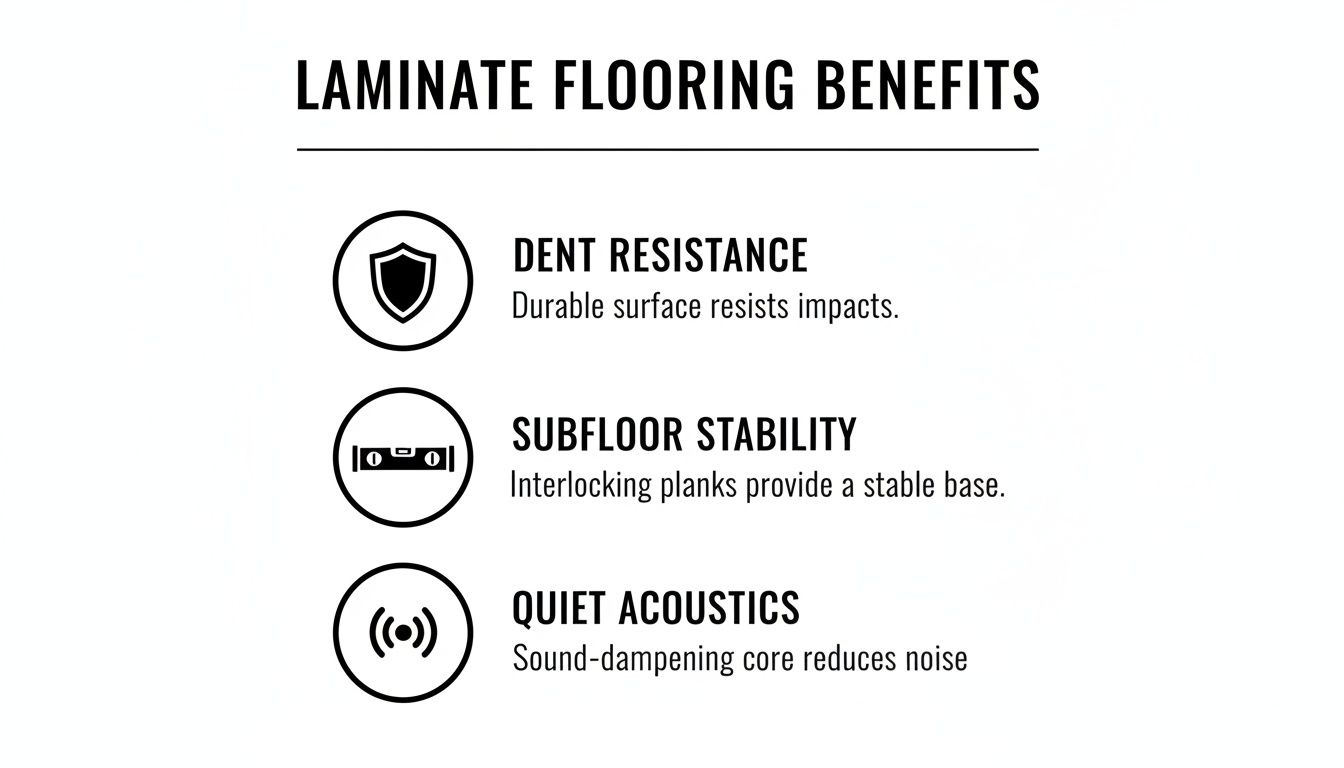
The image above really drives home how that thicker core gives you a floor that's more stable, quieter, and tougher against daily life.
12mm Laminate vs. Hardwood
For many people, nothing beats the classic, natural beauty of hardwood. It’s the original premium floor. However, 12mm laminate presents a modern alternative that is often a much more practical choice, especially for busy households.
The biggest win for laminate is durability—it’s not even close. Hardwood is a beautiful but relatively soft material that scratches and dents easily, and it really doesn't like water. Laminate’s wear layer is built to withstand all three, making it a far better option for homes with kids, pets, and lots of foot traffic.
Hardwood needs to be refinished every 7-10 years to keep it looking good—a process that’s messy, expensive, and disruptive. By contrast, 12mm laminate just needs regular cleaning. It never needs to be sanded or resealed.
And what about looks? Today’s high-definition printing and texturing technologies mean premium 12mm laminate can mimic the look and even the feel of real wood with incredible accuracy. While a purist might spot the difference, most people are blown away by how realistic it is. You get that high-end look for a fraction of the cost—typically 30-50% less than solid hardwood.
Best Rooms for 12mm Laminate Flooring
Picking the right floor for a specific room is a lot like choosing the right tool for a job. You wouldn't use a sledgehammer for a finishing nail, right? The great thing about 12mm flooring laminate is its incredible versatility—it’s a solid choice for so many different spaces in your home. Its beefy construction gives it a premium feel that can handle everything from chaotic family hubs to quiet, private retreats.
Let's walk through a typical home and see where this durable flooring really shines. This will help you make smart, room-by-room decisions that fit how your family actually lives.
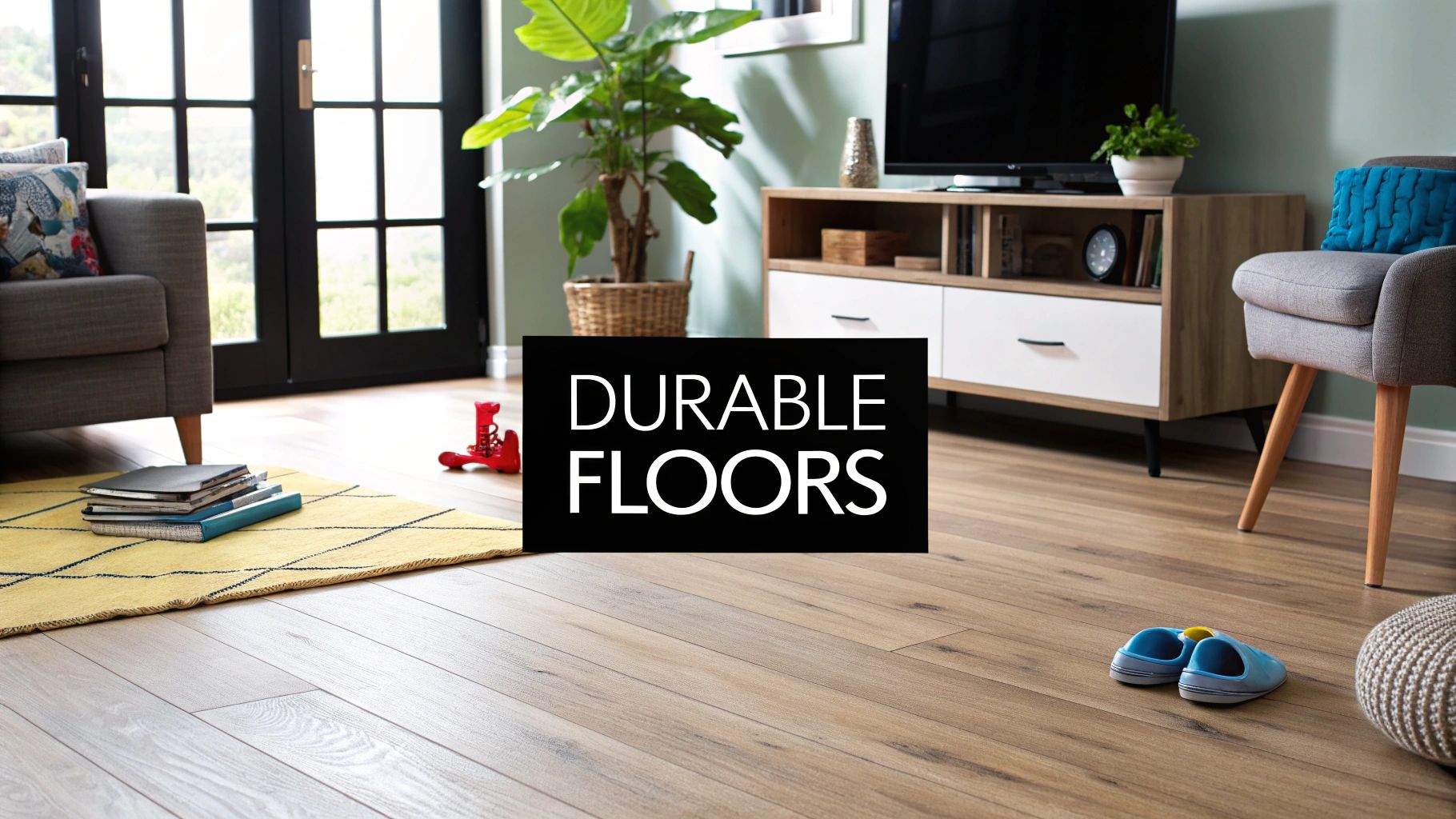
High-Traffic Areas: The True Test of Durability
Think about your living room, hallways, and entryway. These are the main highways of your home. They see non-stop foot traffic, dropped keys, kids' toys, and whatever gets tracked in from outside. This is exactly where the tough-as-nails nature of 12mm flooring laminate proves its worth.
Its dense core and rugged wear layer are specifically engineered to stand up to scratches, scuffs, and impacts that would leave softer floors like hardwood looking battered. For a busy household in Cumming or Forsyth County, that means your floor stays looking great for years, without you having to stress over every little thing.
That solid, substantial feel underfoot is a game-changer. The 12mm planks provide a firm and stable foundation that just feels high-quality, making a fantastic first impression the moment guests step inside.
Kitchens and Dining Areas: The Spill Zones
The kitchen might be the heart of the home, but let's be honest—it's also ground zero for spills, splashes, and dropped utensils. While older laminate floors earned a bad rap for being fussy about moisture, modern 12mm flooring laminate is a different beast entirely, thanks to huge leaps in water-resistant technology.
Many top-tier 12mm products come with super-tight locking systems and water-repellent coatings that shrug off everyday spills. Just wipe up messes promptly, and you’re golden. It’s a fantastic way to get that warm, inviting wood look in your kitchen without the constant worry that comes with real hardwood.
Bedrooms and Home Offices: Comfort and Quiet
In a bedroom or a home office, you want peace, quiet, and comfort. The thicker profile of 12mm flooring laminate gives it a real edge here. Its added mass helps to deaden sound, cutting down on that hollow, click-clack noise you sometimes get with thinner floors. The result is a much quieter, more serene space for sleeping or focusing.
Plus, when you pair it with a good underlayment, 12mm laminate feels noticeably softer and more forgiving underfoot than ceramic tile or a thinner laminate. It hits that sweet spot between a clean, hard surface and a genuinely cozy vibe.
Basements: Navigating Georgia Humidity
Finishing a basement in our part of North Georgia means you have to think about humidity—it’s just a fact of life here. Since 12mm flooring laminate is installed as a "floating floor," it can be a phenomenal choice for below-grade spaces, as long as you do the prep work right.
The secret to a successful basement install is a top-notch moisture-barrier underlayment. This layer is non-negotiable; it protects the laminate’s wood-based core from moisture vapor that naturally comes up through the concrete slab. The stability of the thicker 12mm planks also helps them bridge the minor imperfections often found in concrete subfloors. With the right approach, you can create a warm, durable, and beautiful living space downstairs.
Installation Tips for Georgia's Climate
Picking out the right flooring is a huge step, but the real secret to a long-lasting, beautiful floor is in the installation. This is especially true here in North Georgia. Our famous humidity can really put building materials to the test, and a successful 12mm laminate installation boils down to a few key details that respect our local climate.
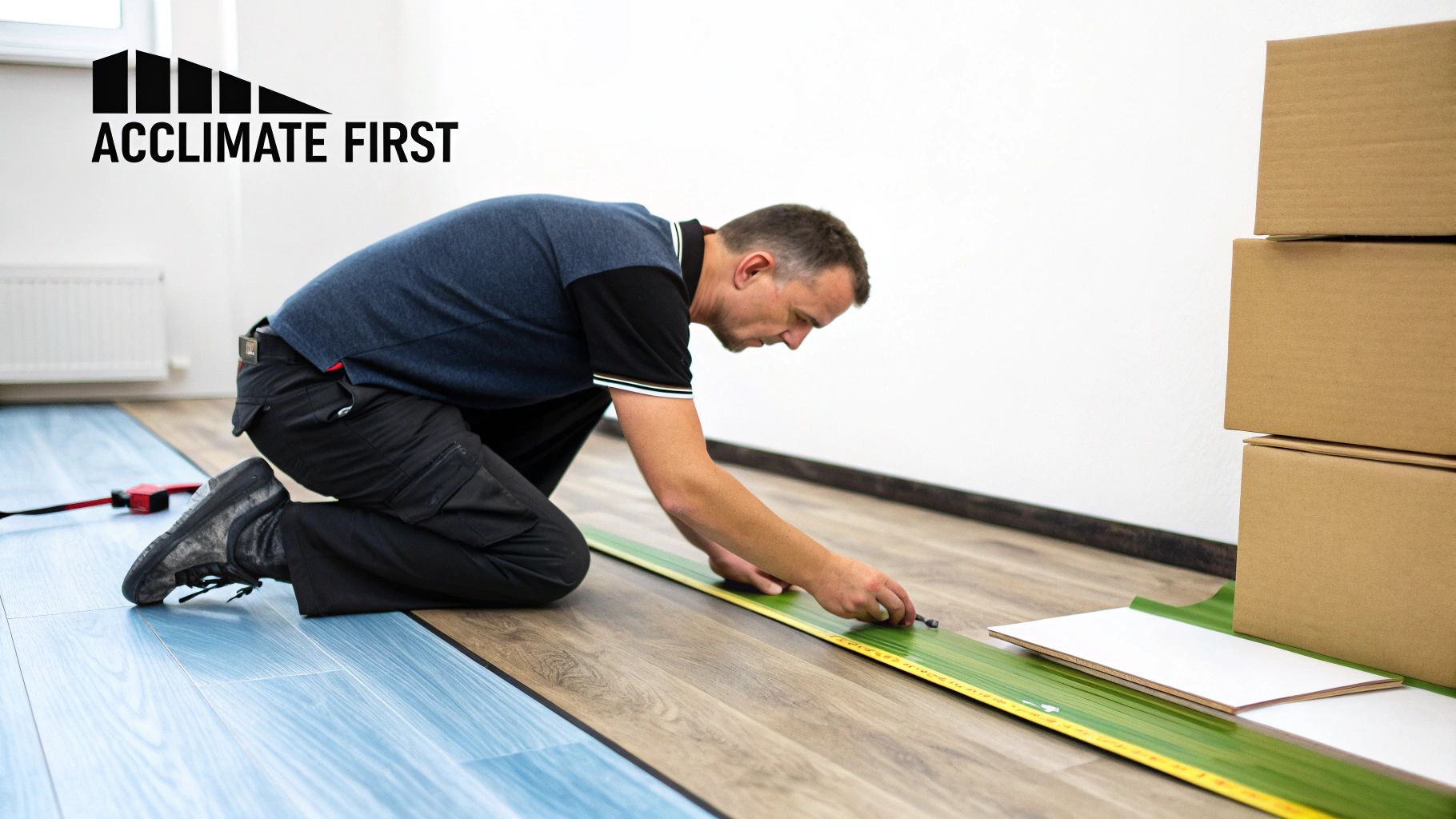
Before you even think about laying the first plank, there’s one step you absolutely cannot skip: acclimation. Think of it like letting a new plant get used to its spot before you re-pot it. Your new laminate planks need time to get acquainted with the temperature and humidity inside your home.
This is a non-negotiable part of the process in places like Cumming or Milton. All you have to do is lay the unopened boxes flat in the room where you'll be installing them for at least 48 hours. This simple act allows the dense core to stabilize, which dramatically cuts down the risk of the floor buckling or forming gaps later on.
The Right Foundation: Moisture Barriers and Underlayment
Once your flooring has had time to acclimate, it's time to think about what goes underneath. That thin roll of foam or felt, the underlayment, does a lot more than just add a bit of cushion. It’s a critical component, especially if you’re installing over a concrete slab—a common feature in Georgia basements.
A good underlayment for your 12mm flooring laminate needs to do three jobs well:
- Block Moisture: It acts as a shield, stopping dampness from wicking up through the subfloor and wrecking your laminate’s core.
- Muffle Sound: It absorbs noise, getting rid of that hollow "click-clack" sound and making your substantial 12mm planks feel even more solid underfoot.
- Smooth Things Over: It helps even out tiny imperfections in the subfloor, giving your new floating floor a perfectly stable base to rest on.
Choosing the right padding is a big deal for a successful installation. You can dive deeper into the specifics in our guide on selecting the right padding for laminate floor installation.
Why Your Floor Needs Room to Breathe
The final, crucial piece of the installation puzzle is giving your floor some breathing room. Laminate flooring naturally expands and contracts with the swings in temperature and humidity that are just a part of life here. To account for this, we leave a small "expansion gap"—usually about 3/8 of an inch—around the entire edge of the room.
Don't worry, you'll never see it. This gap is completely covered by your baseboards and trim, but it’s the single most important trick to prevent your floor from buckling or warping. It lets the entire floor "float" and shift naturally without bumping up against the walls.
This is another area where the thicker profile of 12mm flooring laminate really shines. It's just inherently more stable. In fact, high-density fiberboard (HDF) laminates like these commanded 63.61% of the market share in 2025. For a homeowner in Forsyth County, that translates to real-world durability; these beefier planks can resist up to 40% more swelling from humidity compared to thinner options.
By nailing these three steps—acclimation, a quality underlayment, and proper expansion gaps—you’re not just getting a floor that looks great on day one. You’re making a smart investment that will stand up to Georgia's climate for years to come.
Your Smart Buyer's Checklist for Laminate Flooring
Feeling ready to head to the store? Keep this checklist handy. It’ll help you cut through the noise and make a smart decision you’ll be happy with for years to come.
Thinking about new floors often happens in the bigger picture of home ownership. It's not just about picking a color; it's an investment in your home's value and daily comfort, much like the other key factors when buying a house.
What Homeowners Should Look For
-
The AC Rating: Don't settle for less than an AC4 rating for the main areas of your home. This is your guarantee that the floor can handle the daily chaos of family life, from the living room to busy hallways.
-
Feel the Texture: Don't just look at samples—run your hand over them. The best 12mm planks have a deep, convincing texture that follows the wood grain pattern. This is called "embossed in register" (EIR), and it's what separates a good-looking floor from a great one.
-
The Locking System: A strong, tight click-lock system is non-negotiable. It not only makes the installation process smoother but also ensures minimal gaps between planks, which is a huge deal for preventing moisture from seeping in.
Talking Points for Agents & Designers
For real estate pros, a premium 12mm flooring laminate is an easy and effective selling point. It gives the look and feel of hardwood—a huge draw for buyers in areas like Johns Creek or Milton—but at 30-50% less of the cost. It’s a smart upgrade that adds real value.
In fact, while the market is full of options, 12mm laminate continues to be a go-to for durability, often lasting 20-30% longer than its thinner counterparts under the same conditions. You can see how trends are shaping up in this report on flooring market preferences.
Designer's Tip: The secret to a high-end look on a budget is in the details. The extra thickness of 12mm laminate allows for deeper beveled edges and richer textures, which mimic the substantial feel of real hardwood and elevate the entire design of a room.
Your Top Questions About 12mm Laminate Answered
Even after we've walked through all the benefits and comparisons, a few practical questions always pop up when you're zeroing in on a decision. It's completely normal. Homeowners here in Cumming and the surrounding towns often ask us about how 12mm flooring laminate really holds up day-to-day, especially when it comes to spills, comfort, and the actual installation.
Getting straight answers to these questions is the best way to feel confident about your choice. So, let’s tackle the most common ones we hear right here in our showroom.
Is 12mm Laminate Flooring Truly Waterproof?
This is probably the number one question we get, and it's a critical one. While today's high-quality 12mm flooring laminate is incredibly water-resistant, it isn't completely waterproof in the way vinyl or tile are. The dense core and super-tight locking systems are fantastic at defending against everyday spills—think a dropped glass of water in the kitchen—as long as you wipe them up reasonably quickly.
However, it’s not built for places with constant standing water or heavy moisture, like a full bathroom with a shower. In those wet zones, a truly waterproof floor like SPC or luxury vinyl is still the smarter, safer bet to avoid any chance of moisture damage down the line.
Does Thicker 12mm Laminate Feel Warmer Underfoot?
Yes, it really does. You'll notice that a 12mm flooring laminate feels more solid and warmer under your feet compared to thinner laminates or especially ceramic tile. That thick, high-density fiberboard core acts as a natural insulator, making a real difference on those chilly North Georgia mornings.
When you add a good quality underlayment into the mix, the thermal comfort gets even better. It won't ever be as cozy as carpet, of course, but it’s a huge step up from the cold shock of tile or stone, especially over a concrete slab. It strikes that perfect balance between a hard-wearing surface and a comfortable feel.
Can I Install 12mm Laminate Over My Existing Floor?
Most of the time, absolutely. Because 12mm flooring laminate is a "floating floor," it can often go right on top of existing hard surfaces like old ceramic tile or sheet vinyl. The two main rules are that the original floor has to be clean, perfectly flat, and in good shape.
For instance, if you're going over old tile, you'll likely need to skim-coat the floor with a leveling compound to fill in the grout lines. This step is crucial for creating a smooth, stable foundation for the new planks.
This is where using the right underlayment is non-negotiable. It helps smooth out tiny imperfections in the old floor and provides a vital moisture barrier. A quick assessment from a professional installer can confirm if your floor is a good candidate and ensure a flawless, long-lasting result.
How Do I Clean and Maintain 12mm Laminate Flooring?
Here's the best part: it's incredibly easy. Regular sweeping or vacuuming (using the hard floor setting) is all it takes to get rid of the daily grit and dust that could eventually cause fine scratches.
For a more thorough clean, just use a damp mop—and I mean damp, not soaking wet or a steam mop—with a pH-neutral cleaner made for laminate. It’s important to stay away from harsh chemicals like bleach, ammonia, or abrasive cleaners, as they can damage the protective top layer and dull the floor's shine. With this simple routine, your floors will stay looking great for years.
Ready to explore the durable and stylish options for your home? The team at Flacks Flooring is here to help you find the perfect flooring solution. Visit our showroom in Cumming, GA, to see our wide selection today!