
For homeowners with pets, the best carpet is almost always a low-pile, cut-loop style made from tough, stain-resistant synthetic fibers like Nylon or Triexta. These materials strike the perfect balance between standing up to claws and foot traffic, making cleanup a breeze, and keeping things comfy for both you and your four-legged friends.
Finding Your Perfect Pet Friendly Carpet
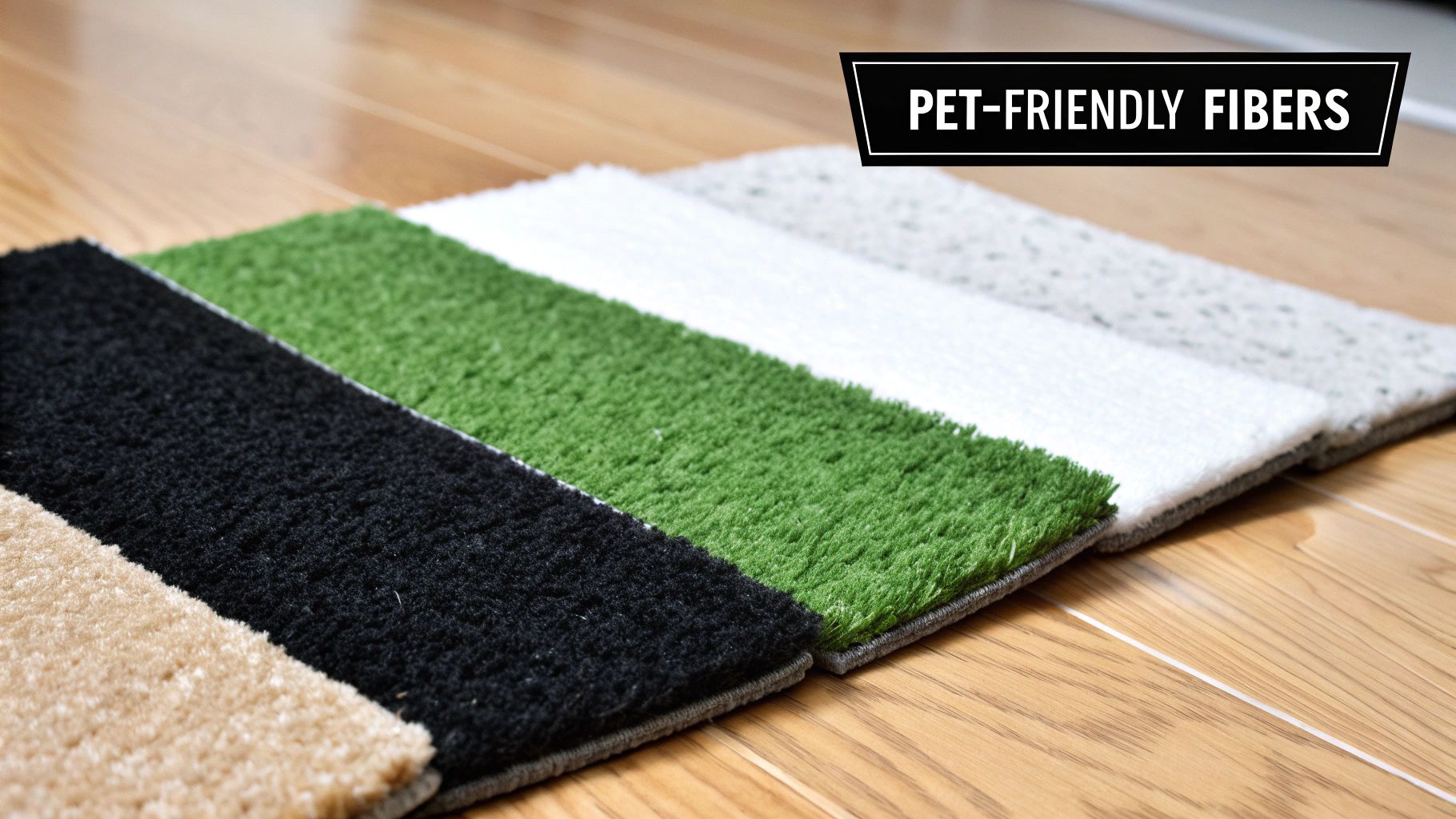
If you're a pet owner, you know the struggle. You want soft, cozy carpet underfoot, but you also need something that can handle the reality of life with animals—from muddy paws and shedding to the occasional accident. This guide is your roadmap to finding a carpet that you and your furry family members will absolutely love.
We’ll walk through the features that make a carpet genuinely "pet-friendly," digging into everything from the best fiber types and stain-blocking technologies to why the carpet's construction matters so much.
Why Pet-Specific Carpets Matter More Than Ever
Choosing new flooring is a big investment, and when you have pets, the stakes are even higher. The wrong carpet can quickly become a headache, trapping pet hair, permanently absorbing stains, and showing wear and tear far too soon. Thankfully, flooring technology has come a long way.
The demand for better solutions is huge. The global market for pet-friendly carpet is already valued at an estimated $2.5 billion as of 2025 and is expected to hit $4.5 billion by 2033. This boom shows just how many homeowners are looking for durable, easy-to-clean floors designed specifically for life with pets.
To help you sort through the options, we've put together a quick reference table.
Quick Guide to Pet Friendly Carpet Features
Here’s a snapshot of the most important factors to keep in mind while you shop. It’s all about finding the right mix of features that fit your home and your pet's lifestyle.
| Feature | Why It Matters for Pet Owners | Best Options |
|---|---|---|
| Durability & Resilience | Withstands constant running, playing, and pacing without getting matted down or showing wear. | Nylon, Triexta |
| Stain & Soil Resistance | Repels liquids from accidents and prevents dirt from seeping deep into the fibers. | Carpets with built-in or solution-dyed protection |
| Ease of Cleaning | Low-pile carpets make it much easier to vacuum up pet hair, dander, and dirt effectively. | Low-pile (less than 1/2 inch), cut-loop construction |
| Pet Safety & Comfort | Avoids snags from claws, which can be painful for pets and damaging to the carpet. | Cut-loop styles (no continuous loops to catch nails) |
| Odor Resistance | Features moisture barriers or antimicrobial treatments to stop odors before they can start. | Look for carpets with lifetime pet-proof warranties |
This table simplifies the key decision points, but understanding how they all work together is what will lead you to the perfect choice for your home.
Key Factors for Success
Making the right choice really comes down to balancing a few key needs. While our guide on how to choose a good carpet for your home is a fantastic starting point for anyone, pet owners need to focus on a few specific things:
- Durability and Resilience: Your carpet needs to handle a lot of activity without crushing or fraying.
- Stain and Soil Resistance: Look for materials and treatments that make liquids bead up instead of soaking in.
- Ease of Cleaning: You'll be vacuuming a lot, so you want a carpet that lets go of pet hair easily.
- Pet Safety and Comfort: Steer clear of looped carpets that can snag claws and opt for something soft under their paws.
And don't forget the big picture! A pet-friendly home extends outside, too. Complementing your indoor flooring with durable outdoor options like the best artificial grass for pets can help keep your entire space clean and beautiful. By keeping these principles in mind, you’ll be ready to find a carpet that not only looks great but performs flawlessly for years.
Choosing The Right Carpet Fiber For Your Pet
Think of your carpet's fiber as its core personality. It’s the single most important decision you'll make, determining how well your new floor handles the daily chaos of life with pets. This choice dictates everything from resilience against a game of fetch to its ability to survive a muddy-paw disaster.
Some fibers are built like tanks, ready for anything. Others, while gorgeous, might wave the white flag after the first accident. Let's walk through the most common options to figure out which one is the perfect fit for you and your furry family.
Nylon: The Resilient Workhorse
If there's one fiber that can truly handle the rough-and-tumble life of a pet-friendly home, it's nylon. I've seen it stand up to years of abuse in busy households. Its claim to fame is its incredible resilience—that "bounce-back" quality that keeps it from getting crushed or matted down in your dog's favorite nap spot or the path to the back door.
Nylon is a synthetic fiber, so it’s naturally tough against the abrasion from claws and toys. While it isn't inherently stain-proof, nearly all modern nylon carpets come with a powerful stain-protective treatment applied at the factory. This acts as a shield against most spills and accidents.
- Best For: High-traffic areas like living rooms, stairs, and hallways where pets play and roam constantly.
- Key Benefit: Unmatched durability and a fantastic ability to resist crushing and matting over time.
Polyester: The Stain-Fighting Champion
Polyester is another synthetic option that comes with its own secret weapon: built-in stain resistance. The fibers themselves are hydrophobic, which is just a fancy way of saying they naturally push liquids away. This makes it a fantastic choice for homes with puppies still in the potty-training phase or older pets who might have occasional accidents.
While older versions of polyester couldn't compete with nylon's durability, modern manufacturing has closed that gap significantly. Polyester also offers beautifully vibrant colors and a surprisingly soft feel, giving you a touch of luxury at a more wallet-friendly price point.
Key Takeaway: For most pet owners, the big decision comes down to durability versus stain resistance. Nylon is the king of bouncing back from heavy traffic, while polyester's greatest strength is its natural ability to block liquid stains from setting in.
Triexta: The Modern Hybrid
What if you didn't have to choose between durability and stain resistance? Enter Triexta. This relatively new synthetic fiber is a game-changer, offering a brilliant balance of nylon's toughness and polyester's stain-blocking power. It's also partially made from renewable resources like corn glucose, making it a more eco-friendly choice.
Triexta's stain protection is engineered right into the fiber, so it never wears off, no matter how many times you clean it. It’s also incredibly soft underfoot and holds up exceptionally well in active homes. Honestly, this unique combination of features makes Triexta one of the top contenders for the best all-around carpet for pet owners.
Carpet Fiber Comparison for Pet Owners
To help you visualize the trade-offs, here’s a straightforward breakdown of how these fibers stack up against each other in the areas that matter most to pet owners.
| Fiber Type | Durability | Stain Resistance | Softness | Average Cost |
|---|---|---|---|---|
| Nylon | Excellent | Good (with treatment) | Good | $$$ |
| Polyester | Good | Excellent | Excellent | $$ |
| Triexta | Excellent | Excellent | Excellent | $$$ |
| Wool | Good | Poor | Excellent | $$$$ |
This table makes it clear that while each fiber has its perks, synthetic options like Nylon, Polyester, and Triexta simply offer a better, more practical balance for the realities of living with pets.
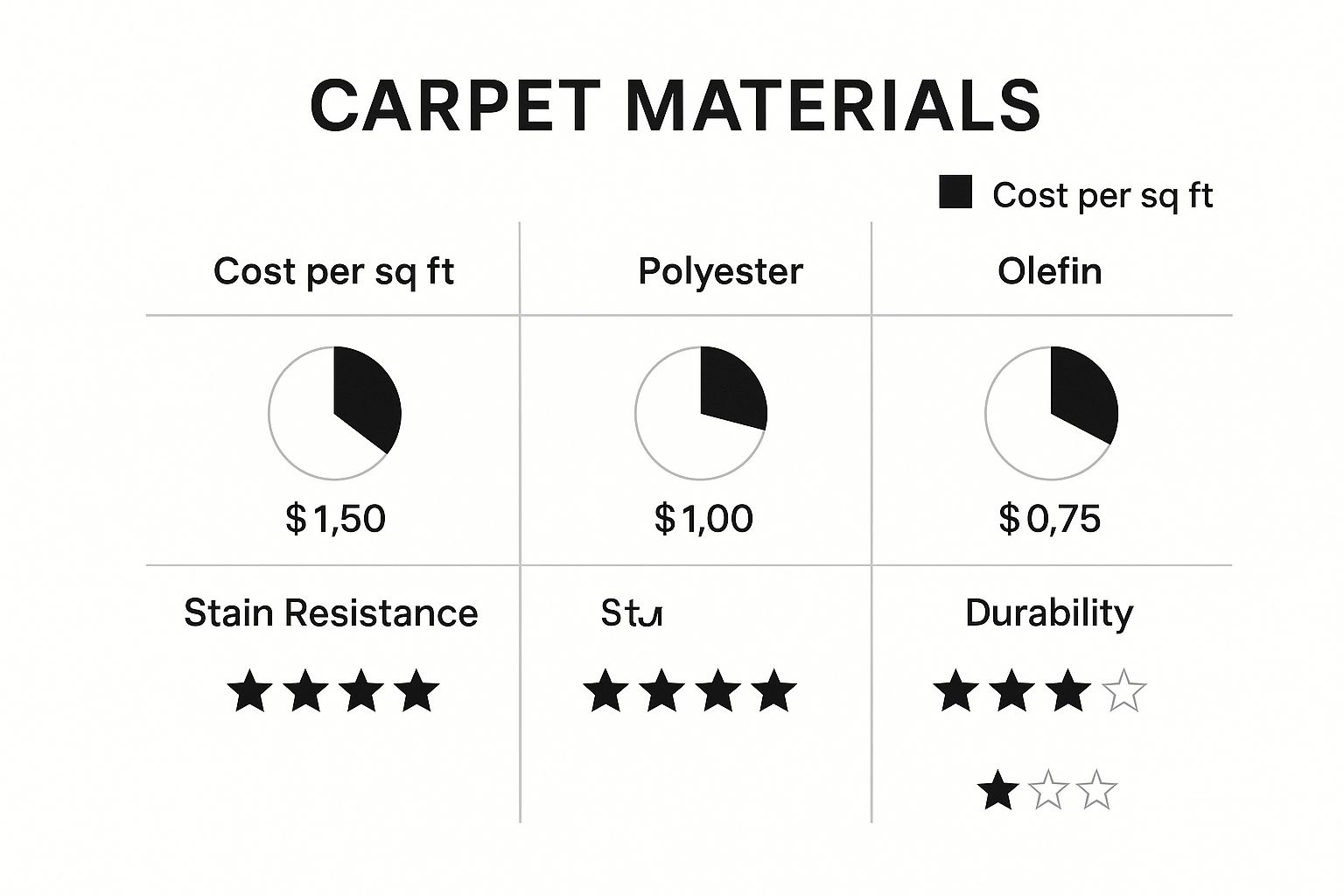
As the infographic highlights, while some materials are easy on the budget, nylon and polyester provide the well-rounded performance you need to keep your floors looking great.
Why Natural Fibers Like Wool Fall Short
Wool is undeniably beautiful. It's luxurious, all-natural, and feels amazing underfoot. For most pet owners, however, it’s just not a practical choice. Because wool is a natural fiber, it's extremely absorbent—it soaks up liquids like a sponge.
This means pet accidents can quickly become permanent stains, leaving behind odors that are nearly impossible to remove. While it’s a premium material, its high maintenance and vulnerability to pet-related issues make it a tough sell for homes with cats and dogs. If you're still curious, you can explore the benefits and challenges of wool carpet in our detailed guide.
How Carpet Construction Impacts Durability
While picking the right fiber is a great start, the carpet's actual construction is what makes it a champion against the daily chaos of paws and claws. It’s a lot like building a house—the materials matter, but the architecture is what helps it stand up to a storm. You could have two carpets made from the exact same nylon, but how they’re put together will make all the difference in how they perform.
Getting a handle on a few key construction terms will help you choose a carpet that doesn’t just look good on day one, but provides a safe, tough, and easy-to-clean floor for your furry family members. Let's break down what really matters.
Cut Pile vs. Loop Pile: The Critical Difference
Your first big decision comes down to two styles: cut pile and loop pile. For anyone with pets, this choice is a big deal, affecting both the carpet's lifespan and your pet's safety.
Think of a loop pile carpet like a classic knitted sweater. The surface is made of countless little loops of yarn. Now, picture your dog or cat getting the zoomies—their nails can easily snag a loop, pulling the thread and creating a permanent, ugly run in the carpet.
A Critical Warning for Pet Owners: Loop pile carpets are a major snagging hazard. A pet’s claw can get caught in a loop, which can lead to a painful injury for them and irreversible damage to your floor. Because of this, we almost always steer pet owners toward a cut pile style.
Cut pile carpets solve this problem entirely. The tops of the yarn loops are sheared off, creating individual strands that stand straight up. There are no loops to snag, making it the clear winner for safety and durability in a home with four-legged friends.
Why Low Pile Height is Your Best Friend
Okay, so you've landed on a cut pile. The next thing to look at is pile height—basically, how long the carpet fibers are. As much as we all love the feel of a deep, plush shag carpet, it’s a total nightmare for pet owners.
Long fibers create a dense jungle where pet hair, dander, dirt, and allergens go to hide. Your vacuum doesn't stand a chance of getting it all out, which can lead to stubborn odors and a constant battle with allergies.
A low-pile carpet, typically with fibers less than 1/2 inch high, is the way to go. Here’s why:
- Cleaning is a Breeze: Hair and dirt sit near the surface where your vacuum can actually grab them, instead of getting buried deep down.
- Stands Up to Traffic: Shorter, tighter fibers are much better at resisting the crushing and matting that comes from constant paw traffic.
- Easier Stain Removal: Spills and accidents are easy to spot and clean up before they soak through the fibers and into the backing.
Going with a low-pile carpet is one of the smartest, simplest moves you can make. It’s a practical choice that will save you a ton of cleaning headaches down the road.
The Power of Density and Twist
Finally, let's get into two details that separate a cheap, flimsy carpet from a high-quality, durable one: density and twist level. These specs are the true sign of how well a carpet will hold up over the years.
Carpet density is all about how closely the fibers are packed together. A denser carpet has more fibers stitched into every square inch, creating a strong, resilient surface that fights back against crushing. A quick way to test this in the store is to press your fingers into the pile. If you can easily feel the stiff backing, it's a low-density carpet. You want one that feels thick and substantial under your hand.
Twist level measures how tightly each individual strand of yarn is twisted. The higher the twist, the stronger the yarn is, and the less likely it is to untwist, fray, or look fuzzy over time. Think of it like a rope—a tightly twisted rope is far stronger than a loose bundle of threads. This is crucial for handling the wear and tear from pets constantly running and playing. When you're looking at samples, check for a tight, well-defined twist in each yarn strand. It’s a small detail that signals big-time durability.
What to Look For in a Pet-Friendly Carpet
Carpet technology has come a long way. It's not just about picking a color anymore; manufacturers are now designing carpets with specific features to handle the messes and realities of life with pets. Knowing what these features are is the secret to finding a carpet that looks great and stands up to the challenge.
Think about it like buying a family car. You wouldn’t just focus on the paint job, right? You’d check the safety ratings, look at the cargo space, and make sure the seats are easy to clean. The best carpet for your pets requires the same practical mindset—it’s the built-in tech that really makes your life easier.
Stain Resistance: Inherent vs. Treated
Stains are probably the number one concern for any pet owner. When an accident happens, you need a carpet that can handle it. This is where you need to understand the big difference between a carpet that’s simply "stain-treated" and one with inherent stain resistance.
A stain-treated carpet has a chemical coating sprayed on at the factory. At first, it works great, making liquids bead up on the surface. But here's the catch: over time, with foot traffic and cleanings, that treatment can wear away, leaving the carpet fibers defenseless.
On the other hand, fibers like polyester and Triexta have stain resistance built right into their DNA. Their stain-blocking power is part of the fiber itself, so it will never wash off or wear out. It’s a permanent defense system that gives you peace of mind for the entire life of your carpet.
The Bottom Line: For the best protection, always go with a carpet that has inherent stain resistance. It's a permanent solution you can count on, no matter how many accidents you have to clean up over the years.
The Unseen Hero: A Moisture Barrier
Even with the best stain protection on the fibers, liquids can still seep through the carpet and its backing, soaking the pad and subfloor underneath. Once moisture gets trapped down there, it’s a recipe for mold, mildew, and stubborn odors that are almost impossible to get rid of.
This is why a moisture barrier (or a waterproof backing) is a total game-changer and a non-negotiable feature for pet owners.
This special backing acts like a shield, stopping any liquids from ever reaching the carpet pad. It keeps spills and accidents contained on the surface, so you can clean them up completely without worrying about what’s lurking below. Many of the best pet-friendly carpets now come with this feature, and it’s the single most effective way to prevent those lingering pet odors from taking hold.
Understanding Pet-Friendly Warranties
Finally, a solid warranty is your safety net. But not all warranties are the same, so you have to read the fine print. You'll want to look specifically for carpets that offer coverage designed for pets.
A good pet-friendly warranty should include:
- Lifetime Stain Protection: This should cover stains from all food and drinks, plus pet-specific accidents like urine, feces, and vomit.
- Soil Resistance: This ensures the carpet will resist clinging to dirt tracked in on paws.
- Texture Retention: This guarantees the carpet won't crush and mat down in hallways and other busy areas.
The demand for these features is huge and it's changing the industry. The market for pet-friendly carpets in North America hit USD 2.1 billion in 2022 and is projected to jump to USD 3.5 billion by 2030. This boom shows just how much we’ve started prioritizing hygiene and comfort for everyone in the family—furry members included. You can see for yourself how this trend is shaping new products. Learn more about the North America home pet-friendly carpet market findings.
Making sure your new carpet has these three things—inherent stain resistance, a moisture barrier, and a specific pet-focused warranty—is your checklist for success. It’s how you know you're investing in a floor that’s truly ready for the wonderful, messy reality of life with pets.
Keeping Your Carpet Clean with Pets
You’ve done the hard part and picked out the perfect pet-friendly carpet. That's a huge win! But now comes the real challenge: keeping it looking as good as the day it was installed. Think of it less as a chore and more as protecting your investment. A good maintenance routine is what makes the difference between a carpet that lasts and one that tells the tale of every muddy paw and accident.
Your carpet acts like a giant filter, trapping all the fur, dander, and dirt that your furry family members bring in. The trick is to get all that stuff out before it works its way deep into the fibers. It all boils down to having a smart cleaning plan that mixes good daily habits with a fast response when messes happen.
Build a Proactive Cleaning Routine
The best way to deal with pet messes is to get ahead of them. A consistent cleaning schedule stops dirt and fur from building up, which means those big, deep-cleaning days are less of a headache. Your vacuum is your absolute best friend in this fight.
In a house with pets, you’ll want to vacuum two to three times per week. It sounds like a lot, but this is what it takes to stop fur from getting tangled and embedded deep in the carpet pile.
- Get the Right Gear: A vacuum with powerful suction and a beater bar (a motorized brush) is non-negotiable. It needs to be able to agitate the carpet fibers to pull up that stubborn, woven-in hair.
- Switch Up Your Angles: Don't just vacuum in one direction. Go over the same spot from north-to-south, then again from east-to-west. This simple change in direction does wonders for lifting hairs caught in the pile.
- Mind the Edges: Pet hair loves to collect along baseboards and in corners. Use your vacuum's crevice tool to get into those tight spots where the fur bunnies hide.
Act Fast on Stains and Spills
Let's be real—accidents are going to happen. The difference between a minor cleanup and a permanent stain is how quickly you act. The longer a liquid sits, the more it soaks past the carpet fibers and into the pad below.
Immediate Action is Crucial: The second you spot an accident, grab a clean, dry cloth and blot the area. Don't rub! Rubbing just pushes the mess around and can fray the carpet fibers. Just press down firmly to soak up as much as you can.
After you've blotted up the excess, it's time to treat the spot. Grab a cleaner made specifically for pet stains. Enzymatic cleaners are your best bet here; they use natural enzymes to literally break down and "eat" the bacteria in urine that causes odors, instead of just covering up the smell. To help prevent accidents from reaching the carpet in the first place, you might want to place a reusable dog pee pad blanket in your pet’s favorite hangout spots. For more great, pet-safe cleaning ideas, check out our guide to natural floor cleaning solutions.
Schedule Professional Deep Cleaning
Your weekly vacuuming and quick spot treatments are vital, but they can't replace the power of a professional deep clean. Most carpet pros recommend a deep cleaning at least once every 12 to 18 months. If you have a few pets or family members with allergies, you might want to bump that up to every 6 to 9 months.
Professional hot water extraction (often called steam cleaning) gets way down deep to remove the ground-in dirt, allergens, and grime that your home vacuum just can't reach. It’s like hitting a reset button for your floors—it not only makes your carpet look and feel fresh again but also helps improve your home's air quality.
A Few Lingering Questions About Pet-Friendly Carpet
Even after you've narrowed down the fiber and style, a few practical questions always seem to pop up. It's one thing to know the technical specs, but it's another to picture how that carpet will actually hold up to your furry family members day in and day out.
Let's tackle some of the most common questions we hear from pet owners. Getting these answers straight is often the last step before you can feel truly confident in your choice.
What’s the Best Carpet Color to Hide Pet Hair?
The smartest trick in the book is to choose a carpet color that’s a close match to your pet's fur. Think of it as camouflage for your floors. If you share your home with a golden retriever, a light tan or beige carpet will be your best friend, making shedding far less obvious than a dark navy would. On the flip side, if you have a black lab, a deep charcoal or rich brown carpet will work wonders.
But here’s a pro tip: solid colors are often a pet owner’s worst enemy. They put every single stray hair and speck of dirt on full display.
The real secret weapon is variation.
- Flecked or multi-toned carpets are brilliant at hiding pet hair. Those little specks of different colors break up the surface, so your eye doesn't get drawn to every little hair.
- Textured carpets with subtle patterns are also fantastic. They create just enough visual interest to distract from minor messes and daily shedding.
Bottom line? Steer clear of stark, solid colors—both the very light and the very dark—as they tend to act like a spotlight for whatever your pet leaves behind.
Is Any Carpet Truly Indestructible?
Let’s be honest: if a pet is determined enough, they can damage just about anything. So, while no carpet is 100% indestructible, modern flooring technology has gotten us incredibly close to it.
The idea of a totally "pet-proof" carpet is more of a goal than a reality, but some options are engineered to be extraordinarily tough against the daily grind of claws, paws, and accidents.
To get the most durable carpet possible, you need to stack the deck in your favor. Start with a carpet made from Triexta or a high-quality nylon. These fibers are famous for their sheer strength and ability to bounce back from crushing and matting. Then, pair that with a low, dense, cut-pile construction. This combination creates a surface that’s tough for claws to snag and makes cleanup much simpler.
An Expert's Take: The nearest you’ll get to an indestructible carpet is a product that pairs top-tier materials with a rock-solid warranty. Look for brands that specifically offer "pet-proof" guarantees that cover stains from urine, vomit, and feces for the life of the carpet. That’s your best assurance that the carpet is built to last.
How Can I Get Pet Odors Out of My Carpet for Good?
The key to eliminating pet odors for good is to destroy the source, not just cover it up with air fresheners. When a fresh accident happens—especially urine—time is of the essence. The longer it sits, the deeper it soaks into the carpet pad and even the subfloor, creating a smell that seems to last forever.
First thing's first: blot, don't rub. Grab a clean, dry towel and stand on it to apply pressure and soak up as much liquid as you can. Rubbing just works the stain deeper into the fibers and can damage them.
Once you’ve blotted, reach for an enzymatic cleaner. These cleaners are made specifically for pet messes. They contain active enzymes that literally break down and "eat" the odor-causing bacteria in the urine. You have to saturate the spot completely—the cleaner needs to go as deep as the urine did—and let it work its magic for the time recommended on the bottle. Blot it dry afterward. For old, set-in odors, you might need a second treatment or to call in a professional with heavy-duty equipment.
Can I Have Carpet if My Family Has Allergies?
Absolutely, as long as you choose the right type and commit to maintaining it. There’s a common myth that hard floors are always the superior choice for allergy sufferers. The truth is, carpet can act like a giant filter, trapping allergens like pet dander, dust, and pollen and holding them down so they aren't constantly floating in the air you breathe.
The trick is getting those trapped allergens out of the carpet effectively. You just need the right setup:
- Go for a low-pile carpet. Shorter fibers mean allergens can't bury themselves too deeply, making them much easier to vacuum up. Synthetic fibers like nylon or polyester are also a better bet than natural fibers like wool, which can be more porous.
- Invest in a great vacuum. Regular, thorough vacuuming is non-negotiable. Use a model with a HEPA filter, which is designed to capture 99.97% of tiny airborne particles, including the microscopic dander and dust mites that trigger allergies.
Many modern carpets also come with built-in hypoallergenic treatments to inhibit the growth of mold and mildew. With the right carpet and a good cleaning routine, you can definitely enjoy the softness and comfort of carpet without kicking allergies into high gear.
At Flacks Flooring, we get it—your pets are family. Our team is here to help you find the perfect floor that works for everyone in your home, whether they have two legs or four. Visit our showroom or schedule an in-home consultation to explore our huge selection of pet-friendly carpets today