
For homeowners here in Georgia, the best engineered hardwood flooring isn't just about looks—it’s about smart construction. You’ll want a floor with a thick real-wood wear layer (at least 3mm), a stable multi-plywood core, and a tough UV-cured Aluminum Oxide finish. This specific recipe gives you the timeless beauty of classic hardwood but with the muscle to handle the humidity swings we see all the time in Cumming, Johns Creek, and Milton.
Your Guide to Choosing the Best Engineered Hardwood
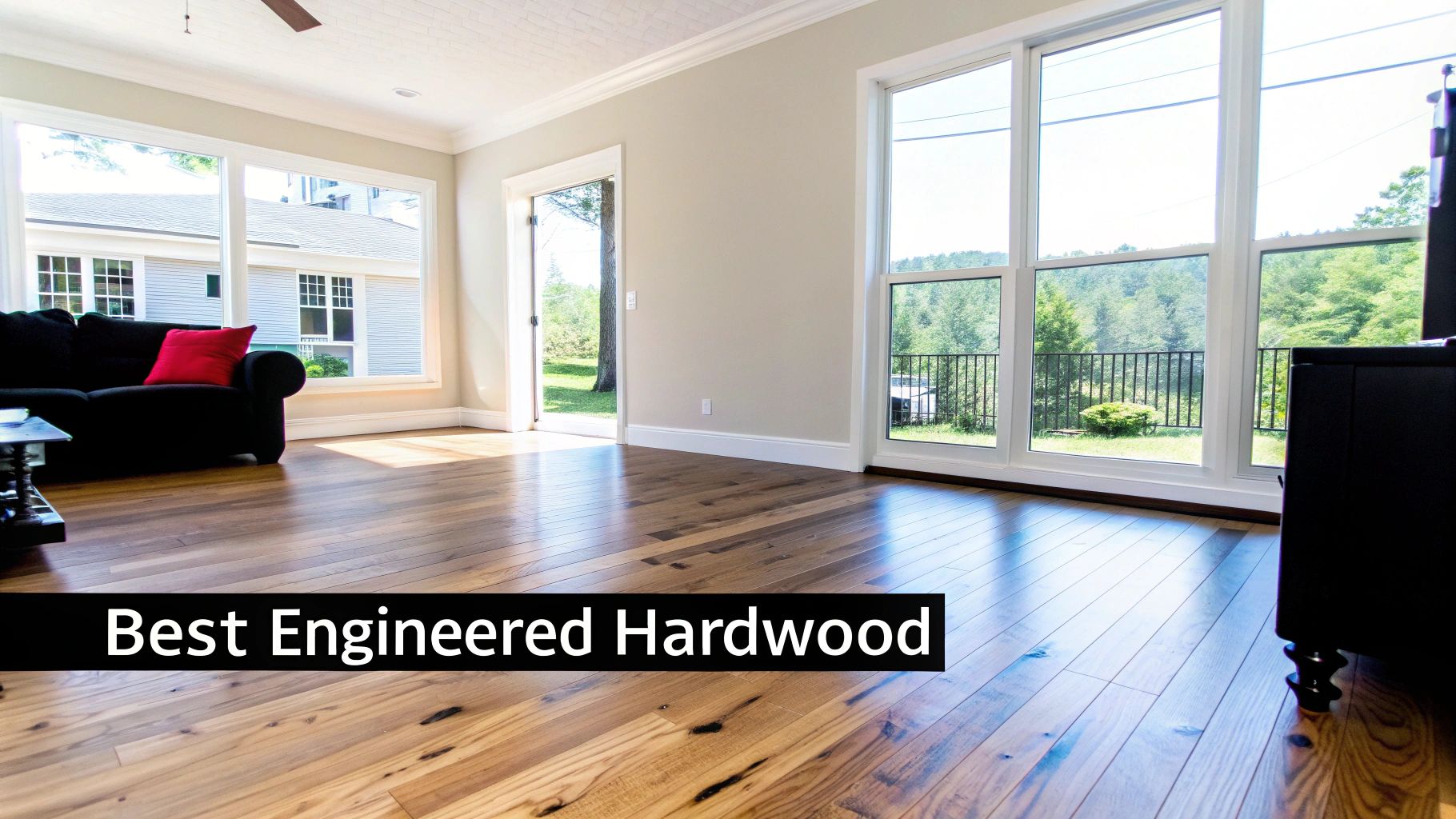
Picking a new floor is a big deal. It’s not just about matching your paint color; it's a real investment in your home’s comfort and long-term value. While solid hardwood is beautiful, it has a tendency to warp and cup in our humid climate. This is where engineered flooring really shines, and it's precisely why it has become the go-to choice for savvy homeowners across Forsyth County.
The secret to engineered hardwood is all in its layered construction. It starts with a top layer of genuine hardwood—the part you see and walk on. This is bonded to a core of plywood sheets stacked in alternating directions, creating a plank that’s incredibly stable. This clever design resists swelling and shrinking from moisture by up to 50% more than solid wood. That’s a game-changer for homes built on concrete slabs, which are so common around here.
Key Factors for Georgia Homeowners
To find a floor that will last, you have to look past the pretty surface and get to know what’s underneath. Here are the key ingredients that separate a great engineered floor from a mediocre one, especially for our local climate.
-
Wear Layer Thickness: This is the slice of real hardwood on top. A thicker layer, ideally 3mm or more, is what allows the floor to be sanded and refinished down the road. It’s the difference between a 15-year floor and a 30-year floor.
-
Core Construction: The core is the unsung hero. A multi-ply plywood core provides the best defense against moisture. Cheaper high-density fiberboard (HDF) cores just don't offer the same stability. As a rule of thumb, more layers equal more strength.
-
Wood Species and Grade: Harder woods like Oak and Hickory are fantastic for busy households with kids, pets, and lots of foot traffic. Getting familiar with understanding the primary hardwood lumber grades can also help you know exactly what you’re buying in terms of character and clarity.
-
Finish Quality: Don't overlook the finish. Look for a factory-applied, multi-layer finish infused with Aluminum Oxide. This invisible shield is what protects your floors from scratches, scuffs, and fading from our strong Georgia sun.
Think of engineered hardwood as a high-performance athlete. The wear layer is its skill, the core is its strength and conditioning, and the finish is its protective gear. For a Georgia home, you need an athlete built to handle the heat and humidity without breaking a sweat.
Zeroing in on these structural details ensures you'll choose a floor that not only looks stunning on day one but continues to perform beautifully for years to come.
To make things even clearer, here’s a quick-glance table summarizing what to look for.
Key Factors for Choosing Engineered Hardwood
| Feature | What to Look For | Why It Matters in Georgia |
|---|---|---|
| Wear Layer | 3mm or thicker; made of a durable wood species. | Allows for future refinishing, extending the floor's life despite wear and tear. Essential for long-term value. |
| Core | Multi-ply plywood (avoid HDF if possible). | Provides superior dimensional stability to resist warping and cupping during humid summers and damp winters. |
| Finish | UV-cured with Aluminum Oxide (multiple layers). | Offers maximum protection against scratches from pets, kids, and daily life, plus prevents fading from strong sunlight. |
| Species Hardness | Species like Oak, Hickory, or Maple. | Harder woods are more resistant to dents and dings, making them ideal for high-traffic areas like kitchens and entryways. |
By keeping these four factors in mind, you're well on your way to selecting an engineered hardwood floor that’s perfectly suited for your home and our unique Georgia climate.
Understanding How Engineered Hardwood Is Constructed
To really get why engineered hardwood is often the perfect fit for a Georgia home, you have to look past the beautiful surface. Don't think of it as a solid piece of wood. Instead, picture a high-performance sandwich, with each layer engineered for maximum strength and stability. This layered construction is the secret weapon against our region’s notorious humidity.
Each layer has a distinct job to do. Working together, they create a floor that fights back against the warping, cupping, and gapping that can be the downfall of solid wood. Let's peel back the layers and see how this smart design works, from the top down.
The Top Layer: The Beauty of Real Hardwood
What you see and walk on is the very top layer. This is the veneer, and it's 100% genuine hardwood. It isn’t a photo or a plastic fake; it's a real slice of Oak, Hickory, Maple, or whatever species you choose, complete with all the authentic grain patterns, knots, and character.
This is exactly why engineered flooring looks identical to solid hardwood—because the part you actually see and live on is solid hardwood. The thickness of this wear layer is one of the most important factors for the floor's lifespan and a key sign of a quality product. A thicker veneer means the floor can be sanded and refinished down the road, potentially adding decades to its life. For more on this, our guide on what is engineered hardwood flooring dives even deeper into the details.
The Core: The Unsung Hero of Stability
Right below that gorgeous wood veneer is the core, and this is where the real engineering magic happens. The core is usually made from multiple layers of plywood or sometimes a high-density fiberboard (HDF). In the best products, you’ll find a multi-ply plywood core.
Think of it like this: you stack several thin sheets of wood, but you turn each sheet so its grain runs perpendicular—at a 90-degree angle—to the layer above and below it. This cross-grained construction is what gives the plank its incredible dimensional stability.
This cross-hatching effect works a lot like rebar in concrete. It actively fights the natural tendency of wood to expand and shrink with moisture changes. When one layer wants to move in one direction, the layer next to it is pulling in the opposite direction, forcing it to stay put. This is the floor's number one defense against a humid Georgia summer.
This built-in strength allows engineered hardwood to go where solid wood can't, including:
- Over concrete slabs: A common foundation in many homes around Cumming and Johns Creek.
- In basements: Where moisture levels are almost always higher.
- In kitchens: Where it can handle the constant swings in temperature and humidity.
The Backing Layer: The Foundation of Balance
At the very bottom of the plank is the backing layer. Its job is to provide the final piece of stability, balancing the entire structure. It also acts as one last line of defense against any moisture coming up from the subfloor, ensuring the plank stays straight and true for its entire life.
This complete, multi-layered system is what makes engineered hardwood such a smart choice for our climate. It gives you the timeless beauty of real wood on top, supported by a powerful, hidden structure built to handle the unique environmental challenges we face here. For homeowners in Forsyth County, that means a floor that's not just beautiful, but built to last.
How to Select the Perfect Engineered Hardwood
Choosing the right engineered hardwood feels a lot like buying a car. The color and style grab your attention first, but what's under the hood is what really counts for performance and longevity. This guide will walk you through the essential components—from the wood species you see on top to the invisible finish that protects it—so you can pick a floor that truly fits your home and your lifestyle.
Getting this choice right means you’re investing in a floor that will not only look stunning on day one but will continue to perform for years, especially in a variable climate like ours in North Georgia.
Start with the Wood Species
Your journey begins with the top layer—the slice of real hardwood you'll live on every day. This choice is about more than just finding the right color; it’s about durability. Different woods have different hardness levels, which are measured on the Janka Hardness Scale. Simply put, a higher Janka number means the wood is tougher and more resistant to dents and dings.
For a busy household in Cumming or Johns Creek, particularly one with kids or pets, picking a harder species is a no-brainer.
- Oak (Red or White): A true American classic, Oak is a fantastic all-rounder. It's very durable (around 1290-1360 on the Janka scale) and has a pronounced grain pattern that does a great job of hiding minor scratches. It's a reliable workhorse for just about any room.
- Hickory: If you need something incredibly tough, look no further. As one of the hardest domestic woods (around 1820 Janka), Hickory is built for homes that see a lot of action. Its bold, varied grain patterns also bring a ton of rustic character to a space.
- Maple: Known for its clean, contemporary look, Maple has a subtle, fine grain and a creamy, light color. It's also very hard (around 1450 Janka), but its smooth surface can make dings a bit more obvious. It’s perfect for creating a sleek, modern aesthetic.
Knowing how different woods behave is the first step toward making a smart, lasting investment. For a deeper dive, check out our guide to hardwood species to find the perfect match for your home.
Choosing the right species is a balance of aesthetics and practicality. This table breaks down some popular options to help you decide.
Engineered Hardwood Species Comparison
| Wood Species | Janka Hardness Scale | Grain Characteristics | Best For |
|---|---|---|---|
| White Oak | 1360 | Straight, subtle grain with a light, modern look. | High-traffic areas, contemporary or transitional homes. |
| Red Oak | 1290 | Pronounced, wavy grain with reddish-pink undertones. | Hiding wear and tear in busy, traditional family homes. |
| Hickory | 1820 | Bold, dramatic grain with significant color variation. | Rustic or modern farmhouse styles needing maximum durability. |
| Maple | 1450 | Fine, uniform grain with a clean, creamy appearance. | Sleek, minimalist designs in lower-traffic areas. |
| Walnut | 1010 | Softer wood with rich, dark tones and a sophisticated grain. | Bedrooms or formal living rooms where luxury is prioritized. |
Ultimately, the best species is one that complements your design vision while standing up to your daily life.
Prioritize a Thick Wear Layer
If the wood species is the face of your floor, the wear layer is its heart. This is the top slice of real hardwood, and its thickness is the single most important factor in your floor's lifespan. It directly determines how many times, if ever, the floor can be sanded and refinished. Think of it like the tread on a tire—more tread means more miles.
A flimsy wear layer of 1-2mm might look fine at first, but it leaves zero room for repairs down the road. For a floor that's a true long-term asset, you should be looking for a wear layer of at least 3mm. The best floors will even boast a 4-6mm wear layer, giving them a lifespan that can rival solid hardwood.
A thicker wear layer is your insurance policy against life's accidents. It gives you the power to erase years of wear and tear, making your floors look brand new again and protecting your home's long-term value.
Select the Right Plank Dimensions
The size and shape of the planks have a massive impact on a room's overall feel. These days, wide planks—typically 5 inches or wider—are incredibly popular, and for good reason. They create a more open, uncluttered look that can make smaller rooms feel larger and more modern.
On the other hand, narrower planks (under 3 inches) deliver a more traditional, classic aesthetic. There's no right answer here; it’s all about matching the plank to your home's architecture and your personal style.
This flowchart breaks down the critical layers that make up every plank of engineered hardwood.
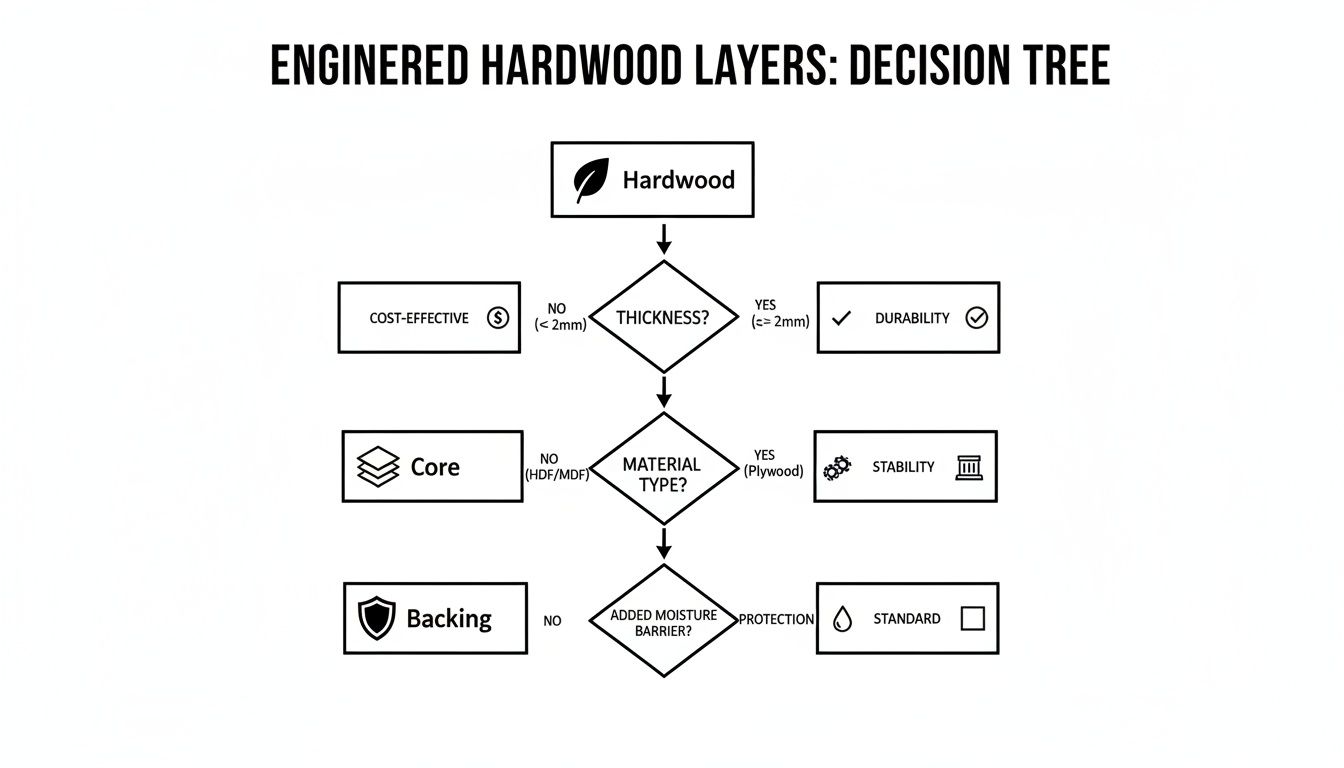
As you can see, it’s the combination of the top hardwood veneer, the stable core, and the protective backing that creates such a high-performance floor.
Demand a High-Performance Finish
The finish is your floor’s frontline defense. It’s the invisible shield protecting the wood from scratches, spills, and the sun's damaging UV rays. A factory-applied finish is always going to be tougher than one applied in your home. The best engineered floors come with multiple coats of a UV-cured Aluminum Oxide finish.
This advanced coating creates an incredibly hard, clear barrier that stands up to the rigors of daily life. For homes in sunny Milton or Forsyth County, a quality UV-cured finish is also non-negotiable for preventing the wood from fading or discoloring over time.
Consider a Waterproof Core for Key Areas
Finally, don't overlook one of the biggest advancements in flooring: engineered hardwood with a waterproof core. Instead of a standard plywood core, these innovative planks use a stone-polymer composite (SPC) or wood-polymer composite (WPC) center that is completely impervious to water.
This game-changing technology allows you to bring the authentic beauty of real hardwood into spaces where it was once considered off-limits, like kitchens, basements, and mudrooms. It offers total peace of mind against everyday spills and moisture.
Choosing the Right Installation Method for Your Home
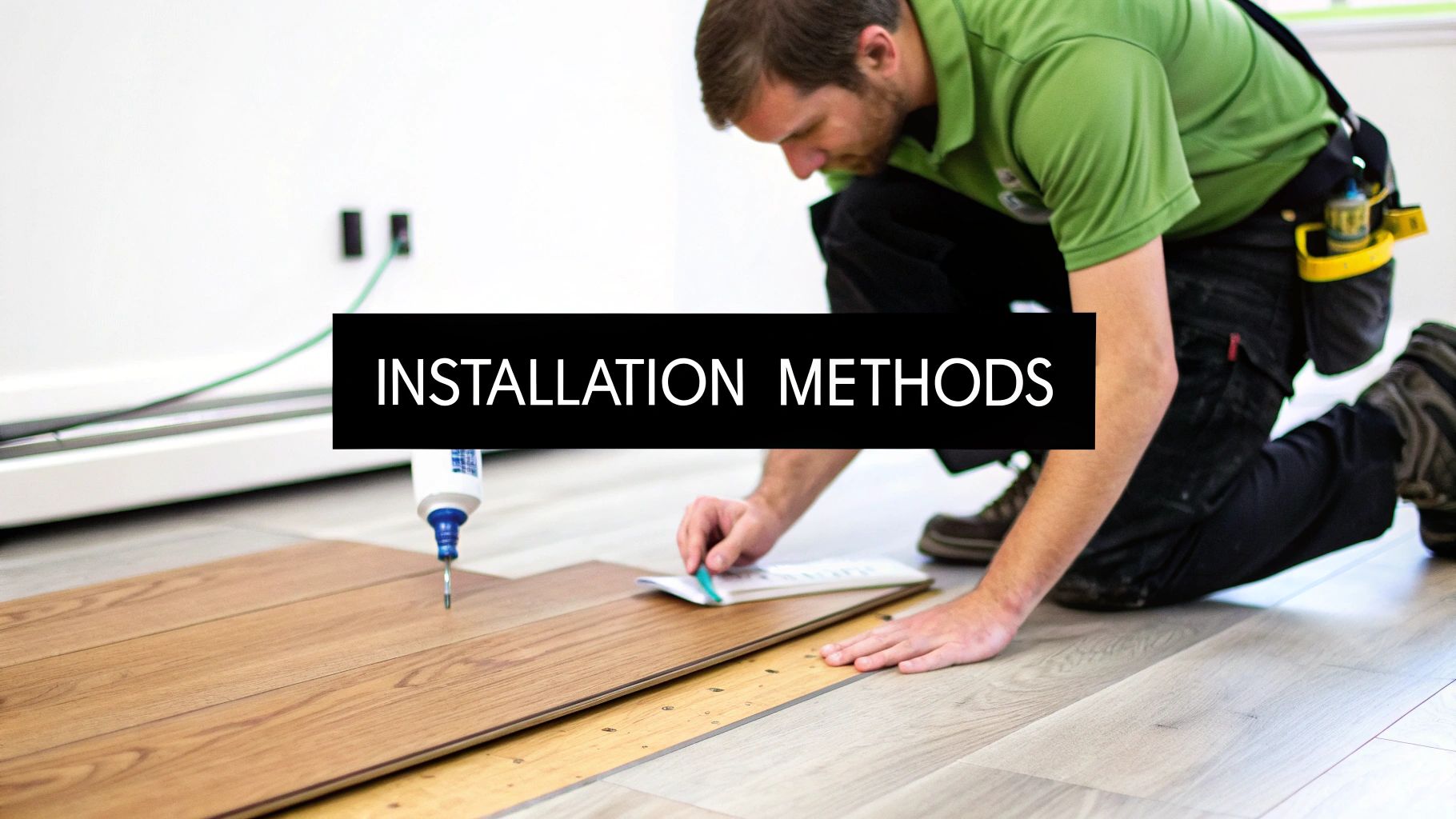
Picking out the perfect engineered hardwood is only half the job. How it gets installed is just as crucial for how it will look, feel, and last in your home. The right method is what makes a floor feel solid underfoot and stand up to daily life for years to come.
This is especially true here in North Georgia, where homes are built on all kinds of foundations. Knowing your options—floating, glue-down, or nail-down—means you can have a smart conversation with your installer about what’s best for your space. Your subfloor, whether it’s a concrete slab or plywood, is the number one thing that will point you toward the right technique.
The Floating Floor Method
Think of a floating floor like a giant, single sheet of wood that rests—or "floats"—right on top of your subfloor. It’s not actually fastened down. Instead, the planks are locked together, either with a click-lock mechanism or a classic tongue-and-groove system, creating one heavy, unified surface.
It's a really flexible and often quicker way to get the job done. We always roll out a thin underlayment first, which acts as a moisture barrier, adds a bit of cushion, and really helps to quiet things down.
- Best For: Putting new floors over old ones (like tile or vinyl), plywood subfloors, and level concrete slabs.
- Key Advantage: Since it’s not glued or nailed, the floor can expand and contract slightly with humidity changes, which is a big plus in our climate.
A floating floor is a go-to for DIYers and for second-story rooms where you want to minimize the sound of footsteps traveling downstairs.
The Glue-Down Method
If you want a floor that feels absolutely rock-solid, the glue-down method is the way to go. Here, a special flooring adhesive is spread across the subfloor with a trowel, and each plank is carefully pressed into it. This creates an incredibly strong, permanent bond.
This is the preferred method for the concrete slab foundations you see all over Forsyth County and Milton. By gluing the planks directly to the concrete, you get rid of that slight flex or hollow sound you might notice with a floating floor. It just feels premium.
The glue-down method basically turns your individual planks and the subfloor into a single, solid unit. That fusion creates exceptional stability and a quiet, high-end feel that so many homeowners love.
One word of caution: this method demands a perfectly flat, clean, and dry subfloor for the adhesive to work properly. It's a job best left to the pros.
The Staple-Down or Nail-Down Method
This is the old-school, traditional way of putting in wood floors. It’s a fantastic method, but it only works if you have a wooden subfloor, like plywood or OSB (Oriented Strand Board). You absolutely cannot nail or staple flooring into concrete.
Your installer will use a special flooring nailer to drive either staples or cleats through the tongue of each board, hiding the fastener while securing the plank to the wood subfloor below.
- Staple-Down: Uses heavy-duty, U-shaped staples for a tight grip.
- Nail-Down (Cleat): Uses L-shaped cleats. Some old-timers swear this allows the wood to move a bit more naturally over time.
Both give you a tough, secure floor that will last a lifetime. For homes with wooden subfloors, this remains a trusted and time-tested choice. Deciding what to do in trickier areas can be tough, which is why we put together a guide on the unique challenges of installing engineered hardwood in basement environments.
Choosing the right installation is the final, critical piece of the puzzle. When you understand how these methods work, you can make sure your beautiful new floors are set up for maximum durability and are perfectly suited for your home.
Why Engineered Hardwood Is a Perfect Match for Georgia's Climate
Living in North Georgia, we all know our weather is more than just polite conversation—it’s a real force that shapes how we build and live in our homes. The thick summer humidity that gives way to cooler, damp winters can be brutal on traditional solid hardwood floors. This is exactly where engineered hardwood steps in and shows its true strength.
Picture a solid wood plank. It's one solid piece. When the air gets humid, it soaks up moisture and swells. When things dry out, it shrinks back down. This constant cycle of expansion and contraction is what causes those dreaded problems like cupping, warping, and ugly gaps between boards. It's just what wood does, but it's a real headache for homeowners from Cumming to Johns Creek.
Built Tough for Humidity Swings
Engineered hardwood, on the other hand, is built completely differently. Its secret lies in its core, which is made of multiple layers of plywood stacked in a cross-grain pattern. Think of it like a sheet of lasagna—each layer runs perpendicular to the one below it. This construction creates a powerful internal tension that stops the wood from wanting to expand or contract.
This clever design means that while a solid wood floor is in a constant battle with our climate, engineered flooring stays put. It’s built from the inside out to handle the very environmental shifts that make solid wood a gamble in our part of the country.
Engineered hardwood isn't just an alternative to solid wood; it's a solution designed for our climate. Its layered core gives it the stability to handle Georgia's humid summers and mild winters, keeping your floor beautiful for years to come.
This built-in stability makes it the go-to choice for tricky installations, which are common in homes across Forsyth County and Milton. Think about laying floors directly over a concrete slab or finishing a basement—these are places where moisture is always a factor and where solid wood would likely fail.
A Smart and Sustainable Investment
Beyond just performing better, engineered hardwood is also a much more sustainable choice. Its manufacturing process is remarkably efficient, using 70-80% less solid timber from the slow-growing part of the tree for every square foot. For real estate agents, this is a huge selling point, as homes with sustainable features can often sell 10-15% faster. You can dig deeper into the market trends and growth factors for engineered wood at Straits Research.
In the end, choosing engineered hardwood is about getting the authentic, timeless beauty of real wood without its weaknesses. For homeowners here in Georgia, it’s about peace of mind. It’s knowing your floors aren’t just stunning to look at, but are also built to stand up to our local climate, year after year.
Maintaining Your Floors for a Lifetime of Beauty
You've made a significant investment in your home's character and value with new engineered hardwood floors. The good news? Protecting that investment is far easier than you might think. It’s less about hard work and more about smart, consistent habits that will keep your floors looking brand new for years, even decades.
The secret is all about proactive care. The biggest enemy to a beautiful finish isn't a major spill; it's the tiny, abrasive particles of dirt and grit that act like sandpaper underfoot, slowly dulling the surface over time. A simple, consistent routine is your best defense.
Everyday Care and Cleaning
When it comes to daily maintenance, think gentle. The best engineered hardwood floors don't need harsh chemicals or sopping wet mops—in fact, those are the quickest ways to damage the protective finish and even the core of the boards.
- Sweep or Vacuum Often: The goal is to get the grit up before it gets ground in. A soft-bristle broom or a vacuum with the beater bar turned off is perfect for picking up dust, pet hair, and daily debris.
- Choose the Right Cleaner: For deeper cleaning, stick with a pH-neutral cleaner specifically made for hardwood floors. Brands like Bona or Loba are industry favorites. Just lightly mist a section of the floor and go over it with a dry microfiber mop. Never soak the floor.
- Avoid Damaging Products: Stay far away from vinegar, ammonia, oil soaps, or any wax-based cleaners. These can eat away at the finish, leaving your beautiful wood exposed and vulnerable.
For more great advice that applies to all kinds of wood flooring, check out these essential tips for maintaining hardwood floors.
Preventing Scratches and Dents
Most floor damage happens slowly and quietly. It’s the daily grind of chair legs, furniture, and foot traffic that causes the most wear and tear. Thankfully, preventing it is incredibly simple.
Think of felt pads on furniture as tiny, silent bodyguards for your hardwood. They are the single most effective way to prevent a constant barrage of tiny scratches that can dull your floor's finish.
Take a few minutes to stick high-quality felt pads under every piece of furniture that touches the floor—chairs, tables, sofas, you name it. In high-traffic areas like entryways, hallways, and in front of the kitchen sink, laying down area rugs or runners can trap dirt right at the source and drastically reduce wear.
Understanding Refinishing Potential
One of the biggest selling points of a quality engineered hardwood floor is its ability to be renewed. Unlike laminate or vinyl, which have to be replaced once worn, many engineered floors can be completely sanded and refinished, wiping the slate clean.
It all comes down to the thickness of the top veneer—that slice of real hardwood. A plank with a wear layer of 3mm or more can typically be professionally sanded and refinished at least once, sometimes twice, over its lifetime. This process strips off the old, worn finish and any surface scratches, revealing fresh wood that can be stained and sealed again. It's a fantastic feature that ensures your floors can be a lasting centerpiece of your home for years to come.
Frequently Asked Questions About Engineered Hardwood
After digging into all the details, you probably still have a few questions rolling around in your head. That's perfectly normal. Think of this as the final once-over, where we tackle the common questions that pop up right before homeowners are ready to make a final decision.
Getting these last few details sorted out is what creates real confidence. So, let’s clear up any lingering uncertainties with straight answers to the things we hear most often from clients right here in Cumming and Forsyth County.
Is Engineered Hardwood Actually Real Wood?
Absolutely. This is the big one, the question we get asked more than any other, and the answer is a simple, resounding yes.
The part of the plank you see and walk on—that top layer—is 100% real hardwood. It's the same oak, hickory, or maple you'd find in a solid plank, with all the unique grain patterns and authentic texture.
The "engineered" part is the secret sauce underneath. It refers to the incredibly stable, multi-layered core that makes the flooring so tough. This core is what keeps the planks from warping or buckling in our humid Georgia climate, giving you the classic look of real wood without the classic headaches.
How Long Can I Expect Engineered Hardwood to Last?
A good quality engineered hardwood floor isn't a temporary fix; it's a long-term investment. With proper care, you can expect it to last 25 to 40 years, and sometimes even longer.
Its longevity really boils down to two things we've already touched on:
- Wear Layer Thickness: This is the most important factor. A thick wear layer (think 3mm or more) means you can sand and refinish the floor down the road, essentially hitting the reset button and giving it a whole new life.
- Finish Durability: The factory-applied finish, usually an Aluminum Oxide coating, is your frontline defense against scratches, scuffs, and daily foot traffic. A quality finish keeps the wood looking beautiful for years.
Here's a simple way to think about it: The wear layer determines how long your floor can last, but your maintenance routine determines how long it will last. A great product plus simple, consistent care is the secret to a floor that looks fantastic for decades.
Can I Install Engineered Flooring in My Kitchen?
You sure can. In fact, it's become one of the best choices for kitchens. For years, the conventional wisdom was to keep wood far away from kitchens and their potential for spills and humidity. Engineered hardwood flipped that script completely.
Its layered core construction is far more stable than solid wood, so it doesn't react as dramatically to the temperature and moisture swings that are just part of life in a busy kitchen.
Better yet, many top-tier engineered products now come with fully waterproof cores. This is a huge leap forward, offering serious protection against the inevitable splashes and spills. It makes engineered hardwood a fantastic option for kitchens, mudrooms, and even laundry rooms. While we'd still steer clear of full bathrooms with showers, this innovation brings the warmth of real wood to almost every other space in the house. For active families in Johns Creek and Milton, it's the perfect blend of timeless style and modern, real-world performance.
Ready to explore the best engineered hardwood options for your home in Cumming or Forsyth County? The team at Flacks Flooring has the expertise to guide you through every step, from selection to professional installation. Visit our showroom or schedule an in-home consultation today