
When you're trying to find the best flooring for a concrete slab, the answer always comes back to one thing: how well it handles moisture. For spaces that might get damp, like a basement, you absolutely need a waterproof champion. Think luxury vinyl tile (LVT), ceramic tile, or a tough epoxy coating. On the other hand, if you're working with a dry, climate-controlled slab, your options open up to include beautiful engineered hardwood or even specific types of carpet.
Choosing Your Best Flooring Over Concrete
A concrete slab is more than just a subfloor; it's the unique foundation that sets the rules for your flooring. I like to think of it like soil in a garden—the condition of that soil dictates exactly what you can grow. The biggest factor with concrete is its tendency to act like a sponge, pulling moisture up from the ground. This invisible water vapor is the arch-nemesis of most flooring, causing everything from warped planks to mold growth and total adhesive failure.
So, your choice isn't just about aesthetics; it's a strategic move to prevent future disasters. Getting it right from the start saves you a world of headaches and money down the road. Beyond moisture, you’ll also want to consider what the room is used for, how much foot traffic it gets, and how much time you're willing to spend on upkeep.
This decision tree gives you a great visual starting point. It all boils down to that first critical question: is your slab dry or is there a moisture issue?
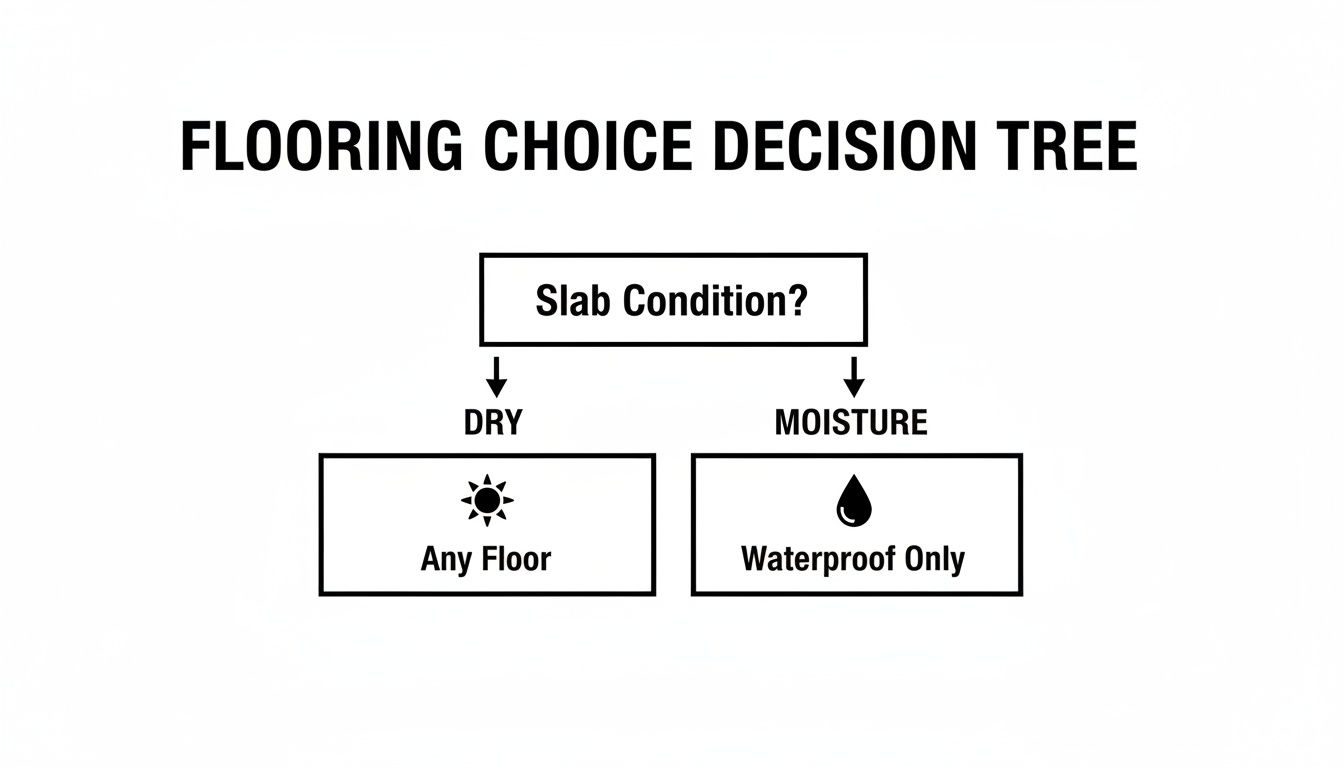
As you can see, a dry slab gives you a ton of freedom. But if there’s even a hint of moisture, you’re immediately funneled toward waterproof solutions.
Key Factors Guiding Your Decision
Before you fall in love with a specific material, let's ground your decision in the reality of the slab itself. Knowing how to choose flooring for your home is about more than just picking a pretty color; it’s about making a smart match between the material and its environment.
Here's what you need to zero in on:
- Moisture Levels: Is your slab above-grade (like on the main floor) or below-grade (a basement)? Below-grade slabs are almost always more prone to moisture problems.
- Intended Use: A bustling entryway needs something far more resilient than a quiet guest bedroom.
- Budget: The price range is huge. You can go from affordable polished concrete to premium engineered hardwoods.
- Comfort and Aesthetics: Are you after something warm and soft underfoot, or do you prefer a cool, sleek, modern finish?
The single biggest mistake we see is homeowners choosing a floor based on looks alone, without ever testing the concrete slab's condition. A beautiful floor that fails in a year isn't just a disappointment—it's a completely wasted investment.
To help you get started, this table gives you a bird's-eye view of the top contenders for concrete floors.
Top Flooring Options for Concrete Slabs at a Glance
| Flooring Type | Best For | Moisture Resistance | Average Cost (Material Only) |
|---|---|---|---|
| LVT / Vinyl | Basements, kitchens, bathrooms, high-traffic areas | Excellent (waterproof) | $2 – $7 per sq. ft. |
| Engineered Hardwood | Living rooms, bedrooms (on dry, sealed slabs) | Moderate (needs vapor barrier) | $4 – $12 per sq. ft. |
| Ceramic/Porcelain Tile | Any room, especially wet areas like bathrooms | Excellent (waterproof) | $2 – $15 per sq. ft. |
| Carpet | Bedrooms, living rooms (on dry, sealed slabs) | Low (can trap moisture) | $2 – $7 per sq. ft. |
| Epoxy Coating | Garages, basements, commercial spaces | Excellent (waterproof) | $3 – $8 per sq. ft. |
| Polished Concrete | Lofts, basements, modern living spaces | Excellent (sealer dependent) | $3 – $12 per sq. ft. |
This quick comparison should give you a good idea of where to begin your search. In the following sections, we'll dive deeper into each of these options to see what makes them tick.
Preparing Your Concrete Slab for New Floors
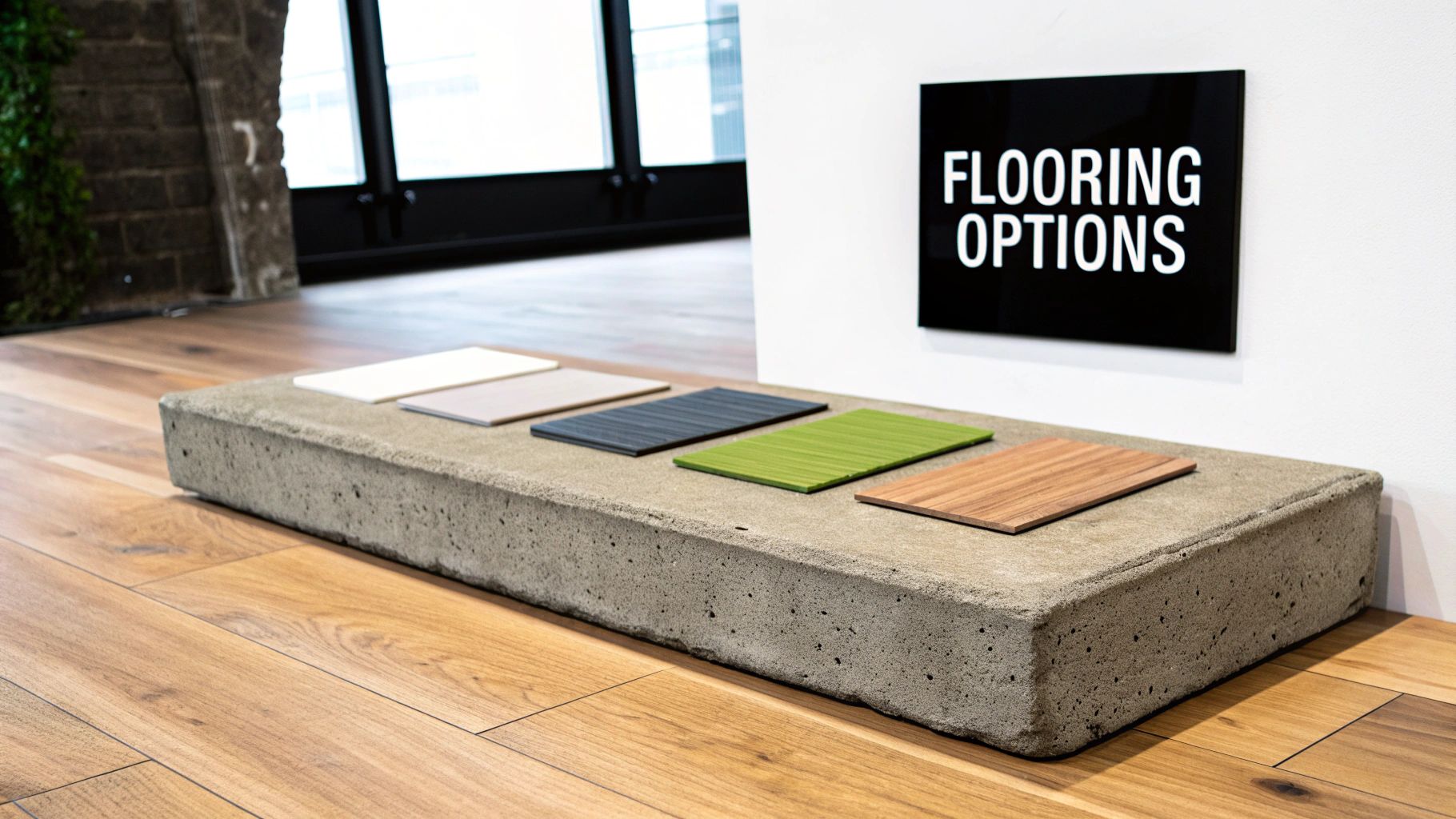
Think of your concrete slab as the canvas for your new flooring masterpiece. If that canvas is bumpy, damp, or dirty, even the most expensive flooring in the world won't look right or last long. Honestly, skipping the prep work is the single biggest—and most costly—mistake we see homeowners make. It almost always leads to flooring failure, frustrating repairs, and voided warranties.
The first and most critical hurdle is tackling the unseen enemy: moisture. Concrete is like a hard sponge; it can wick moisture up from the ground, which is a death sentence for most types of flooring.
The Simple Moisture Test You Cannot Skip
Before you even think about laying down a single plank, you have to find out if your slab has a moisture problem. The good news is that a simple, old-school DIY test can give you a clear answer.
- Cut a Square: Grab a piece of clear plastic sheeting, roughly 16×16 inches.
- Tape it Down: Securely tape all four sides of the plastic to a clean spot on your concrete floor. Use good-quality duct tape and make sure there are no air gaps.
- Wait and Watch: Now, just leave it alone for at least 24 hours.
- Check for Condensation: After the time is up, peel back the plastic. If you see water droplets on the underside of the plastic, you've got a moisture issue that needs to be solved before any flooring goes down. A dark patch of concrete under the plastic is another tell-tale sign.
A "dry-looking" slab doesn't mean it's free from moisture vapor. This simple plastic sheet test is a non-negotiable diagnostic that prevents catastrophic flooring failures down the road.
If you ignore this warning and install a non-waterproof floor, you're setting yourself up for disaster. For serious problems like a slab leak that can undermine the concrete itself, you'll need a professional. This guide offers excellent guidance on addressing slab leaks and house water damage repair.
Achieving the Perfect Foundation
Once you've cleared the moisture hurdle, it's time to get the slab physically ready. The goal is a surface that is perfectly clean, smooth, and flat. Even the best flooring on the market will fail if the foundation underneath is flawed.
-
Step 1: Clean Thoroughly
Start with a good sweep and vacuum to get rid of all the dust and debris. If there’s any old paint, glue, or sealer, that needs to come off, too. You want to get down to the bare, clean slab for the next steps to work properly. -
Step 2: Repair All Imperfections
Get down on your hands and knees and inspect the entire surface for cracks, chips, or divots. Fill any spots you find with a high-quality concrete patch or epoxy-based filler, then let it cure completely. A smooth surface is key to preventing those annoying bumps and hollow spots under your new floor. -
Step 3: Level the Surface
This is probably the most crucial step of all. Your floor needs to be flat within a tolerance of 3/16 of an inch over a 10-foot span. Anything more than that, and you’ll see planks separating, tiles cracking, and a floor that feels unstable and squeaky underfoot. Use a long, straight edge to find high and low spots. You'll need to grind down the high points and use a self-leveling compound to fill in the low areas. For a detailed walkthrough, check out our guide on how to level uneven floors.
Taking the time to get these prep steps right protects your investment and ensures your new floor will look incredible and perform perfectly for years to come.
A Deep Dive on Top Flooring Materials
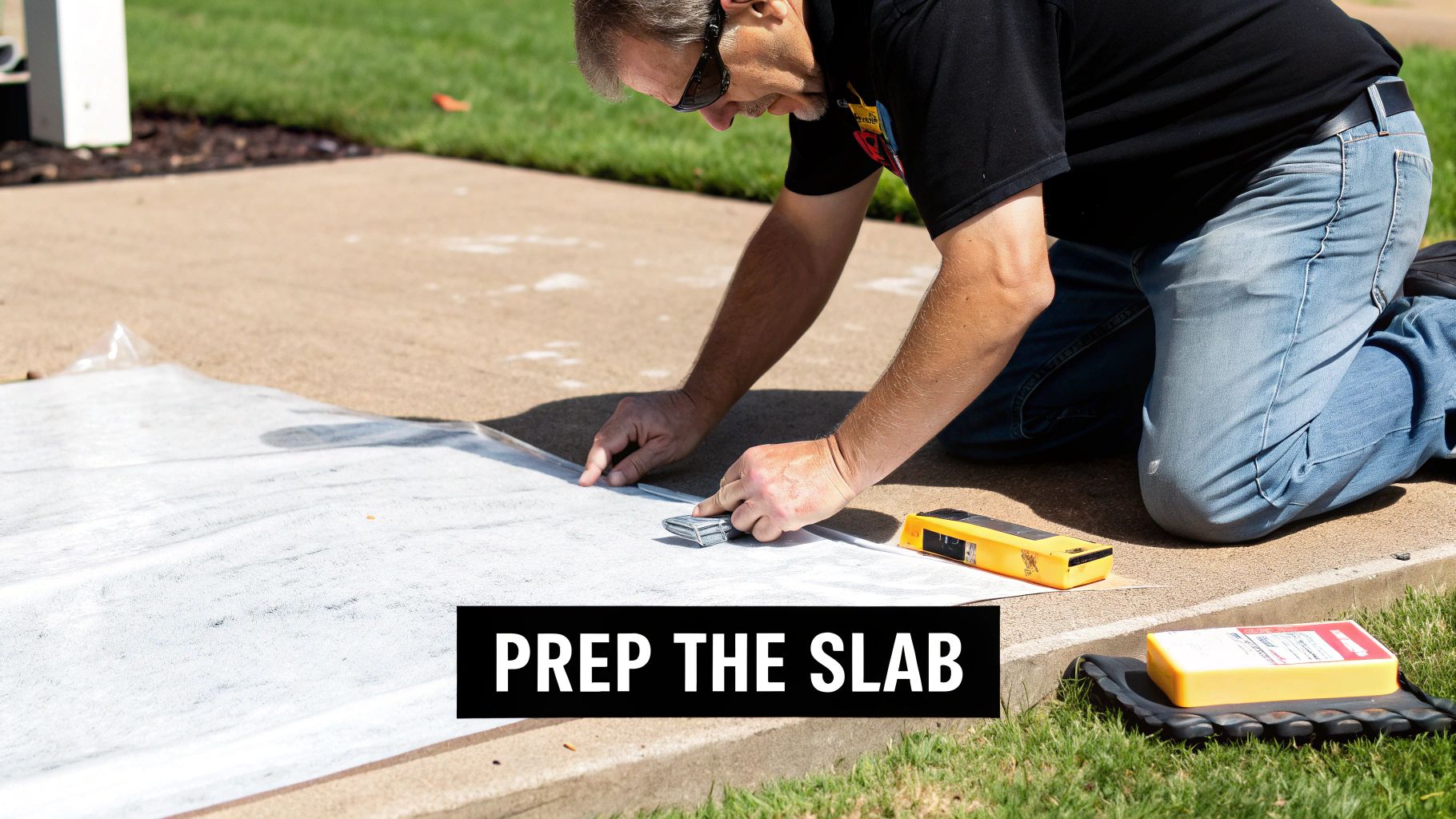
With a perfectly prepped concrete slab, you've set the stage for success. Now comes the fun part—choosing the floor that will define your space. Each option has its own personality and brings a unique set of strengths and weaknesses to the table, especially when installed over concrete.
This decision goes way beyond just picking a color. It's about matching a material’s fundamental nature to how you use the room and the realities of a concrete foundation. Let’s walk through the leading contenders and find the perfect fit for your project.
Luxury Vinyl Tile and Plank (LVT/LVP): The Waterproof Warrior
Luxury vinyl is, without a doubt, one of the most popular and practical choices for concrete slabs. It’s the perfect solution for moisture-prone areas like basements, kitchens, and bathrooms. Think of it as the all-terrain vehicle of the flooring world—it’s built to handle tough conditions with style.
Today’s LVT is a far cry from the old sheet vinyl you might remember. It offers shockingly realistic wood and stone visuals, all while being made from a 100% synthetic, multi-layered core. This construction makes it completely waterproof. It won't swell, warp, or fall apart when exposed to the kind of moisture vapor that concrete slabs are known for.
Luxury vinyl plank's waterproof core provides ultimate peace of mind over concrete. It directly counters the slab's primary weakness—moisture—making it a safe, durable, and stylish choice for virtually any room.
Most LVT and LVP products are installed as a floating floor. This means the planks simply click together and sit right on top of your concrete (with a vapor barrier underneath), no messy glues or nails required. It's a forgiving, fast, and DIY-friendly installation. For a closer look at what makes it tick, this guide explains what is luxury vinyl plank flooring.
Key Advantages of LVT on Concrete:
- Completely Waterproof: Its main job is to shrug off water, making it a no-brainer for basements and bathrooms.
- Durability: A tough, transparent wear layer fights off scratches, dings, and spills from kids, pets, and daily life.
- Comfort: It's much softer and warmer underfoot than something like tile, which makes a big difference in comfort.
- Easy Installation: The click-lock system makes installation a breeze, often saving big on labor costs.
Engineered Hardwood: The Authentic Wood Alternative
If you have your heart set on the timeless beauty of real wood, engineered hardwood is your go-to option for a concrete slab. Unlike solid hardwood, which is one solid piece of lumber, engineered planks feature a top layer of real hardwood bonded to a core of high-quality plywood.
This layered construction is the key to its stability. By alternating the grain direction in the core layers, the plank is much less likely to expand and contract with swings in temperature and humidity. It's this built-in resilience that makes it suitable for installation over concrete, where moisture is always a factor.
But let's be clear: engineered hardwood is water-resistant, not waterproof. That beautiful real wood veneer on top can still be damaged by puddles, and too much moisture wicking up from the slab can cause the layers to separate over time. A top-notch vapor barrier isn't just a suggestion; it's a requirement.
Installation usually happens in one of two ways:
- Floating Installation: The planks click together over a specialized underlayment, just like LVT.
- Glue-Down Installation: A powerful adhesive that doubles as a moisture barrier is used to bond the planks directly to the concrete.
Ceramic and Porcelain Tile: The Indestructible Classic
When it comes to pure, unadulterated durability, nothing beats tile. Whether ceramic or porcelain, these materials are made from clay fired at scorching temperatures, turning them into a rock-hard, non-porous surface.
Tile is completely unfazed by moisture from a concrete slab, making it a fantastic choice for bathrooms, kitchens, laundry rooms, and basements. It's also a designer's dream, with endless styles that mimic everything from natural stone to wood, plus countless patterns and colors. On top of that, it’s a breeze to clean and practically immune to scratches.
The trade-off is the installation. It’s a much more involved and less forgiving process than a floating floor. Tile has to be permanently bonded to the slab with thin-set mortar, which means your concrete has to be almost perfectly flat and free of cracks. Any movement in the subfloor can transfer right through, cracking your tiles or grout.
Things to Consider with Tile:
- Hardness: Its durability means it's very hard underfoot, which can be tough on your joints if you're standing for long periods.
- Cold Temperature: Tile feels cold, especially in a basement. You can solve this by installing an in-floor radiant heating system before laying the tile.
- Grout Maintenance: Grout is porous and can stain. It needs to be sealed periodically to keep it looking fresh and prevent mildew.
Carpet: The Comfort King
For bedrooms, living rooms, and cozy dens, it's hard to beat the warmth and softness of carpet. It’s a fantastic insulator, muffling sound and making any room feel more inviting. Installing carpet over concrete is common, but you have to get the moisture management right.
Think of carpet and its padding as a giant sponge. If moisture vapor rises from the slab, it gets trapped, leading to mold, mildew, and a musty smell that’s nearly impossible to get rid of.
To avoid this nightmare scenario, two things are essential:
- A high-quality vapor barrier must be laid down between the concrete and the carpet pad.
- The carpet pad itself should be synthetic and inorganic—materials that won't support mold growth.
Carpet is installed using tack strips fastened around the edge of the room. The pad goes down, and the carpet is stretched over it, locking into the tack strips. This tried-and-true method works perfectly on a properly sealed and prepared concrete slab.
Comparing Costs and Lifespan
Making the right choice also means balancing your budget with your long-term goals. The best flooring for your slab is one that delivers lasting value. Here's a quick look at how these options compare.
Flooring Cost and Durability Comparison
This table gives a clear breakdown of what you can expect to invest upfront and what you’ll get in return over the years.
| Flooring Type | Installed Cost / Sq. Ft. | Expected Lifespan | Key Maintenance Needs |
|---|---|---|---|
| LVT / Vinyl | $4 – $10 | 15-25 years | Regular sweeping and mopping with a pH-neutral cleaner. |
| Engineered Hardwood | $8 – $16 | 20-40 years | Dust mopping and cleaning with a wood-specific cleaner; may need refinishing once. |
| Ceramic/Porcelain Tile | $10 – $25 | 50+ years | Sweeping and mopping; periodic grout sealing to prevent stains. |
| Carpet | $4 – $9 | 5-15 years | Regular vacuuming and professional deep cleaning every 12-18 months. |
As you can see, tile offers incredible longevity but comes with a higher upfront investment. LVT strikes a fantastic balance of cost, durability, and performance, while carpet is a great budget-friendly pick for areas where comfort is king. Engineered hardwood is a premium choice that delivers authentic wood beauty, as long as the conditions are right.
What If the Floor Is the Foundation?
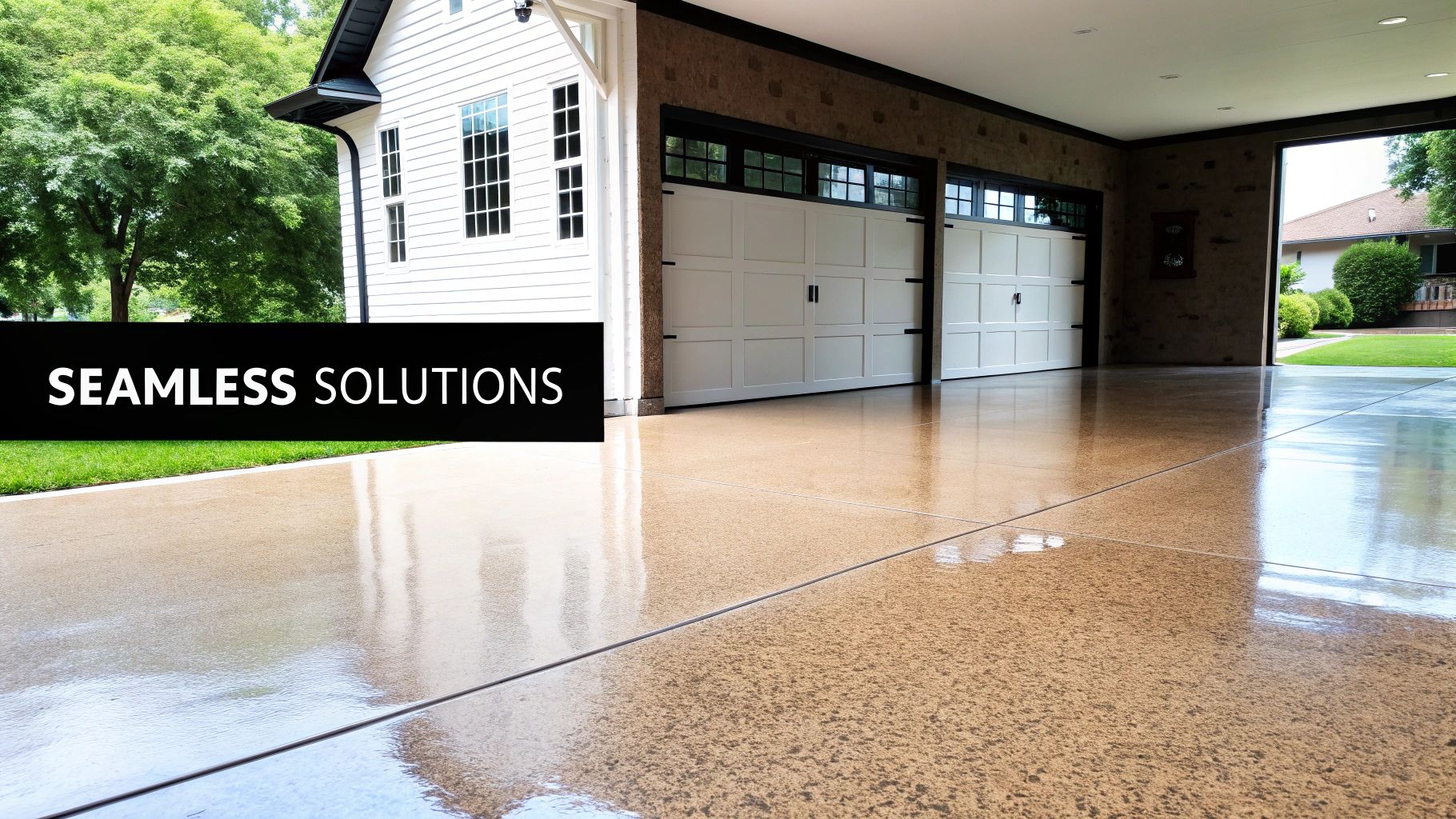
Sometimes the best flooring for a concrete slab isn't another material you lay on top—it's the slab itself, totally transformed. This is the whole idea behind seamless flooring. You’re not covering the concrete; you’re either coating it or refining it to create a tough, monolithic surface that’s one with its foundation.
Two major players dominate this space: epoxy coatings and polished concrete. They both give you that smooth, durable finish, but they get there in completely different ways. Figuring out that difference is the key to picking the right one.
Epoxy Coatings: A Liquid-Applied Suit of Armor
Think of an epoxy coating like a custom-fitted suit of armor for your concrete. It’s a two-part resin system that you mix and apply, causing a chemical reaction that bonds it directly to the slab. The result is an incredibly tough, non-porous, and protective layer.
This isn't just a coat of paint. It’s a thick, high-performance system you can customize with endless colors, patterns, and even decorative flakes to get a look that mimics granite or terrazzo.
Because it’s so resistant to chemicals, abrasion, and heavy impacts, epoxy has long been the champion for garages, workshops, and commercial settings. But its seamless, waterproof surface is also a fantastic, modern choice for basements, laundry rooms, and even kitchens.
Concrete floor coatings are a force in the market for a reason. In 2022, the global market for these systems hit US$ 1.3 billion, and it's easy to see why. A good coating can cut down on the dust from a bare slab by up to 90% and will often last 10-20 years with very little upkeep, making it a smart long-term investment. If you want to dive deeper into the market data, you can discover more insights about the concrete coatings industry.
Polished Concrete: Unlocking the Beauty Within
If epoxy is armor, then polishing concrete is like revealing the stunning natural stone that was hiding in the slab all along. This process doesn't add a layer on top. Instead, we use heavy-duty machines to mechanically grind the surface with progressively finer diamond abrasives until it reaches a smooth, almost mirror-like sheen. It’s a lot more like sanding a piece of fine wood than it is like painting it.
Part of the process involves applying a chemical densifier. This liquid soaks into the concrete and hardens it from the inside out, making it even stronger and more resistant to dust. What you’re left with is a sophisticated, minimalist floor that’s incredibly low-maintenance and hypoallergenic. With no grout lines or fibers, there's simply nowhere for dust, pollen, or other allergens to hide.
Polished concrete is not a coating; it's the concrete itself, refined to a level of beauty and strength. This makes it an exceptionally sustainable and long-lasting flooring solution, perfect for modern living spaces, lofts, and retail environments.
Why Go Seamless?
Both epoxy and polished concrete bring some serious advantages to the table, especially in high-traffic areas or places where moisture is a concern.
- Extreme Durability: These floors can take a beating. They stand up to heavy foot traffic, impacts, and spills without the chipping or scratching you might see with other materials.
- Effortless Maintenance: Cleaning is a breeze. With no seams or grout lines to scrub, a quick sweep and an occasional mop is all it takes to keep them looking brand new.
- Allergen-Free Surface: The non-porous nature of both options means dust mites, pet dander, and other allergens have no place to take root, which can significantly improve your indoor air quality.
- A Bold, Unique Look: From the industrial chic of polished concrete to the limitless design potential of epoxy, these floors make a strong visual statement that can define the entire feel of a room.
Making the Smartest Choice for Your Home
Picking the right floor for a concrete slab isn't just about comparing waterproof cores or installation specs. It’s about finding the right personality match for your family, your home, and how you actually live your life. The best floor is one that not only looks incredible but feels like a natural extension of your home.
Of course, everyone's "perfect floor" looks a little different. A growing family in Cumming, GA, with kids and pets has a completely different set of needs than a real estate agent staging a property for a quick sale in Milton. One needs something that can take a beating, while the other is focused on immediate wow-factor and return on investment.
Tailoring Your Choice to Your Life
Think of this as an investment in your home's daily comfort and practicality. Let’s walk through how different lifestyles point to different flooring solutions.
For the Busy Family
Life is messy. Your floor needs to be your ally in the daily battle against spills, dropped toys, and muddy paws. The name of the game is durability, easy cleanup, and safety.
- Luxury Vinyl Plank (LVP): This is the heavyweight champion for a reason. It’s waterproof, so you don't have to panic over every sippy cup spill. It's tough against scratches from dog claws and is softer underfoot than tile, which is a nice cushion for the inevitable tumbles.
- Epoxy Coating: If you’re finishing a basement playroom or a high-traffic mudroom, epoxy is practically indestructible. You get a seamless, bulletproof surface that you can just wipe clean.
- Low-Pile Carpet: For bedrooms or a cozy family room over a properly sealed slab, a quality low-pile carpet still offers unbeatable warmth and comfort.
A floor in a high-traffic family home needs to be more than just pretty; it must be a resilient surface that simplifies your life, not adds to your list of chores. For Forsyth County's active families, performance is key.
For the Style-Conscious Designer or Homeowner
When the look is everything, you're not just picking a floor—you're choosing a foundational design element. You want character, texture, and a premium feel that elevates the entire room.
- Engineered Hardwood: Nothing can truly replicate the authentic warmth and timeless appeal of real wood. It's a fantastic choice for living rooms and bedrooms on a well-prepared slab and adds serious property value.
- Polished Concrete: For that clean, minimalist, or industrial vibe in a Johns Creek loft, the sophisticated sheen of polished concrete is unmatched. It’s a bold design statement that becomes the star of the show.
- Porcelain Tile: The design possibilities here are truly endless. From massive, dramatic slabs to intricate, custom patterns, tile gives you complete creative freedom in kitchens, bathrooms, and entryways.
Considering Local Climate and Property Value
Here in the greater Cumming area, you can’t ignore the humidity. That moisture in the air has a knack for finding its way through concrete slabs, which makes proper subfloor prep an absolute must. A good vapor barrier isn't optional; it's essential, no matter which floor you choose. A high-quality installation is your best defense against humidity-related disasters down the road.
For real estate agents and contractors, the decision-making process has a few extra layers. An agent might lean toward LVP because it has mass appeal and looks great in listing photos. A contractor, on the other hand, is balancing the speed of a floating floor installation with the more labor-intensive (and costly) process of setting tile.
Understanding these different perspectives helps you choose the best flooring for your concrete slab—not just for today, but for a successful sale or a happy home for years to come.
Your Top Flooring Questions, Answered
Even when you think you have it all figured out, flooring projects have a way of throwing a few curveballs. Let's tackle some of the most common questions we get from folks right here in Cumming and Forsyth County. This is the stuff that often comes up right before you're ready to pull the trigger, and getting clear answers can make all the difference.
Think of this as a final gut-check to make sure you're heading in the right direction with complete confidence.
Can I Install Solid Hardwood Flooring Directly on a Concrete Slab?
In a word: no. I can't stress this enough—installing solid hardwood planks directly onto concrete is a recipe for disaster. Real wood is a natural material that expands and contracts with humidity. Concrete, on the other hand, constantly releases a small amount of moisture vapor. When the two meet, you get warping, cupping, and a whole lot of heartbreak.
If you love that classic wood look, engineered hardwood is your best friend. Its layered construction is specifically designed to be dimensionally stable, making it tough enough to handle the moisture conditions of a concrete subfloor. If you absolutely have your heart set on solid wood, the only proper way involves building a whole new plywood subfloor on top of a heavy-duty vapor barrier. It’s a major undertaking that adds significant cost and height to your floors.
What Is the Cheapest Way to Cover a Concrete Floor?
Working with a tight budget? No problem. You don't have to leave your concrete bare. The most wallet-friendly options usually involve either treating the concrete itself or using simple, DIY-friendly materials.
Here are the go-to solutions for getting the job done without breaking the bank:
- Paint, Stain, or Epoxy: A good coat of concrete paint or a simple epoxy kit is a fantastic low-cost way to seal the slab and inject some color and personality.
- Sheet Vinyl: For pure value, it's hard to beat sheet vinyl. It gives you a seamless, waterproof surface for a rock-bottom price per square foot, perfect for basements or utility rooms.
- Peel-and-Stick Tiles: Whether vinyl or carpet, peel-and-stick tiles are a DIY dream. The best part? If one gets damaged down the road, you just pop it out and replace it—no need to tear up the whole floor.
Do I Always Need a Vapor Barrier on Concrete?
Yes. Full stop. A vapor barrier isn't just a suggestion; it’s a non-negotiable part of almost every flooring installation over concrete. Your slab might feel completely dry to the touch, but it's always wicking trace amounts of moisture up from the ground. It’s an invisible process that will silently destroy your new floors from below and can lead to mold and mildew issues.
Think of a vapor barrier as cheap insurance for your expensive new floor. Skipping this $0.50 per square foot step can easily lead to a multi-thousand-dollar failure and will almost certainly void your flooring's warranty.
For floating floors like LVT, a 6-mil polyethylene sheet is the industry standard. For anything else, check the flooring manufacturer’s specs—they will tell you exactly what kind of moisture protection you need to use.
How Do I Know if My Concrete Slab Is Level Enough?
A flat, level slab is the foundation of any good flooring job. Get this wrong, and you'll end up with gaps between planks, cracked tiles, or that annoying hollow sound when you walk across certain spots. The industry standard is that your floor must be flat within 3/16 of an inch over a 10-foot span.
So, how do you check? Grab a long, straight 2×4 or a 10-foot level and lay it on the floor in various spots and directions. If you can slide a stack of three quarters (which is just under 3/16") under the board anywhere, you've found a low spot. Those low spots need to be filled with a self-leveling compound, and any high spots need to be ground down. It’s a tedious but absolutely critical step for a professional result that lasts.
Ready to find the perfect floor for your home in Cumming or Forsyth County? The experts at Flacks Flooring are here to help you navigate every step of the process, from slab preparation to final installation. Explore our wide selection of waterproof flooring, hardwoods, and more by visiting us online at https://flacksflooring.com.