
When you're trying to find the best flooring for high traffic areas, a few standout options consistently rise to the top: Luxury Vinyl, Porcelain Tile, and Engineered Hardwood. I've seen these materials perform time and again in both busy homes and commercial settings because they hit that sweet spot of incredible durability, easy upkeep, and modern style.
What Makes Flooring Great For High Traffic Zones
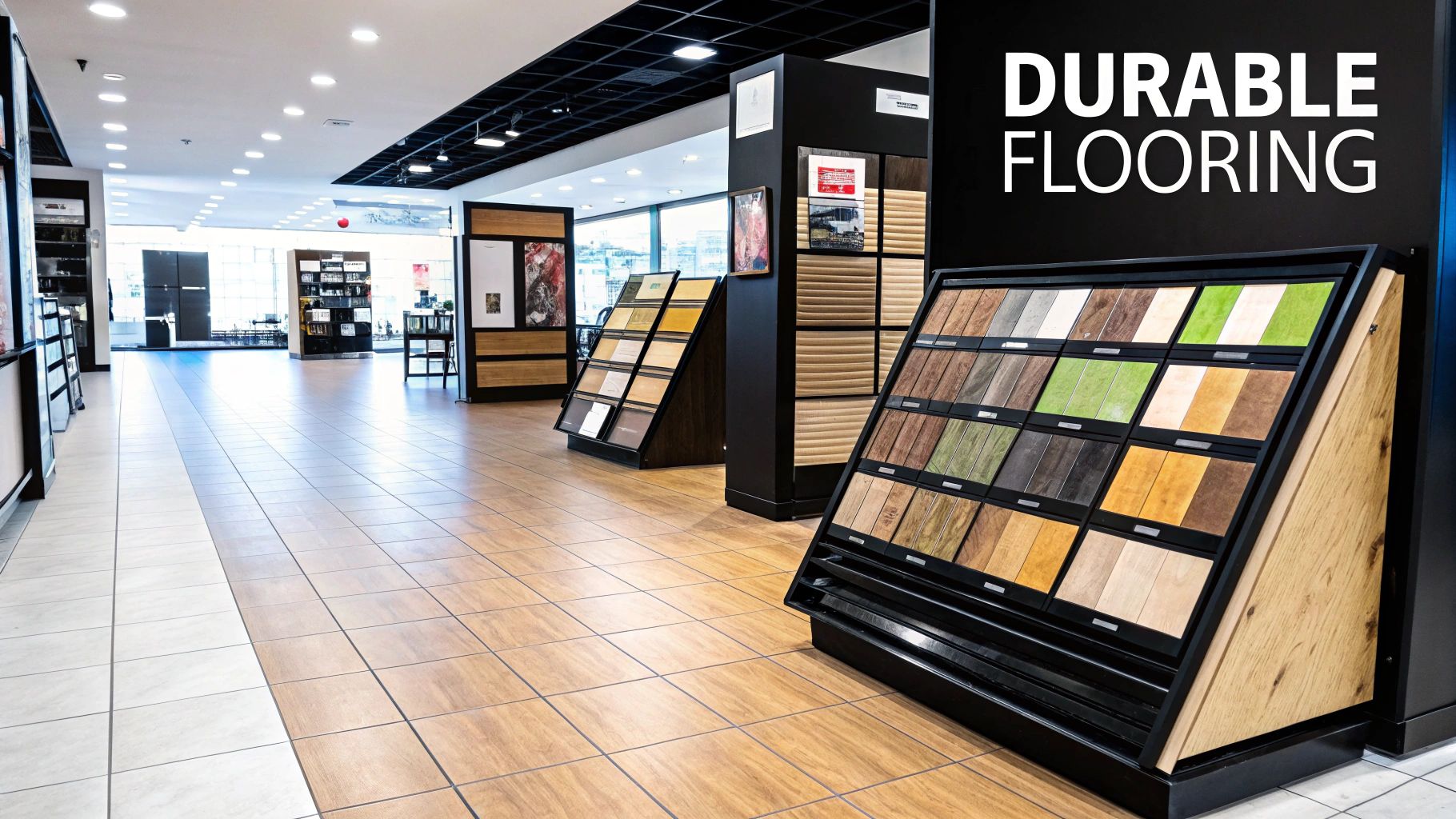
Picking the right floor for a high-traffic area is all about finding a surface that can take a beating and still look great. Think about the workhorses in your home or business—the entryways, hallways, kitchens, and lobbies. These spaces face a daily assault from heavy foot traffic, dirt, spills, and scuffs.
The perfect flooring has to do more than just look good when it's first installed. It needs to hold up for the long haul, year after year, without demanding a ton of your time and effort to keep it looking fresh.
Key Factors To Consider
When you're weighing your options, these are the non-negotiables:
- Durability and Scratch Resistance: The material absolutely must be tough enough to handle everything from pet claws and dropped keys to heavy furniture, all without showing every little scratch and dent.
- Ease of Maintenance: Let's be realistic—no one wants a floor that requires a complicated cleaning ritual. The best choices are non-porous and simple to wipe clean, shrugging off stains and spills with ease.
- Water Resistance: In places like kitchens, mudrooms, or entryways, moisture is a fact of life. You need a water-resistant or fully waterproof material to prevent common damage like warping, bubbling, or mold.
- Long-Term Value: While the initial price tag matters, true value comes from a floor that won't nickel and dime you with repair and replacement costs down the road.
To give you a clearer picture, I've put together a quick rundown of how the top contenders stack up in these demanding environments.
Quick Comparison of Top High Traffic Flooring
Sometimes you just need a quick, at-a-glance summary to get your bearings. This table offers a high-level summary of the most durable flooring types, helping you make a quick, informed decision.
| Flooring Type | Durability Rating (1-5) | Maintenance Level | Best For |
|---|---|---|---|
| Luxury Vinyl | 5 | Low | Kitchens, entryways, basements, and pet-friendly homes |
| Porcelain Tile | 5 | Low | Bathrooms, lobbies, and commercial spaces |
| Engineered Hardwood | 4 | Medium | Living rooms, hallways, and areas needing style |
This table helps narrow down the choices, but the best fit always depends on the specific demands of your space and your personal style.
Why Luxury Vinyl Is a Top Contender
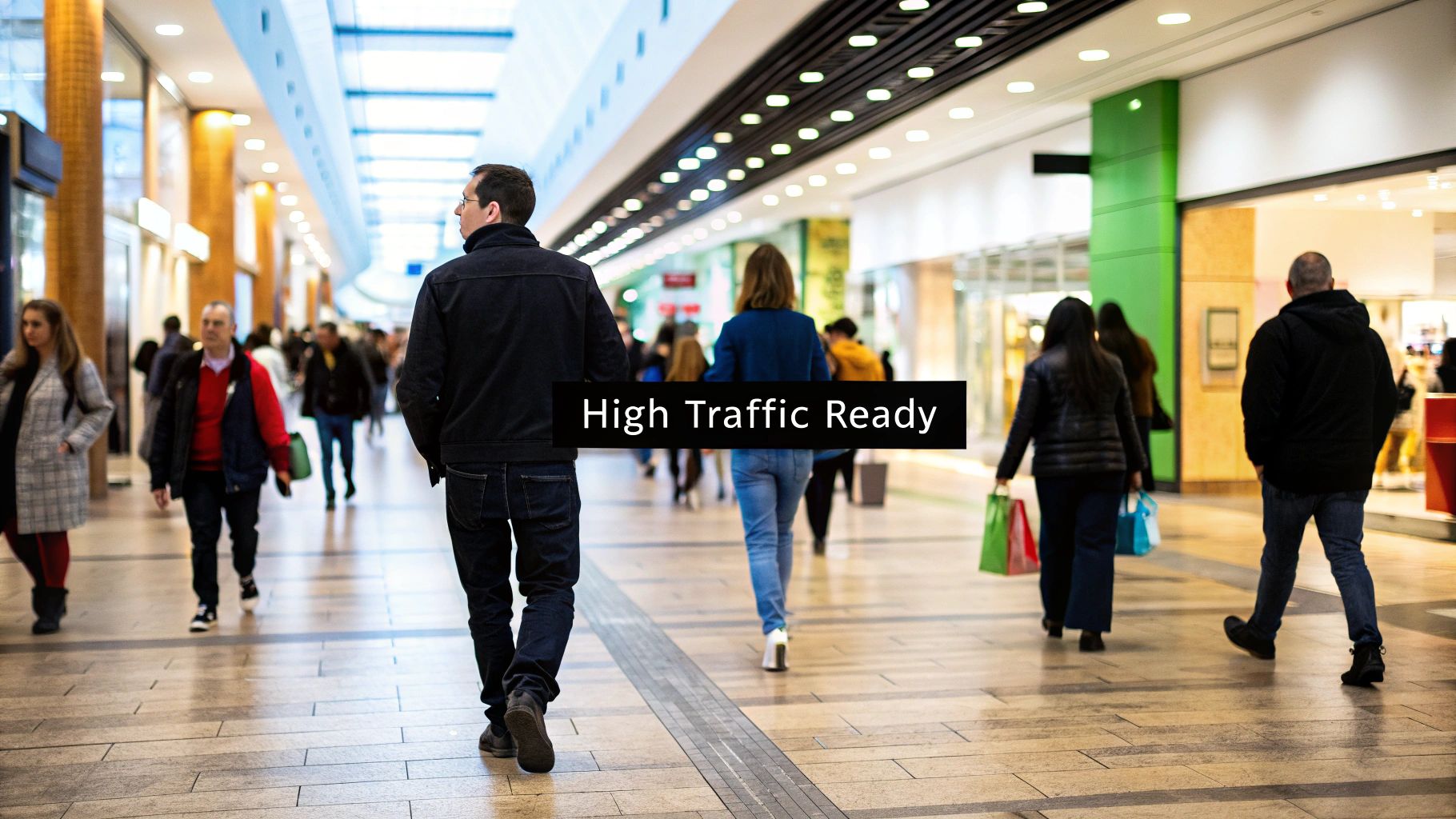
When people start looking for flooring that marries good looks with serious strength, Luxury Vinyl Flooring (LVF) almost always ends up at the top of the list. It comes in both plank (LVP) and tile (LVT) styles, and it’s built from the ground up to take whatever modern life throws at it.
The real secret to its toughness is its layered construction. The top is a transparent wear layer that acts as its bodyguard, fending off the scuffs, scratches, and spills that are just part of a busy home or office.
Unpacking Its Practical Advantages
Here’s a key difference: while a lot of flooring is just "water-resistant," most LVF products are actually 100% waterproof. This is a game-changer for moisture-prone spaces like kitchens, bathrooms, basements, and mudrooms. You can wipe up a spill without worrying about the planks swelling or staining.
That waterproof nature also makes it incredibly easy to maintain. A quick sweep and a damp mop every now and then is really all it takes to keep it looking fantastic. It's the perfect choice for anyone who loves a beautiful floor but doesn't want to sign up for a demanding cleaning regimen.
The real magic of LVF is that it convincingly mimics high-end materials like hardwood or stone, but without the premium price tag or the high-maintenance headaches. You get the best of both worlds—gorgeous aesthetics and everyday practicality.
Built for Real-World Demands
Luxury vinyl is known across the industry as one of the best options for high-traffic areas, and for good reason. It's just so durable and versatile. Thanks to its multi-layer engineering, including a high-density core and that protective wear layer, LVF is specifically designed to handle heavy foot traffic and resist scratches, dents, and stains. We see it used in demanding commercial spaces like offices and lobbies that handle thousands of footsteps a day.
For a homeowner, that same durability means your floor can handle the beautiful chaos of family life. Think about these common situations where LVF really shines:
- Busy Entryways: It shrugs off tracked-in dirt, wet boots, and the constant back-and-forth without showing its age.
- Family Kitchens: Spilled juice, dropped pans, and messes from pets are no match for its waterproof, scratch-resistant surface.
- Active Playrooms: It gives kids a durable surface for toys and games while being a bit softer underfoot than ceramic tile.
Its smart design truly makes it one of the best flooring for high traffic areas you can find today. If you want to get into the technical details, you can learn more about what luxury vinyl plank flooring is and see how its construction delivers such reliable performance.
The Unbeatable Resilience of Porcelain Tile
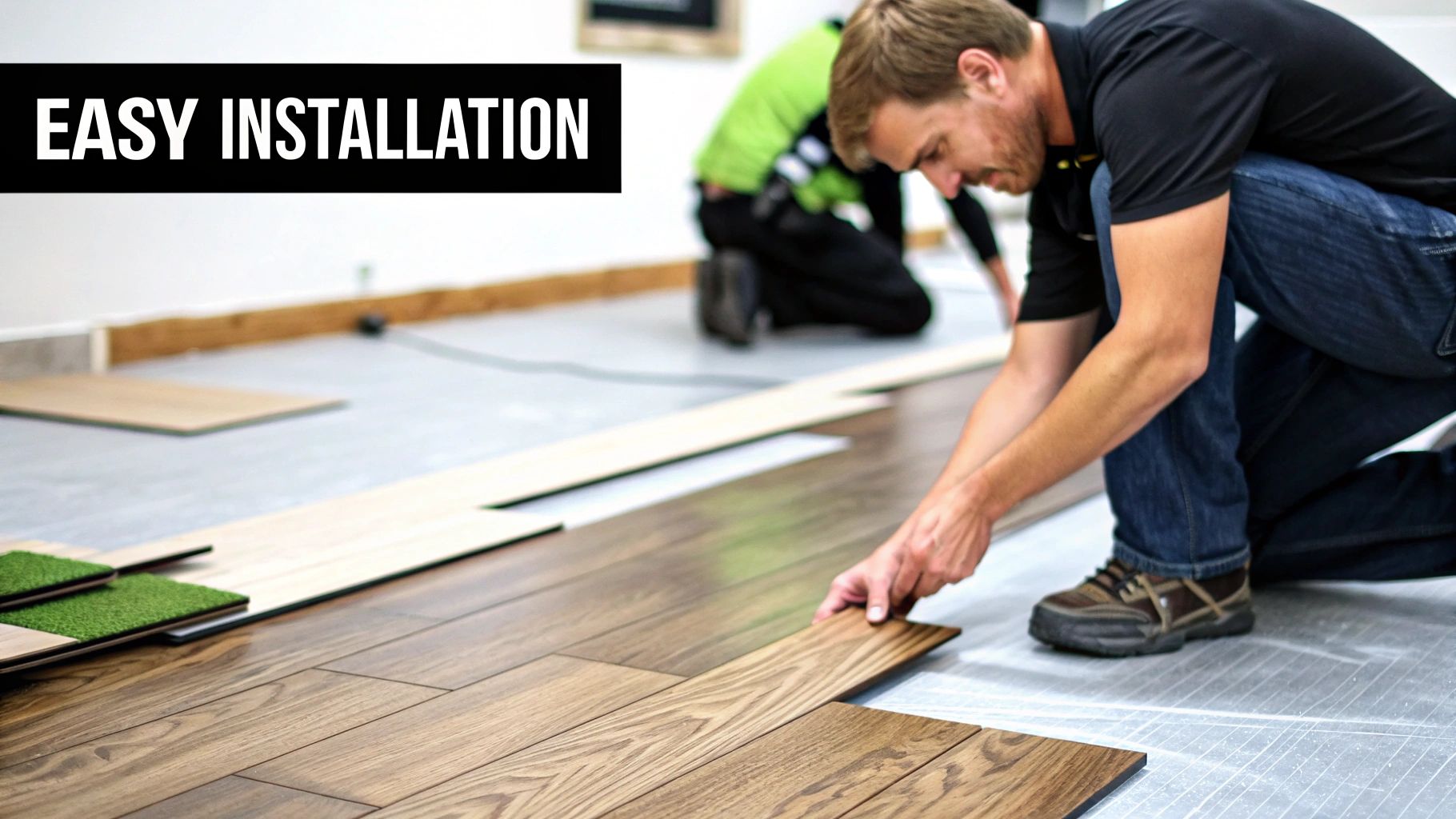
When the name of the game is sheer, uncompromising durability, porcelain tile is in a league of its own. It's a true powerhouse, engineered by firing refined clay at incredibly high temperatures to create a material that's exceptionally dense, hard, and non-porous.
Unlike a lot of other flooring, porcelain’s strength isn’t just skin-deep. The color and pattern run straight through the entire tile, which means that if you do manage to chip it, the damage is much harder to spot. This through-body construction is a major reason you see it in high-stakes commercial spaces like retail stores, airports, and hotel lobbies where the foot traffic is relentless.
Technical Strength in Practice
Those technical specs you hear about translate directly into real-world performance. One of the biggest advantages is its water absorption rate, which is typically below 0.5%. That makes it practically waterproof, shutting down any chance of moisture damage and making it a perfect fit for bathrooms, kitchens, and entryways.
That low porosity also means it's a champion at resisting stains. Spills like wine or coffee just sit on the surface, ready to be wiped away without a trace. It’s a floor that stays looking great for years with very little fuss.
Porcelain's reputation for handling heavy foot traffic isn't new; it's been the go-to for demanding commercial environments for decades. It resists scratches and scuffs far better than most other materials, making it a smart choice for any space that sees thousands of footsteps a day. You can learn more about its performance in our guide to high-traffic flooring performance.
The Importance of Professional Installation
For all its toughness, a porcelain floor is only as good as its installation. The material is so rigid and unforgiving that an uneven subfloor is its worst enemy. Any hollow spots underneath can lead to cracked tiles under pressure.
Professional installation isn't just a recommendation; it's an investment in the floor's long-term performance. Proper subfloor preparation and expert setting ensure the tiles are fully supported, preventing fractures and guaranteeing a flawless, durable surface for decades.
Putting the money into a quality installation pays for itself over and over. A porcelain floor that's been laid correctly can easily last for 50 years or more with nothing more than routine sweeping and mopping. For anyone who needs the ultimate in resilience, porcelain tile is arguably the best flooring for high traffic areas. It strikes that perfect balance of robust performance and timeless style that more than justifies the initial cost.
Comparing High Traffic Flooring Options Side By Side
Picking the right floor for a busy area means putting the top contenders head-to-head. It’s a balancing act between durability, style, and cost, and your final decision really hinges on what you value most. A direct comparison cuts through the noise and shows you which material can genuinely handle the demands of your space.
Let's get past the generic pros and cons and dig into the real trade-offs. We'll size up each option based on the things that truly matter: scratch resistance, ability to handle water, ongoing maintenance, and of course, the price tag.
Head-To-Head Durability Ratings
Sometimes a picture says it all. This chart lays out the durability scores for three of the most common high-traffic flooring choices, giving you a quick visual on how they stack up in terms of sheer toughness.
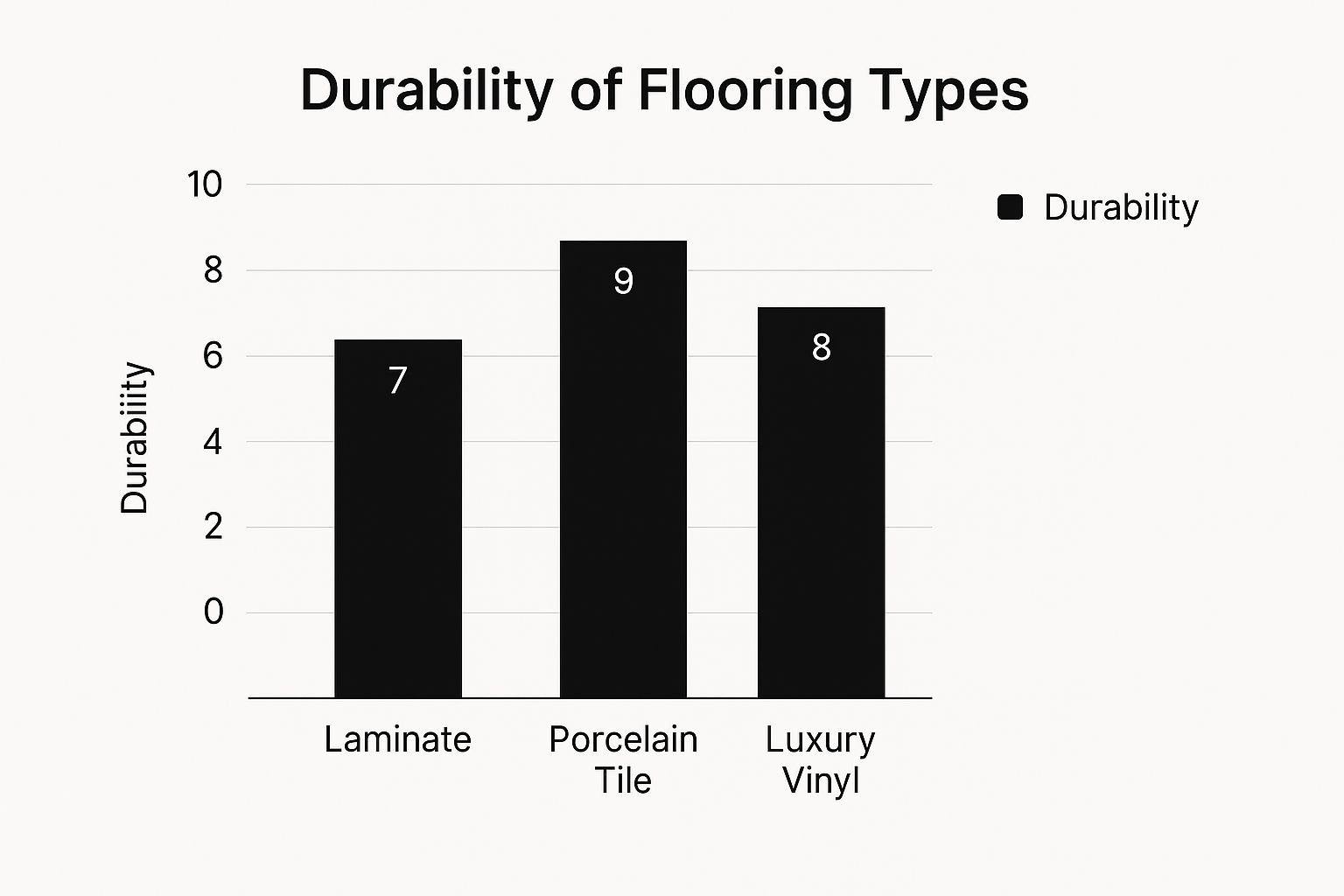
As you can see, porcelain tile is the clear winner for raw durability. But luxury vinyl and the newer laminates are right on its heels, proving to be incredibly resilient alternatives.
Detailed Flooring Performance Matrix for High Traffic Zones
To really see how these materials perform, a detailed breakdown is essential. This table compares the leading options across the most important metrics, helping you quickly spot which one aligns with your home, lifestyle, and budget.
| Flooring Material | Scratch Resistance | Water Resistance | Upfront Cost (per sq ft) | Long-Term Maintenance |
|---|---|---|---|---|
| Luxury Vinyl (LVF) | Excellent | Waterproof | $$ | Low |
| Porcelain Tile | Exceptional | Waterproof | $$$ | Very Low |
| Engineered Hardwood | Good | Moderate | $$$$ | Medium |
| Laminate | Very Good | High (Water-Resistant) | $$ | Low |
| Polished Concrete | Exceptional | High (When Sealed) | $$$ | Very Low |
The trade-offs become pretty clear when you see it all laid out. For instance, engineered hardwood gives you that classic, timeless beauty and can boost your home's resale value, but it demands a higher initial investment and more careful upkeep. Polished concrete, on the other hand, delivers an industrial-chic look with almost unbeatable durability for a moderate price, though it doesn't offer the same warmth underfoot.
The best choice almost always boils down to your specific environment and lifestyle. A busy household with kids and pets might lean toward luxury vinyl for its waterproof and scratch-proof qualities. A high-end retail shop, however, might choose polished concrete for its sleek, minimalist vibe and sheer toughness.
Analyzing the Nuances
The numbers in a chart don't tell the whole story. You have to think about the practical, day-to-day differences. Take two top performers: porcelain tile and luxury vinyl plank (LVP). Both are fantastic when it comes to water and scratches, but they feel completely different. Porcelain is incredibly hard and cool to the touch, which is part of why it lasts so long, but it can be uncomfortable to stand on for long periods.
LVP, in contrast, has a bit more give. It feels warmer and softer underfoot, which makes it more forgiving when you inevitably drop a glass in the kitchen. For a much deeper dive into how these two popular options compare, our guide on tile vs. wood flooring can give you more specific insights. Getting a handle on these subtle differences is what helps you make a choice you’ll be happy with for years.
Matching Flooring to Your Specific Needs
Technical specs are one thing, but the best flooring for a high-traffic area is the one that actually works in your real-world environment. A floor’s performance is all about context. So, let's get past the numbers and look at some practical scenarios to help you picture the right fit for your space.
Every home and business moves at its own pace. What works perfectly in one high-traffic spot might be a disaster in another.
For the Bustling Family Home with Pets
If your home is a hub of activity with kids and pets, your flooring needs to be a serious multitasker. It has to stand up to everything from spilled juice and muddy paws to dropped toys and the constant patter of feet (and claws).
In this kind of joyful chaos, Luxury Vinyl Plank (LVP) is almost always the undisputed champion. It just makes sense.
- Ultimate Durability: That top wear layer is incredibly tough, fending off scratches from dog nails and scuffs from daily life.
- 100% Waterproof: Spills, water bowl splashes, and accidents are no big deal. Cleanup is a breeze, and you don’t have to worry about water damage.
- Softer Underfoot: LVP has a bit more give than something like tile. It’s more comfortable for kids playing on the floor and a lot easier on your pets' joints.
This blend of toughness, water resistance, and comfort makes LVP a go-to choice for kitchens, hallways, and living rooms in any busy family home.
For the High-End Commercial or Retail Space
Think about a boutique, a salon, or an office lobby. These places need flooring that looks sophisticated but is also practically bulletproof. It has to endure hundreds of people a day, rolling carts, and constant cleaning without batting an eye.
For this kind of demanding job, Porcelain Tile is the clear winner. Its incredible density and non-porous surface make it extremely resistant to scratches, stains, and moisture. It instantly conveys a sense of quality and permanence, which really elevates the customer experience while being surprisingly low-maintenance in the long run.
Choosing porcelain tile is an investment in both your brand image and your operational sanity. It holds up under constant commercial stress, keeping your space looking professional and new for years, which more than justifies the initial cost.
For the Elegant and Frequently Used Living Room
Now, what if you need a floor that balances classic style with real-world durability? Consider a living room or great room where you host parties and gatherings. You want the timeless warmth of wood but need it to handle guests, furniture being moved around, and steady traffic.
This is where Engineered Hardwood really shines. You get the authentic, beautiful look of a real wood top layer, which adds so much character to a room. But underneath, its layered core provides much more stability than solid hardwood, making it less likely to warp with changes in temperature or humidity.
It strikes the perfect balance, giving you that high-end look without the fragility of traditional wood. This makes it one of the best flooring for high traffic areas when style is just as important as strength.
Installation and Maintenance: The Keys to a Floor That Lasts
Picking a tough material is only half the battle. To get a floor that truly lasts, you need a flawless installation and a smart maintenance routine. Even the most durable flooring options for high-traffic areas can fail if they're not installed or cared for correctly.
Everything starts with the subfloor. For something rigid like porcelain tile, an uneven subfloor is a recipe for disaster—it's the number one reason tiles crack under pressure. Similarly, engineered hardwood has to be fitted perfectly to avoid gaps that can lead to warping down the road.
This is exactly why professional installation is more than just a convenience; it's a critical investment in your floor's future.
Your Flooring's Care and Feeding Guide
Once your floor is down, the right cleaning habits will protect its finish for years. Every material is different, and using the wrong products or methods can cause permanent damage. A generic approach just won't cut it.
Take luxury vinyl, for example. It's famously easy to care for, but if you use harsh, abrasive cleaners, you’ll slowly strip away the protective wear layer that keeps it looking great. A simple, pH-neutral cleaner is all it takes. We've got a whole guide on this, showing you how to keep vinyl floors looking new with the right daily habits.
People often mistake "durable" for "maintenance-free," and that’s a critical error. While these floors are lower-effort, they still need the right kind of care. Sealing the grout lines on your porcelain tile, for instance, is what stops stains and moisture from ruining that clean, uniform look.
Here are a few pointers for some of the most popular materials:
- Engineered Hardwood: A microfiber mop and a cleaner specifically made for hardwood are your best friends. Stay away from steam mops—the heat and moisture can delaminate the wood veneer.
- Porcelain Tile: Regular sweeping or vacuuming is a must to get rid of grit that can scratch the surface. When you mop, just use a mild detergent and make sure to rinse with clean water to prevent a dull film from building up.
- Luxury Vinyl: Keep it simple. Sweeping and damp mopping are usually all you need. Avoid any kind of wax or polish, as they just create a sticky, dull buildup over time.
When you match a high-quality material with expert installation and a consistent maintenance plan, you get a floor that can handle constant foot traffic and still look fantastic for decades.
Common Questions About High Traffic Flooring
Every home has its own rhythm—whether it’s kids racing down the hall, muddy paws at the door, or guests mingling in the kitchen. To help you make an informed decision, here are straightforward answers to the most frequent questions about flooring that stands up to heavy use.
What Is the Most Scratch-Resistant Flooring for Homes With Large Dogs?
When you’ve got big dogs roaming around, durability is non-negotiable. Two materials rise to the top:
- Porcelain Tile: Thanks to its extreme hardness, it’s virtually scratch-proof and won’t show claw marks.
- Luxury Vinyl Plank (LVP): Opt for a 20 mil+ wear layer and you’ll get excellent scratch resistance plus a warmer, softer surface underfoot—something pets tend to prefer.
Is Solid Hardwood a Bad Choice for High Traffic Areas?
Not at all—but you do need to choose wisely. Harder species like hickory or white oak will hold up far better than softer woods such as pine. And remember, solid hardwood can be sanded and refinished multiple times to erase scratches. Just be mindful of moisture near entryways and spills in busy spots like the kitchen.
The wear layer is the single most important factor for vinyl flooring's durability. For high-traffic residential areas, a minimum of 12 mil is recommended. For commercial applications or very busy homes, 20 mil or thicker is essential.
Ready to find a floor that balances style and resilience? The experts at Flacks Flooring are here to guide you. Visit our showroom or schedule an in-home consultation today!