
When it comes to the best flooring for a living room, most people find themselves deciding between three heavy hitters: hardwood for its timeless appeal, luxury vinyl plank (LVP) for its incredible durability, and carpet for pure, simple comfort. The right answer for you lies at the intersection of your family's lifestyle, your design vision, and your budget. It's about finding that sweet spot where beauty and practicality meet.
Finding the Foundation of Your Home
Think of your living room floor as the stage where your life unfolds. It’s the backdrop for movie nights, the playground for kids, and the first thing guests see when they walk in. Picking the right surface is a lot like choosing a car; a two-seater sports car looks amazing, but it’s not the best choice if you’re hauling a family around. There’s no single “best” floor—only the one that’s best for you.
This is a decision that forces you to balance your dream aesthetic with the realities of daily life. A floor doesn't just need to look good; it has to stand up to everything your household throws at it, from muddy paws and spilled juice to the constant shuffle of feet.
Balancing Style with Everyday Life
To find your perfect match, you really have to think about how you live. Each of the main contenders brings something different to the table:
- Hardwood: You just can't beat its classic beauty. It's an investment that adds real value to your home, but it does ask for a bit more care.
- Luxury Vinyl: This stuff is tough. It offers surprisingly realistic wood and stone looks with the durability to handle kids, pets, and high traffic without breaking a sweat.
- Carpet: Nothing beats the warmth and softness of carpet underfoot. It makes a room feel instantly cozy and does a great job of muffling sound.
- Tile: For longevity and a clean, modern look, tile is hard to top. The trade-off is that it can feel cold and hard.
This decision is a big one, and homeowners are clearly taking it seriously. In fact, the residential flooring market is projected to make up nearly 50% of the entire flooring industry by 2025. This shows just how much people are prioritizing creating homes that are both stylish and comfortable. We're also seeing a big shift toward materials that feel natural and are sourced sustainably. If you want to dive deeper, you can learn about flooring industry trends and see what's driving these changes.
At the end of the day, you want a floor that looks fantastic the day it's installed and continues to perform beautifully for years to come. Getting to know the core strengths of each material is the key to making a choice you'll be happy with.
To make things a bit simpler, here's a quick rundown of the most popular choices and what they do best.
Living Room Flooring At a Glance
| Flooring Type | Best For | Durability | Average Cost (per sq. ft.) |
|---|---|---|---|
| Solid Hardwood | Timeless style, increasing home value, and longevity | Good | $8 – $25 |
| Engineered Wood | Resisting humidity changes, versatile installation options | Very Good | $5 – $15 |
| Luxury Vinyl (LVP) | Homes with pets and kids, moisture resistance, easy maintenance | Excellent | $3 – $10 |
| Carpet | Comfort, warmth, and sound absorption | Fair | $2 – $12 |
| Laminate | Budget-friendly wood looks and scratch resistance | Good | $2 – $8 |
| Porcelain Tile | Extreme durability and modern aesthetics | Excellent | $10 – $35 |
This table gives you a starting point, but remember that the "best" option always comes down to what works for your specific home and lifestyle.
The Timeless Appeal of Hardwood Floors
Let’s be honest, when you close your eyes and picture a beautiful, classic living room, you’re probably picturing hardwood floors. It’s the undisputed champion of timeless design for a reason. Hardwood brings a natural warmth and character into a room that other materials just can't seem to match. Think of it as more than just a floor; it's a long-term investment that can genuinely boost your home's resale value.
But "hardwood" isn't just one thing. You'll mainly run into two options: solid and engineered. Getting to know the difference is the first big step in picking the right one for your space.
Imagine a single, thick plank of wood—that's solid hardwood. Now, picture a high-tech sandwich made of multiple wood layers with a slice of real, beautiful hardwood right on top. That's engineered hardwood.
Solid vs. Engineered Hardwood
Solid hardwood is the original, the classic. Its biggest selling point is its incredible lifespan. Because it's the same wood all the way through, you can sand it down and refinish it over and over again. We're talking about erasing decades of scuffs and scratches, making the floor look brand new. A well-cared-for solid floor can easily last for generations.
Then there's engineered hardwood, which is all about stability. Its layered construction is a game-changer because it resists the natural tendency of wood to swell or shrink with changes in temperature and humidity. This toughness means you can install it in places where solid wood would be risky, like over a concrete slab or in a basement.
The choice between solid and engineered often boils down to your home's climate and your own plans. If you live somewhere with big humidity swings, engineered wood gives you that authentic look without the worry.
Understanding Wood Species and Hardness
After you've picked your construction type, the fun part begins: choosing the species of wood. This decision is about more than just color; it’s about durability and personality.
- Oak (Red and White): This is the go-to for a reason. It's known for its strong, visible grain and fantastic durability, making it a workhorse that fits in anywhere, from a rustic farmhouse to a modern condo.
- Walnut: If you're going for a touch of luxury, look no further. Walnut is famous for its rich, dark chocolate tones and elegant, flowing grain that creates a sophisticated vibe.
- Hickory: As one of the hardest domestic woods out there, Hickory is incredibly tough and resistant to dents and dings. Its bold color variations also bring a lot of rustic character to a room.
How do we measure all this toughness? Pros use something called the Janka hardness scale. It's a test that measures how much force it takes to press a small steel ball into the wood. The higher the Janka number, the more resistant the wood is to dings and dents.
To put it in perspective, Brazilian Walnut is a tank with a score of 3,684, while the softer, more elegant Black Walnut comes in at 1,010. For a more detailed look at your options, this guide on how to choose hardwood flooring is a great resource.
No matter which you choose, remember that hardwood floors, while stunning, do need some love and care to protect them from scratches and moisture. But with a little attention, that timeless beauty will last a lifetime.
Why Resilient Flooring Is Taking Over
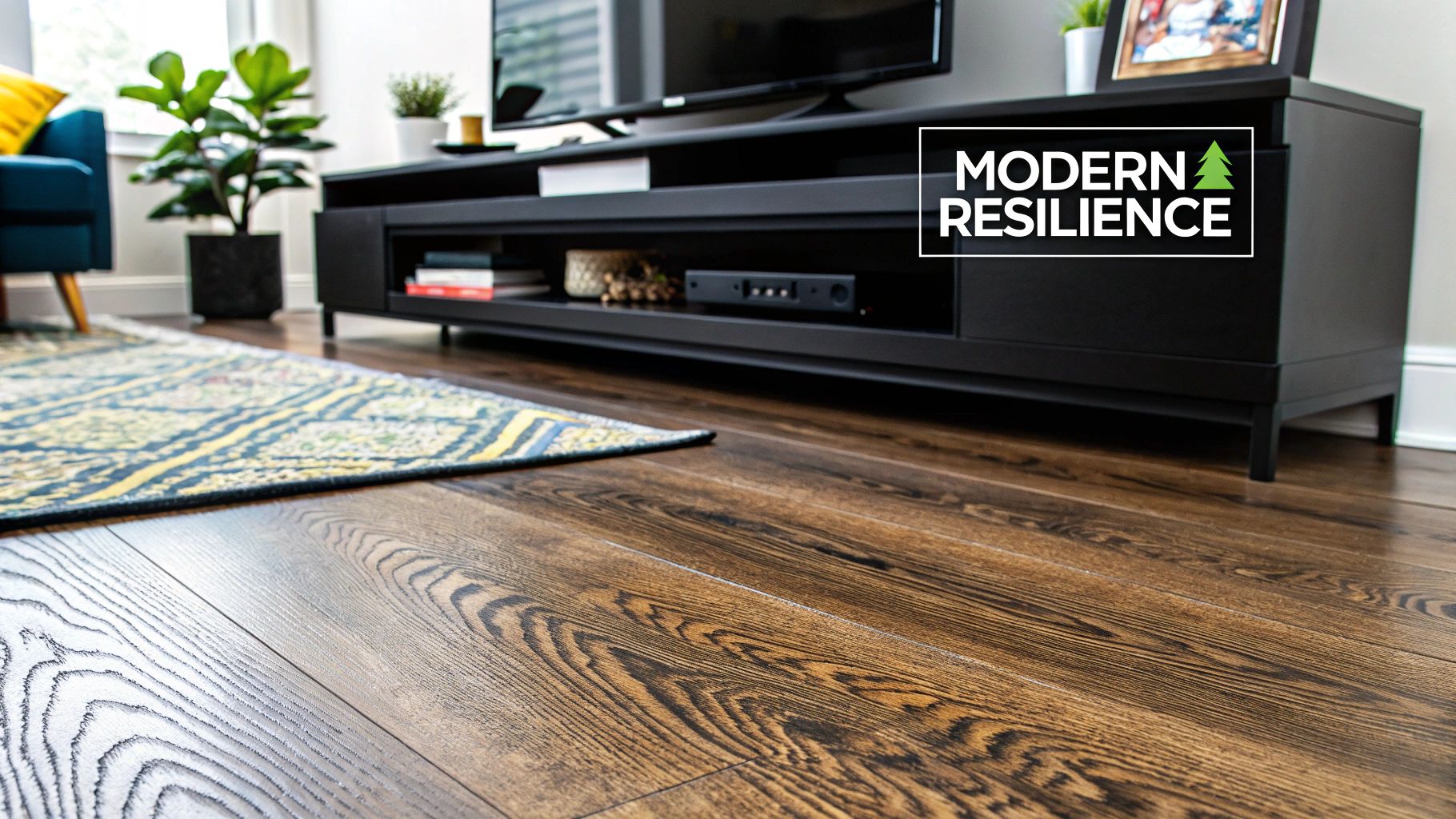
If you've been flooring shopping recently, you've probably heard two names pop up again and again: Luxury Vinyl Plank (LVP) and laminate. These materials have absolutely exploded in popularity, and for good reason. They fall under the "resilient flooring" category, which is just a way of saying they offer the gorgeous look of hardwood or stone without the demanding maintenance or sky-high cost. For busy, modern households, they're a total game-changer.
At a quick glance, it can be tough to spot the difference between LVP and laminate, but what they're made of sets them apart. LVP's superpower is that it's typically 100% waterproof from top to bottom. Spills, muddy paws, and wet shoes are no match for it—the planks simply won't swell or warp. It's a huge relief for anyone with kids or pets. Laminate is more water-resistant than truly waterproof, but its tough-as-nails surface is more than capable of handling the daily chaos of family life. If you want to get into the nitty-gritty, you can learn what luxury vinyl plank flooring is and see why it’s become such a go-to option.
The Power of the Wear Layer
Think of the top surface of your flooring like the screen protector on your phone. It's a clear, tough wear layer that takes all the abuse so the beautiful design underneath stays pristine. This is your floor's first line of defense against scratches from furniture, scuffs from shoes, and even fading from sunlight.
The thickness of this layer, measured in mils (a thousandth of an inch), is probably the single most important factor for durability. For a living room that gets a lot of use, you'll want to look for a wear layer of at least 12 mil. If your living room is the central hub of your home, stepping up to 20 mil or more gives you commercial-grade toughness that can handle just about anything.
Unbelievable Realism Through Technology
So, why are LVP and laminate suddenly everywhere? It all comes down to how incredibly realistic they’ve become. Using high-definition printing, manufacturers can now perfectly capture the subtle grain patterns, knots, and textures of real wood. The level of detail is so convincing that you’d have to get on your hands and knees to tell it’s not genuine hardwood.
This leap in technology means you can get the exact aesthetic you're dreaming of—from a rustic, reclaimed barn wood to a clean, Scandinavian oak—with performance that real wood just can't match.
Interestingly, shifts in the global market have pushed this innovation even further. As tariffs on certain imported goods increased, American manufacturers doubled down, investing in better technology to create superior products right here at home. This has resulted in flooring with fewer repeating patterns, giving your living room a much more natural, authentic look. Homeowners are the real winners here, with access to more beautiful, durable, and higher-quality flooring than ever before. You can read more about how the resilient flooring market adapts on floortrendsmag.com.
Making the Case for Carpeted Living Rooms
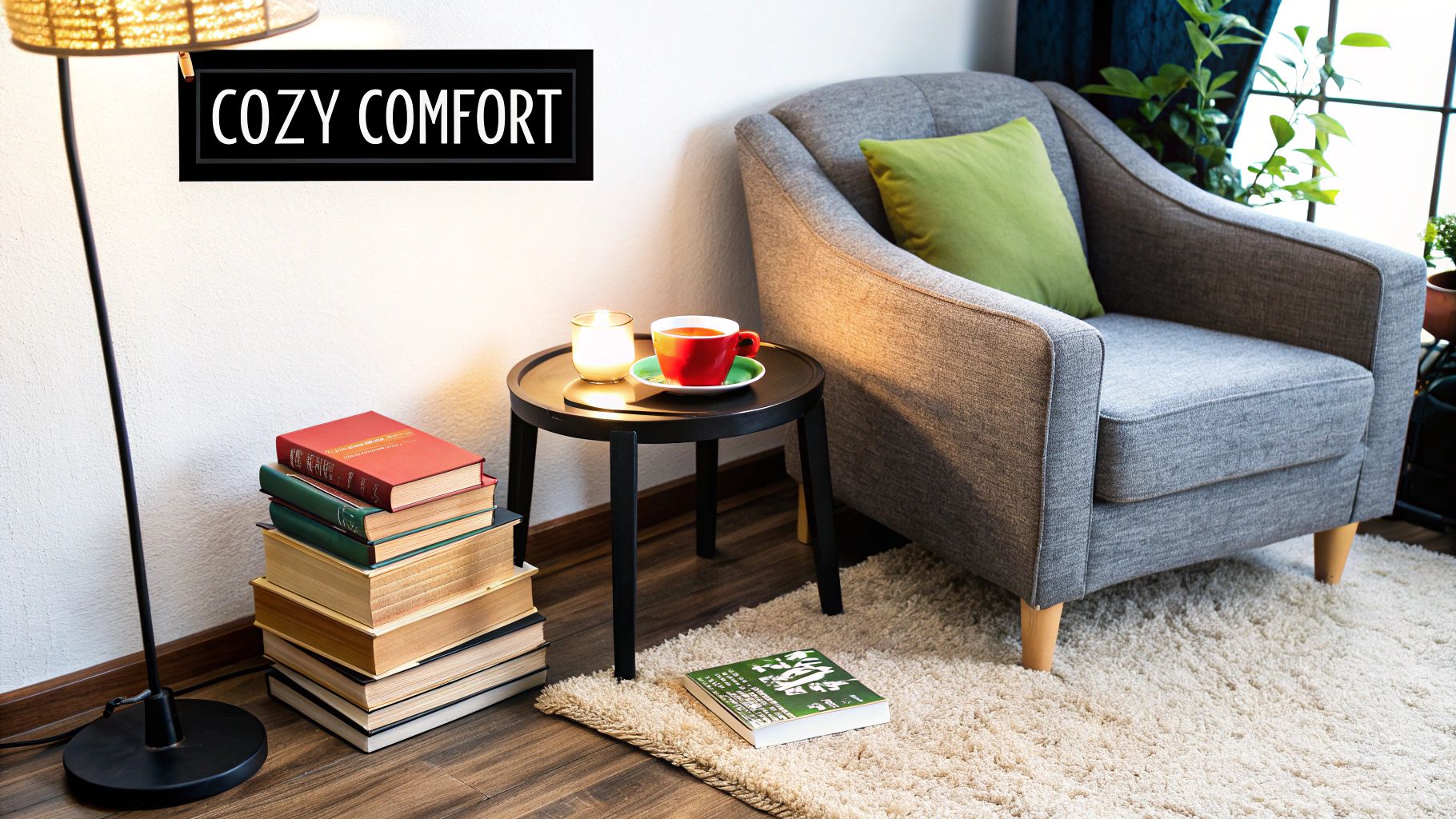
In a world filled with hard surfaces, there’s just something special about the soft, welcoming feel of carpet. While hardwood and LVP get a lot of attention, carpet is still a top choice for the best flooring for living rooms—and for good reason. Nothing beats its comfort, warmth, and sound-dampening qualities. It's the flooring you want to sink your toes into after a long day.
Forget those outdated shag carpets from decades past. Today's options are engineered for both luxury and real-life durability, making them a fantastic solution for creating a cozy and inviting family space. To really understand what makes a great carpet, you need to know about two key things: its pile and its fiber.
Carpet Pile and Fiber Explained
The "pile" is simply how the yarn is looped into the carpet’s backing. This is what really determines how a carpet looks and feels underfoot.
- Cut Pile: This is what most of us think of when we picture a cozy living room. The tops of the yarn loops are sheared off, creating a soft, plush, and incredibly comfortable surface.
- Loop Pile: With this style, the yarn loops are left intact. The result is a highly durable and resilient surface that holds up beautifully to heavy foot traffic, though it isn't quite as soft as a cut pile.
The fibers used to make the yarn are just as critical. Nylon is a fan favorite because of its incredible resilience—it bounces back from crushing and keeps its shape for years. Polyester, on the other hand, is loved for its built-in stain resistance and the vibrant, rich colors it comes in. If you want to get into the nitty-gritty of materials, this guide on how to choose a good carpet for your home is a great resource.
Addressing Common Concerns
Worried about stains and allergens? That's completely understandable, but modern carpet technology has come a long way. Many carpets now come with powerful stain protection applied right at the factory, making spills much easier to clean up. This isn't just a spray-on coating; it's often bonded directly to the fibers.
What about allergies? The market is full of hypoallergenic and low-VOC (Volatile Organic Compound) carpet options designed to help improve indoor air quality. When you clean it regularly with a good HEPA-filter vacuum, carpet can actually act as a filter, trapping airborne dust and dander and keeping them from circulating through the air.
At the end of the day, carpet provides a soft landing spot for family life. It quiets a noisy house, helps insulate your room, and adds a layer of safety for homes with young children. All of this makes it a uniquely comfortable and practical choice for the heart of your home.
Choosing the Right Floor for Your Lifestyle
All the product specs in the world won't help you until you get real about how you actually live in your home. The "best" flooring isn't about what's trendy—it's about what works with the unique rhythm of your daily life. Before you get swept away by a beautiful sample, let's take a beat and think about your specific needs.
Your living room is command central. How much action does it really see? A few honest answers here will instantly filter out the wrong choices and shine a spotlight on the right ones.
Key Lifestyle Questions to Ask
- Who uses this room? Is it a quiet retreat for a couple of adults, or is it the Grand Central Station of your home, with kids, pets, and guests constantly passing through? The more foot traffic, the more you need to prioritize durability.
- What is your tolerance for maintenance? This is a time for brutal honesty. Do you find satisfaction in caring for a beautiful hardwood floor, or do you need something you can quickly wipe down and forget about?
- What matters most: comfort or durability? Are you picturing cozy family nights on a soft, plush surface, or do you need a floor that can shrug off dropped toys, spills, and scratches without causing you stress?
If you're a visual person, this decision tree can make it even clearer.
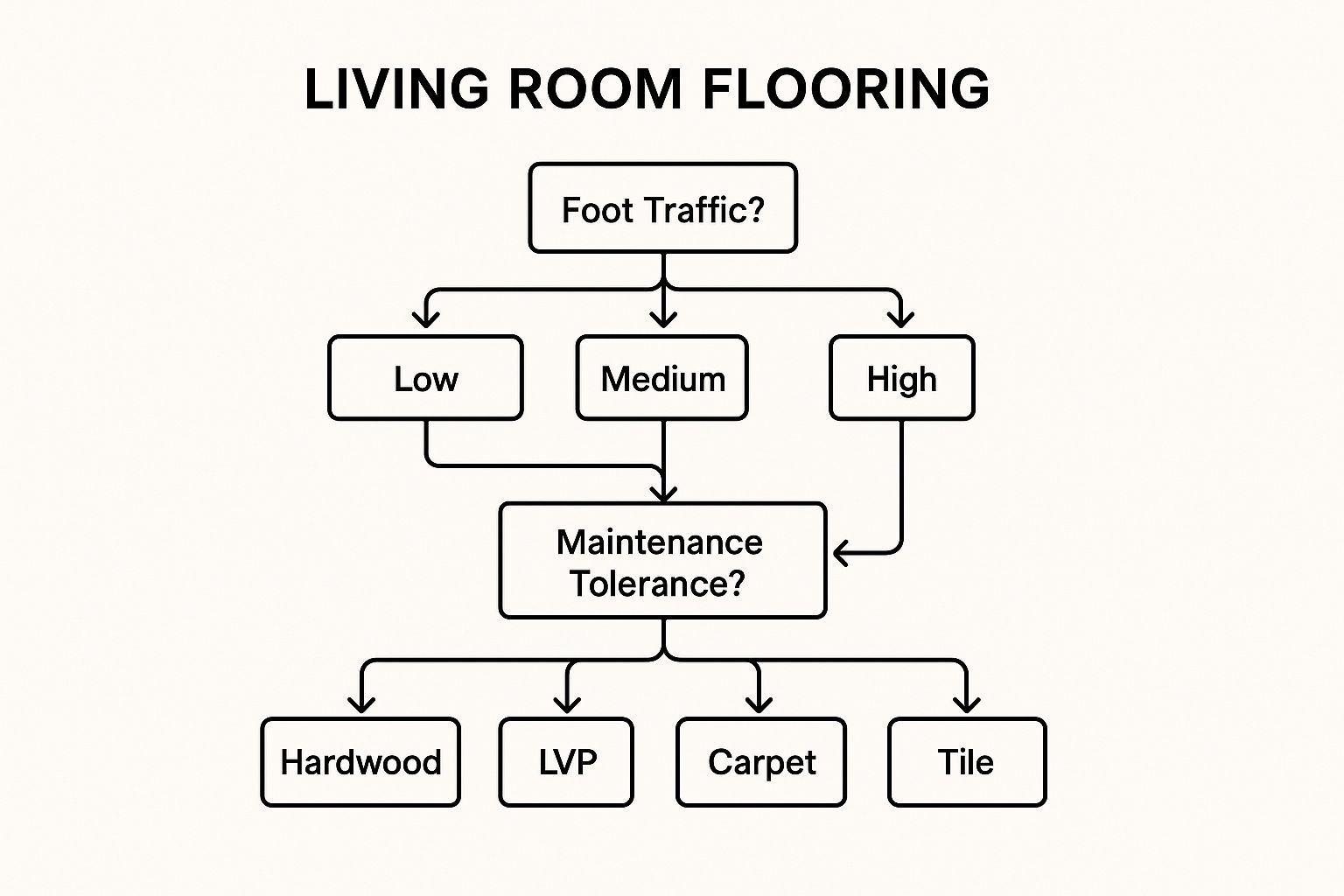
As you can see, a busy home that needs a low-maintenance solution often points directly toward tough-as-nails options like luxury vinyl or porcelain tile.
For families with four-legged members, the right material is even more critical. You might be surprised to learn about the best carpet options for pet owners and how far modern fibers have come in balancing softness with stain resistance.
The market definitely reflects these practical needs. For instance, vitrified porcelain tile captured a massive 36.65% of the global flooring market in 2024, largely because of its incredible toughness. At the same time, the luxury vinyl plank (LVP) segment is booming for similar reasons. When you match your floor to your lifestyle, you're not just buying a product; you're investing in a surface that will bring you joy and peace of mind for years.
The Ultimate Flooring Decision Matrix
Still on the fence? Let's quantify it. Use this table to score each flooring type from 1 (Low Priority) to 5 (High Priority) based on what matters most to you. Tally up the scores to see which material comes out on top for your home.
| Feature | Hardwood | Luxury Vinyl (LVT) | Carpet | Porcelain Tile |
|---|---|---|---|---|
| Durability & Scratch Resistance | ||||
| Water & Stain Resistance | ||||
| Comfort & Warmth | ||||
| Ease of Maintenance | ||||
| Upfront Cost | ||||
| DIY-Friendly Installation | ||||
| Resale Value Boost | ||||
| Total Score |
Once you've filled it out, one or two options will likely emerge as the clear winner, giving you a fantastic starting point for your shopping journey.
Answering Your Final Living Room Flooring Questions
Making a big decision like choosing a new floor always comes with a few last-minute questions. That's completely normal. Let's walk through some of the most common concerns we hear from homeowners, so you can feel 100% confident in your final choice.
Getting these details sorted is what turns a good decision into the perfect one for your family and your home.
Durability for Pets and Kids
If you have a busy household, this is probably your number one concern: what's the most durable flooring for a living room with kids and pets?
Hands down, Luxury Vinyl Plank (LVP) is what we recommend most often. Its tough-as-nails wear layer is engineered to stand up to everything from dog claws to dropped toys. The real game-changer, though, is its waterproof core. Spills and accidents are no longer a catastrophe, which gives you incredible peace of mind.
While porcelain tile is also amazingly durable, LVP has a warmer and softer feel underfoot, which makes it a more comfortable choice for a room where everyone loves to hang out.
Coordinating Floors Throughout Your Home
Another question we get all the time is whether the living room floor has to match the rest of the house. The short answer is no, it's not a hard-and-fast rule, though a consistent floor can make a space feel bigger and more connected.
The real key is making the transition from one flooring type to another feel deliberate and stylish. Think about how a beautiful classic hardwood in the living room can flow into a modern slate-look tile in the kitchen. As long as the tones and styles complement each other, the result looks fantastic.
The goal is visual harmony, not necessarily uniformity. A well-planned transition can add architectural interest and define different zones within an open-concept layout, enhancing the overall design of your home.
Adding Warmth to Hard Surfaces
So you love the clean look of hardwood or tile, but you're worried the room might feel a little cold or sterile. How can you make a hard floor feel cozier?
An area rug is your best friend here. It's the simplest and most effective way to add instant warmth and comfort. A good rug works wonders:
- Softness: It gives you a plush, comfortable spot for your feet.
- Definition: It anchors your furniture, creating a clear and inviting seating area.
- Sound Absorption: It dramatically cuts down on echo, which makes the whole room feel quieter and more intimate.
A great rule of thumb is to pick a rug large enough for at least the front legs of your sofa and chairs to sit on. It’s a small detail that completely transforms the feel of the space without hiding your beautiful new floors.
Feeling ready to find the perfect foundation for your home? The experts at Flacks Flooring are here to help you explore all your options. Visit our showroom in Cumming, GA, to get started