
When you're trying to pick the best hardwood floor, it really boils down to finding a material that fits your life. For many folks, especially here in North Georgia, the sweet spot is a high-quality engineered hardwood like White Oak. It gives you that classic, real-wood look on the surface but with a core built for stability, which is a huge plus with our humid summers. It’s a smart, durable choice that works in just about any room.
Your Guide to Finding the Perfect Hardwood Floor
Let’s be honest: choosing a new floor can feel like a massive decision. You’re facing a sea of wood species, finishes, and construction types, and it's easy to get lost in the noise. This guide is here to be your roadmap, cutting through the technical talk and giving you practical advice you can actually use.
Think of this as your personal consultation with a flooring pro. We'll walk you through everything you need to know, making the whole process feel a lot less overwhelming and a lot more empowering.
Why Hardwood Remains a Smart Investment
Hardwood flooring isn't just about looks; it's a genuine investment in your home's value and appeal. The numbers back this up. The global hardwood flooring industry is enormous, valued at USD 51.38 billion and still growing. Here in North America, we're the biggest fans, making up over 36.5% of the entire market.
For homeowners in places like Cumming, Johns Creek, and Milton, that strong, steady demand means great resale value. A home with quality hardwood simply has broader appeal. You can dig into the numbers yourself in this in-depth market analysis on imarcgroup.com.
This guide will help you make the right calls to protect that investment. We’ll cover:
- Construction Types: We’ll explore the real-world differences between old-school solid hardwood and modern engineered planks.
- Durability Factors: You'll learn how to read hardness ratings and pick finishes that can stand up to your family's daily life.
- Aesthetic Choices: We'll look at how different species, plank sizes, and textures come together to create your home's unique style.
- Local Climate Considerations: We'll discuss why Forsyth County’s humidity is a critical factor in your decision.
By the time you're done here, you won't just be buying a floor. You'll be confidently choosing the right foundation for your home, knowing it's built to last.
Navigating Your Flooring Journey
Our mission is to give you the confidence to pick a floor that's not only beautiful but also a practical, long-lasting part of your home. We'll break down the tricky stuff into simple concepts. From understanding how solid wood expands and contracts with the seasons to seeing why an engineered core provides crucial stability, you’ll get a real feel for what makes a hardwood floor the right one for you.
Let's dive in and start with the first big choice every homeowner has to make.
Solid vs. Engineered Hardwood Unpacked
When you start looking at hardwood floors, the first big fork in the road is deciding between solid and engineered construction. This isn’t just a minor detail—it’s a choice that dictates how your floor will perform, where it can be installed, and how it will hold up over the years. Getting this right is the foundation for a successful project.
It's a decision more and more homeowners are making. In fact, residential replacement projects now drive a whopping 66.4% of all wood flooring sales. This tells us that people are actively choosing to upgrade their homes with the timeless appeal of real wood. For a deeper dive into these numbers, you can review the latest hardwood statistics on fcnews.net.
So, what's the real difference between these two options? Let's break it down.
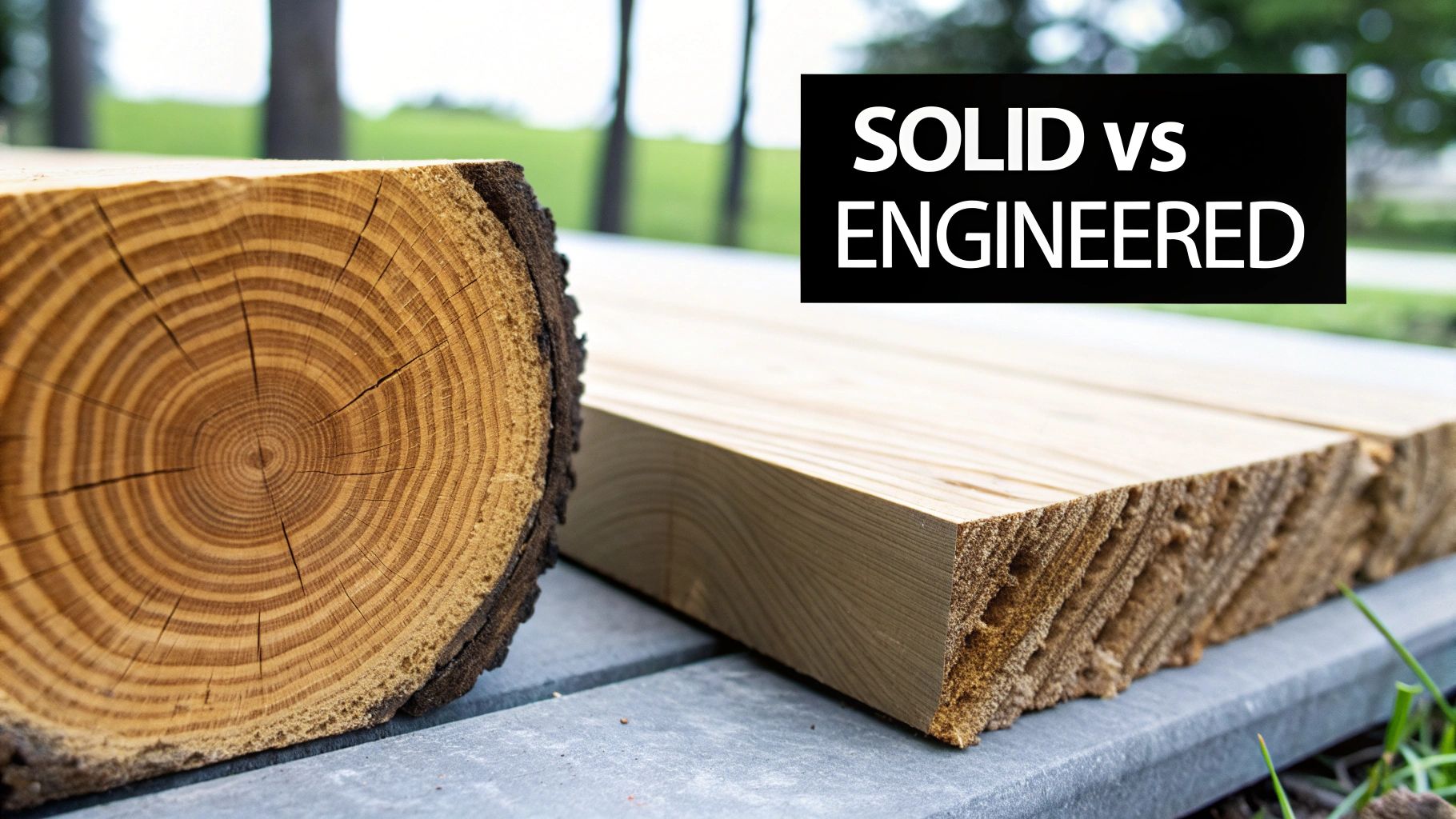
The Enduring Classic: Solid Hardwood
Think of solid hardwood as the original, tried-and-true classic. Every single plank is milled from one solid piece of wood, usually about 3/4-inch thick. Its biggest advantage is that substantial thickness, which allows it to be sanded down and refinished again and again over its lifetime.
This means a solid wood floor isn't just a purchase; it's a long-term investment that can literally last for generations. If you want a floor that could be a part of your home for 50 years or more, adapting to new styles and erasing signs of wear, solid hardwood is a fantastic choice.
The trade-off? That single-piece construction makes it more sensitive to humidity. In North Georgia's climate, with its humid summers, solid wood will naturally expand and contract with the seasons.
The Modern Innovator: Engineered Hardwood
Engineered hardwood is the result of clever innovation. Picture it as a high-tech wood sandwich: a top layer of beautiful, real hardwood is bonded to a core of multiple plywood layers stacked in opposite directions. This cross-grain construction is its superpower.
This layered core counteracts wood’s natural tendency to move, making it far more stable against moisture and temperature changes than solid wood. It's a game-changer for installation possibilities. If you're curious about the specifics, we have a complete guide on what engineered hardwood flooring truly is.
Key Takeaway: The difference isn't the look—it's what's underneath. Engineered hardwood’s multi-layered core gives it incredible stability, making it the go-to choice for tricky installations like basements or directly over concrete.
This stability is what makes it such a valuable option, especially here in Forsyth County.
Solid vs. Engineered Hardwood Decision Guide
Deciding between the two can feel overwhelming, but it often comes down to where the floor is going and what you expect from it. This quick guide breaks it down for homeowners here in Cumming and the surrounding areas.
| Feature | Solid Hardwood | Engineered Hardwood | Best For Forsyth County Homes |
|---|---|---|---|
| Construction | Single piece of 3/4" wood | Real wood top layer + multi-layer plywood core | Engineered: Its stability is a massive advantage in our humid Georgia climate, especially below ground level. |
| Longevity | 50-100+ years, can be refinished many times | 20-50 years, refinishing depends on wear layer | Solid: Unbeatable for a "forever floor" on main or upper levels that you plan to refinish over several decades. |
| Moisture Resistance | Low—prone to warping and cupping | High—very stable against humidity swings | Engineered: The clear winner for kitchens, basements, or any area installed directly over a concrete slab. |
| Installation Areas | On or above grade (ground level), over wood subfloors | Below, on, or above grade; concrete or wood subfloors | Engineered: Its versatility allows for real wood looks in places solid simply can't go, like a finished terrace level. |
| Cost | Generally higher initial cost | Often more budget-friendly | It Depends: The price is more influenced by the species and finish. Both have options across the price spectrum. |
This table should help clarify which construction type aligns best with the specific demands of your project and our local environment.
Making the Right Choice for Your Georgia Home
So, which is the best hardwood floor for your home in Cumming, Johns Creek, or Milton? It all comes down to the room and your lifestyle.
- For Upstairs Bedrooms and Living Areas: Both solid and engineered are fantastic choices. If you love the idea of a floor that will last a century and can be refinished endlessly, solid is your champion.
- For Basements or Concrete Slabs: This one is easy—engineered hardwood is the only safe bet. Its stability prevents the warping and gapping that solid wood would almost certainly suffer in these moisture-prone areas.
- For Kitchens and High-Humidity Zones: Again, engineered wood’s resistance to moisture makes it a much more reliable and worry-free option for kitchens or half-baths where humidity and spills are part of life.
By understanding how each floor is built from the inside out, you can pick an option that not only looks stunning but will perform beautifully in your home for years to come.
Decoding Durability: What Janka Ratings and Finishes Really Mean
A beautiful hardwood floor has to do more than just look good; it has to live with you. When we talk about durability, it’s not just one thing. It’s a team effort between two key players: the wood’s natural hardness and the protective finish on top.
Think of it like a high-end car. The steel frame provides the core strength (that’s the wood), but the multi-layer paint and clear coat (the finish) is what protects it from dings, scratches, and the elements. You need both working together for a floor that lasts. Let’s break down what you actually need to know to choose a floor that will stand up to kids, pets, and whatever else life throws at it.
The Janka Hardness Scale: Your Dent-Resistance Scorecard
You're going to hear the term Janka Hardness Scale thrown around a lot. Don't let it intimidate you—it’s just a fancy way of measuring how resistant a wood species is to denting and crushing. Think of it as a "dent score."
The test itself is pretty simple: it measures how much force it takes to press a 0.444-inch steel ball halfway into a plank of wood. The higher the Janka number, the harder the wood. A higher score means it’s better at resisting dents from things like dropped pots, furniture legs, or stiletto heels.
Expert Insight: Remember, the Janka scale is all about dents, not scratches. Scratches happen to the finish, which is the protective layer on top of the wood. We’ll get to that in a minute.
Matching Hardness to Your Home Life
So, what Janka number do you actually need? The trick is to be realistic about your lifestyle. A floor that works perfectly for a quiet couple in a Johns Creek condo might not hold up in a bustling Milton home with two kids and a Golden Retriever.
Here’s a practical way to think about it:
- Softer Woods (Lower Janka): Species like American Cherry (950) or Walnut (1010) have a timeless beauty but are on the softer side. They’ll show dents and dings more easily, which can actually contribute to a charming, lived-in patina over time. These are often best for lower-traffic spaces like a home office or formal bedroom.
- The Industry Standard (Mid-Range Janka): This is where you’ll find the workhorses of the flooring world. Red Oak (1290) and its slightly harder cousin, White Oak (1360), hit the sweet spot of durability, classic looks, and value. They’re tough enough for most households.
- Harder Woods (Higher Janka): If you need serious toughness, look to species like Hickory (1820), a domestic favorite known for its rustic grain and incredible resilience. For maximum dent resistance, exotic woods like Brazilian Cherry (2350) are like iron, making them a fantastic choice for the most chaotic, high-traffic homes.
The Finish: Your Floor’s Invisible Shield
While a wood’s Janka rating tells you how well it resists deep gouges, the finish is what handles the daily grind of scuffs, scratches, and spills. Honestly, for everyday wear and tear, the quality of the finish is even more important than the hardness of the wood itself.
Today’s factory-applied finishes are miracles of modern chemistry. They’re often cured under UV lights and infused with additives like aluminum oxide, creating a protective layer that’s far tougher than anything that could be applied in your home.
Comparing the Most Common Hardwood Finishes
Even with factory finishes, you have choices that affect how your floor looks, feels, and ages. Here’s a quick rundown of the big three.
| Finish Type | Key Characteristics | Best For |
|---|---|---|
| Oil-Based Polyurethane | The traditional choice. It's incredibly durable and gives the wood a warm, amber tone that deepens with age. | Anyone looking for that classic, rich hardwood glow and a rock-solid protective layer. Just be prepared for strong fumes during application if it's a site-finished floor. |
| Water-Based Polyurethane | Dries fast with very little odor (low VOCs). It goes on crystal clear and stays that way, so it won't change the wood's natural color. | Keeping light-colored woods like Maple or a natural White Oak looking true to their original shade. It's the go-to for a clean, contemporary look. |
| Hardwax Oil | This finish works differently, soaking into the wood fibers instead of sitting on top. It creates a stunning, natural-looking matte or satin sheen. | Homeowners who love an organic, close-to-the-wood feel and the ability to do easy spot repairs. You can sand and re-oil a single scratch without redoing the entire floor. |
By pairing the right wood hardness with the right protective finish, you can build a floor that’s not just beautiful, but perfectly equipped for the realities of your home.
5. Finding Your Look: Wood Species, Plank Size, and Texture
Now for the fun part. After we've covered the technical side of things—the construction, the durability—we get to talk about style. This is where you really define the personality of your home. The wood species you choose, the width and length of the planks, and the texture under your feet are what will make your floors uniquely yours.
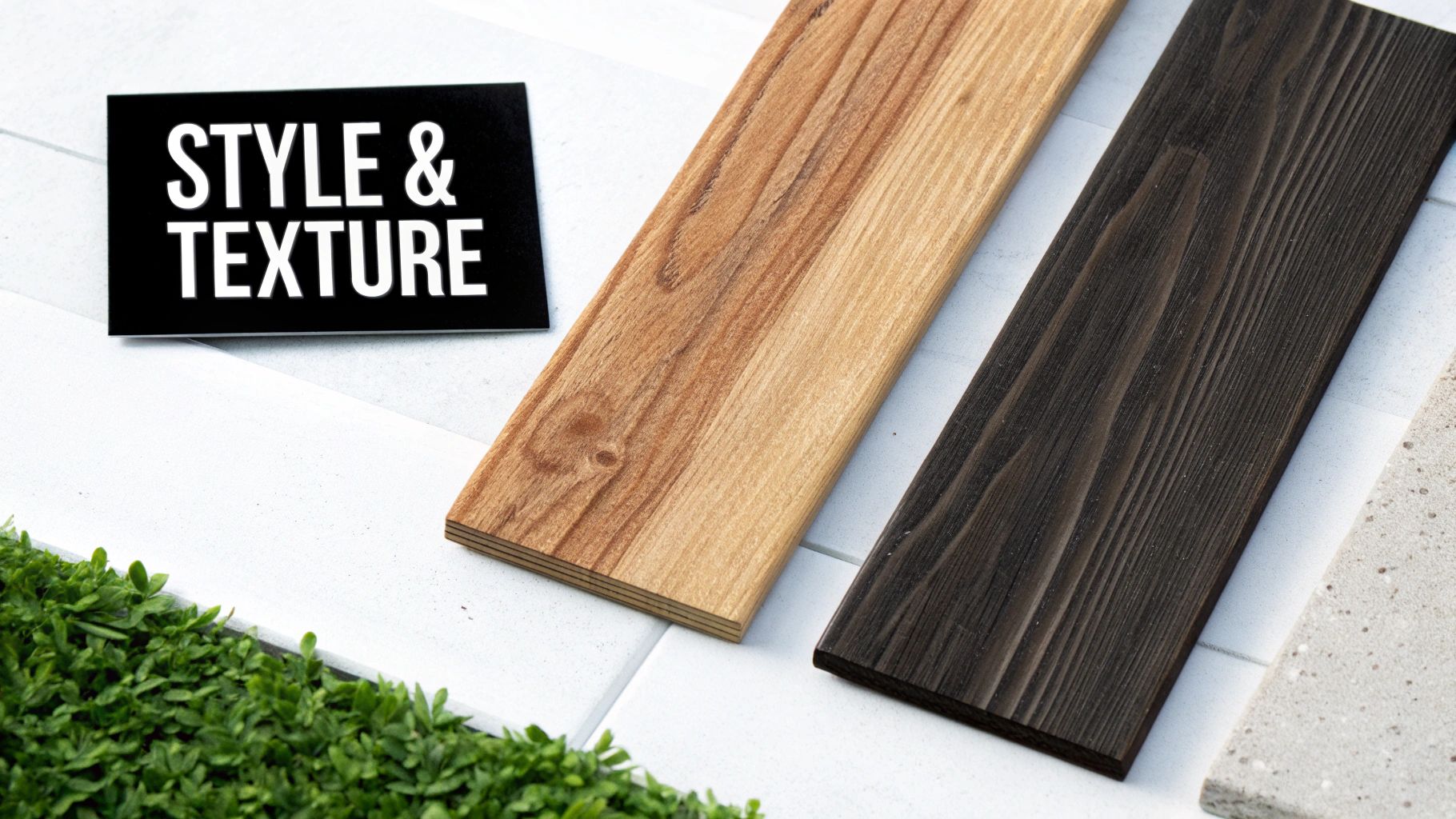
Think of the wood species as the foundation of your design. For example, a classic White Oak floor gives you a bright, versatile canvas that works just as well in a modern farmhouse as it does in a sleek, minimalist space. But if you're after a more rustic, cozy vibe, the rich tones and bold grain of Hickory bring immediate warmth and character into a room.
Every species tells a different story. To get a better feel for the options, our comprehensive guide to hardwood species is a great place to start exploring what speaks to you.
Choosing a beautiful hardwood floor is more than just a style decision; it’s a significant investment in your property. The global flooring market was valued at USD 416.56 billion, and hardwood holds a premium slice of that pie at around USD 53.35 billion, or 12-13% of the total market. It’s clear that a well-chosen floor is a long-term asset.
How Plank Dimensions Change a Room
The size of your planks has a huge impact on how a room feels. It’s a powerful design trick that can make a space seem bigger, more traditional, or completely contemporary.
- Narrow Planks (2 to 3 inches): This is the classic, timeless look. Narrow strips create a sense of formal elegance and beautiful detail, making them a perfect fit for traditional homes.
- Standard Planks (3 to 5 inches): This is the go-to for a reason. Standard widths are incredibly versatile and strike a great balance between classic and modern, working well in just about any room.
- Wide Planks (6 inches and up): If you want to make a statement, go wide. Fewer seams create a clean, expansive feel that can make a small room look larger and a large room feel truly grand.
Pro Tip: Wide planks do a fantastic job of showing off the wood's natural character. If you've fallen in love with the unique knots and grain patterns of a wood like Hickory or a character-grade Oak, wider planks will put that beauty on full display.
The Feel of the Floor: Adding Depth with Texture
Texture is the final touch that adds both visual interest and practical benefits. While a smooth, polished finish is always classic, textured surfaces are becoming more and more popular—and for good reason.
A wire-brushed finish, for instance, is made by lightly scraping the surface to remove the softer grain. This leaves behind a subtle, organic texture that feels great underfoot and does an amazing job of hiding small scratches. It’s an ideal choice for households with kids or pets.
For an even more rustic, lived-in feel, a hand-scraped finish echoes the look of floors crafted long before modern sanding machines. The gentle, rolling contours give the floor a historic charm and make it incredibly forgiving in a busy home. By layering these choices—species, size, and texture—you can create a floor that doesn't just look amazing, but is built for the way you live.
What Goes Into the Real Cost of Your New Floor?
When you first start looking at hardwood flooring, it's natural to zero in on that price per square foot. But that number? It's really just the starting line. The real, all-in cost of a beautiful floor that lasts a lifetime includes a handful of other crucial steps that take you from a stack of planks to a finished, installed floor.
Getting a handle on the total investment from the get-go saves you from sticker shock later on. It’s the difference between a project that runs smoothly and one that’s full of frustrating surprises. Let's pull back the curtain on the essential (and often forgotten) expenses that make up the true price tag.
More Than Just Wood: What You’re Really Paying For
The material cost is your anchor point, but a few other services are absolutely fundamental to getting a professional result that protects your investment. Think of these not as "extras," but as non-negotiable parts of the job.
Here’s what’s typically involved:
- Tear-Out and Disposal: That old carpet, tile, or laminate has to go somewhere. This is a labor-intensive job that involves tearing out the old floor and hauling it away properly.
- Subfloor Preparation: I can't stress this enough—this is the most critical step. Your subfloor needs to be clean, level, and dry. A pro will grind down high spots, float low spots with leveling compound, and make sure everything is structurally sound. No squeaks, no dips.
- Installation Method: How your new floor gets put down—whether it's nailed, glued, or floated—also plays a role in the final price. Each method has its own material and labor costs, with complex glue-down jobs often requiring more time and expertise.
A flawless floor starts with a perfect foundation. Investing in proper subfloor prep isn't just a good idea; it's the only way to prevent future headaches like annoying squeaks, ugly gaps, or that hollow feeling underfoot.
The Value of a Pro Installer in North Georgia
Here in Cumming, Johns Creek, and the surrounding areas, we see some serious humidity swings. That's why professional installation isn't a luxury—it's an absolute must. An experienced local installer knows our climate inside and out. They understand how to properly acclimate the wood to your home before a single board is laid.
This step is vital. It stops the wood from shrinking or swelling too much after it's installed, which is what causes those dreaded gaps or buckling. A true pro also has the right tools and techniques for our common subfloors, whether you're on a concrete slab or a traditional wood subfloor. For a deeper dive, our guide on the factors influencing hardwood flooring installation cost breaks it down even further.
To give you a clearer picture, it helps to see how all the pieces of the puzzle fit together beyond just the price of the wood.
Hardwood Flooring Budget Factors
| Cost Factor | Description | Typical Cost Impact |
|---|---|---|
| Material Cost | The price of the hardwood planks, driven by species, grade, and solid vs. engineered. | $4 – $12+ per sq. ft. |
| Old Floor Removal | Labor to tear out and properly dispose of existing carpet, tile, or other flooring. | $1 – $3 per sq. ft. |
| Subfloor Prep | Leveling, cleaning, and repairing the subfloor to get it ready for installation. | Varies widely, from minimal to $2 – $5+ per sq. ft. for major work. |
| Installation Labor | The skilled labor to install the new floor, including the specific method and trim work. | $3 – $7+ per sq. ft. |
As you can see, the final installed price is a combination of these essential services, ensuring the job is done right from start to finish.
Protecting Your Investment for the Long Haul
Once your gorgeous new floor is in, the final piece of the cost puzzle is knowing how to care for it. The best part? Great maintenance is simple and cheap, but it’s absolutely key to keeping that floor looking fantastic for decades to come.
A few easy habits can make a world of difference. Stick felt pads under all your furniture legs to stop scratches before they start. Use area rugs in high-traffic spots like entryways and hallways. And when spills happen, wipe them up right away with a dry cloth.
For routine cleaning, a microfiber dust mop will be your best friend. For a deeper clean, stick to a pH-neutral cleaner made specifically for hardwood floors. Steer clear of wax, polish, or any product that promises to add a "shine"—they often do more harm than good. These simple routines are all it takes to make sure your investment remains a stunning centerpiece in your home.
Your Final Decision-Making Checklist
Picking the right hardwood floor really comes down to balancing three things: how it looks, how it holds up, and what you can afford. This final checklist pulls together everything we've talked about, giving you a clear game plan before you even set foot in a showroom. Think of it as your cheat sheet for having a smart conversation with a flooring pro, so you can make a choice you’ll love for years.
Taking a few minutes to think through these points first will save you a ton of headache later. It stops the decision paralysis and makes sure the floor you bring home is actually the right fit for your life.
Questions to Answer Before You Shop
- Location, Location, Location: Where exactly is this floor going? An upstairs bedroom is one thing, but a basement over a concrete slab is a whole different ballgame where you have to think about moisture and stability.
- Lifestyle Assessment: Let's be honest about daily life in your house. Do you have big dogs with big claws? Toddlers who treat the floor like a racetrack? Your answer will point you toward the right wood hardness and a finish that can take a beating.
- Your Design Vision: What’s the vibe you're going for? Maybe it's a clean, modern look with wide, light-colored planks. Or maybe you're after something more traditional and cozy, like a classic, warm-toned oak.
- The All-In Budget: What’s the real number you're working with? It's easy to get sticker shock if you only focus on the price of the wood. You've got to factor in the cost to tear out the old floor, prep the subfloor, pay for installation, and maybe even get new baseboards.
This chart can help you see how all those different costs start to add up, depending on the choices you make.
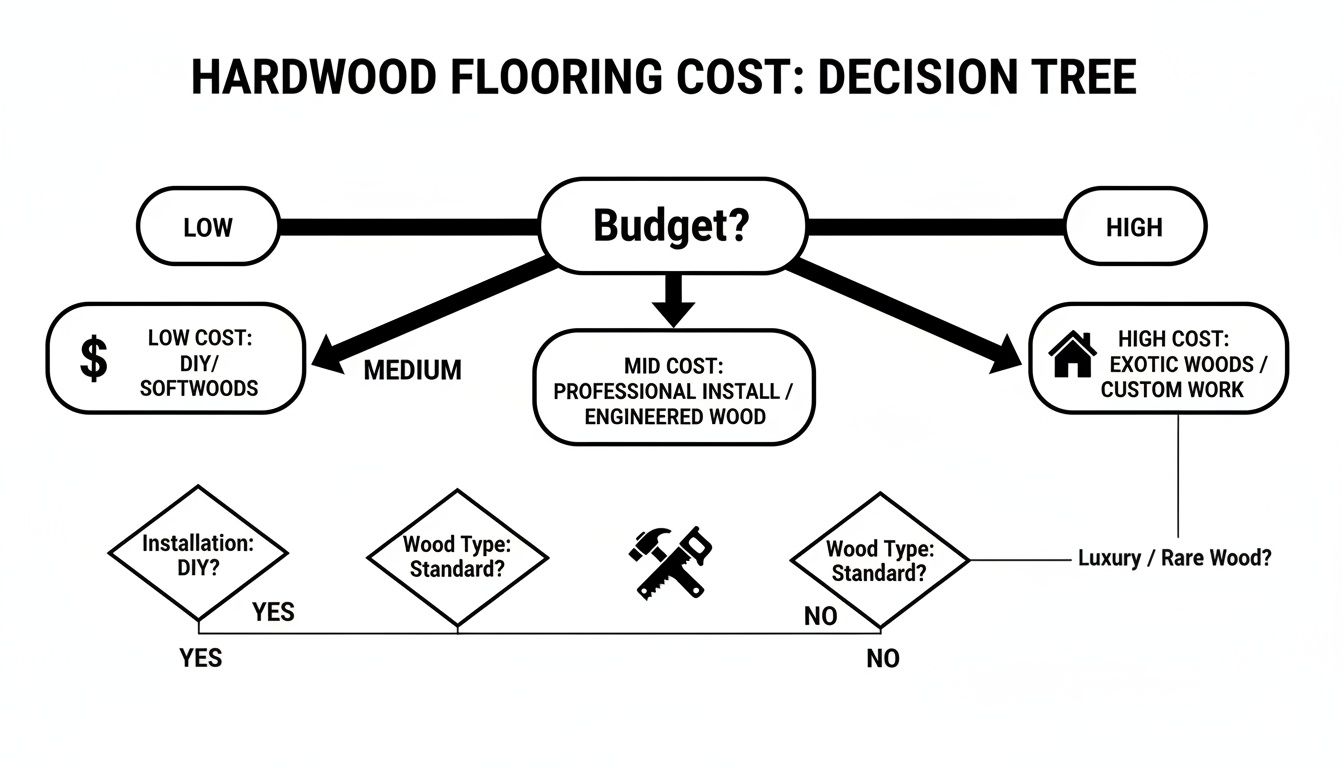
As you can see, the final ticket price is about way more than just the wood. The type of wood you pick and how complex the installation is are huge factors.
Final Steps to Confidence
Once you've got solid answers to those questions, you're in a great position. The next fun part is to start gathering ideas. Save pictures of floors you're drawn to and make a note of what you like—the color, the grain, the plank width.
Your Final Takeaway: Running through this checklist turns you from a casual browser into an educated buyer. You'll be able to walk in and clearly explain what you need, making sure the floor you choose is a smart, lasting investment for your home.
With this plan, you can talk to professionals with confidence, compare your options apples-to-apples, and find the perfect foundation for your home.
Common Questions We Get About Hardwood Floors
When you're looking for the perfect hardwood floor for your North Georgia home, a lot of questions come up. It's a big decision! Here are some straightforward answers to the things we get asked most often by homeowners in Cumming, Johns Creek, and the surrounding areas.
How Does Georgia's Humidity Affect My Hardwood Floor Choice?
This is a big one. Georgia's high humidity is a huge factor for anything made of wood. Wood is a natural material, so it breathes—it expands when the air is humid and shrinks when it's dry. Over time, that constant movement can cause ugly gaps between your planks or even warping.
This is exactly why engineered hardwood is often the smarter choice for our local climate. Its core is built in cross-grain layers, which creates incredible stability and fights that natural urge to expand and contract. This makes it far more reliable than solid wood, especially if you're installing it over a concrete slab or in a finished basement, which are both really common around here.
Can I Get Hardwood Floors if I Have Pets?
You absolutely can! You just have to be strategic about it. The trick is to pick a floor that can stand up to the daily chaos of paws and claws. Your best bet is to go with a harder wood species with a high Janka rating, like Hickory or White Oak. They’re much better at resisting scratches and dents than softer woods like Walnut or Pine.
The finish is just as important. A matte or satin finish, especially one with a bit of texture like wire-brushed or hand-scraped, does a fantastic job of camouflaging the little scratches that are bound to happen. And of course, keeping your pet's nails trimmed and putting a good mat at the door will make a world of difference.
Expert Tip: Don't just look at the wood; look at the finish. A high-quality, factory-applied aluminum oxide finish creates a shield that's tough as nails, giving you a protective layer that can handle the traffic of a busy family with pets.
Is "Waterproof Hardwood" a Real Thing?
Yes, and it's a pretty exciting development in flooring. When you see a product labeled "waterproof hardwood," it's a type of high-performance engineered flooring. The top layer is a slice of genuine hardwood, so you get that authentic beauty and feel of real wood.
The secret is what's underneath. Instead of a plywood core, these floors are built on a waterproof composite core. This construction gives you the best of both worlds: the timeless look of hardwood with top-down protection from everyday spills, making it a solid option for kitchens and even basements.
How Many Times Can I Refinish My Floors?
That all comes down to what your floor is made of.
- Solid Hardwood: Since it's one solid piece of wood from top to bottom (usually 3/4-inch thick), it has a lot of life in it. You can sand it down and refinish it 4 to 6 times over its lifespan. This means you can completely change the color or erase years of wear and tear.
- Engineered Hardwood: Its potential for refinishing depends entirely on the thickness of that top layer of real wood, which we call the "wear layer." A quality engineered plank with a thick wear layer (3mm or more) can typically be refinished 1 to 3 times. Cheaper options with a very thin veneer, however, can't be refinished at all.
Knowing this difference is key to understanding the long-term value and flexibility you're getting with your investment.
Ready to find the perfect hardwood for your North Georgia home? The experts at Flacks Flooring are here to walk you through every option with confidence. Stop by our showroom in Cumming or schedule an in-home consultation to find the perfect foundation for your home.