
When it comes to finding the best type of flooring for a kitchen, a few options consistently rise to the top: Luxury Vinyl Plank (LVP), porcelain tile, and engineered hardwood. Each one brings a unique mix of durability, water resistance, and style to the table. The right choice really comes down to your family's lifestyle, your budget, and the look you're going for.
Finding Your Ideal Kitchen Flooring a Quick Guide
Choosing a new kitchen floor is a big deal. Let's be honest, the kitchen is ground zero for household chaos—it’s a high-traffic zone where spills are a daily event. You need a floor that can handle all that and still look great. With so many materials on the market, it's easy to get overwhelmed.
This guide is designed to cut through the noise. We'll focus on the most practical and popular choices so you can find the perfect fit, whether you're managing a busy family with pets or designing a sleek, modern kitchen for entertaining.
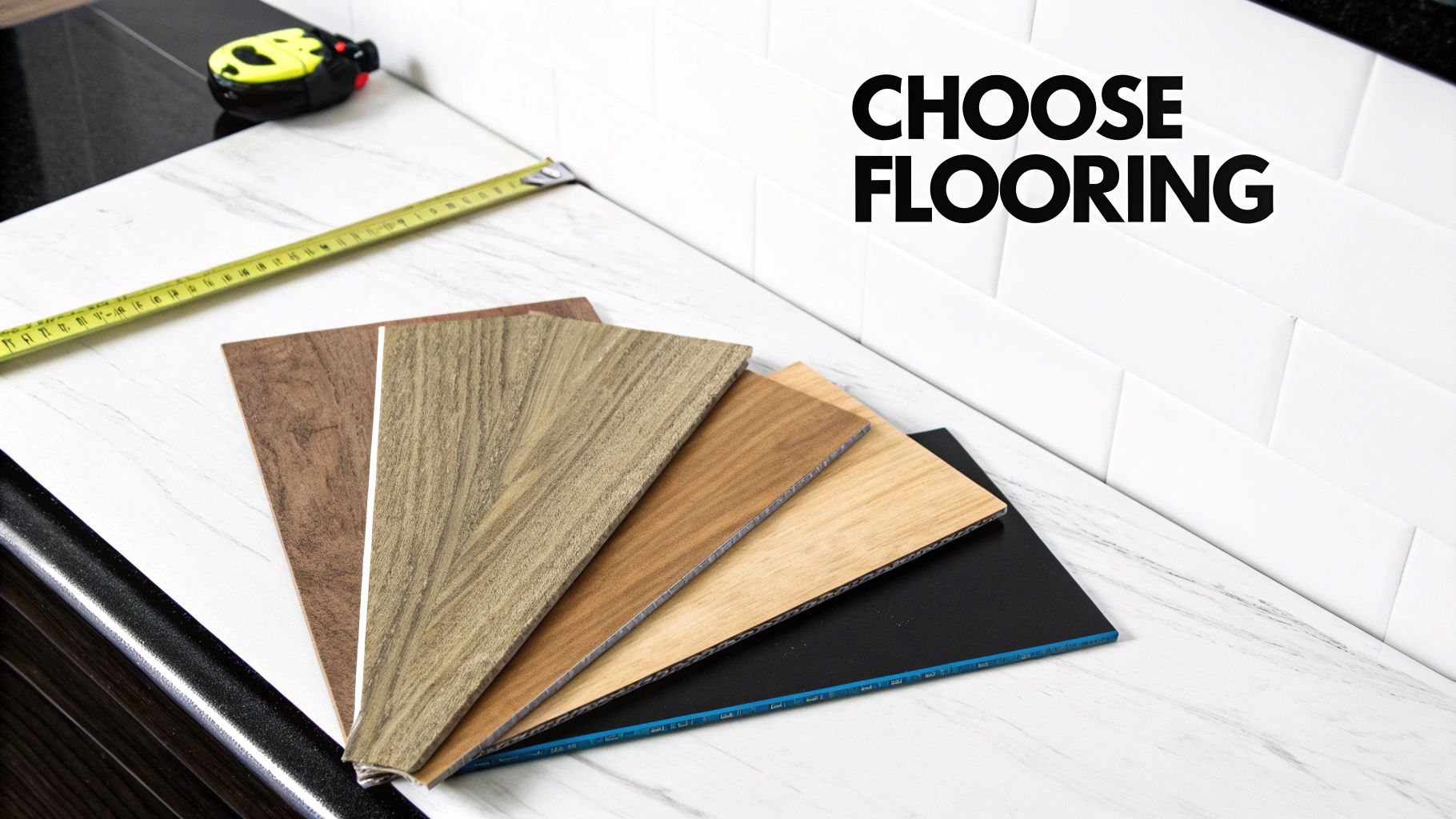
A Quick Comparison of Top Materials
To kick things off and help you narrow down the field, here’s a quick look at how the leading kitchen flooring materials stack up against each other. This table covers the key factors that matter most to homeowners.
Kitchen Flooring Options at a Glance
| Flooring Type | Water Resistance | Durability | Average Cost (per sq ft) | Best For |
|---|---|---|---|---|
| Luxury Vinyl Plank (LVP) | Excellent (Often 100% waterproof) | High (Resists scratches and dents) | $2 – $7 | Busy families, pets, and DIY projects. |
| Porcelain Tile | Excellent (Virtually impervious to water) | Very High (Resists heat and scratches) | $3 – $10 | High-moisture areas and heavy use. |
| Engineered Hardwood | Good (More stable than solid wood) | Good (Varies by wear layer) | $4 – $12 | Achieving a real wood look with better moisture stability. |
As you can see, each material shines in different areas. Your final decision will likely involve a trade-off based on what matters most to you.
Key Takeaway: If you want unbeatable practicality at a great price, LVP is your winner. For maximum, long-term durability, porcelain tile is tough to beat. But if you can't live without the authentic beauty of wood, engineered hardwood offers a great compromise.
For a more in-depth look at these and other top flooring options for kitchens, it's worth exploring all the pros and cons. We’ll dive deeper into each material’s specific strengths and weaknesses to help you feel completely confident in your choice.
Why Resilient Flooring Dominates Modern Kitchens
Walk through any new home or renovated kitchen these days, and you'll notice a huge shift happening right under your feet. For decades, hardwood and tile were the undisputed kings of the kitchen. But now, a new category of flooring is taking over, and for good reason. We're in the age of resilient flooring, and it’s built for the chaos of real life.
Materials like Luxury Vinyl Plank (LVP), Luxury Vinyl Tile (LVT), and even modern sheet vinyl aren't just the "budget option" anymore. They’ve become the go-to choice for homeowners who want great looks without the high-maintenance headaches. It's simple, really: these floors solve the biggest problems kitchens throw at them.
Unmatched Waterproof Performance
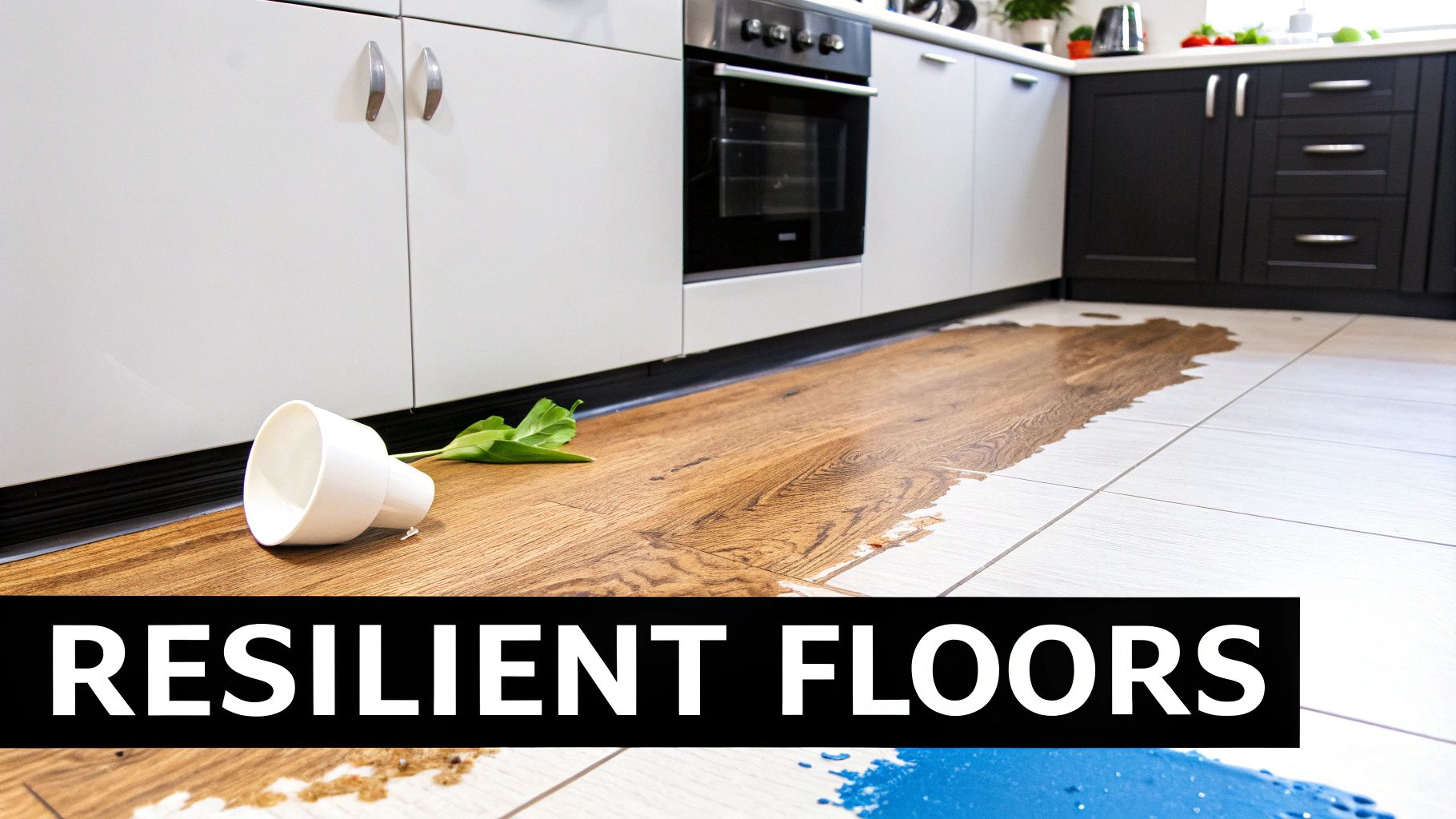
Let’s be honest—the kitchen is a splash zone. Between overflowing sinks, dishwasher mishaps, and everyday spills from kids and cooking, water is a constant threat. This is where resilient flooring completely outshines the competition, because most options are 100% waterproof, not just water-resistant.
And we're not talking about a simple top coating. The core of materials like LVP is a composite that water just can't get through. Hardwood will warp and buckle, and even water-resistant laminate can swell if moisture seeps into the seams. A waterproof vinyl floor, on the other hand, creates a solid barrier, protecting your subfloor from costly damage.
Imagine the dog's water bowl getting knocked over while you're at work. With a resilient floor, you come home, wipe it up, and there's absolutely no sign it ever happened. No panic, no lasting damage.
The numbers don't lie. A recent Houzz Kitchen Trends Study revealed that resilient flooring has rocketed to the top spot for kitchen installations, now holding a 22% market share. It's officially surpassed hardwood, a major shift that signals a new era for America's most renovated room.
Durability That Meets Daily Demands
A kitchen floor takes a special kind of beating. Dropped pans, scooting chairs, constant foot traffic, and the click-clack of pet nails—it has to handle it all. Resilient flooring is engineered specifically for this high-traffic, high-impact environment.
Its strength comes from a smart, multi-layered construction:
- A protective wear layer: This is the invisible shield on top that fights off scratches, scuffs, and stains.
- A realistic design layer: High-definition printing creates the authentic wood or stone look.
- A rigid or flexible core: This is the heart of the plank, providing stability and those crucial waterproof properties.
- An attached underlayment: Many products come with this pre-attached, adding a bit of cushion and quietness underfoot.
Key Insight: The wear layer is everything. It's measured in mils, and for a busy family kitchen, you should look for 20 mil or higher. That's commercial-grade toughness, built to handle just about anything you can throw at it.
The Best of Both Worlds: Aesthetics and Maintenance
Maybe the biggest reason for resilient flooring's popularity is its incredible ability to look like expensive, high-end materials without any of the drawbacks. Thanks to advanced printing and embossing technology, you can find vinyl that mimics the warm grain of oak or the elegant veins of marble so perfectly it's hard to tell the difference.
You get the look you love without ever worrying about water damage or scrubbing grout lines.
Better yet, that beautiful look comes with almost zero effort. A quick sweep and an occasional mop with a pH-neutral cleaner are all it takes. Forget about special waxes, polishes, or the future expense of refinishing. For busy families, this "set it and forget it" quality is a total game-changer. If you want to dive deeper into what makes this material so special, check out our full guide on what luxury vinyl plank flooring is and how it's made.
A Look at Timeless Materials: Hardwood and Stone
Even with all the fantastic modern materials out there, there's a certain magic to classic, natural flooring. Timeless choices like solid hardwood and natural stone bring a sense of history and authenticity to a home that can't be faked. They are a serious investment in elegance, but they also come with their own set of rules, especially in a busy, spill-prone room like the kitchen.
For many homeowners, the warmth and character these materials offer are well worth the extra care. Opting for hardwood or stone is more than just a design decision—it’s a lifestyle choice. It’s about prioritizing organic beauty and tradition over the “set it and forget it” convenience of modern flooring. Let's dig into what that really means for your kitchen.
The Enduring Appeal of Hardwood
Solid hardwood floors have been the heart of American homes for centuries, and for good reason. They radiate a warmth and an inviting feel that synthetic materials just can’t quite capture. Every single plank tells its own story through unique grain patterns and knots, adding a layer of texture that truly makes a kitchen feel like home.
Despite the rise of waterproof floors, hardwood is still a major player. It remains a top choice in kitchen remodels, holding a strong 22% market share, neck-and-neck with resilient flooring options. Its popularity endures because it’s a timeless look that can boost a home's resale value by an average of 3-5%. You can dive deeper into how flooring impacts home value by checking out recent market reports on the flooring market from futuremarketinsights.com.
The catch, of course, is water. A bad leak from a dishwasher or a fridge can cause the planks to warp, cup, and stain. That kind of damage often means a costly replacement, not a simple repair. For a closer look at how different wood types handle daily life, our comprehensive guide to hardwood species is a great resource.
The Engineered Hardwood Compromise
Engineered hardwood presents a smart middle-ground solution. It’s made with a genuine slice of solid wood on top, bonded to multiple layers of high-quality plywood. This layered construction gives it much better dimensional stability than solid wood, so it won't expand and contract as dramatically with changes in humidity.
That stability is a huge advantage. It means you can install engineered hardwood in places where solid wood is a no-go, like in basements or directly over concrete slabs. And because the surface is real wood, you get that authentic look and feel. The main trade-off? You can only refinish it once or twice—sometimes not at all, depending on how thick that top veneer is.
Expert Insight: When you're looking at engineered wood, the thickness of the top "wear layer" is everything. A thicker layer, say 3mm or more, means you can sand it down in the future to get rid of scratches. That single feature can add years to the life of your floor.
Natural Stone: The Ultimate in Luxury
If you want a kitchen that truly makes a statement, nothing beats the grandeur of natural stone. Materials like marble, granite, slate, and travertine bring an unmatched feeling of luxury and permanence. Every slab is a one-of-a-kind piece of art created by the earth over millions of years.
Stone is incredibly tough and will last a lifetime if you take care of it. It’s also completely heat-resistant, so you never have to worry about a hot pan leaving a mark. But this premium material comes with some serious considerations.
- Porosity: Most natural stone is porous. This means you have to seal it regularly—usually once a year—to keep it from soaking up spills like wine, oil, or juice.
- Hardness: Stone is unforgiving. If you drop a glass, it’s guaranteed to shatter. It’s also very hard underfoot, which can be tiring if you spend a lot of time standing and cooking.
- Cost: Natural stone is one of the priciest flooring options around, both for the material itself and for the specialized labor needed to install it correctly.
In the end, choosing between these classic materials and their modern counterparts is all about finding the right balance between the beauty you crave and the practicality you need.
A Head-to-Head Comparison of Top Flooring Materials
Picking the right kitchen floor is about more than just looks; it's about understanding how different materials stand up to real life. Forget simple pro-con lists. Let's dig into how the top contenders—Luxury Vinyl Plank, Porcelain Tile, Engineered Hardwood, and Laminate—actually perform where it matters most: your kitchen.
Durability and Scratch Resistance Showdown
The modern kitchen is a constant hustle of dropped pans, scooting chairs, and the click-clack of pet claws. How a floor absorbs this daily abuse is a make-or-break factor.
Porcelain tile is, without a doubt, the king of scratch resistance. It’s made from incredibly dense clay fired at blistering temperatures, giving it a surface that just shrugs off scratches from pets and furniture. But that strength is also its weakness. Drop a heavy cast-iron skillet, and you could end up with a cracked or chipped tile—a repair that isn't exactly a quick DIY fix.
Luxury Vinyl Plank (LVP) brings a different kind of toughness to the table. Its secret is a commercial-grade wear layer (always look for 20 mil or thicker) that does a fantastic job resisting everyday scuffs and scratches. LVP has a bit of give, so it's far less likely to crack than tile. Its main vulnerability is deep gouges from something sharp or dents if you drop a very heavy object just right.
Engineered hardwood's durability really comes down to the wood species on top and the quality of the finish. Harder woods like hickory and oak naturally resist dents better than a softer pine. The factory-applied aluminum oxide finish gives it solid protection against scratches, but it's not invincible—dragging a heavy fridge can still leave a mark. If you're curious how LVP's engineered toughness compares to traditional wood, we dive deep into that topic here: https://flacksflooring.com/vinyl-plank-flooring-vs-hardwood/.
The Ultimate Water Resistance Test
In the kitchen, water is the enemy, and it's everywhere—splashes from the sink, a leaky dishwasher, a spilled glass. Your floor has to be ready for it all.
When it comes to water, porcelain tile and LVP are in a league of their own.
- Porcelain Tile: Because it's virtually non-porous, water just beads up on the surface until you wipe it away. The tile itself is safe. The only potential vulnerability is the grout, which needs to be sealed properly to keep out moisture and stains.
- Luxury Vinyl Plank (LVP): Most LVP today is marketed as 100% waterproof, and for good reason. The core is typically a stone-polymer composite (SPC) or wood-polymer composite (WPC) that simply won't be damaged by water. This makes LVP a genuinely worry-free choice for any wet area.
Engineered hardwood can handle a little moisture, but it's not waterproof. Its layered plywood core is more stable against humidity than solid wood, but letting a puddle sit will lead to warping, discoloration, and damage. Spills have to be cleaned up fast. Laminate is the most vulnerable of the group; water seeping through the seams into its fiberboard core will cause permanent swelling and bubbling.
Kitchen Flooring Performance Scorecard
To make sense of it all, here's a quick scorecard rating each material on the key performance metrics on a scale of 1 (Poor) to 5 (Excellent).
| Material | Durability & Scratch Resistance | Water Resistance | Ease of Maintenance | Comfort Underfoot | DIY Friendliness |
|---|---|---|---|---|---|
| Porcelain Tile | 5 | 5 | 4 | 2 | 2 |
| Luxury Vinyl Plank (LVP) | 4 | 5 | 5 | 4 | 5 |
| Engineered Hardwood | 3 | 2 | 3 | 4 | 3 |
| Laminate | 3 | 1 | 4 | 3 | 4 |
This at-a-glance comparison makes it clear: if you’re prioritizing pure waterproofing and easy upkeep, LVP and Tile are your top contenders. If the authentic feel of wood is non-negotiable, you’ll just have to be more careful with spills.
Maintenance and Long-Term Upkeep
Let's be honest, you have better things to do than spend hours on floor care. Simplicity is a huge selling point.
Once again, porcelain tile and LVP come out on top for low-maintenance living. Both clean up beautifully with a quick sweep and a mop with a pH-neutral cleaner. The biggest difference? Grout. Tile grout lines can trap dirt over time and may need a good scrub or even re-sealing every few years to look their best.
Engineered hardwood demands a bit more attention. You'll need to use cleaners specifically made for wood and be mindful not to use too much water. It won’t need waxing, but after years of wear and tear, it may need to be refinished—something you can only do once or twice, depending on how thick the top wood layer is.
Expert Insight: The real trade-off here is repairability versus day-to-day care. Tile is tough to damage, but a nightmare to fix; replacing one cracked tile is a professional job. LVP might get a deep scratch or gouge, but replacing a single damaged plank is often a straightforward, simple fix.
A Look at Aesthetics and Resale Value
Function is critical, but you also want a floor that looks fantastic and adds to your home's bottom line.
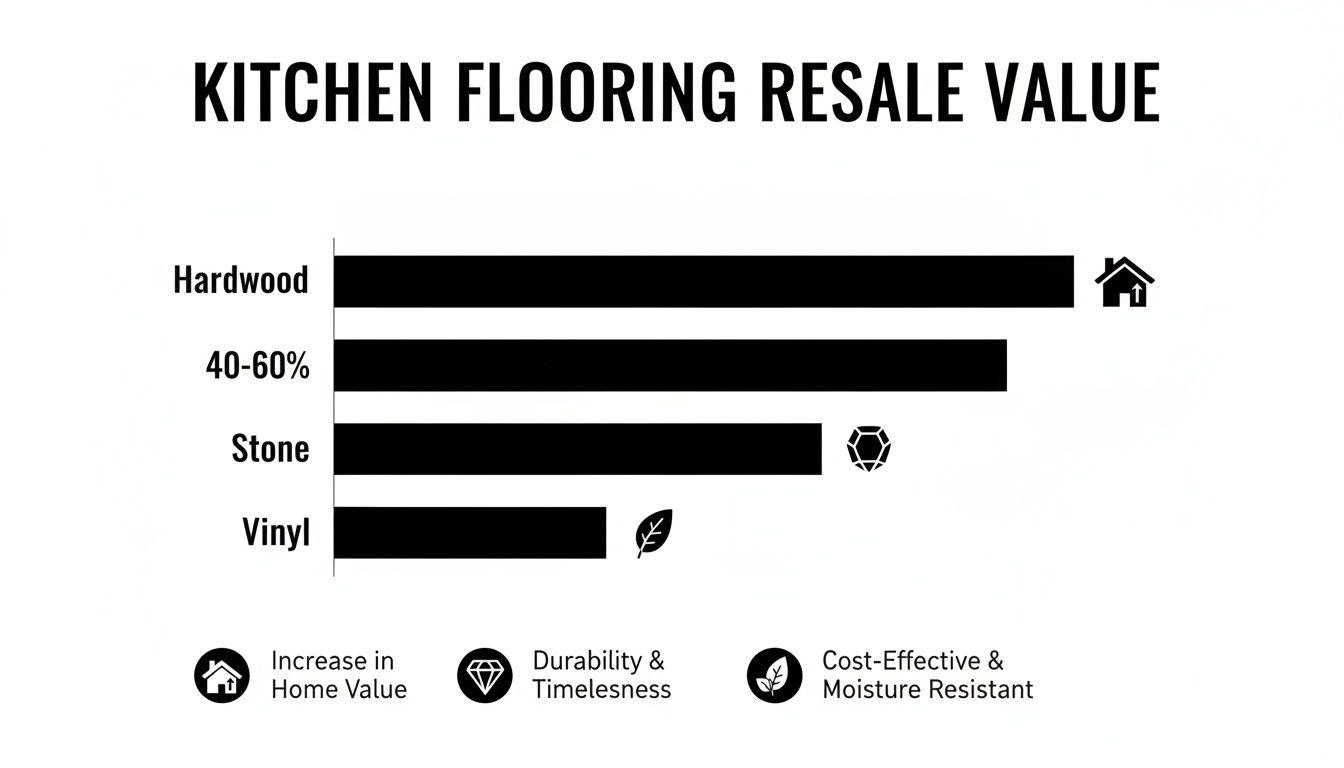
As the chart suggests, traditional materials like hardwood and stone often have a higher perceived impact on home value, while vinyl is prized for its practical strengths.
There's no denying the timeless, authentic beauty of engineered hardwood—it's what many homebuyers are actively looking for. Natural stone delivers a high-end, luxurious feel that's tough to imitate.
But don't count the others out. Modern LVP and porcelain tile have come an incredibly long way. Thanks to high-definition printing, they can realistically mimic almost any wood grain, stone pattern, or even a sleek concrete look. For instance, the industrial aesthetic achieved by painting concrete floors is now convincingly replicated in durable tile and LVP products, giving you the style without the upkeep.
Comfort and Feel Underfoot
Finally, think about how the floor feels to live on. You spend a lot of time on your feet in the kitchen, and a hard, unforgiving surface can take a toll.
Porcelain tile is the hardest and coldest option. It's incredibly durable, but standing on it for hours can be fatiguing without a few anti-fatigue mats.
Engineered hardwood offers the natural warmth and slight give that you expect from wood, making it much more comfortable than tile. However, LVP is often considered the most comfortable of the bunch, especially WPC (wood-plastic composite) core products that have more built-in resilience. Many LVP planks also come with an attached underlayment, which adds a bit of cushion and helps deaden sound, making for a quieter, more pleasant kitchen.
Flooring Recommendations for Your Lifestyle
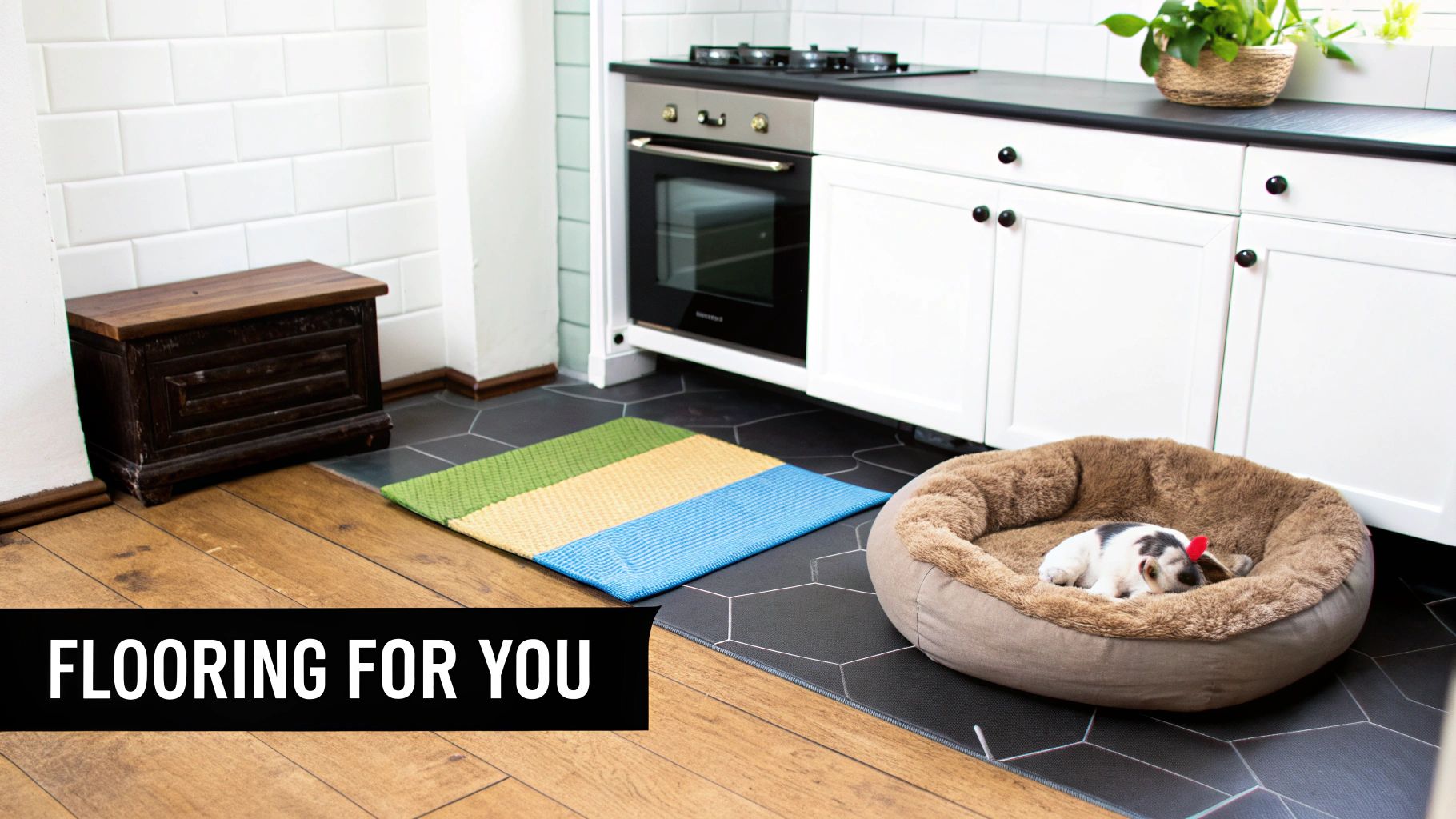
Let’s be honest: there’s no single “best” floor for every kitchen. The right choice is the one that fits how you actually live. A floor that’s a dream for a meticulous home chef could be a complete nightmare for a family with a golden retriever and two toddlers.
The secret is matching the flooring’s strengths to your household's real-world demands. To get it right, you need to think about your daily life first and the material second. Let's walk through a few common scenarios to pinpoint the perfect fit for you.
For the Busy Family With Kids and Pets
Your kitchen is the command center, and it’s a beautiful mess. We’re talking a constant whirlwind of spilled juice, muddy paws, dragged chairs, and the occasional science experiment gone wrong. You don’t need a floor that demands kid gloves; you need a fortress you can clean in a flash.
Top Recommendation: Waterproof Luxury Vinyl Plank (LVP)
This is, without a doubt, the champion for high-traffic, high-mess homes. Here’s why LVP just makes sense:
- Totally Waterproof: Spills from a sippy cup or the dog bowl can sit there for hours without causing a hint of damage to the planks or the subfloor. That kind of peace of mind is priceless.
- Scratch and Dent Resistant: A good quality LVP with a thick wear layer (20 mil or more) is built to handle pet claws, dropped toys, and constantly shifting furniture.
- Zero-Fuss Maintenance: A quick sweep and a damp mop are all it takes to make it look brand new. No special sealants, no fancy cleaners needed.
LVP gives you the warm, inviting look of real wood without any of the anxiety that comes with it. It’s a floor designed for real life, letting you focus on your family, not your floor.
For the Passionate Home Chef
Your kitchen is more than a room; it’s your workshop. It sees intense heat, dropped utensils, and endless hours of you on your feet perfecting new recipes. You need a surface that’s incredibly tough, hygienic, and can handle the demands of a semi-pro cooking space.
Top Recommendation: Porcelain Tile
There's a reason porcelain tile is the workhorse of the culinary world. Its properties make it the ideal partner for any serious cook.
- Extreme Durability: Fired at incredibly high temperatures, it’s practically impervious to scratches, stains, and heat. You can set a hot pan down on it without a second thought.
- Hygienic Surface: The non-porous surface of porcelain won’t harbor bacteria or absorb odors and allergens, making it one of the cleanest flooring options out there.
- Waterproof Integrity: When installed and sealed correctly, tile creates a watertight shield that protects against any spill imaginable, from olive oil to red wine.
Yes, it’s hard underfoot, but that’s an easy fix. A few well-placed anti-fatigue mats solve the problem, leaving you with a beautiful, functional, and bombproof kitchen floor.
For the Rental Property Owner
As a landlord, your priorities are simple: find something durable, affordable, and with a look that appeals to just about anyone. You need a floor that can survive multiple move-ins and move-outs without needing replacement, protecting your return on investment.
Key Insight: For rental properties, the goal is to find the sweet spot between initial cost and long-term resilience. The best floor is one you can install once and forget about for the next decade.
Top Recommendation: Waterproof SPC Vinyl or Sheet Vinyl
Waterproof Stone Polymer Composite (SPC) vinyl, which is a type of LVP, is a fantastic investment for rental units. Its rigid core gives it superior dent resistance, and its waterproof nature means you won't be dealing with costly subfloor repairs after a tenant’s dishwasher inevitably leaks. If you're on an even tighter budget, modern sheet vinyl offers a seamless, waterproof surface that’s incredibly tough and easy to maintain.
For the Luxury Homeowner
For you, the kitchen is a statement piece. Aesthetics, authenticity, and adding lasting value to your home are what matter most. You want a floor that feels as good as it looks and showcases a commitment to high-end, natural materials.
Top Recommendation: Engineered Hardwood or Natural Stone
- Engineered Hardwood: This gives you the timeless, organic beauty of real wood but with better stability for the kitchen’s temperature and moisture fluctuations. It adds a warmth and character that can genuinely boost your home's resale value.
- Natural Stone: Materials like travertine, slate, or marble deliver an unmatched sense of luxury and permanence. Each tile is unique, creating a truly one-of-a-kind floor that makes a powerful design statement.
Nailing Down Your Final Decision: A Practical Checklist
Alright, you've sifted through the options and weighed the pros and cons. Now it's time to get down to the nitty-gritty and make a final choice you'll be happy with for years. Picking the perfect kitchen floor is about more than just aesthetics; it’s about making sure your choice works in the real world—your specific kitchen.
This checklist will guide you through those last crucial details. Answering these questions now will save you a world of headaches and surprise costs later. Think of it as the final bridge between your vision and a beautifully finished kitchen.
What's Underfoot? Assessing Your Kitchen’s Foundation
Before you get your heart set on a specific material, you have to know what you’re working with. Your subfloor is the unsung hero of your kitchen, and its condition can make or break your project. It might even limit your options.
Start by getting some answers:
- What's my subfloor made of? Is it a concrete slab or plywood? This is a big deal. For instance, you can typically install engineered hardwood over concrete, but solid hardwood is a no-go.
- Is my subfloor level and sound? A flat, stable surface is absolutely essential for a professional finish. Any dips, high spots, cracks, or signs of water damage must be fixed first, and that will impact your timeline and budget.
- What am I replacing? Can you lay the new floor directly over the old one, or does everything need to come out? Tearing out old ceramic tile is a messy, labor-intensive job compared to peeling up a layer of sheet vinyl.
Key Insight: Most flooring failures aren't the fault of the new material. They're caused by a subfloor that wasn't properly prepped. Any reputable installer will insist on checking for levelness and moisture before they even think about laying the first piece.
Crunching the Numbers: Your Full Project Budget
Your total cost is much more than the price per square foot you see on the box. A realistic budget accounts for everything from demolition and delivery to the final piece of trim.
Be sure to factor in these costs:
- Materials: This is the flooring itself, plus a 10-15% overage to account for cuts, mistakes, and future repairs. Don't forget the essentials like underlayment, adhesive, grout, or sealer.
- Labor: Professional installation fees can swing wildly depending on the flooring. Installing tile is a craft that takes time and skill, so it's almost always more expensive than clicking together LVP.
- Prep and Removal: Will the installers need to tear out and haul away your old floor? Are there repairs needed for the subfloor? These are often separate charges on an estimate, so ask upfront.
- Finishing Touches: It's the little things that pull it all together—new baseboards, matching thresholds for doorways, and transition strips to other flooring types.
Common Questions About Kitchen Flooring
Even after you've narrowed down your options, a few last-minute questions always seem to pop up. Let's tackle some of the most common ones I hear from homeowners, which should give you that final bit of confidence to make your choice.
What Is the Most Durable and Scratch-Resistant Kitchen Floor?
If we're talking about pure, brute-force durability, porcelain tile is the undisputed champion. Its surface is incredibly hard and dense, which makes it almost immune to scratches from pet claws or dragged furniture. Plus, it laughs off heat and moisture.
But there's another contender for the durability crown: waterproof luxury vinyl plank (LVP). Look for a product with a thick, commercial-grade wear layer—20 mils or higher is the magic number. While you could gouge it with something sharp, it’s fantastic at shrugging off everyday scuffs and won't crack like tile if you accidentally drop a heavy pot. It's a different kind of tough.
Can I Install New Flooring Over My Old One?
The short answer is: sometimes. But it's rarely the best path forward. "Floating floors" like LVP and laminate are often marketed for this, and you can sometimes lay them over a single, solid layer of old flooring like sheet vinyl. The appeal, of course, is saving on the cost and mess of demolition.
However, a professional installer will almost always advise against it. You can't put new flooring over anything that's damaged, soft, or uneven. Ripping out the old stuff is the only way to guarantee your subfloor is solid, level, and properly prepped for an installation that will actually last.
Key Consideration: Stacking floors can create a real headache with height. Your dishwasher might get trapped, and doors will probably need to be trimmed down. These are the little details that turn a simple project into a complicated one.
Are There Any Eco-Friendly Kitchen Flooring Options?
Absolutely, and there are some really great ones out there. Cork is a personal favorite. It's harvested from the bark of cork oak trees without ever cutting the tree down, so it's a truly renewable resource. On top of that, it’s naturally cushioned underfoot, anti-microbial, and a fantastic insulator.
Another classic green choice is linoleum. Don't confuse it with vinyl—true linoleum is made from all-natural, biodegradable materials like linseed oil, cork dust, and wood flour. It’s known for being incredibly long-lasting and comes in a huge range of vibrant, rich colors that vinyl just can't replicate.