
When you're trying to figure out the best underlay for wood flooring, it almost always starts with what's underneath. If you've got a concrete subfloor, you absolutely need an underlay that blocks moisture—think dense rubber or a specialty foam with a built-in vapor barrier. But for a standard plywood subfloor, you might be more focused on sound dampening, where materials like felt or cork are fantastic.
The truth is, there’s no single “best” option. The right choice is the one that perfectly suits your home, your climate, and the beautiful wood floor you’ve picked out.
Your Guide to Choosing Wood Flooring Underlay
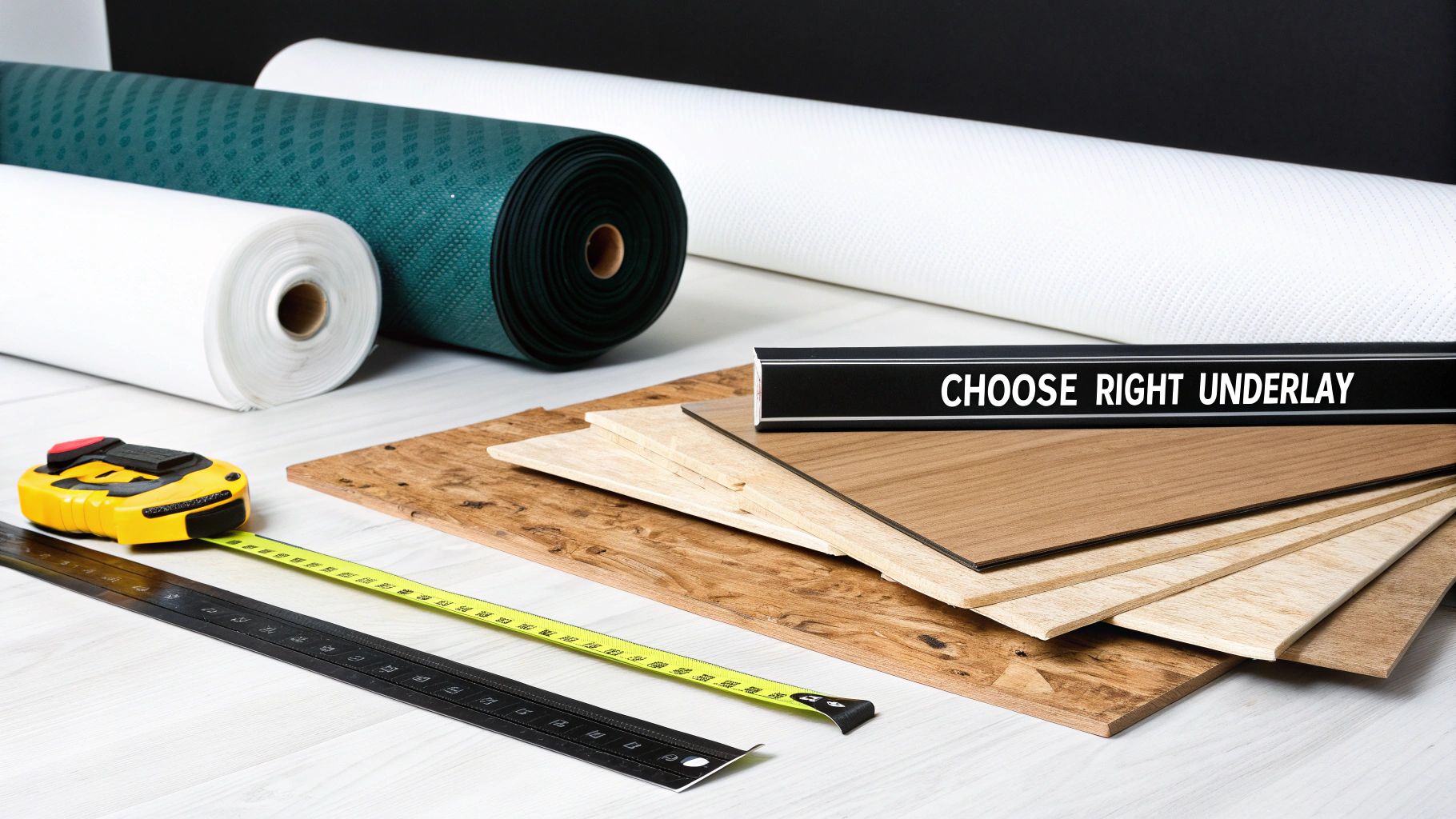
Picking the right underlayment is just as critical as choosing the wood itself. This is the unseen hero of your flooring project, the layer that determines how your floor feels underfoot, how quiet it is, and how well it holds up over time. It’s the foundation that protects your investment from moisture and makes the entire room feel more solid and comfortable.
There’s a reason this market is so big. The global flooring underlayment market was valued at around USD 3.5 billion in 2023 and is expected to hit nearly USD 5.8 billion by 2032. That growth is fueled by homeowners who want flooring systems that don't just look good, but also deliver on comfort and protection.
To make the right call, you have to look past the idea of a one-size-fits-all solution. Your home has unique needs, and your decision should hinge on a few key things:
- Your Subfloor Type: A concrete slab in a Cumming, GA basement has completely different requirements than a plywood subfloor on the second floor of a home in Johns Creek.
- Your Wood Flooring: Solid hardwood and engineered wood often have different needs when it comes to underlay thickness and density.
- Your Home Environment: Local humidity levels and whether you need to muffle the sound of footsteps between floors are huge factors in finding the best underlay for wood flooring.
This guide will walk you through everything you need to know, from moisture protection and sound dampening to thermal insulation. By the end, you'll be able to confidently pick an underlay that ensures your new floors look and perform their best for years to come. It’s a key step that goes hand-in-hand with learning how to choose your hardwood flooring.
Getting to Grips with Underlay Performance Metrics
When you're picking out an underlayment for your new wood floors, it's easy to get lost in brand names. But the real story is in the numbers on the packaging. These specs aren't just technical fluff—they tell you exactly how that material will perform in your home, influencing everything from the noise you hear to your energy bills. Getting a handle on these key figures is the best way to choose with confidence.
It's no surprise that the demand for better underlayment is on the rise. The global market hit about USD 1.5 billion in 2024 and is projected to climb to USD 2.06 billion by 2033. Homeowners everywhere are looking for more comfort, better soundproofing, and solid moisture protection. Here in North America, evolving building codes and a strong renovation market keep pushing that demand. If you're curious about the bigger picture, you can check out the full floor underlayment market report.
Cracking the Code on Sound Ratings: STC and IIC
A good underlayment should make your home quieter. We measure its sound-dampening abilities with two different ratings, each tackling a specific type of noise. This is especially important in multi-level homes or condos you see around Johns Creek or Milton.
-
Sound Transmission Class (STC): Think of this as the rating for airborne noise. It tells you how well the underlay can block sounds like voices, music, or the TV from passing through the floor to the room below. The higher the STC number, the more sound it stops.
-
Impact Insulation Class (IIC): This one is huge for wood floors. IIC measures how well the underlay deadens impact sounds—footsteps, something being dropped, or furniture being moved. A higher IIC rating means less of that "click-clack" noise will travel through the floor.
Expert Insight: For any second-story installation or condo project, zero in on a high IIC rating. You'll want to see a number of 55 or higher to keep footstep noise from bothering anyone downstairs. In fact, many multi-family buildings require it.
Moisture Protection and Why Perm Ratings Matter
If you have a concrete subfloor, common in basements throughout Cumming, protecting your wood flooring from moisture is absolutely critical. An underlay's ability to block moisture is measured by its perm rating.
It’s pretty simple: a lower perm rating means less moisture can pass through. Anything under 1.0 perm is considered a good vapor retarder. But for maximum protection, look for a rating below 0.1 perms, which qualifies it as a true vapor barrier. Getting this right is often the difference between a floor that lasts a lifetime and one that fails prematurely from moisture damage.
Thermal Insulation and R-Value
Ever wonder why some floors feel so cold underfoot? That’s where R-value comes in. This number measures an underlay's ability to resist heat flow.
A higher R-value provides better thermal insulation, helping to keep your floors a bit warmer in the winter and cooler in the summer. While it won’t replace your home's main insulation, a quality underlay with a decent R-value adds a tangible layer of comfort and can even contribute to lower energy bills over time. It makes a real difference over concrete slabs or unheated crawlspaces.
Compressive Strength: The Foundation for Your Floor
Finally, let's talk about compressive strength. This measures how well the underlay can stand up to being crushed by daily foot traffic and heavy furniture. This is absolutely vital for protecting the integrity of your floor's locking system.
If an underlay is too soft and squishy, it will allow the floor planks to flex at the joints every time you walk on them. That leads to squeaks, gaps, and eventually, a damaged floor. A high compressive strength ensures the underlayment provides a firm, stable base that properly supports the floor and prevents that kind of long-term wear. Always double-check your wood flooring manufacturer's warranty—they'll have specific requirements for this.
Comparing Underlay Materials for Wood Floors
Choosing the best underlay for your wood flooring isn't about finding a single "winner." It's about matching the right material to your specific situation. The decision really comes down to your subfloor, where the room is located, and what you care about most—whether that’s deadening sound, blocking moisture, or just getting a solid, reliable base.
It’s no surprise that homeowners are investing more in high-quality flooring systems. The global wood flooring market was valued at around USD 58.2 billion in 2024 and is expected to more than double by 2035. With engineered wood making up a huge chunk of that—about 60-70%—the demand for underlayment that boosts its performance and longevity is growing right along with it. If you're interested in the numbers, you can dive deeper in this full wood flooring market analysis.
So, let's get practical and break down the real-world differences between the most common underlay options: foam, felt, cork, and rubber.
Foam Underlayment: The Versatile Standard
Foam is what most people think of when they hear "underlayment," especially for floating engineered wood floors. It’s the go-to for a reason: it's lightweight, easy to roll out, and does a decent job of smoothing over minor imperfections in the subfloor. This creates a much more stable base for the new flooring planks to sit on.
But you have to know that not all foam is the same. Basic polyethylene foam is your budget-friendly pick, offering minimal cushioning and sound reduction. It's perfectly fine for a plywood subfloor on an upper level where moisture isn't a problem. On the other hand, you can find advanced foam products with a pre-attached vapor barrier, turning it into an all-in-one solution for installations over concrete.
To get a quick sense of where to start, this simple decision tree shows how your subfloor type immediately points you in the right direction.
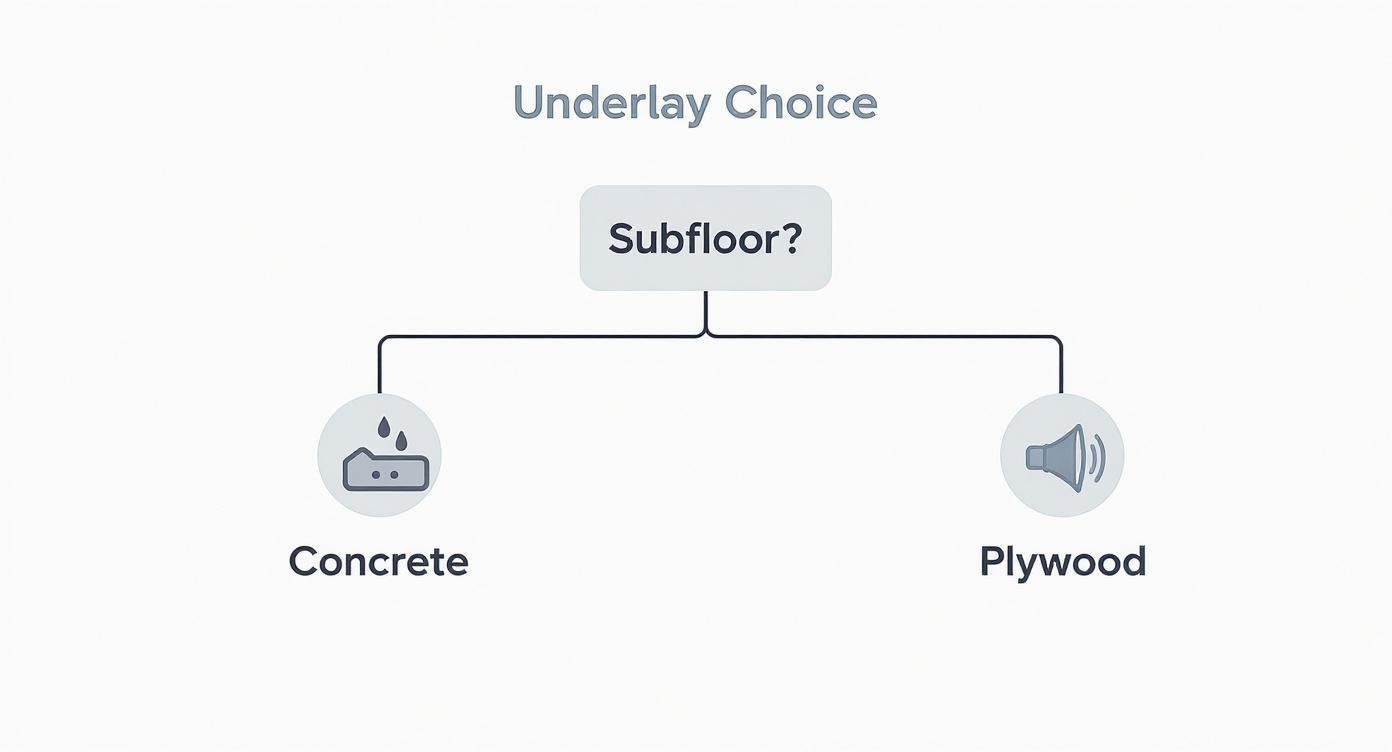
The takeaway here is straightforward: if you have a concrete subfloor, moisture protection becomes your top priority. If you're working with plywood, you can shift your focus to things like acoustic performance.
Felt Underlayment: The Comfort Choice
Recycled felt underlayment is all about its dense, fibrous build. That density is what makes it so good at dampening sound, especially airborne noise like voices or music. It also gives a noticeably cushioned feel underfoot, which is why so many homeowners in Forsyth County choose it for bedrooms and living rooms.
Felt is also great at evening out small subfloor irregularities, providing a forgiving base that helps keep annoying creaks and squeaks at bay. Since it's a breathable material, it’s best used over plywood subfloors where you don't have to worry about moisture coming up from below.
Key Differentiator: Felt's magic lies in its blend of soft comfort and sound absorption. It truly shines when you want to create a quieter, more comfortable walking surface, making it an ideal pick for second-story rooms where you need to minimize noise traveling downstairs.
Cork Underlayment: The Natural Insulator
For those looking for a natural, sustainable option, cork is a fantastic choice. Harvested from the bark of cork oak trees, it's an eco-friendly material that delivers some seriously impressive performance. Its unique cellular structure is full of tiny air pockets, which makes it an incredible thermal and acoustic insulator.
This natural insulation helps keep your floors feeling warmer in the winter, a big plus if your room is over a cool concrete slab or an unheated crawl space. Cork also has excellent compressive strength. This means it won’t get crushed under heavy furniture or constant foot traffic, which helps protect your floor's locking system for years to come.
One important note: while cork is naturally moisture-resistant, it is not a waterproof vapor barrier. If you're installing it directly over concrete, you absolutely must pair it with a separate 6-mil polyethylene moisture barrier to prevent moisture from damaging your wood floors.
Rubber Underlayment: The Ultimate Sound Blocker
When you need the absolute best in sound reduction and moisture protection, rubber underlayment is the premium solution. Typically made from recycled tires, rubber is incredibly dense, which gives it unparalleled sound-blocking abilities. It's a beast at deadening impact noise—like footsteps—making it the best underlay for wood flooring in condos, apartments, and multi-level homes where sound travel is a major concern.
That same density also provides exceptional compressive strength, offering rock-solid support for both solid and engineered hardwood. On top of that, rubber is impermeable to moisture, so it acts as an all-in-one vapor barrier and underlayment. This makes it a perfect fit for basements and on-grade concrete slabs, which are common here in the Cumming area. The only trade-off for this top-tier performance is its higher cost and significant weight, which can make the installation a bit more of a workout.
Wood Flooring Underlayment Performance Comparison
To make your decision a little easier, we've put together this table comparing these materials across the most important performance factors. It helps lay out the strengths and weaknesses of each option side-by-side.
| Underlay Type | Best For Sound | Moisture Protection | Thermal Value | Ideal Subfloor | Average Cost |
|---|---|---|---|---|---|
| Foam | Good | Varies (often needs a separate vapor barrier) | Fair | Plywood & Concrete | $ |
| Felt | Very Good | Low (not for concrete or damp areas) | Good | Plywood (Upper Levels) | $$ |
| Cork | Excellent | Good (needs a separate vapor barrier on concrete) | Excellent | Plywood & Concrete | $$$ |
| Rubber | Superior | Superior (acts as a built-in vapor barrier) | Good | Concrete (Basements, Condos) | $$$$ |
As you can see, each material offers a unique mix of benefits. Foam is a reliable, budget-friendly baseline. Felt adds a layer of comfort and quiet. Cork provides excellent natural insulation. And rubber delivers uncompromising performance for the most demanding jobs. The right fit ultimately comes down to your home, your subfloor, and your priorities.
How to Match Underlay to Your Subfloor
Picking the right underlay for your new wood floor isn't a one-size-fits-all decision. In fact, its performance really boils down to one critical thing: your subfloor. The material lying just beneath your hardwood dictates what that underlay needs to do—whether it’s fighting moisture, quieting footsteps, or keeping a room warm.
Think of your subfloor as the foundation of your project. A concrete slab in a Cumming, GA, basement brings a completely different set of rules than a plywood subfloor in a second-story bedroom. Getting this match right is the secret to protecting your investment and ensuring your floors look and feel great for years to come.
Protecting Wood Floors Over Concrete Subfloors
By its very nature, concrete is porous. It’s constantly wicking moisture from the ground, and even if it feels bone-dry to the touch, there's always a tiny amount of water vapor rising through the slab. For a wood floor, that’s a recipe for disaster. It leads to cupping, warping, and damage that you just can't undo.
Because of this, any wood flooring installed over concrete absolutely must have a robust moisture barrier as its first line of defense. This is non-negotiable.
-
Scenario A: The Finished Basement: Let's say you're putting engineered hardwood in a newly finished basement. Your best bet here is a dense rubber underlayment. Its impermeable structure does it all—it acts as a powerful vapor barrier and a great sound dampener, giving you maximum protection and a solid feel under your feet.
-
Scenario B: The On-Grade Slab Home: For a house built on a concrete slab at ground level, you might go with an advanced foam underlayment that has an integrated vapor barrier. These products are designed with a very low perm rating (often below 0.1 perms) and have sealed seams to create a continuous shield against moisture.
In both situations, the goal is the same: completely isolate the wood from the concrete. Skipping this step is one of the most common and costly mistakes we see.
Crucial Takeaway: For any concrete subfloor, basement or main level, your underlayment must be a true vapor barrier. If you prioritize moisture protection above everything else, you’ll save yourself from catastrophic floor failure down the road.
Before you lay down a single plank, it's also vital to make sure the concrete itself is perfectly level. Even minor dips and bumps can show through the underlay and create an unstable surface for the wood. You can learn more about this essential prep work in our guide on how to level uneven floors.
Choosing Underlay for Plywood or OSB Subfloors
Things change when your subfloor is plywood or Oriented Strand Board (OSB), which you'll typically find on the upper levels of a home. Moisture rising from the ground is no longer the main enemy. Instead, your focus shifts to things like acoustic performance, thermal comfort, and a little bit of cushioning.
This is where you have more flexibility to pick an underlay that really improves how you experience the room. The right choice will depend on what the room is used for and where it is in the house.
Prioritizing Sound and Comfort on Upper Levels
For bedrooms, home offices, and second-story living rooms, keeping noise down is often the biggest goal. The "click-clack" of footsteps can easily travel to the rooms below, making for a pretty noisy house. This is where materials with high IIC (Impact Insulation Class) ratings really shine.
-
Example: The Upstairs Bedrooms: In a family home, installing a good felt or cork underlayment in the upstairs bedrooms would be a fantastic move. Recycled felt is amazing at absorbing sound and provides a soft, cushioned feel, making the rooms much quieter and more comfortable.
-
Example: The Home Office Over a Garage: If you're putting new floors in a bonus room situated over a chilly garage, cork underlayment is the perfect solution. Its natural cellular structure gives it incredible thermal insulation, which helps keep the floor from feeling cold while also doing a great job of dampening sound.
Unlike with concrete, you generally don't need a separate vapor barrier over a wood subfloor unless there’s a specific moisture concern, like a bathroom on the floor below. For most situations, a quality felt, cork, or standard foam underlayment provides the ideal balance of support, comfort, and sound reduction. The trick is to look at the space and choose the material that solves the most pressing need.
Installation Best Practices to Avoid Costly Mistakes
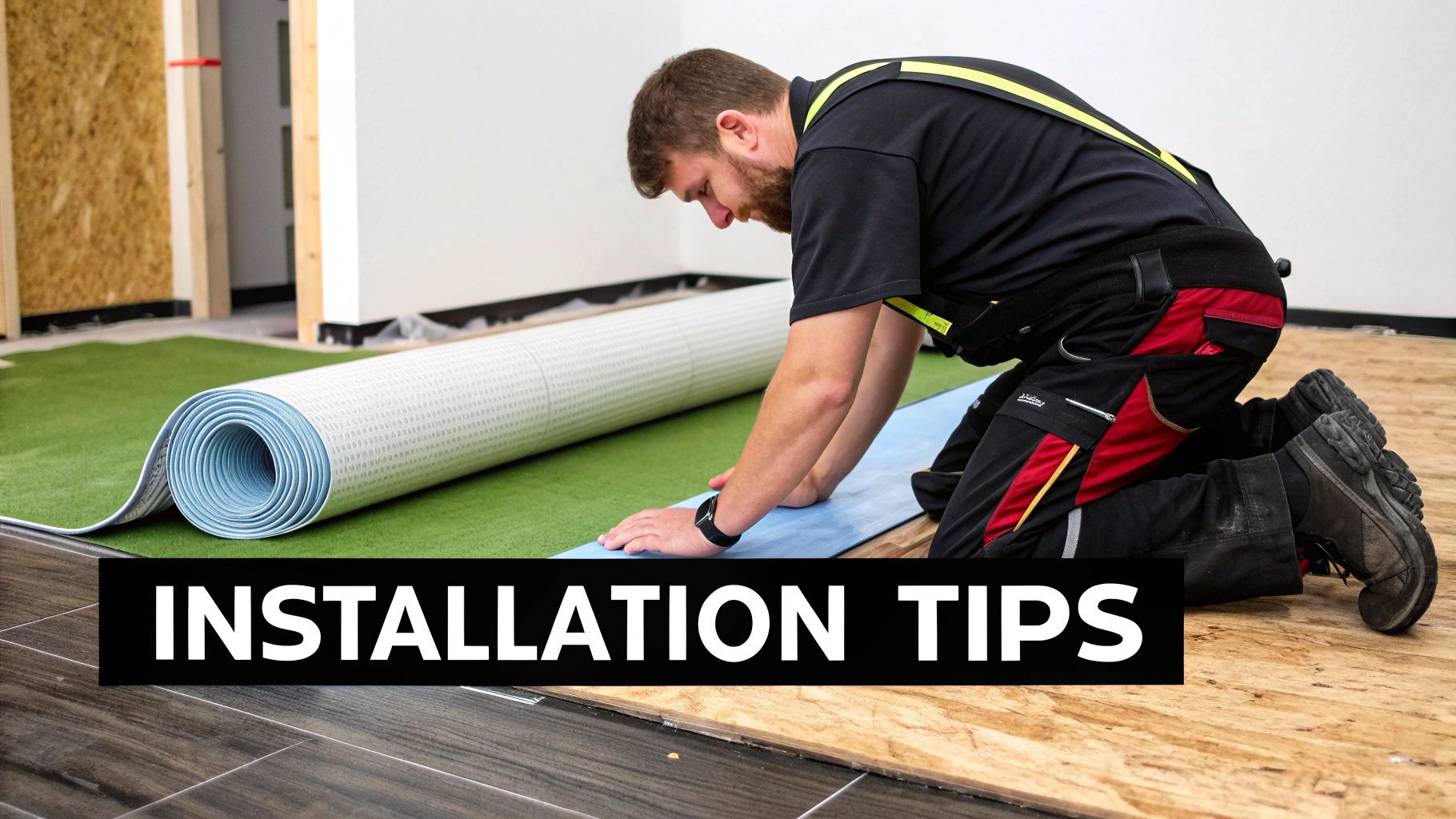
You can pick the absolute best underlay for wood flooring, but if it’s installed poorly, it’s not going to do its job. A quality installation is what makes all your careful planning and investment pay off. It’s the difference between a floor that lasts for decades and one that starts causing headaches in a few years.
Even tiny mistakes can lead to hollow spots, annoying squeaks, or moisture damage down the road. These aren't just minor annoyances; they're expensive and messy problems to fix once your beautiful hardwood is down. Following a few key best practices ensures your underlayment performs exactly as it should.
Subfloor Preparation Is Non-Negotiable
Before you even think about unrolling your underlayment, the subfloor needs to be perfect. I can't stress this enough. This is the foundation for everything, and if you cut corners here, you’ll see and feel the consequences in the finished floor.
Your subfloor must be:
- Completely Clean: Get rid of every bit of dust, debris, and old adhesive. We always give it a thorough sweep and then go over it with a shop vacuum. You don't want anything trapped under there, creating bumps and crunches.
- Perfectly Flat: Grab a long straightedge and check for high and low spots. Most flooring manufacturers won't warranty a floor unless the subfloor is flat within 3/16 of an inch over a 10-foot span. High spots need to be ground down, and low spots filled with a leveling compound.
- Bone Dry: Moisture is the ultimate enemy of hardwood. If you're going over concrete, you absolutely have to do a proper moisture test to make sure the slab is cured and dry. For plywood, check for any signs of leaks or dampness.
Taping Seams for a Seamless Barrier
When you're installing underlayment, especially one with a built-in moisture barrier, how you handle the seams is critical. Your goal is to create one big, continuous sheet that completely blocks moisture vapor from getting through.
Never overlap the underlayment material itself. That’s a rookie mistake. Instead, butt the edges of each roll together tightly and seal the seam with a manufacturer-approved waterproof tape. Overlapping the underlay creates high spots that will make your flooring feel uneven and unstable underfoot.
Expert Installation Tip: I’ve seen people try to use duct tape or masking tape on seams, and it always fails. Those tapes degrade over time. You have to use a high-quality polyethylene vapor barrier tape made specifically for this purpose to create a seal that will actually last.
Avoiding Common and Costly Installation Errors
It’s the little things that can derail a project, often voiding your flooring warranty and leading to repairs that cost more than you bargained for. Paying attention to detail is everything. As you plan, it's also smart to understand the full picture, including the hardwood flooring installation cost, to budget properly.
Here are the most common slip-ups we see people make:
- Choosing an Underlay That's Too Thick: Thicker does not mean better. A thick, squishy underlayment allows too much movement in the floor’s locking system, which leads to creaking, joint stress, and eventual failure. Stick to the flooring manufacturer’s specs, which is usually around 3mm for floating floors.
- Overlapping the Underlayment Seams: As I mentioned, this is a big no-no. The ridges created by overlapping seams will cause your floor planks to rock and feel bouncy, putting constant stress on the joints.
- Forgetting to Acclimate Your Materials: Both your wood flooring and your underlayment need to sit in the room where they'll be installed for at least 48-72 hours. This allows them to adjust to the home's normal temperature and humidity. Skipping this step is asking for trouble with gapping or buckling later on.
Your Top Questions About Wood Flooring Underlay
When you get down to the nitty-gritty of a flooring project, a few final questions always pop up about underlayment. Getting clear, straightforward answers is the best way to feel confident in your choice and make sure your new floor is a success from the ground up.
Let's dive into some of the most common things we hear from homeowners around Cumming.
Do I Really Need Underlay Over Plywood?
Yes, you absolutely do. It's a common misconception that underlay is only for concrete slabs. While you might not be fighting the same moisture battle with plywood, the underlayment is doing so much more than that. Think of it as a performance enhancer for your beautiful new wood floors.
A good underlayment over plywood provides crucial sound dampening, quieting down everything from footsteps to noises traveling between floors. It also adds a bit of cushion for underfoot comfort and, just as importantly, helps smooth over minor imperfections in the subfloor. This creates a perfectly stable base for the wood planks, protecting their locking systems from stress over the years.
Can I Reuse My Old Underlayment?
I'll make this one easy for you: it's almost always a bad idea. Underlayment, especially the foam kind, gets compressed and tired after years of being walked on and having furniture sit on it. It develops permanent indentations and loses its ability to provide real support and cushioning.
If you reuse that old, worn-out material, you're building your brand-new floor on a failing foundation. It won't give you the same acoustic benefits or support for the new floor's joints. This can quickly lead to annoying creaks and squeaks, and it could even void your new flooring's warranty. Always start fresh for the best underlay for wood flooring performance. It's a small investment that protects a much larger one.
What Is the Best Underlay for Noise Reduction?
If you’re trying to create a quieter home and minimize noise between floors, you need to look at materials with a high Impact Insulation Class (IIC) rating. In this arena, dense materials are the undisputed champions.
- Rubber: It’s simply unmatched for blocking impact noise. This makes it the top choice for condos, apartments, or any second-story room where you're worried about the sound of footsteps.
- Cork: A very close second, offering fantastic acoustic and thermal insulation. Its natural cellular structure is incredible at absorbing sound vibrations.
Both rubber and cork will dramatically outperform a standard foam underlay when your goal is a peaceful, quiet home.
Pro Tip: Don't get fixated on thickness. A thin but dense underlay like rubber will often give you far better sound reduction and support than a thick, squishy foam. Always stick to the flooring manufacturer’s specifications, which usually recommend an underlay around 3mm thick. Going too thick can actually destabilize the floor's locking mechanism.
When to Call in a Flooring Pro
Even with the best information at your fingertips, some flooring situations just demand a professional touch. Knowing when to step back and call an expert isn't admitting defeat—it's the smartest way to protect your investment and guarantee a beautiful, lasting floor.
Sometimes the biggest problems are the ones you can't see. A seasoned pro can spot subtle subfloor issues that a DIYer might overlook, saving you a world of headaches and expensive repairs later on.
Complex Subfloors and Tricky Installations
If you pull up the old flooring and find a subfloor with major issues, that’s your cue to call for help. We're talking about significant cracks, signs of ongoing moisture problems, or surfaces that are obviously out of level. These aren't minor fixes; they require professional-grade preparation to avoid a complete flooring failure down the road. An expert has the right equipment and know-how to properly level, seal, and prep the surface.
The same goes for complex installations. If your project involves navigating a room with lots of odd angles, or creating seamless transitions to other flooring types like tile, it's a job for a pro. They’ll make sure both the underlayment and the wood are installed according to the manufacturer’s exact specifications, which is crucial for keeping your warranty intact.
A flooring professional does more than just lay the planks. Their expertise is in the details—from conducting precise moisture tests to recommending the perfect underlay and wood combination for your specific home environment. That’s how you get a flawless result that protects your investment.
If your flooring project is part of a larger remodel, knowing how to choose a contractor who works well with your flooring installer is also key to a smooth process.
At the end of the day, hiring a professional is about peace of mind. You can rest easy knowing every single detail has been handled correctly, and your stunning new floors will perform perfectly from the moment you walk on them.
For expert advice tailored to your home in Cumming, GA, and the surrounding Forsyth County area, trust the team at Flacks Flooring. We can guide you through every step, from subfloor assessment to the final walk-through. Contact us today for a consultation.