
Picking the right hardwood is only half the battle. The real secret to a great floor lies underneath, in the high-performance material known as underlayment. It’s what provides critical moisture protection, sound absorption, and even a bit of thermal insulation. What works best for your project depends entirely on your subfloor, the type of wood you’ve chosen, and what you need the floor to do.
The Unsung Hero Beneath Your Hardwood Floors
Everyone oohs and aahs over beautiful hardwood planks, but the real MVP is the unseen layer of underlayment working tirelessly beneath them. This crucial barrier is your floor's first line of defense, a non-negotiable part of the system that protects your hardwood from the subfloor up. I’ve seen it time and again: skipping this step or grabbing the wrong type leads to frustrating squeaks, warped boards, and can even void your flooring warranty.
A quality underlayment isn't just a thin sheet of something-or-other; it performs several critical jobs that ensure your floors look and feel great for decades.
What an Underlayment Actually Does
Think of underlayment as the foundation for your foundation. It acts as both a shock absorber and a shield, heading off problems before they ever get a chance to damage your beautiful new hardwood. It's the one thing that separates a professional, long-lasting installation from one that starts failing in a few years.
Here’s what it’s doing for you:
- Moisture Protection: It forms a barrier against vapor that inevitably rises from concrete slabs or damp crawl spaces. Without it, that moisture can cause wood to cup, warp, or even grow mold.
- Sound Absorption: It makes a huge difference in reducing both impact noise (like footsteps) and airborne sound, leading to a much quieter and more peaceful home.
- Thermal Insulation: It adds a layer of insulation, which helps keep floors warmer underfoot in the winter and can reduce heat loss, especially over basements or garages.
- Subfloor Correction: It smooths out minor imperfections in the subfloor, giving the hardwood a perfectly flat and stable surface to rest on.
Setting Your Underlayment Priorities
Which of these jobs is most important? That depends entirely on your situation. A homeowner in a Cumming, GA condo is probably most concerned with sound reduction to keep the neighbors happy. But someone putting new hardwood in their Johns Creek basement needs to make moisture control their absolute top priority.
Figuring this out is the key to selecting the right material.
| Priority | Key Benefit | Ideal For | Common Materials |
|---|---|---|---|
| Moisture Control | Prevents warping and mold | Concrete subfloors, basements | Foam with vapor barrier, Rubber |
| Sound Reduction | Minimizes footstep noise | Multi-story homes, condos | Cork, Dense Felt, Rubber |
| Comfort & Thermal | Adds softness and warmth | Cold climates, rooms over garages | Cork, Felt |
"A floor’s lifespan depends as much on what’s underneath as what’s on top. The best floors are always built on thoughtful preparation."
At the end of the day, investing in the right underlayment is an investment in the entire flooring system. It's the silent partner that ensures your hardwood performs just as beautifully as it looks for years to come.
Comparing Underlayment Materials: A Performance Breakdown
Choosing the right underlayment for a wood floor isn't about grabbing the first roll you see at the hardware store. Every material—foam, cork, rubber, and felt—brings a different set of strengths to the table. The trick is matching those strengths to your specific situation, whether you’re trying to quiet down a second-story bedroom in Cumming or block moisture from a concrete slab in your Milton basement.
We're going to skip the generic pro/con lists. Instead, let's get into what really matters: how these materials perform on sound reduction, moisture resistance, and thermal value. Nailing this choice is the key to a floor that’s quiet, durable, and comfortable for years to come.
This infographic lays out the three core jobs your underlayment needs to handle to protect and elevate your wood flooring.
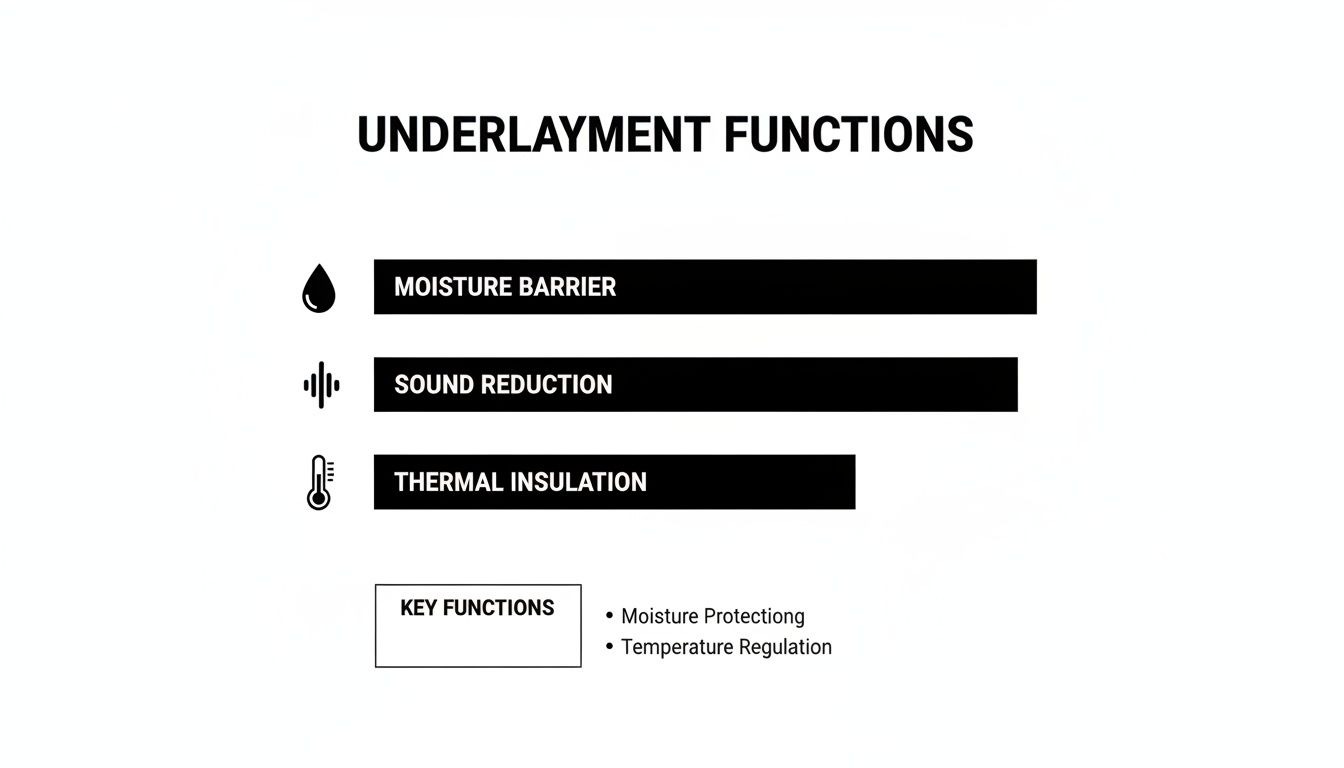
As you can see, it all comes down to controlling moisture, absorbing sound, and providing a thermal break. Let's dig into which material does what best.
Foam: The Versatile Standard
Foam is hands-down the most common underlayment you'll encounter, mostly because it's affordable and gets the job done in many situations. Your standard polyethylene foam is a budget-friendly way to get some basic cushioning and smooth over tiny imperfections in a subfloor. That's why you see it so often with floating engineered hardwood floors laid over plywood, where moisture isn't the biggest threat.
But not all foam is created equal. Many of the better foam products come with a pre-attached vapor barrier—a thin film that is an absolute must for any installation going over concrete. These combo products are a great all-in-one solution. While basic foam does very little for sound, some of the higher-density versions can take the edge off.
Key Insight: Think of foam as the practical workhorse. It's an excellent, cost-effective choice for general-purpose jobs, especially the versions with an integrated vapor barrier for concrete subfloors.
Cork: The Natural Sound and Thermal Insulator
If you’re sensitive to noise or just prefer natural materials, cork is in a class of its own. It's harvested from the bark of cork oak trees, and its natural honeycomb-like structure is full of tiny air pockets. This makes it a fantastic sound absorber. It truly shines at dampening impact noise—think footsteps, dropped toys, and chairs scraping. We recommend it all the time for condos and upper-level rooms in Johns Creek and Forsyth County homes for this very reason.
Beyond its acoustic benefits, cork is also a great thermal insulator. It helps keep floors from feeling so chilly underfoot in the winter, which makes a huge difference in rooms over garages or unheated basements. While cork is naturally antimicrobial and resists moisture, it is not waterproof. You absolutely must pair it with a separate 6-mil polyethylene vapor barrier if you're installing it over concrete.
Rubber: The High-Density Sound Blocker
When you need maximum sound control and durability, rubber is the heavy hitter. Usually made from recycled tires, this stuff is incredibly dense and tough, giving it superior sound-blocking power. Its high IIC (Impact Insulation Class) and STC (Sound Transmission Class) ratings make it one of the best underlayments for wood floors in apartments, townhomes, or anywhere else noise is a major issue.
Rubber is also excellent at resisting moisture, and in many cases, it’s dense enough that you don't need a separate vapor barrier over concrete slabs. Its density gives the hardwood a very firm, solid feel underfoot, eliminating the slight "bounce" you can get from softer foams. It does cost more, but for high-traffic areas or luxury projects, the top-tier performance and longevity are well worth the investment.
Felt: The Traditional Choice for Comfort
Felt underlayment, typically made from recycled fibers, is an old-school option that’s all about a plush feel and great sound dampening. It’s thick and provides a noticeable cushion underfoot while doing a great job of evening out subfloor irregularities. This makes it an ideal partner for solid hardwood floors that need consistent, robust support.
The dense, fibrous construction of felt is fantastic for soaking up ambient sound, making for a much quieter home. It provides good thermal value, too. Just like cork, standard felt is not a vapor barrier. You’ll have to roll out a separate moisture-blocking film when installing it over concrete. But if you're after that combination of comfort, quiet, and insulation, felt is a premium choice for creating a truly comfortable living space.
To make the decision a bit easier, here's a side-by-side comparison of how these materials stack up in the real world.
Underlayment Performance Comparison
This table breaks down the key performance metrics, typical costs, and ideal scenarios for the most common underlayment materials used in wood flooring projects.
| Material | Acoustic Performance | Moisture Resistance | Thermal Value | Ideal Application |
|---|---|---|---|---|
| Foam | Low to Moderate | Good (with vapor barrier) | Low | Budget-friendly installs, floating floors over plywood |
| Cork | Excellent | Good (requires vapor barrier on concrete) | Excellent | Upper floors, condos, eco-conscious projects |
| Rubber | Superior | Excellent | Good | High-end soundproofing, commercial or high-traffic areas |
| Felt | Excellent | Low (requires vapor barrier on concrete) | Excellent | Luxury installations, comfort-focused spaces |
Ultimately, the best underlayment for your wood floors comes down to a clear-eyed assessment of your project's specific needs. By weighing each material's core strengths against your priorities—be it sound, moisture, or comfort—you can choose a foundation that protects your investment and makes your home a better place to live.
Why Cork Is a Premier Choice for Natural Performance
If you're looking for an underlayment that's both natural and high-performing, cork is in a class of its own. It's sourced from the bark of the cork oak tree, making it a fantastic eco-friendly option. But it's much more than just a sustainable choice; its unique cellular structure delivers incredible performance that synthetic materials just can't match. For homeowners who really care about acoustic comfort, thermal insulation, and creating a healthier indoor space, cork is the answer.

The real magic is in its composition. Cork is made up of millions of tiny, air-filled cells that work like microscopic cushions. This structure makes it a phenomenal sound absorber, particularly for impact noise—think of the thuds from footsteps, dropped toys, or furniture being moved around. That's exactly why we often recommend it as the best underlayment for wood floors in multi-story homes, condos, or anywhere sound transmission is a major concern.
Superior Acoustic and Thermal Insulation
One of the biggest reasons people choose cork is its ability to create a quieter, more peaceful home. Those air-filled cells are brilliant at disrupting sound waves, which significantly cuts down on the noise traveling between floors. It’s a natural soundproofing quality that can completely change the feel of a room, making it more private and serene.
Those same air pockets also provide some pretty impressive thermal insulation. A cork underlayment acts as a thermal break, helping your wood floors feel warmer underfoot, especially during those colder months. You'll really notice the difference in rooms built over garages, basements, or crawl spaces, where it helps stop heat from escaping and makes the whole area more comfortable.
In the active flooring markets of North Georgia—including Cumming, Forsyth County, Johns Creek, and Milton—choosing the right underlayment can make a huge difference in your floor's longevity and comfort. Industry data shows North America leads global demand due to high renovation rates, and with the global floor underlayment market valued at US$1.497 billion in 2024 and projected to hit US$1.911 billion by 2031, it's clear homeowners are investing in quality. For families renovating in our area, cork is a standout choice that aligns perfectly with a comfortable, quality-focused lifestyle. You can explore more data on the global underlayment market to see these trends firsthand.
Natural Resilience and Moisture Resistance
Cork doesn't just insulate; it also gives your floor a subtle cushioning effect that absorbs impact. This resilience makes the floor noticeably softer and more comfortable to walk on, which is great for reducing strain on your joints. That's a huge plus for any household with active kids or pets. This quality also helps protect the wood floor’s locking system by absorbing shocks that could otherwise cause damage over time.
Key Takeaway: Cork is naturally antimicrobial and moisture-resistant because it contains a waxy substance called suberin. This inherent property helps stop mold and mildew from growing, which is a big win for your home's air quality.
It's really important to remember, though, that "moisture-resistant" doesn't mean "waterproof."
- Plywood Subfloors: On upper levels, cork is an excellent choice to install directly over a wood subfloor.
- Concrete Subfloors: If you're installing over a concrete slab, you must pair cork with a separate 6-mil polyethylene vapor barrier. This is non-negotiable for blocking moisture vapor from wicking up through the concrete.
Using this two-part system ensures you get all of cork's amazing acoustic and thermal benefits without risking moisture damage to your beautiful hardwood. Choosing cork is an investment in your home's comfort, durability, and long-term value, making it a top-tier choice for any wood floor installation.
Foam Underlayment: The Practical, All-Around Choice
If there's a workhorse in the world of wood floor underlayment, it’s foam. For years, it's been the go-to for countless flooring projects, and for good reason. It’s a practical, accessible solution that provides the basic cushioning and subfloor correction that most floating engineered hardwood and laminate floors need to perform well.
Think of it as a thin buffer between your new hardwood and the subfloor. That slight separation makes the floor more comfortable underfoot while also gliding over minor imperfections like small bumps or cracks. You need a flat, stable surface for the floor's locking system to last, and foam helps you get there without breaking the bank.
Not All Foam Is the Same: Standard vs. Advanced Options
It’s easy to lump all foam underlayment together, but there are key differences you need to know. The most common type you’ll see is standard polyethylene foam. This is your basic, thin, lightweight roll—an excellent budget-friendly pick if you're installing over a plywood subfloor where moisture isn't a major worry. It gives you the essential cushioning and a bit of sound dampening for a standard floating floor.
But if you're installing over a concrete slab, you absolutely need to step up your game. Many modern foam products come with an integrated vapor barrier, which is just a thin, moisture-blocking film attached to one side. These 2-in-1 or 3-in-1 underlayments are a non-negotiable defense against the moisture that naturally wicks up from concrete. Without it, you’re risking warped boards, cupping, and even mold.
A Quick Tip from the Field: When you’re using foam with an attached vapor barrier, don't just overlap the seams. You must seal them with a moisture-resistant tape. An unsealed seam is like a hole in a boat—it completely undermines the whole point of the barrier.
As homeowners across Cumming and Forsyth County continue to renovate, foam underlayment is proving to be the best all-around option. This isn’t just a local trend; the global market is projected to grow from USD 3.5 billion in 2023 to USD 5.8 billion by 2032. This synthetic powerhouse delivers serious protection, absorbing up to 95% of subfloor imperfections to prevent the squeaks and creaks that plague roughly 40% of older homes in areas like Johns Creek and Milton, based on what local contractors are seeing.
What Foam Really Delivers
While foam might not have the high-end acoustic specs of cork or rubber, it delivers a fantastic balance of features that makes it a smart pick for the majority of homeowners. The key is just picking the right type for your specific situation.
- Comfort Underfoot: Foam adds a noticeable softness when you walk, which can reduce foot fatigue. That little bit of give also helps protect the tongue-and-groove joints of floating floors from unnecessary stress.
- Minor Subfloor Smoothing: It does a great job of evening out small imperfections, which is critical for a stable and quiet floor. Just remember, for bigger dips or humps, you'll still need to do proper subfloor prep first.
- Moisture Defense: When you choose a version with a built-in vapor barrier, foam is one of the best lines of defense against moisture from concrete. This is a must-have for any installation in a basement or on a slab-on-grade foundation.
- Budget-Friendly: Hands down, foam is almost always the most affordable underlayment. You can get solid, reliable performance without putting a huge dent in your project budget.
This blend of benefits makes foam incredibly practical, especially for DIYers who love how easy it is to just roll it out and get to work. While many people associate it with laminate, the same logic applies to engineered wood floors. You can read more about the crossover in our guide to padding for laminate floor installation.
By simply knowing the difference between a basic roll and one with a moisture barrier, you can confidently choose a versatile foundation that will help your new wood floors look and feel great for years.
Pairing Underlayment with Your Floor and Subfloor
When it comes to wood floor underlayment, there's no single "best" option. The real goal is to create a perfectly matched system where your hardwood, underlayment, and subfloor all work together seamlessly. Getting this pairing right is the difference between a floor that lasts a lifetime and one that causes headaches down the road.
Think of it this way: you wouldn't put off-road tires on a sports car. The same logic applies here. The right choice is a direct response to two things: the kind of hardwood you've picked and what you're putting it on top of. A mismatch can lead to squeaks, buckling planks, and moisture damage—turning a beautiful investment into a costly repair.
The Concrete Subfloor Challenge
Laying hardwood over a concrete slab is a common job, especially for basements or ground-floor installations in and around Cumming. If you're going over concrete, one rule is absolute: you must have a powerful vapor barrier.
Concrete is naturally porous and constantly wicks moisture vapor up from the ground. If that moisture gets trapped beneath your wood floor, the planks will swell, cup, and ultimately fail. It’s a guaranteed disaster without the right protection.
You have a couple of solid ways to handle this:
- Go with an all-in-one solution. Many modern foam and high-density rubber underlayments come with a moisture-blocking film already built-in. This simplifies the installation into a single step.
- Create a two-part system. You can opt for a material like cork or felt for its superior sound and thermal insulation. Just be sure to first lay down a separate 6-mil polyethylene sheet. Make sure the plastic runs a few inches up the walls and that you overlap and tape all the seams.
Expert Insight: Before a single plank goes down on concrete, you have to test for moisture. It’s a quick step that can save you from a complete flooring catastrophe. We walk you through the whole process in our guide on how to test concrete for moisture.
Since moisture is the main enemy when installing over concrete, especially in basements, it’s also smart to think about how to avoid mold in your basement. A dry subfloor is the foundation of a healthy, long-lasting wood floor.
Plywood and OSB Subfloors
When you're working with a wood subfloor like plywood or OSB—which is typical for upper levels in homes across Forsyth County and Johns Creek—the game changes. The primary threat is no longer moisture coming up from the ground. Now, the main concern is noise.
Your focus shifts to dampening impact sounds, like footsteps, kids dropping toys, or furniture being moved around, which can easily travel to the rooms below. This is where high-performance acoustic underlayments really prove their worth.
Material Recommendations for Wood Subfloors:
- Best for Soundproofing: If you want to deaden sound, cork and dense felt are the undisputed champions. They excel at absorbing vibrations, making them perfect for second-story bedrooms or hallways above a living room.
- Great All-Around Choice: A quality foam underlayment still does a good job cushioning the floor and smoothing out tiny imperfections in the subfloor.
- The Luxury Option: For top-tier sound blocking and a rock-solid feel underfoot, high-density rubber is an excellent choice.
Even with a wood subfloor, you can't completely ignore moisture. If the floor is above a damp crawlspace or a humid basement, a basic foam with a thin integrated vapor barrier is a smart, inexpensive insurance policy.
Solid vs. Engineered Hardwood Needs
The construction of your hardwood floor also plays a huge role in choosing the right underlayment. Solid and engineered planks behave differently, so they need different kinds of support.
Solid Hardwood Flooring:
Old-school solid wood planks are almost always nailed or stapled down to a plywood subfloor. For this type of installation, a thin but dense underlayment like 15 lb asphalt-saturated felt paper (often just called "felt paper") is the traditional choice. It doesn't provide cushion; instead, it acts as a "slip sheet" that reduces friction while the wood expands and contracts with the seasons, and it offers a bit of moisture resistance. You want to avoid anything thick or spongy here, as it can create too much flex and cause the fasteners to loosen over time.
Engineered Hardwood Flooring:
Engineered hardwood is a different beast. It's usually installed as a "floating" floor, meaning the planks just click together and rest on top of the subfloor without being nailed down. This method puts the underlayment front and center—it’s responsible for stability, comfort, and sound absorption.
- For Floating Floors: This is where foam, cork, and rubber underlayments are the perfect partners. They provide the cushion that makes the floor comfortable to walk on, smooth out the subfloor, and—if they have a vapor barrier—protect the planks from any moisture from below. The trick is to pick a thickness that supports the floor’s locking mechanism without allowing too much vertical bounce, which can put stress on the joints and cause them to fail.
Critical Underlayment Mistakes You Must Avoid
You can spend a fortune on gorgeous hardwood, but if the underlayment is wrong, the entire project is at risk. I've seen it happen time and again—simple, avoidable mistakes that turn a dream floor into a nightmare of squeaks, gaps, and moisture damage. Let’s walk through the most common pitfalls so you can get it right the first time.
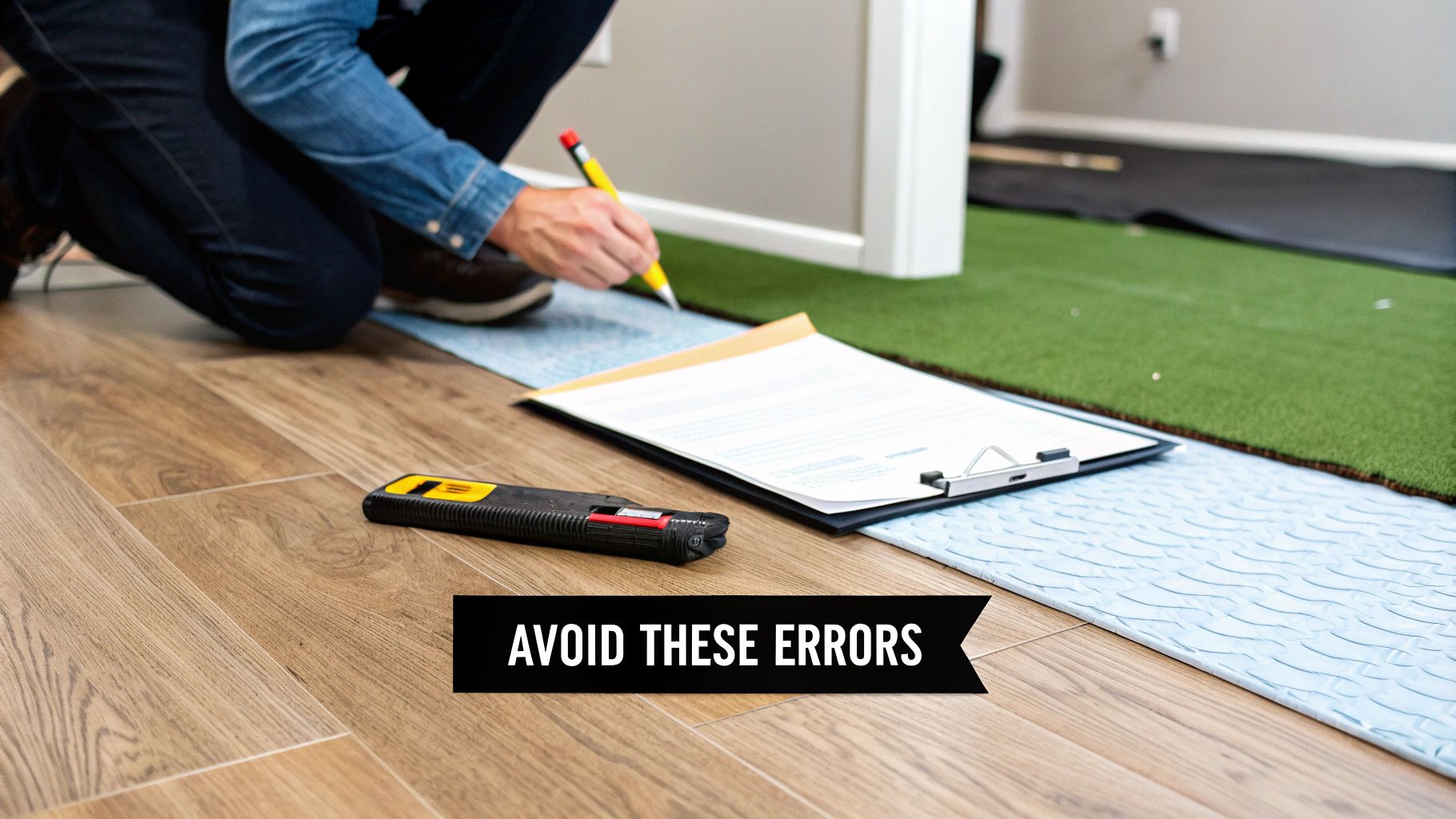
The number one mistake is picking the wrong thickness. People often think thicker means more cushion and better soundproofing. While that can be true to a point, an overly thick or spongy underlayment creates too much give. This vertical movement puts constant stress on the tongue-and-groove joints, leading to annoying squeaks and even plank separation down the road.
Ignoring Your Subfloor
Another huge error is laying underlayment over a subfloor that isn't ready. Your underlayment can smooth out minor imperfections, but it's not a magical fix for major dips, humps, or unlevel surfaces. When you install over a bad subfloor, you end up with a floor that feels hollow in some spots and bouncy in others—it's just a matter of time before you hear it and feel it.
Taking the time to prep is crucial. For bigger issues, you might need to do some real work. We've put together a detailed guide on how to level uneven floors that shows you the right way to tackle it.
A clean, flat, and dry subfloor is non-negotiable. Skipping this foundational work guarantees problems down the line, regardless of how good your underlayment is.
Finally, don't mess up the seams. This is so common yet so damaging. If you're using an underlayment with a built-in vapor barrier, those seams must be sealed perfectly with moisture-resistant tape. Even a tiny gap defeats the whole purpose, creating a perfect pathway for moisture to sneak through and wreak havoc on your beautiful hardwood.
Key Mistakes to Sidestep
- Choosing the Wrong Thickness: Always stick to the flooring manufacturer’s guidelines. Anything too thick will compromise the floor’s locking system.
- Skipping Subfloor Cleaning: Debris left on the subfloor gets trapped, creating crunching sounds and pressure points that can damage your floor from below. A quick sweep and vacuum makes all the difference.
- Ignoring Moisture Testing: This is a big one, especially over concrete slabs. Not testing for moisture is asking for warped, cupped, and ruined planks.
- Forgetting to Seal the Seams: An unsealed seam on a vapor barrier underlayment might as well not be there. It offers absolutely zero moisture protection.
Steering clear of these common blunders ensures your underlayment does its job, protecting your investment and giving you a solid, quiet wood floor that you'll love for years to come.
Common Questions About Wood Floor Underlayment
It's completely normal to have a few lingering questions when you're digging into the details of underlayment. Getting them sorted out is the first step toward a successful floor installation right here in Cumming or Forsyth County. Let’s tackle some of the most common things we hear from local homeowners.
Do I Really Need Underlayment for a Hardwood Floor?
Yes, almost without exception. Think of underlayment as the essential foundation for your floor's performance and longevity. It protects against moisture, deadens sound, and adds a bit of cushion underfoot.
Just as importantly, it bridges minor gaps in the subfloor and provides crucial support for the planks' locking systems. Skipping it is a risky move—it usually voids your flooring warranty and opens the door to problems like warping, squeaking, and permanent damage down the road.
What's the Best Underlayment for Soundproofing?
If peace and quiet are high on your list, you can't beat high-density cork or rubber underlayments. They are the heavyweights when it comes to blocking impact noise, like the sound of footsteps.
Their sheer density is fantastic at absorbing vibrations, which is why they earn top marks for their IIC (Impact Insulation Class) ratings. Dense felt is another great old-school choice that does a solid job of hushing a room, making it a popular option in many Johns Creek and Milton homes.
For anyone in a multi-story home or a condo, a high-performance acoustic underlayment is money well spent. The quiet it brings is something you'll appreciate every single day.
Can I Put Hardwood Directly on a Concrete Slab?
You absolutely can, but you have to do it right. The number one rule for installing over concrete is moisture protection. You must use an underlayment with a built-in vapor barrier.
The other option is to lay down a separate 6-mil polyethylene sheet before the underlayment. This isn't optional; it's the only way to block the constant moisture vapor that wicks up through concrete and prevent it from destroying your beautiful new wood floors.
Choosing the best underlayment for wood floors really does set the stage for an installation that will last for decades. If you need some expert advice for your project in Cumming, Johns Creek, or anywhere nearby, the team at Flacks Flooring is here to help. Visit our showroom or schedule an in-home consultation today!