
When it comes to picking the best waterproof flooring for a basement, Luxury Vinyl Plank (LVP) is what homeowners turn to again and again. It’s tough, 100% waterproof, and looks surprisingly like real wood. Of course, other fantastic options like porcelain tile and sealed concrete also offer incredible protection against moisture in those below-grade spaces. Ultimately, your decision will come down to a balancing act between your budget, the style you're after, and your basement's specific quirks.
Why Your Basement Demands 100% Waterproof Flooring
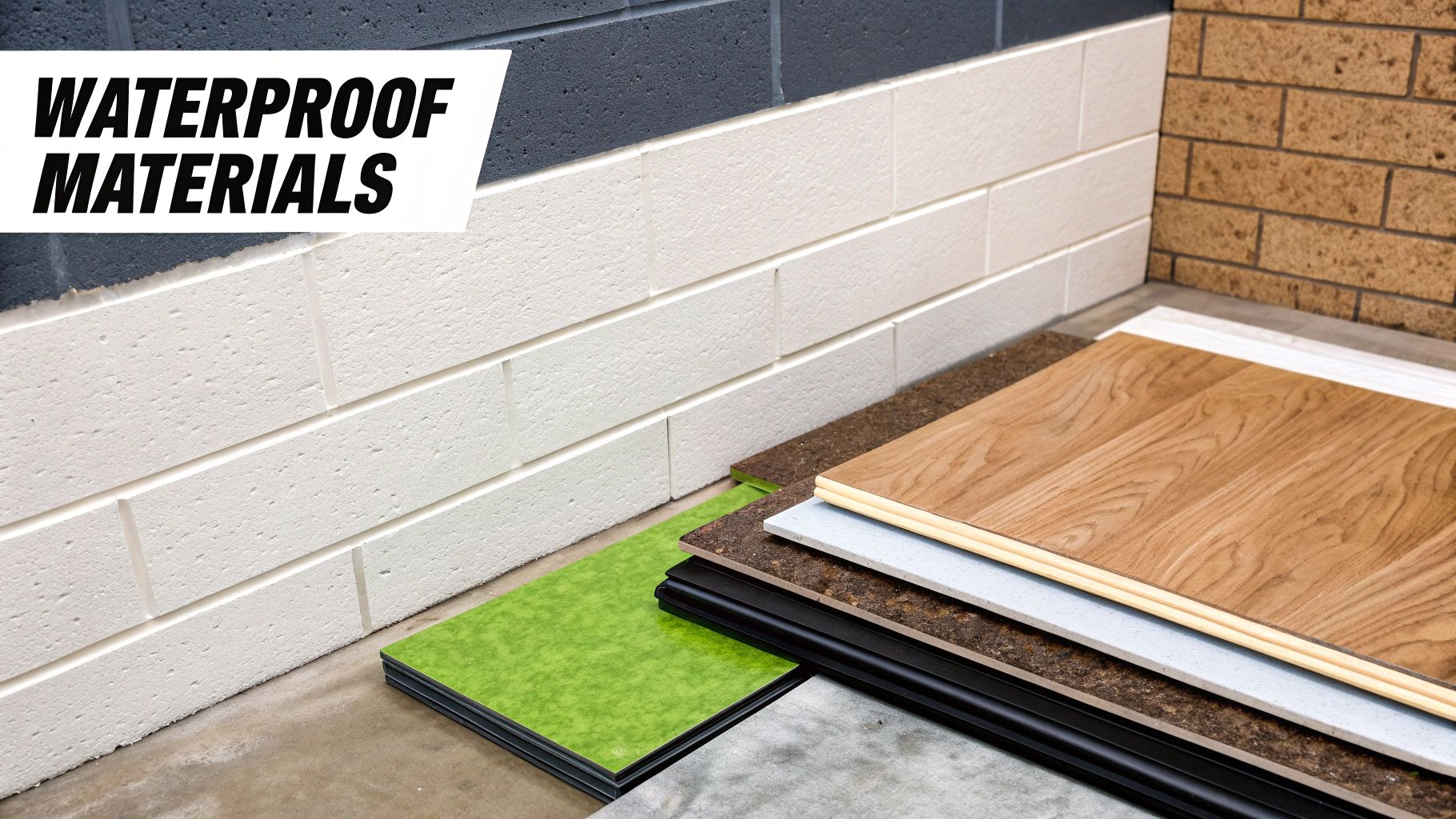
Let's be clear: basements aren't like any other room in your house. Because they sit below ground, they are naturally prone to moisture problems that can absolutely destroy standard flooring. Just slapping down a "water-resistant" floor is a risky bet you don't want to make in a space that's inherently damp.
A truly waterproof floor is non-negotiable because it creates an impenetrable barrier against all the moisture a basement can throw at it. We’re not just talking about big events like floods, either. The real threat often comes from the subtle, persistent dampness that causes massive damage over time.
Common Basement Moisture Sources
To really get why you need a fully waterproof solution, you first have to understand where all that water is coming from. Basements are constantly fighting a multi-front war against moisture.
- Hydrostatic Pressure: This is a fancy term for when groundwater saturates the soil around your foundation. That water builds up and literally pushes its way through tiny, invisible pores and cracks in the concrete.
- Condensation: When warm, humid air from upstairs drifts down into your cool basement, it hits the cold foundation walls and floor. The result? Water droplets form, leaving surfaces perpetually damp.
- Internal Leaks: Sometimes the call is coming from inside the house. A failing sump pump, a leaky pipe, or a busted water heater can dump a huge amount of water into your basement without warning.
If you ignore these realities and install materials like carpet, solid hardwood, or regular laminate, you’re setting yourself up for a disaster. These materials soak up moisture like a sponge, creating the perfect breeding ground for mold, causing planks to warp and buckle, and even weakening your home’s structure.
The most important thing to remember is that basement flooring needs to be completely impervious to water, not just resistant to a spilled drink. The material itself can't absorb moisture or break down, even if it's wet for a long time.
This isn't just an opinion; the market shows it's a priority for homeowners everywhere. The global waterproof flooring market was valued at USD 9.5 billion in 2024 and is expected to climb to USD 15.2 billion by 2033. This growth is all thanks to homeowners demanding reliable flooring for moisture-prone areas like basements.
A great floor is your last line of defense, but a dry foundation is your first. Thinking about the bigger picture of making your home leak-proof helps put the importance of waterproof flooring into context.
Comparing Top Waterproof Basement Flooring Materials
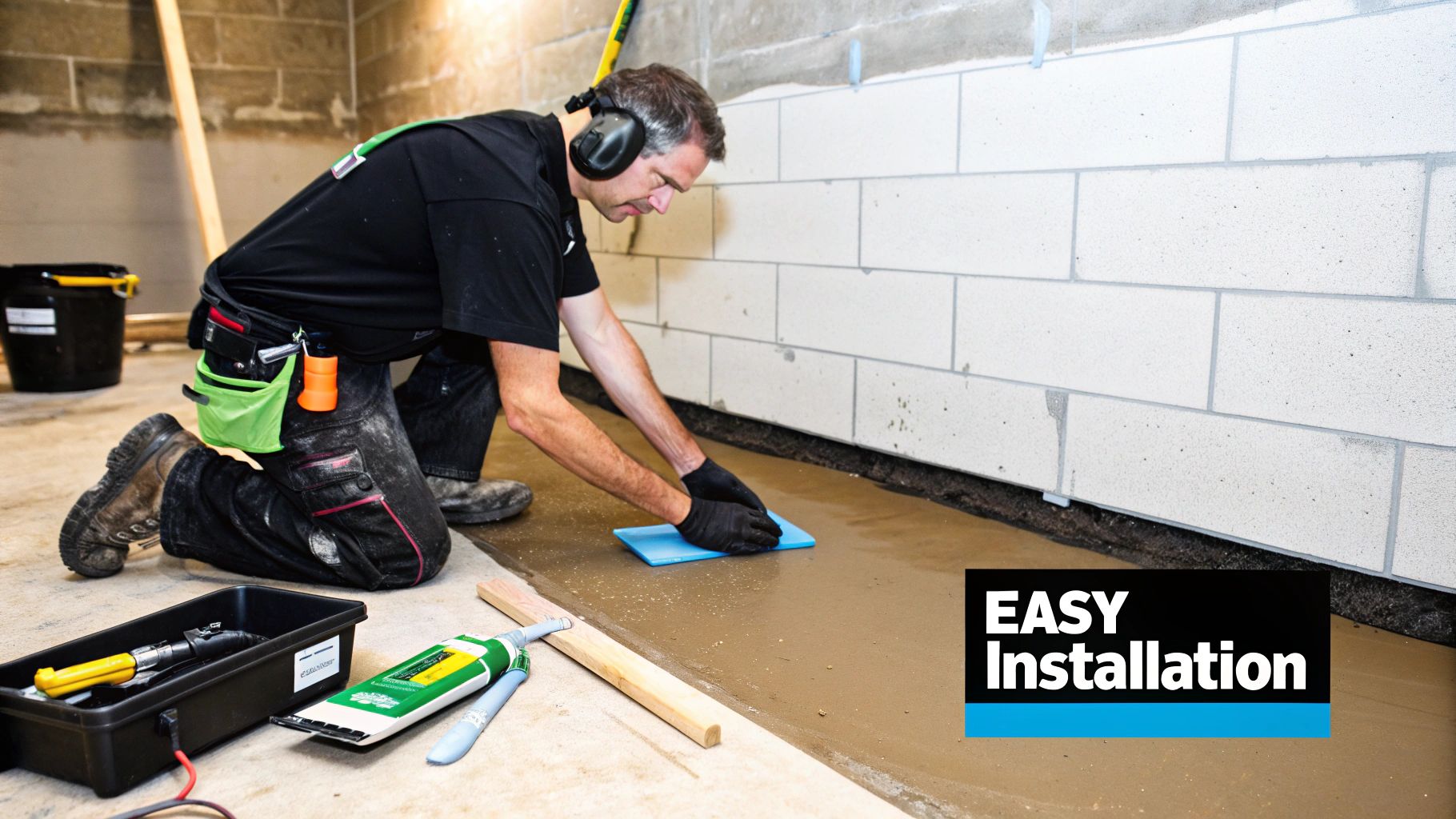
When it comes to picking the right waterproof flooring for a basement, you're really balancing the unique strengths of a few key players. Each one brings something different to the table in terms of durability, style, and how it handles moisture, which is obviously the top priority for any below-grade space. Let's dig into the main contenders you'll likely be considering.
Luxury Vinyl Plank (LVP)
There’s a good reason luxury vinyl plank has become such a go-to for homeowners. LVP is a 100% synthetic material, which means water has nowhere to go; it can't soak in or damage the core. That alone makes it a fantastic choice for any basement, regardless of the moisture risk.
Beyond its waterproof nature, LVP's real magic is how well it mimics the look of natural wood or stone. It brings a warmth and high-end feel to a space that can otherwise feel a bit cold and utilitarian. For a deeper dive into how different brands perform, our luxury vinyl plank flooring reviews are a great resource. Plus, its click-lock installation system makes it a very approachable DIY project for many.
LVP is often hailed as the king of basement flooring. It hits that perfect sweet spot of being completely waterproof, looking fantastic, and being straightforward to install.
Porcelain And Ceramic Tile
Tile is the classic, time-tested choice for a reason—it’s built to last and handle water. Both porcelain and ceramic tiles are fired at incredibly high temperatures, which creates a dense body that's naturally impervious to water. Once you install it correctly with a quality waterproof grout and thin-set, you have a truly seamless barrier against moisture.
If you want to get specific, porcelain is a bit denser and less porous than ceramic, giving it a slight edge in water protection. That makes it the top-tier choice for basements that might see actual flooding. But the biggest selling point for tile is its raw durability. It’s tough as nails and stands up to scratches, heavy furniture, and tons of foot traffic without breaking a sweat.
Sealed Concrete
If you're aiming for a modern, industrial, or minimalist vibe, nothing beats sealed concrete. In this case, your existing concrete subfloor becomes the finished floor. After it's properly prepped, it's coated with epoxies or other professional-grade sealers, creating a single, unbroken surface with zero seams for water to sneak through.
You could argue that sealed concrete is the most durable and low-maintenance floor you can have. And it’s not just a boring gray slab anymore—it can be stained, polished, or textured to create all kinds of custom looks. For a broader comparison of materials, this guide on the 7 Best Basement Flooring Options for 2025 offers some great perspectives.
Real-World Performance: How Durable Are These Floors?
Marketing brochures can make any flooring sound indestructible, but a basement is the ultimate proving ground. What really matters is how these materials hold up to the chaos of real life—dragged furniture, dropped tools, and the constant foot traffic of a busy family. Let's get past the sales pitch and look at how these floors actually perform.
When it comes to luxury vinyl plank, its toughness comes down to one critical component: the wear layer. This transparent top coat is your floor's bodyguard, measured in mils (a thousandth of an inch). For a basement that will double as a playroom or family hangout, you absolutely want a wear layer of 20 mil or higher. Anything less just won't cut it long-term. There's a reason the vinyl market is booming—projected to grow from USD 33.9 billion in 2025 to USD 63.8 billion by 2035—it’s a reliable workhorse.
This chart breaks down how our top contenders stack up against common basement challenges.
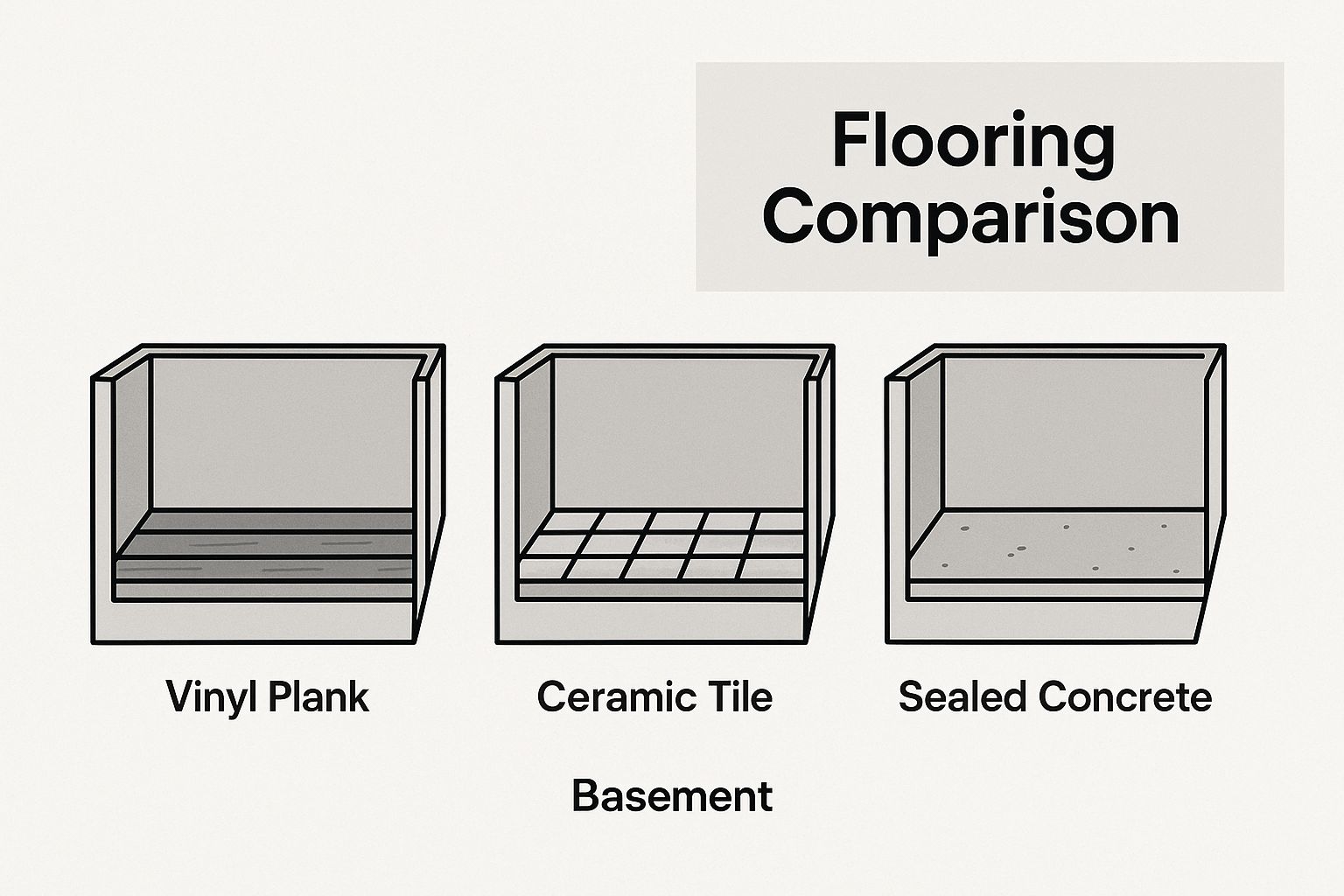
As you can see, there’s no single "best" option. The right choice really depends on how you plan to use your basement.
Scratch and Impact Resistance
If you're looking for pure, brute-force toughness, tile and concrete are in a class of their own. Porcelain tile, which is fired at higher temperatures and is denser than standard ceramic, is incredibly hard to scratch or crack. Think about a basement home gym—if you accidentally drop a dumbbell, porcelain will likely shrug it off. We have a detailed guide that explores how vinyl plank handles water and wear in more depth.
Sealed concrete, on the other hand, is just on another level. It’s practically indestructible in a residential setting. This makes it a fantastic choice for a workshop or a serious storage area where you might be dragging heavy equipment around. While high-quality LVP is very durable, a sharp object dragged with enough force can still gouge it. For the most demanding environments, tile or concrete is the way to go.
Here’s a real-world scenario: A dropped hammer might leave a small dent in a premium LVP floor. It could chip a ceramic tile. But on porcelain tile or sealed concrete? You'd probably just have a noisy clang and no damage. That simple test shows you the practical difference in impact resistance.
Handling Heavy Foot Traffic
For basements that will function as a primary living space, you need a floor that won't show its age after a few years of constant use. This is where the subtle differences really start to matter.
- Luxury Vinyl Plank: That all-important wear layer comes into play again, shielding the printed design from fading or wearing thin. A good quality LVP won't develop those tell-tale traffic paths you see on older floors.
- Porcelain & Ceramic Tile: Both are absolute champions in high-traffic areas. Since the color and pattern run through the entire body of the tile (especially with through-body porcelain), they look the same even after decades of wear.
- Sealed Concrete: This is the undisputed king of foot traffic. It’s the same stuff used in retail stores and warehouses for a reason. While the top sealant might need a refresh every few years to keep its luster, the concrete itself is essentially permanent.
When it comes to durability, it's not just about surviving a flood; it's about withstanding daily life. This table provides a quick side-by-side comparison.
Basement Flooring Durability and Performance Comparison
| Feature | Luxury Vinyl Plank (LVP) | Porcelain/Ceramic Tile | Sealed Concrete |
|---|---|---|---|
| Scratch Resistance | Good to Excellent (depends on wear layer) | Excellent (Porcelain is superior) | Nearly Indestructible |
| Impact Resistance | Good (can dent with heavy impact) | Very Good (Porcelain resists chipping) | Excellent |
| Moisture Resistance | Excellent (100% waterproof core) | Excellent (Impervious to water) | Excellent (When properly sealed) |
| Wear from Foot Traffic | Very Good (wear layer prevents fading) | Excellent (Color is through-body) | Excellent (Industrial-grade) |
Ultimately, LVP offers a fantastic balance of resilience and comfort for most family basements. But for spaces dedicated to heavy-duty work or fitness, the raw strength of porcelain tile or sealed concrete is hard to beat.
Matching Flooring Style with Your Basement Vision
Functionality is key in a basement, but let's be honest—style is what makes it feel like part of your home instead of just a glorified storage unit. The flooring you choose is the single biggest factor in setting the room's vibe. Thankfully, today's waterproof options mean you don't have to choose between performance and aesthetics.
The old days of sacrificing good looks for durability are over, especially with materials like luxury vinyl. Modern LVP does an incredible job of mimicking the rich grain of real hardwood and the textured feel of natural stone, which can bring a much-needed organic warmth to a space that often feels a bit cold. It's a huge reason why it’s considered one of the best waterproof flooring options out there.
Getting a High-End Look with LVP
The design potential of luxury vinyl has come a long way. Thanks to high-definition printing, manufacturers can now produce planks that look astonishingly real. We're talking everything from the rustic saw marks you’d find on reclaimed oak to the clean, smooth finish of maple. This makes LVP a true design chameleon.
- Cozy Family Room: Think about a wide-plank LVP with a warm, hand-scraped texture. It creates that comfortable, lived-in feel perfect for movie nights.
- Modern Entertainment Space: A light-colored plank that looks like white oak with a smooth finish can make the whole area feel bright, open, and contemporary.
This kind of design flexibility is why the market has exploded. As of 2023, waterproof luxury vinyl made up about one-third of all flooring sales by value. Homeowners simply want beautiful floors that are also "worry-proof" against moisture and the inevitable spill. You can read more about the rise of waterproof flooring on scharm.com if you want to dive deeper into the trend.
The Timeless Appeal of Tile and Concrete
While LVP is a master of imitation, tile and sealed concrete bring their own authentic and powerful design statements to the table. They offer looks that are nearly impossible to get with any other type of flooring.
Porcelain and ceramic tile, for example, unlock a ton of creative potential. You could go with large-format, neutral-colored tiles to create a sleek, modern foundation that makes the room feel bigger. Or, you could play with smaller, patterned tiles to design a bold, decorative floor that becomes a focal point. Even the grout is a design choice—a contrasting color makes the pattern pop, while a matching one creates a more seamless, uniform look.
Sealed concrete has really shaken off its purely industrial reputation and is now appreciated for its minimalist chic. It delivers a clean, raw, and honest look that can be stained or polished to achieve anything from a moody charcoal to a warm, earthy terra cotta. It’s the perfect canvas for a home gym, an art studio, or a sleek, modern den.
Unpacking the Real Installation Costs
The price you see on the box of flooring is just the beginning of the story. To get a true handle on your budget, you have to look at the total cost of the project—from prepping the concrete slab all the way to the final installation labor. This complete picture is crucial for picking a waterproof basement floor that won't give you sticker shock down the line.
Some options, like Luxury Vinyl Plank (LVP), are built for the DIY crowd, potentially saving you a bundle on labor. Others, like tile or a professionally sealed concrete floor, are jobs best left to the pros, which adds a significant chunk of change to your overall expense.
The Labor Bill: DIY vs. Pro
How complex the installation is will directly shape your final cost. A simple click-lock LVP floor can be a satisfying weekend project for a motivated homeowner. Setting tile, on the other hand, is practically an art form—a multi-day process demanding specialized tools and a whole lot of patience.
- Luxury Vinyl Plank (LVP): This is where you can really save on labor. Most LVP uses a click-lock system for a "floating" installation, meaning no messy glue or nails. If you're comfortable with a saw and a tape measure, you can bring the labor cost down to $0.
- Porcelain & Ceramic Tile: This is a labor-intensive job, period. It involves mixing and spreading thin-set mortar, perfectly placing each tile, and then coming back to grout everything. You really want a pro for this to guarantee it's level and truly waterproof.
- Sealed Concrete: Polishing, staining, and sealing a concrete floor isn't a DIY-friendly task. It requires heavy-duty grinders and polishers, plus the expertise to get a smooth, non-porous finish. This is one you'll definitely be hiring out.
Here's the bottom line: a material that seems cheap on the shelf can quickly become your most expensive option once you pay for a professional to install it. Conversely, a DIY-friendly floor like LVP lets you put more of your money into the quality of the material itself.
The Hidden Work: Subfloor Preparation
Let's be honest—your basement's concrete slab probably isn't perfectly flat. Before you can lay down any new flooring, that subfloor needs to be clean, dry, and level. The amount of work this takes can vary wildly between flooring types, adding another "hidden" cost to the project.
LVP is pretty forgiving here. It can float over minor imperfections in the concrete, and often, all you need is a good vapor barrier underneath. This keeps the prep work simple, saving you both time and money.
Tile, however, is a diva. It demands a perfectly flat surface. Any high spots or dips in the concrete can cause tiles to rock and eventually crack. This usually means grinding down high points or pouring a self-leveling compound to fill in low areas, which adds to your material and labor expenses. Getting concrete ready for a professional sealing job is just as involved, requiring deep cleaning and grinding to ensure the sealer bonds correctly.
Thinking Ahead: Long-Term Maintenance Costs
Finally, you have to consider the future. While all these floors are considered low-maintenance, their upkeep isn't identical. Sealed concrete, for instance, will likely need a fresh coat of sealant every 5-10 years to keep it looking good and performing as a waterproof barrier. Tile grout is notorious for staining and will need a deep cleaning or even resealing from time to time.
This is where LVP shines again. Its long-term cost of ownership is practically zero. All it needs is a good sweep and an occasional mop. With no grout to scrub or sealant to reapply, it remains one of the most budget-friendly choices over the entire life of the floor.
How to Choose the Right Flooring for Your Basement
Let’s be honest: picking the “best” waterproof flooring for a basement isn't a one-size-fits-all deal. It really comes down to how you plan to live in that space. After breaking down the contenders, it's time to match the material to your life. The floor that works perfectly for a home gym is almost never the right call for a family playroom.
This whole process is about deciding what you value most. Are you prioritizing a soft feel underfoot over something that can take a beating from a dropped hammer? Is a high-end, seamless look more important than being able to install it yourself over a weekend? Once you answer those questions, the right choice becomes much clearer.
The Best Choice for a Family Playroom
When your basement is destined to become the go-to spot for movie nights, wrestling matches, and energetic kids, Luxury Vinyl Plank (LVP) is tough to beat. Its biggest strength is hitting that sweet spot between being tough and comfortable. LVP is noticeably warmer and has more give underfoot than tile or concrete, which makes a world of difference when kids are playing on the floor.
A quality LVP with a thick 20 mil wear layer will stand up to dragged toys and constant foot traffic without showing its age. And since it's 100% waterproof, you won't have a meltdown over a spilled drink. On top of that, the convincing wood looks can make a chilly, sterile basement feel just as warm and inviting as the rest of your home.
The Ideal Flooring for a Home Gym or Workshop
For basements that are all business—think heavy-duty workouts or messy projects—your top priority has to be pure, unadulterated durability. This is where Porcelain Tile and Sealed Concrete really shine. Porcelain is incredibly dense and hard, giving it fantastic resistance against scratches and the shock of a dropped dumbbell.
Sealed concrete is the most resilient option you can choose, period. In a home setting, it’s practically indestructible, making it the perfect surface for a workshop where tools get dropped and heavy equipment gets rolled around. The seamless surface is also a breeze to clean up.
The Top Option for a Flood-Prone Area
If you've dealt with water in your basement before or live in an area where flooding is a real risk, you can't compromise on waterproofing. While LVP, tile, and sealed concrete are all great, Porcelain Tile and Sealed Concrete offer the ultimate peace of mind.
They are bonded directly to the concrete slab with waterproof mortars and sealants, creating a single, solid barrier against moisture. While LVP planks themselves are waterproof, a major flood could still allow water to get trapped underneath the floating floor. For a deeper dive, our complete guide on choosing a basement floor offers more detailed insights to help you make the final call.
Even after narrowing down the options, you're bound to have a few lingering questions. It’s completely normal. Let’s tackle some of the most common things homeowners ask when they’re about to pull the trigger on a new basement floor.
Can I Just Install Flooring Directly on My Concrete Slab?
In most cases, yes. Modern flooring like LVP and tile is specifically designed to go right over concrete. But don't mistake "direct" for "zero prep."
Before you lay down a single plank, that concrete has to be perfectly clean, level, and completely dry. And here’s the kicker: even concrete that feels bone-dry to the touch is constantly wicking moisture up from the ground. That’s why a vapor barrier is an absolute must for any floating floor system like luxury vinyl. It’s a simple sheet of plastic that stops that slow, constant vapor from getting trapped under your floor, where it can cause a world of mold and mildew problems.
A vapor barrier is the cheapest insurance policy you'll ever buy for your floor. It’s a small, one-time cost that protects your entire investment from the moisture that is always present in a concrete slab.
Is There a Real Difference Between Waterproof and Water-Resistant?
This is a huge one, and the difference is critical for a basement. Water-resistant flooring can handle a spilled drink if you clean it up quickly. But let that moisture sit, and it will eventually find its way through the seams and into the core material. For a space that’s constantly dealing with ambient humidity or potential leaks, that's just not enough.
Waterproof flooring is the real deal. Materials like luxury vinyl plank and porcelain tile are 100% impervious to water. They won't swell, warp, or fall apart, no matter how long they're exposed to moisture. When you're finishing a below-grade space, you absolutely need a truly waterproof floor. Don't settle for anything less.
How Do I Keep Mold from Growing Under the Floor?
Preventing mold is all about smart installation. Your number one goal is to deny moisture any place to hide.
- Lay a Vapor Barrier: I know I mentioned it before, but it's the single most important step for floating floors.
- Seal the Edges: Run a bead of waterproof silicone caulk where the floor meets the wall. This creates a seal that stops moisture from creeping in around the perimeter.
- Manage the Air: Get a good dehumidifier and keep your basement's humidity below 50%. Mold simply can't get a foothold in a dry environment.
Get these steps right, and you won’t have to worry. Your new floor will look great and stay healthy for the long haul.
Ready to find the perfect waterproof floor for your basement? The experts at Flacks Flooring have over 30 years of experience helping homeowners in Cumming, GA, make the right choice. Explore our extensive selection and schedule a personalized consultation today at https://flacksflooring.com.