
You’re probably looking at a floor that has reached the end of its run. Maybe it’s worn carpet in a Roswell living room, scratched builder-grade flooring in Johns Creek, or a patchwork of surfaces after years of updates in a Cumming home. You know you want wood. The question is what kind of wood, what shade of brown, and whether it will prove durable in a Georgia house.
That’s where brown hardwood floors keep coming up. They’re warm without being loud. They work with painted cabinets, brick fireplaces, black fixtures, farmhouse interiors, and more traditional homes in Forsyth County. They also hide day-to-day life better than many homeowners expect, especially when the right species, finish, and plank construction are doing the heavy lifting.
A good brown floor isn’t just about color. It’s about matching the floor to the house, the light, the subfloor, the humidity, and the way your family lives. In North Metro Atlanta, that matters. Homes in Alpharetta, Canton, Woodstock, and Milton don’t all have the same foundation, same sun exposure, or same traffic patterns.
The Enduring Appeal of Brown Hardwood in Georgia Homes
Brown hardwood floors have staying power because they make a room feel settled. In Georgia homes, that matters more than chasing a short-lived trend. A medium brown oak floor can warm up a newer build in Alpharetta just as easily as it can ground a more traditional home in Roswell with heavier trim and formal spaces.
The appeal also comes from flexibility. Brown hardwood floors can lean clean and modern, soft and rustic, or classic and formal depending on the species, stain, plank width, and finish sheen. That’s why they remain one of the safest long-term flooring choices for homeowners who want a floor they’ll still like years from now.
Natural light plays a big role in how brown floors age and how they read from room to room. South-facing windows in North Atlanta homes can shift a floor from cozy to washed out if the room isn’t managed well. If your home gets a lot of direct sun, it’s worth looking at practical options for preventing floors from fading before you settle on a final stain color.
Brown hardwood floors work best when the color choice is tied to the house itself, not just a showroom sample under fluorescent lighting.
In this area, the best results usually come from treating flooring as a long-term part of the renovation, not a decorative afterthought. The floor sets the tone for everything above it.
Understanding the Spectrum of Brown Hardwood Floors
Set three brown floor samples on a kitchen floor in Cumming at 9 a.m., then look at them again after dinner. You will usually see three different floors. One turns warmer, one looks flatter, and one suddenly shows a green, red, or gray cast that did not stand out in the showroom.
That is why “brown” is too broad to be useful by itself. For North Metro Atlanta homes, the better question is what kind of brown fits your house, your light, and the amount of wear the floor will take.
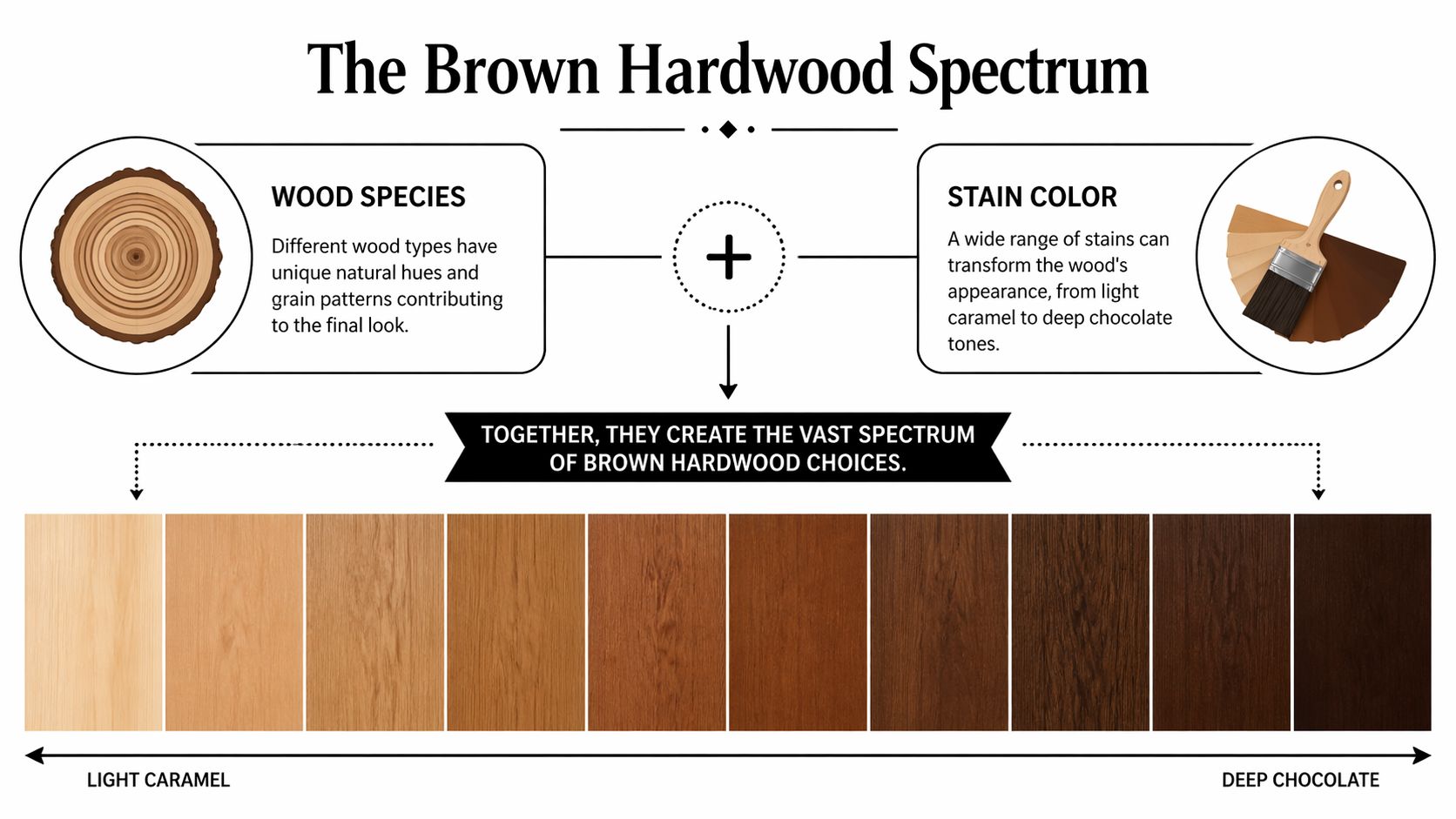
Species gives the floor its starting point
Every wood species starts with its own grain, undertone, and hardness. Stain shifts the color, but it does not erase what is already there.
White oak is the species I point North Atlanta homeowners toward most often for brown floors. It starts in a light to medium brown range, often with a soft olive undertone, and it handles daily traffic well. According to Artisan Floors specifications, white oak ranks 1375 lbf on the Janka hardness scale, compared with about 1290 lbf for red oak.
That difference is not dramatic on paper, but in busy homes with dogs, kids, and constant traffic from the garage to the kitchen, white oak usually gives you a little more forgiveness over time.
Maple looks cleaner and more uniform, which works well in newer homes around Johns Creek that lean brighter and more contemporary. Hickory has heavier contrast and stronger movement from board to board. It hides everyday wear better than many people expect, but the look is busier, so it needs to fit the style of the house. Oak stays in the middle, which is one reason it remains a dependable choice.
If you want to compare grain patterns before you settle on a color, this guide to hardwood species is a useful place to start.
Stain sets the direction
Stain changes the mood of the floor more than homeowners expect.
A medium brown stain on white oak usually keeps the grain visible and gives the room warmth without making it feel heavy. Put that same stain on maple and the floor can read smoother and more formal. Put it on hickory and you often get stronger contrast, with light and dark boards standing out more clearly.
Natural light significantly affects how brown floors look from room to room. In Roswell and Alpharetta homes with large rear windows, I have seen the same sample read honey-brown in one room and taupe-brown in the next. That is why sample boards belong in the actual house, on the actual floor, at different times of day.
If you are trying to match brown flooring with cabinets, trim, or furniture you plan to keep, this guide on how to choose the right colors of wood floors can help narrow the range before you order full boxes.
The main brown floor families homeowners compare
Most brown hardwood floors land in a few practical categories:
- Light brown: Honey, wheat, and soft natural browns that keep smaller rooms open.
- Mid brown: The easiest range to live with long term because it balances warmth, dirt concealment, and design flexibility.
- Dark brown: Rich and dramatic, but more likely to show dust, pet hair, and surface scratches.
- Taupe brown: Brown with gray influence, often a good fit in transitional interiors and homes with cooler paint colors.
- Rustic brown: More variation, more visible grain, and more natural character across the floor.
Practical rule: Pick the species first if grain, hardness, and board character are your top concerns. Pick the stain family first if you already have fixed finishes like cabinets, brick, or stone that the floor needs to work with.
Here is a simple comparison for Georgia homeowners weighing the common options:
| Wood Species | Janka Hardness (Higher is Harder) | Grain Pattern | Typical Cost Range |
|---|---|---|---|
| White Oak | 1375 lbf | Balanced, visible grain, often with an olive cast | Varies by grade, width, construction, and finish |
| Red Oak | ~1290 lbf | Stronger, more traditional grain | Varies by grade, width, construction, and finish |
| Hickory | Harder than oak in general use, depending on product | Bold, high variation | Varies by grade, width, construction, and finish |
| Maple | Moderately hard with a smoother face | Subtler, cleaner grain | Varies by grade, width, construction, and finish |
The best brown floor is usually the one that still looks right on a cloudy day, in evening light, and after a few years of normal living. In North Metro Atlanta, that usually means choosing a brown with enough warmth to suit the home, enough grain to hide real life, and a species that fits how the house is used.
Solid Versus Engineered Hardwood for Georgia's Climate
This is the decision that saves people from expensive regret. In North Georgia, the question isn’t just whether you like wood. It’s whether the wood construction matches the house.

Solid hardwood is exactly what it sounds like. One piece of wood from top to bottom. It’s a proven material and still a great option in the right setting. But in this part of Georgia, many homes sit on slabs, have partial basements, or deal with seasonal indoor moisture swings that make plank movement a real concern.
A source focused on Southern conditions notes that average annual humidity in Georgia runs 70-80%, and that level of moisture can cause warping in solid hardwoods unless they’re properly acclimated and sealed. The same source points to engineered options with high stability ratings as a more resilient choice, with the potential to extend lifespan by 20-30 years in these conditions, as discussed in this piece on humid-climate flooring concerns.
Where solid hardwood still makes sense
Solid hardwood still has a place. If you have a stable main-level wood subfloor, good indoor climate control, and you want a traditional nail-down installation, it can perform well. It also appeals to homeowners who want a floor with the feel of a single-species board through the full thickness.
That said, solid works best when the environment supports it. It’s less forgiving when installers skip moisture checks, rush acclimation, or force it into rooms that are poor candidates.
Why engineered hardwood often wins here
Engineered hardwood has a real wood top layer, but the plank is built in layers for better dimensional stability. That construction gives it a practical advantage in Cumming, Johns Creek, Milton, and other North Metro Atlanta areas where moisture and subfloor conditions vary house to house.
The biggest benefit is predictability. Engineered hardwood usually handles slab installations, multi-level homes, and below-grade or near-below-grade conditions more gracefully than solid wood. That doesn’t make it waterproof. It does make it a smarter choice in many Georgia renovations.
If you’re comparing products for your house type, this overview of the best engineered hardwood is worth reviewing alongside site-specific advice from your installer.
What usually goes wrong
Most hardwood failures in this market aren’t caused by the stain color or the brand name. They come from mismatch.
- Solid over a risky slab: The homeowner wants “real hardwood,” but the installation environment isn’t stable enough for it.
- No respect for humidity: The wood goes in before the home is conditioned properly.
- Bad room selection: People try to force hardwood into areas that call for a different material.
- Skipping moisture prep: Sealing, vapor management, and acclimation get treated like optional steps.
If your home has a concrete slab, a walkout basement, or noticeable indoor humidity swings, engineered hardwood usually gives you a wider margin for success.
How I’d think through the choice in North Atlanta
A homeowner in an older Roswell house with a raised wood subfloor may have a good case for solid. A homeowner in a newer Forsyth County build on slab usually needs to evaluate engineered first. A basement remodel in Cumming or a lower level in Milton often pushes the conversation even more strongly toward engineered wood or a non-wood alternative if moisture is a concern.
The trade-off is straightforward. Solid hardwood offers tradition and can be a great fit in the right space. Engineered hardwood offers flexibility and stability where Georgia homes often need it most. If you want brown hardwood floors that stay flat, quiet, and consistent over time, construction matters just as much as color.
Styling Your Home with Brown Hardwood Flooring
A brown hardwood floor can either disappear into the background or carry the entire room. The difference comes from tone, texture, and what’s happening around it.
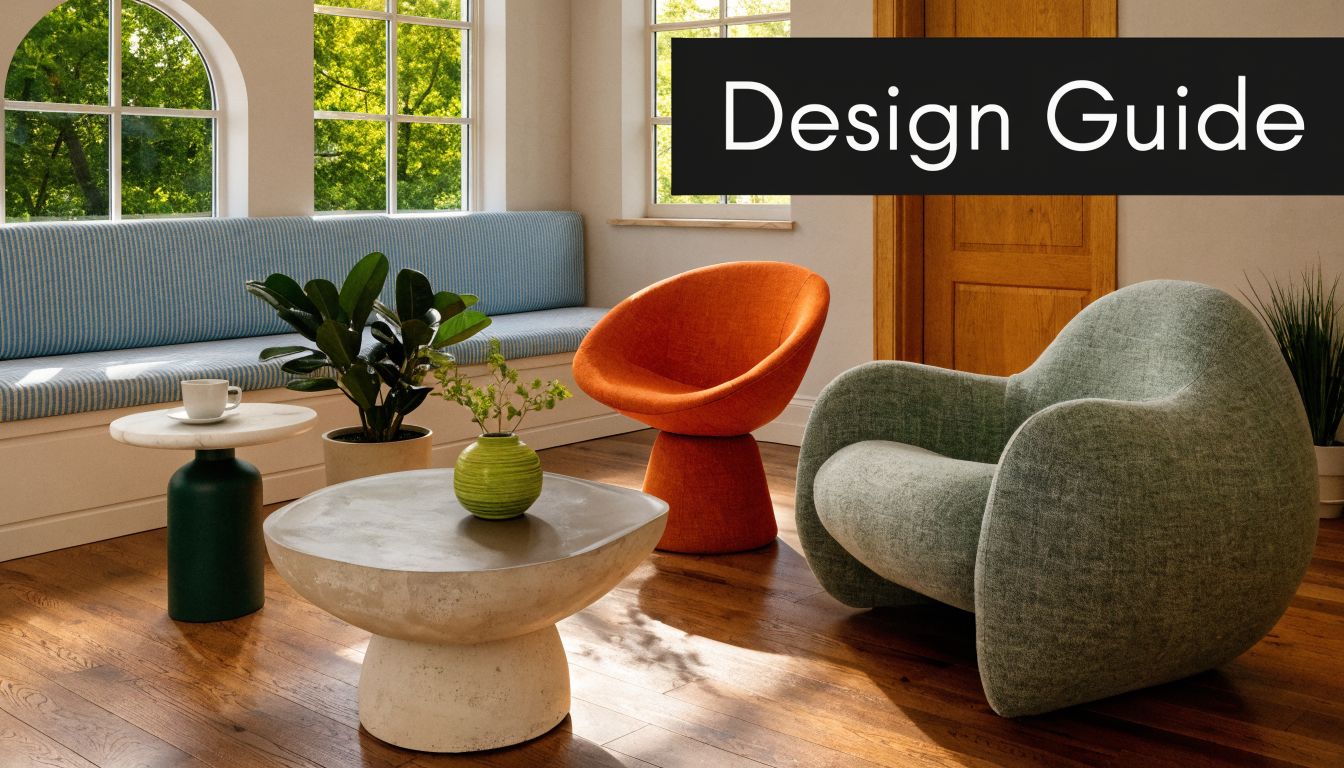
Brown floors in modern farmhouse homes
In Canton, Woodstock, and parts of Forsyth County, modern farmhouse still shows up in painted millwork, black hardware, light walls, and mixed natural textures. Brown hardwood floors help that style feel grounded instead of stark.
The best fit is often a medium brown with visible grain and a low-sheen finish. It gives the room warmth and keeps white kitchens from feeling too sharp. If the floor is too dark and too glossy, the look starts fighting the relaxed side of the style.
Brown floors in transitional interiors
A lot of North Metro Atlanta homes sit in the middle. Not full traditional. Not fully modern either.
These homes usually do well with taupe-leaning or neutral medium browns. They work with greige walls, mixed metal finishes, and both painted and stained cabinetry. A balanced brown floor gives you more freedom to update furniture and lighting later without the floor becoming the problem.
Brown floors in classic traditional spaces
Roswell, Marietta, and older sections of Alpharetta often have homes with heavier trim profiles, formal dining rooms, curved staircases, and richer built-ins. In those homes, a deeper brown floor can look right at home.
The key is proportion. Darker brown hardwood floors look best when the room has enough natural or layered lighting and enough contrast above the floor. If the walls, cabinets, and furniture are also dark, the whole room can flatten out.
A good brown floor should support the architecture. It shouldn’t compete with it.
Easy pairing decisions that work
If you’re trying to make decisions without overcomplicating the process, start here:
- White cabinets: Mid-brown oak is usually the safest partner.
- Warm wall colors: Keep the floor from going too orange or too red.
- Cool paint palettes: Brown with taupe influence tends to bridge the gap well.
- Busy furniture and rugs: A quieter grain pattern often helps the room feel more organized.
- Minimal interiors: More character in the floor can keep the space from feeling flat.
A common mistake with brown hardwood floors
Homeowners often choose a color from memory instead of from samples in the room. They remember a floor they liked in another house, then try to force that same shade into a home with different sunlight, wall colors, ceiling height, and cabinet finishes.
That rarely ends well. Brown is forgiving, but it still shifts a lot based on context. What looks rich in a showroom can look muddy in a shaded room. What looks subtle in a sample board can turn yellow beside warm cabinets.
A strong floor choice doesn’t come from picking “the best brown.” It comes from picking the brown that belongs in your house.
Room-by-Room Recommendations for Your Atlanta Home
A lot of North Metro Atlanta homeowners start out wanting one brown hardwood floor through the entire house. Then real life gets involved. A Roswell kitchen sees spills, a Cumming foyer gets red clay and wet shoes, and an upstairs bedroom stays fairly easy on the floor. The best result usually comes from keeping the color family consistent while adjusting the product and finish by room.
Living rooms and main living areas
Main living spaces usually carry the visual weight of the house, especially in the open floor plans common in Cumming, Johns Creek, and newer parts of Alpharetta. Brown hardwood works well here because it connects the entry, family room, and kitchen without making the house feel cold.
Medium brown oak is often the safest choice. It reads warm in Georgia light, works with painted trim and stone fireplaces, and hides day-to-day dust better than very dark stain. In these rooms, product construction is just as important as appearance. For homes that run air conditioning hard in summer and heat in winter, engineered oak often gives a steadier result over wide spans.
Kitchens and breakfast areas
Kitchens need honesty more than optimism. Brown hardwood can work very well in an Atlanta-area kitchen if spills get wiped up, appliance leaks are not an ongoing issue, and the homeowner wants a warmer look than tile. If the room sees frequent standing water around the sink, dog bowls, or the fridge, a wood-look waterproof floor is usually the safer long-term decision.
If you still want real wood in the kitchen, engineered hardwood is often the better fit. The thinner profile can also help with remodels where floor height is tight. According to Lumber Liquidators product information, some engineered brown oak products use a 3/8-inch profile that can be installed over existing vinyl, and the same source says its aluminum oxide finish can produce 40 to 50 percent fewer scuffs than older alternatives. That kind of detail matters when you are trying to avoid awkward transitions into adjoining rooms, and it is the kind of planning many contractors now price out with construction estimating software.
Bedrooms
Bedrooms give you more flexibility. Traffic is lighter, moisture is usually low, and the room benefits more from comfort and visual calm than from maximum dent resistance.
Mid-brown and lighter walnut-brown tones tend to work best in bedrooms around here, especially in rooms with limited natural light. Very dark floors can still look great, but they ask more from the room. You need enough light, enough contrast, and a willingness to see more lint and dust between cleanings.
Entryways and hallways
These are the rooms that tell the truth about a floor.
In Forsyth County homes, entryways and halls deal with grit, damp shoes, grocery traffic, backpacks, and pet nails every single day. A floor with visible grain, a matte or low-sheen finish, and some natural variation usually ages better than a dark, smooth, glossy floor. If a homeowner asks me for one area to prioritize finish quality over pure color preference, this is usually it.
Field note: The more uniform and polished a floor looks on installation day, the more obvious scratches, dents, and dust become in busy traffic lanes.
Basements and lower levels
Below-grade spaces require caution. Even a basement that feels dry can have seasonal moisture movement, and that is common in parts of North Metro Atlanta after long wet stretches.
If there is any moisture concern, skip hardwood and use a floor built for that environment. Tile, waterproof flooring, or a quality LVP product usually makes more sense. If the lower level is well-controlled, fully tested, and you still want wood, engineered hardwood is the first category to evaluate. The slab condition, moisture readings, and subfloor prep should decide the job, not the sample board.
Homes with pets
Pet homes need a forgiving floor, not a perfect one. Brown hardwood can still be a strong choice if the floor is selected with wear in mind.
Look for:
- Low-sheen finishes: They show less scratching and less dust.
- Noticeable grain or light texture: Minor marks blend in better.
- Mid-tone browns: They hide hair, dirt, and everyday wear better than very dark espresso or very pale beige-brown floors.
- Factory-finished engineered products: They often hold up well for active households, especially in busy family zones.
When another flooring type is the better answer
Good advice sometimes means steering a homeowner away from hardwood in one or two rooms.
- Basement with moisture risk: Waterproof flooring or tile
- Laundry and utility rooms: Waterproof flooring
- Budget-focused rental update: LVP or laminate
- A bedroom where softness matters more than resale: Carpet can still be the right call
The strongest whole-house flooring plans are not rigid. They keep the house visually connected, respect how each room gets used, and make choices that will still look sensible five or ten years from now.
The Hardwood Installation Process Cost and Timeline
Most homeowners worry about two things once they pick a floor. How disruptive will this be, and what will drive the final cost?
Both are fair questions. Brown hardwood floors can last a long time, but the value comes from the full project, not just the carton of flooring. The wood, the subfloor, the prep, the layout, the transitions, and the cleanup all affect the result.
Why modern installation is more efficient than people think
Hardwood flooring used to be a luxury item for a very small group of homeowners. That changed when mechanized tools transformed production. The invention of the drum sander and other mechanized tools in the 1800s helped move hardwood from a luxury material into an accessible option, and the later move to mass-produced, standardized planks with tongue-and-groove molding laid the groundwork for the installation methods contractors rely on today, as outlined in this history of hardwood flooring production and standardization.
That history still matters now. Today’s installations are faster and more precise because the materials themselves are more consistent than they were generations ago.
What a typical project usually includes
The process tends to follow a clear sequence, even though every house adds its own complications.
In-home measuring and product selection
The room is measured, the subfloor is identified, and the product is matched to the site conditions.Existing flooring removal if needed
Carpet, laminate, vinyl, or older flooring materials may need to come out first.Subfloor prep
A lot of project quality is won or lost during subfloor prep. Flatness, moisture conditions, and surface readiness matter.Acclimation and site readiness
The home needs to be at livable conditions before wood goes in. Rushing this step creates problems later.Installation
Depending on the product, this could be nail-down, glue-down, or floating installation.Trim, transitions, and cleanup
These details separate a decent job from a professional one.
What affects cost
There isn’t one universal price for hardwood flooring installation because the main variables are in the house.
Here are the factors that usually change the number the most:
- Flooring type: Solid and engineered don’t install the same way.
- Wood species and finish: Product selection changes material cost and labor approach.
- Demolition needs: Pulling carpet is different from removing tile or existing glued flooring.
- Subfloor condition: Leveling, patching, or moisture mitigation adds work.
- Layout complexity: Stairs, angled rooms, and tied-in areas take more labor.
- Furniture movement and occupied homes: Logistics matter.
- Trim and transitions: Finished edges take time and skill.
For contractors and property owners trying to understand how estimates are built, tools like construction estimating software can help clarify how labor, materials, and scope get organized into a usable project budget.
What timeline surprises homeowners
The visible installation is only part of the timeline. Selection, ordering, site prep, acclimation, and curing windows can all affect when you can move furniture back or fully use the space.
The floor may go in quickly. The project still succeeds or fails on everything that happens before and after that day.
A simple bedroom replacement usually moves differently than a full main-level floor replacement in an occupied home. So does a project over slab versus over an existing wood subfloor. If trim painting, stair work, or furniture coordination are involved, the calendar stretches.
What homeowners can do to keep the job smooth
You don’t need to micromanage the crew, but you do need to prepare the house.
- Clear decision-making early: Don’t wait until install week to choose stain tone or plank direction.
- Ask about transitions: Height differences between rooms should be addressed before installation starts.
- Control indoor conditions: Wood needs a stable environment.
- Plan for access: Pets, kids, work-from-home schedules, and furniture all affect the flow.
- Review the finish expectations: A hand-made product installed in a real house will never look like a printed showroom panel.
The best hardwood projects feel predictable because the process is handled straightforwardly from the beginning. That matters just as much as the flooring itself.
Finding the Right Partner for Your Flooring Project
Brown hardwood floors are a long-game purchase. That’s one reason they’ve kept their place in the market even after flooring trends have shifted back and forth over the years.
After World War II, hardwood went through a three-decade decline while carpeting took over, then hardwood began a strong comeback in the 1990s. That revival reflects a preference for sustainable, long-lasting materials and reinforces the idea that quality hardwood flooring remains a sound long-term investment, as described in this overview of the history and return of wood floors.
That long-term value is exactly why the installer matters so much. A good-looking sample is easy. A floor that performs well through Georgia seasons is harder.
What to look for in a flooring partner
The right installer should do more than show up with tools. They should know how homes in Cumming, Johns Creek, Milton, Roswell, and surrounding areas are built, and how those construction details affect wood flooring choices.
Look for a partner who can handle:
- Site-specific recommendations: Not every room should get the same answer.
- Moisture awareness: Especially on slabs, lower levels, and homes with indoor humidity issues.
- Material honesty: If hardwood isn’t the right choice in one room, they should say so.
- Clean transitions: Doorways, stairs, and adjoining surfaces need planning.
- Clear process communication: You should know what happens before install day, not just on it.
Why local knowledge matters
A local flooring team sees the same foundation types, humidity patterns, renovation shortcuts, and builder-grade problem areas over and over. That experience helps them spot issues before they become callbacks.
They also tend to know which products hold up in actual family homes, not just in displays. That’s useful when you’re comparing hardwood flooring installation to LVP flooring, laminate flooring, tile flooring, carpet installation, or waterproof flooring for specific rooms.
Questions worth asking before you hire
Don’t make this decision based on one sample board and a price line.
Ask questions that reveal whether the company really understands the project:
- What do you recommend for my subfloor and why?
- Where would you use engineered instead of solid?
- How do you handle transitions and trim details?
- What site prep is included?
- What concerns do you see in this house before installation starts?
If you want a benchmark for what professional execution should look like, review what’s involved in professional floor installation and use that as a standard when comparing providers.
The best flooring partner protects you from the wrong material just as much as they install the right one.
A reliable local company should be able to talk through hardwood flooring installation, floor replacement, flooring repair, affordable flooring options, and alternatives like scratch-resistant flooring or waterproof flooring without pushing one product where it doesn’t belong. That kind of guidance is what keeps a renovation from turning into a correction job.
If you’re planning brown hardwood floors in Cumming, Forsyth County, Johns Creek, Milton, or anywhere in North Metro Atlanta, Flacks Flooring is a strong place to start. Their team offers in-home consultations, a local showroom, and practical guidance on hardwood, waterproof flooring, carpet, and more, so you can choose a floor that fits your house, your lifestyle, and your renovation goals without guesswork.