
Let's get right to it: putting vinegar on your hardwood floors is playing with fire. It's often touted as a "natural" cleaning hero, but its acidity is the very thing that can slowly eat away at your floor's protective finish, leaving it dull and vulnerable.
So, can you use it? The short answer is a very cautious maybe—but only if your floor is sealed with a modern polyurethane finish, and you dilute the vinegar to an almost comical degree.
The Great Vinegar Debate: What's the Real Story?
Few topics in home care are as polarizing as cleaning hardwood with vinegar. You've got one camp, often backed by generations of tradition, that swears by its ability to cut through grime without harsh chemicals. Then you have the other camp: pretty much every single flooring manufacturer and professional group, like the National Wood Flooring Association, who will tell you to stay far, far away.
So who's right?
The truth is somewhere in the middle, and it all comes down to two things: your floor's finish and your dilution ratio.
When you mix just a tiny bit of vinegar with a lot of water (think a half-cup of vinegar per gallon of water), the acidity drops way down. This weak solution can indeed lift surface dirt from a well-sealed floor without causing immediate damage. This is why it’s such a popular DIY trick—it seems to work just fine.
But here's the catch: the same acidic property that cleans is also what poses a long-term threat. Every time you use it, you're conducting a tiny, micro-experiment in stripping your floor's finish. It's a slow-burn kind of damage you won't notice until it's too late. It’s also important to understand the crucial difference between cleaning and disinfecting, as vinegar's main risk here is to the finish, not its germ-killing ability.
Here's a quick rundown to help you weigh the pros and cons.
Using Vinegar on Hardwood At a Glance
This table breaks down the key arguments for and against using a vinegar solution on your hardwood floors.
| Aspect | Potential Benefit | Potential Risk |
|---|---|---|
| Cleaning Power | Great at cutting through greasy, sticky messes. | The acid can slowly dull or etch the floor's sealant. |
| Cost | It's incredibly cheap compared to commercial cleaners. | Could lead to a very expensive refinishing job later. |
| Safety | It's non-toxic and free of harsh, synthetic chemicals. | Can easily void your flooring manufacturer's warranty. |
Ultimately, while vinegar is cheap and effective in the short term, the potential long-term cost and damage to your floor’s finish are serious risks to consider.
How Vinegar Can Damage Your Floor's Finish
To really get why vinegar is such a gamble for hardwood, picture the protective finish on your floor like the clear coat on your car. It’s that tough, invisible shield that takes the brunt of daily abuse—from scuffs and spills to foot traffic—protecting the beautiful wood underneath. When you clean with vinegar, you're essentially rubbing a mild acid all over that protective layer.
Vinegar is a fantastic natural cleaner because of its acetic acid, which cuts through grease and grime like a champ. The problem is, that same acid can’t tell the difference between grime and the polyurethane finish on your floor.
The damage isn't usually a dramatic, one-time disaster. It's more of a slow, creeping problem. Each time you mop with a vinegar solution, you're microscopically etching away at the finish, making it a tiny bit softer and weaker. Over months or years, that adds up, leaving your once-gleaming floors looking dull, hazy, or cloudy.
The Science of Acidity and Your Floor
It all comes down to the pH scale. Remember from science class? The scale goes from 0 (highly acidic) to 14 (highly alkaline), with a perfect 7 being neutral. Your floor’s finish is designed to thrive in a neutral environment.
- Vinegar's pH: Lands somewhere between 2.4 and 3.4. That's pretty acidic.
- Neutral Cleaner's pH: Hovers right around 7.0, which is the sweet spot for your floor's protective coating.
This is exactly why almost every flooring professional will tell you to stick with a pH-neutral cleaner. The acid in vinegar actively works against the chemical makeup of the finish, weakening its bonds and exposing the raw wood to potential scratches and water damage.
The debate over vinegar often comes down to this very point. While its acid does clean well, it can also degrade the floor's sealant over time. Most industry experts agree that repeated use, especially if the mixture is too strong, can strip that glossy finish right off, causing premature wear and tear. You can dig deeper into how different cleaners affect finishes by exploring expert resources on the subject.
At the end of the day, using an acidic cleaner is a long-term risk. You might save a little money on a bottle of cleaner now, but you could be facing a refinishing job that costs thousands down the road. Protecting that top coat is the single most important thing you can do to keep your hardwood looking its best for years to come.
So, When Could You Possibly Use Vinegar?
Look, while just about every flooring pro will tell you to stay away from vinegar, let's talk about the very specific, very rare times it might not be a total disaster. There's one hard and fast rule: never let vinegar touch floors that are unsealed, oiled, or have an old-school wax finish. The acid will go straight for the wood and damage it. No exceptions.
The only scenario where this is even a remote possibility is with modern hardwood floors that have a tough, factory-applied polyurethane finish. This finish acts like a clear, protective shield between the world and the actual wood. It's this heavy-duty coating that gives you a tiny bit of wiggle room for occasional and very careful cleaning. But if that finish is scratched, worn down, or peeling? Forget it. The door is closed.
It All Comes Down to Your Floor's Finish
Before a single drop of vinegar gets near your floor, you have to play detective. Is your floor's protective seal completely intact everywhere? Older floors or boards in a busy hallway often have finishes that are worn thin, leaving the wood underneath exposed to moisture and acid, even if it looks sealed.
It’s also worth remembering that different woods might have different factory finishes. You can dig deeper with this guide to hardwood species to get a better handle on what you're working with.
The key takeaway is simple: You aren't cleaning the wood itself. You're cleaning the plastic-like coating on top of it. If that shield is broken, vinegar will seep through and cause damage you can't undo.
The Make-or-Break Safety Spot Test
If your floors seem to fit the bill—a modern, flawless polyurethane finish—you still have one crucial step. The spot test. This is your final, non-negotiable safety check.
- Find a Hidden Area: Pick a spot nobody will ever see. Think inside a closet, under the heaviest part of your couch, or behind the fridge.
- Mix an Incredibly Weak Solution: Start with an extremely diluted mix. We’re talking no more than one tablespoon of white vinegar to two cups of water.
- Apply with a Light Touch: Barely dampen a small corner of a white microfiber cloth with your solution. Gently wipe an area about the size of a coin.
- Dry and Wait: Immediately buff the spot completely dry with a clean cloth. Now, walk away. Wait a full 24 hours, then check the spot in different lights. Look for any dulling, haziness, discoloration, or a soft feeling on the finish.
If you notice even the slightest change, stop. Don't go any further. This little test is the only way to know for sure if your specific floors can handle even a hint of vinegar without being damaged.
The Right Way to Dilute and Apply a Vinegar Solution
Alright, so you've done your spot test, it came out okay, and you're ready to move forward. Let's walk through how to do this in the safest way possible. If you're going to use vinegar, getting the dilution ratio right is absolutely critical—it's the one thing that stands between a clean floor and a damaged finish.
The only mixture I'd ever feel comfortable suggesting is an incredibly weak one.
You’ll want to mix no more than one-half cup of distilled white vinegar into one full gallon of lukewarm water. Anything stronger than that, and you're playing with fire. The acid can start to dull or even soften the protective polyurethane finish over time.
The Damp-Dusting Method
How you apply the solution is just as important as how you mix it. The key here is to damp-dust, not to wet-mop. Remember, water is the natural enemy of hardwood, so your main goal is to use as little moisture as possible and get it off the floor quickly.
- Pick the Right Tool: A good microfiber flat mop is your best friend here. They're designed to grab onto dirt and dust without being soaked.
- Wring, Then Wring Again: Dip your mop into the diluted vinegar solution, then wring it out until it feels almost dry to the touch. Seriously, it should not leave any drips.
- Follow the Grain: Work in small, manageable sections, always moving the mop in the same direction as the wood grain.
- Dry as You Go: Don't let the floor air dry. Follow immediately behind with a clean, dry microfiber cloth to buff away any remaining dampness.
This simple flowchart lays out the process visually, showing you exactly how to clean your floors safely with this method.
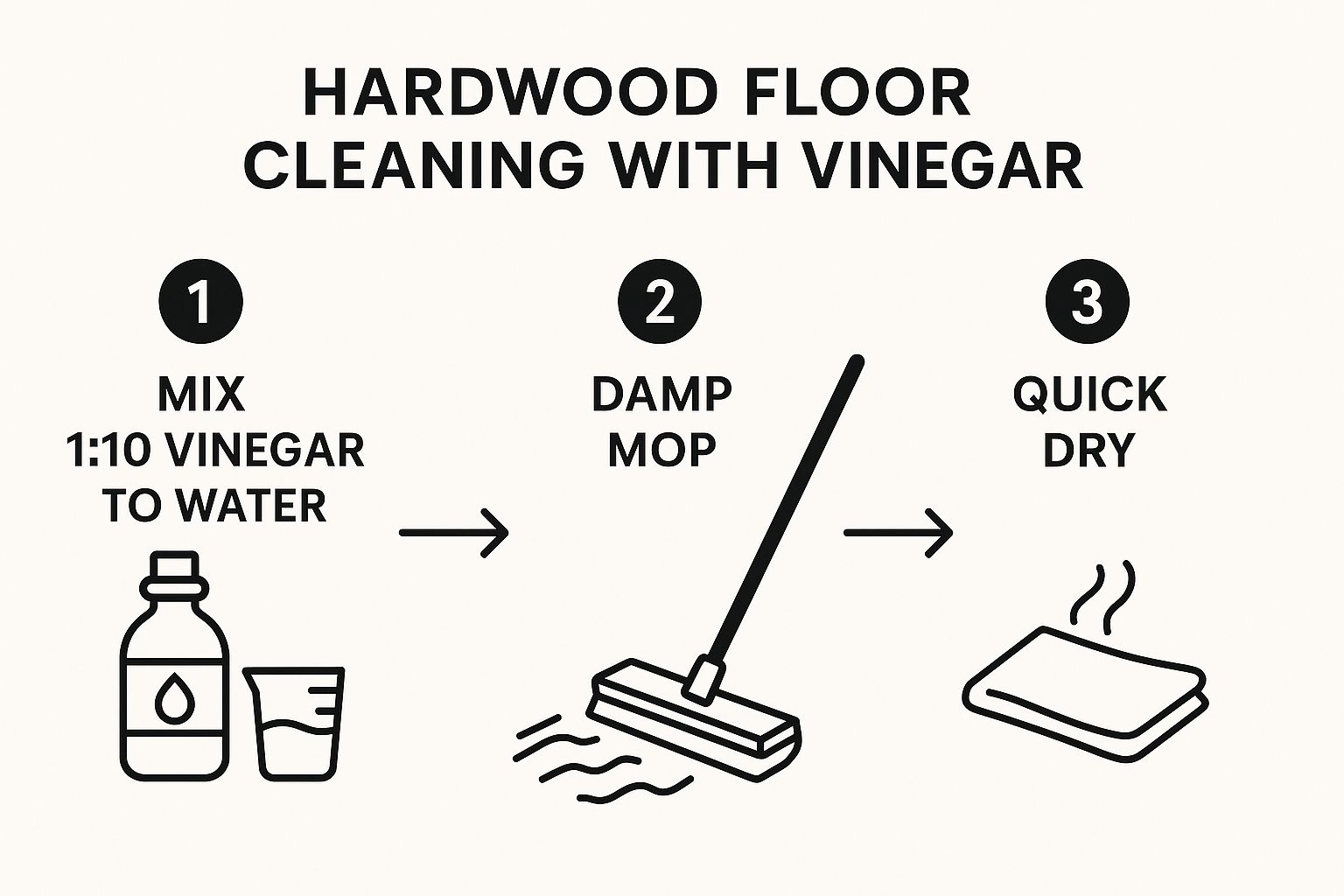
As the visual shows, proper mixing, damp mopping, and immediate drying are all equally important. To help things along, crack a window or turn on a ceiling fan. Good air circulation will speed up the drying process and help protect your investment.
Discovering Safer and Better Cleaning Alternatives
So, you've realized vinegar might not be the best friend to your hardwood floors. It's a common "aha!" moment for homeowners. Why risk your floor's beautiful finish when there are so many fantastic—and safer—alternatives out there? Moving away from acidic cleaners like vinegar isn't just about avoiding damage; it's about protecting your investment and getting a better, more consistent clean.
The best cleaners work with your floor’s protective finish, not against it. They lift dirt and grime while preserving that crucial top layer that keeps your wood looking its best for years to come.
Top Vinegar-Free Cleaning Methods
For everything from a quick daily dusting to a more thorough weekly clean, these methods are what the pros recommend. They're designed specifically for the unique needs of hardwood, so you can clean with confidence.
- Commercial pH-Neutral Cleaners: This is the go-to choice for a reason. Products like Bona are the gold standard because they're formulated to be tough on dirt but incredibly gentle on your floor's polyurethane finish. They get the job done without leaving behind that hazy, dulling residue.
- Gentle DIY Solutions: If you're a fan of making your own cleaners, there's a much better option than vinegar. Try adding just a teaspoon or two of mild castile soap to a gallon of warm water. It gives you just enough cleaning power for light messes without any harsh acidity. We cover more ideas like this in our guide to natural floor cleaning solutions.
- Water and a Microfiber Mop: Honestly, for day-to-day dust and footprints, you often don't need anything more than a microfiber mop lightly dampened with plain water. It’s surprisingly effective at grabbing debris without introducing any chemicals to the floor. Simple and safe.
Hardwood Floor Cleaner Comparison
Choosing the right cleaner is a lot easier when you can see how the options stack up against each other. When facing a really tough job, some people even call in professional cleaning services to ensure it’s done right.
To help you decide what's best for your home, here’s a quick side-by-side look at your choices.
| Cleaning Solution | Safety for Finish | Effectiveness | Cost | Warranty Impact |
|---|---|---|---|---|
| Vinegar & Water | Low (Acidic, can dull finish) | Moderate (Good on grease) | Very Low | Often Voids It |
| pH-Neutral Cleaner | High (Formulated for finish) | High (Removes grime) | Moderate | Usually Safe |
| Castile Soap & Water | High (Gentle & non-acidic) | Moderate (Good for light dirt) | Low | Generally Safe |
| Plain Water | Very High (No chemicals) | Low (Best for dust/daily use) | Very Low | Safe |
The verdict is pretty clear. While vinegar is undeniably cheap, it just isn't worth the risk. A good pH-neutral cleaner offers the ideal balance of cleaning power, safety, and peace of mind, ensuring you don't accidentally void your floor's warranty.
Common Questions About Hardwood Floor Care
Even when you think you have it all figured out, a few questions always seem to pop up when caring for hardwood floors. It can feel a little overwhelming, but getting clear answers to a few common concerns can give you the confidence to protect your beautiful floors for the long haul.
Let's tackle some of the most frequent questions we hear, starting with whether you can swap out standard white vinegar for another type you have in the pantry.
Can You Use Different Types of Vinegar?
It might be tempting to grab that bottle of apple cider vinegar when you're out of white vinegar, but please don't. It's a really bad idea for your floors.
Unlike distilled white vinegar, apple cider vinegar has natural sugars and colors that can leave a sticky film on your floor. That residue acts like a magnet for dirt and could even stain lighter-colored wood over time. For any home cleaning, you should only ever reach for distilled white vinegar—but remember, it still carries the same risks of acid damage.
No matter which type you use, the core problem is acidity. All vinegars are acidic, and that acid will slowly but surely eat away at your floor's protective finish. This is the main reason why flooring experts will almost always tell you to steer clear of vinegar completely.
Does Vinegar Void Your Floor Warranty?
This is a big one, and the answer is almost always yes. Go ahead and check the fine print on your flooring's care guide. You'll likely see that manufacturers explicitly forbid using acidic or abrasive cleaners.
That list usually includes:
- Vinegar
- Ammonia
- Oil-based soaps
- Abrasive powders
Using any of these will typically void your warranty on the spot. The only surefire way to keep your warranty safe is to use a pH-neutral cleaner that the manufacturer specifically recommends. For more nitty-gritty details on what’s covered, it's always smart to review some hardwood floor FAQs from the pros.
Finally, people often ask how often they should be "deep cleaning" their floors. The answer? Not very often. Your best line of defense is daily sweeping or vacuuming to get rid of grit and dirt before it can do damage. You should only need to damp-mop with a proper cleaner every one to two months, depending on how much foot traffic your home gets. Remember, over-cleaning can be just as harmful as using the wrong products.
At Flacks Flooring, we want to give homeowners the knowledge they need to care for their floors the right way. If you're looking for flooring that's as durable as it is beautiful, explore our wide selection and get expert guidance at https://flacksflooring.com.