
The great carpet vs hardwood debate really boils down to what you value most in your home. Are you after timeless elegance and a fantastic return on investment? Hardwood is a clear winner. But if your top priorities are comfort, warmth, and keeping initial costs down, you can’t beat carpet.
Framing Your Flooring Decision
Picking between these two isn’t just about looks; it’s one of the biggest calls a homeowner can make. It affects your daily life, the feel of your home, and even its future market value. There’s no single “best” choice here—it all comes down to your budget, your lifestyle, and what you need from a specific room.
This guide will get into the nitty-gritty details, helping you see beyond the surface to make a choice that’s right for you.
Quick Look Carpet vs Hardwood Flooring
To kick things off, let’s start with a high-level view. Seeing how carpet and hardwood stack up in the most important categories can help frame the decision before we dive deeper.
Here’s a quick side-by-side comparison.
| Attribute | Carpet Flooring | Hardwood Flooring |
|---|---|---|
| Initial Cost | Lower ($3-$7 per sq. ft. installed) | Higher ($8-$25 per sq. ft. installed) |
| Typical Lifespan | 5-15 years | 50-100+ years |
| Comfort & Warmth | Excellent; soft and insulating | Poor; hard and cool underfoot |
| Maintenance | High (frequent vacuuming, professional cleaning) | Moderate (sweeping, occasional refinishing) |
| Resale Value | Neutral or negative impact | High positive impact |
| Allergy Friendliness | Poor (traps dust, dander, and allergens) | Excellent (easy to clean surface) |
As you can see, the trade-offs are pretty clear from the get-go.
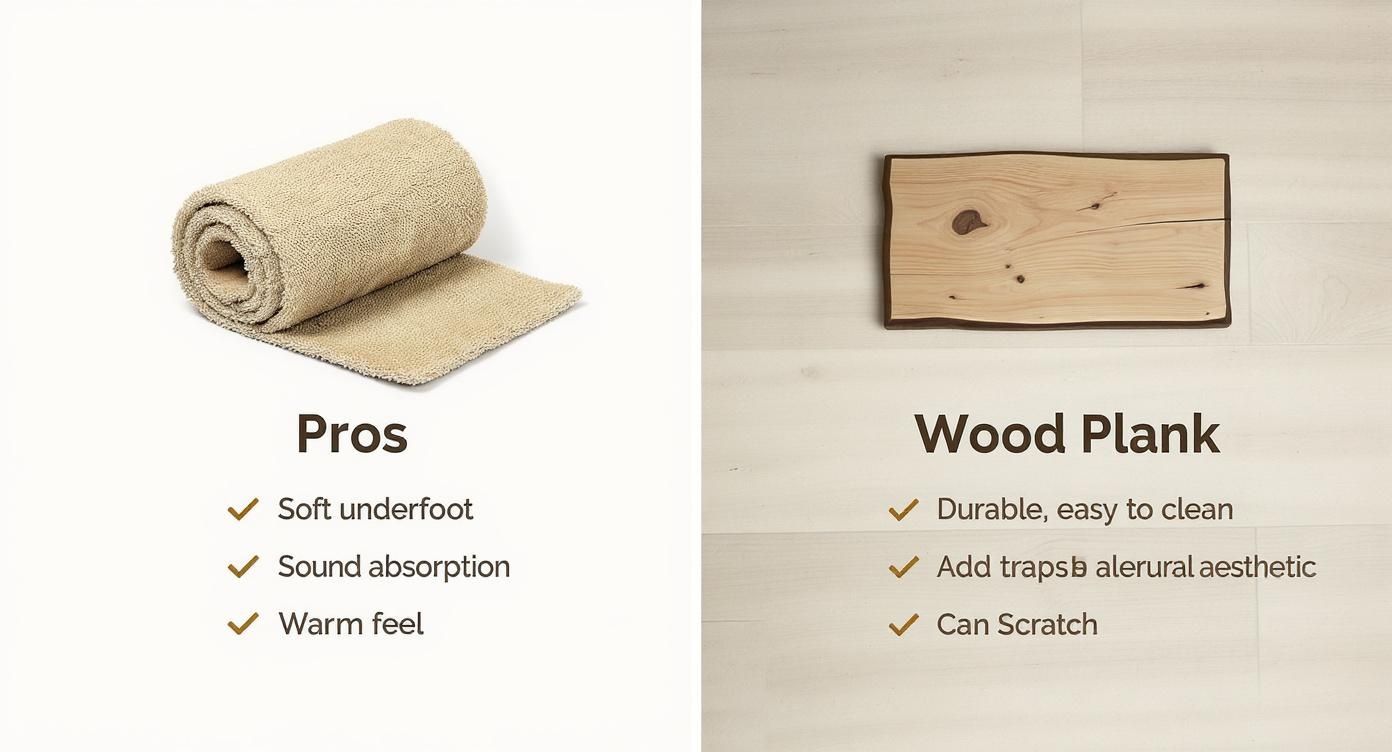
This really highlights the core difference: carpet offers immediate comfort and affordability, while hardwood is a long-term play that shines in durability and investment value. Grasping this fundamental trade-off is the first step toward choosing the perfect floor for your home with confidence.
Understanding the Total Financial Commitment
When you’re weighing carpet against hardwood, the price tag you see at the store is just the first chapter of a much longer story. To really understand the financial side of things, you have to look at the whole picture—from the day it’s installed to the value it adds (or doesn’t add) to your home years down the road.
Carpet almost always wins on the upfront cost. You’re typically looking at $3 to $7 per square foot for both the materials and the professional installation. That lower initial price point makes it a really practical choice if you’re working with a tight budget or have a huge space to cover without breaking the bank.
Hardwood, on the other hand, is a bigger investment right out of the gate. The cost for solid hardwood usually lands somewhere between $8 to $25 per square foot installed. That price reflects the premium material and the detailed, labor-intensive work needed to get that perfect, seamless finish. To really get a handle on what your specific project might cost, it helps to see a full breakdown. For a deeper dive, check out our guide on the real hardwood flooring installation cost.
Beyond the Initial Purchase Price
This is where the financial conversation gets interesting. Once you start factoring in long-term expenses and a little thing called return on investment, the numbers start to tell a different story. While carpet is cheaper to install, its upkeep costs and much shorter lifespan can add up.
Think about it: carpets need a professional steam cleaning every so often, and that can cost a few hundred dollars each time. Plus, a carpet’s typical lifespan is only about 5 to 15 years. After that, you’re back to square one, paying for a full replacement.
Hardwood floors, however, are in it for the long haul—they can literally last a century or more if you treat them right. Their main long-term cost is an occasional refinishing every 10 or 20 years, which basically brings the floor back to brand-new condition.
Analyzing the Return on Investment
Here’s where the financial paths of carpet and hardwood really split. Your flooring choice has a surprisingly big impact on your home’s resale value, and the numbers heavily favor one over the other.
The National Association of Realtors found that homeowners who install new hardwood floors can actually recover an incredible 106% of their cost when they sell their home. On top of that, 54% of potential homebuyers say they are willing to pay more for a house with hardwood floors.
That statistic says it all. Hardwood isn’t just a purchase for your home; it’s an investment that grows in value. Carpet, unfortunately, is often seen by buyers as something that will need replacing soon, so it rarely adds any value and can sometimes even detract from it. When you’re making a final call, you have to weigh those initial savings from carpet against the powerful long-term financial gain of hardwood.
Comparing Durability and Real-World Lifespan
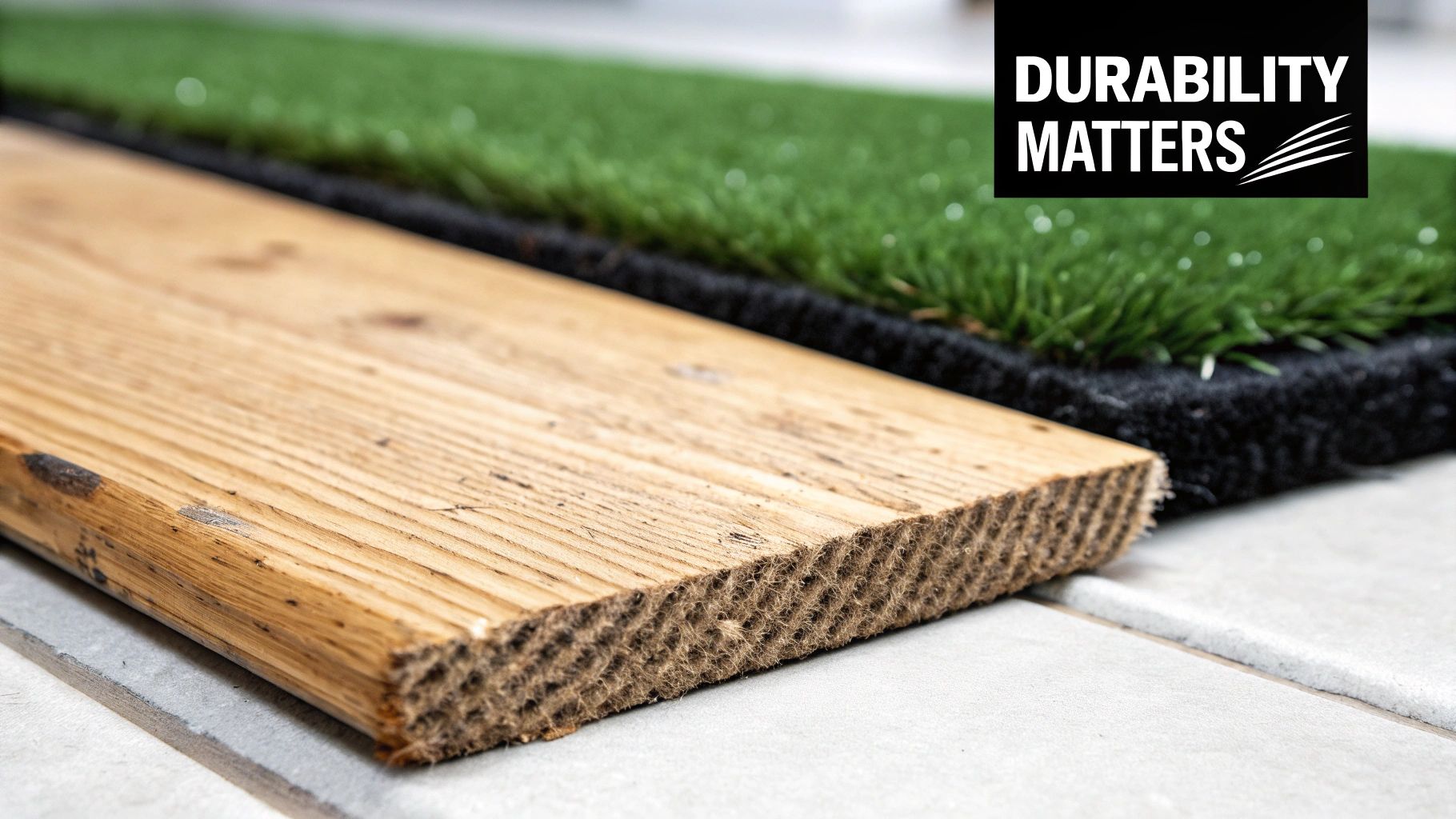
How your floors handle the chaos of daily life is one of the most practical things to consider when you’re stuck between carpet vs hardwood. Both are designed to last, of course, but what “durability” means for each couldn’t be more different. The real story isn’t just about what damages them, but what you can do about it afterward.
For carpet, the big villains are staining and matting. In the main arteries of your home—hallways, family rooms—the fibers will inevitably crush down over time, creating those ugly, worn-in traffic paths. And when it comes to spills, things like coffee, mud from the dog’s paws, or a dropped plate of spaghetti can become permanent residents, sometimes defying even professional-grade cleaning.
Hardwood, on the other hand, faces different foes. Its surface is vulnerable to scratches from scooting furniture, dents from a heavy object taking a tumble, or even warping from a major leak. The beautiful thing about wood, though, is its incredible capacity for a second chance.
Repairability: The True Test of a Floor
This is where the two materials really part ways. It’s not about which one is immune to damage—nothing is—but about how you can fix that damage. Once a carpet has a serious stain or a large tear, your only real option is a full replacement. That’s a huge disruption and a major expense.
A scratched or worn-out hardwood floor, however, can almost always be brought back to life. You can have the entire surface sanded down and refinished, which literally strips away years of wear and tear, leaving you with a floor that looks brand new. It’s this ability to be reborn that explains why a solid hardwood floor can last 50 to 100+ years, while most carpets are on a 5-15 year replacement cycle.
The real measure of durability isn’t just resistance to damage—it’s the capacity for renewal. Hardwood’s ability to be refinished multiple times gives it a practical lifespan that carpet simply cannot match.
This long-term thinking is a huge driver in the flooring market. The global hardwood flooring market was valued at USD 52.38 billion in 2025 and is expected to keep climbing. People are investing in their homes with an eye on durable, high-value features. A lot of that growth is in engineered wood, which gives you classic hardwood looks with better moisture resistance. You can see more on these trends at Mordor Intelligence.
Putting It into Practice: A Room-by-Room Breakdown
Let’s walk through a couple of real-world scenarios to see how this plays out.
- The Family Entryway: This is the battlefield of your home, seeing constant foot traffic, dropped keys, and whatever the weather brings inside. Hardwood will definitely pick up scuffs and scratches here, but a good rug can mitigate that, and cleanup is simple. Carpet, however, will get matted and dirty fast, losing its fresh look in no time.
- A Low-Traffic Guest Room: In a room that’s rarely used, carpet’s weaknesses are much less of an issue. It can provide a cozy, quiet feel without facing the daily grind. Hardwood would work perfectly fine too, but its superpower of extreme durability isn’t as necessary here.
In the end, it’s about matching the floor to your family’s lifestyle and deciding whether you prefer to maintain or replace. To get a clearer picture of what living with wood is really like, take a look at our complete guide to the hardwood flooring pros and cons. It’ll help you see if it’s the right long-term fit for your home.
Evaluating Comfort and Daily Lifestyle Impact
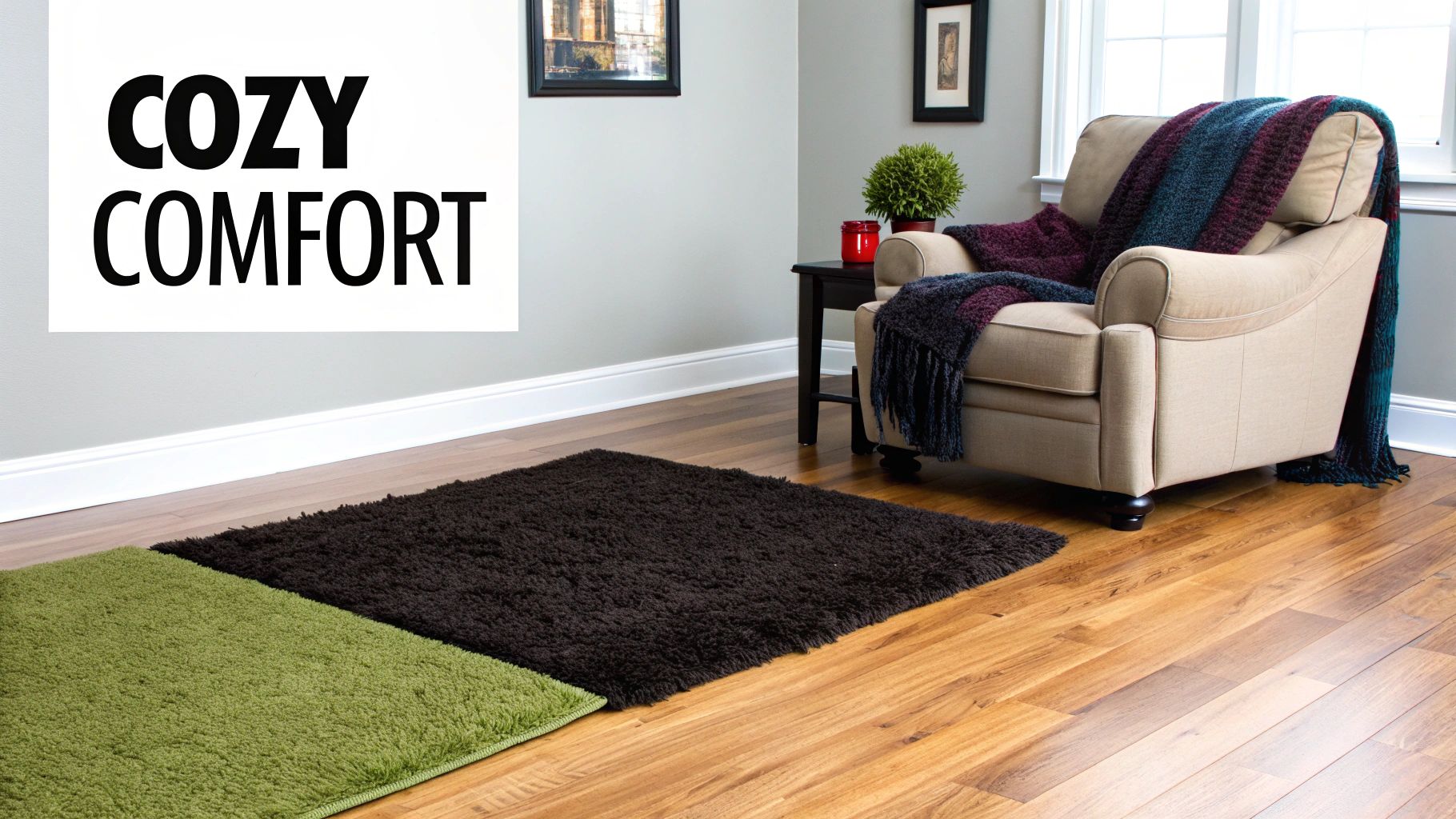
The carpet vs hardwood debate is about more than just looks—it’s about how your home feels. This choice directly shapes your daily life, from the sensation under your feet to the way sound travels through your rooms.
When it comes to pure coziness, carpet is in a league of its own. Nothing quite beats the soft, cushioned feeling it provides, especially on a cold morning or in rooms meant for relaxing, like a family room or bedroom. That softness also doubles as a safety feature, giving toddlers a gentler surface for their inevitable tumbles.
Carpet also works wonders for acoustics. It’s a natural sound insulator, absorbing the noise of footsteps, conversations, and dropped items. This creates a much quieter, more serene environment, which is a huge plus for private spaces where peace is a priority.
The Feel of Hardwood
Hardwood floors offer a completely different experience. You get a solid, firm, and clean surface that many people love for its classic, natural feel. It feels substantial underfoot, and moving furniture around is a breeze.
But where hardwood really shines is its impact on indoor air quality. Carpet fibers are notorious for trapping dust, pollen, pet dander, and other allergens. Hardwood’s smooth, non-porous surface doesn’t give those irritants anywhere to hide.
This is a massive advantage for anyone with allergies, asthma, or pets. A quick sweep or vacuum gets rid of allergens completely, making for a healthier home.
For families prioritizing a low-allergen home, hardwood is often the superior choice. Its inability to harbor dust mites and pet dander provides a tangible benefit for respiratory health that carpet cannot match.
Market Trends and Homeowner Preferences
Even with the rise of hardwood, the desire for comfort and warmth keeps carpet firmly in the game. The global flooring and carpets market was valued at around USD 684.57 billion in 2022, and carpet commands a huge piece of that pie thanks to its affordability and insulating qualities. Experts expect this segment to keep growing, proving just how much people still value cozy living spaces. You can learn about the flooring market’s growth and see the trends for yourself.
In the end, it all comes down to the kind of daily experience you’re after. Are you building a soft, quiet sanctuary, or do you need a clean, allergy-friendly foundation for your home? Your answer will point you to the right floor.
Matching Your Flooring to Each Room’s Purpose
The classic carpet vs hardwood debate doesn’t have a one-size-fits-all answer. Why? Because the best flooring for a quiet bedroom is almost never the right choice for a high-traffic hallway. The real secret is to think about how you use each room and choose a floor that fits that specific purpose.
When you start thinking room-by-room, the decision becomes much less overwhelming. It’s not about which material is “better” in general, but which one performs best where you need it to. Our detailed guide on how to choose flooring can help you walk through this strategic process.
For those spaces dedicated to quiet, comfort, and relaxation, carpet is often the clear winner. Its inherent qualities are just a perfect match.
Creating Cozy Sanctuaries with Carpet
Think about bedrooms and kids’ playrooms. These are the spaces where wall-to-wall carpeting truly shines, and for good reason.
- Warmth and Comfort: Nothing quite compares to the feeling of soft, warm carpet under your feet on a chilly morning. It just makes a room feel cozier.
- Sound Absorption: Carpet is a fantastic sound dampener. It absorbs the noise from footsteps, echoes, and rambunctious playtime, creating a much more peaceful home.
- Safety Cushion: Especially in a child’s room, carpet provides a softer surface that can cushion the tumbles and falls that are bound to happen.
Embracing Durability and Style with Hardwood
On the flip side, the busier and more formal areas of your home need a floor that can handle the action while still looking great. This is where hardwood steps into the spotlight.
Living rooms, dining rooms, and foyers are your home’s workhorses. They see the most foot traffic and are the first thing guests notice. Hardwood offers that timeless, elegant first impression but has the tough-as-nails durability to back it up. Plus, it’s a breeze to clean, which is a lifesaver in dining areas prone to spills.
The perfect compromise? A hybrid approach. Laying a beautiful area rug over hardwood in a living room gives you the best of both worlds: the classic style and durability of wood with the soft comfort and sound-dampening qualities of carpet right where you want it.
This strategy is also great for defining different “zones” in an open-plan layout. You get to add texture and warmth without giving up the practical benefits of a hard surface. By matching your flooring to each room’s function, you create a home that’s not just beautiful but also perfectly in sync with your life.
Answering Your Final Questions on Carpet vs. Hardwood
Even after weighing the pros and cons, a few lingering questions often stand between homeowners and a final decision. Let’s tackle some of the most common ones that come up when you’re on the home stretch of the great carpet vs. hardwood debate.
A classic question is about putting hardwood in kitchens or bathrooms. For years, the answer was a simple “don’t do it” because of moisture. But things have changed. While traditional solid hardwood is still a risky choice, modern engineered hardwood is built differently. Its layered construction makes it far more stable and less likely to warp or cup when exposed to humidity, making it a viable, stylish option for these spaces.
What About Pets and Local Climate?
If you have pets, you’re looking at a classic trade-off. Carpet is fantastic for traction and comfort—no slipping and sliding—but it’s a magnet for pet hair, dander, and odors. You have to commit to frequent, deep cleanings. On the other hand, hardwood is a breeze to wipe clean but can get scratched by claws and might be too slippery for older or less steady pets.
The climate where you live should also be a major factor. If you’re in a colder region, you can’t beat the natural insulation of carpet. It adds a real layer of warmth underfoot and can even contribute to better energy efficiency.
In warmer, humid climates, hardwood is the clear winner for many. It stays cool underfoot, offering a welcome relief during those long, hot summers.
So, what’s the verdict? It all comes back to your specific situation. You might put engineered hardwood in your kitchen for a modern look that can handle a few spills. If you’ve got energetic dogs, maybe you choose a durable hardwood with a scratch-resistant finish and place area rugs where they play and rest.
Homeowners in northern states might insist on cozy carpet in the bedrooms, while those in the south wouldn’t dream of anything but cool hardwood throughout the main living areas. The best flooring is the one that fits your life, not just the room.
Ready to find the perfect flooring for your home in Cumming, GA? The experts at Flacks Flooring are here to help you weigh every option, from cozy carpets to timeless hardwoods. Visit our showroom or schedule an in-home consultation today!