
You’re probably in the same spot a lot of North Atlanta homeowners hit during a renovation.
The carpet is tired. The old floor has seen too many dogs, too many chair drags, too many muddy shoes from the backyard. You want something that feels permanent. Not trendy. Not fake. You want a floor that makes the house feel better the minute you walk in.
That’s where cherry wood floors enter the conversation.
They’re gorgeous. They’re warm. They have that old-house character people in Cumming, Johns Creek, Milton, and the rest of Forsyth County keep chasing. But cherry also comes with a trade-off. It’s softer than many homeowners expect, and Georgia humidity doesn’t care how much you spent on hardwood.
My advice is simple. If you love cherry, buy it for the right rooms and the right reasons. Don’t buy it because someone told you all hardwood performs the same. It doesn’t.
Is a Classic Hardwood the Right Choice for Your Metro Atlanta Home
A homeowner in Cumming came into a showroom mindset with two goals that usually fight each other. She wanted a floor that looked richer than LVP and felt more classic than laminate flooring. She also had kids, a dog, and a kitchen that gets hammered every day.
That’s the cherry wood floor decision in one sentence.
Cherry is a lifestyle floor. It works best for homeowners who care about warmth, character, and long-term appearance. It’s not the best pick for every house, and pretending otherwise is bad advice.
If you’re in Johns Creek or Milton and you’re renovating for a more upscale, settled look, cherry makes sense. It has the kind of visual depth that helps a home feel custom instead of builder-basic. Real estate agents notice that. Designers notice that. Buyers notice that.
If your main priorities are scratch-resistant flooring, pet-friendly flooring, or waterproof flooring for a basement or busy main level, cherry usually loses to tougher hardwoods, tile flooring, or a strong LVP flooring product.
Practical rule: If you want beauty first and can live with normal wear, cherry deserves a serious look. If you want the most forgiving floor in the house, look elsewhere.
A lot of homeowners in Alpharetta, Roswell, Woodstock, Acworth, Marietta, and Canton start by searching “hardwood flooring installation near me” and assume the answer is just species selection. It isn’t. The better question is this: How do you live in your house?
Cherry can be the right answer. It’s just not the universal answer.
The Timeless Appeal of American Cherry Wood
American cherry earns its reputation. It doesn’t need hype.
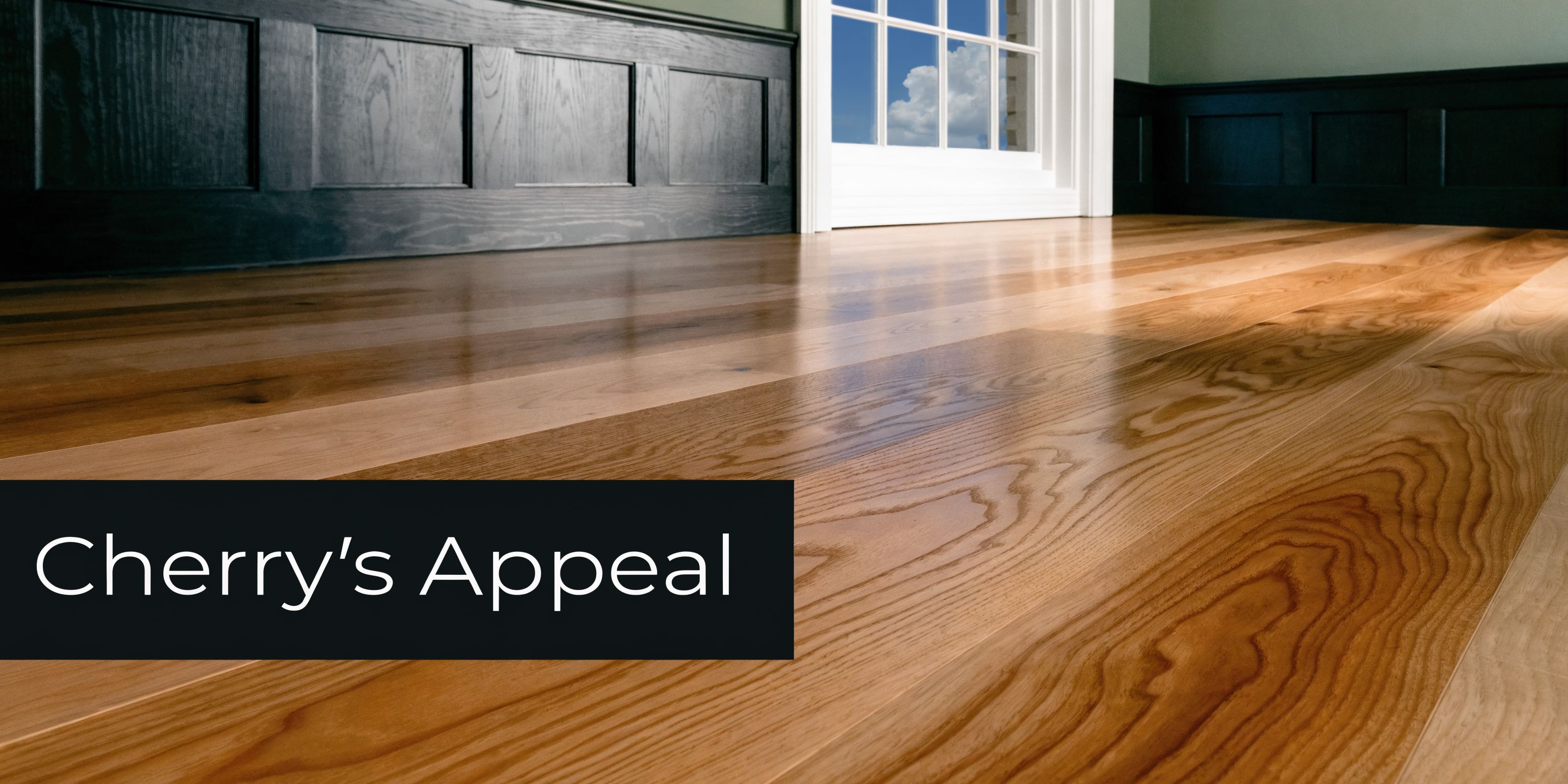
It starts lighter, often with a pinkish cast, then deepens into a richer reddish-brown after exposure to light. That color change is one of the main reasons people choose it in the first place. It doesn’t sit still. It matures.
What makes cherry look different
Cherry has a flowing grain and a satiny surface that feels refined without looking stiff. It doesn’t shout the way some dramatic woods do. It glows.
That matters in real homes.
In a formal dining room in Johns Creek, cherry can look polished and traditional. In a cleaner, updated house in Roswell or Alpharetta, it can still work if you balance it with lighter paint, simpler trim, and quieter furniture lines.
A few practical things to keep in mind when you shop:
- Color shift matters: Cherry darkens noticeably with light exposure. The floor sample you love today won’t be the exact color you live with later.
- Grain stays elegant: If you hate busy cathedral grain, cherry is often easier on the eyes than some oak looks.
- Sheen changes the mood: A lower-sheen finish usually looks more current and hides daily life better than a very glossy finish.
Why homeowners still chase cherry
Cherry wood, derived from the American black cherry tree (Prunus serotina), has a long furniture history dating back to 400 BC, and early Colonial American makers nicknamed it “New England Mahogany” because its color darkened in a way that reminded them of true mahogany, according to this history of cherry wood.
That history still shows up in how the floor feels under design choices today. Cherry has a built-in sense of age and permanence. It doesn’t need distressing tricks or trendy stains to seem valuable.
If you’re comparing species before a hardwood flooring installation, this guide to hardwood species is a useful starting point because species choice changes both the look and the daily wear story.
What to look for in the showroom
Don’t overcomplicate the grade question. Think in terms of visual consistency.
Some homeowners want a cleaner, more uniform look. Others like natural variation because it feels less precious once the family starts living on it. Neither approach is wrong.
Use this quick filter:
- For formal rooms: Lean toward cleaner visual selection.
- For lived-in family spaces: A bit of variation helps the floor age more naturally.
- For resale-minded updates: Choose a look that feels classic, not overly red or overly glossy.
Cherry is one of the few floors that can feel richer a year after installation than it did on day one.
That’s a real advantage if you want your home to look better settled in than it did on move-in day.
Real-World Durability in North Georgia's Climate
Now for the part that matters most once the sample board leaves the showroom.
Cherry is not a hard-use champion. It’s a moderately durable hardwood, and that’s the honest way to frame it.
According to K-Timbers’ cherry wood properties overview, cherry wood floors have a Janka hardness of 950 lbf (4,430 N). That makes them 26% softer than Northern Red Oak at 1,290 lbf, which means they handle regular residential traffic but can dent under heavier impacts. The same source recommends keeping indoor humidity at 40-60% RH in Georgia’s climate, and notes that engineered cherry improves stability.
What that softness looks like in daily life
You don’t need a lab test to understand cherry. You need to think about your kitchen stools, your dog’s launch path, and the chair somebody always drags instead of lifts.
Cherry usually does fine with ordinary foot traffic. It doesn’t love sharp impacts, heavy furniture without pads, or high-chaos entry areas.
That means:
- Living rooms and bedrooms: Usually a good fit
- Home offices: Good, if you protect rolling chairs and furniture legs
- Busy kitchens: Possible, but only if you’re realistic
- Main entry paths: Riskier if your household tracks in grit and moisture
- Commercial spaces: I usually steer people away
Georgia humidity changes the conversation
In Cumming, Canton, Woodstock, and across North Metro Atlanta, humidity isn’t a side note. It’s part of the flooring spec.
Solid hardwood moves. That’s normal. But cherry needs a controlled indoor environment if you want it to stay looking tight and stable. Air conditioning helps in summer. Consistent HVAC use matters in winter. Ignoring indoor moisture levels is how homeowners end up blaming the wood for a house-condition problem.
Here’s my direct advice for North Georgia:
- Use engineered cherry over concrete slabs. That’s common in many main-level and basement-adjacent conditions.
- Keep humidity steady. Sharp swings are harder on wood than a consistently imperfect range.
- Don’t skip acclimation and moisture testing. Good installation starts before the first board is laid.
If you’re weighing formats, this page on engineered hardwood helps explain why engineered construction often makes more sense in our area than solid planks.
In Georgia, a hardwood floor succeeds or fails long before the furniture goes back in. Moisture prep decides more than stain color ever will.
When cherry works well and when it doesn’t
Cherry works well for homeowners who want natural hardwood, appreciate patina, and don’t panic over small signs of use. In fact, some wear can make cherry feel more authentic over time.
It does not work well for people who want their floor to stay untouched-looking while handling dogs, teenagers, parties, and standing water near the back door.
Use this decision filter:
| Household situation | My recommendation |
|---|---|
| Quiet home, adults, style-first remodel | Cherry is a strong option |
| Family home with moderate activity | Cherry can work with good maintenance |
| Large dogs, rough traffic, dropped toys, constant chair movement | Consider oak, maple, hickory, or LVP |
| Concrete slab or moisture-prone area | Choose engineered cherry, not solid |
| Basement flooring project | Skip solid cherry |
The biggest mistake I see is homeowners buying cherry because they love the sample, then treating it like hickory. It isn’t hickory. Buy it with open eyes and it can be one of the most rewarding hardwood choices you’ll make.
Cherry Wood vs Popular Atlanta Flooring Alternatives
A floor only makes sense when you compare it against the other real options on the table.
Most homeowners around Cumming, Woodstock, Acworth, Marietta, Alpharetta, and Roswell aren’t choosing between cherry and nothing. They’re choosing between cherry, red oak, maple, hickory, waterproof LVP flooring, tile flooring, and sometimes laminate flooring when budget drives the project.
Cherry vs domestic hardwood favorites
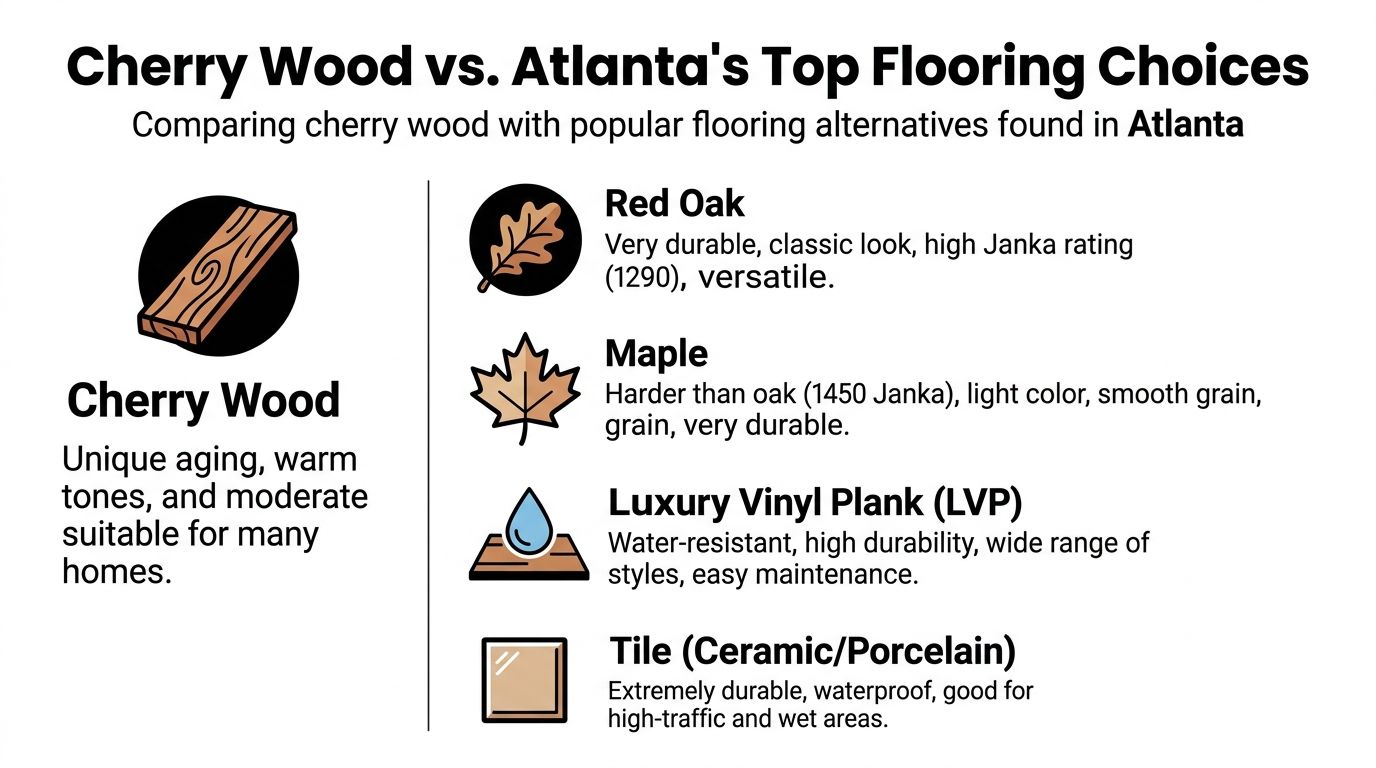
Cherry wins on warmth and character. It loses on toughness.
Red oak is the easy comparison because so many North Atlanta homes already have it. Maple appeals to homeowners who want a cleaner, lighter look. Hickory is the workhorse when people want hardwood flooring installation with more forgiveness against dents and rough use.
Here’s the plain-English version:
- Cherry: Richer color story, softer surface, more traditional personality
- Red oak: Familiar, versatile, easier for active households
- Maple: Smoother grain, lighter feel, tougher than cherry
- Hickory: Strong visual movement, very durable, less subtle
If your home leans classic, cherry often appears more refined than red oak. If your household is hard on floors, red oak or harder species are usually the smarter buy.
Cherry vs waterproof LVP flooring
Many buying decisions get settled here.
LVP flooring keeps winning in North Metro Atlanta because people want waterproof flooring, fast installation, easier replacement, and a surface that doesn’t make them nervous every time a dog bowl tips over.
Cherry still beats LVP in one area that matters to a lot of homeowners: it feels like real wood because it is real wood. The visual depth, the aging, the warmth under natural light, and the resale perception are different.
But if your priority list starts with these terms, LVP is hard to ignore:
- Pet-friendly flooring
- Scratch-resistant flooring
- Waterproof flooring for basements
- Affordable flooring options
- Fast floor replacement
My opinion is blunt. If you’ve got a busy household and you’re already worried about scratches, you probably don’t want cherry on your entire main level. You may want cherry in the front room and LVP in the hard-use zones. Mixed-material planning often makes more sense than forcing one floor type into every room.
American cherry vs Brazilian cherry
These two get confused constantly, and they should not.
According to this breakdown of Brazilian cherry flooring, Brazilian cherry (Jatoba) has a Janka hardness of 2350, compared with 950 for American cherry. That’s a massive durability difference.
American cherry is softer, calmer in grain, and more understated. Brazilian cherry is much harder, heavier in visual presence, and usually bolder in color.
That means the practical choice is different too:
- American cherry: Better for homeowners who want subtle luxury and can accept wear
- Brazilian cherry: Better for households that need serious dent and scratch resistance and like a more dramatic look
There’s also an appearance issue people miss. If you love the gentle, furniture-grade charm of American cherry, Brazilian cherry may feel too intense. Harder isn’t automatically better if it gives you the wrong house.
Don’t buy Brazilian cherry thinking it’s just a tougher version of American cherry. It’s a different visual statement.
Cherry vs tile flooring and laminate flooring
Tile flooring belongs in a different lane. It wins where water resistance matters most, especially bathrooms, laundry rooms, and some basement projects. It’s practical, durable, and easy to clean. It also feels harder and cooler underfoot.
Laminate flooring can be a reasonable budget-minded alternative when someone wants a wood look without committing to hardwood. But if the whole point of the remodel is long-term warmth and real material value, cherry sits in a different class.
Flooring Comparison for North Atlanta Homes
| Flooring Type | Hardness (Janka) | Scratch/Dent Resistance | Water Resistance | Average Cost (Installed) | Best For |
|---|---|---|---|---|---|
| American Cherry | 950 | Moderate. Can dent under heavier impacts | Low to moderate, depends on product and installation | Varies by product, site prep, and layout | Living rooms, bedrooms, style-first remodels |
| Red Oak | 1290 | Better than cherry for active homes | Low to moderate, depends on product and installation | Varies by product, site prep, and layout | Balanced hardwood choice for many homes |
| Maple | 1450 | Strong for daily wear | Low to moderate, depends on product and installation | Varies by product, site prep, and layout | Modern interiors, tougher hardwood use |
| Brazilian Cherry | 2350 | High | Low to moderate, depends on product and installation | Varies by product, site prep, and layout | Heavy-use hardwood applications |
| LVP | N/A | Often a practical choice for scratch-conscious buyers | High on waterproof-rated products | Varies by product, subfloor condition, and scope | Basements, pets, kids, rentals, busy households |
| Tile | N/A | High | High | Varies by tile type, prep, and layout complexity | Wet areas, high-traffic zones |
I’m leaving the installed cost column qualitative on purpose. Installed price changes with tear-out, subfloor repair, trim work, transitions, room shape, and product grade. Anyone giving you a one-size-fits-all number without seeing the house is guessing.
My recommendation by homeowner type
If you want a simple filter, use this:
- For classic resale appeal in formal living spaces: Choose cherry.
- For all-around hardwood practicality: Choose red oak.
- For a lighter, tougher hardwood look: Choose maple.
- For maximum hardwood toughness: Consider Brazilian cherry, if you like the appearance.
- For waterproof performance and lower stress: Choose LVP.
- For bathrooms, laundry, or wet mudroom zones: Choose tile.
That’s the key comparison. Cherry is beautiful. It’s not the answer to every flooring question.
Designing Your Home with Cherry Floors
Cherry has a strong personality. That’s why people love it, and it’s also why some homes get it wrong.
The biggest design mistake is fighting the floor. If you install cherry wood floors and then surround them with finishes that clash with the wood’s warmth, the whole room feels off.
Where cherry looks best
Cherry shines in spaces where people notice atmosphere more than abuse.
The best rooms are usually:
- Bedrooms, where the traffic is lighter and the warmth feels intentional
- Living rooms, especially where natural light helps the wood deepen over time
- Dining rooms, if you’re willing to use pads under chairs and treat the floor with some respect
- Home offices, where the floor becomes part of a polished, custom look
Kitchens are more complicated. You can do cherry in a kitchen, but don’t do it because it looks good on a sample board. Do it only if your household is fairly controlled and you’re serious about prevention.
How to keep the room balanced
Cherry floor color grows richer with time, so the room should give it space.
Good pairings usually include:
- Soft whites and warm neutrals on walls
- Muted greens, charcoal accents, or black hardware for contrast
- Simple rugs that don’t compete with the wood
- Cabinet and furniture choices that either complement the warmth or intentionally contrast it
What usually goes wrong:
- Too much red in adjacent finishes
- Very glossy finishes that make the room feel dated
- Heavy traditional furniture stacked on top of already-rich wood tones
- Trying to force cherry into a pale, cool-toned design scheme
If you want a modern farmhouse or updated classic look in Milton or Johns Creek, cherry can work. Just keep the rest of the palette quieter than the floor.
Finish choice matters more than people think
The finish changes how cherry lives in your house.
A polyurethane finish is usually the practical choice for most homeowners. It’s lower maintenance and better for households that don’t want to fuss.
Oil-style looks can be beautiful, but they ask more from the homeowner. If you want repair-friendly character and don’t mind upkeep, that route can make sense. If you want simpler care, stick with a stronger surface finish.
Here’s the short version:
- Want easier upkeep: Choose polyurethane.
- Want a more natural, furniture-like look: Explore oil-style finishes carefully.
- Want the floor to age gracefully: Don’t over-gloss it.
Cherry rewards restraint. Let the wood do the visual work. Don’t try to make it louder than it already is.
Expert Installation and Long-Term Refinishing
A beautiful species can still fail if the installation is sloppy.
That’s why I care more about prep than sales language. Hardwood flooring installation in North Georgia has to account for moisture, subfloor condition, transitions, and how the house performs through the seasons.
What a proper installation should include
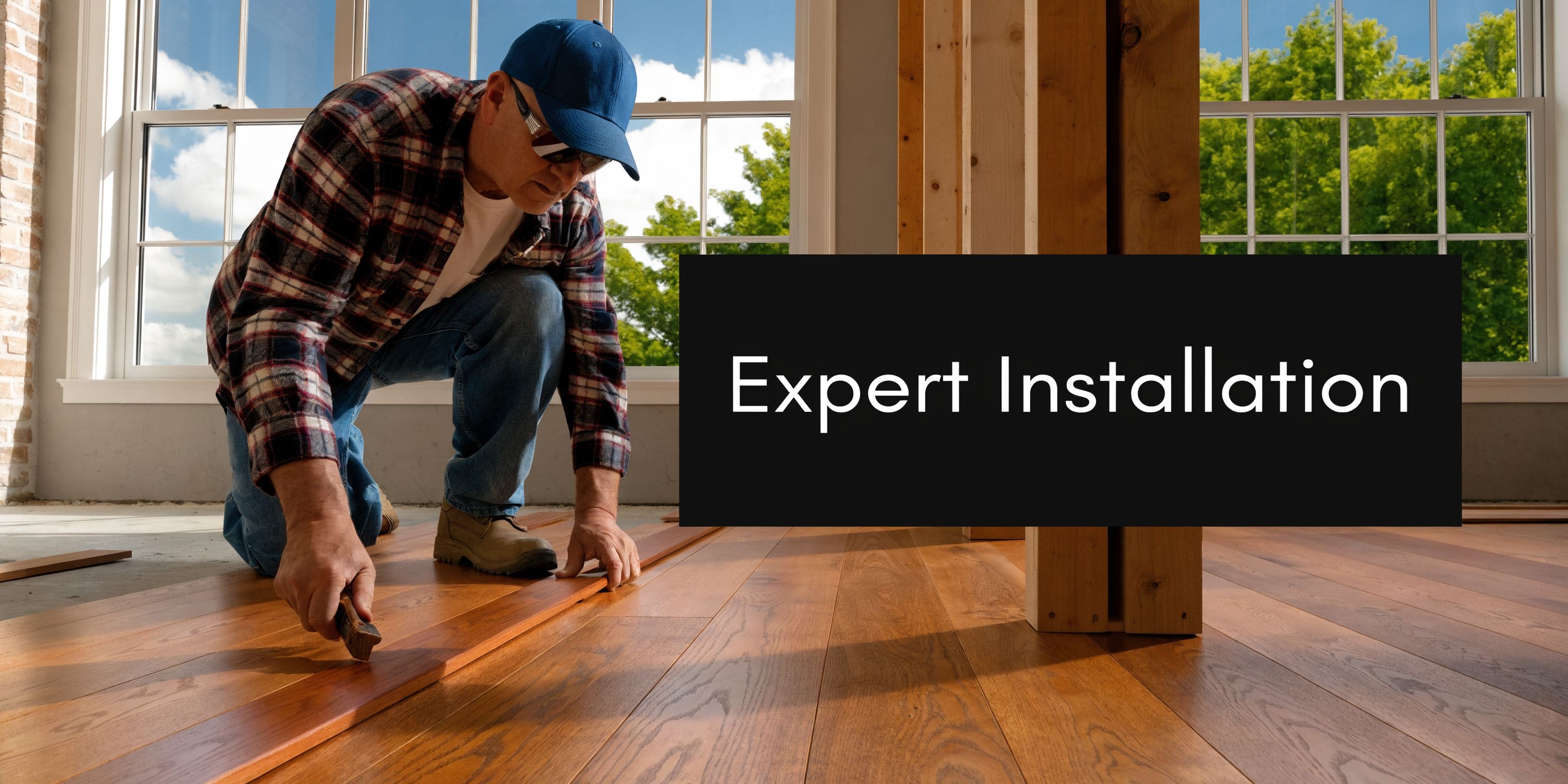
A reputable installer should never treat cherry like a drop-and-go product.
At minimum, expect:
- Moisture testing: The house and the subfloor both need checking before installation starts.
- Acclimation: Wood needs time onsite so it isn’t shocked by interior conditions.
- Subfloor prep: Uneven or damaged subfloors telegraph problems upward.
- Layout planning: Board direction, transitions, and room flow affect the final result as much as stain color.
- Trim and threshold decisions: Many “cheap” jobs start looking expensive here.
If you’re trying to budget before an in-home estimate, a simple flooring calculator can help you rough out square footage and waste allowance. It won’t replace a site visit, but it’s useful for early planning.
Solid vs engineered for the long run
This isn’t only an installation question. It’s also a refinishing question.
Solid cherry gives you the traditional full-thickness hardwood experience. Engineered cherry often makes more sense in homes around Cumming and Forsyth County because of slab construction and climate swings. The best choice depends on where the floor is going and what kind of future maintenance flexibility you want.
For many homeowners, the smartest decision is this: use engineered cherry where moisture stability matters most, and reserve solid hardwood for conditions that support it well.
Refinishing value is part of the purchase
One reason homeowners still choose hardwood over laminate flooring or some lower-end alternatives is the long view. A real wood floor can be refreshed. That matters.
Cherry can age beautifully, but life happens. Dogs scratch. Sunlight shifts color. Furniture leaves marks. Refinishing lets you bring the floor back instead of replacing it outright.
If you’re comparing the long-term value of restoration versus replacement, this guide on hardwood floor refinishing cost is worth reading before you commit to any material.
A good hardwood floor isn’t just installed. It’s planned for the next decade.
What drives project cost
Homeowners often ask for the cost to install hardwood or the cost to replace flooring as if there’s one clean answer. There isn’t.
The final number usually moves based on:
- Tear-out needs
- Subfloor repair
- Stair work
- Room shape and layout complexity
- Trim replacement
- Material format
- Finish selection
- Furniture moving and project sequencing
That’s why two homes in the same Cumming neighborhood can have very different project totals even when they choose similar-looking cherry wood floors.
A serious estimate should explain the work, not just throw out a number.
Simple Maintenance to Preserve Your Floors
Cherry doesn’t need babying, but it does need habits.
The goal is simple. Keep grit off the floor, keep moisture under control, and stop avoidable dents before they happen.
The routine that works
For most homes, maintenance should look like this:
- Daily or as needed: Sweep or dry mop grit from entries, kitchen walkways, and pet paths.
- Weekly: Vacuum with a hardwood-safe setting or soft-floor attachment.
- As needed for spots: Use a hardwood floor cleaner approved for your finish.
- Seasonally: Check felt pads, rugs, and problem areas around chairs, stools, and furniture legs.
Don’t use steam mops. Don’t soak the floor. Don’t mix up home remedies because somebody online swears by vinegar and water. Cherry is still wood, and excess moisture is still the enemy.
The easiest ways to prevent wear
Most floor damage isn’t dramatic. It’s repetitive.
That’s why simple prevention does most of the heavy lifting:
- Use felt pads under chairs and tables
- Put rugs in entry zones and under movable furniture
- Trim pet nails regularly
- Lift furniture when possible instead of dragging
- Clean up spills quickly
For a straightforward checklist on furniture protection, this guide on protecting your floors from furniture is practical and worth saving.
What to accept
Cherry develops character. If that idea bothers you, you probably chose the wrong species.
Small marks, light wear paths, and color deepening are part of owning a real wood floor with personality. The right goal isn’t freezing the floor in its first-week condition. The goal is helping it age well.
That mindset makes cherry much more enjoyable to live with.
Your Cherry Wood Flooring Questions Answered
Is cherry a good choice for resale
Yes, in the right home.
Cherry wood floors appeal to buyers who want warmth, classic style, and real hardwood rather than a purely functional surface. In higher-expectation markets like Johns Creek and Milton, that can help a home feel more finished and more memorable.
Should I use cherry in a basement
No, not as solid hardwood.
Below-grade spaces and slab conditions call for safer choices. If you want the cherry look in that part of the house, engineered options are the better hardwood route. If moisture risk is the main concern, waterproof flooring is often the smarter call.
Is cherry good for pets and kids
It depends on your standards.
If you can accept normal wear and take prevention seriously, cherry can work. If you want a floor that shrugs off rough treatment, choose a tougher hardwood or LVP.
Is cherry better than LVP
For beauty and authenticity, yes.
For water resistance, lower stress, and hard-use practicality, usually no. That’s why many homeowners split the decision by room instead of forcing one product everywhere.
What’s my final recommendation
Choose cherry wood floors if you want classic hardwood character and you’re willing to care for it.
Skip cherry if your top priorities are waterproof performance, maximum scratch resistance, or low-anxiety living with a rough household. In that case, LVP, tile, or a harder wood species is usually the better floor replacement choice.
If you’re trying to decide between cherry hardwood, tougher hardwoods, or waterproof flooring for your home in Cumming, Forsyth County, Johns Creek, or Milton, Flacks Flooring is a solid place to start. Their team can walk you through real samples, room-by-room recommendations, installation options, and practical trade-offs so you end up with a floor that fits your house and the way you live.