
When you're designing a room, the floor is your canvas. It’s the single biggest decision you’ll make, and it sets the stage for everything else you bring into the space. Picking the right wood floor color isn't just about choosing between light and dark; it's about learning the subtle language of color and understanding how it will shape the feel of your home.
Your Foundation of Style: Choosing the Right Wood Floor Color
Think of your floor as the anchor for your home's entire personality. It's the one constant that flows through every room, connecting all your furniture and decor. With so many colors of wood flooring available, it’s easy to feel a bit lost. But don't worry—it really just comes down to a few core ideas.
Your choice here does more than you think. It can change how big or small a room feels and even influence the mood. A light, breezy floor can make a room feel open and contemporary, while a deep, rich wood tone often brings a sense of warmth, tradition, and intimacy.
The real trick, though, goes beyond the main color you see at first glance. It's all about spotting the undertones—those subtle hints of warm, cool, or neutral shades that give every wood its unique character. These undertones are the key to making sure your floor works with your wall colors, cabinets, and furniture, not against them.
Beyond a Simple Shade
Getting this right involves more than just pointing to a favorite color on a tiny sample swatch. A great choice is born from a few critical factors all working in harmony.
- Understanding Undertones: The most important first step is learning to see if a wood has warm (yellow, red), cool (gray, ash), or neutral undertones. This changes everything.
- Considering Your Home's Lighting: The exact same floor can look dramatically different in a room flooded with natural sunlight compared to one that depends on lamps and overhead fixtures.
- Harmonizing with Existing Elements: Your floors need to feel at home with the things that aren't changing, like kitchen cabinets, a stone fireplace, or that big sofa you love.
- Reflecting Your Lifestyle: Be honest about your daily life. Some colors are fantastic at hiding a little dust and a few scratches, while others will show every speck and need more upkeep.
Your wood floor is more than just a surface; it's a long-term design partner. Taking the time to understand its color properties ensures you create a cohesive and timeless backdrop that you'll love for years to come.
Since your wood flooring lays the groundwork for your home's entire look, getting a handle on the broader principles of mastering home design color can really help you make a confident decision. By looking beyond the obvious, you can pick a floor that not only looks incredible but also works perfectly for your home here in Cumming or Forsyth County. For some great ideas, you can always explore the latest https://flacksflooring.com/hardwood-floor-color-trends/ to see what's inspiring today's interiors.
Let’s walk through each step together. We'll turn what feels like a daunting task into a creative and rewarding process.
Decoding Undertones: The Secret Language of Wood Floors
When you look at a wood floor, the first thing you see is its surface color—the brown, the blonde, the gray. But the real soul of the floor, the thing that gives it its character, is its undertone. This is the subtle hint of color hiding just beneath the surface that sets the entire mood of a room.
Think of it like the bassline in a song. You might not always notice it directly, but it provides the foundation that holds the whole melody together. Understanding undertones is the key to creating a space that feels cohesive and intentional, not one where your design elements feel like they're fighting each other. Get this right, and everything from your paint to your furniture will just click.
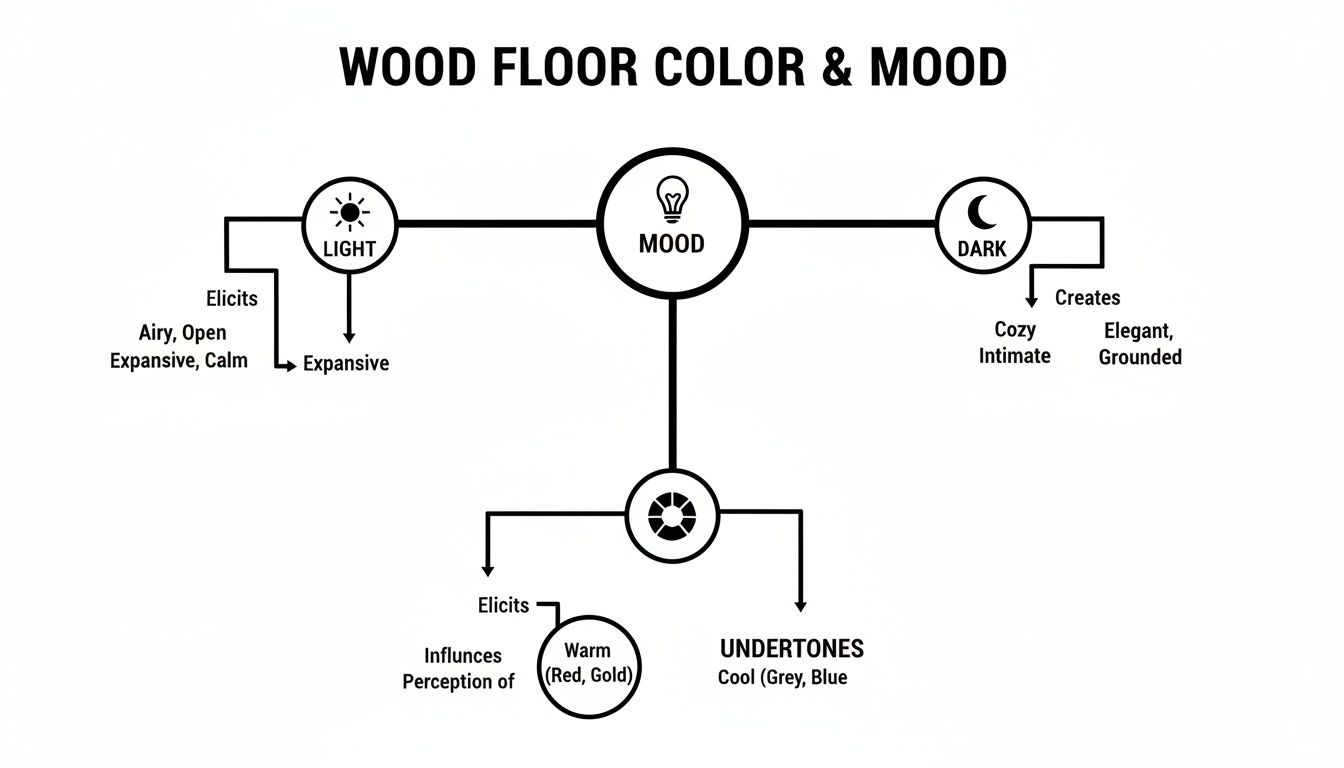
The Three Families of Wood Undertones
Every wood floor falls into one of three undertone families, and each one brings a completely different energy into your home.
Warm Undertones (Red, Orange, Yellow): These are the cozy, inviting floors that feel like a warm hug. They radiate a classic, comforting energy, making them a natural fit for the traditional homes you see all over Cumming and Forsyth County. You’ll often find these rich, warm hues in species like cherry, red oak, and hickory.
Cool Undertones (Gray, Blue, Ash): If you're going for a modern, sleek, or calming vibe, cool undertones are your friend. They create a clean, crisp backdrop that’s perfect for contemporary or minimalist spaces. Think of those beautiful gray-washed oaks or woods that have a subtle ashen tint.
Neutral Undertones (Beige, Greige, Taupe): These are the ultimate chameleons of the flooring world. Neutral floors don't lean too heavily warm or cool, giving you a balanced, versatile canvas that works with just about any decor style you can dream up. It's no wonder they're a staging agent's secret weapon—they appeal to almost everyone.
Here's why this is so critical: A floor with a strong red undertone will always clash with a cool gray wall, even if they're the same level of darkness. Their underlying "temperatures" are in conflict, and the room will feel off.
Wood Floor Undertones at a Glance
Navigating these subtle color differences can be tricky. This quick guide breaks down the basics to help you match the undertone to the look you're trying to achieve.
| Undertone | Common Colors | Creates This Feeling | Best For These Styles |
|---|---|---|---|
| Warm | Honey, amber, reddish-brown, golden oak | Cozy, inviting, traditional, rustic | Farmhouse, Traditional, Craftsman, Rustic |
| Cool | Ashy brown, gray, taupe with a blue/green hint | Modern, calming, spacious, sleek | Contemporary, Minimalist, Scandinavian, Coastal |
| Neutral | Beige, light natural wood, "greige" | Versatile, balanced, timeless, airy | Transitional, Modern Farmhouse, Eclectic, Japandi |
Ultimately, the right undertone acts as a beautiful, harmonious foundation for your home's entire design story.
Why This Matters More Than Ever
Just a decade or two ago, your choices were pretty limited. But today, the game has completely changed. The global wood flooring market was valued at USD 60.95 billion in 2025 and is projected to skyrocket to USD 88.15 billion by 2033, according to a report on market growth from Data Bridge Market Research.
What does that mean for you? It means homeowners in Milton and Johns Creek have an incredible array of options, from authentic honey-toned hardwoods to ultra-durable, cool gray engineered planks designed to handle Georgia’s humidity. For real estate agents in Forsyth County, this explosion of choice is a huge advantage, allowing for precise staging that speaks directly to what today's buyers want.
With so many options, though, it's even more important to know what you're looking for. To spot an undertone, take a large floor sample and place it next to something pure white, like a piece of paper. The contrast will make it much easier to see if the wood leans yellow, red, or gray. Always, always test samples in your own home. The light in a showroom is nothing like the light in your living room, and you need to see how the floor's true personality comes alive in your space.
Light Versus Dark Flooring: A Practical Comparison
Choosing between light and dark wood flooring is one of the biggest decisions you'll make for your home's design. It goes way beyond simple preference—it's about setting the entire mood. This is the classic design showdown, and your room’s size, your family's lifestyle, and the atmosphere you want to create will ultimately pick the winner.
Think of it as choosing the background music for your home. Light floors are like an upbeat, airy tune that makes a space feel bright and relaxed. Dark floors, on the other hand, are like a rich, classical piece—they add depth, drama, and a touch of formal elegance. Neither one is better, but one is definitely a better fit for the story your home is trying to tell.
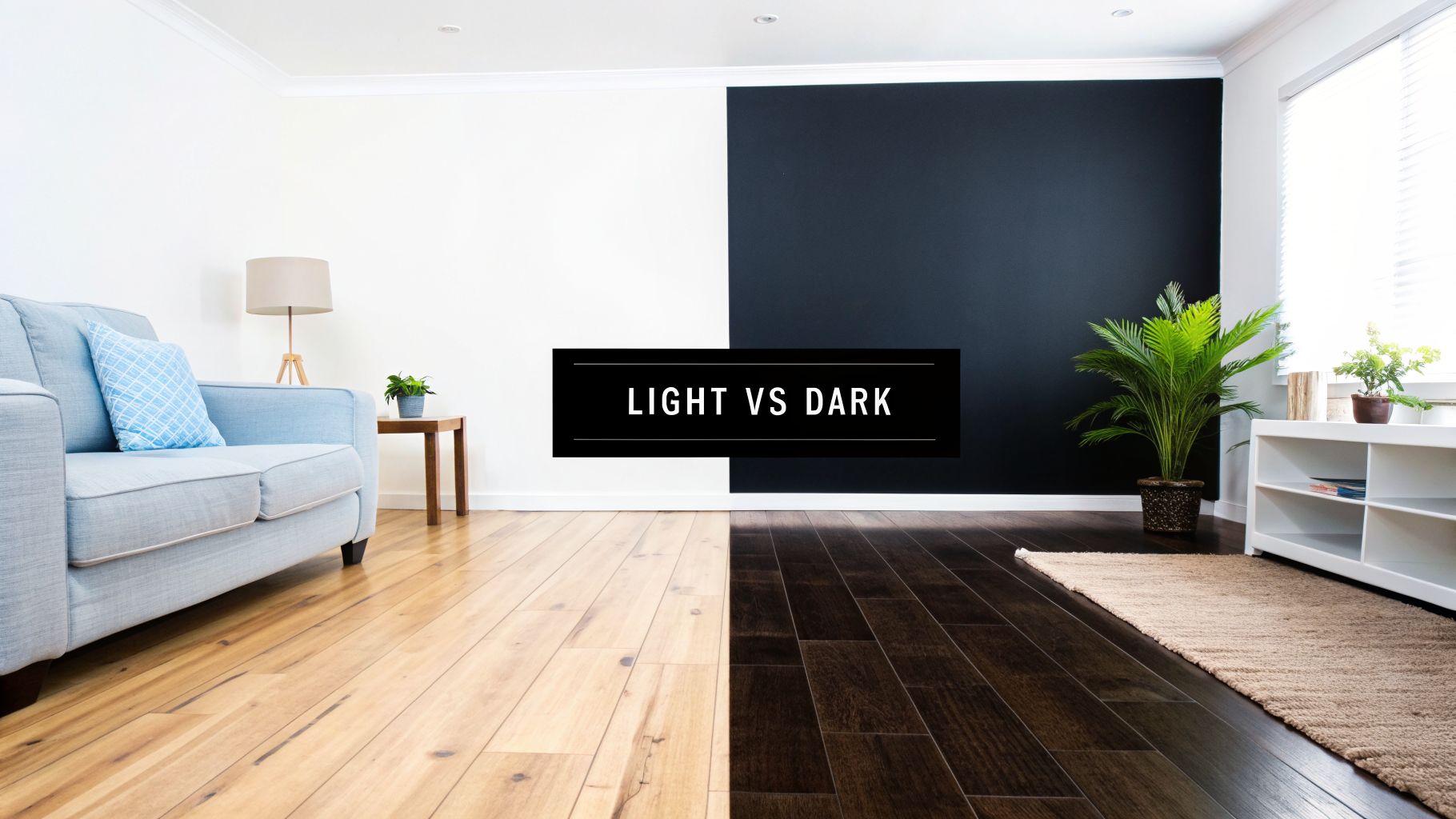
The Case for Light Wood Floors
Light-colored wood floors—from pale blondes and natural oaks to whitewashed and soft gray finishes—are masters of creating an open, expansive feeling. They are the ultimate space-maximizers. By bouncing both natural and artificial light around, they make any room feel instantly larger and more cheerful.
This makes them a go-to choice for smaller rooms, basements, or any area that could use a little more sunlight. Their bright, clean look also happens to be a perfect match for some of the most popular design styles we see in homes around Cumming and Milton.
- Modern and Minimalist: Light floors create a simple, uncluttered canvas that lets your furniture and unique decor really shine.
- Scandinavian: This style is all about clean lines and natural elements, making light wood a foundational element.
- Coastal or Farmhouse: The breezy, casual vibe of light floors is a natural fit for these relaxed and inviting aesthetics.
From a purely practical standpoint, light floors are also surprisingly easy to live with. They are absolute champions at camouflaging dust, pet hair, and small scratches, which is a huge plus for busy families or anyone with furry friends.
The Allure of Dark Wood Floors
Dark wood floors, running the gamut from deep espresso to rich mahogany and dark walnut, bring an immediate sense of luxury and sophistication. They tend to absorb light, which is a fantastic quality for making a large, cavernous room feel cozier, more intimate, and more grounded.
This grounding effect establishes a powerful visual anchor for a room. It's why dark floors are so often used to create a dramatic or formal atmosphere in more traditional or upscale homes.
- Traditional and Formal: Dark wood just has a sense of history and timeless elegance. It’s perfect for a formal living room, dining room, or a stately home office.
- Industrial: The sharp contrast between dark floors and elements like exposed brick or metal creates a striking, edgy look.
- Luxury Modern: A sleek, deep-toned floor can feel incredibly chic and high-end, especially when paired with light walls and furnishings for contrast.
Designer's Note: While undeniably beautiful, dark floors do require a bit of a maintenance commitment. Their smooth, dark surface acts like a spotlight for dust, footprints, and light-colored pet hair. Scratches also tend to stand out more, making them a better choice for lower-traffic areas or households without young kids or pets.
A Side-by-Side Look at the Differences
So, how do you choose? It really comes down to weighing the visual impact you want against the daily upkeep you can handle. Getting clear on these contrasts is key, and if you're ready to go deeper, you can learn more about the pros and cons of dark versus light hardwoods right here.
Here’s a quick breakdown to help you compare:
| Feature | Light Wood Flooring | Dark Wood Flooring |
|---|---|---|
| Atmosphere | Airy, open, casual, and modern | Dramatic, luxurious, intimate, and traditional |
| Space Perception | Makes rooms feel larger and brighter | Makes rooms feel cozier and more grounded |
| Maintenance | Hides dust, pet hair, and minor scratches well | Shows dust, footprints, and scratches more easily |
| Best For | Small rooms, high-traffic areas, minimalist styles | Large rooms, formal spaces, creating a bold statement |
| Resale Value | Broadly appealing, associated with modern trends | Can signify luxury, appeals to traditional aesthetics |
In the end, your lifestyle is the true tie-breaker. If you have a bustling household with kids and pets in Forsyth County, a light to medium-toned floor with a bit of grain will be far more forgiving. But if you're designing a quiet, elegant space in Johns Creek and don't mind a little extra sweeping, the dramatic beauty of a dark floor might be exactly what you're looking for.
How Light and Space Influence Your Floor's Appearance
You can't think of a wood floor's color as a static thing. It's more of a chameleon, constantly shifting and adapting to its surroundings. The very same plank of white oak can look warm and honey-toned in one room but feel cool and almost gray in another. This magic trick is performed by two of the most powerful forces in interior design: light and space.
Think of your floor as a canvas. As the sun moves across the sky, it paints that canvas with different hues. The crisp, cool light of morning might pull out subtle ashy undertones, while the warm, golden glow of late afternoon will make any reds and yellows in the wood pop. This is exactly why a sample you loved in the showroom can feel completely wrong once it's installed in your home.
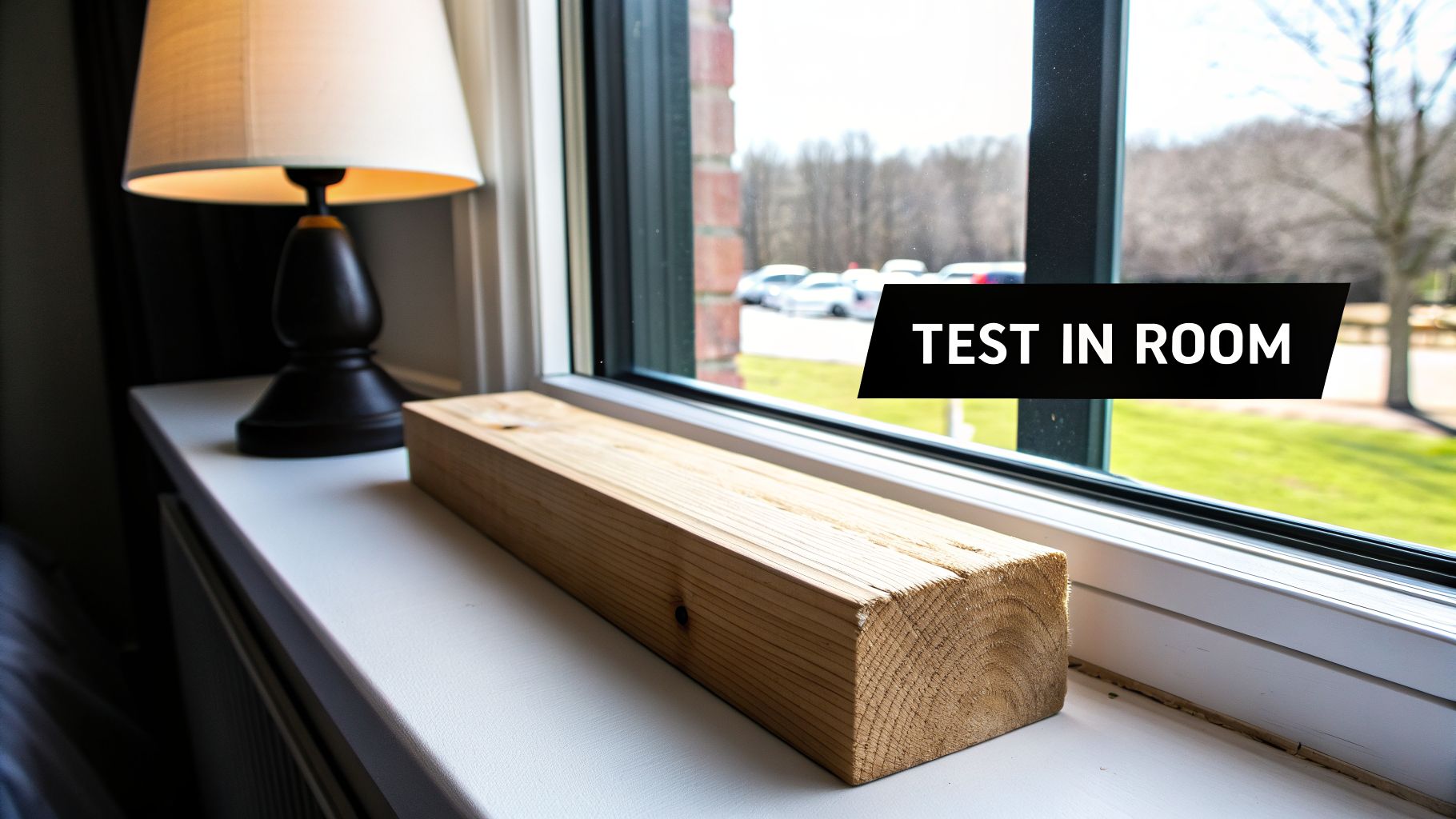
This dance between light and your floor is everything. It highlights the profound impact of light on color perception, which is really just a way of saying that the light in your room completely changes how you see color.
The Role of Artificial Lighting
Once the sun goes down, your light fixtures take over, and they have just as much say in how your floor looks. The bulbs you choose can either complement your floor's natural undertones or fight against them.
- Warm Bulbs (Yellow/Amber Light): These bulbs have a lower Kelvin rating (think 2700K-3000K) and cast a cozy, inviting glow. They’re fantastic for bringing out the inherent warmth in wood, amplifying red, orange, and yellow undertones.
- Cool Bulbs (White/Blue Light): With a higher Kelvin rating (3500K-5000K), these bulbs give off a cleaner, more contemporary light. This is the kind of lighting that will make gray, blue, and taupe undertones look crisp and intentional.
Putting a warm bulb over a cool-toned gray floor can create a confusing, muddy effect. On the flip side, a harsh, cool bulb can wash out the beautiful richness of a classic cherry or walnut floor. The goal is simple: match the "temperature" of your lighting to the undertone of your floors.
How Room Size Changes Everything
Lighting is only half the equation. The actual size and shape of your room play a huge role in how a floor color feels. In fact, you can use floor color as a tool to completely change the perception of space.
A floor color doesn't just sit there; it actively shapes the perception of a room's size and mood. Light floors visually push walls outward, while dark floors pull them in for a more intimate feel.
If you're working with a smaller room or one that doesn't get a ton of natural light—a common feature in some of the charming homes around Johns Creek and Milton—a light wood floor is your best friend. It acts like a mirror, bouncing light around the space to create an illusion of openness. The room instantly feels bigger and airier.
Conversely, dark wood floors are a brilliant choice for large, open-concept spaces. By absorbing light, they ground the room and keep it from feeling like a vast, empty cavern. A deep, rich floor adds a sense of definition and sophistication, helping you create cozier, more distinguished zones within that large footprint.
There's really no substitute for testing. You have to bring large samples into your home and see them in your own space. Watch how they change in the morning light, in the afternoon sun, and at night under your own lamps. It's the only way to truly meet your new floor and ensure it looks exactly how you’ve been imagining it.
Matching Wood Floors to Your Home's Style
Your floors are so much more than just something to walk on. Think of them as the stage for your entire home's personality—a long-term design partner that anchors everything. Choosing the right wood floor color is like casting the lead role in a play; it has to fit the part and work seamlessly with the rest of the cast.
When you match your floor to your home’s architectural style, you create a backdrop that feels intentional and cohesive. It just works. Whether you live in a classic colonial or a sleek modern build, there's a wood floor that will feel right at home. It’s all about seeing the big picture and laying a foundation that you’ll love for years.
For the Modern Farmhouse Vibe
The Modern Farmhouse look, which you see all over Forsyth County, is all about that perfect balance of rustic charm and clean, refined style. This aesthetic lives and breathes on a bright, airy feel, which is why light-colored wood floors are such a natural fit.
- Light, Natural Woods: Picture pale, wide-plank white oak or a soft maple. These floors feel organic and open up a space, making the most of any natural light.
- Gray-Washed Finishes: A subtle gray wash can add a touch of weathered character without making the room feel dark. It offers a cool, contemporary edge that plays beautifully against warm, rustic furniture.
These lighter floors create the perfect canvas for shiplap walls, neutral paint, and cozy textiles. The goal is to feel welcoming and lived-in, and these floors set that stage perfectly.
For a Timeless Traditional Look
Traditional homes just feel right with floors that have a sense of warmth, richness, and history. This is where medium-to-dark tones with warm undertones really get to shine, adding a feeling of elegance and permanence.
These deeper colors ground the room, providing a solid, luxurious base for classic furniture, detailed trim work, and intricate rugs.
- Rich Medium Browns: You can’t go wrong with classic shades like gunstock or saddle brown on an oak or hickory floor. They have a truly timeless appeal.
- Deep, Warm Tones: For a more formal or historic feel, woods like cherry or walnut are stunning. Their reddish undertones add a layer of depth and sophistication that’s hard to beat.
A warm, medium-brown wood floor is a true design classic. It acts as a neutral anchor, giving you the freedom to change up your wall colors and decor over the years without ever worrying about it clashing.
For Sleek and Contemporary Spaces
Contemporary design is all about clean lines, simplicity, and letting the materials speak for themselves. In these homes, the flooring often makes a bold statement, either through dramatic contrast or extreme minimalism.
Cool tones are a signature of this style, creating a look that’s crisp and uncluttered.
- Cool-Toned Grays: From light ash to dark charcoal, gray floors provide a sleek, almost industrial-chic foundation. They pair exceptionally well with minimalist decor and metallic accents.
- Pale Blondes: Almost-white or bleached-look floors are a huge favorite in Scandinavian-inspired design. They do an amazing job of maximizing light and the sense of space.
- Dramatic Dark Stains: An almost-black or deep espresso floor creates an immediate, high-contrast look, especially against bright white walls. This is a choice that adds instant drama.
The flooring market has absolutely exploded with options to meet these different styles. It’s a reflection of how we’re all thinking about design now—with a real focus on personalization and quality. The global flooring market was valued at USD 385.6 billion in 2025 and is projected to hit USD 634.8 billion by 2033, which just shows how much this matters to homeowners.
For those of us in the Cumming area, this means we have access to an incredible variety of wood flooring colors, making it easier than ever to find the perfect match for any home. You can dig deeper into the numbers by checking out the flooring market data on Grand View Research.
At the end of the day, aligning your floor color with your home’s architectural spirit is what makes the final result feel authentic and thoughtfully designed.
A Smarter Way to Select and Test Floor Samples
Let’s be honest: picking the perfect wood floor color in a brightly lit showroom is a recipe for disaster. What looks great under fluorescent lights can be a huge disappointment once it's installed in your home.
The only way to choose with confidence—and avoid a costly mistake—is to bring the decision home. It’s a hands-on method that turns an overwhelming choice into a simple, reliable process.
First things first, forget those tiny 3-inch swatches. They're just too small to give you a real sense of the color and grain variation. You need to get your hands on at least three to four large sample boards of your top contenders and bring them into the exact room where the new floor will live.
Live with Your Samples for 48 Hours
Once you have the large samples, the real test begins. Lay them down on the floor and just live with them for a full 24 to 48 hours. This isn't about a quick glance; it's about seeing how they perform as the light in your home changes throughout the day.
- Morning Light: Notice how the cool, bright light of morning pulls out different undertones.
- Afternoon Sun: See how the warm, direct sun makes the wood's character pop.
- Evening Artificial Light: Pay close attention to how your lamps and overhead lights alter the color's mood after dark.
This simple observation period is the single most important step. It lets you see the floor’s true personality in a way no store ever could.
A floor color that looks perfect under showroom lights can appear completely different in your home. Testing large samples in place is the only way to see how the color will truly live and breathe in your space.
Check Against Your Permanent Fixtures
Before you make your final call, slide those samples right up against the things that aren't changing. We’re talking about your kitchen cabinets, that stone fireplace, the big sectional sofa, and even your wall color. This final check ensures your new floor will complement the room's existing foundation, not clash with it.
If you're still on the fence, professional advice on restaining wood floors can sometimes offer a different perspective on whether to replace or simply refinish what you already have.
With the hardwood flooring market projected to hit USD 73.79 billion by 2031, the technology behind these beautiful floors is getting better all the time. Engineered wood, for example, now holds nearly 72% of the market share thanks to its incredible stability—a huge plus for handling the humidity swings we see here in Forsyth County. That means you have a wider range of colors to choose from, with the peace of mind that your investment is built to last. You can dive deeper into the trends in this hardwood flooring market report from Mordor Intelligence.
Common Questions About Wood Floor Colors
When you start digging into wood flooring, you'll find a world of options, and with that comes a lot of questions. It's completely normal. Getting good answers is what helps you move from feeling overwhelmed to feeling confident in your choice. Let’s walk through some of the questions we hear most often from homeowners right here in Cumming and Forsyth County.
This isn't about memorizing rigid rules. It's about getting a feel for the design principles that work, so you can pick the perfect floor for your home and how you live in it.
Should My Floors Be Lighter or Darker Than My Kitchen Cabinets?
This is probably the number one question we get, and the great news is, there are two fantastic ways to go. It all comes down to the vibe you're trying to create in your kitchen.
- For a Blended, Cohesive Look: Stick with a floor color that's just a shade or two away from your cabinet color. This creates a really seamless, unified feel where the floors and cabinets flow together. The trick is making sure their undertones are on the same team—warm with warm, cool with cool—to keep everything feeling harmonious.
- For a Bold, Contrasting Look: If you want a bit more drama and a modern edge, go for intentional contrast. Crisp white or pale gray cabinets look absolutely stunning against medium-to-dark wood floors. On the flip side, if you have dark cherry or espresso cabinets, pairing them with a lighter floor is a classic move that prevents the whole room from feeling too heavy.
What Wood Floor Colors Are Best for Hiding Dirt and Scratches?
Life is busy, especially with kids and pets running around. For a floor that's going to be forgiving, the answer is always medium-toned floors with plenty of natural graining and variation.
Think about it: really dark floors and super light, uniform floors act like a spotlight for every crumb, dog hair, and speck of dust. But a floor like a natural oak or a rustic hickory, with its built-in patterns and mix of tones, is a master of camouflage. It hides the little signs of daily life. Choosing a matte or satin finish over a high-gloss one also goes a long way in concealing minor scuffs and scratches.
A floor with visible grain and a mix of natural tones is your best ally against daily life. It works with you to keep your home looking clean, even when you haven't had time to sweep.
Do I Have to Use the Same Floor Color Throughout My Entire House?
Using one continuous wood floor color is a fantastic way to create a sense of flow and make your home feel more spacious. But is it a must-do? Absolutely not. It’s perfectly fine—and often very stylish—to switch things up in different areas like bedrooms, basements, or even a home office.
The key is to make any transition feel deliberate and thoughtful, not accidental.
- Stick to the Same Undertone Family: The easiest way to pull this off is to make sure both floors share the same undertone (all warm or all cool), even if the colors themselves are different.
- Go for Complementary Contrast: A clean break can be beautiful. Imagine moving from a medium brown in a main hallway to a softer, lighter natural wood in a bedroom. It signals a change in the feel of the space.
- Use Proper Transition Strips: This is non-negotiable. A professional transition strip creates a clean, intentional finish where the two floors meet.
What's the Most Timeless Color for Wood Flooring?
If you're looking for a color that will look great for decades and adapt to any style you throw at it, medium-toned brown wood floors are the undisputed champions.
Shades like warm honey, a classic saddle brown, or a rich gunstock hit that perfect sweet spot. They aren't as stark as a dark espresso can be, and they avoid the trend-driven feel of some of the gray or bleached looks we see today. These classic colors create a warm, inviting foundation that works with everything, from traditional to farmhouse to modern decor. They give you the freedom to change your paint, furniture, and rugs over the years without ever worrying about a clash. That makes them a truly wise investment.
Ready to see some of these colors in your own home? The team at Flacks Flooring has been helping our neighbors in Cumming, GA, make confident flooring decisions for over 30 years. Stop by our showroom or let us bring the samples to you with an in-home consultation. Learn more at https://flacksflooring.com.