
When you're trying to decide between laminate and carpet, the real answer on cost depends on your timeline. Sure, carpet often looks cheaper on paper at first, but laminate almost always wins the long game with its incredible durability and easy-care nature. It really comes down to balancing what you can spend now with how you want the floor to perform over its entire life in your home.
The True Cost of Laminate vs Carpet Flooring
Choosing the right flooring is a big deal for any homeowner in Cumming, GA. It sets the tone for your home's entire look and feel, dictates your cleaning routine, and can even influence your resale value down the road. Just looking at the price per square foot doesn't give you the full picture. The true cost of laminate versus carpet only becomes clear when you factor in installation, how long it will last, and what you'll spend to keep it looking good.

It’s easy to see why carpet is so tempting. The initial savings can be significant, it goes down fast, and you get that instant feeling of warmth and comfort underfoot. The catch is that it just doesn't last as long, and you'll need to budget for professional deep cleanings to keep it from looking tired and dingy, which adds up over the years.
Laminate, on the other hand, might ask for a bit more from your wallet upfront. But here’s the trade-off: its tough-as-nails resistance to stains, scratches, and spills means it can easily outlive carpet by a decade or more with almost no fuss. That kind of durability makes it a seriously smart investment for a busy family, especially in hallways and living rooms that see a lot of action.
For homeowners here in areas like Johns Creek and Milton, thinking about long-term value is everything. A floor that stays looking new for years and appeals to a wide range of future buyers—like laminate—is going to give you a much better return than carpet that might need to be ripped out and replaced before you even think about selling.
To really make the right call, you have to look at the whole financial story. This guide is here to break down every dollar, from the initial quote to the lifetime value, so you can pick the flooring that truly fits your home and your budget.
At-a-Glance Cost and Value Comparison Laminate vs Carpet
Sometimes you just need a quick, side-by-side look to get your bearings. This table sums up the key financial and performance differences between laminate and carpet to help you see the bigger picture instantly.
| Factor | Laminate Flooring | Carpet |
|---|---|---|
| Upfront Material Cost | Moderate ($2-$4/sq. ft.) | Low to Moderate ($1.50-$4/sq. ft.) |
| Installation Cost | Moderate | Low |
| Typical Lifespan | 10-30 years | 5-15 years |
| Maintenance Needs | Low (sweeping, occasional mopping) | High (regular vacuuming, professional cleaning) |
| Long-Term Value | Excellent | Fair |
| Resale Value Impact | Positive | Neutral to Negative |
As you can see, the initial price tag is just the beginning. The real story unfolds over the years in maintenance costs, lifespan, and how the flooring impacts your home's overall value.
Breaking Down the Upfront Price: Materials and Installation
When you're deciding between laminate and carpet, the first thing most people look at is the price tag. That initial investment covers two big things: the cost of the flooring material itself and what it takes to get it professionally installed. Let's break down how those numbers stack up for laminate and carpet right here in the Cumming and Forsyth County area.
On the surface, carpet often looks like the cheaper option. You can definitely find some very budget-friendly rolls that make it an appealing choice for a fast, affordable room refresh. But don't count laminate out—it's become way more competitive in recent years. It now comes in a huge range of prices that reflect its style and toughness. To get a better handle on how it's made, check out our guide on what is laminate flooring.
Material and Labor: Where the Costs Diverge
The real difference in price often shows up when you add in the labor. Installing carpet is typically a quicker job, which usually means a lower bill from the installers. Laminate, on the other hand, can be a bit more finicky. It often needs extra subfloor prep to make sure every plank lies perfectly flat and the locking system clicks together just right. That extra time can add up.
Let's put this into a real-world context. Imagine you're redoing a 500-square-foot living room in Johns Creek. With carpet, you’re likely looking at a total of $1,400 to $2,600 installed. For the same room, laminate would probably run between $1,800 and $2,800, labor included.
The installation costs alone tell a big part of the story. Carpet installation averages just $0.50 to $1 per square foot, while laminate can range from $2 to $8. That difference can easily mean saving a few hundred dollars right out of the gate with carpet.
The Hidden Costs in Professional Installation
While many laminate floors are marketed as DIY-friendly, hiring a pro is the best way to guarantee it looks perfect and lasts as long as it should. The cost for that labor isn't just a flat rate; it can change based on how complex your room is, the shape of your current subfloor, and whether the crew has to tear out and haul away your old flooring.
Expert Insight: Remember, the total project cost is always more than just the price per square foot of the material. You have to account for underlayment, transition strips, maybe some subfloor leveling, and even moving furniture. A good quote will break down every single one of these line items so you don’t get hit with surprises.
When you're hiring an installer, good communication is everything. Knowing the right questions to ask a general contractor ensures you get quality work and transparent pricing. It helps you get on the same page and confirms every part of the job is included in the estimate, so you can avoid those unexpected costs down the road.
In the end, while carpet often has the lower initial price tag, the slightly higher upfront cost for laminate can often be the first step toward better long-term value.
Calculating Lifetime Value and Hidden Maintenance Expenses
That sticker price on your new flooring? It’s just the beginning of the story. To really understand the cost of laminate vs carpet, you have to think like an investor and look at the total cost of ownership over the next decade or two. This is where longevity, maintenance, and eventual replacement costs come into play, and it’s often where the financial picture completely flips.
Carpet certainly has that initial low-cost appeal, but its lifespan is much shorter. You can expect most carpets to last between 5 to 15 years, and that’s on the lower end for high-traffic areas in a busy family home. On the other hand, quality laminate flooring is engineered for the long haul, with a typical lifespan of 10 to 30 years.
What does that durability gap actually mean for your wallet? Over a 20-year span, you could find yourself replacing that carpet once, maybe even twice. All the while, your laminate floor is still going strong. It’s a huge financial detail that’s easy to miss when you’re just focused on the upfront quote.
Uncovering Ongoing Maintenance Costs
Beyond its lifespan, the day-to-day and annual upkeep expenses really add up. Carpet needs constant vacuuming to keep dust and allergens at bay, plus a professional deep cleaning every year or so to tackle the grime that inevitably sinks in.
Over a 20-year timeframe—a realistic lifespan for quality laminate—the math heavily favors laminate. A high-traffic home in Johns Creek might require carpet replacement every 5-15 years, with costs reaching up to $20 per square foot for premium options. Add in annual steam cleaning at $100-$200 per room, and the expenses accumulate quickly.
Laminate, however, is a different story. A quick sweep and an occasional mop are all it takes to keep it looking fantastic. That simple routine means you can say goodbye to the recurring cost of professional cleaning services, which makes a direct, positive impact on your long-term budget.
The infographic below gives you a snapshot of the upfront costs, but just remember, this doesn't factor in the long-term expenses we're talking about.
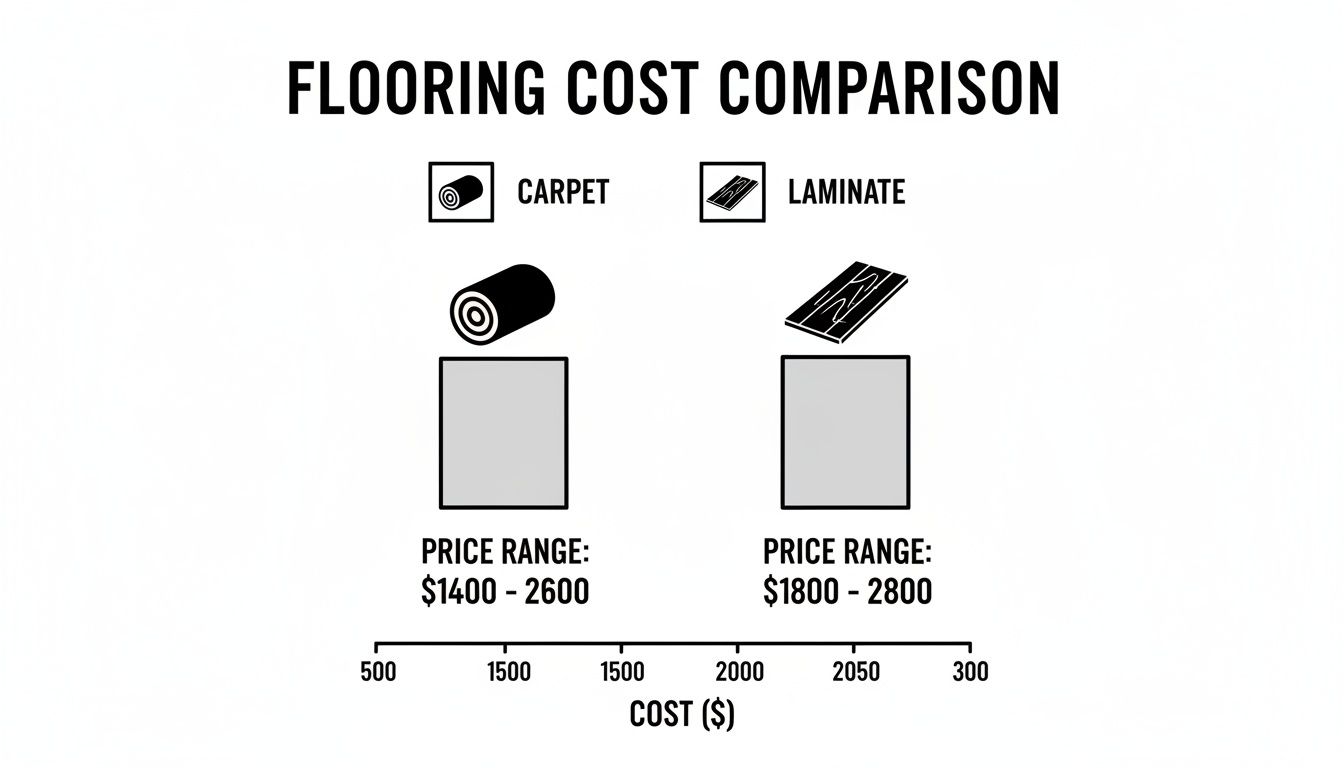
As you can see, laminate might have a slightly higher starting price, but its minimal maintenance and impressive longevity more than make up for that initial investment over time.
The Financial Impact of Durability
Stain resistance is another area where laminate proves its long-term value. Spills on laminate are a non-issue; you just wipe them away. With carpet, a spilled glass of juice can easily become a permanent, unsightly stain that’s both difficult and expensive to remove.
This is a game-changer for anyone with kids or pets. Flooring experts estimate that laminate's simple maintenance routine can slash long-term upkeep expenses by 50-70% compared to carpet. If you're set on carpet and want to know what you're in for, our guide on how to clean a dirty carpet is a great resource.
When you zoom out and look at the next two decades, choosing laminate could mean saving thousands of dollars on replacements and professional cleaning. While there's no denying the comfort of a plush carpet, laminate offers a kind of financial predictability and peace of mind that makes it a smarter long-term investment for many homeowners in Forsyth County.
How Your Flooring Choice Affects Your Daily Life
The numbers are important, but let's be real—how your floor performs day in and day out is what you'll live with. The right flooring should make your life easier, not give you another thing to worry about. We're talking about how it holds up to a busy family, how it feels under your feet, and even how it affects the air you breathe.
Durability and High-Traffic Areas
For anyone in Cumming with kids, pets, or just a busy home, durability is everything. This is where laminate flooring really shines. Its tough, protective wear layer is built to take a beating—from pet claws, dragged toys, and the constant foot traffic in hallways and living rooms. That resilience keeps it looking good for years without showing its age.
Carpet, on the other hand, just can't handle that kind of abuse. High traffic areas quickly show wear paths, and the fibers get matted down, making the whole room look tired. Even though some high-end carpets have great stain resistance, they're still susceptible to the kind of physical wear and tear that laminate simply brushes off.
The Comfort, Warmth, and Quiet Factor
When it comes to pure comfort, carpet is the undisputed champion. Nothing beats that soft, plush feeling under your feet, especially on a chilly morning in a bedroom or a cozy family room. Carpet is also a fantastic sound insulator. It naturally absorbs the noise of footsteps, loud conversations, and the TV, creating a much quieter and more peaceful home.
Laminate is a hard surface, which means it’s louder and not as forgiving to walk on. A good underlayment makes a world of difference by dampening sound and adding a bit of cushion, but it will never match the deep, wall-to-wall comfort and quiet that carpet provides.
The decision often boils down to a trade-off: do you prioritize tough-as-nails resilience or cozy comfort? It’s common for homeowners to get the best of both worlds—installing durable laminate downstairs and putting warm, quiet carpet in the upstairs bedrooms.
Moisture, Allergies, and Your Home's Health
Here in Georgia, humidity is a big deal, and moisture can wreak havoc on your floors. Modern laminate has come a long way, and many products are now 100% waterproof. This makes laminate a fantastic, worry-free option for kitchens, bathrooms, and basements where spills are bound to happen. Carpet is the exact opposite; it's like a sponge for moisture, which can lead to mold, mildew, and lingering odors.
This brings us to a major health consideration: allergies. If anyone in your home suffers from allergies, the choice is pretty clear.
- Laminate Flooring: Its smooth, non-porous surface doesn't give dust, pet dander, or pollen anywhere to hide. A quick sweep or vacuum gets rid of it all, promoting much better indoor air quality.
- Carpet: The fibers are a magnet for allergens. Even with consistent, deep cleaning, it's incredibly difficult to remove all the trapped irritants.
For families in Forsyth County who are focused on a healthy living space, laminate’s easy-to-clean nature gives it a huge advantage. It's simply the better choice for managing allergies and keeping your home cleaner.
Let’s put all this into a simple, at-a-glance format. This table breaks down how each flooring type stacks up in different real-world situations, helping you match your lifestyle needs with the right material.
Lifestyle and Practicality Breakdown: Laminate vs. Carpet
| Performance Metric | Laminate Flooring | Carpet |
|---|---|---|
| Pet-Friendliness | Excellent. Resists scratches from claws and is easy to clean up accidents. | Fair. Claws can snag fibers, and stains/odors can be tough to remove. |
| Kid-Durability | Excellent. Stands up to toys, spills, and heavy foot traffic. | Poor to Fair. Prone to stains, matting, and wear in play areas. |
| Underfoot Comfort | Fair. Hard surface, though underlayment adds some softness. | Excellent. Soft, warm, and plush, especially with thick padding. |
| Noise Reduction | Fair. Can be noisy, but underlayment helps dampen sound. | Excellent. Absorbs sound, making rooms and entire homes quieter. |
| Allergy Management | Excellent. Doesn't trap dust or dander; easy to keep clean. | Poor. Harbors allergens deep in its fibers, difficult to fully clean. |
| Water Resistance | Good to Excellent. Water-resistant and waterproof options are widely available. | Poor. Absorbs spills and moisture, leading to mold and mildew risk. |
| Use in Kitchens/Baths | Excellent. Waterproof laminate is a perfect fit for these areas. | Not Recommended. Constant moisture exposure will ruin carpet quickly. |
Ultimately, this table highlights the core trade-off. Laminate is the practical, durable workhorse perfect for busy, spill-prone, and allergy-sensitive households. Carpet, in contrast, is the go-to for creating spaces defined by comfort, warmth, and quiet serenity.
Flooring Choices and Their Impact on Home Resale Value
When you're getting ready to sell your home, the flooring is one of the very first things a potential buyer sees. That initial impression can have a real impact on your final sale price. Choosing between laminate and carpet isn't just about what you like; it’s a strategic move that can affect how quickly your home sells and for how much.
Let's be honest: in the current market, hard-surface flooring is king.
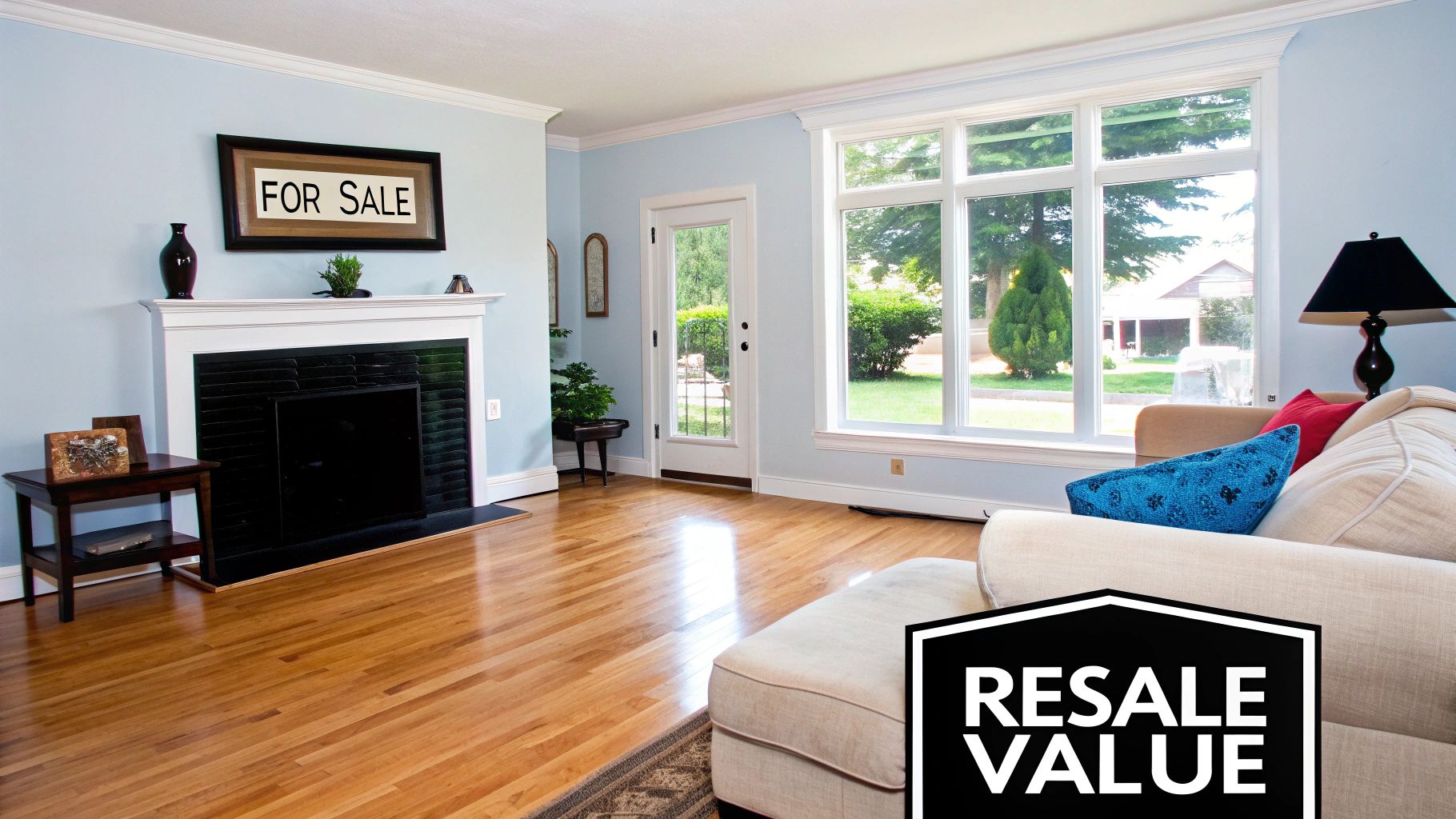
Worn-out, dated, or stained carpet is a huge turn-off for buyers. It can scream "neglect" and make them wonder what else in the house hasn't been maintained. More than that, it signals a big, expensive project they'll have to tackle right after moving in. That often leads to lowball offers or your house just sitting on the market, which is a big deal in competitive areas like Forsyth County and Milton.
On the other hand, fresh, modern laminate gives off a clean, move-in-ready vibe. It makes rooms feel bigger and brighter, helping buyers picture their own lives—and their own furniture—in the space without being distracted by someone else's old carpet.
Maximizing Your Return on Investment
From an investment standpoint, laminate almost always offers a better and more predictable return. Because it's durable, stylish, and long-lasting, buyers see it as a true upgrade, not a problem they have to fix. This positive perception can directly boost your home's appraisal and attract stronger offers. Understanding how floors can increase the value of your home is a critical piece of the pre-sale puzzle.
The numbers back this up. Resale data consistently shows that hard flooring like laminate is a major selling point. A staggering 80% of buyers would choose it over stained carpet. In the Cumming area, this preference can add $5,000 to $10,000 to a home's value. Local real estate agents also report that homes staged with clean laminate floors often close 20% quicker. You can dig into more of this data with flooring experts at Angi.com.
Key Takeaway: For home sellers, the laminate vs. carpet cost debate is about more than just the initial price tag. Laminate is an investment in your home's marketability that can result in a faster sale and a better price. Old carpet, however, can actively drag down your home's value.
Ultimately, while brand-new, neutral carpet is certainly an improvement over old, worn-out carpet, laminate flooring consistently makes a stronger first impression and delivers a more powerful financial return for sellers. It simply lines up better with what today's buyers are looking for.
Making the Right Flooring Choice for Your Home
Choosing between laminate and carpet isn't just about the price tag. The real question is how each one will hold up to the demands of your specific home and lifestyle. The cost of laminate vs carpet debate is really settled by performance over time, not just the upfront expense. When you align your choice with your priorities, you'll end up with a floor you love for years to come.
Take a good look at your daily life. If you've got a busy home with kids, pets, or just a lot of coming and going, laminate is almost always the more practical pick. It's a true workhorse—durable, scratch-resistant, and a breeze to clean—making it perfect for high-traffic zones like hallways, kitchens, and living rooms. And for anyone dealing with allergies, laminate is a game-changer because it doesn't trap dust and dander.
On the flip side, if your main goal is to create a quiet, comfortable sanctuary, nothing beats carpet. It’s the hands-down winner for bedrooms, cozy family rooms, or any upstairs space where you want to dampen sound and have something soft and warm underfoot. Carpet has a unique ability to turn a room into a cozy retreat that hard surfaces just can't replicate.
Your Personal Flooring Checklist
To nail down the right choice, run through these simple questions. Your answers will point you in the right direction.
- Where is the room? Laminate is built for spill-prone, high-traffic areas like kitchens and entryways. Carpet thrives in low-traffic, quiet spaces like bedrooms.
- Who uses the space? Homes with pets and children will get more mileage out of laminate's resilience. Quieter, adults-only households can fully enjoy the plush comfort of carpet.
- What’s your top priority? Is it no-fuss durability and easy maintenance? Go with laminate. Is it all about comfort and noise reduction? Choose carpet.
- Are allergies a concern? If the answer is yes, laminate is the clear winner for better indoor air quality.
- What is your long-term plan? For a rental property or a home you plan to sell, durable laminate often provides a better return on investment.
Final Thought: Remember, your floor is a long-term part of your home. Don't just focus on how it looks the day it's installed—think about how it will serve your family's needs over the next decade.
When you're making a big decision like new flooring, it often helps to see how it fits into the bigger picture. Thinking about the entire project as a room makeover on a budget can help you make sure every element, including your new floors, works together beautifully. This kind of self-assessment ensures your final choice is a perfect match for your budget, lifestyle, and home.
Got Questions? We’ve Got Answers.
When you're trying to decide between laminate and carpet, a few specific questions always come up. Here are the straight answers we give our clients here in the Cumming area to help them nail down their final choice with confidence.
What's the Best Flooring for a House Full of Kids and Pets?
For a busy household with kids and pets, laminate is almost always the winner. Its tough wear layer is built to withstand scratches from dog claws, the constant scrape of dragged toys, and the general wear-and-tear that comes with family life.
Plus, laminate is a breeze to clean. Spills, muddy paw prints, and other little accidents wipe right up without a fuss. Since it's non-porous, you don't have to worry about liquids seeping through and causing stains or lingering smells. Carpet, on the other hand, acts like a magnet for pet dander, dust, and allergens, and cleaning up spills completely can be a real challenge.
Can I Just Install Laminate Myself to Cut Costs?
Absolutely. Many laminate flooring products today are made with a simple click-lock system, which makes them very friendly for a weekend DIY project. Tackling the installation yourself can definitely save you a good chunk of money on labor.
However, there's a big "if" here: your subfloor has to be perfectly level and properly prepped. An uneven subfloor can cause gaps between the planks or prevent them from locking together correctly, which can ruin the whole project.
"A DIY installation can be a fantastic way to save, but a professional crew guarantees the job is done right. It protects your warranty and ensures you get that seamless, durable finish you're paying for."
How Do Laminate and Carpet Handle Moisture?
This is where the two really go their separate ways. Moisture is the arch-nemesis of carpet. The fibers and the thick padding underneath will soak up any spills or even just high humidity in the air. This can quickly lead to mold, mildew, and even damage to the subfloor beneath. That’s why carpet is a no-go for basements, bathrooms, or laundry areas.
Laminate, on the other hand, handles water much better. In fact, many modern laminate floors are now designed to be 100% waterproof. These products give you the gorgeous, high-end look of hardwood without the constant stress of potential water damage, making them a safe and stylish bet for literally any room in the house.
Ready to explore the best flooring options for your home in Cumming, GA? The experts at Flacks Flooring are here to provide personalized guidance and help you find the perfect fit for your lifestyle and budget. Visit our showroom or schedule a free in-home consultation today.