
When you’re staring at new flooring options, the conversation almost always kicks off with one big question: what’s it going to cost me? When it comes to the cost of carpet vs laminate flooring, carpet usually looks like the more budget-friendly choice right out of the gate. But while laminate has a higher initial price tag, it offers a completely different kind of value over the long haul.
Getting a handle on this initial cost difference is your first real step toward making a smart decision for your home.
Carpet vs Laminate An Upfront Cost Comparison
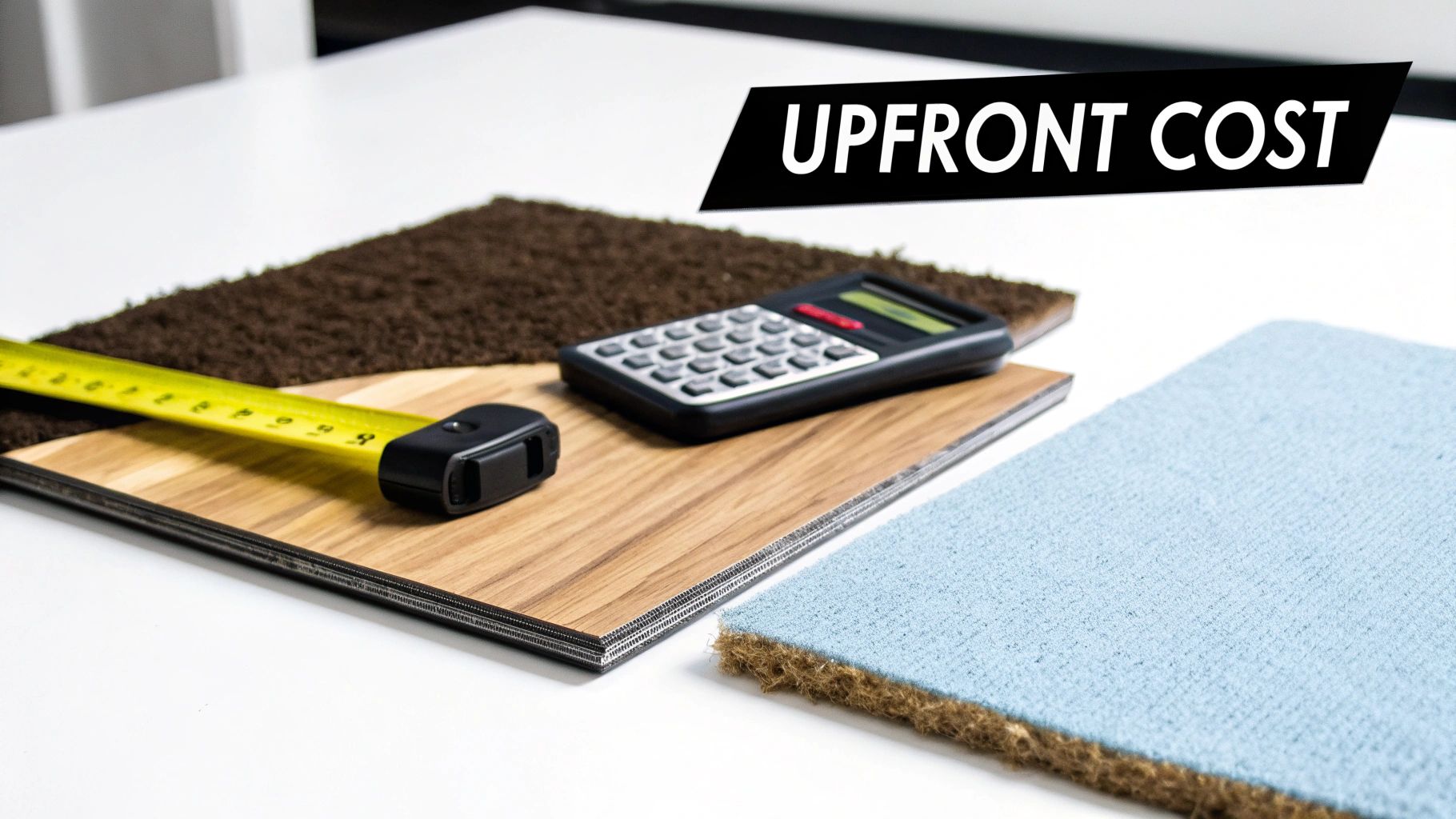
For most of us, the immediate hit to the wallet is the biggest hurdle in any renovation. And when you put carpet and laminate head-to-head on upfront costs, there’s a clear winner if you’re looking for initial savings.
Carpet almost always has a lower price for both the materials and the installation. This makes it a fantastic option if you’re trying to cover a lot of square footage without breaking the bank.
Here in Cumming and the greater Forsyth County area, we see this play out all the time. Carpet consistently comes in as the more affordable option, averaging $2 to $8 per square foot installed based on national 2026 data. For a typical 500-square-foot living room, you’re looking at a total of roughly $1,000 to $4,000. That’s a huge plus for anyone on a tight budget or even for real estate pros staging properties in places like Johns Creek or Milton.
Laminate, on the other hand, typically runs from $4 to $14 per square foot installed. That same 500-square-foot room now costs between $2,000 and $7,000. You can dig deeper into these flooring cost breakdowns to see how the numbers line up for your specific project.
Breaking Down The Numbers
So why the big price gap? It really comes down to how each material is made and installed. Carpet manufacturing is often less complex, and the installation process can be more forgiving. Laminate, however, demands a perfectly flat, stable subfloor to avoid buckling and separating down the road, which can add to the prep work and labor costs.
To make this crystal clear, let’s put some numbers to a common room size.
Quick Cost Comparison Carpet vs Laminate (500 sq. ft. Room)
This table gives you a quick snapshot of what to expect for a standard room, including both materials and professional installation.
| Flooring Type | Average Cost Per Sq. Ft. (Installed) | Estimated Total for 500 sq. ft. Room |
|---|---|---|
| Carpet | $2 – $8 | $1,000 – $4,000 |
| Laminate | $4 – $14 | $2,000 – $7,000 |
As you can see, the difference can be substantial. But keep in mind, this is just the initial investment.
Key Takeaway: Carpet is the easy winner on upfront cost, no question. But laminate’s higher price tag accounts for its multi-layered, durable construction, including a tough wear layer and a realistic image layer. This is just part one of the total cost story.
Beyond the Price Tag: Comfort, Durability, and Style
The initial price tag is just one piece of the puzzle. The real story of carpet versus laminate flooring unfolds in your daily life—how it feels underfoot, how it holds up to foot traffic, and how much time you spend cleaning it. This is where we get into the practical, real-world value of your investment.
Comfort and Feel
When it comes to pure comfort, carpet is the undisputed champion. There’s a certain warmth and coziness you get from a soft, yielding surface that hard floors just can’t match. This makes it a go-to choice for bedrooms, family rooms, and kids’ play areas where you want a soft landing spot. Plus, carpet is a fantastic sound absorber, which really helps quiet things down and create a more peaceful home.
Laminate, on the other hand, provides a firm, solid feel that a lot of people love for its clean, modern vibe. You don’t get the same plushness, but what you do get is an incredibly easy surface to maintain. A quick sweep or a pass with the vacuum is usually all it takes to keep it looking perfect.
Durability and Daily Life
The durability conversation is where things get more interesting. A carpet’s lifespan really depends on its fiber type and overall quality. A high-end nylon or wool carpet can handle heavy foot traffic for years, but it’s still vulnerable to stains, crushing, and matting. Spills have to be dealt with immediately if you want to avoid permanent marks.
Laminate flooring was literally engineered for toughness. Its protective wear layer is built to resist scratches, scuffs, and even fading from UV light. This makes it a fantastic option for the busiest parts of your home, like hallways, kitchens, and any space shared with kids and pets. While today’s laminate is incredibly resilient, keep in mind that a deep gouge is difficult to repair. To get a better sense of how it’s made, you can read our detailed guide on what is laminate flooring.
Laminate’s impressive lifespan of 10-25 years can save thousands by avoiding frequent replacements. Additionally, its maintenance is simple—regular sweeping and occasional damp mopping suffice. Carpet, however, often needs professional cleaning every 12-18 months, which can add $0.20 to $0.40 per square foot to its annual upkeep costs, a key detail you can find in flooring cost analyses.
Finding the Right Style for Your Home
From a design perspective, both materials offer a huge array of options to fit whatever look you’re going for.
- Carpet: You’re looking at an endless spectrum of colors, patterns, and textures. Whether you want a low-profile Berber or a deep, plush shag, carpet can add a layer of visual softness, acting as either a bold design statement or a quiet, neutral foundation.
- Laminate: This is where you get the authentic look of natural materials without the high cost. Modern high-definition printing can convincingly replicate everything from the wood grain of oak and hickory to the detailed patterns of natural stone.
So, what’s the right call? It really boils down to your priorities. If your main goal is creating a comfortable, quiet sanctuary in a low-traffic area, carpet is a fantastic choice. But if you need a durable, easy-to-clean floor that can stand up to the chaos of a busy household, laminate delivers incredible performance and excellent long-term value.
The Long-Term Cost of Ownership Over a Decade
The initial price tag is just the first chapter in the story of your flooring’s total cost. To really understand the investment, you have to look down the road—say, ten years from now. That’s where ongoing maintenance, potential repairs, and eventual replacement costs can completely flip the financial script.
Carpet’s lower upfront cost feels like a win, but it comes with higher maintenance demands. To keep that warranty valid and the fibers looking fresh, you’ll need professional deep cleaning every 12 to 18 months. At $0.20 to $0.40 per square foot, that’s a recurring expense that laminate owners simply don’t have to worry about. Laminate just needs a good sweep and an occasional damp mop, saving you real money and time, year after year.
This infographic breaks down the essential character of each flooring type, from carpet’s unmatched comfort to laminate’s straightforward durability.
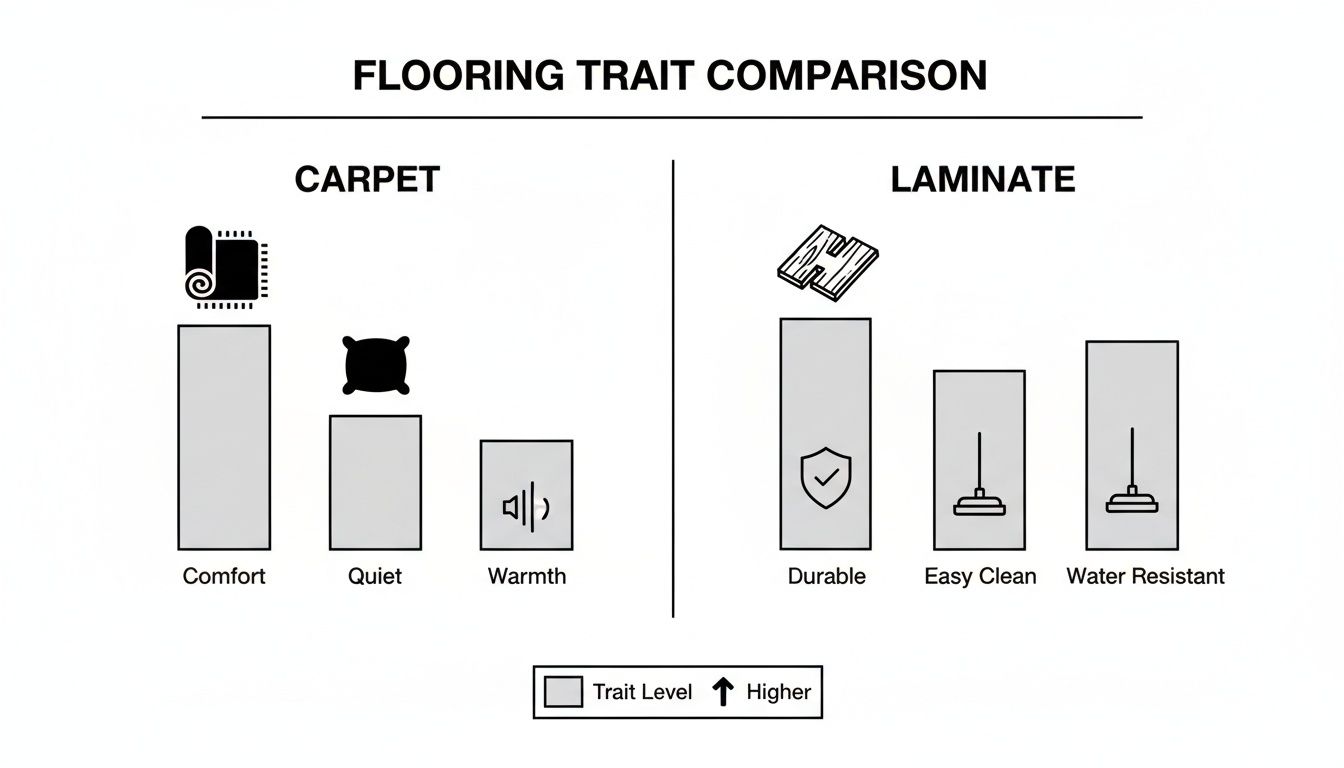
As you can see, the right choice really hinges on what you value most in a room—plush softness or rugged resilience.
Factoring in Lifespan and Replacement
The biggest long-term cost variable is, without a doubt, lifespan. Carpet is fantastic for that cozy, quiet bedroom vibe—it can cut noise by 20-30% more than hard surfaces. But it has a shorter life, typically 5-10 years, and in a busy family home, it will likely need replacing on the lower end of that range. You can get more details on flooring longevity and its financial impact by reviewing trusted industry cost guides.
Laminate, on the other hand, is built to last. With a typical lifespan of 10 to 25 years, a well-made laminate floor installed today could easily outlive two rounds of carpet. That durability means you sidestep the massive expense and disruption of a full replacement, especially within the first decade.
Over ten years, you could find yourself replacing carpet entirely, effectively doubling its initial cost. In that same timeframe, a quality laminate floor just keeps performing with minimal fuss, making its higher upfront price a much smarter long-term play.
10-Year Ownership Cost Scenario: Carpet vs. Laminate
To put this into perspective, let’s run the numbers for a typical 500 sq. ft. room over a decade. This table illustrates how the total cost can shift dramatically once you factor in upkeep and a potential replacement.
| Cost Factor | Carpet (Mid-Grade) | Laminate (Mid-Grade) |
|---|---|---|
| Initial Installation Cost | $2,250 ($4.50/sq. ft.) | $3,500 ($7.00/sq. ft.) |
| Annual Maintenance (Pro Cleaning) | $125 (once per year) | $0 (DIY cleaning) |
| Total 10-Year Maintenance | $1,250 | $0 |
| Replacement After 10 Years | $2,250 | $0 |
| Total 10-Year Cost | $5,750 | $3,500 |
Note: These are illustrative figures. Your actual costs will vary based on materials, labor rates in your area, and specific maintenance needs.
The numbers make it clear: while carpet starts cheaper, the long-term financial burden can be significantly higher. For homeowners in communities like Milton or Johns Creek who plan to stay put, this long-range view is critical. Laminate’s endurance offers a more predictable and often lower total cost, delivering a better return on your investment. It’s a classic case of the cheapest option today not always being the most cost-effective solution tomorrow.
Matching the Right Flooring to Your Lifestyle
The real test of any flooring isn’t just the price—it’s how it holds up in the rooms where you actually live. The perfect choice for a quiet, cozy bedroom is almost never the right fit for a busy hallway or a damp basement. Getting this match right is the secret to being happy with your floors for years to come and avoiding a costly do-over.
Think about what each room demands. Your flooring should be a problem-solver, not a problem-creator. For instance, the soft, warm feel of carpet is a huge plus in private spaces, while laminate’s sheer toughness is exactly what you need in the main arteries of your home.
Bedrooms and Playrooms: The Case for Comfort
When you’re talking about bedrooms or kids’ play areas, comfort and safety are the top priorities. Carpet is the hands-down winner here. It offers a plush, warm surface that’s gentle on your feet, creating an inviting atmosphere that’s perfect for rolling out of bed on a cold morning.
For families with little ones, the perks go beyond just feel. Carpet provides a much softer landing for the inevitable tumbles and does an incredible job of muffling noise—a huge benefit for maintaining quiet spaces in an active home. You can dig deeper into our guide on how to choose a good carpet for your home to find the right style and durability for these key rooms.
High-Traffic Zones: Durability is King
Now let’s shift gears to the busiest spots in your house: living rooms, hallways, and entryways. These areas need a floor that can handle constant foot traffic, accidental spills, and the daily grind. This is where laminate flooring really shines.
Laminate’s tough, protective wear layer is built to resist scratches, scuffs, and fading from sunlight. Better yet, cleaning is a breeze. A quick sweep or a damp mop is all it takes to deal with tracked-in dirt, making it a super practical choice for anyone who prefers a low-maintenance home. That built-in durability ensures these high-use areas stay looking sharp for years.
For contractors and designers working in the Cumming area, a key talking point is how laminate’s thicker, scratch-resistant planks (8-12mm) stand up to kids and pets. This isn’t just about looks; it preserves property value, often delivering a 70-80% ROI on the renovation. HomeGuide offers more insights on these kinds of returns.
Tackling Tricky Spaces: Basements and Moisture
Basements throw a curveball with their potential for dampness and humidity swings. Traditional carpet is a no-go since it can trap moisture and lead to mildew, while standard laminate might warp over time. Fortunately, modern flooring has evolved to handle these below-grade challenges.
Water-resistant or fully waterproof laminate is an excellent solution for basements. You get all the durable, easy-to-clean benefits of regular laminate, but with a core that’s specifically engineered to handle moisture without buckling or damage. It’s a reliable, long-lasting option that protects your investment and saves you from the headaches of putting the wrong material in a tough environment.
How Flooring Choices Impact Your Home’s Resale Value
A flooring upgrade is more than just a cosmetic fix; it’s a real investment in your property’s marketability. When you’re weighing the cost of carpet vs laminate flooring, you have to think beyond the initial installation bill and consider what future buyers will want to see.
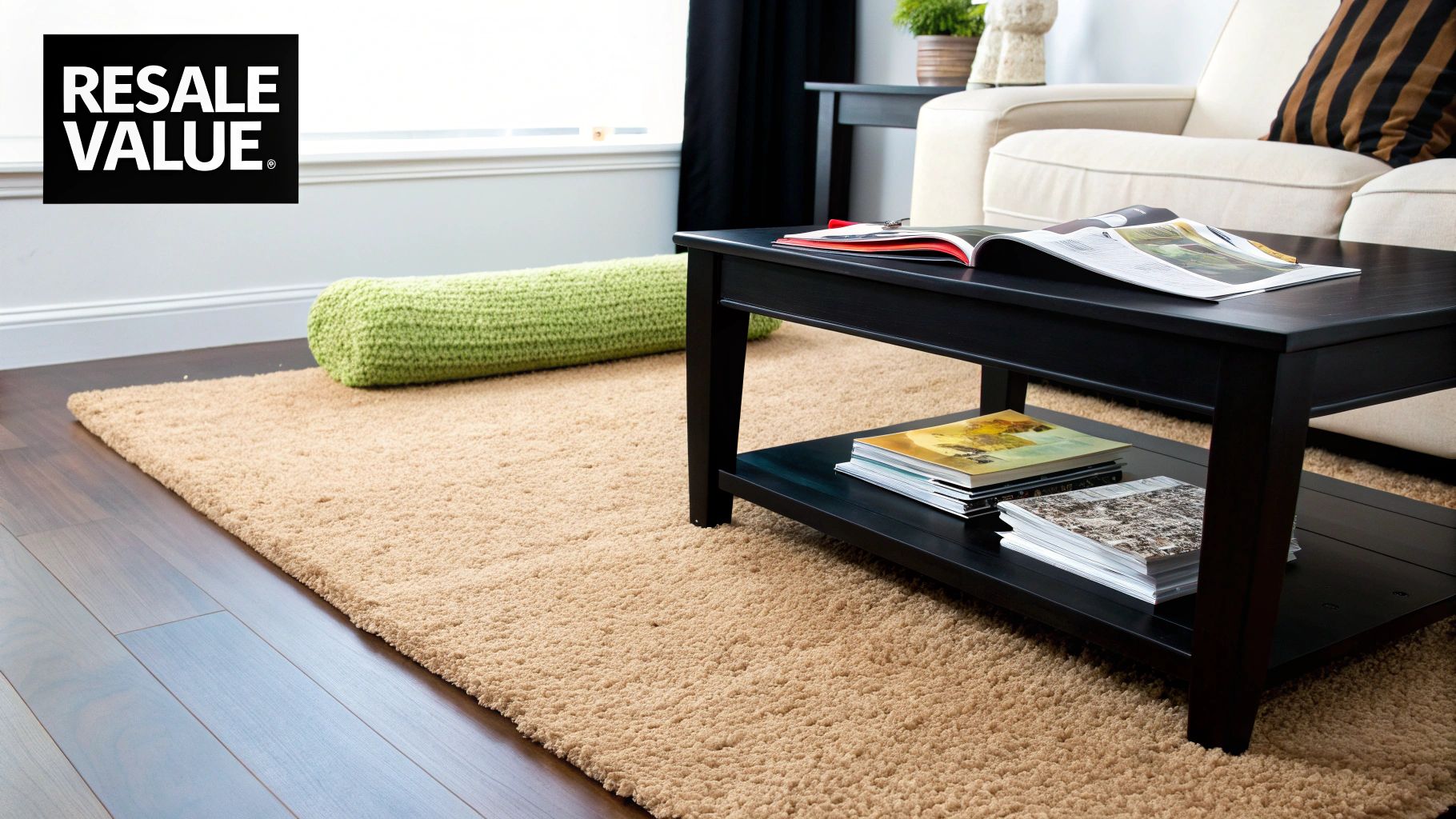
Most buyers today are looking for clean, modern spaces that are easy to care for. High-quality laminate hits all those notes. It gives you that sophisticated hardwood look without the high-maintenance headache, which can make a house feel truly move-in ready and attract a much broader audience. That appeal often translates into a faster, smoother sale.
Laminate as a Long-Term Asset
The durability of laminate is one of its biggest advantages when it comes to resale value. Buyers see it as a permanent feature, not an expensive project they’ll have to deal with down the road. That perception of lasting quality can make a real difference in the offers you receive. To really understand the financial impact of this decision, it helps to know how to determine home value accurately.
In the competitive Forsyth County housing market, homes with updated floors are known to sell 15-20% faster. Choosing laminate can mean a quicker sale and the peace of mind that comes from avoiding the inevitable fading or matting that carpet experiences after just a few years of foot traffic.
The Strategic Use of Carpet
While laminate generally has wider appeal, don’t count carpet out completely. New, high-quality carpet can be a major selling point in certain rooms—especially bedrooms. There’s no denying the feeling of warmth and comfort that carpet provides, and many buyers still crave that cozy, quiet atmosphere in their personal retreats.
Putting fresh, neutral-toned carpet in the bedrooms is a smart play. It signals to buyers that the space is clean and ready for them to relax in. The trick is to make sure it looks brand new, because nothing turns a buyer off faster than worn, stained, or dated carpet. Understanding how floors can increase the value of your home is all about making these kinds of strategic choices.
Key Insight: For the best return on your investment, a hybrid approach is often the winning strategy. Put down durable, high-quality laminate in your main living areas and hallways. Then, install fresh, plush carpeting in the bedrooms to give potential buyers the best of both worlds.
Smart Buying and Installation Tips from Flooring Experts
Choosing between carpet and laminate is a big step, but how you buy and install it is just as important. Getting these next steps right ensures you get the most out of your investment and avoid some common, costly headaches down the road.
First things first: measurements. Once you’ve measured your room, always add an extra 10% to your order. This overage is your safety net, covering cuts, mistakes, and any future repairs you might need. Trying to find a matching lot of carpet or laminate a year from now can be next to impossible, so this little bit of planning is a lifesaver.
Nailing the Installation Details
Great flooring can be ruined by a bad installation. Cutting corners here is a surefire way to void your warranty and see your new floor fail years before it should.
- Don’t Skimp on Underlayment: This is a non-negotiable for both flooring types. A quality underlayment makes the floor quieter and more comfortable to walk on. For laminate, it’s also a critical moisture barrier that prevents the planks from warping and buckling over time.
- Professional vs. DIY Installation: Laminate’s click-lock systems look easy enough for a weekend project, but a pro installer is almost always worth the money. They have the tools and experience to properly prep the subfloor—it has to be perfectly flat, which is something most DIYers struggle with. When it comes to carpet, professional installation is really the only way to get that tight, seamless look that lasts.
A professional installer does more than just make your floors look good; they protect your warranty. Many manufacturers won’t cover product failures unless the flooring was installed to their exact specifications. Think of it as insurance for your investment.
Asking the Right Questions
Before you put any money down, you need to know exactly what you’re paying for. A clear, itemized quote is a sign you’re working with a reputable company.
Make sure your installer or salesperson provides a written quote that breaks everything down. You’ll want to ask:
- Is moving the furniture out and back in part of the price?
- Does the quote include tearing out and hauling away the old flooring?
- What about subfloor prep? Are any potential repairs included in this cost?
- Does the total cover all the necessary materials, like underlayment, adhesive, and transition strips?
Getting these answers in writing is the best way to avoid surprise charges and ensure your project goes off without a hitch.
Frequently Asked Questions
When you’re trying to decide between carpet and laminate flooring, the details really matter. Here are some of the most common questions we hear from homeowners around Cumming and Milton to help you sort through the options and make a choice you feel great about.
Which Flooring Is Better for Pets and Children?
If you’ve got a busy house with kids and pets, laminate is almost always the more practical choice. Its tough, scratch-resistant surface can handle the daily chaos of claws and toys much better than carpet fibers can. Plus, when spills and accidents inevitably happen, cleanup is a breeze on laminate’s non-porous surface.
While many carpets come with stain-resistant treatments, laminate’s sheer resilience against both physical wear and unexpected messes gives it a clear edge for active families.
Can I Install Laminate in a Bathroom or Basement?
You absolutely can, but you have to choose the right kind. Standard laminate flooring and high-moisture areas don’t mix well, but the good news is that many brands now offer excellent water-resistant or fully waterproof versions specifically for these spaces.
These modern laminates are a fantastic solution for basements, laundry rooms, or even a half-bath. Just make sure the product you pick is explicitly rated for moisture-prone environments to avoid any potential damage to your subfloor down the road.
Don’t forget the underlayment—it’s a critical piece of the puzzle for both floors. For carpet, a good quality pad runs $0.50 to $1.25 per square foot. Laminate’s foam underlayment is a bit less, typically $0.30 to $0.75 per square foot. This might not seem like a lot, but it adds up and makes a huge difference in how the floor feels and how long it lasts.
Ready to see which flooring is the perfect fit for your home? The team at Flacks Flooring has the experience to guide you through every step, from selection to professional installation. Stop by our Cumming, GA showroom or schedule your in-home consultation today.