
Thinking about new floors? One of the first questions on everyone's mind is, "What's this going to cost me?" When it comes to vinyl, the average cost to install vinyl flooring usually lands somewhere between $5 and $22 per square foot.
That's a pretty wide range, I know. For a typical 500-square-foot room, you could be looking at a total project cost anywhere from $2,500 to $11,000. The final number really comes down to the quality of the vinyl you pick and how complex your room layout is.
Breaking Down Your Vinyl Flooring Budget
Before you start picking out colors, it helps to understand where your money is actually going. Think of it like buying a car—you have the price of the car itself, and then you have the cost to get it ready and out of the dealership. Flooring is similar. Your final bill is a mix of two main things: the cost of the vinyl materials and the cost of the professional labor to put it all together.
These two pieces of the puzzle can fluctuate a lot. You might fall in love with a high-end luxury vinyl, or you might have a simple room that's a breeze to install.
This infographic gives you a great visual of how those two core costs stack up.
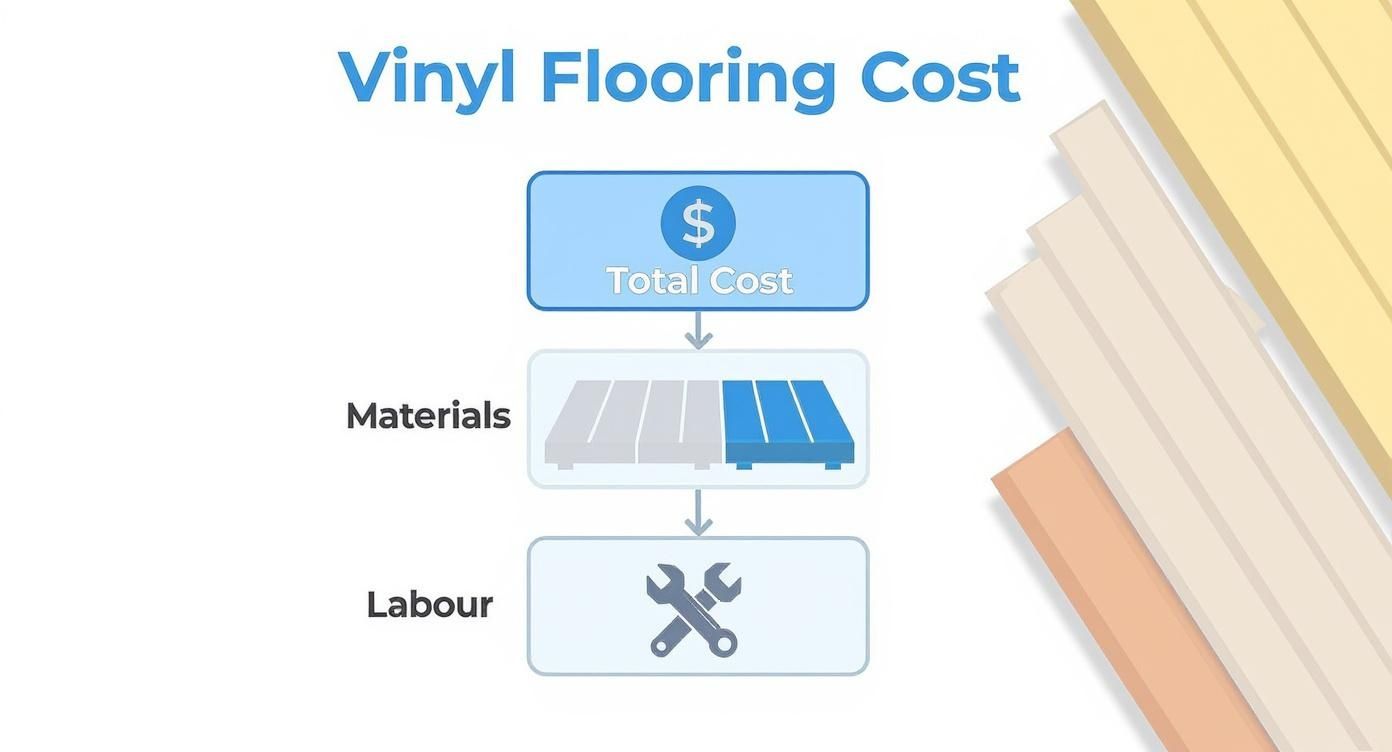
As you can see, labor isn't just a small add-on; it's often a major part of the total investment. Forgetting to account for it is one of the most common budgeting mistakes I see homeowners make.
To give you a quick snapshot, here’s how the costs generally break down per square foot.
Vinyl Flooring Installation Cost At a Glance
| Expense Category | Average Cost Per Square Foot |
|---|---|
| Vinyl Flooring Materials | $2 – $7 |
| Professional Installation Labor | $3 – $10 |
| Total Project Cost | $5 – $17+ |
Remember, these are just averages. A high-end luxury vinyl plank in a room with lots of custom cuts could easily push these numbers higher.
A Closer Look at the Numbers
The world of vinyl flooring has come a long way. The products available today are incredibly realistic and durable. Based on what we're seeing, a homeowner tackling a 1,000-square-foot project can expect the materials alone to cost between $2,000 and $7,000.
Then you have the installation. Professional labor typically adds another $3 to $10 per square foot on top of that. This covers the installer's time, expertise, and the tools needed to get the job done right.
Key Takeaway: When you're budgeting, don't just look at the price tag on the box of flooring. You have to think bigger. Always factor in the cost of labor, any necessary subfloor repairs, and the removal and disposal of your old floors to get a true picture of the total cost.
Setting a Realistic Budget
So, how do you nail down a budget you can trust? The absolute first step is obtaining an accurate flooring estimate. A pro can walk through your space, spot potential issues, and give you a real-world number.
Several key things will influence that final quote:
- Type of Vinyl: High-quality Luxury Vinyl Plank (LVP) and Luxury Vinyl Tile (LVT) are thicker, more durable, and have more realistic textures, so they naturally cost more than basic sheet vinyl.
- Installation Method: A "floating" floor with a click-lock system is generally quicker and less expensive to install. A full glue-down installation, on the other hand, takes more time and meticulous prep work, which increases labor costs.
- Project Complexity: A simple, square room is a flooring installer's dream. But if your space has stairs, tricky angles, closets, or needs a lot of custom cuts, the job will take longer and cost more.
Breaking Down the Cost of Your Vinyl Flooring Materials
Before you can even think about installation, the first thing that shapes your budget is the flooring itself. While paying a professional installer is a big part of the equation, the specific vinyl you choose sets the entire financial baseline for your project. The market is packed with options, and each one comes with its own price and its own unique set of pros and cons.
It’s easy to get lost in all the choices, but it really just comes down to knowing what you're paying for. You aren't just picking a color or a pattern; you're investing in performance, durability, and the quality of the floor's construction. Think of it like buying a car—the base model gets you where you need to go, but a premium model comes with better safety features, a more comfortable ride, and is built to last. Vinyl flooring is no different.
The Three Main Players in Vinyl Flooring
Your first big decision is which type of vinyl flooring you want. Each one is designed for different needs and budgets, with costs typically measured per square foot.
- Luxury Vinyl Plank (LVP): This is the go-to for most homeowners right now, and for good reason. It does an incredible job of mimicking real hardwood, with planks that are thick, rigid, and often built with highly water-resistant cores.
- Luxury Vinyl Tile (LVT): Built just like LVP, LVT is made to look like stone, ceramic, or porcelain tile. It gives you that high-end, sophisticated look without the cold, hard feel or complicated installation of the real thing.
- Vinyl Sheet: This is your most budget-friendly option. It comes in big, flexible rolls, making it perfect for places that see a lot of water, like bathrooms or laundry rooms, because you can install it with very few (or no) seams.
In general, you can expect to pay anywhere from $2 to $7 per square foot for LVP and LVT materials. Sheet vinyl is much more economical, usually landing between $1 and $2 per square foot. The price gap really comes down to how they're made and how realistic the top design layer looks.
What’s Really Behind the Price Tag?
So, why is one plank of LVP $2.50 per square foot while a similar-looking one is $6.00? It all comes down to the nuts and bolts of how the flooring is constructed. These details directly affect how your floor will look, feel, and hold up to daily life, so understanding them helps you make a much smarter choice.
When it comes to price and durability, the single most important factor is the wear layer. This is the clear top coat that protects the pretty design underneath from scratches, scuffs, and stains. A thicker wear layer means more protection and a longer life for your floor.
Think of the wear layer like the tread on a tire. A tire with thick, deep tread can handle tens of thousands of miles of rough roads, while a thin tread wears out in a hurry. For flooring, we measure this in mils (which is different from millimeters).
- Budget-Friendly (6-12 mil): This is fine for low-traffic spots like a guest bedroom or a closet.
- Mid-Range (12-20 mil): This is the sweet spot for most homeowners in the Cumming area, offering great durability for busy living rooms, kitchens, and hallways.
- Premium (20+ mil): Built tough, this is for high-traffic homes or even light commercial use. It offers the best protection you can get.
Besides the wear layer, a few other things influence the price. These include the overall thickness of the plank, the reputation of the brand, and the type of core it has. For instance, floors with a Stone Polymer Composite (SPC) core are incredibly dent-resistant, while those with a Wood Polymer Composite (WPC) core feel a bit softer and quieter under your feet. Each of these features will nudge the final price up or down.
So, What Does Professional Installation Actually Cost?
Once you’ve picked out the perfect vinyl flooring, the next big piece of the puzzle is the labor cost. This isn't something to gloss over. Hiring a pro is a real investment in making sure your new floors look amazing and last for years. In fact, for many jobs—especially in trickier rooms—the cost of labor can easily equal or even exceed the cost of the materials.
It helps to understand what you're really paying for when you get a quote from an installer. It’s about more than just clicking planks together. You’re paying for their experience, their precision, and the peace of mind that comes with a flawless, durable finish.
Breaking Down the Labor Bill
Let's be honest: no two rooms are the same. The unique layout and condition of your space have a massive impact on the final installation price. A simple, square bedroom is always going to be cheaper and faster to finish than a kitchen full of nooks, crannies, and a big island in the middle.
Installers in the Cumming area will look at several key things when putting together your quote:
- Room Complexity: Got a room with a funky shape, multiple closets, or an odd alcove? Those extra cuts and detailed fitting take more time and skill, which will be reflected in the price.
- Stairs: Stairs are a whole different ballgame. Each step has to be cut and fitted perfectly, which is a meticulous, time-consuming task. Expect to pay a premium for every single step.
- Installation Method: A "floating" click-lock floor is the most straightforward and quickest to install. On the other hand, a full glue-down installation requires more subfloor preparation and has a longer process, which drives up the labor cost.
- Subfloor Condition: The floor underneath your new vinyl has to be in good shape. If your subfloor is uneven, cracked, or damaged, it needs to be fixed first. This crucial prep work adds both time and money to the project.
Professional installation is a huge part of your project's bottom line, often accounting for 30-60% of your total budget. Generally, you can expect professional labor to run anywhere from $3 to $10 per square foot, depending on the type of vinyl and how it’s installed. For standard vinyl plank jobs, labor usually falls between $2 to $6 per square foot. If you're going with luxury vinyl, a tricky layout, or a glue-down method, that can climb to $6 to $10 per square foot. You can discover more insights about these installation costs to get a clearer picture for your budget.
Expert Insight: When you start collecting quotes, ask for a detailed breakdown. A good, transparent quote will separate the basic installation fee from any extra charges like subfloor prep, moving furniture, or hauling away your old floors. This makes it so much easier to compare apples to apples.
Budgeting For Luxury Vinyl Plank and Tile
When you start shopping for luxury vinyl plank (LVP) or luxury vinyl tile (LVT), you'll quickly see that the prices can be all over the map. It's a lot like buying a car—you've got reliable, great-looking base models, and then you have the fully-loaded luxury versions with all the bells and whistles. Luxury vinyl flooring works the same way.
Getting a handle on this price spectrum is the first step to making a smart decision for your home. The total cost to install vinyl flooring really comes down to the quality and features of the product you choose. Let's dig into what separates an entry-level vinyl from a premium floor that can genuinely fool you into thinking it's real hardwood or stone.
What’s The Difference Between Budget, Mid-Range, and Premium Vinyl?
So, what are you actually paying for as you move up the price ladder? It boils down to three things: how it's built, how long it will last, and how good it looks.
The more you invest, the better the specs. We're talking about a thicker protective wear layer, more advanced core materials like a super-sturdy Stone Polymer Composite (SPC) core, and incredibly realistic textures and bevels. These features add to the cost, but they also deliver a floor that performs better and lasts longer.
High-end LVP installations today can run you anywhere from $8 to $11 per square foot, a noticeable step up from the budget-friendly options that land in the $4 to $6 per square foot range. For most homeowners, the sweet spot is the mid-range tier, which typically costs between $6 to $8 per square foot for both the materials and professional installation. This is where you get a fantastic balance of durability, style, and value.
A good rule of thumb is to match the flooring to the room's purpose. For a busy kitchen or an entryway that sees constant foot traffic, investing in a premium LVP with a thick wear layer is a no-brainer. But for a rarely used guest bedroom? A more budget-conscious option will likely do the job just fine.
To see how different brands and products stack up, our luxury vinyl plank flooring reviews offer a great side-by-side comparison.
Comparing LVP and LVT Tiers By Cost and Features
To make it even clearer, we've put together a simple table that breaks down what you can expect at each price point. Think of this as your cheat sheet for choosing the right tier for your home and budget.
| Tier | Installed Cost Per Sq. Ft. | Key Features | Best For |
|---|---|---|---|
| Budget | $4 – $6 | Basic visuals, thinner planks, and a 6-12 mil wear layer. | Low-traffic areas like guest rooms, closets, or rental properties. |
| Mid-Range | $6 – $8 | More realistic textures, a thicker 12-20 mil wear layer, and often has an attached underlayment. | The go-to choice for most homes, including living rooms, kitchens, and hallways. |
| Premium | $8 – $11+ | Hyper-realistic designs, a robust 20+ mil wear layer, and a rigid SPC core. | High-traffic homes, light commercial spaces, and rooms where moisture is a concern. |
Once you understand what each tier offers, you can pick a luxury vinyl floor that not only looks fantastic and fits your budget but will also hold up to whatever your family throws at it for years to come.
Uncovering the Hidden Costs in Your Flooring Project
That first quote you get for your new floors? Think of it as the starting line, not the finish. The real cost to install vinyl flooring almost always includes a few extra expenses that pop up along the way. It’s a lot like buying a car—the sticker price is just the beginning, and you have to account for the necessary upgrades and fees to get the full picture.
These aren't surprise charges meant to trick you. They’re simply the cost of doing the job right. A good installer knows what it takes to make a floor look great and last for years, and that often involves work beyond just laying down the planks. By getting familiar with these potential add-ons now, you can build a realistic budget and avoid any sticker shock later on.
It’s All About the Foundation
A perfect vinyl floor installation starts with what’s underneath it. If your subfloor has dips, bumps, or isn't perfectly level, the new planks won't click together properly. This can lead to annoying gaps, squeaks, and a floor that wears out way too fast. It's a surprisingly common issue that needs a professional fix.
Key Insight: You can't skip subfloor leveling. Even tiny imperfections can cause big problems down the road, ruining the entire floor. Most contractors will charge somewhere between $2 to $5 per square foot to get the subfloor perfectly flat, depending on how much work it needs.
If you're curious about what this involves, our guide on https://flacksflooring.com/how-to-level-uneven-floors/ breaks down why this step is so critical for protecting your investment.
A Checklist of Common Extra Charges
To create a budget that holds up, you have to factor in all the little things. They might seem small on their own, but they can easily add up to hundreds or even thousands of dollars on the final invoice.
Here are the most common "hidden" costs to keep on your radar:
- Tearing Out the Old Floor: Ripping up old carpet, tile, or hardwood is tough work. Installers typically charge $1 to $2 per square foot for removal and disposal. Don't forget, hauling away the old stuff has a cost, too; you might need professional debris removal services to get rid of it all.
- Moving Furniture: You can always do this yourself to save a few bucks, but most installers will handle it for you. Expect a fee of around $25 to $75 per room.
- Underlayment: Some vinyl flooring has a pad already attached, but you might need a separate underlayment for extra soundproofing or as a moisture barrier. This usually adds $0.50 to $1.00 per square foot.
- New Baseboards and Trim: Old baseboards often get damaged during removal. Installing fresh ones gives the room a clean, finished look and typically costs $1 to $3 per linear foot.
- Transition Strips: These are the little pieces that seamlessly connect your new vinyl to the carpet in the hallway or the tile in the bathroom. They're essential for a professional finish and generally run $20 to $50 per doorway.
Smart Ways to Save on Your Vinyl Flooring Installation
Now that you have a handle on all the potential costs, let's talk about how to bring that final number down. A little smart planning can go a long way, helping you trim the budget without compromising on the quality of your beautiful new floors. Think of this as your playbook for getting the most bang for your buck.
One of the easiest ways to save is to simply time your purchase right. Keep an eye out for seasonal sales and holiday promotions, as retailers often roll out significant discounts during these periods. If you have the connections, sourcing your materials directly from a wholesaler can also lead to some serious savings.
Of course, the biggest cost-cutting decision you can make is whether to hire a pro or do it yourself.
Considering a DIY Installation
Taking the DIY route means you can slash labor costs right out of your budget. Since labor often makes up 30-60% of the total project price, that's a huge chunk of change you could keep in your pocket. Modern click-lock vinyl plank flooring is specifically designed with the handy homeowner in mind, making it one of the more approachable flooring projects out there.
But before you jump in, a word of caution: a successful DIY job is all about proper prep and having the right tools for the job.
Be honest with yourself about your skill level before you start. A botched installation can lead to squeaky floors, gaps, and other issues that often require a professional to fix, completely wiping out any money you initially saved.
If you feel up to the challenge, our DIY flooring with vinyl guide is a great resource that walks you through the process step-by-step. But if you decide to hire a professional, make sure you get at least three detailed quotes from different installers. This lets you compare not just the price, but the full scope of services they offer.
Still Have Questions About Vinyl Flooring Costs?
Even after we've gone through all the numbers—materials, labor, and those sneaky extra fees—you probably still have a couple of questions rattling around. That's completely normal. Let's tackle a few of the most common ones we hear from homeowners right here in Cumming, so you can lock in your budget with confidence.
Getting these last few details sorted out is the final step to truly understanding the total cost to install vinyl flooring.
Is Thicker Vinyl Always Better?
You'd think so, but it's not that simple. While a thicker plank can feel more solid under your feet, the real MVP for durability is the wear layer. Think of it as the floor's invisible shield.
A 5mm plank with a tough 20-mil wear layer will easily outlast a thicker 7mm plank that only has a flimsy 12-mil wear layer. So, when you're comparing options, look at that wear layer number first, especially for hallways and entryways. Then, think about the overall thickness for that nice, substantial feel.
Is LVP Cheaper Than Laminate?
This is a classic question, and the answer has changed over the years. Laminate used to be the go-to budget option, but now their prices are neck and neck. You can find entry-level options for both that start around $2 to $3 per square foot.
The real difference isn't the price tag—it's how they handle water. LVP is 100% waterproof, which makes it a no-brainer for kitchens, bathrooms, and basements. Laminate, on the other hand, is only water-resistant, and a major spill can mean big trouble.
Pro Tip: Don't just compare the upfront cost of LVP and laminate. Think long-term. LVP's waterproof nature can save you from having to pay for expensive water damage repairs down the line.
How Much Extra Flooring Should I Buy?
Every flooring job needs a little extra material. Installers have to account for miscuts, tricky angles, and just fitting the planks perfectly into your space. The rule of thumb in the industry is to order 10% extra.
If your room is a perfect square, you might squeak by with 5% overage. But for a room with lots of nooks and crannies, or if you're planning a cool diagonal pattern, it's smart to bump that up to 15%. Better to have a little left over than to run out mid-project!
Ready to transform your home with beautiful, durable vinyl flooring? The team at Flacks Flooring has been serving the Cumming, GA community for over 30 years. Stop by our showroom or schedule an in-home consultation to get started