
You’re likely in the same spot a lot of homeowners around Cumming, Alpharetta, and Johns Creek hit during a remodel. You start by thinking, “We just need new floors,” and then suddenly you’re comparing hardwood flooring installation, LVP, laminate flooring, tile, carpet, and bamboo across half a dozen tabs.
That’s when important questions show up. Will it hold up to dogs? Will it handle Georgia humidity? Is it going to feel cheap in five years? And if you’re replacing floors in a busy house, you also want to know whether the material fits your style, whether that’s modern farmhouse, classic traditional, or something cleaner and more contemporary.
Eco forest bamboo flooring has become part of that conversation because it sits in an interesting middle ground. It aims to give you the look and feel people like in wood floors, while also pushing harder on durability, sustainability, and practical day-to-day performance. For some homes in North Metro Atlanta, that makes it a strong candidate. For others, hardwood, waterproof flooring, or luxury vinyl plank still make more sense.
The key is knowing where bamboo fits in the world, not in a showroom brochure.
Choosing the Right Floor in North Georgia
A homeowner in Woodstock might want the warmth of hardwood in the main living area. Someone in Roswell may be leaning toward waterproof flooring for a basement. A family in Cumming with two dogs usually asks a different question first: “What’s the most scratch-resistant flooring that still looks like real wood?”
That’s why flooring decisions get messy. You’re not just picking a color. You’re balancing appearance, moisture behavior, wear, maintenance, and installation conditions.
What most Georgia homeowners are deciding
In my experience, the short list usually looks like this:
- Hardwood flooring: Loved for its classic look and resale appeal.
- LVP flooring: Popular for water resistance and easier everyday upkeep.
- Laminate flooring: Often considered when budget matters and people want a wood look.
- Tile flooring: Strong option for wet spaces and some basement projects.
- Eco forest bamboo flooring: Considered when buyers want a wood-style floor with a stronger sustainability story and a tougher wear surface.
A lot of confusion comes from the word bamboo itself. Some people hear it and assume it’s soft, light, or more like a novelty floor. Others assume it performs exactly like hardwood. Neither is entirely right.
Why Eco Forest gets attention
Eco Forest bamboo isn’t interesting because it’s trendy. It gets attention because it tries to solve three problems at once:
- Busy-house durability
- Lower environmental impact
- A look that still feels appropriate in a finished home
Many people don’t need the “best” flooring in theory. They need the floor that still looks good after muddy shoes, pet nails, dining chair movement, and a Georgia summer.
That’s especially true in Forsyth County, Milton, and Johns Creek, where homes often mix open layouts, active family traffic, and design-conscious finishes. In those settings, a floor has to work hard without looking overly commercial.
If you’re sorting through floor replacement options right now, bamboo is worth a serious look. Not because it replaces every other category, but because it fills a gap many homeowners didn’t realize existed.
The Science Behind Eco Forest Bamboo
Many homeowners picture bamboo flooring as a simple board cut from a bamboo stalk. That’s not what strand-woven bamboo is.
Think of it more like this: instead of stacking a few whole ingredients together, the manufacturer breaks the material down into fibers, compresses those fibers tightly, and forms them into a dense finished plank. That process changes how the floor behaves.
Bamboo is a grass, not a tree
That matters because bamboo grows back much faster than traditional hardwood species. According to this bamboo renewability reference, certain species can grow up to 35 inches daily, reach maturity in 3 to 5 years, and compare against traditional hardwoods that often need 10+ years to mature.
That same source also notes that a single bamboo plant can be harvested repeatedly because the root system stays in place and keeps producing new shoots. For homeowners who care about eco-friendly remodeling choices, that’s a meaningful difference.
If sustainability is high on your list, it helps to compare bamboo alongside other eco-friendly flooring options instead of viewing it in isolation.
What strand-woven means
The “strand-woven” part is where the performance story starts.
Instead of using larger, simpler bamboo pieces, manufacturers create strands and compress them under high pressure. The result is a much denser board than basic bamboo flooring.
One verified product reference states that Eco Forest strand-woven bamboo reaches a density of 1050 to 1100 kg/m³, compared with traditional bamboo around 700 kg/m³ and oak around 600 to 750 kg/m³. That same product data also ties the density to stronger structural performance and reduced void space inside the material.
That’s a technical way of saying the floor is packed tighter. In practice, tighter packing usually means a floor that feels more solid and resists dents and movement better.
Why density matters in a home
Density affects the things people notice later:
- Furniture pressure: Heavy tables and chairs are less likely to leave visible marks.
- Pet traffic: A denser surface generally handles claw traffic better than softer woods.
- Day-to-day wear: The floor tends to stand up better in kitchens, halls, and family rooms.
- Humidity swings: Reduced internal void space can help the material stay more stable.
Practical rule: Don’t judge bamboo flooring by the word “bamboo” alone. Judge it by how it was made. Strand-woven is a different animal than older, softer bamboo products.
The air-quality side of the equation
Another point that often gets lost is indoor air quality. Verified product information notes that premium bamboo flooring can meet CARB Phase 2 certification, and one reference reports approximately 0.003 PPM VOCs, compared with 0.02 PPM for typical ambient air, based on the same source discussing bamboo flooring durability and emissions.
For families with kids, pets, or anyone sensitive to odors after installation, that can be part of the appeal. Not everyone shops for floors by asking about VOCs first, but many people care once they understand what they’re bringing into the house.
Performance Showdown Bamboo vs Hardwood and LVP
Once you get past the sustainability story, the question becomes simple. How does eco forest bamboo flooring compare with the floors people usually cross-shop, especially hardwood and luxury vinyl plank?
The answer depends on what problem you’re solving.
Start with wear resistance
For busy homes, this is the first category I’d look at.
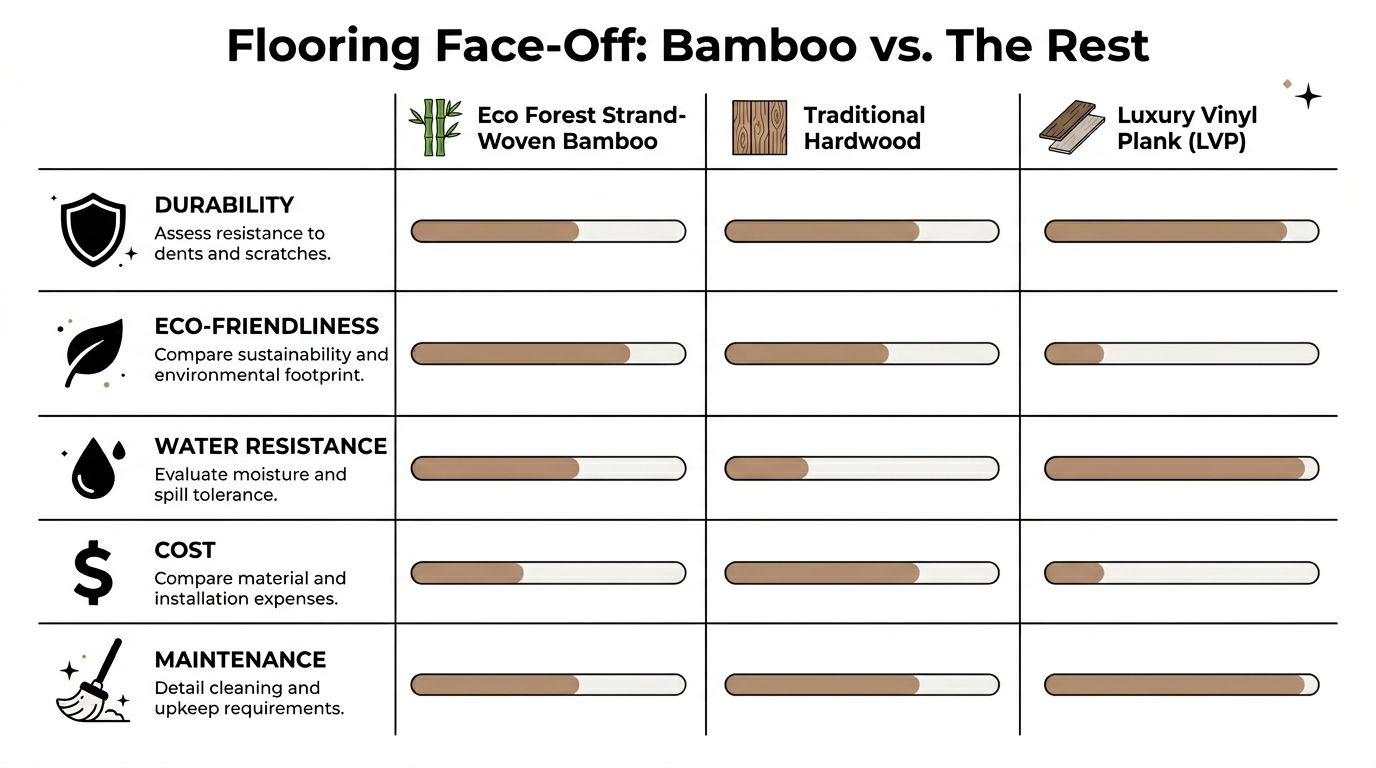
A verified bamboo flooring reference reports that premium bamboo products can score approximately 5,000 on the Janka Hardness Test, compared with around 1,360 for white oak, making bamboo nearly 3.7 times harder than white oak according to this Janka comparison source.
That doesn’t mean your floor becomes indestructible. It does mean strand-woven bamboo enters the conversation as a serious scratch-resistant flooring and dent-resistant option for active households.
By comparison:
- Traditional hardwood offers natural character and refinish potential, but softer species can show wear sooner in high-traffic rooms.
- LVP flooring handles everyday family use well and is often chosen for pet-friendly flooring, but it doesn’t feel like wood underfoot.
- Eco Forest bamboo appeals to homeowners who want a harder wood-style surface without jumping straight to vinyl.
Where bamboo sits next to hardwood
Hardwood still wins on one thing many buyers care about: familiarity. People know what oak floors look like. They understand them. Designers know how to pair them with trim, cabinets, and traditional interiors.
Bamboo competes by offering a different value mix.
| Flooring type | Strong point | Possible drawback | Best fit |
|---|---|---|---|
| Traditional hardwood | Timeless look and broad design acceptance | Can be more vulnerable to dents and seasonal movement | Formal living spaces, classic interiors |
| Eco Forest bamboo | Very high hardness and strong sustainability story | Still a wood-based product, so it isn’t the same as waterproof flooring | High-traffic main levels, pet homes, style-conscious remodels |
| LVP flooring | Strong spill tolerance and easy routine care | Different feel and sound than real wood materials | Kitchens, basements, rentals, utility-minded projects |
If you’ve been comparing vinyl plank flooring vs hardwood, bamboo often enters as the third option for people who want real-material appeal but aren’t sold on standard hardwood performance in a hard-used house.
What about water resistance
Some buyers get tripped up here. Bamboo is not the same category as waterproof flooring.
If you need a floor for a basement that sees moisture events, a laundry room with regular splashes, or a house where plumbing issues are a serious concern, LVP usually has the more forgiving profile. That’s one reason waterproof flooring remains so popular for lower levels and utility-heavy zones.
Eco Forest bamboo may offer better moisture tolerance than some traditional hardwood situations, but it’s still smarter to think of it as a more stable wood-style floor, not a waterproof one.
If waterproof performance is your essential feature, shop waterproof flooring first. If your main concern is wear, feel, and long-term appearance, bamboo deserves a closer look.
Feel and sound matter more than people expect
Hardwood and bamboo both tend to satisfy buyers who dislike the hollow or synthetic feel that some floating floors can have. LVP quality varies a lot, and some premium products feel substantial, but the underfoot experience is still different.
That matters in open-concept homes in Alpharetta, Canton, and Marietta where the floor runs across large connected spaces. You don’t just see it. You hear it and walk on it every day.
Who usually chooses each one
I’d break it down this way:
- Choose hardwood if you want the most traditional wood story and you’re comfortable managing seasonal behavior and wear.
- Choose LVP if spills, basement conditions, and easy replacement matter more than authentic wood feel.
- Choose eco forest bamboo flooring if you want a harder wood-style surface, a sustainability angle, and strong performance in active living spaces.
That’s why bamboo keeps showing up in flooring conversations across North Metro Atlanta. It doesn’t replace every option. It fills a gap between them.
Is Bamboo Flooring Right for Your Georgia Home
Georgia homes ask a lot from any wood-based floor. We deal with air conditioning season, muggy stretches, occasional indoor humidity problems, and houses built over both wood subfloors and concrete slabs. A floor that looks great in a dry climate can behave very differently here.
That’s why the local question matters more than the showroom question.
The humidity issue everyone should ask about
Verified installation guidance confirms Eco Forest is intended to maintain 35% to 55% humidity and 59 to 79°F, while also noting there’s no specific long-term performance data for North Georgia’s humid summers, which often exceed 70% humidity, based on this Eco Forest installation reference.
That’s an important distinction.
A lot of articles skip right past this and act like a published indoor range answers everything. It doesn’t. The honest answer is that local long-term field data for North Georgia isn’t well documented in the verified sources. What we do know is that strand-woven construction is the key advantage, because denser construction generally gives the floor a better shot at staying stable than lower-density alternatives.
If you want a basic overview of the category, this guide on what bamboo flooring is helps clarify the material side before you get into climate-specific decisions.
Best rooms for bamboo in this area
In North Georgia homes, Eco Forest bamboo tends to make the most sense in spaces like:
- Main-level living areas: Good fit when you want wood character but expect heavy daily traffic.
- Bedrooms and hallways: Strong choice if you want a consistent look without babying the floor.
- Home offices and dining rooms: Useful where chair movement and furniture pressure matter.
- Finished basement spaces with controlled conditions: Possible, but only if moisture conditions are properly evaluated first.
I’m more cautious in rooms where standing water is part of normal life. If you’ve got a mudroom entry that gets soaked, or a basement with any history of moisture, waterproof flooring may still be the safer call.
Style fit in real homes
Bamboo sometimes gets stereotyped as a niche green-building material. In practice, that’s outdated. The look can work in:
- Modern farmhouse homes in Milton
- Traditional interiors in Johns Creek
- Cleaner, updated remodels in Cumming
- Investment property refreshes where durability matters
The finish and board color usually matter more than the species story once the floor is installed. Often, buyers react to the tone and finish before they think about the species.
The biggest mistake isn’t choosing bamboo. It’s choosing any wood-style floor without matching it to the room’s moisture exposure and the way your household lives.
When I’d steer someone elsewhere
Eco forest bamboo flooring isn’t for every project.
I’d look harder at LVP, tile, or another waterproof flooring option if:
- You’ve had recurring slab moisture issues.
- The space is below grade and poorly climate controlled.
- You want the most forgiving floor possible for spills and leaks.
- You’re renovating a utility-heavy area instead of a main living space.
Bamboo works best when your home is reasonably controlled and you want a floor that leans closer to real wood than vinyl does, while still offering a tougher wear profile than many traditional wood choices.
Installation Options and Proper Site Prep
A strong floor can still fail if the site prep is sloppy. Most of the disappointment people blame on flooring material starts before the first plank goes down.
That’s especially true with bamboo.
Floating click-lock vs glue-down thinking
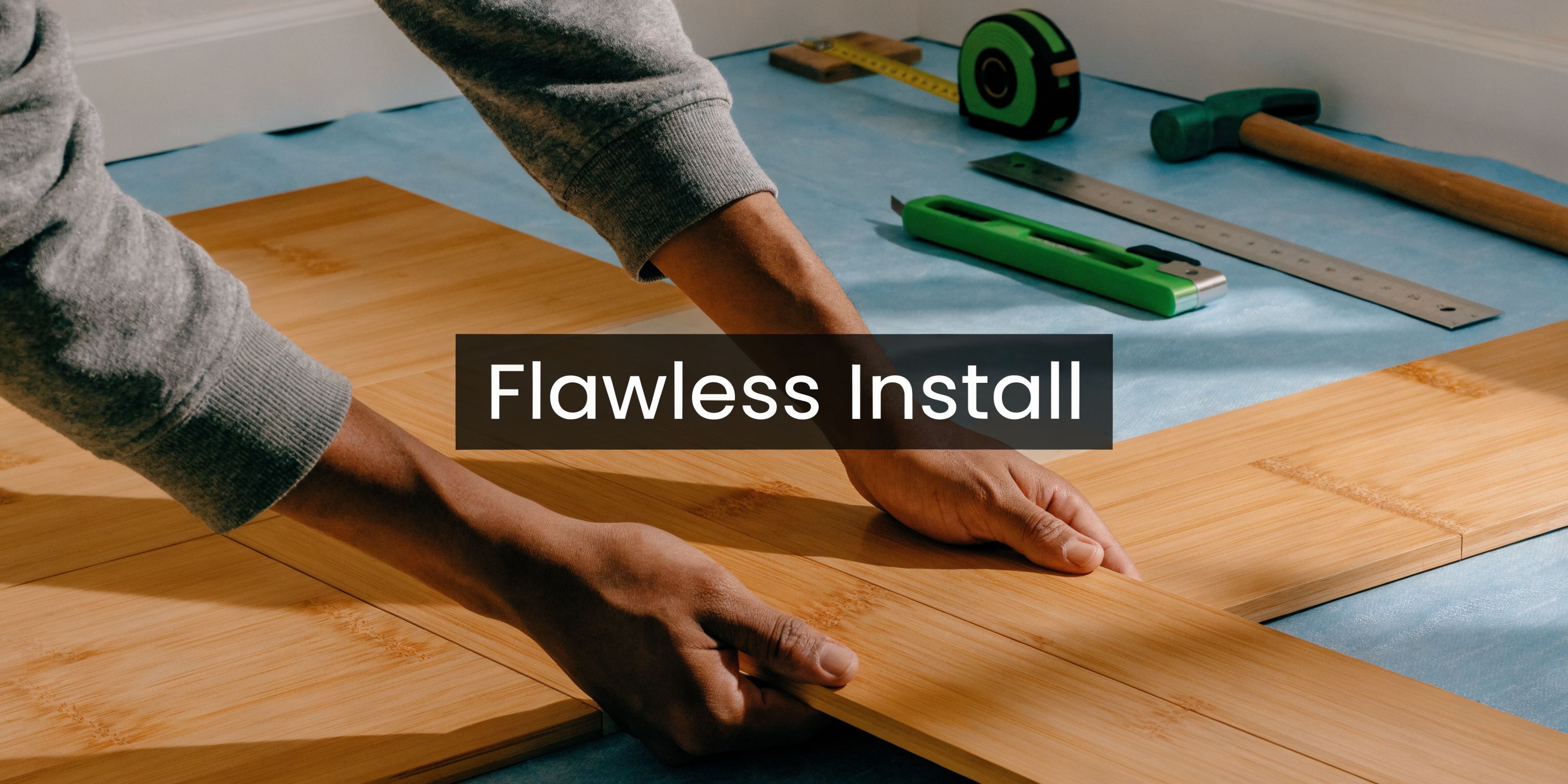
Verified product data states that Eco Forest strand-woven bamboo has a density of 1050 to 1100 kg/m³ and can be installed as a stable floating click-lock floor over concrete subfloors when slab moisture is at or below 3 lbs/1000 sq ft via CaCl test, with labor potentially reduced 20% to 30% versus direct-stick methods, according to this Eco Forest product specification.
For homeowners, the takeaway is simple. Floating installation can be a practical option, especially over concrete, but only when the slab tests within the required limits.
The prep checklist that matters
Before installation, I’d expect these questions to be answered clearly:
- Was the subfloor tested? Concrete needs moisture testing. Wood subfloors need to be checked for flatness and condition.
- Was the material acclimated? Verified guidance for this product recommends 72 hours on site before installation.
- What underlayment is being used? The right underlayment affects sound, minor subfloor variation, and moisture management.
- Is there a below-grade moisture barrier? Verified guidance mentions using 6 to 8 mil poly sheeting for below-slab installs.
- What expansion planning is built in? A wood-based floor needs room to move.
Questions worth asking your installer
A homeowner doesn’t need to know every tool on the truck, but you should ask smart questions.
Here are the ones I’d use:
- How are you verifying slab moisture before installation?
- How long will the planks sit in the home before they’re installed?
- Are you recommending floating, glue-down, or another method for my subfloor type?
- What interior conditions need to be maintained after install?
- What would void the warranty?
Bad installations often look fine on day one. Problems show up later, after the floor has lived through indoor humidity changes and regular traffic.
For homeowners in Cumming who want a local store option for product selection and installation services, Flacks Flooring offers showroom guidance and in-home consultations as one practical route among the usual contractor and retailer options.
Long-Term Care and Simple Repair Tips
The good news with strand-woven bamboo is that daily care is usually straightforward. The bad news is that people still ruin good floors by overcleaning them.
Most damage doesn’t come from normal walking. It comes from grit, chair legs, wet messes left too long, and cleaning methods that are too aggressive.
What simple care looks like
You don’t need a complicated routine.
A sensible maintenance approach usually includes:
- Dry debris removal: Sweep or use a microfiber dust mop so grit doesn’t act like sandpaper.
- Damp, not wet cleaning: Use a lightly damp mop when needed, not a soaked one.
- Furniture protection: Felt pads under chairs and tables help spread load and reduce scratching.
- Fast spill cleanup: Don’t let water or pet accidents sit.
Verified product information specifically notes that damp mopping suffices and recommends felt pads under furniture to help extend floor life.
What to avoid
This matters just as much as what to do.
- Steam mops: Too much heat and moisture for a wood-based floor.
- Standing water: Even durable products don’t benefit from pooled moisture.
- Harsh cleaners: Strong chemicals can wear down finishes over time.
- Dragging furniture: Lift it. Don’t scrape it.
Minor scratches vs real damage
Small surface marks are part of living in a home. The question is whether they stay minor.
For light wear, homeowners often manage well with a manufacturer-approved touch-up approach and better furniture protection. For deeper gouges, edge damage, or boards that shift, it’s better to call a flooring repair professional and identify whether the issue is finish-level, plank-level, or installation-related.
A floor lasts longer when you treat dirt as the enemy, not water alone. Tiny grit particles cause more daily finish wear than many people realize.
Why maintenance is usually easier than people fear
Some buyers hear “bamboo” and assume high-maintenance specialty flooring. That hasn’t matched what I’ve seen when the product is installed correctly and the homeowner follows basic care rules.
In fact, people who switch from carpet installation to hard surface flooring often feel relieved. Pet hair is easier to manage. Dirt is easier to see and remove. And the floor doesn’t need constant special treatment. It just needs common sense.
Understanding the Costs and Long-Term Value
Many begin by considering material price and stop there. That’s understandable, but it’s not the full cost.
Flooring decisions usually include more than the planks themselves. You may also be paying for old floor removal, subfloor prep, moisture testing, transitions, trim work, moving furniture, and installation method differences. That’s true whether you’re shopping hardwood flooring installation, laminate flooring, tile flooring, carpet installation, or bamboo.
Upfront cost and lifetime cost are different
With eco forest bamboo flooring, the key question is not “What does the box cost?” It’s “What am I likely to own and maintain over time?”
Verified product information notes that Eco Forest offers a 40-year warranty, and a separate verified summary states that a true long-term comparison with hardwood should consider refinishing cycles over 20+ years, while also noting bamboo’s superior moisture tolerance may reduce damage-related replacement costs in Georgia’s humid climate, based on this Eco Forest warranty and cost discussion.
That’s not the same thing as saying bamboo is always cheaper over a full ownership period. The verified data specifically says the market lacks a full quantified long-term cost model. So the honest answer is qualitative.
How I’d think about value
A floor creates value when it does three things well:
| Value factor | Why it matters |
|---|---|
| It avoids early replacement | Durability matters more than small upfront savings if the floor takes daily abuse |
| It limits maintenance headaches | A material that handles routine family life with less fuss often feels like the better investment |
| It fits the home well enough to age gracefully | A floor that still looks appropriate years later protects the overall renovation |
That’s where bamboo can make a strong case. It often attracts buyers who want something more substantial than a purely budget-driven floor, but who also don’t want to overpay for a softer traditional hardwood in a rough-use space.
Financing and budgeting questions to ask
If you’re comparing quotes in Cumming, Alpharetta, or Marietta, ask each provider the same practical questions:
- What’s included in installation?
- Is old flooring removal included?
- What site prep assumptions are built into the quote?
- Are transitions, trim, and moisture work separate?
- If financing is available, what project scope does it cover?
A lower quote can stop looking attractive once exclusions start piling up.
Bamboo as an affordable flooring option
I wouldn’t describe eco forest bamboo flooring as the cheapest path. That’s not the point. I’d describe it as a value-oriented floor for homeowners who want durability, a real-material feel, and a sustainability angle without automatically defaulting to hardwood or LVP.
That distinction matters. Cheap flooring and good value aren’t always the same thing.
Common Questions About Eco Forest Bamboo
A lot of final decisions come down to a few practical questions. Here are the ones I hear most often from homeowners, agents, and designers around Forsyth County and North Fulton.
Is Eco Forest bamboo real wood
Not exactly. Bamboo is a grass, not a hardwood tree. But in flooring terms, it often competes directly with wood because it delivers a similar visual role in the home. The strand-woven manufacturing process is what gives it performance characteristics people usually associate with tougher wood floors.
Is it good for dogs and kids
For many active households, yes. Its appeal comes from the harder wear profile discussed earlier, which is why it often lands on the short list for pet-friendly flooring and scratch-resistant flooring.
That said, no floor is claw-proof or toy-proof. Nail trimming, felt pads, and quick cleanup still matter.
Can it go in a basement
Sometimes. It depends on moisture conditions and climate control.
If the basement is dry, finished, and tested properly, bamboo may be a workable option. If the space has any record of slab moisture or dampness, I’d be much more likely to recommend waterproof flooring instead. Basements punish wishful thinking.
Does it look outdated
No, not when the color and finish fit the house.
The “bamboo look” people worry about usually comes from older products or finishes that feel too narrow in style. Current strand-woven products can work in farmhouse, transitional, and clean contemporary interiors. Often, buyers react to the tone and finish before they think about the species.
Is it harder to maintain than hardwood or LVP
Usually not harder than hardwood, and often simpler than people expect.
Routine care is basic. Remove grit, use a damp mop instead of heavy water, and protect the floor from furniture abrasion. LVP may still win on spill tolerance, but bamboo doesn’t require a fussy cleaning ritual.
Can damaged boards be repaired
Minor surface issues may be manageable with touch-up methods. Bigger damage depends on the installation type, board availability, and whether the issue is isolated or part of a larger moisture or movement problem.
If you’re thinking ahead, ask before installation whether matching material can be held for future repairs. That’s smart for almost any hard surface floor.
Who is the best fit for eco forest bamboo flooring
Usually one of these buyers:
- Families replacing worn hardwood in active living areas
- Homeowners who don’t want the feel of vinyl
- Designers looking for a more sustainable hard surface option
- Property owners upgrading from carpet or builder-grade laminate
- Anyone comparing flooring near me searches and trying to balance style with practicality
Who should probably choose something else
I’d point you elsewhere if your top priority is fully waterproof performance, if your home has known moisture trouble, or if the project is heavily budget-restricted and appearance matters less than the lowest possible upfront cost.
That’s not a knock on bamboo. It’s just good flooring advice. Every material has a lane.
If you’re comparing eco forest bamboo flooring with hardwood, waterproof flooring, or LVP for a home in Cumming, Johns Creek, Milton, or the surrounding North Metro Atlanta area, Flacks Flooring is one place to see samples in person and talk through installation conditions, style fit, and room-by-room tradeoffs before making a final decision.