
Engineered hand-scraped flooring blends the worn-in charm of vintage wood with today’s stability. Artisans use chisels and wire brushes to coax out every groove, giving each plank its own story. Beneath that rustic top layer, a sturdy multi-ply core locks everything in place—even when humidity swings.
What Makes Engineered Hand Scraped Flooring Unique
At its heart, this flooring is real hardwood veneer, hand-worked to showcase artisanal character. Below it sits a plywood or high-density fiberboard (HDF) core designed for dimensional stability. The result? A classic, textured look that stands up to the moisture challenges common in Cumming, Forsyth County, Johns Creek, and Milton homes.
Key Highlights Include
- Distinctive Textured Finish: Hides minor scratches and adds depth
- Multilayer Core: Resists shrinking, swelling, and cupping
- Moisture Tolerance: Outperforms solid hardwood in basements and kitchens
In This Guide, You’ll Explore
- Benefits Versus Other Materials like laminate and waterproof options
- Selection Criteria from wood species to plank dimensions
- Installation And Preparation steps for flawless results
- Maintenance, Repair, Cost, And Timelines tailored to local needs
The global hand-scraped wood flooring market—a niche within engineered wood—was valued at approximately $4.2 billion and is projected to nearly double as more homeowners pursue that rustic-meets-reliable look. Learn more at Research Intelo
The diagram below shows the engineered wood construction.

This layered structure highlights how hardwood veneers sit atop stable cores to prevent warping and maintain appearance under pressure.
Read more about engineered flooring techniques in our detailed guide: Read also our guide on what is engineered hardwood flooring
Next up, we’ll dive into installation methods, peel back cost factors and timelines, outline simple maintenance routines, and share tips on working with trusted installers in Forsyth County.
Key Benefits Of Engineered Hand Scraped Flooring
Engineered hand-scraped flooring marries old-world craftsmanship with modern stability. Each plank arrives with a lightly textured surface that cleverly disguises day-to-day wear.
Imagine a well-worn leather jacket: every scuff and crease adds character. Hand-scraping works the same way, turning small scratches into part of the floor’s personality. Active households and busy entryways benefit most—fewer noticeable dings and a deeper grain emerge over time.
Beneath the decorative layer, a multilayered core keeps things dimensionally stable. It shrugs off swelling, shrinking, or cupping—even when humidity levels rise.
- Resistance To Moisture: Plywood or HDF cores lock out moisture, perfect for kitchens and basements.
- Scratch Forgiveness: Hand-carved grooves soften the look of bumps and knocks.
- Consistent Appearance: Natural variation masks damage, so repairs blend right in.
As we move into finishes and durability, picture Forsyth County homes where these benefits really shine.
Durability And Finish Protection
Durability isn’t just marketing speak here—it’s built into every layer.
From matte to semi-gloss, finish choices add spill resistance and UV defense. In Johns Creek foyers, matte surfaces keep dust out of the spotlight. Meanwhile, a satin sheen in a Milton living room casts a cozy glow without sacrificing toughness.
Homeowners can match style to traffic levels, then step back and enjoy worry-free floors.
Globally, the engineered wood market—covering everything from flooring to paneling—was valued at $254.2 billion and is projected to climb to $427.3 billion as demand for durable, eco-friendly materials grows. Learn more in this Precedence Research report.
Next up: how these advantages stack against solid hardwood and laminate.
Comparison With Solid Hardwood And Laminate
Solid hardwood offers depth and authenticity, but it can warp if the subfloor isn’t perfectly prepped. Engineered cores, on the other hand, stay level and true.
Laminate tries to mimic wood, yet it falls short on texture and can’t be refinished. In one Cumming kitchen remodel, heavy steam left laminate edges swelling. The engineered hand-scraped planks simply shrugged it off.
Here’s a quick, side-by-side look:
| Material | Pros | Cons |
|---|---|---|
| Solid Hardwood | Rich depth, renewable surface | Sensitive to moisture |
| Laminate | Budget-friendly, easy install | No refinishing, artificial feel |
| Engineered Hand Scraped | Real wood veneer, moisture resistant | Slightly higher upfront cost than laminate |
“Hand-scraped surfaces hide life’s little mishaps, turning each mark into character,” says local installer Mike Flacks.
Character Development Over Time
Think of these floors like a favorite pair of jeans. They don’t just survive life’s ups and downs—they look better for it.
Tiny scratches sink into the texture, creating a warm, lived-in patina. Over the years, the grain takes on a unique personality, turning every room into a storybook of daily life.
Ease Of Installation And Longevity
Whether you float, glue, or nail it down, engineered hand-scraped flooring adapts to different subfloors and skill levels. That flexibility means quicker installs—and less disruption—for busy Cumming and Johns Creek homeowners.
The robust core and finish combine for decades of wear without the need for constant replacement.
- Lower Lifecycle Costs: Fewer replacements translate to more savings over time.
- Flexible Installation: Pick the method that suits your room layout and existing subfloor.
All told, this flooring style isn’t just beautiful—it’s built to last.
Comparing Engineered Hand Scraped Flooring With Other Options
Selecting new floors means balancing your household’s traffic patterns, design goals, and budget.
We’ll weigh these core factors:
- Moisture Resistance: How each material handles spills and humidity
- Durability: Resistance to scratches, dents, and everyday wear
- Installation Complexity: Tools, skill level, and time required
- Cost per Sq Ft: Upfront material and labor expenses
Durability And Moisture Comparison
Engineered hand scraped planks pair a genuine hardwood veneer with a stable, multi-ply core. That construction makes them far less prone to warping or cupping when moisture levels change.
Solid hardwood can be refinished again and again, offering a classic look—but it will swell or gap in damp rooms.
Laminate holds up well against surface scratches, yet it’s essentially a decorative layer glued to fiberboard. There’s no sanding or refinishing once it wears.
Waterproof vinyl thrives in spill-prone spaces yet sometimes feels hollow underfoot, and seams can become visible over time.
Additionally, engineered wood flooring—hand-scraped editions included—commanded over 72% of the hardwood flooring market share. Its dimensional stability and cost-efficiency made it the top choice over solid planks. Learn more in the hardwood flooring market share findings.
Price And Installation Complexity
Here’s a quick cost breakdown:
- Engineered Hand Scraped: $4 to $12 per sq ft
- Solid Hardwood: $6 to $15 per sq ft
- Laminate: $1.50 to $5 per sq ft
- Waterproof Vinyl: $2 to $7 per sq ft
Glued or floating engineered planks sit midway in difficulty, while click-lock laminate goes down in a few hours. Nailing solid hardwood takes more skill and time—think of it as the bespoke suit of flooring.
Below is a side-by-side look at how these flooring options compare on key factors:
Comparison Of Flooring Types
| Flooring Type | Durability | Cost per Sq Ft | Moisture Resistance | Installation Difficulty |
|---|---|---|---|---|
| Engineered Hand Scraped | High—resists warping, hides scratches | $4–$12 | Good—stable core | Moderate |
| Solid Hardwood | Very high—can be refinished | $6–$15 | Poor in humid areas | Challenging |
| Laminate | Moderate—scratch-resistant | $1.50–$5 | Low—susceptible swelling | Easy |
| Waterproof Vinyl | High—wear layer protects | $2–$7 | Excellent | Easy to moderate |
This comparison highlights how each option stacks up in durability, cost, moisture defense, and installation skill.
Environmental And Resale Impact
Engineered hand scraped flooring uses thinner cuts of hardwood, cutting mill waste and lowering its carbon footprint.
Solid hardwood can earn sustainability points if sourced from certified forests, but shipping heavy boards adds emissions.
“Investing in your floors pays off in lasting beauty and resale value,” says local designer Sarah James.
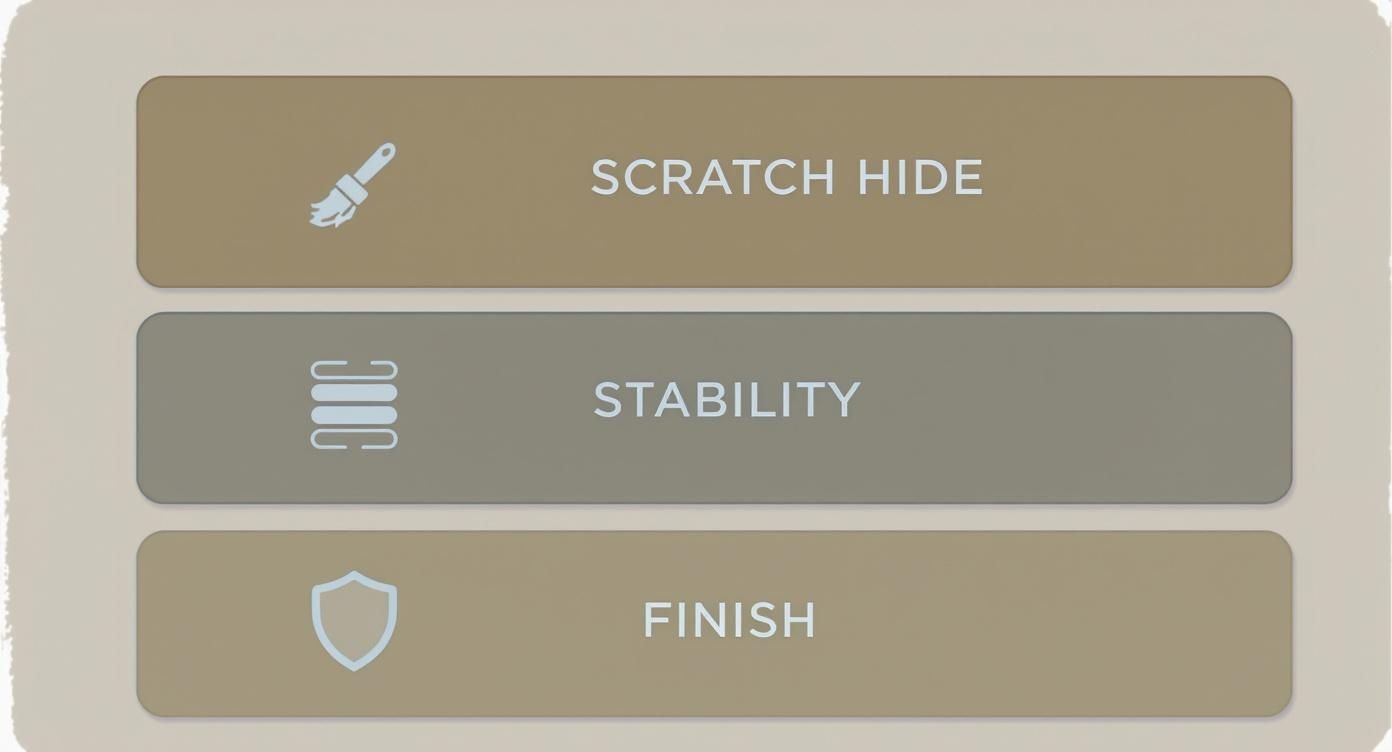
This graphic outlines how hand-scraped textures conceal scuffs, multi-layer cores boost stability, and tough finishes shield against wear.
Pros And Cons Overview
-
Engineered Hand Scraped
• Excellent moisture tolerance
• Natural textures hide wear
• Moderate installation effort -
Solid Hardwood
• Timeless look, refinishable
• Sensitive to humidity
• Higher upfront cost -
Laminate
• Quick install, low price
• Lacks real-wood depth
• Cannot be refinished -
Waterproof Vinyl
• Outstanding spill resistance
• Simple upkeep
• Less appeal to future buyers
Making Your Choice
Match your flooring to your Cumming-area home’s humidity, foot traffic, and décor style.
Consider ongoing maintenance, aesthetic goals, and each room’s purpose before settling on a material.
Key Questions To Ask Your Installer
- What moisture tests will you perform before laying planks?
- How long will acclimation and installation take for 1,000 sq ft?
- Which warranty covers finish wear and potential water damage?
Reach out to trusted professionals in Cumming or Johns Creek for detailed quotes, measurements, and warranty information.
Selecting The Best Engineered Hand Scraped Flooring For Your Home
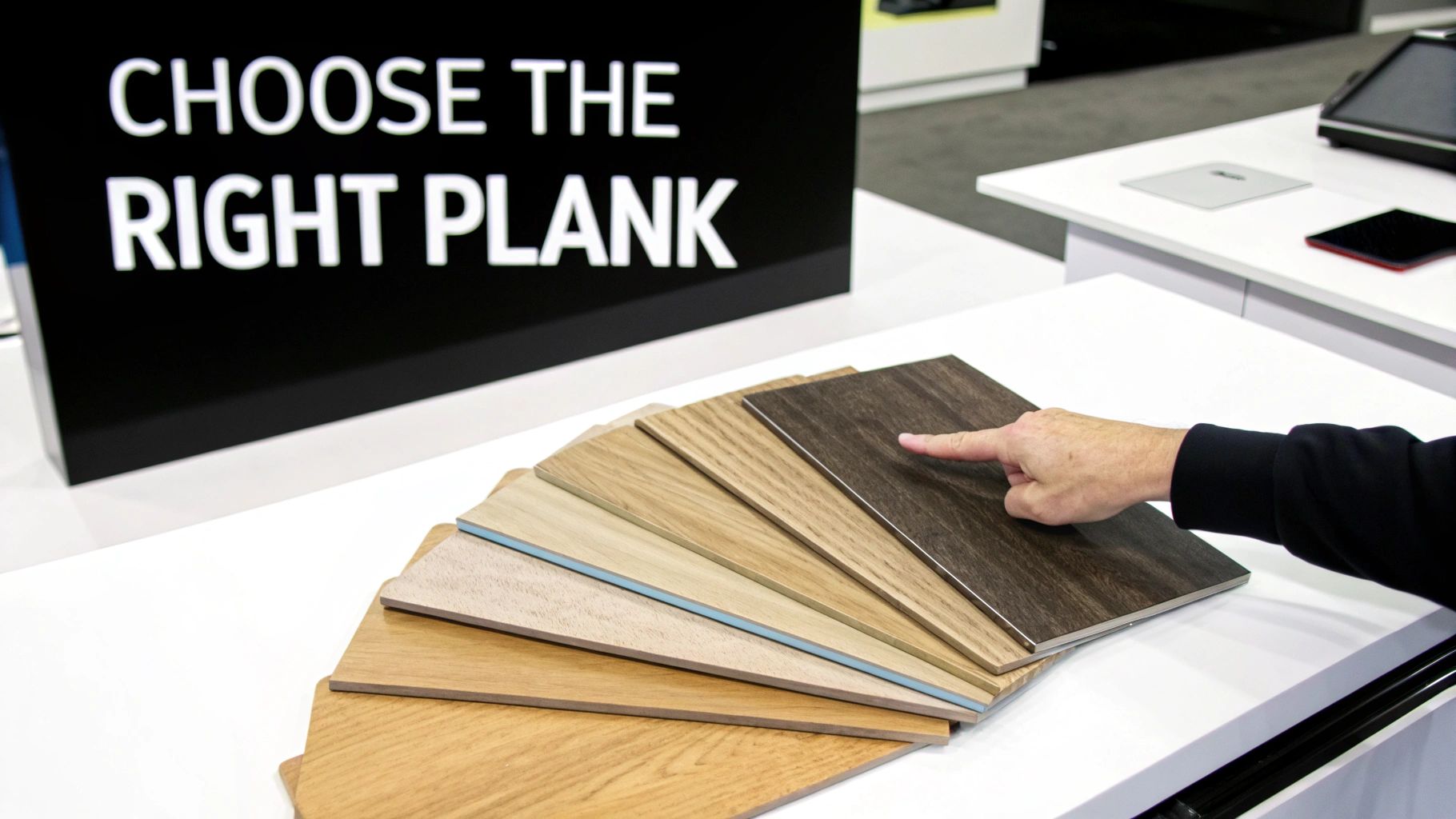
Choosing the perfect engineered hand scraped floor is a lot like picking the right wine—small details make all the difference. From species and wear layer to plank size and edge profile, each element shapes how your floors look and perform over time.
Key Selection Criteria
- Wood Species determines the hardness, grain pattern, and color variation.
- Wear Layer Thickness dictates how many times you can sand and refinish.
- Finish Type affects cleaning routines and surface sheen.
- Plank Dimensions influence how spacious or cozy a room feels.
- Edge Profile adds visual character and guides debris buildup.
Wood Species And Hardness
Hardness is measured on the Janka scale, which tells you how much force it takes to dent a wood species. Think of it as armor: the higher the rating, the tougher the surface.
In high-traffic kitchens, a 1820 lbf hickory plank handles dropped pots and bustling mornings with ease. In quieter living rooms, 1290 lbf oak offers that warm, classic look without sacrificing durability.
Wear Layer Thickness And Refinishing
The wear layer is your buffer against everyday scratches. Most engineered boards range from 2 mm to 4 mm, and thicker layers mean more rounds of rejuvenation down the road.
- 2 mm Wear Layer: Entry-level, minimal refinishing (once or not at all).
- 3 mm Wear Layer: Mid-range, supports one to two light sandings.
- 4 mm Wear Layer: Premium, allows multiple full refinishing cycles.
Finish Types And Maintenance
Your choice of finish sets the tone for upkeep. Matte coatings mask dust and minor scuffs, while semi-gloss options reflect light and clean up in a flash.
- Matte Finish: Conceals wear, needs only a quick sweep and mop.
- Semi-Gloss Finish: Shines under lamps, wipes spotless with a damp cloth.
Plank Dimensions And Room Perception
How wide and long the boards are can make a room feel entirely different.
Wider planks (5–7 inches) create a spacious, open look, whereas narrow boards lend themselves to intricate patterns and cozy charm.
Longer planks also reduce visual seams in open-concept layouts, guiding the eye seamlessly across living areas.
Edge Profile And Style
Edges frame each board like a picture frame, affecting both appearance and maintenance.
- Square Edge: Flush edges for a clean, modern plane.
- Micro-Beveled Edge: Subtle V-groove that highlights each plank and masks minor gaps.
Think about your décor: Do you want continuous surface flow, or do you prefer distinct planks that stand out?
Questions To Ask In Showrooms
- What is the Janka rating for this species and veneer thickness?
- How thick is the wear layer, and how many refinishes does it permit?
- Which finish works best in high-traffic zones like hallways or entryways?
- What plank widths and lengths suit my room dimensions?
- Are square or micro-beveled edges available for my design style?
Selection Summary
Before you make a decision, compare samples side by side. Jot down each plank’s species, hardness, wear layer, finish, dimensions, and edge style. Bring a tape measure and ask for take-home samples to view in your own light.
You might also be interested in our detailed guide on how to choose hardwood flooring when you visit the showroom: Learn how to choose hardwood flooring
Flacks Flooring experts throughout Cumming, Forsyth County, Johns Creek, and Milton are ready to help you measure accurately and pick the perfect plank. Visit our Milton showroom today.
Installing And Budgeting For Engineered Hand Scraped Flooring
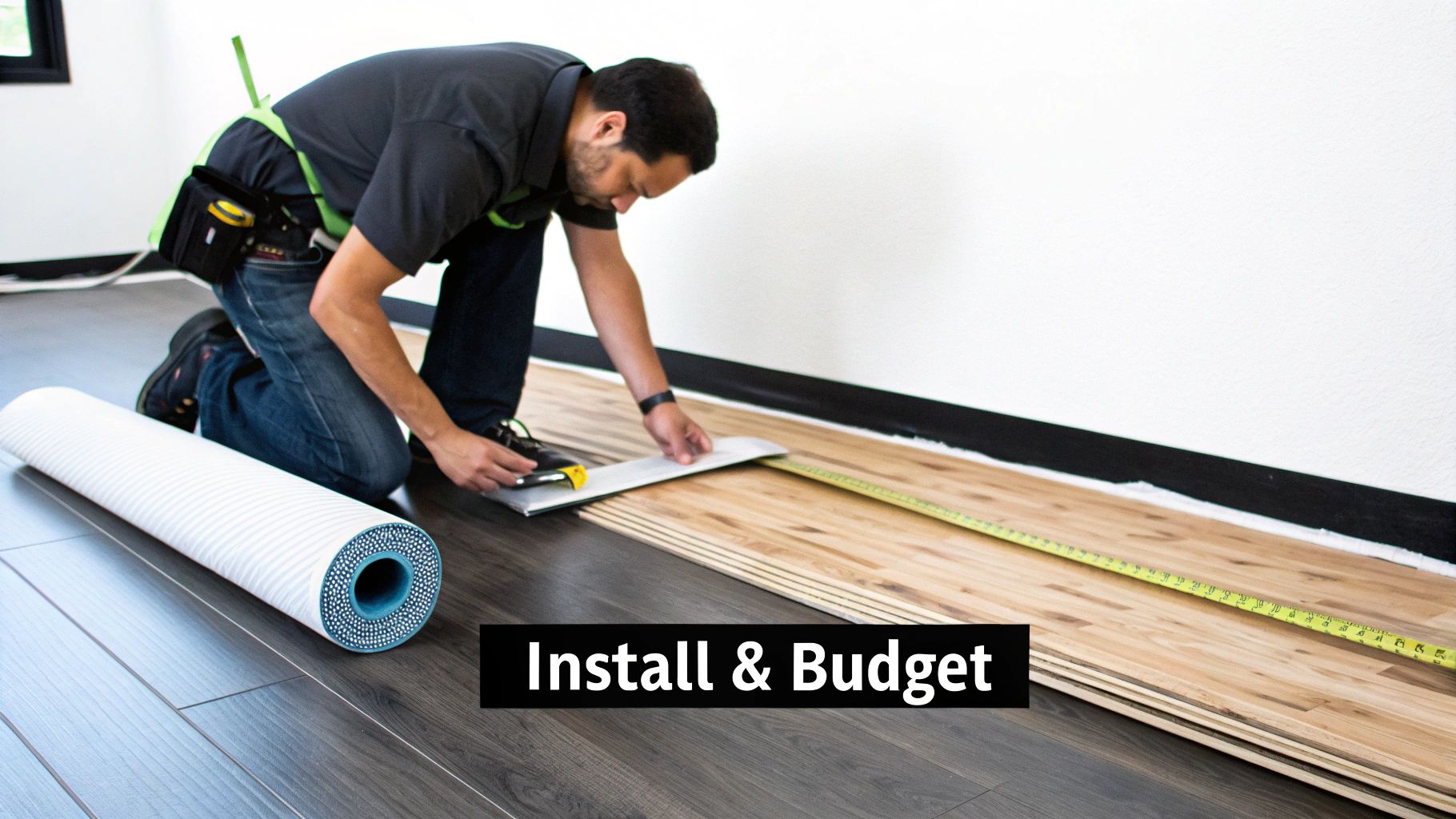
Laying engineered hand scraped flooring isn’t one-size-fits-all. Choices—from floating to glue-down or nail-down—respond to subfloor types and room layouts. Your pick influences both cost and timeline.
Choosing The Right Installation Method
- Floating Installation
- Planks click into place without adhesive.
- Works over concrete or plywood with an underlayment.
- Glue-Down Installation
- Adhesive bonds planks directly to the slab.
- Ideal for basements in Cumming and Forsyth County.
- Nail-Down Installation
- Staples or nails secure planks to wood subfloors.
- A classic choice for homes in Johns Creek and Milton.
Preparation starts with moisture testing using a reliable meter. After confirming dry conditions, a leveling compound fills dips and cracks.
Underlayment cushions footsteps, muffles sound, and blocks moisture. Choosing between 0.2 mm and 2 mm thickness can improve both comfort and acoustics.
Key Preparation Steps include:
- Moisture testing to prevent warping
- Leveling compounds for a flat foundation
- Leaving expansion gaps for natural movement
Budgeting For Materials And Labor
An accurate cost forecast avoids surprises. Below is a sample breakdown of low-end and high-end estimates per square foot.
Sample Cost Breakdown
| Item | Low End Cost | High End Cost |
|---|---|---|
| Materials per sq ft | $4 | $12 |
| Labor per sq ft | $2 | $6 |
| Underlayment per sq ft | $0.50 | $1.50 |
This table offers a snapshot of what you might spend on materials, labor, and underlayment. Tweak these figures to match your chosen wood species, wear-layer thickness, and finish.
Timeline And Milestones
- Delivery and 48–72 hour acclimation
- Moisture testing and subfloor leveling
- Underlayment installation and layout planning
- Plank fitting, finishing touches, and cleanup
- Final walkthrough and punch-list review
A 1,500 sq ft living area typically wraps up in about 7–10 days. Week one covers acclimation and prep; week two focuses on installation and finishing.
Real Homeowner Case Study
A Forsyth County family tracked every expense on their 1,000 sq ft install. They budgeted $9,000 for materials and labor. Unexpected leveling and subfloor repairs added $1,200, but a 5–10% contingency kept their project on track without frantic last-minute adjustments.
Local markets matter. Projects in Cumming and Milton may run 10–15% under metro averages, while Johns Creek demand can push rates higher during peak seasons. Scheduling around holidays and community events will help you avoid timing headaches.
For precise installation guidelines consult trusted professionals. Check out professional floor installation guidelines at Flacks Flooring to compare quotes and services.
Working With Installers
Before signing a contract, make sure you ask:
- Which moisture tests will you perform on my slab?
- How long should boards acclimate in my home?
- Do you handle underlayment, transitions, and door jambs?
- What warranties cover materials and labor?
Request a detailed, itemized proposal and verify all square footage measurements. Confirm the project schedule, daily work hours, and cleanup procedures in writing.
A clear budget and realistic timetable keep your renovation on track. With the right installer and planning, your engineered hand scraped floors will deliver that handcrafted appeal—and stand up to years of family life.
Maintaining And Repairing Engineered Hand Scraped Flooring
Think of your floors as a well-loved leather sofa—it glows with character but calls for gentle care. A simple, consistent routine keeps those hand-scraped textures popping and protects your finish from everyday wear.
A little dirt goes a long way toward dulling that handcrafted look. Tackle debris before it scratches by sweeping or vacuuming daily with a soft-brush attachment.
- Use a microfiber mop and pH-neutral wood cleaner twice a week.
- Wipe up spills within 15 minutes to avoid stains.
- Place felt pads under furniture legs to prevent indentations.
Protective mats at entryways trap grit and moisture before it reaches your planks. You’ll spend less time scrubbing and more time enjoying that rich surface.
Spot Repairs And Minor Refinishing
Even the most careful households see tiny nicks and scrapes. For light surface marks, a matching stain pen can blend them away almost instantly.
- Clean the spot with a soft cloth and manufacturer-approved cleaner.
- Trace the grain with the stain pen, filling in the scratch.
- Wipe off any extra and let it cure for 24 hours.
“A quick touch-up paint pen can restore up to 90% of small dings,” says installer Mike Flacks.
For deeper gouges, switch to a wax filler stick. Just pick a shade that mirrors your plank tones and press it into the groove.
When To Choose Full Sanding
Over large, worn patches, a full sand brings back uniform texture—but it’s not something you do every year. Save this step for when multiple scratches or dull spots start to dominate.
Pros of Full Sanding
- Returns floor to its original smoothness
- Erases numerous scratches in one go
Cons of Full Sanding
- Only possible on wear layers ≥2 mm
- Requires professional equipment and 3–5 days off-limits
| Repair Type | Area Covered | Downtime |
|---|---|---|
| Touch-up Kit | Small spots | 1–2 hours |
| Partial Spot Sand | 1–2 sq ft | 1 day |
| Full Sanding | Entire floor | 3–5 days |
Routine Maintenance Schedule
Sticking to a calendar takes the guesswork out of care and keeps repairs to a minimum.
- Weekly: Vacuum with a soft-brush attachment.
- Biweekly: Mop damp with a wood-safe cleaner.
- Quarterly: Inspect wear areas and refill wax sticks.
- Annual: Deep-clean with a professional-grade solution.
Follow this plan and you’ll dodge expensive fixes—your engineered hand-scraped flooring will look showroom-fresh for decades.
Expert Care Tips
Small tweaks can make a big difference in longevity. Aim for stable humidity and mind the wear patterns.
- Keep indoor humidity between 35–55% with a humidifier or dehumidifier.
- Trim pet nails every two weeks to ward off deep scratches.
- Rotate area rugs quarterly for even, balanced wear.
Always test a new cleaner on a hidden plank before you proceed. And consider a professional inspection every few months—it’s the best way to catch issues early.
Enjoy.
FAQ
When you’re planning to install engineered hand-scraped flooring in Cumming, Forsyth County, Johns Creek or Milton, a few common questions always surface. Here are clear, experience-tested answers to keep your project running smoothly.
What Subfloor Types Work Best?
Engineered planks lay nicely over plywood, OSB or concrete—as long as you install a proper moisture barrier. Before you begin, always:
- Perform a moisture test on the subfloor.
- Level out any dips with a quality leveling compound.
- Add a vapor barrier when you’re working on concrete.
This prep prevents uneven spots that can lead to gaps or movement down the line.
How Long Should Flooring Acclimate?
Give your planks at least 48–72 hours in the room where they’ll be installed. This waiting period lets the boards adjust to your home’s temperature and humidity, reducing the risk of cupping or gapping once they’re down.
“Proper acclimation reduces gapping and cupping issues,” says a Forsyth County flooring expert.
Refinishing Options
Can Hand-Scraped Floors Be Sanded And Refinished?
Yes—so long as the wear layer is 2 mm or thicker. You can lightly sand and apply a fresh finish every 8–10 years to bring back that original character.
What Warranty Questions Should I Ask My Installer?
Before you sign off, make sure your installer spells out:
- Moisture Damage: Which humidity swings are covered, and to what limits?
- Finish Wear: How often can you renew the surface coat?
- Installation Defects: Are both labor and materials included?
Warranty Guidelines
| Question | Key Considerations |
|---|---|
| Subfloor Compatibility | Plywood, OSB, concrete with vapor barrier |
| Acclimation Time | 48–72 hours to balance moisture |
| Refinishing Capability | Wear layer ≥ 2 mm for light sanding |
| Installer Warranty Details | Moisture, finish, and defects in writing |
Homeowners in Johns Creek and Milton can use these pointers to clarify subfloor needs, acclimation timing, refinishing options, and warranty coverage—so you step into installation with confidence.
Quick Preparation Tips
- Check subfloor moisture with a reliable meter; keep levels below 3 lbs/1,000 sq ft/24 hrs.
- Inspect plank bundles and match shades to avoid noticeable variation.
- Maintain room conditions at 60–80°F and 35–55% relative humidity before and during installation.
Armed with these tips and the FAQ above, you’ll speak the same language as your installer, lock down the project scope, and enjoy flawless results in your Cumming or Milton home.
Eager to explore engineered hand-scraped flooring?
Visit Flacks Flooring to schedule your in-home consultation today.
Call us now.