
If you're standing in your kitchen in Cumming, looking at worn floors and trying to decide between hardwood, LVP, laminate, tile, or carpet, you're not alone. Most North Atlanta homeowners hit the same wall. They want something that looks like real wood, fits the house, holds up to kids, dogs, and humidity, and doesn't create a headache a year later.
That’s where engineered hardwood usually enters the conversation. It gives you a real wood surface, but it’s built differently than solid hardwood. That difference matters in places like Forsyth County, Johns Creek, and Milton, where seasonal humidity swings and slab foundations can make some flooring choices more temperamental than they look in a showroom.
An Introduction for North Atlanta Homeowners
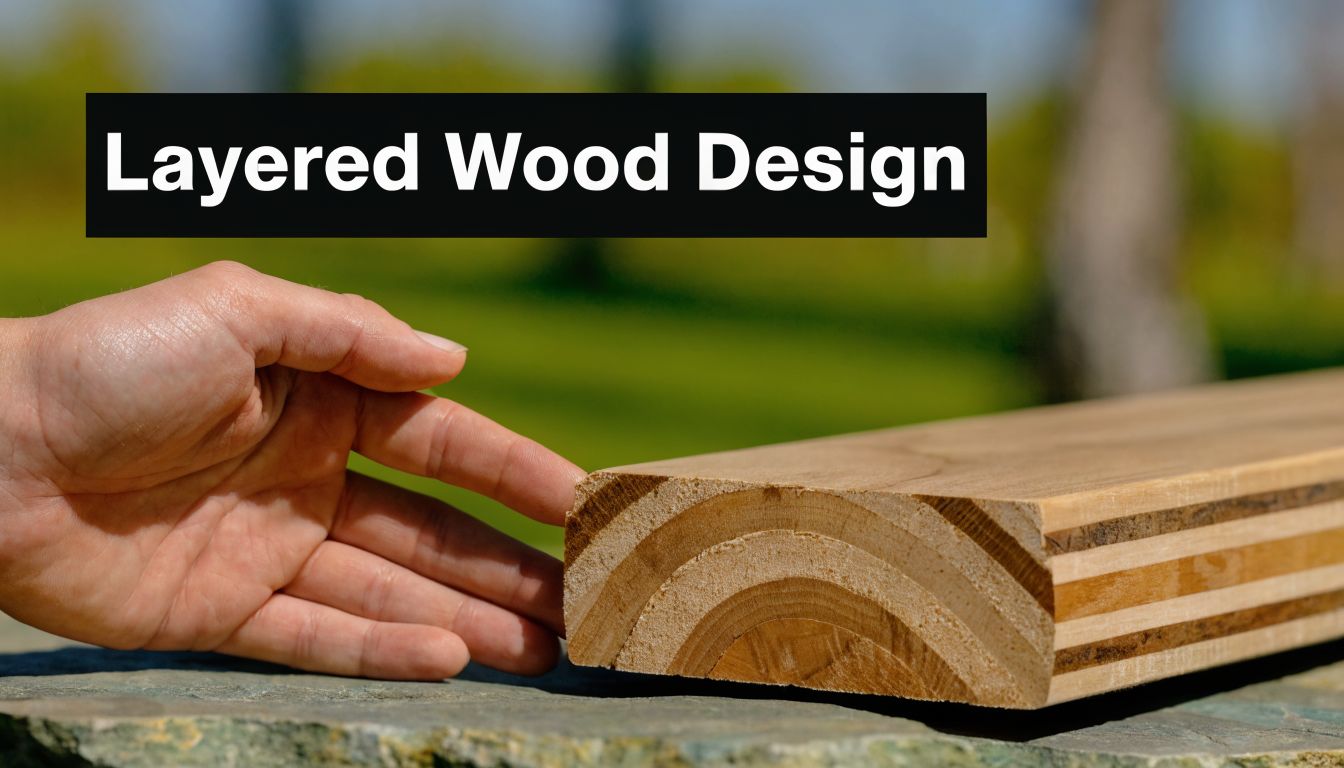
Engineered hardwood is real wood flooring made in layers. The top is a real hardwood veneer, and underneath is a stacked core designed for better stability. For homeowners in North Atlanta, that construction is often the entire point. You get the warmth and character people want from hardwood flooring installation, but with a floor that usually handles day-to-day moisture variation better than traditional solid planks.
That makes engineered hardwood a common middle-ground option for homes that want a classic or modern farmhouse look without taking on every risk that comes with solid hardwood. In Cumming and the surrounding area, I see this matter most in open-concept homes, main levels over crawl spaces, and basement areas where buyers love the look of wood but need better dimensional control.
If resale is part of your thinking, flooring deserves a place on the same list as paint, lighting, and kitchen updates. A practical resource like this priority checklist for boosting house value helps homeowners look at flooring as part of the whole house decision, not just a one-room project.
For a closer look at local product options and installation approaches, it also helps to review engineered hardwood flooring in Cumming.
Before comparing pros and cons, here’s the fast version.
| Flooring Type | Best For | Water Resistance | Durability/Scratch | Typical Cost (Installed) |
|---|---|---|---|---|
| Engineered hardwood | Real wood look in main living areas, bedrooms, some basements | Better than solid hardwood, not waterproof | Good, depends heavily on finish and species | Varies by product and site conditions |
| Solid hardwood | Long-term wood flooring in stable interior environments | Lower moisture tolerance | Good, can be refinished more than engineered in many cases | Material starts higher than engineered |
| LVP | Waterproof flooring, pets, basements, busy households | Strong water resistance | Usually strong for daily wear | Often budget-friendly compared with wood |
| Laminate | Affordable flooring with wood-look style | Better than old laminate generations, but product-dependent | Good surface wear in many homes | Often lower-cost than real wood |
| Tile | Wet areas, mudrooms, baths, some kitchens | Strong water resistance | Very durable, hard underfoot | Varies widely by tile and labor |
The Anatomy of Engineered Hardwood Flooring
Engineered hardwood works because of how it’s built. It isn’t fake wood. It’s real hardwood on top, supported by a layered core underneath. That design changes how the floor reacts to humidity, temperature shifts, and subfloor conditions.
According to this engineered hardwood flooring breakdown, engineered hardwood uses a thin top veneer of premium species such as oak or maple over 3 to 9 layers of recycled plywood or hardwood plies. Total thickness typically ranges from 10mm to 21mm, and the wood top layer makes up about 20% to 25% of the board. The same source notes that traditional solid hardwood starts at a minimum of $600 per 100 square feet, while engineered options usually reduce material expense.
Why the layered build matters in Georgia
Forsyth County homes deal with moisture movement all year. Summer humidity, winter heating, and slab construction can all push a wood floor around. Engineered planks are built to resist that movement better than solid wood because the core layers help limit expansion and contraction.
That’s why engineered hardwood often makes more sense over concrete slabs and in lower-level spaces where solid hardwood can become a gamble. It won't make a damp room safe. It does give you a better shot at long-term stability when the environment is managed correctly.
Practical rule: If a room has a history of moisture trouble, don’t ask engineered hardwood to solve that problem. Fix the moisture issue first, then choose the floor.
What you gain and what you give up
The biggest upside is balance. You get a real wood wear surface, factory-applied finishes, simpler installation options such as click or floating systems, and a floor that fits more areas of the house than many people expect. The same source notes that engineered hardwood can often be refinished 1 to 2 times, can last 25 to 50 years with proper care, and refinishing instead of replacing can deliver up to a 92% reduction in carbon footprint.
The trade-off is straightforward. You do not get endless sanding cycles. Once that top layer is used up, your options narrow. Product quality also varies a lot. A well-made board and a bargain board can both be called engineered hardwood, but they won't perform the same way.
A few structural details matter more than buyers realize:
- Top layer quality: A thicker, better-made veneer usually gives you more long-term flexibility.
- Core construction: Better plies generally mean better stability.
- Factory finish: This affects scratch visibility, cleaning ease, and how the floor ages.
- Installation format: Floating, glue-down, and nail-assisted systems each fit different homes and subfloors.
For a product-level explanation of how these layers come together, this guide on what engineered hardwood flooring is is useful.
Where homeowners misread the product
A lot of confusion comes from assuming engineered hardwood is either "just as good as solid" or "basically laminate." Neither is accurate.
It’s real hardwood with a different structure. That means it looks and feels more like hardwood because it is hardwood on the surface. But it also means you need to respect its limits. It isn’t fully waterproof. It still needs proper indoor humidity, solid subfloor prep, and careful product selection for kitchens, basements, and homes with pets.
Engineered Hardwood vs Other Popular Flooring in Georgia
Homeowners in Alpharetta, Roswell, Canton, and Marietta rarely compare engineered hardwood in isolation. They compare it against the floor they almost bought. Usually that means solid hardwood, LVP, laminate, or tile.
Engineered hardwood flooring's pros and cons become real not in a showroom sample, but in a busy house with dogs, wet shoes, bar stools, and a basement that never feels exactly the same in July as it does in January.
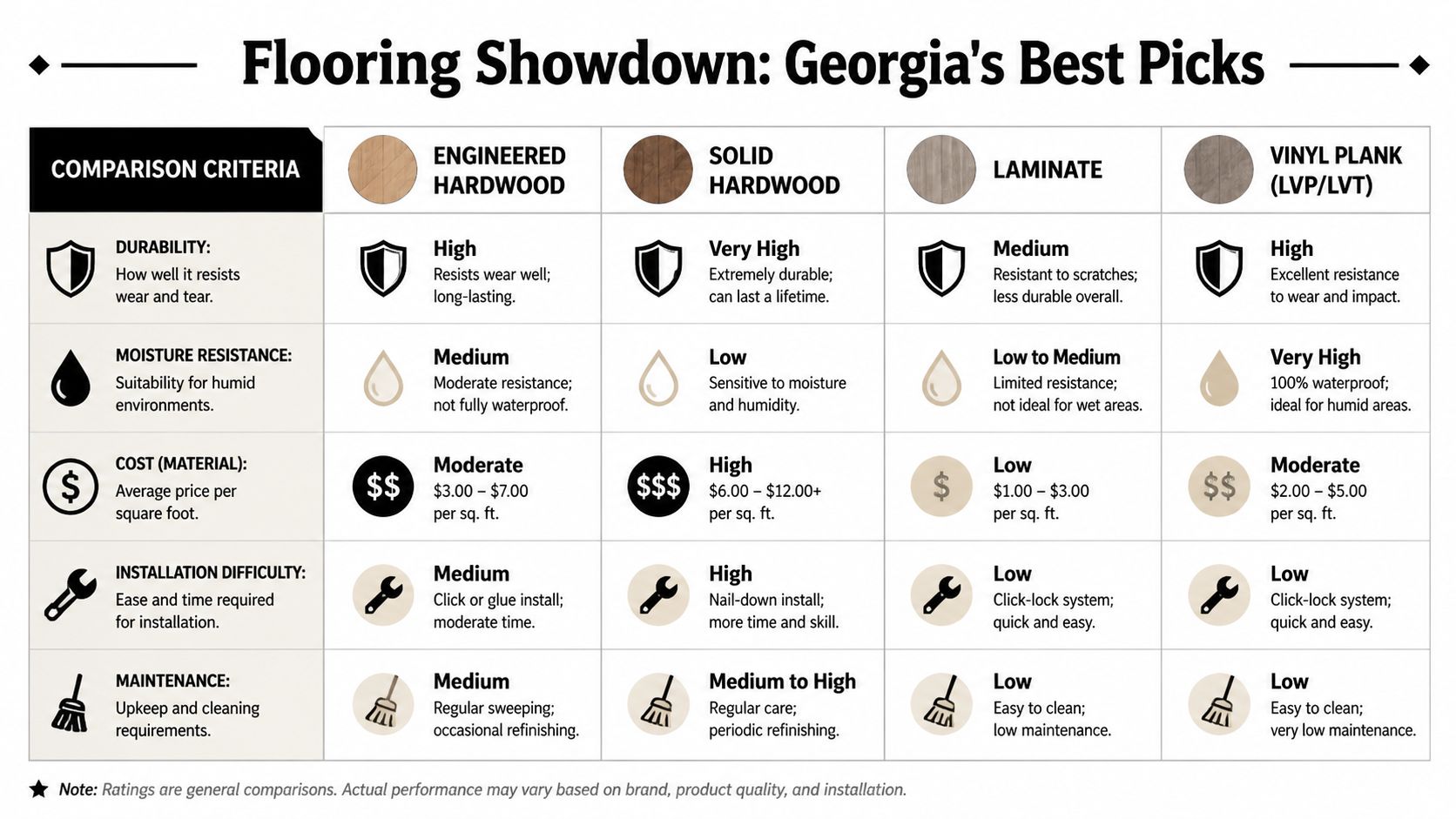
Flooring Comparison for North Atlanta Homes
| Flooring Type | Best For | Water Resistance | Durability/Scratch | Typical Cost (Installed) |
|---|---|---|---|---|
| Engineered hardwood | Main living spaces, bedrooms, some slab homes, style-focused renovations | Moderate, not waterproof | Good, but finish and species matter | Varies by product, prep, and layout |
| Solid hardwood | Traditional homes, long-term ownership, refinishing priority | Lower | Good, with more refinishing potential | Higher material entry point than engineered |
| LVP | Basements, pets, waterproof flooring needs, rentals | High | Strong for everyday abuse | Often more affordable than wood |
| Laminate | Budget-conscious floor replacement, bedrooms, lower-risk dry areas | Product-dependent | Good surface wear, can be noisy if underlayment is poor | Usually affordable |
| Tile | Bathrooms, laundry rooms, heavy moisture zones | High | Excellent, but hard and cold underfoot | Varies widely with tile and labor |
Engineered hardwood vs solid hardwood
Solid hardwood still has one clear advantage. It gives you a thicker wood body and, in many cases, more refinishing potential over the long haul. In the right home, that matters.
But North Georgia isn't always the "right home" for solid hardwood in every room. Slab construction, humidity swings, and finished basements make engineered wood the safer choice in many real-life installs. If you want wood throughout the house without taking avoidable risks, engineered often wins on practicality.
Solid hardwood is the classic answer. Engineered hardwood is often the better fit for the way North Atlanta homes are actually built.
Choose solid hardwood when:
- You want maximum sanding potential: Long-term ownership can justify it.
- The environment is stable: Main-level wood subfloors tend to be friendlier.
- You accept a more involved install: Nail-down labor and site conditions matter.
Choose engineered when:
- You need more flexibility: Concrete and mixed subfloors are common reasons.
- You want real wood with less movement risk: That’s especially relevant in Cumming and Johns Creek.
- The project timeline is tight: Floating and click options can simplify scheduling.
Engineered hardwood vs LVP
This is the comparison I have most often with families. LVP has become popular for a reason. It handles spills better, it’s easier to live with in some households, and many products hide wear well.
Engineered hardwood still wins on one thing LVP can’t fully duplicate. It is actual wood. The grain variation, texture, and visual depth are different when the floor is made from wood instead of printed to look like it.
That said, if you have large dogs, kids coming in from the backyard, or a basement that occasionally gets damp, LVP may be the smarter answer. If your top priority is a wood floor in a dining room, office, or main living area where style leads the decision, engineered usually makes more sense.
For homes with heavy pet traffic, the question isn’t which floor looks better on day one. It’s which one you’ll still enjoy after muddy paws, dropped toys, and water bowls become part of the routine.
A practical breakdown:
- Pick engineered hardwood if the room is design-driven and you care about authentic wood character.
- Pick LVP if waterproof flooring and easier abuse tolerance matter more than natural wood.
- Mix both if you want wood upstairs or on the main level and LVP in basement or utility-heavy zones.
Engineered hardwood vs laminate
Laminate has improved, but it still serves a different buyer. It’s often chosen when affordable flooring is the top priority and the homeowner wants a wood-look floor without stepping into real wood pricing.
Engineered hardwood feels more substantial and usually delivers a more convincing high-end finish because the top layer is genuine hardwood. Laminate can work well in bedrooms, secondary spaces, or homes where speed and budget drive the project. It usually becomes a weaker option when buyers specifically want hardwood flooring installation, resale appeal tied to real wood, or a floor that aligns with custom trim and cabinet work.
The common mistake is buying laminate for a space that’s expected to perform like wood. It won’t.
Engineered hardwood vs tile
Tile is a different category, but it still enters the conversation in kitchens, mudrooms, laundry areas, and some basements. Tile wins when water exposure is routine and durability is the main concern.
Engineered hardwood wins when comfort, warmth, and a continuous look through the home matter more. Most homeowners in Milton and Woodstock don’t want their entire main floor to feel like a commercial hard surface. They want some softness underfoot, visual warmth, and a finish that fits the architecture of the house.
The local decision shortcut
If you want a quick filter for North Atlanta homes, use this:
- Choose engineered hardwood for living rooms, dining rooms, offices, and many bedrooms when real wood is the goal.
- Choose LVP for basements, playrooms, rental properties, and households where water and scratches are constant.
- Choose laminate when budget leads and the room stays relatively dry.
- Choose tile in wet zones where wood of any kind creates too much maintenance risk.
No single floor wins every room. The best projects in Metro Atlanta usually use the right material in the right place.
Understanding Flooring Installation and Replacement Costs
The material is only part of the budget. Homeowners asking about hardwood flooring installation in Cumming or floor replacement in Cobb County usually focus first on the plank they like, then get surprised by everything underneath it.
That’s normal. Flooring quotes change because houses change. A simple bedroom install is one kind of job. Pulling out old flooring, correcting a subfloor, working around cabinets, and transitioning into multiple rooms is a different kind of job.

What drives the final price
A flooring estimate usually moves based on labor conditions more than homeowners expect.
The biggest cost drivers are often:
- Existing floor removal: Carpet, glued-down products, tile, and old wood all come out differently.
- Subfloor prep: Leveling, patching, moisture prep, and cleanup can change the project scope fast.
- Installation method: Floating, glue-down, and nail-down each require different labor and materials.
- Room complexity: Stairs, tight closets, heavy trim work, and multiple transitions add time.
- Furniture and appliance coordination: Occupied homes take more planning than empty ones.
If you’re trying to compare options, this guide to engineered wood flooring cost per square foot helps frame the material side of the equation. It still needs to be paired with site conditions to get to a real project number.
Installation method changes the project
A floating engineered floor can move faster in the right setting. That makes it attractive for families who want less disruption. Glue-down jobs can be a good match over concrete, but they demand careful slab prep. Nail-assisted installs may fit wood subfloors well, though they usually involve a more traditional installation path.
None of those methods is automatically better. The right one depends on the board, the subfloor, the room, and the manufacturer's requirements.
The cheapest quote on paper can become the most expensive floor in the house if the installer skips moisture checks, prep, or the correct installation method.
Replacement vs new construction
Floor replacement usually costs more in effort than new installation because the house is already living around the floor. People are walking through it. Baseboards may need careful handling. Appliances and furniture have to be moved or protected. Existing height differences between rooms have to be addressed.
That’s why two homes of similar size can get very different flooring proposals. In one home, the old floor comes up cleanly and the subfloor is ready. In another, the installer spends time correcting old issues before the first plank goes down.
A few questions help homeowners budget more clearly:
- Are you replacing old flooring or starting clean?
- Is the subfloor wood or concrete?
- Does the job include stairs, trim work, or multiple room transitions?
- Will the new floor run under appliances or stop at defined edges?
- Do you need the job phased so the household can keep functioning?
For high-intent buyers searching flooring near me, affordable flooring options, or floor replacement in North Fulton, those details matter more than broad averages ever will.
Why professional installation matters
Engineered hardwood is more forgiving than solid hardwood in some settings, but it still isn't a casual DIY material. Moisture checks, acclimation decisions, slab prep, underlayment selection, and expansion planning all affect how the floor performs.
That’s one reason many homeowners use companies that handle both product selection and installation. Flacks Flooring offers in-home consultations, site prep, product selection, and installation as part of the same process, which can help keep the material choice aligned with the actual conditions in the house.
Ideal Rooms and Advanced Use Cases
Engineered hardwood doesn’t belong everywhere, but in the right room it solves a lot of common North Atlanta problems. The homeowners who end up happiest with it usually choose it room by room, not house-wide by default.
A basement renovation in Johns Creek is a good example. Many homeowners want the warmth of wood downstairs, especially when they’re building a second living area, home office, or guest suite. Solid hardwood is usually a risky move there. Engineered hardwood gives you a more stable wood option, as long as the space is dry and the slab is properly evaluated.
Rooms where it usually works well
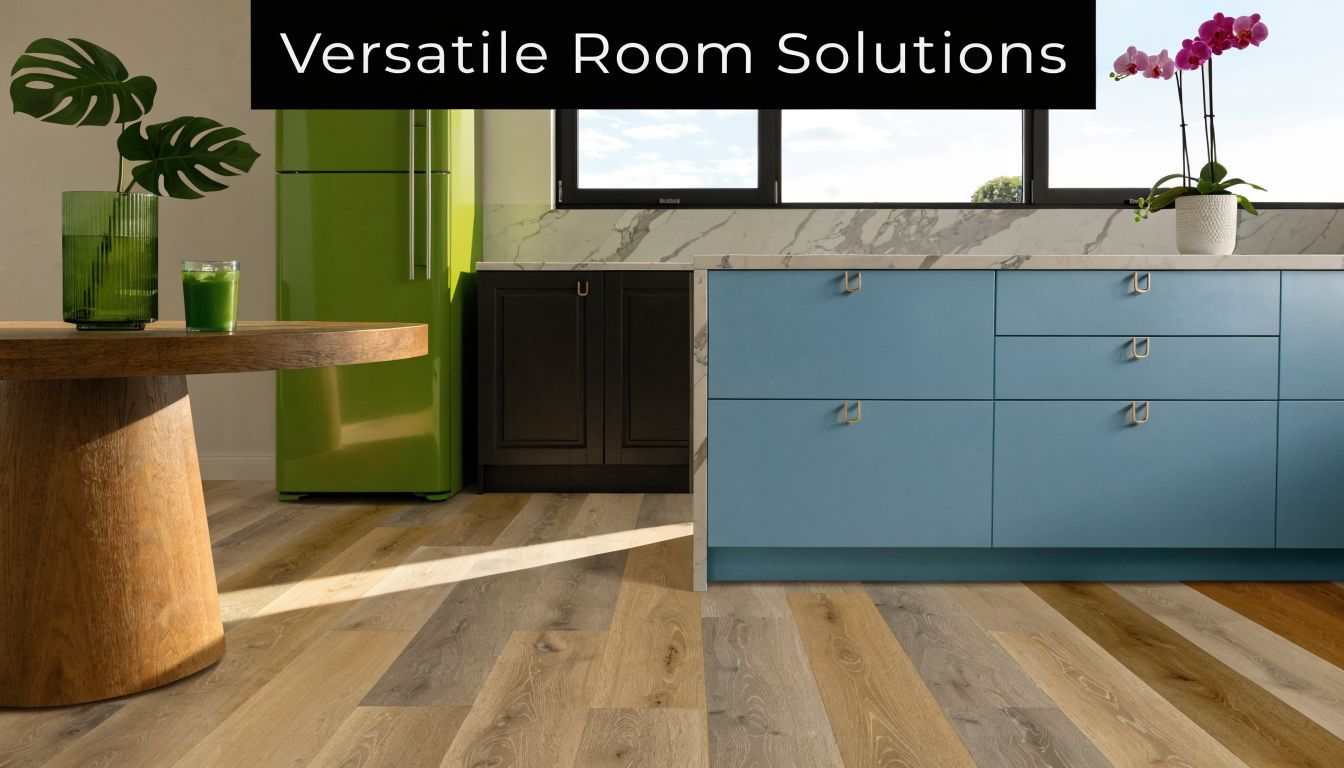
Living rooms, dining rooms, hallways, and primary bedrooms are natural fits. These are spaces where people want real wood character, easy styling, and a floor that supports both classic and more modern interiors.
Kitchens can work too, but only if the household understands the trade-off. Engineered hardwood can handle ordinary life better than solid wood in many homes, but standing water, repeated leaks, and neglected spills are still a problem. If your kitchen is busy enough to act like a mudroom, LVP or tile may be the more practical call.
For pet-friendly flooring, engineered hardwood can work, though product selection matters. Lower-gloss finishes and textured surfaces usually hide the daily signs of dogs better than smooth, dark, shiny boards. If your dog’s nails sound like tap shoes on every hard surface, that’s a lifestyle clue worth listening to.
A practical room-by-room view
- Finished basement in Johns Creek: Good candidate if moisture conditions are stable and tested.
- Main-floor office in Milton: Strong fit when the goal is a quieter, warmer alternative to tile.
- Open-concept kitchen and family room: Possible, but only for households willing to wipe spills quickly and protect sink zones.
- Kids’ playroom: Usually not my first pick. LVP often handles abuse better.
- Formal dining room or sitting room: Excellent use case when style and real wood character lead the decision.
If you're preparing a house for market and debating upgrades versus broader repairs, this resource on strategies for homes needing repairs can help frame where flooring fits in the bigger selling decision.
Your Practical Decision Checklist
A good flooring decision usually comes from better questions, not more samples. If you're weighing engineered hardwood flooring pros and cons for a home in Cumming, Forsyth County, Johns Creek, or Milton, use this checklist to narrow the call.
For homeowners
Ask yourself:
- How much real wood matters: If the answer is a lot, engineered hardwood stays in the conversation longer than laminate or LVP.
- How busy the room gets: Dogs, kids, wet traffic, and backyard access can push you toward LVP in some zones.
- Whether the subfloor is concrete: That often strengthens the case for engineered over solid hardwood.
- How long you plan to stay: If this is a long-term home, finish quality and board construction matter more than chasing the cheapest plank.
For agents and sellers
Look at the room through buyer eyes.
A staged home in Milton or Johns Creek often benefits from flooring that feels current, warm, and broadly appealing. Engineered hardwood can fit that goal well in visible living spaces, especially if the house needs an update that looks more substantial than a cosmetic patch.
For designers and contractors
Push past color first.
Check board construction, finish level, transition planning, and subfloor conditions before locking into a style direction. A floor that fits the cabinetry, wall color, and furniture plan still has to suit the actual site.
For long-term care, homeowners should also plan for everyday wear. Simple habits matter. Felt pads, furniture glides, and careful movement can preserve the finish. This guide on expert advice on protecting floors from furniture is a useful companion once the new floor is in.
Frequently Asked Questions About Engineered Hardwood
Can you use a steam mop on engineered hardwood
I wouldn’t recommend it. Heat and moisture pushed into the seams can create avoidable problems over time. Use a manufacturer-approved cleaner and a lightly damp microfiber mop instead.
What’s the difference between engineered hardwood and waterproof hardwood
Engineered hardwood is real wood with a layered core. Some products are treated for better moisture performance, but that doesn’t make them fully waterproof. When a homeowner says "waterproof hardwood," it usually refers to a product marketed for improved water resistance, not a floor you can treat like tile or LVP.
How long does engineered hardwood really last
With proper care, the verified range is 25 to 50 years. Actual life depends on the product, installation quality, indoor conditions, and how the house is lived in.
Is engineered hardwood good for homes with dogs
It can be, but it isn’t the automatic winner. Lower-gloss finishes and more forgiving surface textures help. If scratch resistance and water accidents are your main concerns, some homes are better served by LVP.
Is engineered hardwood worth it in North Atlanta
For many homes, yes. Especially when you want real wood, need better stability than solid hardwood, and are installing over conditions common in this area.
If you’re comparing flooring options for a home in Cumming, Johns Creek, Milton, or the surrounding North Atlanta area, Flacks Flooring is one place to start the process with an in-home consultation, showroom selection, and guidance on whether engineered hardwood, LVP, laminate, or carpet makes the most sense for your layout, subfloor, and daily life.