
A lot of North Metro Atlanta homeowners start in the same place. They want the look of real hardwood, but they’ve already seen what Georgia humidity can do to the wrong floor. In Cumming, Johns Creek, Milton, and across Forsyth County, that concern is justified. Summer air carries moisture, HVAC systems run hard, and the swing between seasons can expose weak flooring choices fast.
That’s where engineered hardwood usually enters the conversation. It gives you a real wood surface, but the structure underneath is built to handle conditions that make solid wood more temperamental. For busy homes with kids, dogs, tracked-in grit, and daily traffic from kitchen to living room, that matters more than the sample board color alone.
Homeowners shopping for hardwood flooring installation, pet-friendly flooring, or even comparing affordable flooring options against LVP flooring and laminate flooring often focus on appearance first. The floor’s long-term behavior matters just as much. A good engineered floor can look right on day one and still perform years later, provided the product spec and the installation match the home.
Choosing the Right Floor for Your North Atlanta Home
A homeowner in Cumming might love the look of white oak planks but hesitate once they hear about expansion, gaps, scratches, and moisture. That hesitation is reasonable. In this part of Georgia, flooring choices aren’t made in a vacuum. The climate, the subfloor, the room use, and the household all affect what holds up.
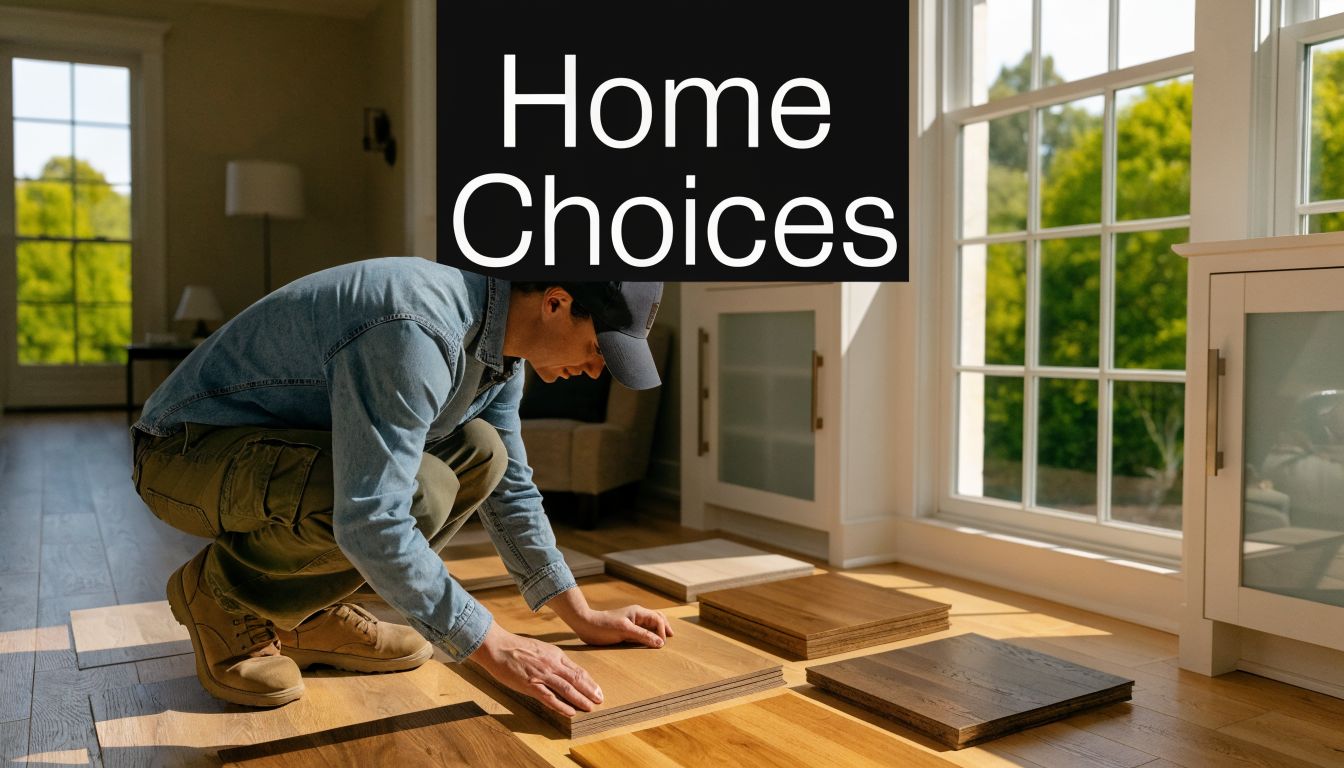
Engineered hardwood usually makes sense for buyers who want actual wood underfoot without taking on the full movement risk that comes with traditional solid planks. That includes families replacing worn carpet in Roswell, owners updating builder-grade floors in Alpharetta, and sellers in Woodstock preparing a home for market with something that feels more permanent than laminate flooring.
What homeowners are usually balancing
Some homes need a floor that can stand up to dogs and daily traffic. Others need a floor that works over concrete, performs better in a kitchen breakfast area, or fits a broader floor replacement plan that also includes tile flooring in baths and carpet installation in bedrooms.
Most buying decisions come down to a few practical questions:
- Looks and resale appeal matter because real wood still carries a different visual warmth than printed surfaces.
- Moisture tolerance matters because Georgia homes deal with seasonal humidity, and some rooms see more risk than others.
- Repairability matters because a floor that can be refreshed later often holds value better over time.
- Budget fit matters because buyers compare engineered wood against LVP, laminate, and other flooring near me options in the same shopping trip.
Engineered wood durability isn’t just about how hard the top surface feels. It’s about whether the floor stays flat, stable, and serviceable in the house you actually live in.
That’s the primary reason engineered hardwood keeps showing up in serious renovation conversations across North Fulton, Cherokee County, Cobb County, and Forsyth County.
The Science of Stability How Engineered Hardwood is Built
The reason engineered hardwood performs differently starts below the surface. The top is real hardwood, but the floor’s stability comes from the layered construction underneath. Those layers are arranged so the grain directions oppose each other, much like quality plywood. That construction slows the natural movement wood makes when humidity and temperature change.

A lot of homeowners hear “engineered” and assume it means synthetic. It doesn’t. The wear surface is real wood. What’s engineered is the support structure that keeps that wood from reacting as dramatically as a single solid board.
Why cross-grain construction matters
Solid hardwood wants to expand and contract more freely because it’s one piece of wood. Engineered hardwood resists that movement because the plies work against each other. According to this explanation of engineered hardwood construction science, engineered hardwood achieves superior dimensional stability through cross-grain layered construction, and maintaining indoor relative humidity between 35-65% helps prevent extreme movement and extends floor life.
That matters in North Metro Atlanta because homes here don’t sit in one static indoor condition all year. HVAC cycles, outdoor humidity rises, and concrete slabs can hold moisture differently than wood subfloors. A stable plank handles those conditions better.
The three structural parts that do the work
You can think of the board in layers:
- Wear layer. This is the visible hardwood veneer. It provides the species, grain, stain color, and the natural wood character you’re paying for.
- Core layers. These are usually plywood or high-density fiberboard. They provide the structural resistance to swelling, cupping, and seasonal movement.
- Backer layer. This balances the plank and helps keep the board stable from top to bottom.
A useful primer for homeowners comparing options is Flacks Flooring’s guide on what engineered hardwood flooring is. It helps separate the product from common misconceptions.
What this means in a Georgia house
In practical terms, engineered hardwood is often the safer wood-floor choice for homes in Cumming, Johns Creek, and Milton where interior conditions change through the year. It’s also one reason installers are comfortable using it in areas where solid hardwood would require more caution.
Practical rule: Stability starts before the first plank is laid. If the board is well built, the install has a much better chance of staying quiet, flat, and consistent through seasonal changes.
This doesn’t mean engineered hardwood can ignore moisture. It still needs a proper site check, proper acclimation, and a floor matched to the room. But the construction gives it a stronger starting point, and that’s the foundation of real engineered wood durability.
Decoding Durability The 3 Factors That Matter Most
Not all engineered wood is built the same. Two floors can look almost identical in a showroom and behave very differently after a few years in a busy home. If you’re comparing samples for a renovation in Marietta, an update in Canton, or a whole-home floor replacement in Alpharetta, three specs deserve most of your attention.

Wear layer thickness
The wear layer determines whether the floor can age naturally, or whether it can be renewed later. Many lower-priced products exhibit reduced durability in this respect.
According to this wear-layer and finish durability guide, premium products with 3mm+ wear layers can last 20-30 years in high-traffic homes, and the multi-coat aluminum oxide finish can withstand over 1000 cycles in Taber abrasion tests. That same source also notes that veneer thickness and aluminum oxide finishes are central to durability.
Here’s the practical takeaway. A thicker wear layer gives you more room for future refinishing and more margin for real household use. Thin veneers may look fine on install day, but they leave little recovery option once wear builds up.
Core material
The core doesn’t show, but it determines how calm the floor stays. Plywood-core and HDF-core products can both perform well when the product is made properly, but they don’t feel or react exactly the same.
A plywood core is often favored when stability across varying conditions is the main concern. An HDF core can bring a dense, firm feel and good resistance in certain settings. In either case, the buyer should be looking for a board that feels structurally serious, not just visually appealing.
For local homeowners sorting through choices for humid conditions, this guide to flooring for humid climates is a useful reference point.
Finish quality
Finish is where scratch resistance really lives day to day. The species matters, but the top coating handles the abuse from dog nails, chair movement, kitchen grit, and foot traffic.
Multi-coat aluminum oxide finishes are a major advantage because they create a hard protective barrier. That doesn’t make engineered hardwood scratch-proof. It does mean the floor stands up better to normal household wear than unfinished or lightly protected wood surfaces.
Buyers often overspend on color and underspend on specification. For durability, that’s backwards.
A quick way to judge a product
If you’re standing in a showroom and trying to sort through engineered options, focus on these questions:
- How thick is the wear layer? A thicker top layer usually gives the floor a longer useful life and a better chance of refinishing later.
- What is the core made from? Ask whether it’s plywood or HDF, and ask why that core was chosen for your room and subfloor.
- What finish is on top? Look for a factory-applied aluminum oxide finish rather than assuming all finishes perform the same.
- Where is the floor going? A quiet bedroom and a high-traffic kitchen entry don’t ask the same things from a board.
What works and what doesn’t
A premium engineered floor in a busy family home usually performs well when all three pieces line up. A thick wear layer helps with longevity. A stable core keeps movement under control. A strong finish protects the surface from the daily grind.
What doesn’t work is buying engineered hardwood as if every product is interchangeable. It isn’t. The difference between a floor that ages gracefully and one that looks tired early often comes down to specs most buyers never see unless someone points them out.
Engineered Wood vs Other Floors A Head-to-Head Comparison
Homeowners shopping for flooring in Woodstock, Roswell, Acworth, or Johns Creek rarely look at engineered hardwood in isolation. They compare it against solid hardwood, luxury vinyl plank, and laminate because each one answers a different problem. The right choice depends less on trends and more on where the floor is going, how the room is used, and whether long-term repairability matters to you.
The biggest strength of engineered hardwood is that it sits in the middle of several competing priorities. It gives you a real wood surface, more dimensional stability than solid hardwood, and more long-term renewal potential than laminate or LVP if the wear layer is substantial.
According to this lifespan comparison for engineered hardwood, laminate, and LVP, engineered hardwood typically lasts 20-30 years, can reach 40 years with proper maintenance, and can last 50+ years if the wear layer is thick enough for refinishing. That same source states laminate typically lasts 10-20 years, while LVP typically lasts 20-30 years, and neither can be refinished once worn.
Flooring Comparison for Georgia Homes
| Feature | Engineered Hardwood | Solid Hardwood | Luxury Vinyl Plank (LVP) | Laminate |
|---|---|---|---|---|
| Surface material | Real wood veneer | Solid wood | Printed surface | Printed surface |
| Humidity stability | Better suited to changing indoor conditions | More prone to movement | Handles moisture well | Surface is durable, but damaged wear layers can't be refinished |
| Refinish potential | Possible if wear layer is thick enough | Strong repair and refinishing potential | Cannot be refinished | Cannot be refinished |
| Typical lifespan | 20-30 years, with potential for 40-50+ years depending on wear layer and maintenance | Qualitatively long-lasting, but more climate-sensitive | 20-30 years | 10-20 years |
| Best fit | Buyers who want real wood with better stability | Buyers committed to classic solid wood and controlled interior conditions | Buyers prioritizing waterproof flooring and low maintenance | Buyers focused on lower upfront cost and appearance |
| Basement suitability | Often a better wood option than solid, with correct installation conditions | Usually more limited in moisture-prone areas | Common choice for basement and waterproof flooring needs | Use with caution where moisture is a concern |
| Pet households | Good with a strong finish and realistic expectations | Can show scratches depending on species and finish | Often chosen for scratch-conscious households | Top layer resists wear, but repair options are limited |
Where each floor wins
Engineered hardwood works well when the homeowner wants the character of wood and plans to stay in the house long enough to care about service life. It also fits homes where the subfloor or room conditions make solid hardwood a riskier choice.
Solid hardwood still has a place. In the right home, with the right site conditions and buyer expectations, it delivers a classic floor with strong renewal potential. But it’s less forgiving when moisture swings are part of the picture.
LVP flooring answers a different problem. If the project is centered on waterproof flooring for basements, laundry areas, or homes with repeated spill risk, LVP is often on the shortlist for good reason.
Laminate flooring can make sense when budget is driving the project and the homeowner wants a hard-wearing printed surface. The trade-off is what happens later. Once the top layer fails, replacement becomes the path.
If you want a floor that still feels like wood years from now, repairability matters as much as resistance on day one.
The practical trade-off
This isn’t about declaring one category “best.” It’s about matching the floor to the room and the owner. For many North Atlanta homes, engineered hardwood lands in the sweet spot. It looks like wood because it is wood, but it avoids some of the climate sensitivity that pushes buyers toward non-wood alternatives.
Protecting Your Investment Maintenance and Repair Tips
A durable floor still needs good habits. Most engineered hardwood failures that homeowners describe as “the floor didn’t hold up” are often a mix of normal wear, delayed cleanup, harsh cleaners, or preventable abrasion from dirt and furniture.
The good news is that maintenance isn’t complicated. What matters is consistency. A floor that gets simple routine care usually keeps its finish longer and avoids the kind of surface damage that makes replacement feel necessary too early.
Daily and weekly habits that help
The finish takes the abuse first, so protecting that finish is the job.
- Remove grit early. Dry dust, vacuum with a hard-floor setting, or sweep regularly so sand and debris don’t grind into the surface.
- Clean with the right product. Use a cleaner made for wood flooring, and avoid soaking the floor. Excess water is still a problem even when the board itself is more stable than solid wood.
- Catch spills fast. Wipe up pet water, kitchen drips, and wet shoes instead of letting moisture sit at seams.
- Protect furniture contact points. Felt pads under chairs and tables prevent a lot of unnecessary finish wear.
- Use entry mats. Front and back doors are the biggest dirt delivery system in most homes.
What pet owners should do differently
Engineered hardwood can work well in pet households, but owners need realistic expectations. Dirt, repeated running paths, and untrimmed nails create the kind of wear that shows up first in traffic lanes and near doors.
A few habits make a noticeable difference:
- Trim nails consistently so the finish isn’t taking sharp-point contact every day.
- Keep bowls on mats to reduce standing moisture.
- Clean accident spots promptly so moisture and residue don’t sit on the floor.
- Use rugs in sprint zones like hallways if your dog launches through the house.
Minor wear versus real repair
Not every mark means the floor is failing. Light surface scuffs often live in the finish and may improve with proper cleaning or professional attention. Deeper scratches that reach the wood are a different category.
If the finish is dull but the wear layer still has life, a professional may recommend a screen-and-recoat approach. If the floor has enough wear layer and enough overall condition to justify it, full sanding and refinishing may be possible. That’s one of the long-term advantages engineered hardwood can offer over floors that must be fully replaced once the surface is spent.
Maintenance is cheaper than correction. Most homeowners don’t need a complicated routine. They need a consistent one.
If you’re ever unsure whether the issue is cosmetic, finish-related, or structural, have a flooring professional evaluate it before trying aggressive DIY fixes.
Why Local Installation Matters in Forsyth County
North Georgia doesn’t reward generic installation habits. A board that behaves well in one market can fail in another if the installer ignores local humidity, concrete moisture, room size, or seasonal movement. That’s why engineered wood durability in Forsyth County starts with the installation, not the product brochure.

Homeowners in Cumming and Milton often hear broad advice like “leave an expansion gap” or “let the wood acclimate.” That advice is directionally right, but it’s incomplete. The details are what prevent callbacks.
Expansion gaps are not a throwaway detail
According to this discussion of wood floor contraction gaps and humidity swings, generic guidance often suggests a 1-1.5cm expansion gap, but in humid regions like Forsyth County, a data-driven approach that accounts for room size and seasonal shifts from 40-70% RH is essential. That same source notes this approach can extend floor lifespan by 20-30%.
That’s why local installation matters. The right gap in one room may be wrong in another if the dimensions, layout, and humidity profile are different. Installers who understand local conditions are less likely to underbuild the movement allowance.
Concrete subfloors change the job
A lot of North Metro Atlanta homes, especially remodels and lower-level spaces, involve concrete. Concrete introduces moisture considerations that buyers don’t always see from the finished side. If the slab isn’t evaluated properly, the flooring takes the consequence later.
That’s one reason engineered hardwood is often discussed alongside basement and slab projects. It can be a practical wood-floor solution when the install system, moisture control, and room conditions are handled correctly. The key phrase there is “handled correctly.”
What a local installer should actually check
A serious installation process includes more than carrying planks inside and starting layout.
- Site conditions should be checked before the install date, including interior climate and the type of subfloor.
- Acclimation should be based on product requirements and actual site conditions, not guesswork.
- Moisture management matters over slabs and in rooms where seasonal changes are more pronounced.
- Layout and perimeter planning should account for room dimensions, transitions, and movement allowances.
Homeowners comparing contractors for engineered hardwood flooring should ask how those decisions are made, not just how fast the crew can start.
Why this matters more here
In a mild, stable indoor environment, weak installation practices can stay hidden longer. In Forsyth County, they tend to show themselves. You’ll see it as edge pressure, seasonal gaps that look excessive, noisy movement, or boards that don’t sit as they should.
Flacks Flooring handles installation in this market, where local humidity and subfloor conditions are part of the job from the start. That local perspective matters because durable flooring isn’t only a product choice. It’s a site-specific installation discipline.
A well-made plank can still fail in the wrong install. Homeowners usually blame the floor. The real issue is often the prep.
Common Questions About Engineered Hardwood Flooring
Is engineered hardwood waterproof
No. Engineered hardwood is not waterproof.
It is more dimensionally stable than solid hardwood, which helps it perform better around normal seasonal humidity changes and in some rooms where solid wood would be less forgiving. But standing water, repeated wet exposure, and hidden moisture problems can still damage it. If a homeowner’s top priority is waterproof flooring for basements, mudrooms, or areas with frequent spill risk, LVP or tile may be the better fit.
Is engineered wood pet-friendly and scratch-resistant for dogs
It can be a very practical choice for pet households if you choose the right finish and maintain it properly. According to this discussion of LVP versus engineered hardwood durability, factory-applied aluminum oxide finishes can last up to 25 years and provide superior scratch resistance, making engineered hardwood a strong option for homes with pets.
That doesn’t mean dog nails can’t mark the floor. It means the finish is built to resist everyday wear better than many softer or less protected surfaces. Nail trimming, fast spill cleanup, and rugs in high-action zones still matter.
What does it cost to install engineered hardwood in the Atlanta area
The total cost depends on the board you choose, the subfloor condition, room layout, transitions, trim work, removal of existing flooring, and the amount of prep required. A simple replacement over a clean, flat subfloor is a different job than a full renovation involving floor leveling, furniture moving, and moisture mitigation.
That’s why homeowners searching “flooring near me” or “cost to install hardwood or LVP” usually need an in-home consultation instead of a guess from a website. Good estimates account for the actual house, not just the square footage.
Can engineered hardwood go in a basement
Sometimes, yes. The better question is whether the basement is dry, climate-controlled, and suitable for wood flooring at all.
Engineered hardwood is often the wood product homeowners consider first for below-grade or slab-adjacent spaces because it’s more stable than solid wood. But it still needs proper moisture testing, the right installation method, and realistic expectations about the environment. If the basement has a history of moisture intrusion, a waterproof flooring product is usually the safer direction.
Is engineered hardwood better than laminate or LVP
It’s better for some priorities and worse for others.
Choose engineered hardwood when you want real wood, stronger long-term repair potential, and a more natural look and feel underfoot. Choose LVP when moisture resistance is the main requirement. Choose laminate when you’re trying to control upfront cost and want a hard-wearing printed surface. The right answer depends on the room and the homeowner, not the trend cycle.
How long does engineered hardwood actually last
That depends heavily on wear layer thickness, finish quality, room use, and installation quality. Higher-spec floors with enough veneer to support future refinishing have a much longer runway than entry-level products built mainly to hit a price point.
If you’re planning to stay in the home, that distinction matters. Buyers often compare floors based on sample appearance, but service life usually comes back to construction quality and whether the installation respected the house.
What’s the biggest mistake homeowners make
They shop by color first and specification second.
A beautiful board with a thin wear layer, weak finish, or poor installation plan can disappoint quickly. A floor that’s chosen for the actual room, local humidity, and the way the household lives usually performs much better over time.
If you’re weighing engineered hardwood against LVP, laminate, or carpet for a home in Cumming, Johns Creek, Milton, Roswell, or the broader North Metro Atlanta area, Flacks Flooring can help you sort through the trade-offs. An in-home consultation is often the fastest way to match the right floor to your subfloor, your style, and the way your household uses the space.