
The best flooring for kitchens and bathrooms needs to be a triple threat: waterproof, durable, and slip-resistant. It has to stand up to daily moisture and constant foot traffic, which is why top choices like luxury vinyl plank (LVP) and porcelain tile are so popular. They deliver on performance and style, protecting your home's most critical spaces.
Choosing the Best Foundation for Your Busiest Rooms
Let's face it: kitchens and bathrooms are the workhorses of any home. They’re where life happens, but they’re also ground zero for spills, moisture, and a whole lot of foot traffic. For homeowners here in Cumming and Johns Creek, picking the right flooring for these rooms isn't just about looks—it's a crucial investment in your home's future and your own peace of mind.
Think of your floor as the unsung hero of the room. It’s the surface that has to take a beating, from dropped pans and overflowing bathtubs to muddy paws after a rainy walk through a North Georgia park. Getting this choice right from the start means preventing some serious headaches and expensive repairs down the road.
Why Material Selection Matters Most
The unique demands of a kitchen or bathroom immediately rule out a lot of flooring options. Unlike a quiet bedroom or cozy living room, these spaces need materials specifically designed to fend off water and resist wear. The wrong floor can quickly lead to warped planks, stubborn stains, or even dangerous mold growing right under your feet.
When it comes to kitchen and bathroom floors, always think function first, then form. A beautiful floor that fails in a year because it couldn't handle the moisture is just a frustrating and costly mistake.
Here are the key challenges your floor will face:
- Constant Water Exposure: Between steamy showers, splashes from the sink, and the occasional plumbing leak, water is always a threat.
- Heavy Foot Traffic: These are the busiest hubs in the house, so your floor needs to be tough enough to handle scratches, scuffs, and dents.
- Cleaning and Maintenance: Spills are a given. You need a non-porous surface that’s a breeze to clean and won’t become a breeding ground for germs.
Setting the Stage for a Smart Decision
This guide is here to give you the practical knowledge you need to choose your flooring with confidence. We’ll walk through the best contenders for kitchens and bathrooms, from completely waterproof luxury vinyl to tough-as-nails porcelain tile.
We'll also touch on the importance of the subfloor—the foundation beneath your flooring. Before a single new plank or tile is laid, you have to make sure the base is solid and dry. To dive deeper into this critical first step, you can learn more about how to test concrete for moisture in our detailed guide. By understanding the challenges and knowing what to look for in a material, you can pick a floor that not only looks fantastic but performs beautifully for years to come.
Comparing Top Flooring Materials for High-Moisture Areas
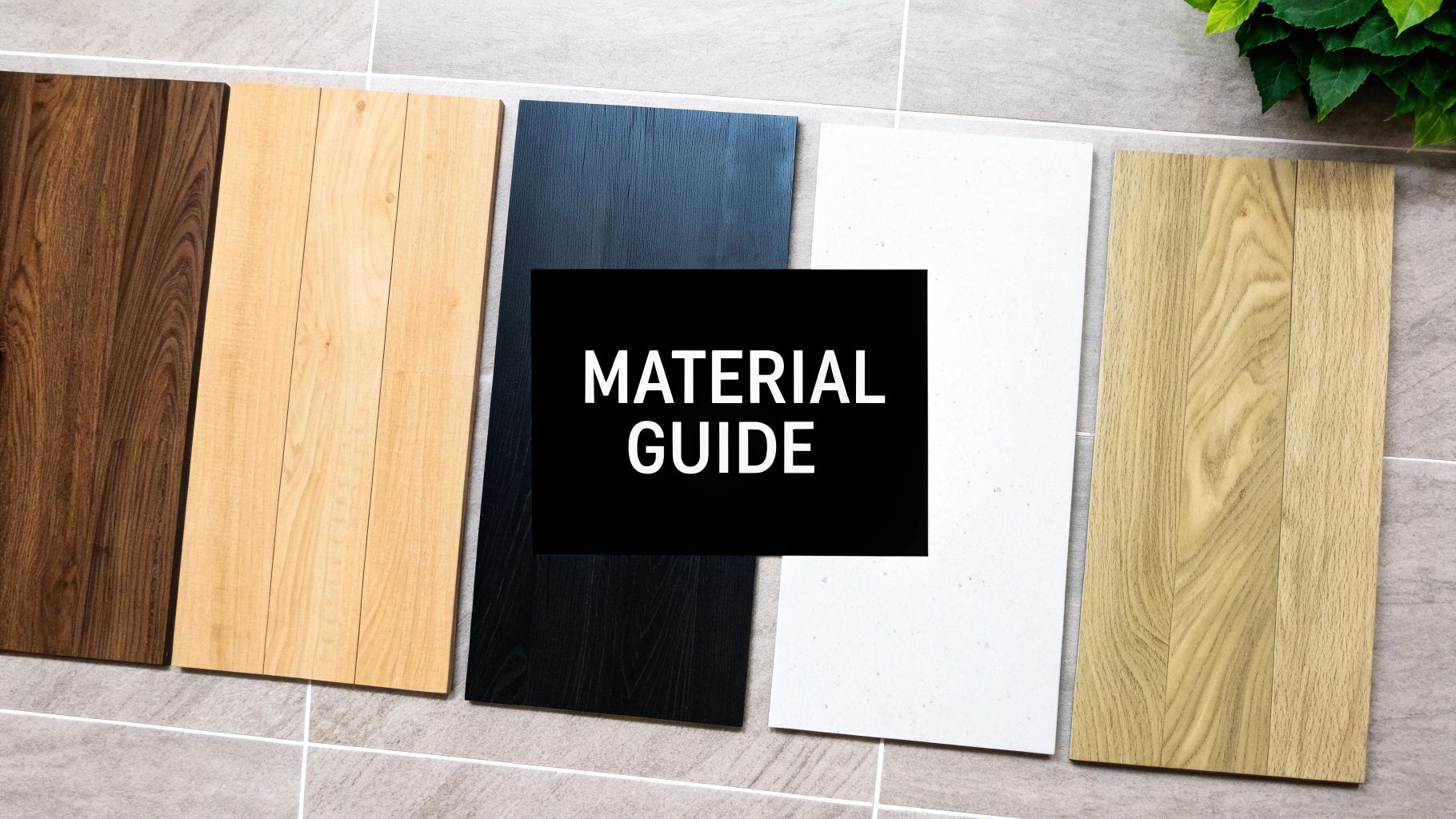
When it comes to kitchens and bathrooms, flooring isn't just about looks—it's about performance. These rooms are the front lines of your home, constantly battling water, humidity, and heavy foot traffic. The wrong choice can lead to warped planks, stained surfaces, or worse.
So, let's cut through the noise and talk about the real contenders for your Cumming or Milton home: Luxury Vinyl Plank (LVP), Ceramic and Porcelain Tile, and specialized Engineered Hardwood. Each has its own story and set of strengths.
Luxury Vinyl Plank: The Resilient All-Rounder
Think of Luxury Vinyl Plank (LVP) as the modern workhorse of flooring. This isn't your grandma's old sheet vinyl; today's LVP is a high-tech, multi-layered product built for incredible toughness and beautiful aesthetics.
The magic is in its construction. A rigid, 100% waterproof core—usually made from a stone-plastic or wood-plastic composite—creates a shield against water. Spills, splashes, and even minor plumbing mishaps won't cause the planks to swell, buckle, or delaminate. On top of that core sits a high-definition design layer that mimics wood or stone with stunning realism, all protected by a tough-as-nails wear layer that shrugs off scratches and scuffs.
Basically, LVP acts like a waterproof jacket for your subfloor, making it a fantastic, worry-free choice for busy family kitchens and bathrooms.
Beyond its water-handling abilities, LVP brings a few other perks to the table:
- Comfort Underfoot: It's noticeably softer and warmer than tile, which makes a huge difference on a chilly morning.
- Slip Resistance: Many LVP styles come with a textured surface, offering better grip when the floor gets wet—a great safety feature.
- Simple Maintenance: The non-porous surface means spills are no big deal. A quick wipe is usually all it takes.
Ceramic And Porcelain Tile: The Timeless Fortress
For sheer, unyielding durability, ceramic and porcelain tiles are in a class of their own. They are the classic, time-tested solution for any room that sees water, and for good reason.
Porcelain, in particular, is a beast. It's crafted from finer, denser clay and fired at scorching-hot temperatures. The result? A tile with a water absorption rate of less than 0.5%. This density makes it practically immune to water damage, staining, and even frost.
Ceramic and porcelain are legendary for their longevity. With proper care, a tile floor can look just as incredible in ten years as it did the day it was installed.
This toughness makes tile the perfect flooring for kitchens and bathrooms where you might drop a heavy pot or deal with constant foot traffic. When you're ready to get into the nitty-gritty, this guide on choosing bathroom tiles offers some great practical advice.
Specialized Engineered Hardwood: A Touch Of Warmth
For homeowners in Johns Creek and Forsyth County who just can't part with the authentic warmth of real wood, specialized engineered hardwood is a compelling option—but it comes with some important ground rules. Unlike solid hardwood, which is a single piece of wood, engineered planks have a top layer of real hardwood bonded to a core of stable plywood layers.
This cross-grain construction makes it far more resistant to the expansion and contraction that humidity inflicts on solid wood. But here’s the key takeaway: it is water-resistant, not waterproof. That beautiful wood veneer on top is still vulnerable if water is left to sit.
If you go this route, engineered wood is best reserved for a powder room or a kitchen where you’re absolutely diligent about wiping up spills right away. A professional installation with a high-quality sealant is non-negotiable to protect the seams from moisture. You can find a complete overview in our ultimate guide to waterproof flooring.
To give you a clearer picture, here's a quick comparison of how these materials stack up against each other.
Kitchen & Bathroom Flooring Materials at a Glance
| Flooring Type | Water Resistance | Durability | Maintenance Level | Average Lifespan |
|---|---|---|---|---|
| Luxury Vinyl Plank (LVP) | Excellent (Waterproof) | High (Resists Scratches) | Low | 15-25 Years |
| Porcelain/Ceramic Tile | Excellent (Waterproof) | Very High (Resists Chips) | Low | 50+ Years |
| Engineered Hardwood | Good (Water-Resistant) | Moderate (Prone to Scratches) | Moderate | 20-40 Years |
Ultimately, understanding these core differences is the key to choosing a floor that not only looks great but also stands up to the demands of your home's busiest, wettest rooms.
Five Critical Factors to Consider Before You Buy
Choosing a flooring material is a great first step, but now we need to get down to the brass tacks. The perfect floor for a high-moisture space like a kitchen or bathroom isn't just about looks—it's about how it holds up to the realities of your daily life.
Let's walk through five key factors that will act as a final checklist. This will help you make a choice that truly fits your family's needs, whether you're in Cumming, Johns Creek, or Milton. Think of it like buying a car: you know you want an SUV, but the right one depends on your commute, family size, and budget. It's the details that matter.
1. Water-Resistance vs. Waterproof: The Critical Difference
These two terms get tossed around a lot, often interchangeably, but they mean very different things for your floor's survival. Getting this right is probably the most important part of your decision.
Water-Resistant: This means the material can fend off surface-level spills for a little while. If you mop up a splash right away, you're fine. But if water sits too long or seeps into the seams, it can penetrate the core and damage both the flooring and the subfloor underneath. This is the category where you'll find some specialized engineered hardwoods.
Waterproof: This is the real deal. A waterproof material is completely non-porous. Things like Luxury Vinyl Plank (LVP) and porcelain tile simply won't absorb moisture, swell, or warp, even if a puddle sits there for hours. This is your ultimate peace of mind for rooms where a plumbing leak or bathtub overflow is a genuine risk.
For a busy family kitchen or a full bathroom with a shower, picking a truly waterproof floor is the best insurance policy you can buy against expensive repairs down the road.
2. Durability and Your Household's Lifestyle
Your floor needs to be tough enough to handle your family's unique rhythm. A quiet home in Milton has completely different flooring demands than a bustling home in Cumming with kids and pets tearing through. Be honest with yourself about your lifestyle to find a floor that will still look great years from now.
Ask yourself about these scenarios:
- Kids and Pets: If you have toddlers dropping heavy toys or a dog whose claws are constantly scratching, you need something that can take a beating. Porcelain tile is incredibly hard to scratch, while an LVP with a thick wear layer (look for at least 20 mil) offers fantastic protection against scuffs and dents.
- Heavy Foot Traffic: Is your kitchen the command center for every family gathering? That constant foot traffic can create visible wear paths over time. Both tile and high-quality LVP are built to handle this kind of constant use without breaking a sweat.
- Dropped Items: In a kitchen, dropping a pot or a dish is a matter of when, not if. Tile is amazingly durable, but it’s also rigid—it can crack a dropped plate or even chip itself on a heavy impact. LVP, on the other hand, has a little more give, often absorbing the shock without damaging the floor or the object.
3. Safety First: Slip Resistance
A wet floor is a serious hazard, especially in a bathroom or kitchen. Slip resistance isn't a luxury feature; it's a fundamental necessity. The industry measures this with a Coefficient of Friction (COF) rating, but you don't need to get lost in the technical jargon.
A floor's texture is your best friend when it comes to preventing slips. Many modern porcelain tiles and LVP options are designed with a subtle, embossed texture that provides excellent grip, even when wet, without feeling rough underfoot.
A polished marble or glossy ceramic tile might look stunning, but it can turn into a skating rink the moment it gets wet. Always lean toward materials with matte or textured finishes to keep everyone in your family safe.
4. Real-World Maintenance Demands
Every floor needs cleaning, but the time and effort you have to put in can vary wildly. The goal is to find a floor that fits your routine, not one that adds another major chore to your to-do list.
Porcelain tile and LVP are the undisputed champions of low maintenance. Their non-porous surfaces mean spills can't soak in, making cleanup a breeze. The only catch with tile is the grout lines, which can attract dirt and mildew over time and might need a deep scrub or a fresh seal every few years.
Engineered hardwood, beautiful as it is, needs a bit more TLC. You’ll have to stick to specific wood-safe cleaners and be disciplined about wiping up any moisture immediately to protect its finish.
5. Balancing Your Budget with Long-Term Value
Finally, let's talk money. The upfront price tag is obviously important, but it’s just one piece of the puzzle. True value comes from picking a floor that will last, saving you from headaches and replacement costs in the future.
A cheap, non-waterproof laminate might look like a great deal today, but one bad leak could force you to replace the entire floor in just a few years. Spending a little more on a truly waterproof option like LVP or a timeless material like porcelain tile often provides a much better return on your investment.
When making your decision, think about the floor’s entire lifespan, not just the initial cost. That’s how you make the smartest financial choice for your home.
Why Professional Installation Is Your Best Insurance Policy
You've spent weeks, maybe months, picking out the perfect flooring for your kitchen or bathroom. It's a huge win, but that's only half the battle. The best materials in the world will fail if they aren't installed correctly—think of it as building a beautiful house on a shaky foundation.
That's why professional installation isn't a luxury; it's your non-negotiable insurance policy against future headaches and costly repairs, especially in rooms where water is a constant threat.
A top-notch installation is a game of precision. It’s not just about laying down planks or tiles. It’s about creating an impenetrable barrier that protects the very structure of your home.
The Anatomy of a Flawless Installation
Professional installers are masters of the tiny details that most DIY attempts completely miss. They follow a systematic process designed to head off those small mistakes that can snowball into catastrophic failures down the line. A proper job isn't just about the floor you see; it's about what’s happening underneath.
Here are the critical steps an expert takes that make all the difference:
- Meticulous Subfloor Prep: A pro knows the job starts with a perfect canvas. They ensure the subfloor is spotlessly clean, dead level, and structurally sound. They’ll grind down high spots and use self-leveling compounds to fill in any dips, because even a minor imperfection can cause tiles to crack or vinyl planks to separate over time.
- Strategic Waterproofing: This is where the pros really shine. In bathrooms, they'll often apply waterproof membranes and specialized sealants around tubs, showers, and toilets. This creates a hidden, watertight "pan" that contains any moisture, stopping it from ever reaching your subfloor and joists.
- Precision Cutting and Fitting: Experts make surgically precise cuts to fit the flooring perfectly around cabinets, pipes, and tricky doorways. This obsession with detail eliminates those tiny, unsightly gaps where water loves to pool and cause hidden damage.
This decision-making process, from lifestyle to budget, is often complex. A visual guide can help simplify things.
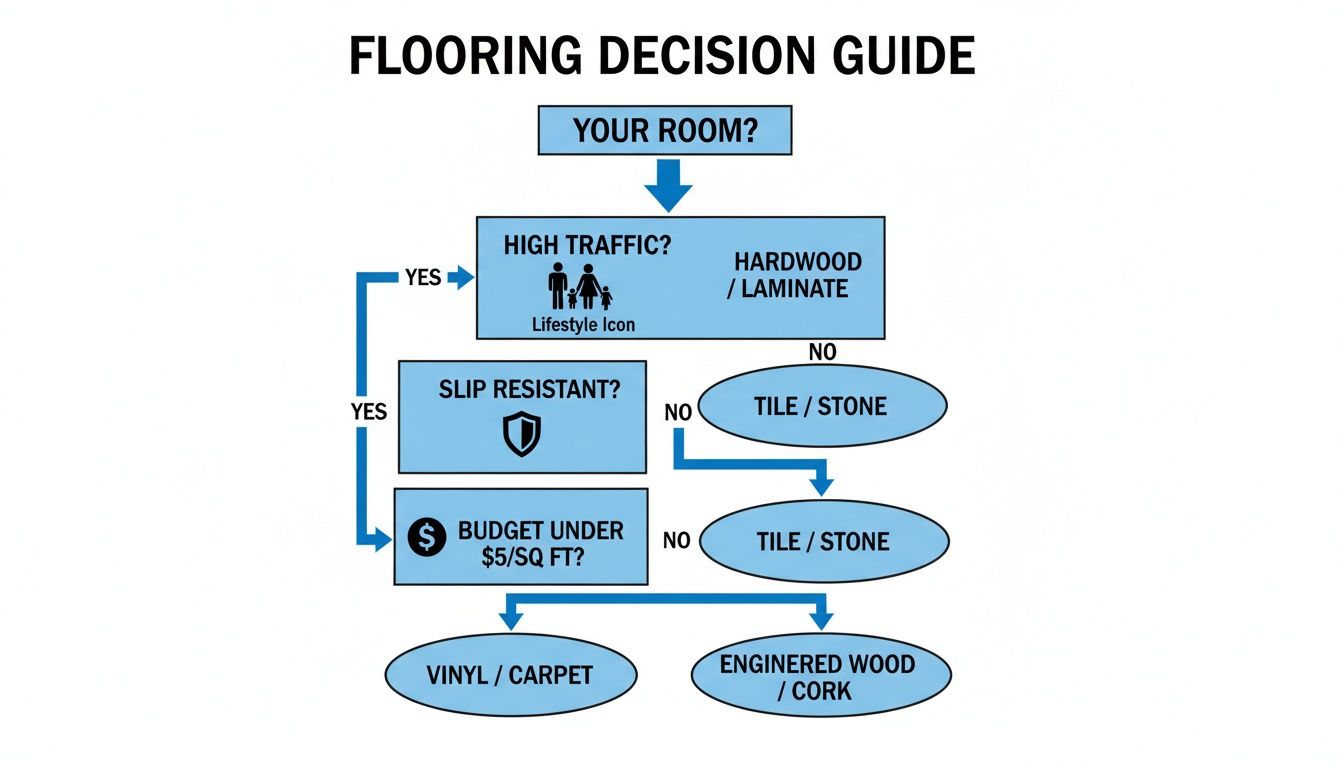
The guide shows how different needs—like heavy foot traffic, slip resistance, and cost—naturally lead to specific flooring solutions.
Avoiding Common and Costly DIY Disasters
I get it. The temptation to save a few bucks with a DIY installation is strong. But more often than not, it backfires, leading to much bigger expenses down the road. Hidden water damage is the number one enemy in kitchens and bathrooms, and amateur mistakes are its favorite way in.
Improperly sealed seams, tiny gaps around fixtures, or a poorly prepped subfloor are open invitations for moisture to creep in undetected. Over months or years, this can lead to disaster:
- Subfloor rot and serious structural decay
- Dangerous mold and mildew growing inside your walls and under your floor
- Complete flooring failure that requires ripping everything out and starting over
A professional installation isn't just a service; it's an investment in your home's long-term health and your own peace of mind. A floor that fails due to poor installation almost always voids the material warranty, leaving you holding the bag for the full cost of repairs.
When you're planning a major project, looking into something like a toilet and kitchen renovation package can be a smart move. These often bundle professional services, ensuring that critical tasks like flooring are handled correctly from the get-go.
The Long-Term Value of Expert Work
Ultimately, hiring a professional gives you a level of confidence that a weekend DIY project simply can't match. You’re not just paying for labor. You’re paying for years of experience, specialized tools, and the hard-won knowledge of how to prevent problems before they even start. For homeowners in Cumming and Forsyth County, it’s the smartest way to protect your investment.
Investing in expert work ensures your beautiful new flooring for kitchens and bathrooms will look and perform exactly as it should for its entire lifespan. If you'd like to see what a professional approach looks like, explore the benefits of our professional floor installation and see how we guarantee a flawless, durable result. After all, a professionally installed floor is a beautiful floor that lasts.
Matching Your Floors to North Georgia Design Trends
Functionality is the foundation, but let's be honest—style is what makes a kitchen or bathroom feel truly yours. In places like Cumming and Milton, we want floors that can handle real life while still looking incredible. Think of choosing flooring for kitchens and bathrooms not as just a practical decision, but as a chance to set the entire personality of the room.
The great news is you don't have to pick between design and durability anymore. Today's waterproof materials come in a huge range of styles that fit right in with our local aesthetics, whether you love modern farmhouse or something more timeless and traditional. The trick is to treat your floor as a major design element, right up there with your cabinets and countertops.
Creating a Cohesive and Stylish Look
The secret to a high-end look is coordination. Your new floor has to play nice with the other fixed elements in the room, whether they’re brand new or have been there for years. A classic mistake is falling in love with a flooring sample at the store, only to get it home and realize it clashes with the undertones in the countertops or the wood grain of the cabinets.
Here’s a simple rule of thumb: stick to one "star" pattern. If your granite countertop is busy with a lot of movement and color, a simple, solid-colored floor tile is your best bet. On the other hand, if your countertops and cabinets are more subdued, you can bring in a floor with a beautiful pattern, like a wood-look LVP or a porcelain tile with delicate marble veining.
Think of your floor, countertops, and backsplash as a team. For them to look good together, they can't all be the star player. If one has a bold pattern, the others should be the supporting cast with simpler, more solid designs.
Popular Aesthetics in Johns Creek and Forsyth County
Certain flooring styles just feel right at home here. We see these trends all across our local communities, and here’s how you can use flooring to nail that specific vibe:
- Modern Farmhouse: This look is all about mixing rustic charm with clean, modern lines. You can capture it perfectly with wide-plank, light-toned Luxury Vinyl Plank that looks like white oak or hickory. It brings in that essential warmth, and its waterproof nature makes it a no-brainer for kitchens.
- Timeless Spa Retreat: For bathrooms, nothing creates a serene, spa-like atmosphere better than large-format porcelain tiles. Stick to soft whites, gentle grays, or subtle marble patterns. A bonus? Fewer grout lines make the whole space feel bigger and a lot more luxurious.
- Classic Southern Elegance: To ground a kitchen with traditional white or cream cabinets, consider a dark-stained, wood-look LVP or a rich, slate-look tile. This creates a foundation of classic sophistication that never goes out of style.
Using Color and Texture to Your Advantage
Your floor can also be a powerful tool for changing how a room feels. Lighter-colored floors, for example, bounce light around and can make a small bathroom in Johns Creek feel much more open and airy. Darker floors, on the other hand, bring a sense of drama and coziness, which can be fantastic in a larger kitchen.
Texture is just as important. A matte or lightly textured tile not only helps with slip resistance but also adds a subtle layer of visual interest that keeps the room from looking flat. The authentic graining you find in a high-quality LVP plank adds a realistic depth that elevates the entire design.
We're seeing a clear trend toward materials that blend good looks with practicality. In fact, recent data shows that 22% of U.S. homeowners renovating their kitchens chose either hardwood or ceramic/porcelain tile, highlighting the demand for both natural warmth and rock-solid water resistance. This is part of a bigger picture—the global flooring market is expected to grow significantly by 2034 as more people look for smart, stylish upgrades. You can read more about these flooring market insights on Fortune Business Insights. By choosing carefully, your new floor won't just be a surface to walk on; it will be a stylish and valuable asset for years to come.
Your Local Flooring Questions Answered
When you're close to making a final decision on kitchen or bathroom flooring, it’s usually those last few nagging questions that hold things up. To help you move forward with confidence, we've put together some of the most common things we hear from homeowners in Cumming, Johns Creek, and the surrounding areas. Here are the clear, straightforward answers you need.
What’s the Most Durable and Waterproof Flooring for a Busy Kitchen in Cumming, GA?
For a kitchen that sees a lot of action, you have two clear winners: porcelain tile and Luxury Vinyl Plank (LVP). Both are phenomenal performers, but they bring different strengths to the table.
Porcelain tile is like armor for your floor. It's incredibly hard and dense, which means it stands up brilliantly to scratches from pet claws, dropped pots, and constant foot traffic. Because its surface is non-porous, it’s completely immune to spills—you’ll never have to worry about water damage or tough stains. It’s a true fortress.
On the other hand, LVP is also 100% waterproof, but its biggest selling point is comfort. It feels softer and warmer underfoot, which makes a huge difference if you spend hours standing while cooking or cleaning. Honestly, the best choice usually boils down to what you value more: the unbeatable hardness of tile or the comfortable give of LVP.
Can I Install Engineered Hardwood in My Johns Creek Bathroom?
We get this question all the time because nothing quite beats the authentic look of real wood. And while it's true that engineered hardwood handles moisture better than solid hardwood, we still generally advise against putting it in a full bathroom with a shower or tub.
The constant humidity, steam, and inevitable splashes can eventually work their way into the wood layers, causing them to swell, separate, or warp. It's just not worth the risk. However, it can be a stunning option for a half-bath or powder room where there’s very little direct water exposure.
If you do go with engineered hardwood for a powder room, professional installation isn't just a good idea—it's non-negotiable. The installer must meticulously seal every edge around the perimeter and fixtures. And you have to be diligent about wiping up any and all water immediately to protect your investment.
For the high-moisture reality of a full bath, a truly waterproof material like LVP or porcelain tile is always the safest and most reliable long-term choice.
How Important Is Subfloor Preparation for New Tile in Milton?
Subfloor prep isn't just important—it's absolutely critical, especially for tile. Think of your subfloor as the foundation of a house. If it isn't perfect, everything you build on top of it is at risk of failing.
An uneven, weak, or dirty subfloor is the number one reason tiles crack and grout lines crumble. A true professional installer will make sure the subfloor is perfectly level, structurally sound, and free of debris before a single tile is laid. This process might involve:
- Grinding down high spots in a concrete slab.
- Pouring a self-leveling compound to fill in low spots and create a flat plane.
- Installing a cement backer board for a stable, water-resistant base.
Skipping this foundational work can cause a beautiful, expensive new floor to fail in a matter of months. Professional subfloor prep is the single most important part of protecting your flooring investment.
What's the Difference Between Water-Resistant and Waterproof Flooring?
This is a big one. Getting this distinction right is key to choosing the right floor for a kitchen or bathroom. The terms sound similar, but they mean very different things.
- Water-Resistant Flooring: This material can handle spills on its surface for a little while. It buys you a window of time to clean up before moisture has a chance to seep through the seams and damage the core or the subfloor below.
- Waterproof Flooring: This material is made from things that are completely impervious to water. Materials like LVP and porcelain tile won't absorb moisture, swell, or get damaged, even if water sits on the surface for a long, long time.
For any room where a leak or a big splash is a real possibility, choosing a truly waterproof floor gives you far better protection and priceless peace of mind.
Should My Kitchen Floor Tile Match My Countertops?
The goal isn't an exact match, but it's crucial that your floor coordinates with your countertops, cabinets, and other permanent fixtures. A common design mistake we see is having too many bold patterns fighting for attention in one room.
A simple rule of thumb is the "one star of the show" principle. If you have busy granite countertops with lots of color and movement, let them be the star. Your floor should play a supporting role—something simple, solid, or with a very subtle pattern. On the flip side, if you have simple, solid-colored quartz countertops, you have the green light to choose a floor with more personality, like a wood-look LVP or a tile with elegant veining. It's all about creating harmony, not competition.
Ready to find that perfect blend of style and waterproof performance for your home? The team at Flacks Flooring has been helping homeowners in Cumming and the surrounding areas for over 30 years. Come visit our showroom or schedule an in-home consultation to get expert guidance from a team that treats you like family. Explore our flooring solutions today!