
When you're trying to pick flooring for a small bathroom, it can feel like a puzzle with incredibly high stakes. But honestly, the best options almost always boil down to three champions: Luxury Vinyl, Porcelain or Ceramic Tile, and Sheet Vinyl.
These materials are fantastic because they're masters of disguise, giving you the look of high-end stone or wood but with the kind of water protection you absolutely need in a bathroom. They really are the go-to solutions for creating a space that's not just beautiful and functional, but also feels surprisingly spacious.
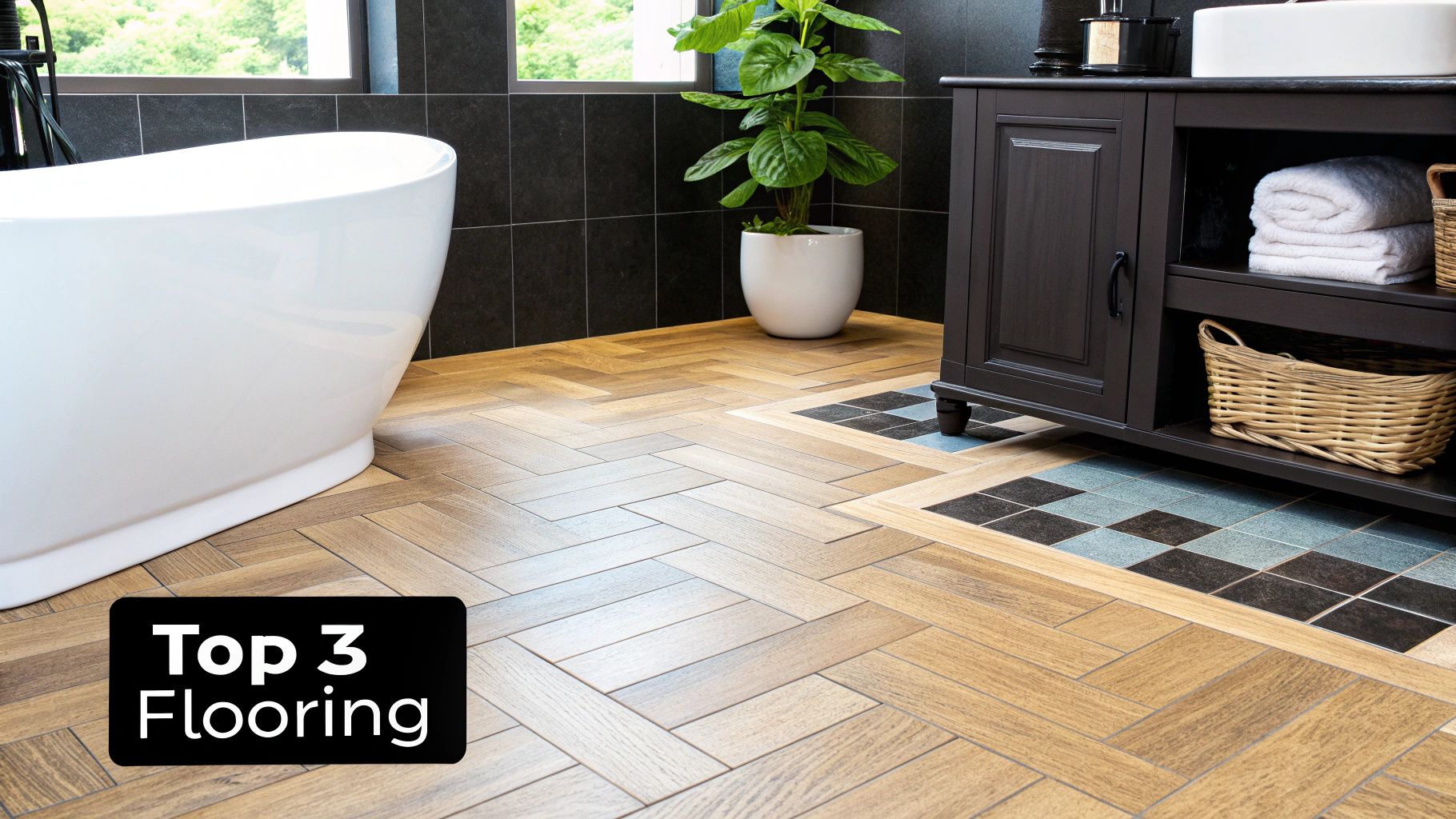
Why Your Flooring Choice Is So Important
Choosing the right flooring for a small bathroom is about so much more than just what looks good. It’s a strategic move that directly affects how the room works, how long it lasts, and even how big it feels.
In a room where every single square inch matters, the floor becomes one of your most powerful design tools. Think of it as the foundation of the room's entire personality. When you get the floor right, everything else just seems to fall into place.
A small bathroom floor has a tough job. It's constantly dealing with water, steam, and humidity, making it one of the most demanding environments in any house. Picking the wrong material can quickly spiral into expensive problems like warped planks, mildew growth, or even serious damage to the subfloor beneath.
The Three Pillars of Small Bathroom Flooring
To make a confident decision, it helps to focus on three essential pillars. Each one tackles a key challenge that comes with designing for a compact, wet space.
- Absolute Water Resistance: This is non-negotiable. The material must be completely waterproof, not just water-resistant. We're not just talking about handling a few splashes; it needs to form a barrier that stops moisture from ever reaching the structure of your home.
- Visual Space Expansion: The right floor can play tricks on the eye, making a cramped bathroom feel open and airy. Everything from the color and pattern to the size of the tiles or planks contributes to this powerful illusion.
- Long-Term Durability: Between foot traffic, constant cleaning, and the occasional dropped hair dryer, your bathroom floor needs to be tough. You want a surface that can handle daily life without getting scratched, chipped, or faded.
When you focus on these three core requirements, you stop just picking a floor and start designing a smarter, more resilient, and visually bigger space. It’s the difference between a quick fix and a smart, lasting investment.
To give you a clearer picture, let's break down how the top contenders stack up.
Top Flooring Choices for Small Bathrooms at a Glance
This table offers a quick comparison of the most recommended materials, helping you see at a glance which one might be the best fit for your project and budget.
| Flooring Type | Water Resistance | Average Cost (per sq ft) | Best For |
|---|---|---|---|
| Luxury Vinyl (LVP/LVT) | Excellent (100% waterproof) | $2 – $7 | DIY-friendly, realistic wood/stone looks, comfort underfoot. |
| Porcelain/Ceramic Tile | Excellent (virtually impervious) | $2 – $15+ | Ultimate durability, endless design options, and a classic high-end feel. |
| Sheet Vinyl | Excellent (seamless and waterproof) | $1 – $4 | Budget-conscious projects, maximum water protection, and simple installation. |
As you can see, all three options excel in water resistance, which is our top priority. The real differences come down to cost, aesthetics, and how much work you're willing to put into the installation.
What Really Matters in Small Bathroom Flooring
Before you get swept away by a gorgeous pattern or a trendy color, let’s get down to the brass tacks of what your new floor needs to do. Picking the right flooring for a small bathroom isn't just about looks; it's a practical decision that rests on three critical pillars. Get these right, and you're not just a shopper—you're a smart project manager.
Think of it this way: your bathroom floor needs a specific skill set to survive. Without these core strengths, even the most beautiful material is destined to fail.
Moisture Armor is Non-Negotiable
The single most important job for your bathroom floor is providing 100% waterproof performance. Small bathrooms are ground zero for humidity, steam, and splashes. Your floor is the final barrier protecting your home’s subfloor and structure from the slow, silent damage of water.
Picture your bathroom floor as the hull of a boat. Even a tiny, consistent leak will eventually lead to major problems. Materials that are just "water-resistant" often have wood composite cores that swell, buckle, or grow mold when moisture inevitably seeps through the cracks. That’s why truly waterproof materials are the only game in town. A good first step is understanding if luxury vinyl plank is truly waterproof to see what that level of protection really looks like.
Everyday Durability for Real Life
Next up, your floor has to be tough. It’s going to face constant foot traffic, chemical cleaners, dropped hair dryers, and all the little accidents that come with a high-use space. A floor that scratches or scuffs at the slightest provocation will quickly lose its charm.
Just think about the daily grind: stepping out of a wet shower, scrubbing with bathroom cleaners, the occasional dropped shampoo bottle. Your floor needs to handle all of it without looking worn out. This is where materials like porcelain tile and high-quality luxury vinyl really prove their worth, offering a tough-as-nails surface that stays looking great for years.
A great small bathroom floor must be a fortress against water and a workhorse against daily life. Function must come before form, as the best-looking floor is useless if it can't withstand its environment.
The Power of Spatial Illusion
Finally, we get to the fun part. In a tight space, your flooring is a powerful tool for creating the illusion of more room. This is where the right flooring for a small bathroom becomes your secret weapon for making a cramped space feel open and inviting.
The right choice can visually stretch your bathroom, making it feel brighter and wider than it actually is. This bit of design magic works through a few key strategies:
- Color and Tone: Lighter colors are your best friend. They reflect light, which instantly makes a room feel larger and more airy.
- Pattern and Scale: Think big. Large-format tiles with thin grout lines create a clean, continuous surface that tricks the eye into seeing one expansive plane.
- Direction: The way you lay planks or rectangular tiles can visually lengthen or widen the room.
By focusing on these three pillars—Moisture Armor, Everyday Durability, and Spatial Illusion—you’re building your decision on a solid foundation. You’ll end up with a new floor that’s not just beautiful, but also perfectly engineered for the unique demands of a small bathroom.
A Practical Comparison of Waterproof Flooring Materials
Now that we’ve covered the ground rules—moisture armor and durability—let's put the top contenders for your flooring for small bathroom project under the microscope. Each material brings something different to the table, and figuring out those nuances is how you find the perfect match for your space.
This quick visual breaks down the three superpowers your flooring absolutely needs.
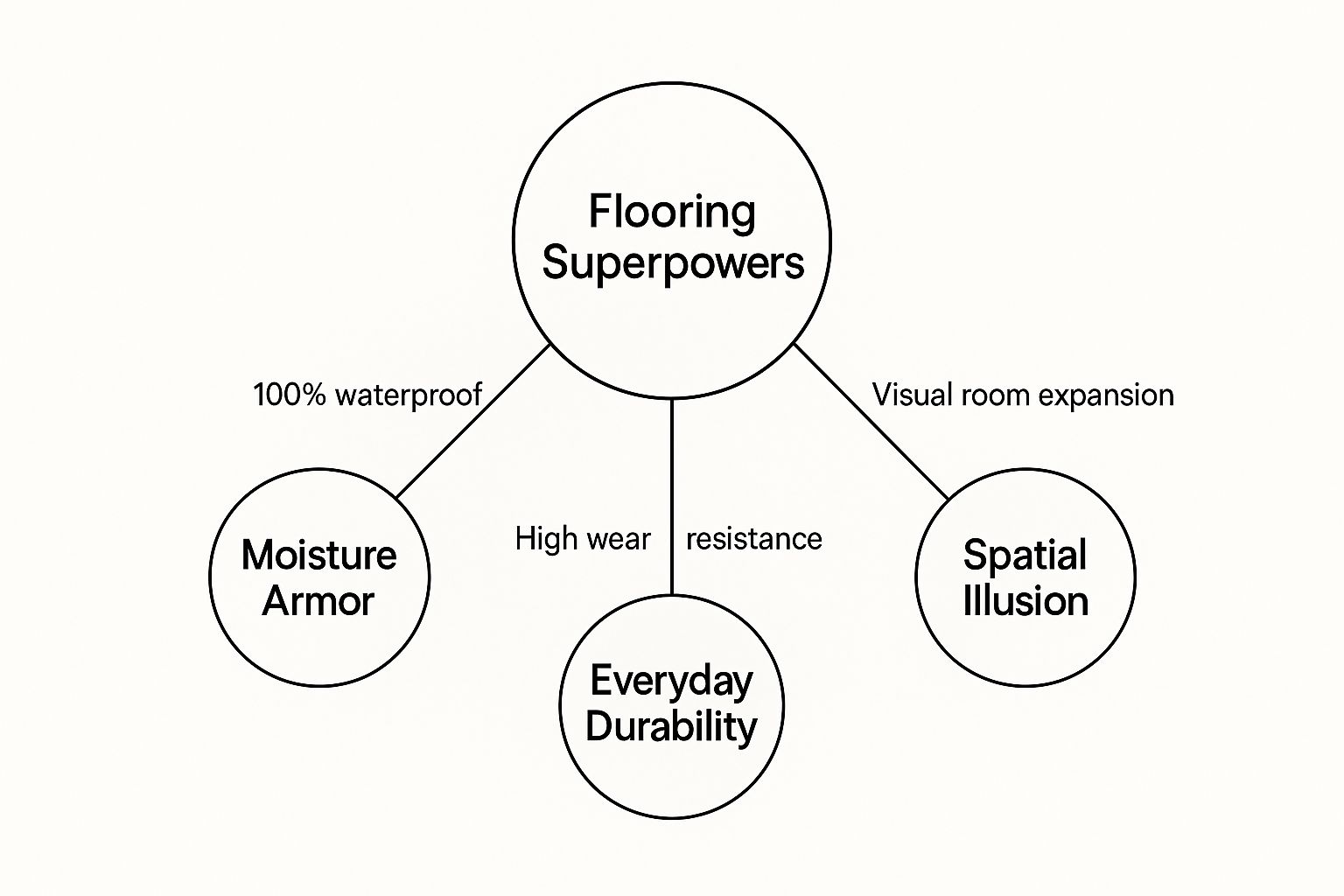
As you can see, the sweet spot is where complete waterproofing, high durability, and space-enhancing design all meet. Let's see how our options stack up.
Porcelain and Ceramic Tile: The Timeless Champions
When it comes to bathroom flooring, porcelain and ceramic tile are the undisputed heavyweights. We're talking about materials made from fired clay, giving them a surface that's practically impervious to water. This natural resistance is exactly why they’ve been a go-to for so long.
The design flexibility is nearly endless, too. You can find tiles that look just like natural stone or wood, or you can create intricate mosaic patterns for a truly custom feel. This is your chance to craft a look that makes a small bathroom feel unique and upscale. Just keep in mind that this premium quality often comes with a higher price tag and a more involved installation that’s best left to a pro.
Luxury Vinyl Tile (LVT) and Planks (LVP): The Versatile Chameleon
Luxury vinyl is a true modern marvel in the flooring world. It’s the perfect blend of stunning looks and down-to-earth performance. I often call it a "chameleon" because it can convincingly mimic the appearance of expensive hardwood, stone, or ceramic while feeling much warmer and more comfortable underfoot.
For a deeper dive, our comprehensive waterproof flooring ultimate guide has you covered.
The best part? LVT and LVP are 100% waterproof from top to bottom, making them an incredible choice for a small bathroom. Many products even use a simple click-lock system, making them one of the most DIY-friendly options out there. This mix of style, comfort, and easy installation puts luxury vinyl at the top of the list for any bathroom remodel.
Waterproof flooring isn't just a trend; it's becoming the standard. The market for bathroom waterproof flooring was valued at around USD 20 billion in 2023 and is projected to climb to about USD 34 billion by 2032. This tells us that homeowners are increasingly choosing materials like vinyl that deliver both style and peace of mind in wet areas.
Sheet Vinyl: The Budget-Friendly Fortress
If your main goals are maximum water protection on a tight budget, sheet vinyl is pretty hard to beat. It comes in large rolls, which means you can often install it in a small bathroom with very few seams—or even none at all. This creates a single, uninterrupted surface that offers the ultimate defense against spills and splashes.
While sheet vinyl used to have a reputation for bland designs, today's options come in a huge range of attractive patterns and colors. It's also soft underfoot and a breeze to clean. Remember, a waterproof floor is only half the battle; knowing how to approach detecting water leaks early is just as crucial. A seamless floor like sheet vinyl can make it much easier to spot a puddle from a leaky pipe, helping you prevent serious damage before it starts. It's a smart, practical choice that delivers on all fronts.
Material Showdown: LVT vs. Porcelain vs. Sheet Vinyl
To make things even clearer, let's break down the key differences between these three fantastic options in a head-to-head comparison. Seeing the features side-by-side can really help you pinpoint which material aligns best with your budget, lifestyle, and design vision.
| Feature | Luxury Vinyl Tile (LVT) | Porcelain/Ceramic Tile | Sheet Vinyl |
|---|---|---|---|
| Water Resistance | Excellent (100% waterproof core) | Excellent (Impervious surface, but grout needs sealing) | Excellent (Seamless, monolithic surface) |
| Durability | High (Resists scratches, dents, and stains) | Very High (Extremely hard and resistant to wear) | Good (Can be punctured by sharp objects) |
| Cost (Material Only) | $$ (Mid-range) | $$$ (Mid-to-High range) | $ (Most budget-friendly) |
| Installation | DIY-friendly (Click-lock systems are common) | Professional recommended (Complex and messy) | DIY-possible, but professional ensures a seamless fit |
| Comfort Underfoot | Warm and comfortable | Cold and hard | Soft and cushioned |
| Maintenance | Low (Easy to clean, no special sealers needed) | Moderate (Grout lines require regular cleaning/sealing) | Very Low (Easy to sweep and mop) |
| Design Options | Vast (Realistic wood, stone, and abstract looks) | Limitless (Endless colors, patterns, and shapes) | Good (Improved variety of modern patterns) |
Ultimately, there's no single "best" choice—only the best choice for you. If you prioritize limitless design and don't mind the cost and professional installation, porcelain is a clear winner. For a perfect balance of style, durability, and DIY-friendliness, LVT is tough to top. And if you're looking for a foolproof, budget-conscious solution, sheet vinyl is an incredibly practical option.
Design Strategies That Make Small Bathrooms Feel Huge
Choosing a floor for a small bathroom isn't just about picking something that can handle water. It's one of your biggest opportunities to trick the eye and create a sense of space. Without knocking down a single wall, the right material, color, and pattern can visually stretch your bathroom, turning a cramped little room into a surprisingly open and airy retreat.
It’s a design challenge more and more homeowners are tackling. In fact, the residential bathroom flooring market was valued at an impressive USD 25.6 billion in 2024 and is expected to climb to USD 39.8 billion by 2033. That boom is largely fueled by renovations aimed at making smaller bathrooms feel bigger and more luxurious. Smart design is clearly top of mind.
Go Big with Large-Format Tiles
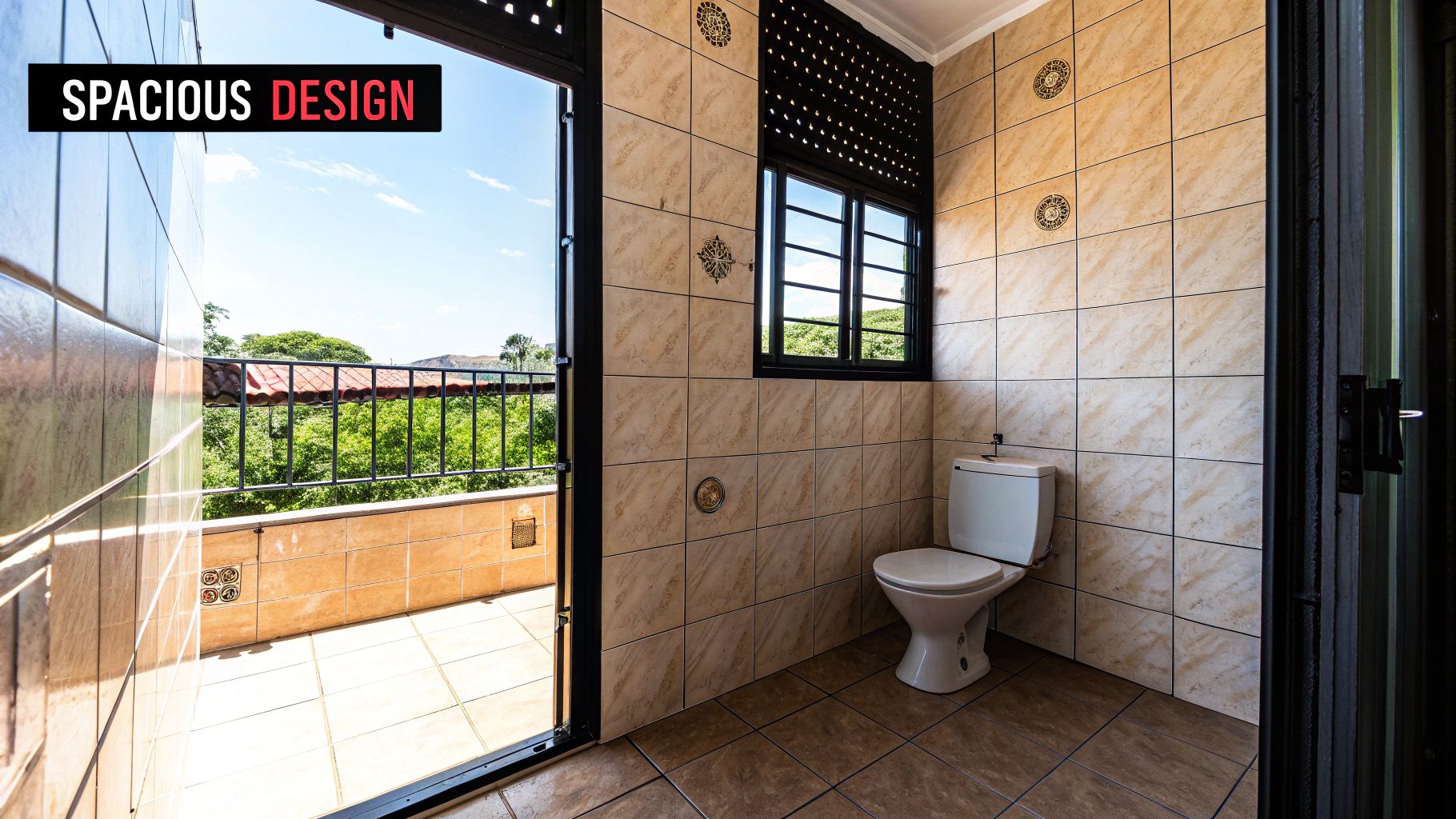
This might sound backward, but large tiles are a small bathroom’s secret weapon. Every grout line you see breaks up the floor, creating a grid-like pattern that makes the space feel busy and confined. The more lines, the smaller the room looks.
By opting for large-format tiles—think 12×24 inch or even bigger—you dramatically cut down on the number of grout lines. This simple change creates a cleaner, more continuous surface that your brain registers as a single, expansive plane. The result? A floor that feels uncluttered and way more spacious than it actually is.
Keep It Light and Continuous
Color is probably the most powerful tool you have for manipulating a sense of space. Light-colored flooring is a classic for a reason. Soft grays, creamy beiges, and muted whites are fantastic at bouncing light around the room, whether it’s coming from a window or a fixture. This brightness instantly makes any small room feel more open.
Want to take it to the next level? Create continuity. When you use the same light color on the floor and the walls, it blurs the visual boundaries of the room. The corners where the floor meets the wall seem to disappear, making the space feel less like a box and more like an open, cohesive area. You can find more great tips in these smart small bathroom remodel ideas for big style.
Get Smart with Your Layout
The direction you lay your flooring can completely change how you perceive the room's shape and size. It’s a subtle trick, but it really works.
- Make it Longer: Got a narrow bathroom? Lay planks or rectangular tiles so they run parallel to the longest walls. This directs your gaze down the length of the room, making it feel longer.
- Make it Wider: To make a tight space feel wider, run the flooring parallel to the shortest wall. This visual trick adds an illusion of width.
- Go Diagonal: A diagonal layout is a fantastic way to break out of the boxy feel. The angled lines add a sense of movement and energy, making the whole floor plan feel more dynamic and expansive.
The "Infinity Floor" Effect
If you’re looking for the ultimate space-enhancing illusion, run your floor tile right up the shower walls. This is what designers sometimes call an "infinity floor." It creates a seamless visual flow from the main bathroom area into the shower, getting rid of the hard stop of a shower curb or a different wall material.
By wrapping the room in the same tile, you make the entire bathroom feel like one large, unified space. It's a game-changer, especially in really tight layouts.
Smart Installation and Mistakes to Avoid
You can pick the perfect flooring for your small bathroom, but if the installation is botched, even the best materials will fail. This is where the rubber meets the road. A great installation is the difference between a floor you'll love for decades and one that becomes a massive headache in just a few months.
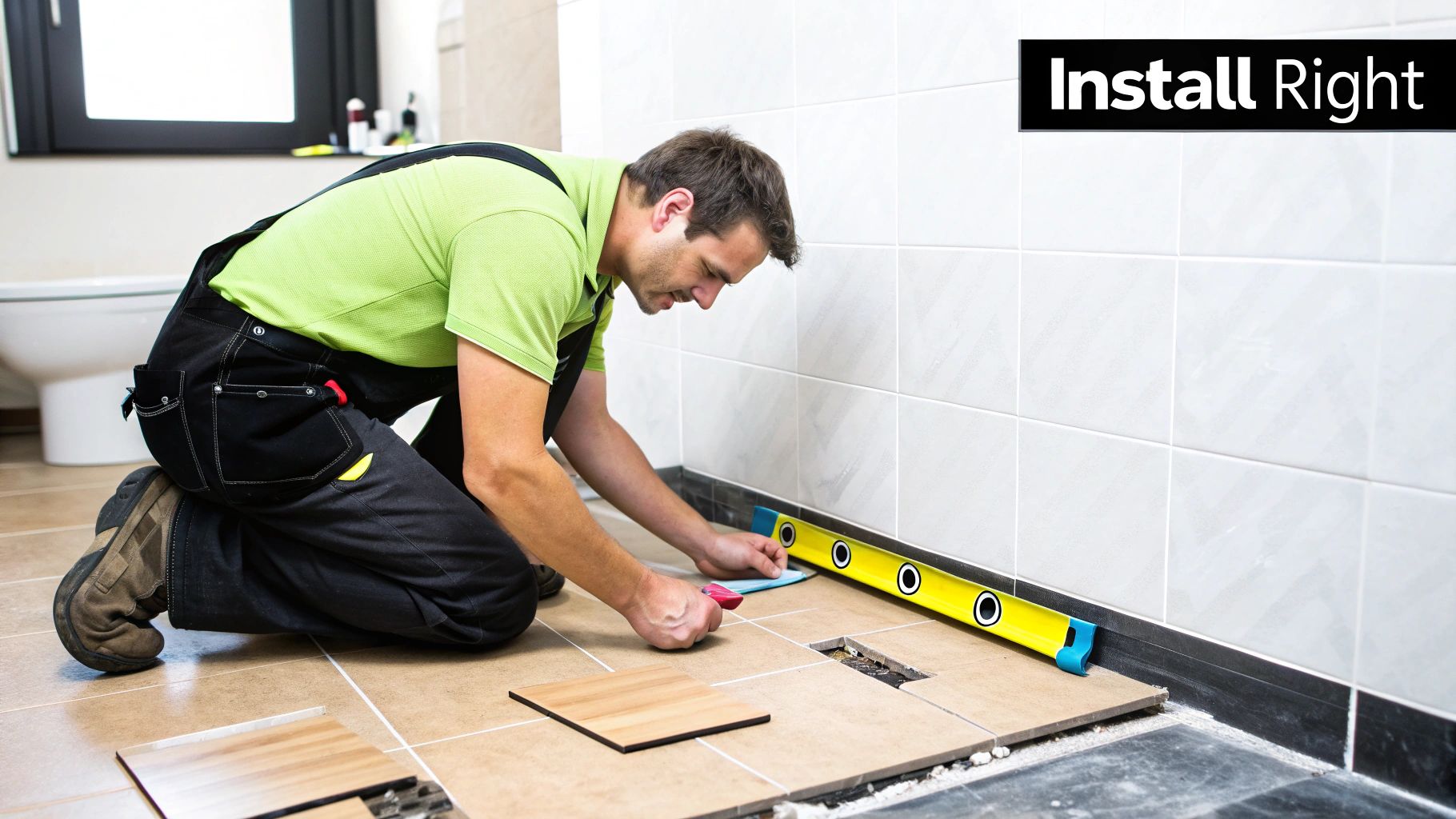
The real secret to a long-lasting floor isn't the tile or vinyl on top—it's the subfloor underneath. Before a single plank or tile is laid, that subfloor needs to be perfectly level, clean, and solid. Think of it like a painter's canvas; you can't create a masterpiece on a lumpy, dirty surface.
DIY vs. Professional Installation
Let's be realistic about the job. Some flooring is absolutely made for a weekend warrior. Click-lock luxury vinyl plank (LVP), for instance, is designed for DIYers. The planks snap together over the subfloor, creating a "floating" floor without any messy glues.
Then there's tile. Laying porcelain or ceramic tile is a true craft. It's a demanding process of mixing mortar, making precise cuts, ensuring every tile is perfectly level, and then finishing with careful grouting. For a tile job, bringing in a pro is almost always money well spent. You're paying for a waterproof seal and a finish that will stand the test of time.
The most expensive part of any flooring project is having to do it twice. Investing in proper subfloor prep and professional help for tricky materials like tile will save you a world of hurt down the road.
Common Flooring Installation Mistakes
In a space as wet as a bathroom, even tiny installation errors can blossom into major problems. Knowing the common pitfalls ahead of time can save your entire project. It's always better to learn from others' experiences, so be sure you understand the most frequent flooring renovation mistakes and misconceptions before you start.
Here are the top three blunders to sidestep when laying a new bathroom floor:
- Skimping on Waterproofing: Don't just rely on the flooring material to keep water out. If you're laying tile, a waterproof membrane on the subfloor is non-negotiable. For any floor, you absolutely must seal the perimeter with 100% silicone caulk—at the baseboards, around the vanity, and especially at the base of the toilet. This is your last line of defense against stray water.
- Ignoring Expansion Gaps: All floors move. They expand and contract with changes in temperature and humidity, especially floating floors like LVP. You have to leave a small gap, usually about a quarter-inch, around the edges of the room. If you don't give it that breathing room, the floor will have nowhere to go but up, causing it to buckle and warp.
- Using the Wrong Adhesive: If your floor needs to be glued down, this is no place to cut corners. Use only the waterproof adhesive recommended by the flooring manufacturer. The wrong glue will eventually break down in a humid bathroom, leading to loose planks and a compromised floor.
Your Final Small Bathroom Flooring Checklist
Alright, let's bring this all together. You've gone through the options, weighed the pros and cons, and now it's time to turn those ideas into a reality. This isn't just a list; it's your game plan for getting this project off the ground without a hitch.
Making the right choice here is a big deal. You're tapping into a massive global flooring market that was valued at around USD 360.7 billion in 2024. It’s no surprise that porcelain tile commands a huge slice of that pie—over 36.65%—because people know that durable, waterproof materials are king in a bathroom. You can explore more flooring market trends to see just how important this decision is.
Pre-Purchase Action Plan
Before you even think about clicking "buy," let's walk through the essential prep work. Getting these steps right from the start is the secret to avoiding those gut-wrenching (and expensive) mistakes down the road.
-
Measure, Then Measure Again: Grab a tape measure and get your bathroom's exact length and width. Multiply those two numbers to find your square footage. Here’s the pro tip: always add an extra 10-15% to your final number. This little buffer covers you for any mis-cuts, tricky angles, or waste.
-
Get Your Hands on Samples: A picture on a website can be deceiving. Always order physical samples of your top contenders. Place them on the floor and see how they look in the morning light, under artificial light at night, and every time in between. This is the only way to know how they’ll really look in your space.
-
Give Your Subfloor a Health Check: What’s underneath your flooring is just as important as the flooring itself. Take a close look at your subfloor. Is it level? Is it clean? Is it damaged? Any problems you find now must be fixed before a single new plank or tile is laid.
Think of your subfloor as the unsung hero of your bathroom. A solid, level foundation isn't just a "nice-to-have"—it's the non-negotiable secret to a professional-looking floor that will stand the test of time.
Final Decision Checklist
With your prep work out of the way, run through this final list to make sure you've covered all your bases.
- Do the Full Math: Your budget isn't just the price per square foot of the flooring. Remember to factor in the cost of underlayment, adhesive, grout, tools, and—if you’re not doing it yourself—the labor to install it all.
- Confirm It's Truly Waterproof: Don't get tripped up by marketing terms. Double-check that the material you've chosen is 100% waterproof, not just "water-resistant." In a bathroom, there’s a huge difference.
- Lock in Your Layout: How will the flooring be installed? A classic straight lay? Or will you run it diagonally to make the room feel wider? Decide on your pattern now, as it can dramatically change the final look and feel of the space.
Tying Up the Loose Ends: Your Small Bathroom Flooring Questions Answered
When you're finalizing your flooring choice, a few last-minute questions always pop up. Let's tackle the most common ones so you can move forward with your project, feeling totally confident in your decision.
Can I Really Get Away with Laminate Flooring in a Small Bathroom?
This is a big one, and the honest answer is: it's a gamble. While many newer laminates boast "water-resistance," their core is still made of a wood composite. In a steamy, splash-prone bathroom, it's not a matter of if water will find its way into the seams, but when. Once that happens, you're looking at swelling, warping, and a floor that's ruined.
For true peace of mind, you're much better off sticking with materials that are 100% waterproof, like luxury vinyl or porcelain tile.
What’s the Most DIY-Friendly Flooring Out There?
If you're planning on installing the floor yourself, Luxury Vinyl Planks (LVP) with a click-lock system are a game-changer. They're designed to simply float over your existing subfloor, snapping together without any need for messy adhesives or mortar.
While peel-and-stick tiles are also an option, the click-lock systems usually give you a more durable, professional-looking, and watertight finish.
A bit of hard-won wisdom from another homeowner: "Choosing small tiles for the shower was a mistake. The endless grout lines are a nightmare to keep clean." This applies just as much to your floor—making an easy-to-install, low-grout option like LVP look even better.
Should I Go with a Dark or Light Floor in a Tiny Bathroom?
To make a small bathroom feel bigger and brighter, the answer is almost always a light-colored floor. Think soft grays, warm beiges, or classic off-whites. These shades are fantastic at reflecting light, which instantly creates a more open, airy feel.
Dark floors do the opposite—they absorb light and can make an already tight space feel even more confined. That said, if your goal is a bold, dramatic look and spaciousness isn't a concern, a dark floor can certainly make a statement.
Does it Make Sense to Use Large Tiles in a Small Bathroom?
Yes, it absolutely does! It's one of the most common design myths that a small room needs small tiles. In reality, using large-format tiles (like 12×24 inches or even bigger) is a fantastic visual trick.
Fewer tiles mean fewer grout lines. This creates a cleaner, less cluttered, and more seamless look that tricks the eye into perceiving the room as more expansive and unified.
Ready to find that perfect waterproof floor that will make your small bathroom feel brand new? The experts at Flacks Flooring have the experience and selection to guide you. Explore our flooring solutions and schedule a consultation today!