
When you’re picking out flooring for a small bathroom, you need a material that’s a triple threat: it has to master moisture, stand up to daily use, and make the space feel bigger than it is. Options like luxury vinyl, porcelain, and ceramic tile are the heavy hitters here, mainly because they’re waterproof and a breeze to clean in such a humid spot.
Your Guide To Small Bathroom Flooring
Choosing the right floor for a small bathroom is a special kind of puzzle. It’s not like picking carpet for a bedroom; this floor needs to be tough enough for constant water, steam, and foot traffic, all while playing a visual trick to make the room feel less cramped. It’s a real balancing act between hardcore function and smart design.
The number one enemy in any bathroom is water. Splashes, drips, and steam are relentless. If they get into the wrong kind of flooring, you’re looking at rot, mildew, and some seriously expensive subfloor repairs down the line. That’s why waterproofing isn’t just a nice-to-have feature—it’s the single most important thing to look for. Materials like porcelain and luxury vinyl act as a shield, protecting the bones of your home.
Balancing Style With Practicality
Beyond just keeping water out, your flooring choice has a huge visual impact in a tight space. Every single design element counts. The right floor can fool the eye, turning a tiny powder room into something that feels surprisingly open and bright.
Here’s what you really need to think about:
- Waterproofing: This is non-negotiable. Go for materials that are naturally resistant to moisture to head off future headaches.
- Durability: The floor needs to handle frequent cleaning and the wear and tear of being a high-traffic zone.
- Design Impact: The color, pattern, and even the size of your tiles or planks can completely change how big the room feels.
- Maintenance: Let’s be honest, nobody wants to spend hours scrubbing grout in a tiny bathroom. Easy-to-clean surfaces are your best friend.
This decision tree gives you a great visual for how to narrow down your choices based on what matters most to you—your budget or how long you need the floor to last.
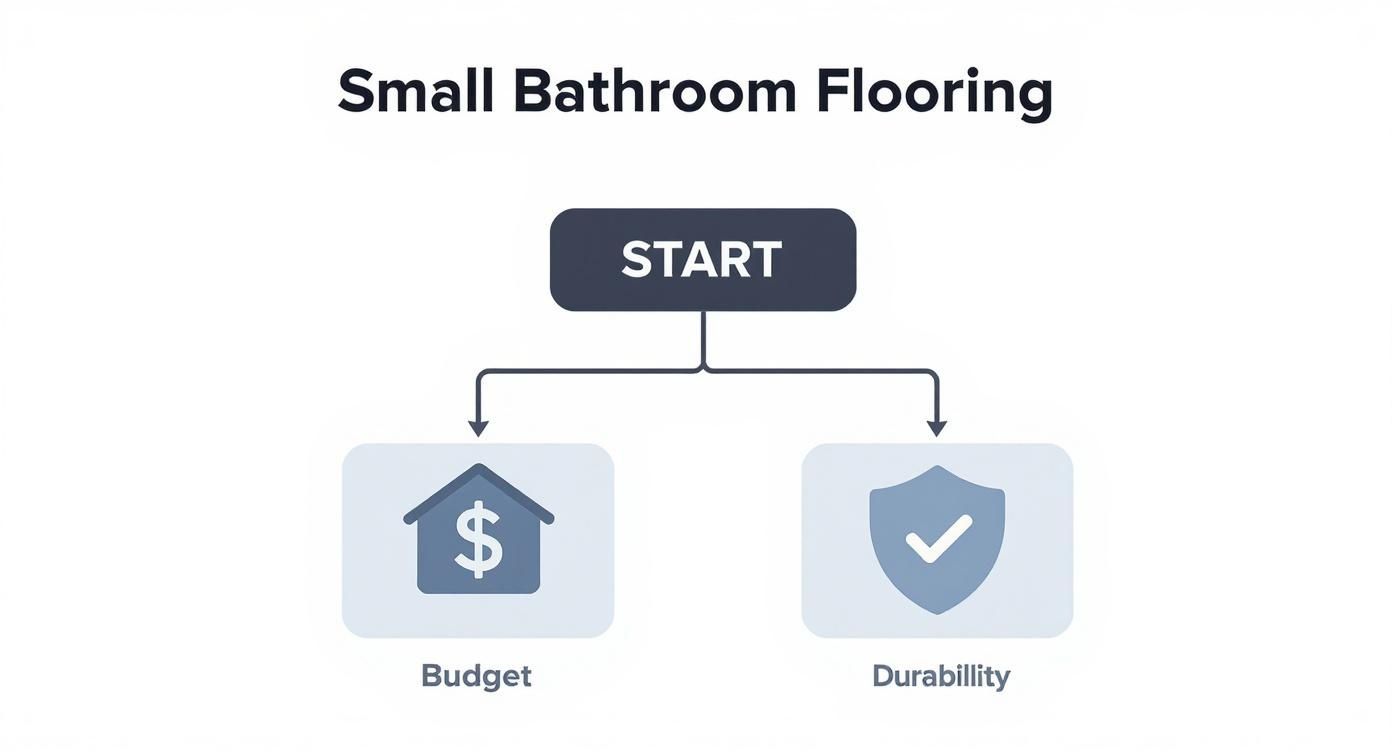
As you can see, if budget is your main concern, you’ll lean towards options like sheet vinyl. But if you’re focused on something that will last for decades, porcelain tile is where you should be looking.
To make things even easier, here’s a quick rundown of the top contenders.
Top Flooring Options For Small Bathrooms At A Glance
| Material | Water Resistance | Average Cost (Per Sq Ft) | Best For |
|---|---|---|---|
| Porcelain Tile | Excellent | $3 – $35 | Homeowners wanting maximum durability and a premium, classic look. |
| Ceramic Tile | Excellent | $2 – $20 | Budget-conscious projects needing a durable, waterproof, and stylish option. |
| Luxury Vinyl (LVT/LVP) | Excellent | $2 – $10 | DIY-friendly installations and those who want a softer, warmer feel underfoot. |
| Sheet Vinyl | Excellent | $1 – $2 | The most budget-friendly, seamless waterproof solution available. |
Each of these materials brings something unique to the table, but they all check that critical “waterproof” box.
We’re about to get into the nitty-gritty of each of these, giving you the inside scoop to choose a floor that’s both beautiful and built for the long haul. If you want a broader look at the topic first, this guide on how to choose the best flooring for your bathroom remodel is a great starting point.
Now, let’s dive in.
The Best Waterproof Flooring Materials
In a small bathroom, every single inch counts, and the floor is the very foundation of your design. But with constant splashes, steam, and humidity, your flooring choice is more than just about looks—it’s your home’s first line of defense. Let’s walk through the top contenders that keep water locked out while bringing serious style to your space.
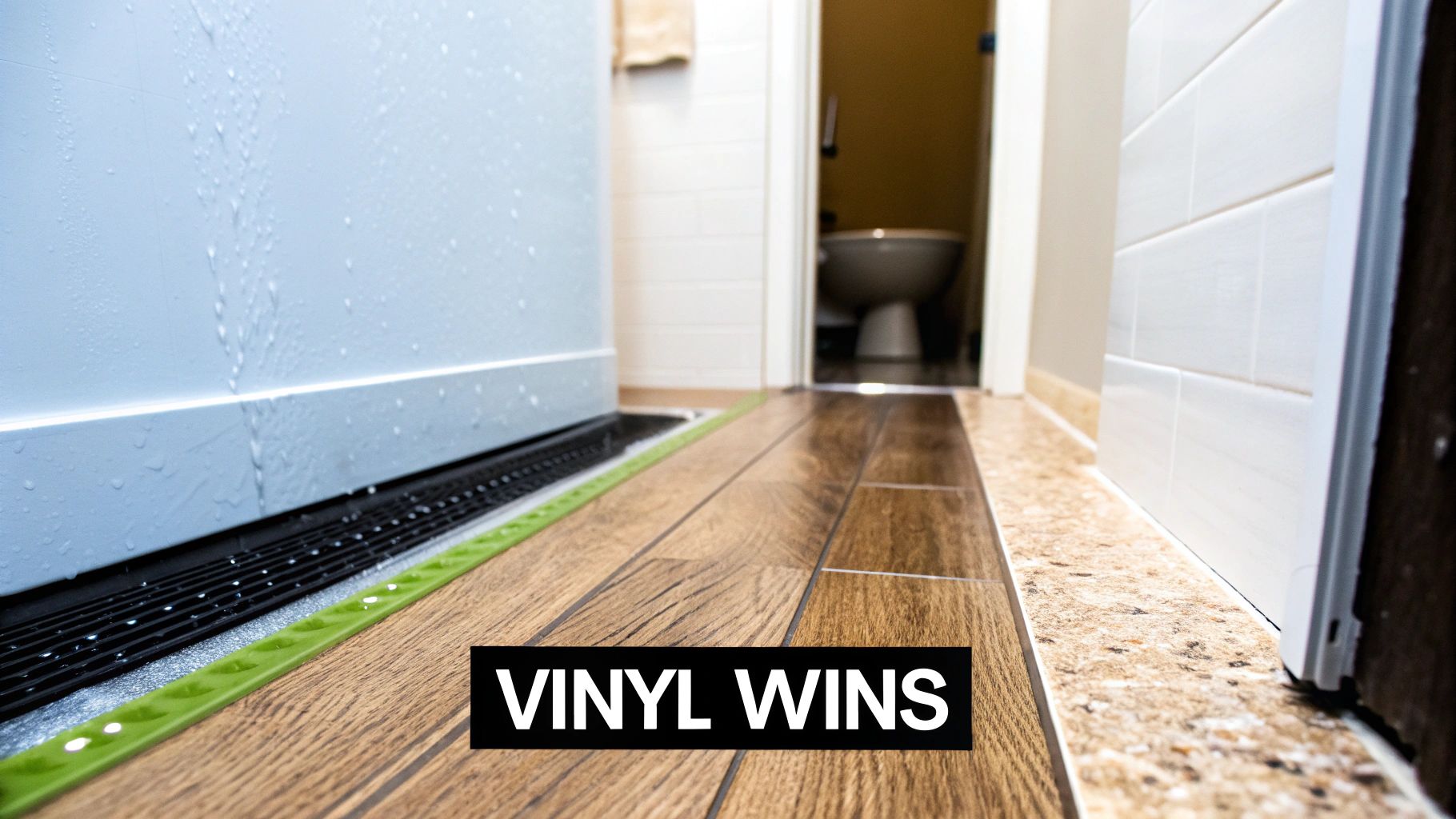
We’re not just talking about “water-resistant” materials here. These options create a truly impermeable barrier, shielding your subfloor from the kind of moisture damage that leads to mold, rot, and expensive headaches down the road. Think of it as total peace of mind for one of the most demanding rooms in your house.
Luxury Vinyl Flooring: A Modern Marvel
When it comes to flooring for small bathrooms, Luxury Vinyl Tile (LVT) and Luxury Vinyl Plank (LVP) are absolute game-changers. Forget the old-school linoleum you might be picturing. Today’s vinyl is a sophisticated material that pulls off a stunning impression of natural stone, ceramic, or hardwood with one huge advantage: it’s 100% waterproof.
This makes it the perfect candidate for a compact bathroom where a single splash can travel from the tub to the door in seconds. Unlike real wood, vinyl won’t ever swell, buckle, or warp, no matter how much water it encounters.
But its superpowers don’t stop there:
- Comfort Underfoot: It feels much softer and warmer than tile, which is a small luxury you’ll appreciate on a cold morning.
- DIY-Friendly Installation: Many vinyl products use a simple click-lock system, making installation a straightforward project even in tight corners—no messy glues needed.
- Endless Style Choices: Whether you love the look of rustic wood grain or elegant marble, you can get a high-end aesthetic without the high-maintenance headache.
If you’re curious about this do-it-all option, you can learn more about the benefits of waterproof vinyl tile and see just how transformative it can be.
Porcelain and Ceramic Tile: The Timeless Champions
There’s a reason tile has been the king of bathrooms for centuries. Its ability to stand up to water is legendary. Porcelain, which is fired at incredibly high temperatures, has a water absorption rate of less than 0.5%. That makes it practically impervious to moisture.
Ceramic is another fantastic choice, giving you great durability and a massive range of styles, often at a slightly more accessible price. When installed the right way—with high-quality grout and a proper seal—a tile floor forms a rock-solid, impenetrable surface that can easily last for decades. It’s an investment that truly pays off in the long run.
The secret to a completely waterproof tile floor isn’t just the tile itself; it’s the installation. Using a skilled professional who applies high-quality, sealed grout is the only way to guarantee that moisture can’t sneak between the tiles and damage the subfloor below.
Sheet Vinyl: The Seamless Solution
If you want the ultimate budget-friendly, seamless defense against water, sheet vinyl is tough to beat. Since it’s typically installed as one continuous piece, there are absolutely no seams or grout lines for water to work its way into. That alone makes it one of the most effective waterproof flooring solutions you can find.
Sheet vinyl is an especially smart pick for small bathrooms, as you can often cover the entire floor with a single cut. This eliminates any potential weak spots. And when it’s time to clean? A quick wipe-down is all it takes to make it look brand new.
Why Vinyl Flooring Wins In Compact Spaces
When you’re trying to choose the right flooring for a small bathroom, you’ll find that vinyl often comes out on top. It’s really the undisputed champion for these tight, tricky spaces. Forget what you might think you know about vinyl from years past—modern vinyl is a whole family of high-performance materials perfectly built for a compact, humid room.
The best part? It’s the ultimate chameleon. Vinyl can give you the gorgeous, high-end look of hardwood or natural stone without any of the headaches.
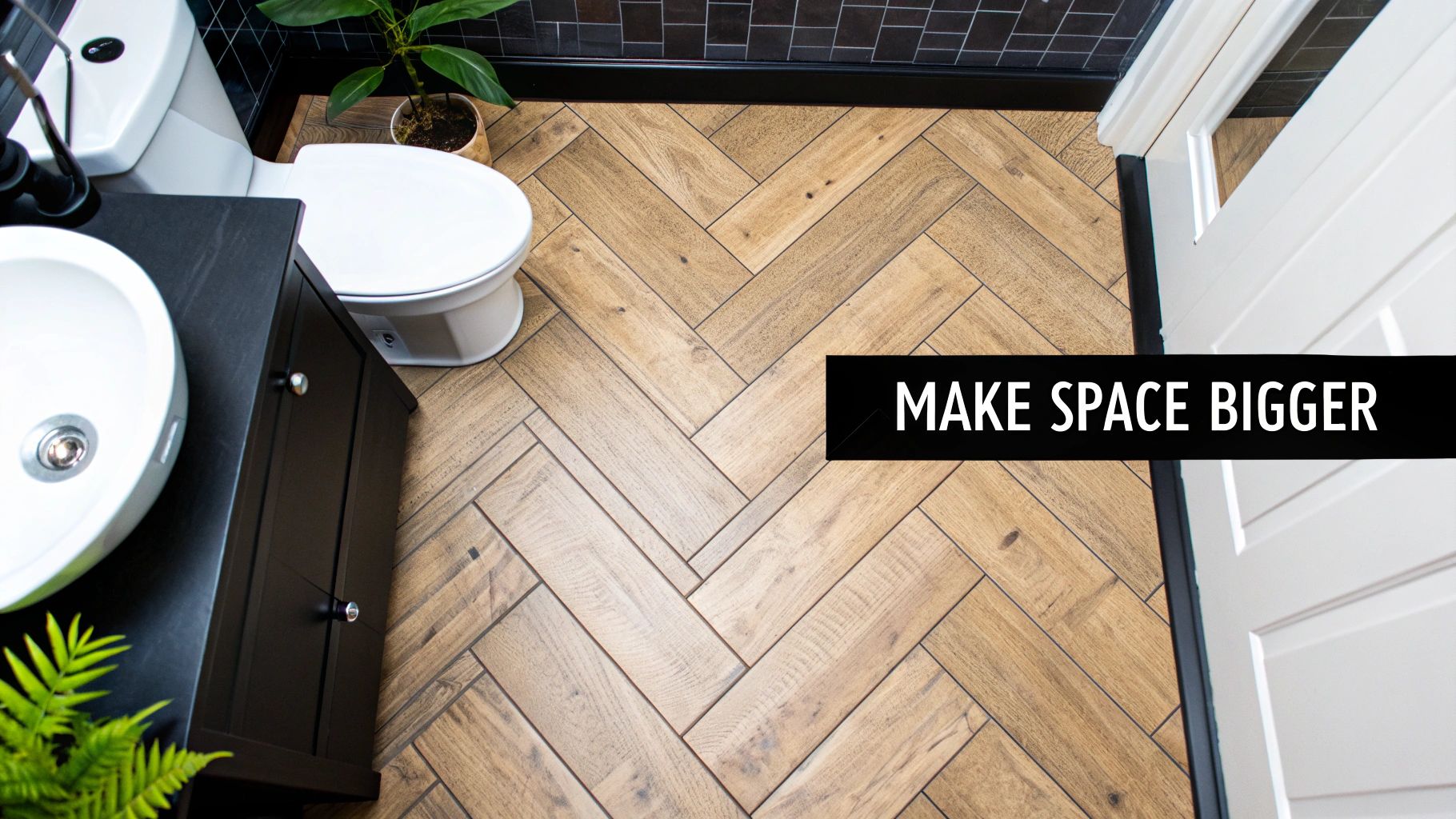
This isn’t your grandmother’s linoleum. Thanks to some serious leaps in technology, today’s vinyl flooring has completely shaken off its dated reputation. It delivers a powerful mix of style, toughness, and practicality that’s tough to beat, especially when every square inch counts.
Understanding Your Vinyl Options
Not all vinyl is the same, so it’s good to know what you’re looking at. There are three main types, and each one brings something a little different to the table for a small bathroom.
- Luxury Vinyl Plank (LVP): If you love the look of real wood, this is your go-to. LVP does a masterful job of mimicking wood planks, bringing that warmth and character into your bathroom without the constant worry of water damage, warping, or swelling that comes with real hardwood.
- Luxury Vinyl Tile (LVT): LVT gives you that elegant, timeless look of ceramic or stone tile, but it’s much softer and warmer under your feet on a cold morning. It’s also way more forgiving. Drop a glass bottle on LVT, and it’s a lot less likely to shatter than it would on a hard porcelain floor.
- Sheet Vinyl: For a completely seamless, budget-friendly, and truly waterproof surface, you can’t go wrong with sheet vinyl. It’s installed in a single, continuous piece, which means there are zero grout lines or seams for moisture to sneak into. It basically turns your floor into a fortress against water.
This incredible versatility is a huge reason vinyl has become so popular. Demand is through the roof, with its share of the U.S. bathroom market climbing to nearly 30% in 2024. People are catching on to its great blend of affordability, water resistance, and design options. You can read up on more market trends about bathroom vinyl flooring adoption rates.
Busting Common Vinyl Myths
Some old, outdated ideas about vinyl are still floating around, but they just don’t apply to the modern stuff. Today’s high-quality vinyl is worlds away from the flimsy flooring of the past.
Key Insight: Modern vinyl flooring is engineered with a tough protective wear layer that stands up to scratches, scuffs, and stains. This makes it an incredibly resilient choice for a busy spot like a family bathroom, keeping its good looks for years with very little effort.
Of course, safety is always a top priority in a wet room like a bathroom. Big improvements in surface texturing have made vinyl much more slip-resistant. If you’re worried about slips and falls, looking into the features of modern non-slip vinyl flooring can offer some serious peace of mind.
From being comfortable underfoot to its straightforward installation and impressive durability, vinyl is a compelling, stylish, and genuinely practical solution for any small bathroom project.
The Timeless Appeal of Ceramic and Porcelain
When you think of bathroom flooring, ceramic and porcelain tiles are probably the first things that come to mind. They’re the undisputed classics, the go-to choice for generations, and there’s a good reason for that. Think of tile as the bedrock of bathroom design—it’s tough as nails, completely waterproof, and a breeze to keep clean.
These tiles are literally forged in fire, which creates a dense, hard surface that’s like a shield for your floor. Porcelain gets fired at even higher temperatures, making it even less porous than its ceramic cousin. What that means for you is that splashes, steam, and even the occasional overflow won’t seep through and wreck your subfloor.
Durability and Safety You Can Count On
Besides being waterproof, the sheer resilience of tile is a huge selling point. The key thing to look for here is the PEI rating (which stands for Porcelain Enamel Institute). It’s a simple 1-to-5 scale that tells you how well the tile holds up against wear and tear. For a bathroom floor, you’ll want a PEI rating of 3 or higher to make sure it can handle daily foot traffic without scratching or wearing down.
But toughness isn’t the only technical spec that matters. On a wet floor, safety is everything.
- Slip Resistance: Check the tile’s Coefficient of Friction (COF) rating. A higher number means more grip, which is crucial for preventing slips in a damp bathroom.
- Maintenance Ease: The glazed, non-porous surface of most tiles naturally resists stains and keeps bacteria from settling in. A quick sweep and a mop are really all it takes to keep it looking brand new for years.
This blend of strength and safety makes tile a smart, worry-free investment for your home.
A tile floor that’s been properly installed and sealed will outlast almost any other flooring material. It’s one of those decisions you make once, knowing it will protect your home and look great for decades, adding real long-term value.
Modern Styles for Small Spaces
If you’re picturing boring, old-fashioned squares, think again. Today’s tile options are incredibly stylish and versatile. Modern manufacturing has opened up a whole new world of design possibilities that are perfect for making a small bathroom feel bigger and more sophisticated.
One of the most effective tricks in the book is using large-format tiles. Tiles that are 12×24 or even 24×24 inches have far fewer grout lines, which creates a clean, uncluttered look. That visual simplicity can trick the eye, making the room feel more spacious and seamless—a powerful illusion in a tight space.
This isn’t just a niche trend; it’s a huge shift in the market. In 2024, the global flooring market was valued at $360.7 billion, and ceramic and porcelain tiles grabbed a massive 36.65% of that pie. The explosion in popularity of large-format tiles in Europe, where sales shot up 12% between 2022 and 2024, shows just how much people love them for smart, space-conscious design. You can find more details in this flooring market trends report from Grand View Research.
From intricate mosaics that become a stunning feature wall to tiles that perfectly replicate the look of wood or marble, the design potential is practically endless. It’s what keeps tile a timeless, yet totally modern, choice.
Design Tricks To Make Your Bathroom Look Bigger
Beyond just picking the right material, a smart design strategy can turn your flooring into a powerful tool for visual expansion. It’s all about using a few simple tricks, rooted in psychology, to make even the most compact bathroom feel open and airy. We’re essentially creating an illusion of space, starting from the ground up.
The goal is to trick the eye into seeing a larger, more unified area. By being clever with the size, color, and even the direction of your flooring, you can dramatically alter how big your bathroom feels. These techniques are some of the most effective ways to maximize a small footprint.
Use Large Format Tiles
One of the best things you can do is install large-format tiles, like 12×24 or 24×24 inches. The logic here is surprisingly simple: bigger tiles mean fewer grout lines. All those grout lines create a grid pattern that visually chops up the floor, making the space feel busy and confined.
With fewer lines breaking up the surface, your floor starts to look like a single, seamless plane. This creates an uncluttered foundation that convinces the brain the room is more expansive than it actually is. It’s a subtle change, but a powerful one.
Embrace Lighter Colors
The color of your flooring for a small bathroom plays a huge part in how spacious the room feels. Light colors are your best friend here—think soft grays, beiges, off-whites, or even pale blues. They’re fantastic at reflecting both natural and artificial light.
This light reflection brightens the entire room, creating an airy and open atmosphere.
Key Insight: A light-colored floor acts like a mirror for light, bouncing it around the room to eliminate dark corners and create a sense of spaciousness. Dark floors do the opposite; they absorb light, which can make a small room feel even smaller and more enclosed.
Lay Planks Diagonally
If you’re going with plank flooring like LVP, resist the urge to just lay it parallel to the walls. Try installing the planks on a diagonal. This simple shift draws the eye across the longest part of the room, from corner to corner.
This change in direction creates a sense of movement and makes the floor—and therefore the room—feel wider and longer than it really is.
Create Visual Continuity
To truly erase the boundaries of a small bathroom, think about running the same flooring material from the bathroom right into the adjoining hallway or room. Getting rid of the threshold creates a continuous visual flow that makes both spaces feel larger and more connected.
When the eye doesn’t have to stop at the doorway, the bathroom visually “borrows” space from the area next to it, instantly feeling less cramped.
These design principles are fundamental to making any small area feel larger. For a deeper dive into optimizing cramped areas, explore these smart interior design principles for small rooms. By combining these tricks, your flooring becomes an active player in your design, not just a passive surface.
Sustainable Flooring For An Eco-Friendly Bathroom
Choosing responsible flooring for a small bathroom doesn’t mean you have to settle for less when it comes to performance or style. Thankfully, today’s market is full of fantastic eco-friendly options that stand up beautifully to humid environments, proving sustainability and practicality can absolutely go hand-in-hand. These materials are all about renewable resources, recycled content, and promoting healthier air inside your home.
When you’re thinking green for a small space, it really starts with the material’s origin story. You want something that’s kind to the planet from the get-go. Options like cork and linoleum are perfect examples of this philosophy in action, and they bring some unique benefits to the table that make them ideal for a bathroom.
Naturally Resilient And Renewable Choices
Cork is a truly brilliant sustainable material. It’s harvested from the bark of cork oak trees, which means the tree itself isn’t harmed in the process. Better yet, it’s naturally resistant to mold, mildew, and water, making it a no-brainer for a bathroom. As a bonus, it has a comfortable, cushioned feel underfoot that you just don’t get from tile or stone.
Linoleum is another classic that’s making a major comeback. Don’t confuse it with the old-school vinyl from your grandma’s kitchen; true linoleum is made from natural, renewable ingredients like linseed oil, cork dust, and jute. It’s incredibly durable and, at the end of its very long life, it’s biodegradable.
Key Takeaway: Choosing sustainable flooring is about more than just finding recycled materials. It’s about picking options that are renewable, have a smaller environmental footprint over their entire lifecycle, and help create a healthier home by keeping harmful chemicals out.
Conscious Choices In Conventional Materials
Even when you’re looking at popular materials like vinyl, you can still find eco-conscious versions. The trick is to look for products made with a high percentage of recycled content. More importantly, always check for certifications that guarantee the flooring is safe for your indoor air.
- Low VOC Emissions: Volatile Organic Compounds (VOCs) are chemicals that building materials can release into the air. Opting for flooring with low or no VOCs is a huge step toward maintaining healthy air quality in your home.
- FloorScore® Certification: Think of this label as your seal of approval. It confirms the product has been independently tested and meets strict standards for indoor air quality.
The push for sustainability is definitely changing the flooring game. The trend is particularly strong in Europe, where consumer awareness and new regulations have driven an 18% growth in sales of recycled vinyl and laminate between 2022 and 2024. You can see more about the global flooring market on precedenceresearch.com.
For a much deeper dive into green materials, be sure to check out our guide on eco-friendly flooring options.
Got Questions? We’ve Got Answers
When you’re zeroing in on the perfect flooring for a small bathroom, a few questions always seem to pop up. Let’s tackle some of the most common ones to help you feel confident in your final choice.
Can I Actually Use Laminate Flooring In a Bathroom?
This is a big one. For years, the answer was a hard no, since traditional laminate swells up at the first sign of moisture. But times have changed. Many top brands now make waterproof or highly water-resistant laminate flooring designed specifically for wet areas.
The trick is in the construction—they have a core that repels moisture and locking systems so tight they form a seal against splashes. If you go this route, just make absolutely sure the product is rated for bathroom use and that you follow the installation guide to the letter. A perfect installation is what keeps that seal watertight.
What’s The Easiest Flooring to Install Myself?
If you’re tackling this project yourself, you can’t go wrong with Luxury Vinyl Plank (LVP) or Tile (LVT) that uses a click-lock system. It’s pretty much the gold standard for DIY-friendly flooring.
These planks and tiles are designed to “float” over your existing subfloor, so there’s no need for messy adhesives. They simply click into place. Plus, they’re a breeze to cut, which is a huge advantage when you’re trying to get a perfect fit around a toilet or a tricky vanity corner.
Another fantastic option for a quick and easy upgrade? Peel-and-stick vinyl tiles. They are incredibly straightforward and perfect for a weekend project.
Should I Go With a Light or Dark Floor?
As a general rule of thumb, light-colored flooring is your best friend in a small bathroom. Think soft grays, warm beiges, or classic off-whites. These shades are great at reflecting light, which instantly makes the room feel bigger and more airy.
A dark floor can definitely make a statement and create a sophisticated, dramatic vibe. Just be aware that dark colors absorb light, which can make a tight space feel even tighter. If you love the look, you’ll need to balance it with very light walls and plenty of bright lighting to pull it off.
Ready to see some of these options in person? The experts at Flacks Flooring can walk you through beautiful, durable choices that will completely transform your bathroom. Visit our showroom in Cumming, GA, to get started!