
You’re probably doing what most homeowners in Cumming do at the start of a flooring project. You open a flooring installation cost calculator, punch in a room size, pick a material, and hope the number on the screen is close enough to plan around.
That’s fine as a starting point. It’s not fine as a final budget.
Around Forsyth County, Johns Creek, and Milton, the biggest mistakes happen when people trust a generic calculator more than the house in front of them. Older subfloors, moisture issues, stairs, awkward layouts, and furniture-heavy rooms all change the actual number. If you want a budget that holds up, you need to know what the calculator is good at, what it misses, and how to fill in the gaps before you buy a single box of flooring.
Understanding Your Initial Flooring Cost Estimate

You sit down on a Saturday morning in Cumming, punch your room size into a flooring installation cost calculator, and get a number that looks manageable. Then the house gets involved. The subfloor dips near the back door. The old floor has to come out. The hallway ties three rooms together and creates more cuts than the calculator assumed.
That first number still has value. Use it as a screening tool to decide whether a project fits your price range before you start picking products and calling installers.
What the first estimate covers
A calculator usually gives you a rough material-and-labor range based on a few simple assumptions:
- Square footage
- A basic flooring category
- Standard installation conditions
- Average labor rates, not job-specific conditions in North Atlanta
That can help you sort your options fast. You can tell whether you are looking at an entry-level refresh, a solid mid-range update, or a higher-end project that needs more planning.
What it will not catch is the stuff that changes the budget in real homes around Forsyth County. Older houses often need subfloor correction. Concrete slabs can need moisture testing or leveling. Open floor plans may look simple, but long sightlines make bad transitions and uneven areas more obvious, which means more prep work if you want the finished floor to look right.
My rule: add a separate line in your budget for prep and removal before you trust the calculator total.
Why online estimates miss the mark in North Atlanta
Generic calculators are built for averages. Flooring jobs are not average.
A 1990s home in Cumming or Suwanee can hide squeaks, patchwork subfloors, and previous water damage around exterior doors or kitchen edges. A newer build in Alpharetta may be flatter and easier to price, but even there, stairs, furniture moving, trim work, and floor height changes can push the final number up fast.
This is why homeowners get surprised. They budget for the visible floor and ignore the surface underneath it.
If wood flooring is on your list, review this breakdown of hardwood flooring installation cost before you set your budget. It does a better job showing the installation variables that affect real project pricing.
If you are still choosing between categories, it helps to compare SPC vs timber flooring so you can weigh appearance against durability, noise, and prep requirements.
How to use the estimate the right way
Start with the calculator. Then pressure-test it against your house.
Ask three questions. Does the existing floor need demolition? Does the subfloor need repair or leveling? Will the new floor change trim, door clearance, or transitions into nearby rooms?
If you cannot answer those yet, your estimate is still incomplete. In Forsyth County, that gap is where budgets usually break.
Key Inputs for an Accurate Flooring Calculation
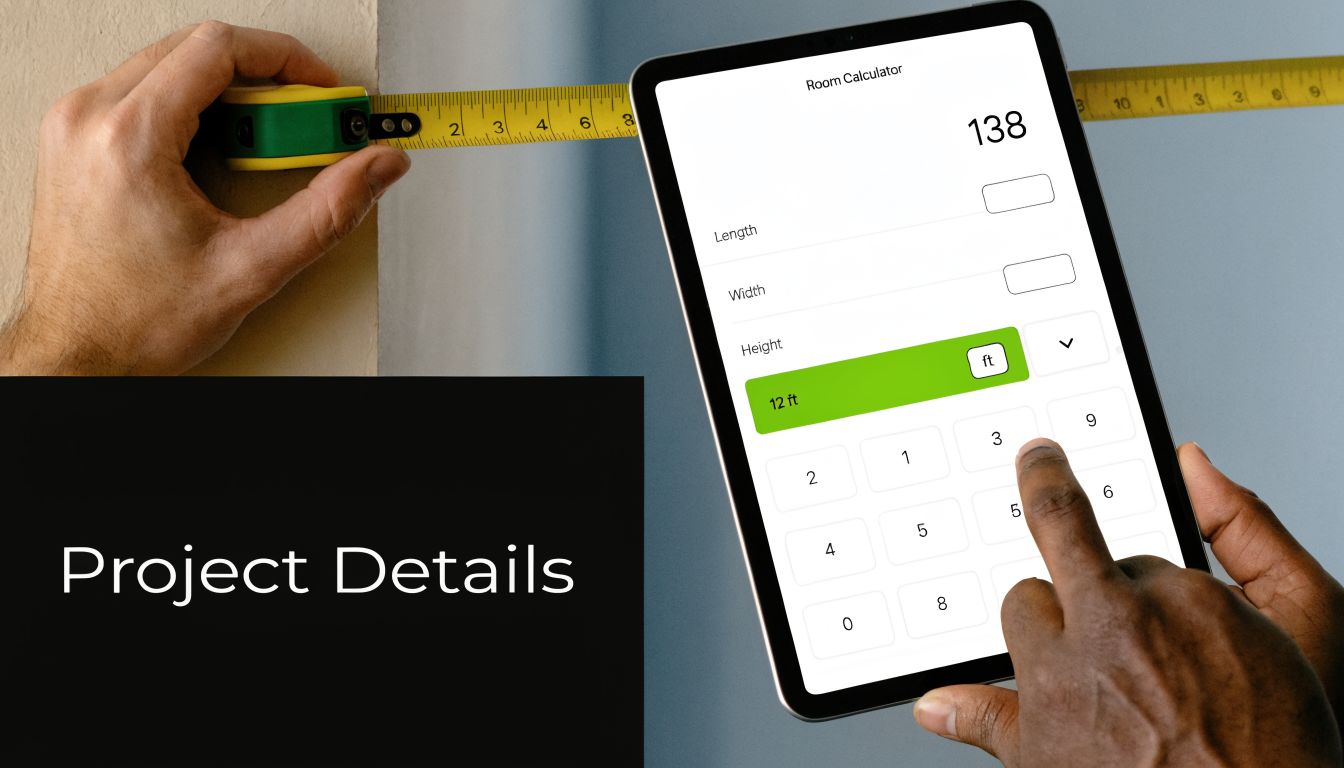
Bad inputs create bad budgets. Most flooring calculators fail because the homeowner guesses.
If you want a number you can use, gather the right inputs before you touch the calculator. The fastest way is to think in three buckets: square footage, layout waste, and flooring type.
Measure the full footprint
Start with the finished area, not the space that “looks about right.”
Measure every room section, alcove, closet, and nook that will receive flooring. If the room isn’t a perfect rectangle, break it into smaller rectangles and add them together. Don’t skip a hallway or closet and assume it won’t matter. Those smaller zones add up fast and they affect how much material you need to order.
If you need a clean process, this guide on how to measure a room for flooring is worth using before you build your estimate.
Add waste the right way
A lot of DIY budgets fall apart here.
For an accurate calculation, apply waste multipliers based on layout: 7-10% for straight-lay patterns, 15% for diagonals, and 15-20% for herringbone in complex spaces. Underestimating can lead to 15-20% material shortages in many DIY projects, according to Lumber Liquidators guidance on estimating flooring projects.
That means a simple bedroom install and a decorative main-floor install should never be budgeted the same way.
Use this quick rule set:
Straight rooms and straight plank layout
Use the lower waste range.Diagonal layout or several jogs in the room
Plan for more offcuts and more ordering cushion.Herringbone, tricky transitions, or a lot of doorways
Stop being optimistic. Budget on the high side.
If your layout is fancy, your waste is not standard.
Choose the material honestly
A calculator only works if you choose the flooring category you’ll buy.
If you know you want hardwood flooring installation because you care about long-term value and natural character, enter hardwood. Don’t plug in laminate just to see a friendlier number. If you need waterproof flooring for a basement or a busy entry, use a waterproof category. If you’re staging a listing and need a cleaner price point, laminate may make more sense.
Here’s the practical lens I use with local homeowners:
- Hardwood fits long-term homes where resale and timeless style matter.
- LVP and waterproof flooring fit active households, basements, mudrooms, and pet-heavy homes.
- Laminate fits affordable upgrades where scratch resistance and easy upkeep matter.
- Tile makes sense in wet areas and spaces where durability beats softness.
- Carpet still works in bedrooms and spaces where comfort matters more than moisture resistance.
Don’t ignore install conditions
Most calculators ask what material you want. Very few ask enough about the jobsite.
Before trusting the number, ask yourself:
- Is the floor level enough for the product I chose?
- Am I installing over concrete, plywood, or existing flooring?
- Are there stairs, tight landings, or heavy built-ins?
- Will transitions be needed between rooms?
Those details don’t just affect labor. They can change the product recommendation too.
Budgeting for Hidden Costs in Floor Replacement
Online calculators act like the floor is ready for installation the moment the crew walks in. That’s rarely true in a real North Atlanta home.
The biggest budget surprises in floor replacement usually come from what’s underneath the old floor, not the new floor you picked. That’s especially true in older homes around Forsyth County, Milton, and parts of Roswell where subfloors have settled, previous installs weren’t done well, or moisture has caused hidden damage.
The costs generic calculators miss
A major problem with many calculators is that they don’t properly include subfloor preparation and staircase costs. Recent data shows subfloor leveling can add $500-$1,200 per 500 sq ft, and that can be 30% of total costs in older properties, based on HomeAdvisor flooring calculator analysis.
That’s not a minor detail. That’s the difference between a project staying on budget and blowing past it.
Here are the hidden items that deserve real attention:
Old floor removal
Carpet, glued-down vinyl, or old tile can turn a simple replacement into a longer prep job.Subfloor leveling
If the floor dips, crowns, or has patched areas, many products won’t perform well until the base is corrected.Stairs and landings
Stairs are labor-heavy and almost never match the simple room-rate assumptions of a calculator.Trim and baseboard work
Sometimes trim can stay. Sometimes it can’t. You won’t know from a generic tool.
Why older homes need a harder look
A lot of homeowners want to budget by square footage alone. I get it. It feels clean. It feels simple. It’s also how people miss the expensive part.
Older homes often hide the exact issues that calculators ignore. Uneven slabs, patched subfloors, soft spots near exterior doors, and transitions between additions and original structures can all affect installation. If you suspect that’s your situation, read through this guide on how to level uneven floors before you finalize your budget.
Local reality: If your house has age on it, plan for prep first and product second.
What to ask before you approve a quote
Don’t just ask for the bottom line. Ask what’s included.
Use these questions:
- Does the quote include floor removal and disposal?
- Is subfloor prep included, or is it an allowance?
- Are stair treads, risers, and landings priced separately?
- Will furniture moving be handled, and is that part of the quote?
- Are transitions and trim replacement included?
If the answers are vague, the budget is weak.
A flooring project goes smoother when the quote is itemized and the prep work is treated as part of the job, not as an afterthought that shows up later.
Matching Flooring Types to Your Metro Atlanta Lifestyle
A family in Cumming with two dogs, a soccer schedule, and an older main level does not need the same floor as a low-traffic condo owner in Alpharetta. That sounds obvious, but generic calculators still treat flooring like a simple price-per-square-foot decision. They miss how you live, and they miss what your house will demand from the installer.
That matters in North Atlanta. Humidity, red clay tracked in from the yard, busy households, and older subfloors in parts of Forsyth County all change which product gives you the best value. A floor that looks cheap after three years is expensive. A floor that needs extra prep before it goes in is not the bargain the online calculator promised.
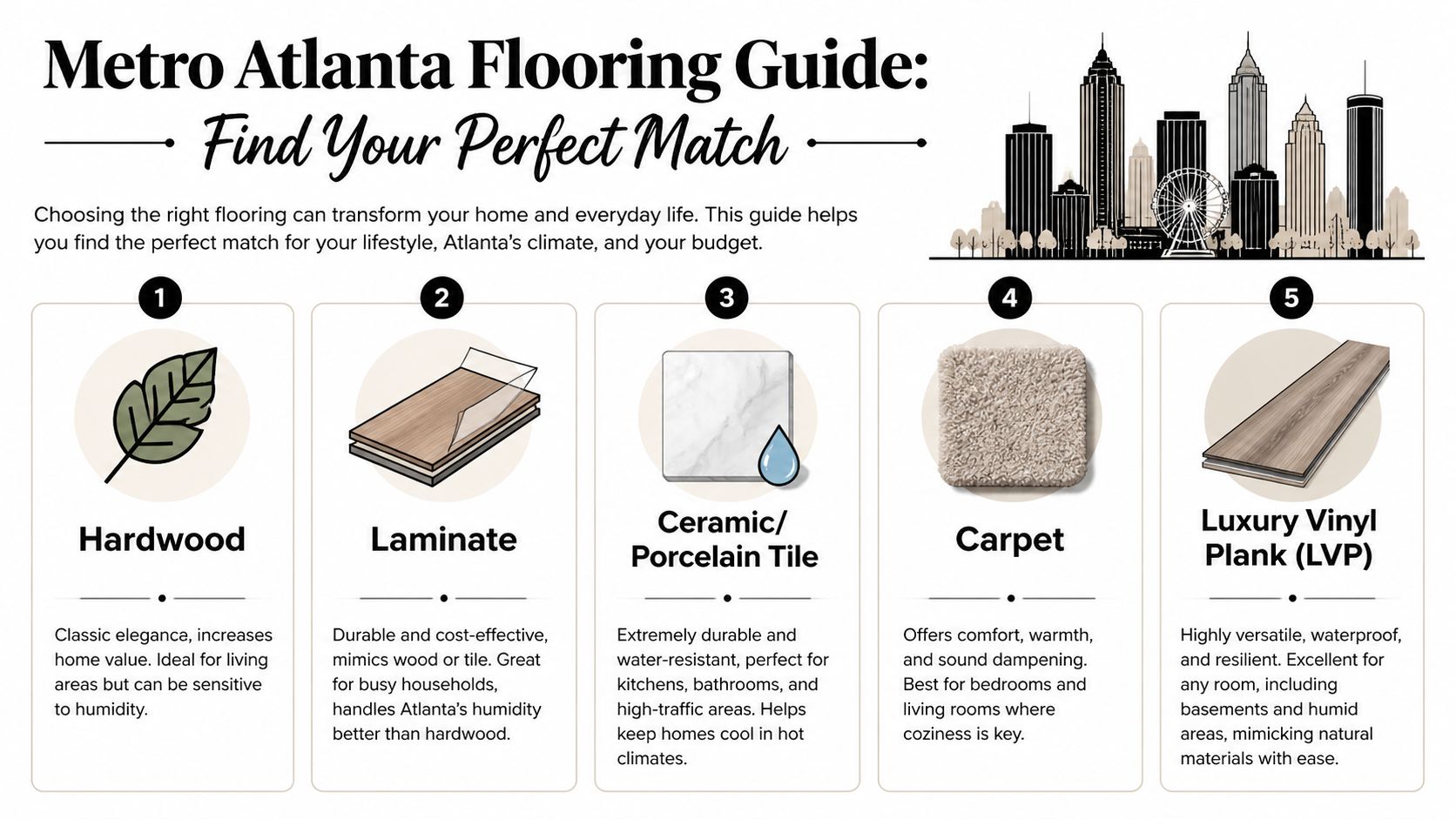
Hardwood flooring
Hardwood still sets the standard for resale appeal and long-term appearance. It fits traditional homes, updated interiors, and higher-end projects where the floor needs to carry the room.
As noted earlier, hardwood sits at the premium end of the budget range. I recommend it for dry main living spaces, dining rooms, and bedrooms where you want staying power. In North Atlanta, the catch is the subfloor. Older homes often need more prep to get hardwood flat and stable, and that can move the project cost faster than homeowners expect.
Choose hardwood if your priorities are:
- Strong resale appeal
- A long service life
- The option to refinish later
- A more custom, finished look
Skip it in rooms with repeated moisture exposure or in homes where wet paws and muddy traffic are constant.
Laminate flooring
Laminate works best for homeowners who want the wood look without paying hardwood prices. It is a smart choice for guest rooms, secondary bedrooms, and budget-conscious updates before a sale.
Inch Calculator laminate flooring cost data shows laminate can land in a reasonable installed range for homeowners trying to control upfront spending. That said, I would not pick laminate just because it is cheaper on paper. In a busy Forsyth County household, the better question is whether the product can hold up to the traffic, spills, and furniture movement you deal with every week.
Laminate is a good fit when you want:
- Lower upfront cost
- Better scratch resistance than many homeowners expect
- A clean, updated look
- Fast visual improvement in low-moisture rooms
If you have kids, pets, and frequent wet messes, I would compare it against LVP before making the call.
Luxury vinyl plank and waterproof flooring
For active households, LVP is often the safest recommendation. It handles daily life well, cleans up easily, and gives you more forgiveness in kitchens, basements, and entry areas.
Earlier cost ranges in this article put vinyl and LVP in a practical middle tier for many homeowners. That lines up with what I see locally. People like it because it solves real problems. Wet shoes by the garage door. Dog bowls in the kitchen. A basement that stays a little cooler and damper than the main level.
I recommend waterproof flooring for:
- Basements
- Kitchens
- Mudrooms
- Homes with pets
- Families who want low-maintenance floors
One warning. Do not assume every “waterproof” product installs the same way or hides subfloor problems. It doesn’t. On older floors with dips or patched areas, a cheaper plank can telegraph every flaw underneath.
Tile and stone flooring
Tile is the best performer in wet areas. Bathrooms, laundry rooms, and some basement sections are where it earns its keep.
It also comes with a harder install path. Tile needs a stable surface, and older homes around Cumming and the rest of North Atlanta do not always offer one without added prep. If the floor has movement, cracks, or uneven transitions, the budget needs room for correction before tile goes down. Skip that step and the finished floor can crack, sound hollow, or fail early.
Use tile where water resistance matters more than softness underfoot.
Carpet installation
Carpet still makes sense in the right rooms. Bedrooms, upstairs hallways, and bonus rooms often feel better with something softer and quieter.
I would not put carpet anywhere that sees frequent spills, pet accidents, or heavy traffic from outside. It solves a comfort problem, not a moisture problem. If your goal is to make upstairs spaces warmer and cut down noise, carpet still does that well.
North Atlanta Flooring Options at a Glance
| Flooring Type | Avg. Cost / Sq. Ft. (Installed) | Best For | Durability |
|---|---|---|---|
| Hardwood | Premium range, as noted earlier | Living areas, bedrooms, resale-focused upgrades | Long-lasting, can be refinished in many cases |
| Laminate | Budget to mid-range, depending on product and install | Affordable updates, staging, lower-moisture rooms | Good everyday durability with simple upkeep |
| Luxury Vinyl Plank | Mid-range and often cost-efficient for active homes | Basements, kitchens, pets, waterproof needs | Durable and moisture-friendly |
| Tile | Varies by project and prep requirements | Bathrooms, laundry rooms, wet zones, heavy traffic | Very durable in water-prone areas |
| Carpet | Varies by material and pad | Bedrooms, upstairs rooms, comfort-focused spaces | Best where softness matters more than moisture resistance |
My straight recommendation
Choose hardwood if you plan to stay, want the best visual payoff, and your dry living areas justify the higher budget.
Choose LVP if you want the least day-to-day stress. For many North Atlanta families, it is the best balance of durability, price, and practicality.
Choose laminate only when the room is dry, the budget is tight, and you are realistic about wear. Cheap flooring usually gets expensive at replacement time.
Turning Your Estimate into a Final Project Plan
Once you’ve used a flooring installation cost calculator, the next move is not to order materials online and hope it works out. The next move is to turn the estimate into a real project plan.
That means getting an in-home consultation, confirming measurements, checking the subfloor, and matching the product to the way your household lives. A calculator can estimate square footage. It cannot inspect a slab, spot a soft subfloor near a patio door, or tell you whether your staircase details are about to complicate the whole install.
What a real project plan should include
A proper final plan should answer these questions clearly:
- What product is going in each room
- What prep work is required before installation
- What happens to the existing flooring
- What trim, transitions, and stair details are included
- What the installation sequence looks like
- How the home will be protected during the job
That’s also when style choices become easier. Samples that looked good online can read completely differently under your home’s lighting. Gray-toned flooring can feel cold in one house and perfect in another. Wide-plank visuals can open up one room and overwhelm another.
Why this step saves money
A firm written quote protects you from the most common budget killers: vague labor assumptions, missing prep work, and product choices that don’t fit the space.
It also gives you a better handle on practical planning. You can line up furniture moving, think through room-by-room sequencing, and decide whether fast installation or maximum durability matters more for your household.
A calculator gives you a price idea. A site visit gives you a project.
If you’re serious about replacing floors in Cumming, Alpharetta, Roswell, or anywhere in North Metro Atlanta, don’t stop at the online number. Use it to get oriented, then build the job the right way.
Frequently Asked Questions About Flooring Costs
Is a flooring installation cost calculator accurate enough to set my final budget
It’s accurate enough to start planning. It’s not accurate enough to approve the job. Use it to establish a range, then confirm the details with an in-home measurement and subfloor check.
What flooring gives the best balance of cost and practicality
For many homes, laminate and LVP are the strongest value plays. Laminate is a smart fit when you want a wood-look floor at a lower price point. LVP is the safer pick when moisture, pets, or heavy traffic are part of daily life.
Why does floor replacement cost more than new installation numbers suggest
Because replacement usually includes more than just installing the new floor. Removal, disposal, subfloor prep, transitions, and stair work can all push the price up compared with a simple calculator estimate.
How do I avoid getting underquoted
Ask for an itemized quote. Make sure it addresses removal, prep, stairs, trim, and transitions. If a number looks unusually low, it’s often because something important has been left out.
Is financing worth considering for flooring
Yes, if it lets you buy the right floor once instead of settling for the wrong product and replacing it sooner than you wanted. Good flooring improves how the house looks, feels, and functions every day, so budget structure matters almost as much as sticker price.
If you want a flooring budget that matches your house, talk with Flacks Flooring. Their team in Cumming helps homeowners sort through hardwood, waterproof flooring, laminate, carpet, and full floor replacement planning with real measurements, all-inclusive pricing, and practical guidance built around North Metro Atlanta homes.