
You're probably standing in a room that has seen better days. The carpet is matted, the laminate is swelling at the seams, or the old tile makes the whole house feel dated. You know you want new floors, maybe hardwood in the main living area, waterproof LVP in the kitchen, or fresh carpet in the bedrooms, but the first question is usually the same.
Where do you even start?
In Cumming, Johns Creek, Milton, and across North Metro Atlanta, the first step isn't shopping for color samples. It's figuring out what's under the floor you already have and how to remove it the right way. That part gets overlooked all the time. Homeowners focus on the finish floor, but the removal is what sets up everything that comes next.
Your First Step to Beautiful New Floors
A lot of homeowners treat removal like the messy part you just have to get through. In practice, it's the foundation of the whole renovation. If the tear-out is rough, rushed, or incomplete, your new hardwood flooring installation, laminate flooring, carpet installation, or luxury vinyl plank job starts with a problem instead of a clean slate.
That matters more than generally understood. One market projection estimates the global flooring removal service market at $3.68 billion in 2026 and $6.74 billion by 2035 (Business Research Insights). That tells you something important. Flooring removal services aren't a side task anymore. They're a real part of the renovation economy because homes, rentals, offices, and retail spaces all go through replacement cycles.
In this part of Georgia, I see the same pattern over and over. A homeowner in Cumming wants to replace worn carpet before listing the house. A family in Alpharetta wants scratch-resistant flooring that can handle kids and dogs. An owner in Johns Creek needs waterproof flooring after years of fighting spills, muddy shoes, and pet accidents. All of them want the same thing in the end. Floors that look better and last.
The new floor only performs as well as the surface under it.
Before any installer shows up with hardwood, LVP, tile, or carpet, the room has to be emptied and protected. If you're moving heavy pieces yourself, Endless Storage's furniture moving tips are worth reviewing because damaged walls, bent furniture legs, and strained backs happen fast during prep.
What homeowners usually miss
The old floor isn't the only thing being removed. A proper start may also involve:
- Adhesive and residue left behind from previous flooring
- Tack strips and staples from carpet installation
- Thinset or mortar under tile
- Damaged underlayment that can't stay in place
- Transitions and trim details that affect the finished height of the new floor
When homeowners search for flooring near me in Cumming or floor replacement in Johns Creek, they're usually shopping for the end result. The smarter move is to ask one more question first. How clean, flat, and ready will the subfloor be when the removal is done?
That answer affects the look, feel, and lifespan of the new floor more than the sample board ever will.
What Professional Flooring Removal Includes
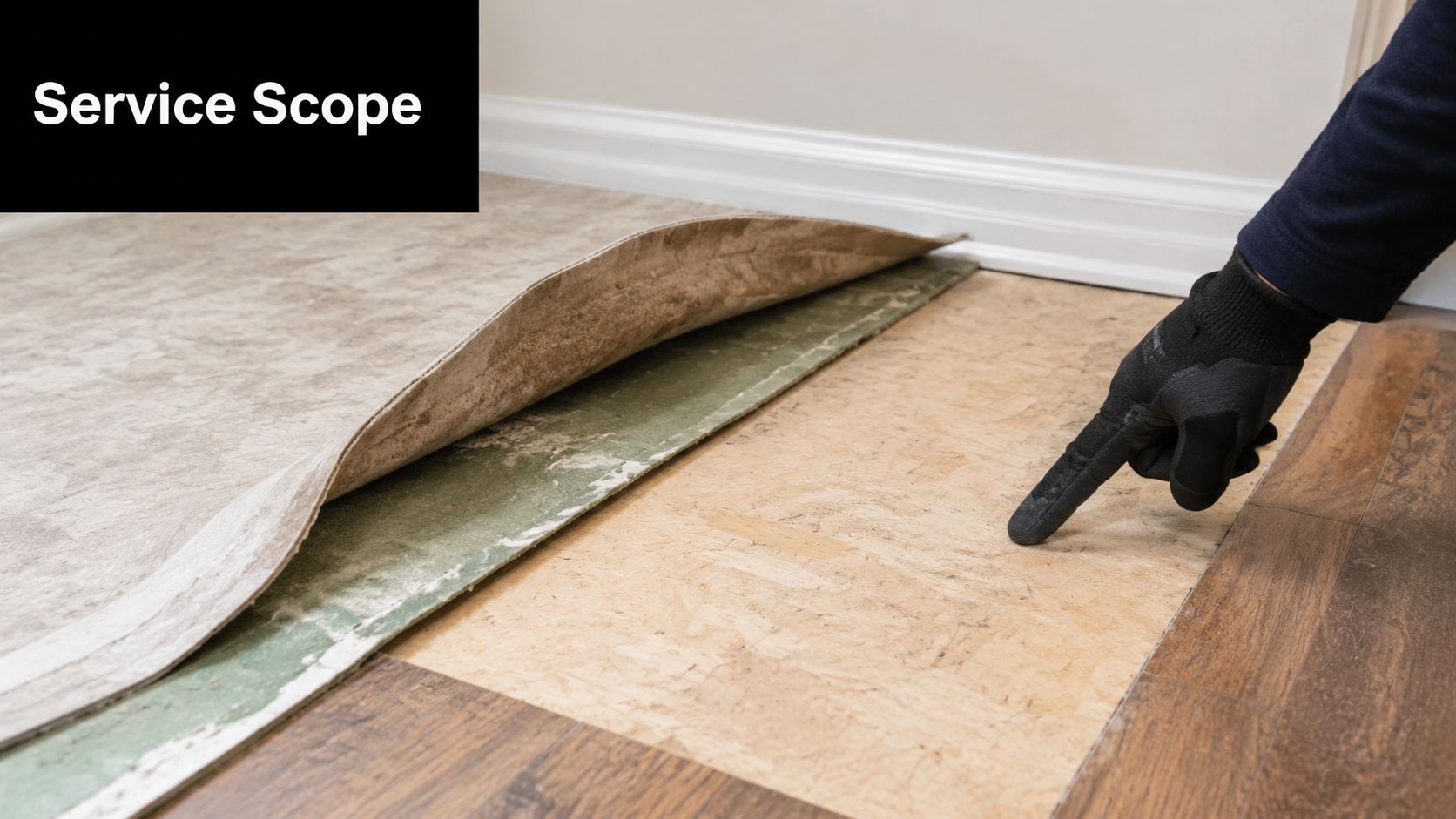
Professional flooring removal is more than demolition. A complete scope means removing the existing material, hauling debris, and getting the subfloor ready for the next installation. That's a key benchmark of quality in this trade, especially because tile, hardwood, carpet, and vinyl all come off differently and leave behind different problems (Wildcat Renovation flooring removal overview).
The visible removal
The part everyone notices is the surface coming up.
Carpet removal usually means pulling carpet and pad, then removing tack strips, staples, and any stuck sections around closets, doorways, and stairs. Laminate flooring and floating LVP often come up faster, but that doesn't mean the room is ready for new flooring right after. There may still be damaged underlayment, swollen areas, or transitions that need correction.
Tile flooring is a different animal. The tile itself is only part of the job. The harder part is often the thinset left bonded to the slab. Hardwood removal can also vary a lot depending on whether the floor is nailed, stapled, glued, or installed over another layer.
The hidden work that separates a good job from a bad one
A professional crew doesn't stop when the old material is in a pile. The next steps are what protect your new floor investment.
- Fastener cleanup means staples, cleats, nails, and tack strip pins are fully removed.
- Adhesive removal matters for glue-down products, old vinyl, and some hardwood jobs.
- Surface correction may involve scraping, grinding, or smoothing high spots.
- Debris hauling keeps the site from becoming a bottleneck for the installation crew.
Practical rule: If a quote only says “tear out old floor,” ask what happens to glue, staples, tack strips, debris, and slab prep.
Different materials need different removal methods
Here's where many homeowners get surprised. One room can look simple and still be labor-heavy once the floor starts coming up.
- Carpet comes out quickly, but the perimeter cleanup still matters.
- Tile and stone often demand aggressive removal plus surface prep afterward.
- Glued-down wood or vinyl can turn into an adhesive-removal job, not just a tear-out.
- Floating floors are simpler to lift, but they can hide soft spots or moisture damage underneath.
If you're living in the home during the project, protecting adjacent spaces matters too. For hallways, stairs, and rooms that aren't part of the demo, some homeowners use temporary carpet protection to reduce traffic damage while crews move tools and debris through the house.
What “ready for installation” should mean
A floor is ready when the next installer can walk in and start prep or installation without discovering a second demo job. That's the standard homeowners should expect for hardwood flooring, waterproof flooring, laminate, tile, or carpet replacement in Cumming, Woodstock, Roswell, or Alpharetta.
One practical note. Flacks Flooring states that its installation process includes removing existing flooring before the new installation begins, which is the kind of all-in scope many homeowners prefer when they don't want demo and installation split between different companies.
DIY Removal vs Hiring a Professional in Metro Atlanta
Some flooring removal services can be handled by a determined homeowner. Some really shouldn't be. The difference usually comes down to the material, the size of the job, the condition of the subfloor, and whether you can afford a mistake before new flooring goes in.
A spare bedroom with old carpet is one thing. A kitchen with tile and bonded thinset, or glued-down hardwood in a busy family home, is something else.
A side-by-side look
| Factor | DIY Approach | Professional Service |
|---|---|---|
| Upfront spending | Lower cash outlay at first, but tool rental, disposal, and patching can add up | Higher initial quote, but scope is usually clearer |
| Time commitment | Even a small job can eat up evenings and weekends | Crews work faster because removal is their trade |
| Tools and equipment | Pry bars, scrapers, utility knives, hammers, shop vacs, and sometimes rented demolition tools | Material-specific tools and removal systems already on site |
| Risk to subfloor | Higher risk if you pry too deep, chip slab edges, or leave residue | Better control over removal and prep quality |
| Cleanup and disposal | You handle bagging, hauling, and dump logistics | Debris hauling is often part of the scope |
| Best fit | Small carpeted room, light floating floor, or a homeowner with time and patience | Tile, glued products, large areas, occupied homes, listing prep, and tight schedules |
When DIY can make sense
DIY removal works best when the floor is easy to separate and the room is isolated. Carpet in a small bedroom is the classic example. If you can pull the carpet, remove the pad, and safely extract tack strips without damaging the subfloor, you may save money on labor.
If that's your project, this guide on how to remove old carpet is a useful starting point.
That said, even easy-looking carpet removal has a few traps. Staples can be everywhere. Old tack strips can splinter. Doorway transitions can hide surprises. A lot of DIY jobs stall not on the carpet itself, but on the cleanup required before the next installer can begin.
When a pro is the safer choice
Tile is where many DIY plans fall apart. The tile may come up, but the thinset doesn't. The room ends up covered in debris, the slab still isn't ready, and the new floor schedule gets pushed back.
The same is true with glued-down hardwood, old vinyl, or multiple layers of past renovations. Once the floor has adhesive, patching, or hidden damage underneath, removal becomes less about brute force and more about control.
If your new floor is premium hardwood, waterproof LVP, or a large carpet installation, protecting the subfloor is usually worth paying for.
The Metro Atlanta reality
In Metro Atlanta homes, a lot of projects happen while people are still living in the house. That changes the equation. Dust, noise, debris, and room access matter just as much as the tear-out itself. A DIY job that drags over several days can be more disruptive than a professional crew that gets in, removes the old floor, and leaves the site ready for the next phase.
For homeowners in Cumming, Canton, Marietta, Johns Creek, and Roswell, that's often the deciding factor. The question stops being “Can I remove this myself?” and becomes “Do I want to live with the disruption, risk, and cleanup if I do?”
Understanding Flooring Removal Costs and Timelines
Price is often the first question, but removal costs only make sense when you know what's driving them. Size matters. Material matters more. Subfloor condition matters most once the old flooring starts coming up.
For a useful benchmark, Angi reports laminate flooring removal averages about $400, with a typical range of $200 to $1,000, and roughly $2 to $3 per square foot for removal. A standard 200-square-foot floor can cost about $400 to $600 to remove (Angi laminate flooring removal cost guide).
What changes the quote
That benchmark helps, but no honest contractor should treat every floor like the same job.
- Material type drives labor. Floating laminate and some carpet jobs are simpler than tile or glued-down wood.
- Square footage affects labor hours, hauling volume, and room transitions.
- Subfloor condition can add prep if the slab or wood base has residue, rough spots, or damage.
- Access matters more than people think. Stairs, tight hallways, and occupied rooms slow removal down.
- Disposal needs can change the scope if the old flooring is heavy or bulky.
A fair quote should tell you whether you're paying for removal only, or removal plus cleanup and prep for the new floor. Those are not the same service.
Timelines are usually tied to complexity, not just size
Homeowners often assume the biggest room takes the longest. Sometimes that's true. Sometimes a smaller room with tile and bonded mortar takes more effort than a larger carpeted space.
Here's the practical way to think about schedule:
- Simple removal jobs move quickly if the old floor releases cleanly.
- Adhesive-heavy jobs slow down because scraping and grinding take time.
- Occupied homes require more care with access, containment, and cleanup.
- Multi-room renovations often depend on sequencing with painters, cabinet crews, and installers.
A realistic schedule protects the installation date. An unrealistic one creates downtime, rescheduling, and rushed prep.
Budgeting for the whole project, not just demo
Removal is one line item in a larger renovation. Homeowners comparing hardwood flooring installation cost, LVP replacement, or carpet installation near me should look at the full sequence. Removal, prep, product, and installation all affect the final budget.
If you're planning the full project, a flooring installation cost calculator can help frame the bigger picture before an in-home consultation.
And if you're also coordinating furniture relocation off-site or between rooms, broad budgeting references like best local moving rates can help you think through the moving side of the project, even though flooring and moving quotes are separate services.
The smart expectation
The most useful estimate is rarely the cheapest one. It's the one that clearly states what happens after the old floor comes out. If the quote doesn't address debris, adhesive, fasteners, or surface readiness, the timeline and budget can change fast once work begins.
That's where homeowners in Forsyth County and North Fulton get frustrated. They think they bought floor replacement, but what they bought was partial demolition. Those are very different outcomes.
Common Flooring Removal Pitfalls to Avoid
Most flooring failures don't start with the new product. They start with what was left behind, what got damaged during removal, or what no one checked before demo began.
Subfloor damage is the expensive mistake
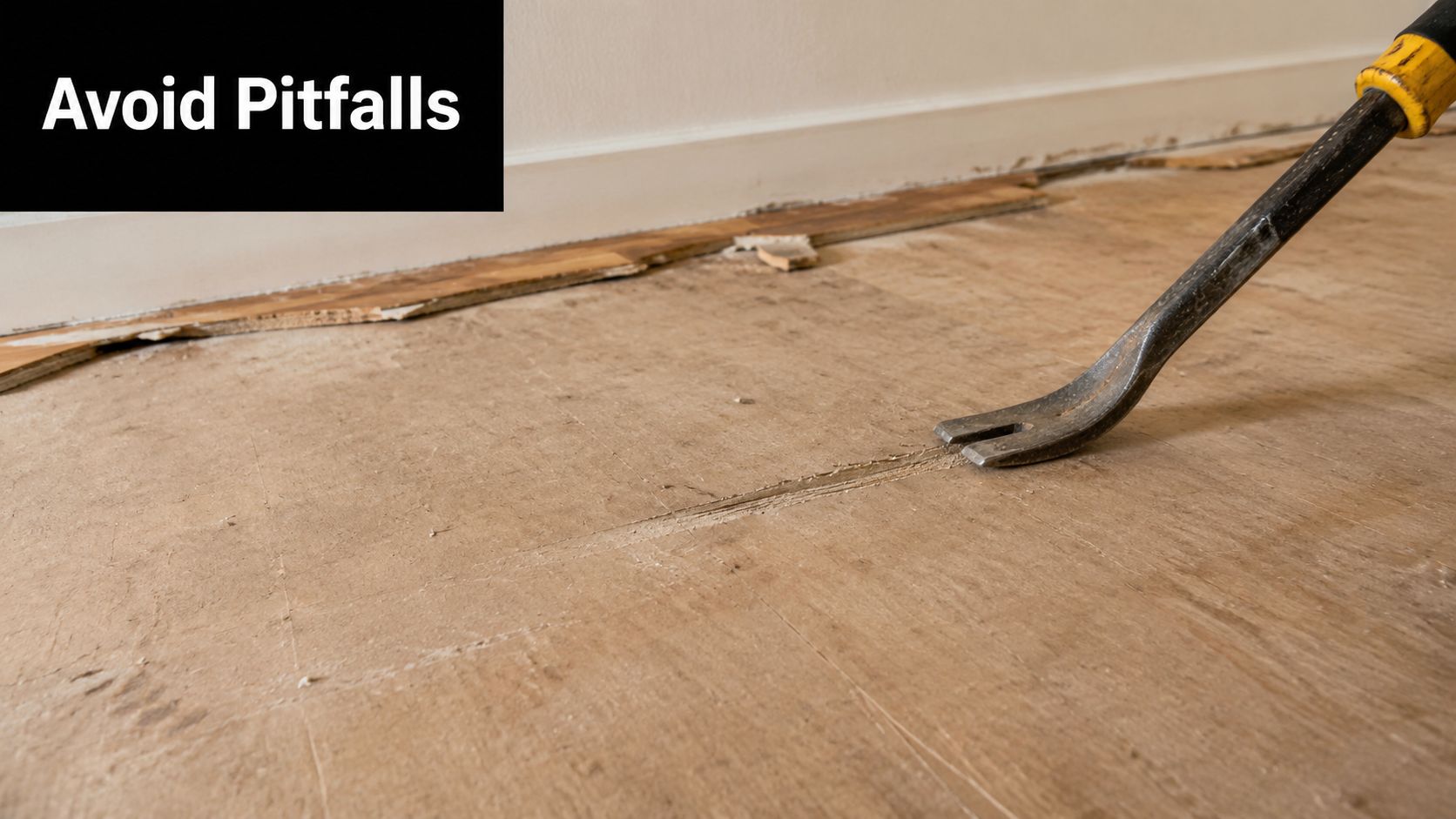
The biggest technical risk in flooring removal is damage to the slab or wood subfloor. Professional crews often use ride-on scrapers, diamond grinders, and integrated dust-control systems because rough scraping, adhesive buildup, and uneven removal can telegraph through or cause bond problems in new hardwood and waterproof flooring (Clean Site Flooring Removal).
That last part matters. Homeowners usually judge removal by what's gone. Installers judge it by what's left behind.
If the slab has gouges, leftover glue ridges, chipped sections, or uneven high spots, the new floor may not sit right. With LVP, you can end up seeing imperfections through the surface. With hardwood, you can get movement, poor bond, or an uneven finished feel.
Older materials need caution
One of the most overlooked issues in floor replacement is the age of the home and the age of the material being removed. Older vinyl flooring and some older adhesives can raise health and handling concerns. That isn't something to guess about on site.
If there's any question about what an old floor or adhesive contains, stop and get proper guidance before disturbing it further. A fast tear-out isn't worth creating a bigger problem for your household or the workers in the room.
Dust spreads farther than people expect
Dust is where homeowners feel the difference between rough demo and controlled removal. Traditional demolition can send fine debris into nearby rooms, vents, cabinets, fabrics, and electronics. In occupied homes around Cumming, Milton, and Johns Creek, that's a major issue because families often stay in the home during remodeling.
A better process uses containment and dust-controlled equipment so the work area stays more isolated and cleanup is manageable.
You can recover from a loud day of demo. It's much harder to recover from dust that ends up throughout the house.
Three mistakes that keep showing up
- Leaving residue behind. Glue lines, thinset ridges, staples, and tack strip damage all interfere with the next floor.
- Assuming every floor has to be removed. Some hard surfaces may be candidates for overlay if they're flat and sound.
- Chasing the cheapest tear-out. Low bids often skip prep details that matter later.
If you want a good overview of the bigger renovation problems these issues create, this article on flooring renovation mistakes and misconceptions is worth reading.
What works better
Good removal protects what needs to stay, removes what needs to go, and leaves the room ready for the installer. That sounds simple, but it takes discipline. The crews that do this well don't rush the prep stage, don't guess about hidden conditions, and don't treat cleanup like an afterthought.
That's what keeps a floor replacement from turning into a repair project.
Choosing Your Flooring Partner in Cumming and Forsyth County
Once you understand what removal involves, choosing the right company gets easier. You're not just hiring someone to rip out old flooring. You're hiring someone to protect the success of the new floor.
What to ask before you book
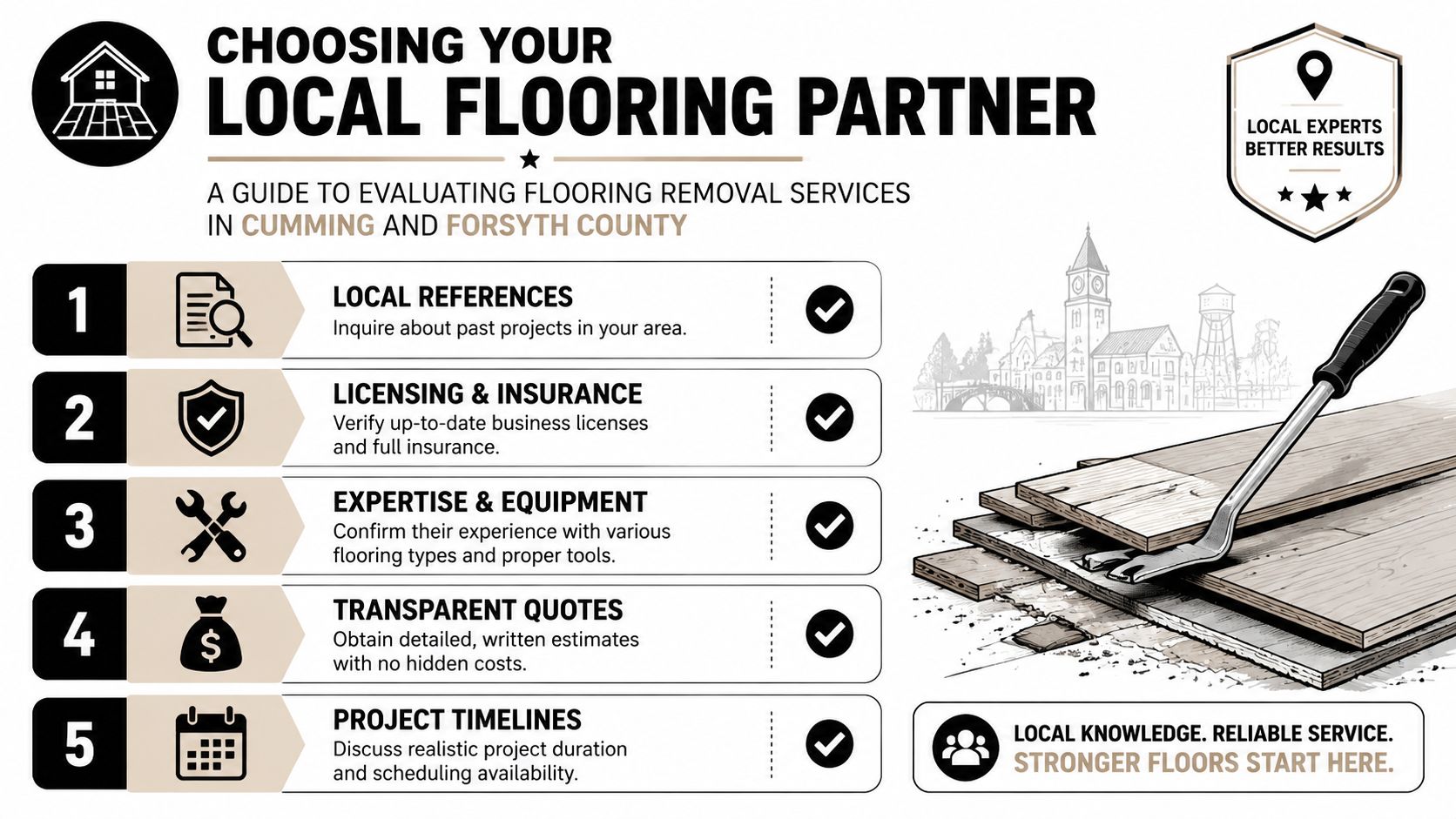
Use a short checklist when you talk with flooring contractors in Cumming, Johns Creek, Milton, or elsewhere in Forsyth County.
- Ask about material experience. Tile removal, hardwood removal, carpet tear-out, and waterproof flooring prep are not the same job.
- Ask what the quote includes. You want clarity on demo, debris hauling, adhesive cleanup, and subfloor prep.
- Ask how they handle occupied homes. Dust control, room access, and cleanup matter if you're living there during the project.
- Ask who installs the new floor. Some companies handle removal only. Others manage the full replacement process.
- Ask about insurance and current local work. Recent local references tell you more than generic promises.
What a solid consultation should feel like
A good in-home visit should be specific. The estimator should look at transitions, door clearances, existing floor height, material type, and the condition underneath if it's visible. They should also talk through your end goal, whether that's hardwood flooring installation, pet-friendly carpet, waterproof flooring for a basement area, or affordable flooring options for a rental turnover.
The right contractor talks as much about prep and condition as they do about color and style.
That's especially important in homes where buyers want scratch-resistant flooring for dogs, families want low-maintenance floors, or agents need fast floor replacement before listing. The partner you choose should understand both the removal and the finished result.
Frequently Asked Questions About Floor Replacement
Do I always need flooring removal before installing new floors
No. In some cases, modern waterproof flooring or engineered hardwood can be installed over existing hard-surface floors if they're flat and sound, which can reduce labor, time, and disposal costs (Six Floors Down flooring removal guidance). This is a smart question to ask during an in-home consultation because overlay works in some conditions and fails in others.
What's the best flooring after removal if I have pets and kids
For many Georgia households, the best fit is a floor that's easy to clean, handles traffic well, and doesn't make you nervous every time a dog runs through the room. Waterproof flooring and many LVP products are popular for that reason. Some homeowners still prefer hardwood for the look and long-term value, while others choose carpet in bedrooms for comfort. The right answer depends on where the floor is going and how the room is used.
Is carpet still a good option
Yes, especially in bedrooms, playrooms, and spaces where comfort matters more than moisture resistance. Carpet can still be a smart choice if you want a softer feel underfoot and a quieter room. The key is making sure the old tack strips, staples, and pad residue are fully addressed before the new carpet installation starts.
Can I stay in the home during flooring removal services
Usually, yes, but it depends on the scope. A single-room floor replacement is much easier to live through than a whole-home demo. If you're staying in the house, ask about work sequence, room access, dust control, and where furniture will go between phases.
Is floor repair ever better than replacement
Sometimes. If you have solid hardwood with cosmetic wear, refinishing may make more sense than full removal. If the existing floor is failing, uneven, water-damaged, or incompatible with the new layout, replacement is usually the better long-term decision.
If you're planning new floors in Cumming, Johns Creek, Milton, or anywhere in Forsyth County, Flacks Flooring is one local option for homeowners who want the removal, preparation, and installation process discussed clearly before work starts. An in-home consultation can help you figure out whether your project needs full tear-out, selective demo, or a different path to new hardwood, waterproof flooring, carpet, or LVP.