
If you're thinking about installing new hardwood floors, one of the first questions on your mind is probably, "What's this going to cost me?" On average, most homeowners find their hardwood flooring installation cost lands around $4,724. Of course, that's just a ballpark figure—the final number can swing anywhere from $2,469 to $7,032, sometimes even more.
The final price tag really boils down to a few key things: the type of wood you fall in love with, the size of your space, and what labor costs look like in your neck of the woods. Getting a handle on these variables is the best way to set a budget you can stick to.
A Snapshot of Hardwood Flooring Costs

Before we get into the nitty-gritty, let's look at the big picture. Think of it like buying a car—the sticker price is just the beginning. You also have to account for taxes, fees, and any upgrades you want. Hardwood flooring is similar. The wood itself is the base price, but things like underlayment, new trim, and the installer's time all add up.
Getting a grip on how all these pieces fit together is crucial. For a broader look at how service-based businesses structure their prices, you can find some helpful parallels in this guide on understanding service pricing and key cost factors.
Hardwood Flooring Installation Cost Summary
To make sense of the quotes you'll get from contractors, it helps to see where the money goes. Here’s a quick table breaking down the typical costs per square foot so you know what to expect.
| Cost Component | Average Range (Per Square Foot) | Typical Total Project Cost |
|---|---|---|
| Materials (Wood) | $4 – $15 | $2,000 – $6,000 |
| Labor | $3 – $12 | $1,500 – $5,000 |
| Total Project Cost | $7 – $27 | $3,500 – $11,000 |
This table gives you a great starting point, but remember that your specific choices will move the needle. For example, a classic solid hardwood installation might run you $11 to $25 per square foot when all is said and done. On the other hand, a more versatile engineered wood floor typically lands in the $7 to $20 per square foot range.
The material you choose is easily the biggest decision affecting your budget. If you're still weighing your options, our guide on https://flacksflooring.com/how-to-choose-hardwood-flooring/ is the perfect place to start. It'll walk you through finding that sweet spot between the look you want, the durability you need, and the price you can afford.
Unpacking Your Quote: Materials vs. Labor
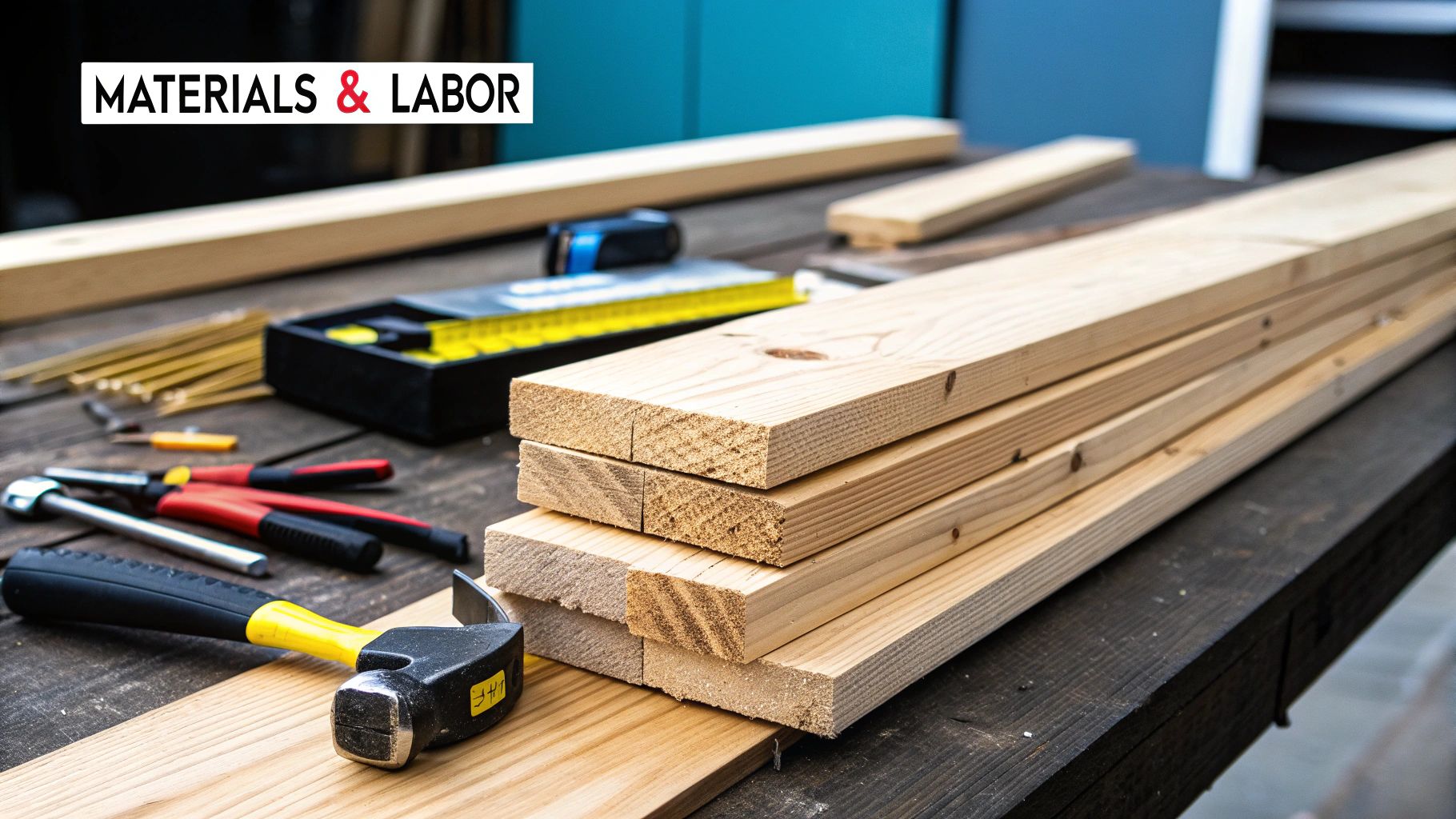
When you get an estimate for a new hardwood floor, you’re looking at a number that’s really two big pieces joined together: the cost of the wood itself and the cost of the skilled labor to install it. Understanding how these two parts work is the first step to getting a clear picture of where your money is going.
The biggest swing factor in your budget will almost always be the wood. Think of it like buying a car. You can get a solid, reliable model that does the job perfectly, or you can opt for a high-performance luxury vehicle with all the bells and whistles. The price difference is huge, and it's the same with hardwood. For example, a classic domestic wood like Red Oak usually runs between $4 and $9 per square foot. But if you've got your eye on something more exotic, like a dramatic Brazilian Walnut, you could be looking at $12 to $20 per square foot or more.
The choice between solid and engineered hardwood will also nudge the price up or down. Each has its pros and cons depending on your home and lifestyle. If you want to get into the nitty-gritty of different woods, our guide to hardwood species is a great place to start.
What Goes Into Labor Costs?
The other half of your quote is labor, and it’s a significant chunk—typically making up 30% to 50% of the entire project cost. It’s easy to underestimate this part, but you're not just paying someone to lay planks on the floor. You're investing in experience, precision, and the peace of mind that the job will be done right. Labor rates can vary widely, from $3 to $12 per square foot, depending on a few key things.
First and foremost is the installer's expertise. A true craftsman with a decade of experience will charge more than a general handyman, and for good reason. They bring an efficiency and eye for detail that prevents common pitfalls and ensures the floor looks perfect for years to come.
A professional installer does more than just place planks. They assess the subfloor, acclimate the wood properly, and execute precise cuts around tricky areas like doorways and vents, ensuring a flawless and long-lasting result.
The complexity of the installation is another major factor. A simple, square room is a very different job from one with challenging features. Here are a few things that will add to the labor bill:
- Fancy Patterns: Want a herringbone or diagonal layout? It looks amazing, but it also requires far more planning, measuring, and cutting than a simple straight installation.
- Stairs and Landings: Every single step is its own mini-project, demanding custom cuts and a perfect fit. This is one of the most labor-intensive parts of any flooring job.
- Awkward Spaces: Rooms with odd angles, curved walls, or lots of nooks and crannies require a higher level of skill and take much more time to complete.
Finally, where you live matters. Labor rates in a major city with a high cost of living are naturally going to be higher than in a small rural town. It’s always a good idea to get a few different quotes from local installers to get a feel for the standard pricing in your area.
The Key Factors That Drive Your Final Cost
While the wood you choose and the labor to install it are the two biggest chunks of your budget, a few other critical variables can really move the needle on the final hardwood flooring installation cost. Think of it this way: you can plan the main road trip, but it's the detours, tolls, and unexpected flat tires that change your total travel expenses.
The all-in cost for a professional installation can land anywhere from $6 to $25 per square foot. For a typical room or two, you’re often looking at a total bill between $2,500 and $7,000. Why such a huge range? It all comes down to the details we're about to unpack, from the species of wood to the current state of your subfloor. Getting a handle on these factors is the key to a realistic budget.
The Wood Itself: Species and Grade
The type of wood you pick is, without a doubt, one of the biggest cost drivers. It's no different than buying a car—a basic sedan isn't going to have the same sticker price as a luxury import. Domestic woods like Red Oak are usually your most budget-friendly starting point. From there, you move up to more expensive options like durable Hickory or exotic woods like Brazilian Cherry, which cost more due to their rarity, hardness, and unique look.
But it’s not just the species. The grade of the wood also plays a huge part. "Select grade" is the top-of-the-line stuff—it’s very uniform in color with almost no knots, and it carries the highest price tag. On the other end, you have "Character grade" or "#2 Common," which has more of the wood's natural personality, like knots and color streaks. This lowers the price and delivers a rustic charm that many people actually prefer.
This infographic gives a quick snapshot of how costs compare for three popular wood species.
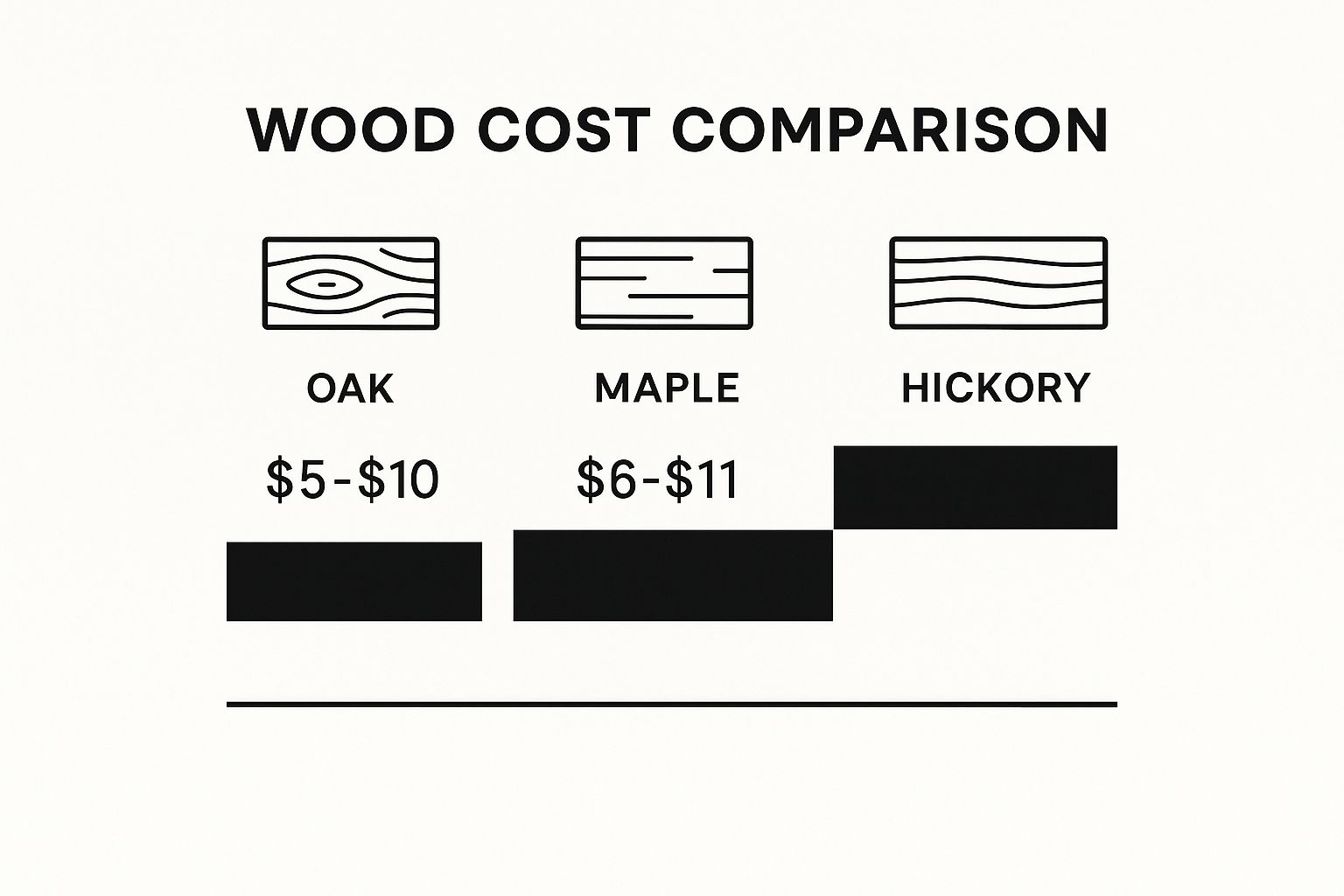
As you can see, even among common North American woods, there’s a clear step up in price as you go from Oak to Maple and then to Hickory.
To give you a clearer picture, let's compare some of the most popular hardwood options side-by-side. The Janka hardness rating is a standard industry test that measures a wood's resistance to denting and wear—the higher the number, the tougher the wood.
Cost and Durability of Popular Hardwood Species
| Wood Type | Average Material Cost (Per Sq. Ft.) | Janka Hardness Rating | Best For |
|---|---|---|---|
| Red Oak | $3 – $9 | 1290 | High-traffic areas, traditional homes, budget-conscious projects |
| White Oak | $4 – $10 | 1360 | Modern aesthetics, kitchens, and areas prone to moisture |
| Maple | $4 – $11 | 1450 | Contemporary spaces, high-traffic zones, homes with kids/pets |
| Hickory | $5 – $12 | 1820 | Rustic or farmhouse designs, extremely high-traffic areas |
| Brazilian Cherry | $6 – $13 | 2350 | Luxury applications, formal living/dining rooms, color richness |
| Pine | $2 – $6 | 690 – 900 | Low-traffic rooms, rustic or cabin-style homes, wide plank look |
As the table shows, there’s often a direct link between a wood's durability and its price. Softer woods like Pine are much more affordable but won't stand up to heavy traffic nearly as well as an incredibly hard wood like Hickory or Brazilian Cherry.
Solid vs. Engineered Hardwood
The next big decision is whether to go with solid or engineered planks. Solid hardwood is exactly what it sounds like: one solid piece of wood from top to bottom. Its biggest advantage is longevity—you can sand and refinish it multiple times over its life. The downside? It's typically more expensive and doesn't handle moisture well, making it a bad choice for basements or bathrooms.
Engineered hardwood is a bit different. It’s constructed with a top layer of real wood veneer over a core of high-quality plywood. This layered structure makes it much more stable against changes in temperature and humidity. The trade-off is that it can only be refinished once or twice, if at all, depending on how thick that top veneer is. While often seen as the more affordable option, don't be fooled—some high-end engineered floors can cost just as much as solid wood.
Subfloor Condition and Room Complexity
Now for the hidden variables that can catch homeowners by surprise. The condition of your subfloor is a huge one. Think of it as the foundation of your house—if it’s not perfectly level, stable, and dry, everything you build on top of it will have problems. Any good installer will insist on fixing issues here first, and that prep work adds to the final bill.
An uneven or damaged subfloor is probably the most common reason for unexpected costs in a flooring project. Fixing it with leveling compounds, replacing sections of plywood, or adding a moisture barrier can add $1 to $4 per square foot to your invoice.
Finally, the shape of the room itself matters. A simple, rectangular room is a breeze to install. But the more complex the layout, the more labor time—and cost—you can expect.
- Intricate Layouts: Rooms with curves, weird angles, or lots of alcoves require far more cuts and precision from the installer.
- Stairs: This is where labor costs can really climb. Installing hardwood on stairs is meticulous, highly skilled work that takes a lot of time.
- Obstacles: Every fireplace, built-in cabinet, or kitchen island the crew has to cut around adds another layer of complexity and time to the job.
Budgeting for Hidden Installation Costs
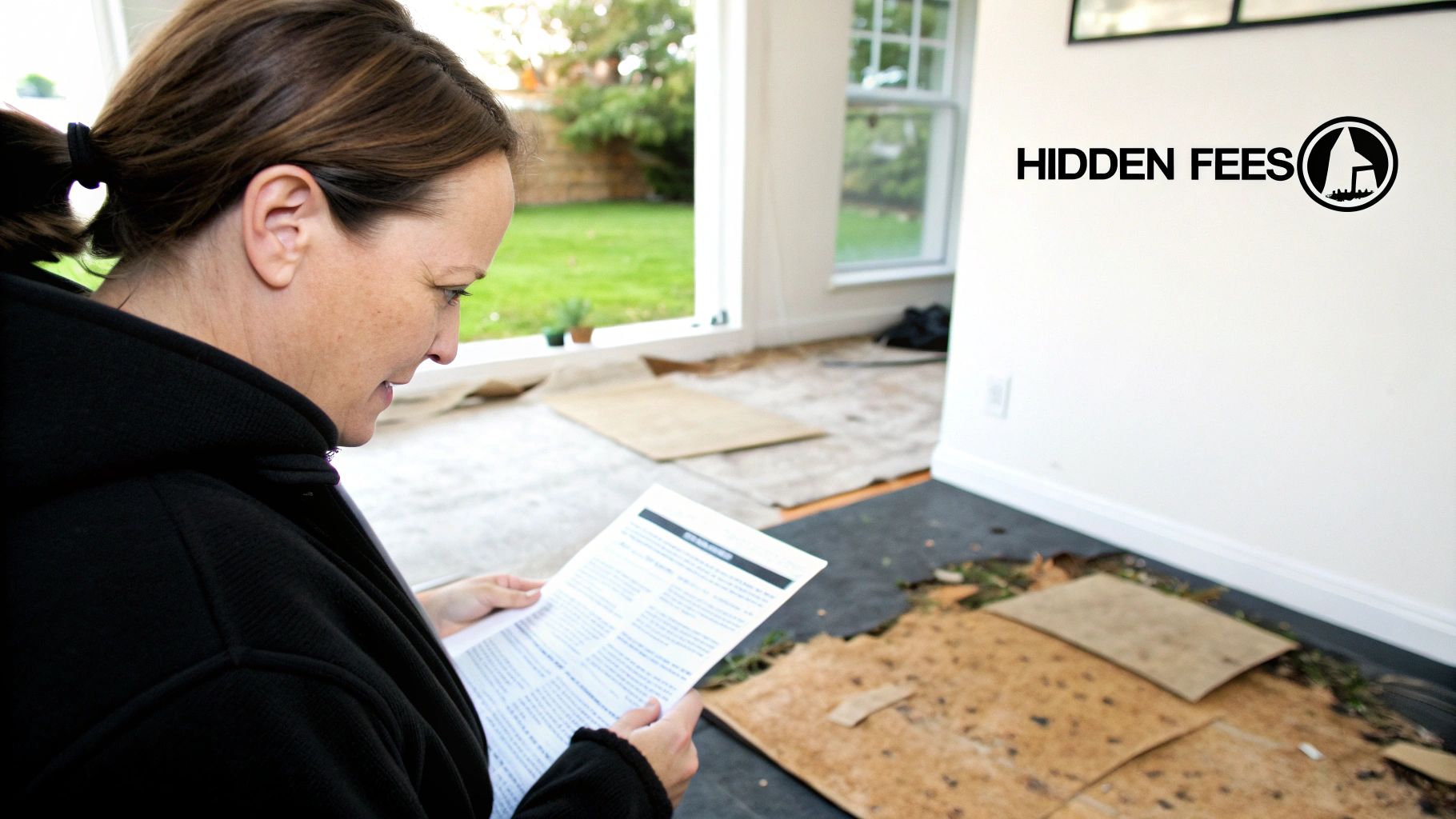
The first quote you get for your hardwood flooring installation cost is just the starting line, not the finish. It’s a common pitfall for homeowners to get blindsided by extra charges that weren't on that initial estimate.
Think of it like planning a big trip. You budget for the flight and hotel, but you know you'll also need money for cabs, meals, and maybe a few unexpected souvenirs along the way. Your flooring project is no different. Knowing what those "souvenirs" might be is the secret to building a budget that doesn't fall apart.
Common Expenses Not in Your Initial Quote
So, what are these mysterious costs that can pop up? Most of the time, they relate to the prep work needed to get your space ready for its beautiful new floors, or the finishing touches that pull the whole look together. Contractors often bill for these tasks separately because the work involved can change dramatically from one home to the next.
Here are a few of the most common add-ons to watch out for:
- Removing Old Flooring: Ripping out that old carpet or tile isn't just hard work; it also costs money to haul it away. Plan on this costing anywhere from $0.50 to $4.00 per square foot.
- Subfloor Repair or Leveling: Your new hardwood needs a solid, flat foundation. If your subfloor is uneven, water-damaged, or squeaky, it has to be fixed first. This crucial step can add $1 to $4 per square foot to the final bill.
- Moving Furniture: Some people tackle this themselves, but if you want the installation crew to handle it, expect an extra charge. This is often billed as a flat fee per room or by the hour.
- Baseboard Replacement: Sometimes old baseboards get damaged during removal, or they just don't sit right with the new floor's height. Installing fresh baseboards typically runs $2 to $6 per linear foot.
The best way to keep your budget in check is to ask for a line-item quote. This detailed breakdown tells you exactly where every dollar is going, from the wood itself to each of these potential extras.
Getting a handle on these variables from day one is essential. So many headaches can be sidestepped with a bit of foresight, a theme we see with all sorts of common flooring renovation mistakes and misconceptions.
Talk through these potential tasks with your installer upfront. That conversation will help you create a realistic budget that covers every part of the job, so you can get that stunning new floor without the last-minute financial stress.
DIY Installation vs. Hiring a Professional
Deciding whether to install your new hardwood floors yourself or hire a professional is one of the biggest forks in the road for your budget. It’s tempting to go the DIY route—the idea of saving all that money on labor is hard to ignore. But it's a path that's often more complicated than it looks on a weekend home improvement show.
Sure, you won't be writing a check to a contractor, but you'll need the right arsenal of tools. We're talking about specialized equipment like a flooring nailer, a good miter saw, and an undercut jamb saw. Renting or buying these can quickly add up, often costing several hundred dollars and taking a serious bite out of your "savings."
Weighing the Risks of DIY
Beyond the cost of tools, there's the skill involved. Installing hardwood flooring is a craft that demands precision. One tiny mistake on the first row can telegraph across the entire room, leaving you with crooked lines that are impossible to unsee.
Even worse are the mistakes you can't see right away. If you don't let the wood acclimate to your home's humidity properly, you could be looking at buckling or unsightly gaps a few months down the line. Fixing those kinds of problems is often more expensive than hiring a pro in the first place.
And here’s the real kicker: the warranty. Many hardwood manufacturers will void their warranty entirely if the flooring isn't installed by a certified professional following their exact guidelines. That short-term saving could end up costing you any long-term protection on a very expensive product.
Going the DIY route is a gamble. You're betting your own time, patience, and the full cost of the materials on your ability to pull off a pro-level job with zero experience.
The Value of a Professional Installer
Hiring a pro is about more than just getting the work done; it's an investment in getting it done right. The upfront labor cost is higher, of course, but what you're really buying is expertise, efficiency, and—most importantly—peace of mind.
A seasoned installer has seen it all. They know how to spot subfloor issues you'd miss, make perfect cuts around awkward doorways, and lay the floor in a way that ensures it will look great for decades. They also work incredibly fast. A job that might consume all your weekends for a month could be done by a pro in just a few days.
Best of all, a reputable installer guarantees their work. If there's an issue with the installation, they come back and fix it. That guarantee, coupled with keeping your manufacturer’s warranty intact, creates a safety net for your investment that you just can't get when you go it alone. The final choice really boils down to how much you value your time and how comfortable you are with the risks.
How to Manage Your Flooring Budget
Knowing the numbers behind your hardwood flooring cost is one thing, but actually keeping them in check is a whole different ball game. A little strategy goes a long way, and you can definitely bring that final bill down without sacrificing the beautiful, high-quality floors you've been dreaming of. This is how you go from just buying flooring to making a savvy investment in your home.
The single most powerful move you can make? Get multiple quotes. Seriously. Always get at least three detailed estimates from reputable, local installers. This does more than just show you the going rate in your area; it also gives you a feel for each contractor’s professionalism and how thoroughly they assess your project.
Smart Choices That Save Money
You can also make some clever choices with your materials that will really help your budget. For example, think about using engineered hardwood in places like basements or condos. It’s more stable against moisture changes—a huge plus in those environments—and gives you that gorgeous, real-wood look for less than solid hardwood.
Here’s another pro tip: try to schedule your installation during a contractor’s slow season. That’s usually in the late fall or winter. With less demand, you’ll often find their rates are more competitive.
If you’re looking into ways to finance the project, certain programs are designed specifically for home renovations. An FHA 203(k) loan, for instance, can be a great option to roll your flooring costs into your mortgage.
A new hardwood floor isn’t just an expense; it’s a powerful investment. Homes with hardwood floors often sell faster and for more money, meaning a significant portion of your initial cost can be recouped in your home's resale value.
When you start thinking of your floor as an asset, the entire picture changes. There's a reason the global hardwood flooring market is valued at over $53 billion—it adds real, tangible value and timeless style. By making smart decisions, you're not just managing a budget; you're building equity one plank at a time.
Frequently Asked Questions
When you're diving into a big project like new flooring, a few questions are bound to pop up. We get it. To help you feel confident and prepared, we've put together answers to the things we hear most often from homeowners about the cost to install hardwood floors.
How Much Does Labor Cost for Hardwood Floor Installation?
Labor is a big piece of the puzzle, usually accounting for anywhere from 25% to 40% of your total project cost. If you break it down by the square foot, you're typically looking at a range of $3 to $12 for the installation itself.
Of course, that price isn't a simple, one-size-fits-all number. It moves up or down based on a few key things: where you live, how complex the job is, and the installation method required for your specific wood. A straightforward installation in a basic, square room is going to be on the lower end, while a custom herringbone pattern winding up a staircase will naturally cost more.
Is Engineered Hardwood Always Cheaper Than Solid Hardwood?
That’s a common assumption, but the answer is surprisingly, no. While your basic, entry-level engineered planks often cost less than solid wood, that price gap can disappear fast once you start looking at higher-quality options.
Premium engineered hardwood, especially versions with a thick, durable top layer of a sought-after wood like white oak or walnut, can easily match or even exceed the price of a standard solid oak floor.
It's less about the "solid vs. engineered" label and more about the quality of the product. The real cost drivers are the wood species on top, how thick that wear layer is, and the overall construction of the plank. Always compare specific products, not just the general category.
The best approach is to focus on the specs of the exact flooring you're considering to get a true side-by-side cost comparison.
How Do I Get an Accurate Installation Estimate?
There's really only one way to get a number you can count on: an in-home consultation. You should always aim to get detailed quotes from at least three reputable, local flooring contractors. A true pro needs to see the space in person to give you an accurate price.
During that on-site visit, the installer will:
- Measure Precisely: They'll take exact measurements of the rooms, including closets and nooks, and factor in the necessary waste.
- Assess the Subfloor: This is crucial. They'll check the condition of your subfloor, looking for uneven spots, signs of moisture, or damage that has to be fixed before new floors can go in.
- Identify Complexities: They'll make note of any tricky areas like stairs, curved walls, fireplaces, or built-in cabinets that demand more time and skill.
Any quote you get over the phone or through email, without someone actually seeing your home, is just a ballpark guess. It's almost guaranteed to change once the real work begins.
Ready to get a clear, accurate quote for your project? At Flacks Flooring, we provide detailed, in-home consultations to help homeowners in Cumming, Johns Creek, and Milton understand their flooring options. Let our 30 years of experience guide you to the perfect hardwood floor for your home. Visit us at https://flacksflooring.com to schedule your consultation today.