
When you start weighing the hardwood flooring pros and cons, you quickly see the classic trade-off. You get that stunning, timeless beauty and serious long-term value, but it comes with a higher price tag upfront and some specific care requirements. The appeal is undeniable, but it's essential to be honest about whether its practical demands truly fit your lifestyle.
This guide is designed to give you a balanced, realistic look at what is, for most people, a major home investment.
The Enduring Appeal of Hardwood Floors
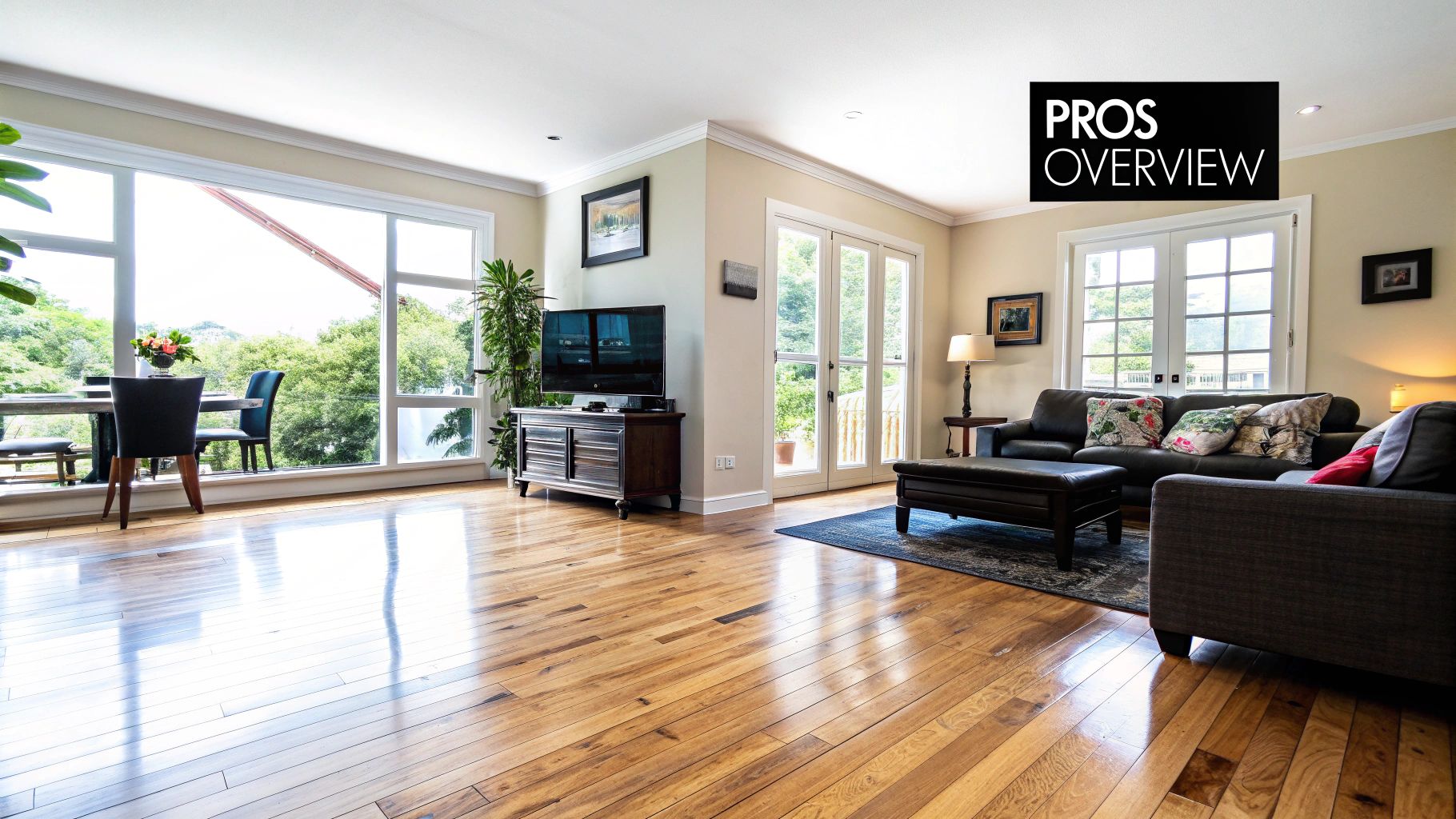
For generations, hardwood has been the go-to for homeowners who want natural elegance. It has this incredible ability to make a space feel warm and inviting, fitting in with just about any design style you can imagine—from a cozy, rustic farmhouse to a clean, modern minimalist home. It’s more than just a floor; it becomes a core part of your home’s character.
This isn't just a feeling; the numbers back it up. The global hardwood flooring market was valued at around USD 51.38 billion in 2024 and is expected to keep growing. That tells you there’s a consistent, powerful demand for flooring that looks great and lasts.
But picking the right floor is about more than just looks. You have to think about how it's going to hold up in the real world, with your family, your pets, and your life.
The central question is simple: do the undeniable benefits of hardwood floors align with the realities of your budget, home environment, and daily life?
Instead of just giving you a simple list of good versus bad, we’re going to dig into the things that really matter so you can make a confident decision.
- Aesthetic Versatility: How well does wood actually adapt to different interior designs?
- Practical Demands: What are the real maintenance needs and durability challenges you'll face day-to-day?
- Lifestyle Compatibility: Is it a smart choice for a busy home with kids, pets, or a lot of foot traffic?
Ultimately, understanding the full picture—from the subtle differences of dark vs light hardwoods to the total installation cost—is the key to choosing a floor you’ll be happy with for decades.
What Makes Hardwood Flooring a Top Choice?
When you're weighing the hardwood flooring pros and cons, the benefits often tip the scales for good reason. It’s not just about how great it looks the day it’s installed; hardwood is an investment that pays you back for years to come.
One of the biggest draws is its incredible lifespan. Carpet wears out, and vinyl can get dated, but a properly maintained solid hardwood floor can last for 100 years or more. It’s not just a floor covering; it becomes a permanent, structural part of your home.
This kind of durability means you’re getting a fantastic return on your investment. Adding hardwood flooring isn’t just an expense—it’s a home improvement that genuinely boosts market value. Just ask any realtor; homes with hardwood tend to attract more buyers and often sell at a better price.
A Cleaner, Healthier Home
Here’s a benefit you can feel: hardwood floors dramatically improve indoor air quality. This is a game-changer, especially for anyone dealing with allergies, asthma, or just a sensitivity to dust.
Think about it—carpet acts like a giant sponge, trapping dust, pet dander, pollen, and all sorts of other irritants deep within its fibers. Hardwood’s smooth, solid surface gives those allergens nowhere to hide. A quick vacuum or sweep, and they’re gone for good.
By getting rid of the porous fibers that become a breeding ground for dust mites and mold, hardwood floors help create a cleaner, more breathable atmosphere for your entire family.
Style That Adapts to You
Hardwood’s timeless beauty is one of its most celebrated features. It works with literally any design aesthetic, from a cozy, rustic farmhouse vibe to an ultra-modern, minimalist space. It’s like a perfect blank canvas for your home.
And the options for customization are nearly endless.
- Wood Species: You can go for the deep, luxurious tones of walnut, the classic, inviting warmth of oak, or the bright, contemporary feel of maple. Each has its own distinct personality.
- Finishes: A high-gloss finish creates a sleek, formal look, while a modern matte or satin finish offers a more natural, understated elegance.
- Plank Sizes: The width of the boards can completely change a room's feel. Traditional narrow strips give a classic look, while today's popular wide planks create a more open, expansive sense of space.
Because it’s so versatile, your hardwood floor will never look dated. As you change your furniture and paint colors over the years, the floor remains a constant, elegant foundation. And if you ever do want a change, you can simply refinish it—a new stain or finish can completely transform its look without the cost of a full replacement.
For a quick overview, this table breaks down the main reasons hardwood remains a favorite.
Key Benefits of Hardwood Flooring at a Glance
| Benefit | Description |
|---|---|
| Exceptional Longevity | Can last for over a century with proper care, making it a permanent fixture of the home. |
| Strong ROI | Consistently adds real estate value, helping homes sell faster and at a higher price point. |
| Healthier Indoor Air | Easy to clean and doesn't trap allergens like dust, pollen, or pet dander, unlike carpet. |
| Timeless Aesthetics | Offers a classic, versatile look that complements virtually any interior design style. |
| Highly Customizable | A wide variety of species, plank sizes, and finishes allow for a completely personalized look. |
| Easy to Maintain | Simple sweeping and occasional mopping are all that's needed for routine cleaning. |
Ultimately, hardwood offers a powerful combination of beauty, durability, and long-term value that few other flooring materials can match.
Looking at the Downsides of Hardwood Flooring
It’s easy to get swept up in the classic beauty of hardwood, but a realistic look at the hardwood flooring pros and cons means acknowledging its practical challenges. For many people, the biggest roadblock is the upfront cost. Hardwood is simply one of the pricier flooring options out there, not just for the wood itself but for the professional installation you need to get it right.
This cost factor is making a real dent in the market. As other flooring types get better and more popular, hardwood sales have felt the squeeze. In the residential replacement sector—which is about two-thirds of the whole market—sales dropped to $1.845 billion in 2024. That's a 9% decline from the year before and the first time sales have fallen below the $2 billion mark in years. It’s a clear sign that homeowners are weighing the price tag very carefully.
It's Not Invincible
Beyond the initial investment, you have to live with the fact that hardwood can be surprisingly delicate. It shows the signs of a busy life far more easily than tougher modern materials.
- Scratches and Dents Happen: Drop a heavy pot in the kitchen or watch your dog slide around a corner, and you could be left with a permanent mark. Some people call this "character," but for many, it's just a blemish.
- Water is the Enemy: This is hardwood's kryptonite. Spills need to be cleaned up instantly before they soak in and stain the wood. In humid climates or if you have a leak, the boards can cup (when the edges raise up) or warp, creating an uneven surface that's expensive to fix.
Because of this, putting hardwood in areas with a lot of moisture, like a full bathroom or a basement, is almost always a bad idea. The risk of water damage is just too high.
The Ongoing Commitment to Maintenance
One of hardwood's biggest selling points is its longevity, but that lifespan isn’t guaranteed without some serious effort. Keeping those floors beautiful requires a consistent care routine and, every so often, a major overhaul.
Day-to-day care is straightforward—use the right cleaners and go easy on the water. The real commitment comes with refinishing. Depending on how much foot traffic your floors see, you'll need to have them professionally sanded down and sealed again every 7 to 10 years to get rid of the scratches and bring back that original glow.
Refinishing isn't just a deep clean; it’s a full-blown renovation project. A crew comes in, sands the entire surface down to bare wood—which creates a ton of dust—and then applies multiple new coats of stain and protective finish. It’s disruptive, to say the least.
While the beauty of hardwood is undeniable, you have to budget for the long haul. The cost to refinish hardwood floors is a recurring expense that's a real part of owning them. It's something every homeowner should factor in before making that initial purchase.
How Hardwood Stacks Up Against Popular Alternatives
It's one thing to love the idea of solid hardwood, but a truly informed decision means sizing it up against the competition. Today's market is full of impressive alternatives like Luxury Vinyl Plank (LVP), laminate, and engineered hardwood. Each brings something different to the table, and understanding their unique trade-offs is key to weighing the pros and cons of hardwood.
Let’s be honest, in some rooms, solid hardwood is just a non-starter. Think bathrooms, kitchens, and basements. That's where a material like Luxury Vinyl Plank (LVP) really shines. It's 100% waterproof, so you never have to worry about spills or moisture. While modern LVP does a fantastic job mimicking the look of real wood, it simply can't replicate that authentic, solid feel underfoot or add the same long-term value to your home.
Then you have laminate flooring, which has built its reputation on being incredibly tough. Its wear layer is a beast when it comes to standing up to scratches from pet claws and kids' toys. But like LVP, it has an Achilles' heel: you can't refinish it. A deep gouge is there to stay unless you replace the entire plank. Solid wood, on the other hand, can be sanded and restored to its original glory multiple times.
The Rise of Wood-Look Alternatives
There's no denying the flooring market has shifted. The convenience and affordability of synthetic options have made a real dent in hardwood's dominance. It's a classic case of new technology meeting changing consumer needs.
Hardwood’s share of total hard surface flooring sales dropped from nearly 23.4% in 2015 to just 12.6% in 2024 by revenue. This change highlights how consumer priorities have expanded to include lower costs and easier maintenance alongside traditional quality. You can get more details on how hardwood stats show a changing market on fcnews.net.
Engineered hardwood is the interesting middle-ground player. It gives you that genuine wood experience because the top layer is real hardwood. Underneath, though, is a core of plywood layers that gives it superior stability against humidity swings. This construction means you can install it in places solid wood can't go, like basements or over concrete. The trade-off? You can only refinish it once or twice, depending on how thick that top veneer is.
The installation method itself can also be a deciding factor, as this graphic shows.
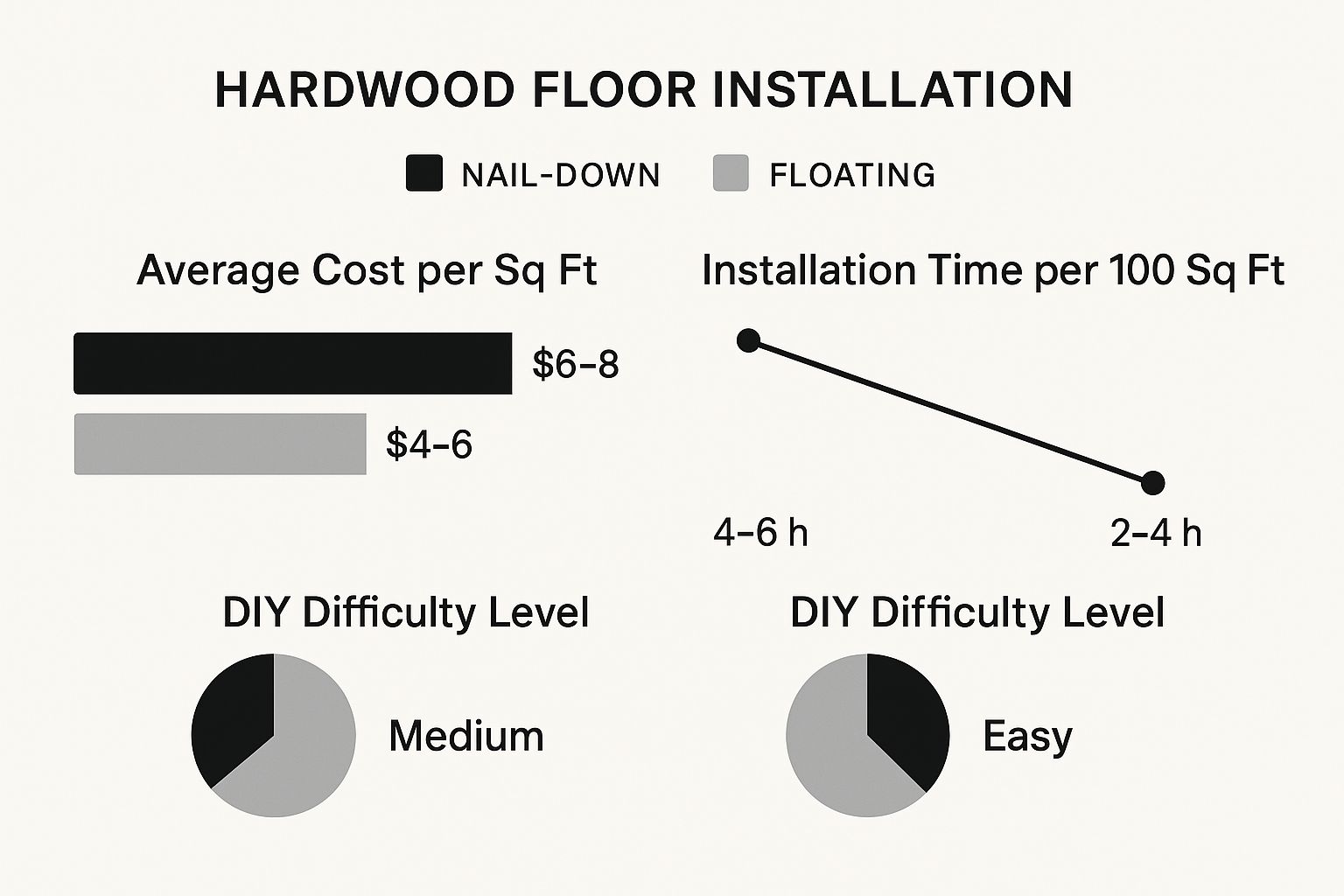
As you can see, a floating floor—the go-to method for laminate and many engineered products—is often faster and cheaper. It’s a much more approachable project for a DIYer compared to the traditional nail-down installation required for solid hardwood.
Hardwood vs Alternatives A Feature Comparison
To make sense of it all, it helps to see these options side-by-side. This table breaks down how solid hardwood compares to the three main contenders across the most important features.
| Feature | Solid Hardwood | Laminate | Luxury Vinyl Plank (LVP) | Engineered Hardwood |
|---|---|---|---|---|
| Material Makeup | 100% solid wood plank | Multi-layer synthetic with a printed image layer | 100% synthetic vinyl core | Real wood veneer over a plywood or HDF core |
| Water Resistance | Poor. Prone to warping and water damage. | Fair. Water-resistant top, but core can swell. | Excellent. Completely waterproof. | Good. More stable than solid wood, but not waterproof. |
| Durability | Good. Can scratch but is repairable. | Excellent. Highly scratch-resistant wear layer. | Very Good. Resists scratches and dents. | Good. Top layer is real wood and can scratch. |
| Refinishing | Yes, multiple times (up to 5-7 times) | No. Damaged planks must be replaced. | No. Damaged planks must be replaced. | Maybe, 1-2 times depending on veneer thickness. |
| Feel Underfoot | Solid, warm, and authentic | Hard and can feel hollow | Softer and more comfortable than laminate | Feels like real wood, but slightly less solid |
| Average Cost | High ($8-$25 per sq. ft. installed) | Low ($3-$7 per sq. ft. installed) | Low to Mid ($3-$10 per sq. ft. installed) | Mid to High ($6-$20 per sq. ft. installed) |
| Resale Value | Excellent. Adds significant value to a home. | Neutral. Does not add or subtract value. | Neutral to Minor. Can be a plus for buyers. | Good. Adds value, though less than solid hardwood. |
Ultimately, the "best" floor depends entirely on your room, your lifestyle, and your budget. While nothing quite matches the timeless appeal and longevity of solid hardwood, its modern counterparts offer compelling advantages in specific situations.
Making the Right Flooring Choice for Your Lifestyle
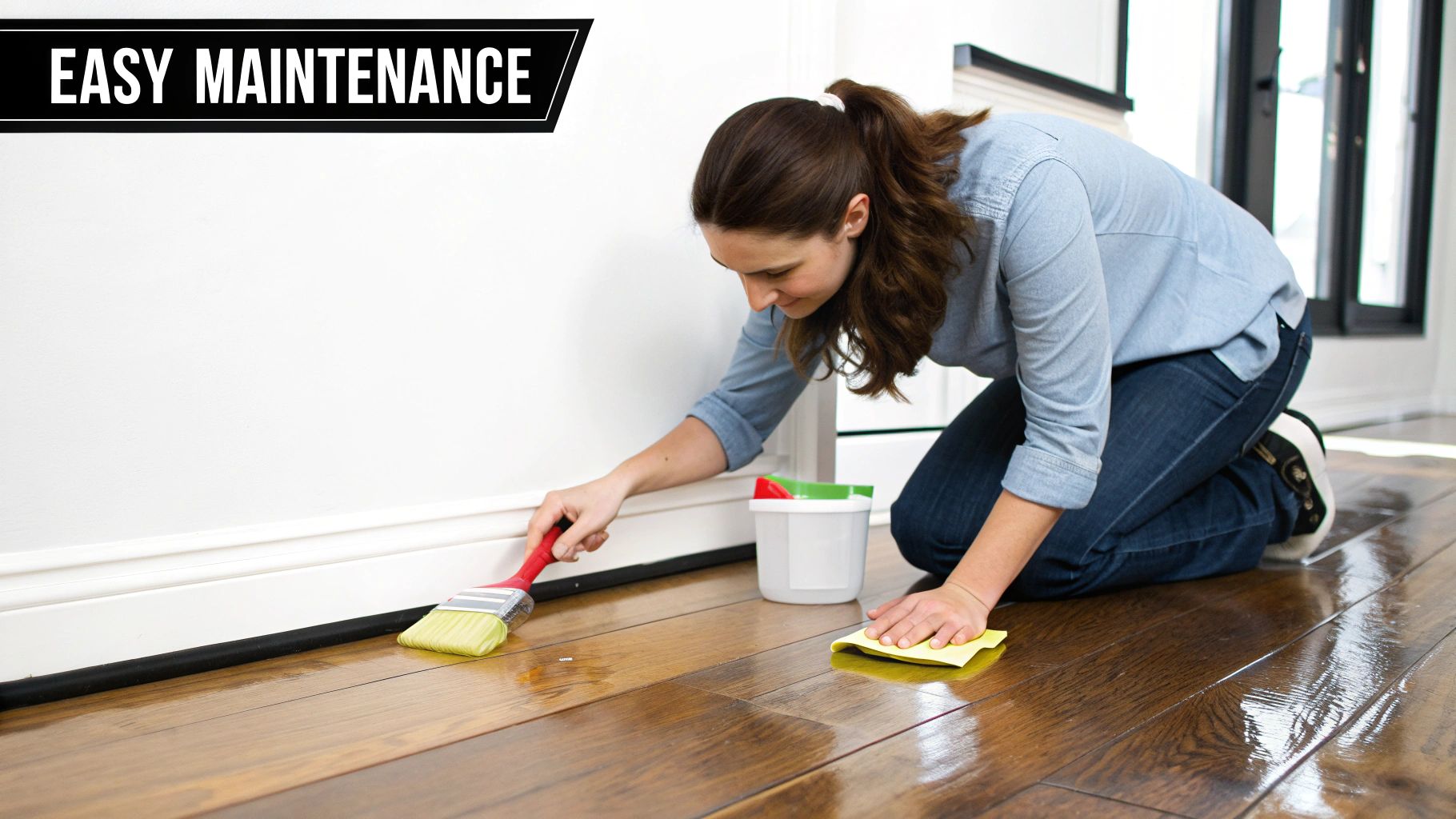
When you're weighing the pros and cons of hardwood, it really boils down to your life and your home. To feel confident in your choice, you have to get specific and ask yourself some honest questions. What's your real-world budget for the materials and the installation? Do you have kids and pets constantly running through the house?
Thinking through these details helps put the trade-offs into perspective. For instance, a busy family with a golden retriever will probably put scratch resistance at the top of their list. Someone living in a humid, coastal area needs to worry more about how the wood will handle moisture.
With the global flooring market estimated at a massive USD 349.66 billion in 2024, it's clear there are endless options out there. A great starting point is to dive into a detailed guide to hardwood species to see which types of wood can actually stand up to your daily demands.
The goal is to find a floor that isn't just beautiful but is a practical, sustainable partner for your home's daily life for many years.
Remember, the work doesn’t stop after installation. The secret to keeping that "wow" factor is knowing the right hardwood floor cleaning and polishing techniques to preserve its beauty. When you align your flooring choice with how you actually live, you're not just buying a floor—you're making an investment that brings lasting satisfaction instead of future headaches.
A Few Common Questions About Hardwood Flooring
When you're weighing the pros and cons of hardwood flooring, a few key questions always seem to pop up. Let's tackle them head-on.
One of the biggest concerns for many is pets. Can you really have a beautiful hardwood floor with dogs running around? While it's true that claws can cause scratches, the right wood makes all the difference. Choosing a harder species like hickory or white oak, combined with a modern, durable finish, creates a floor that can absolutely stand up to your furry family members.
Then there’s the question of installation, specifically over concrete slabs. It’s a common scenario in basements or newer homes. The short answer is that you generally can’t nail solid hardwood directly onto concrete; the moisture will cause it to warp and buckle. This is one of those situations where engineered hardwood really shines, as its layered construction gives it the stability to handle that environment.
So, Is Hardwood a Good Investment?
Without a doubt. Hardwood flooring is more than just a surface to walk on; it's a long-term asset that consistently boosts a home's resale value. It’s not just a feeling—the market data backs it up.
Global demand for hardwood is expected to climb from roughly $53 billion in 2024 to an incredible $74.5 billion by 2029. This isn't just a trend; it's proof that buyers see hardwood as a premium feature worth paying for. You can dig deeper into these hardwood flooring market trends to see just how solid this investment is.
Finally, people often ask about maintenance, especially refinishing. The great thing about solid hardwood is its longevity. Depending on how much foot traffic it sees, you can sand it down and refinish it every 7-10 years. This process not only erases surface-level wear and tear but also gives you the chance to completely change the stain color for a fresh look.
Have more questions? We've answered dozens of them in our complete hardwood floor FAQs.
Ready to find the perfect floor that fits your life and style? The team at Flacks Flooring has the expertise to guide you through every option. Visit our showroom or schedule an in-home consultation today!