
Finding the right hardwood flooring store near me is more than a simple search. It’s the first—and most important—step in a major home investment. The local partner you choose will influence everything from the quality of the wood under your feet to the skill of the installers, ultimately determining whether your new floors will be a source of pride for decades.
Your Guide to Finding the Right Local Hardwood Store
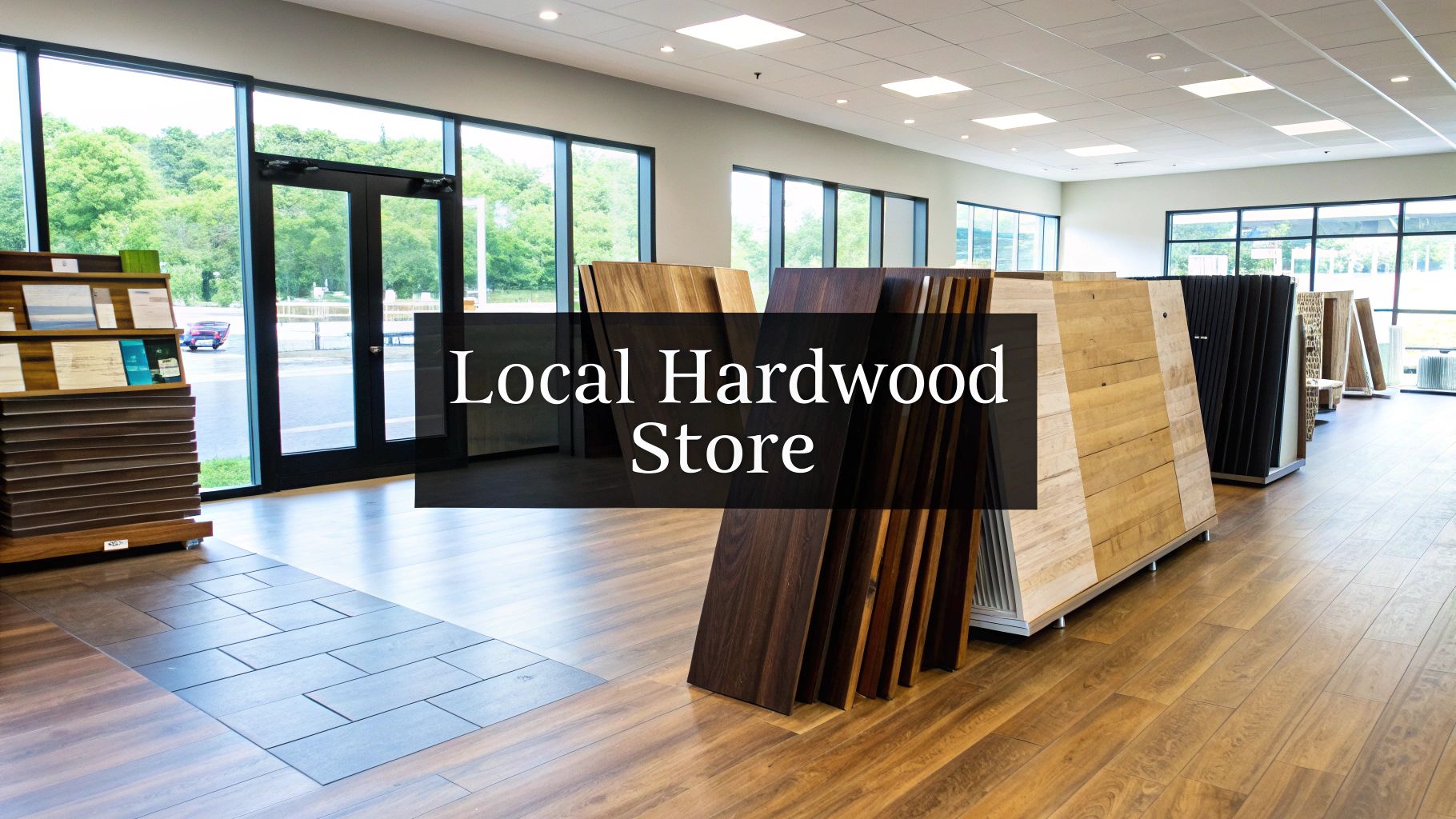
Choosing a local hardwood flooring store is a decision that pays off long after the last board is laid. Unlike an impersonal big-box chain or an anonymous online vendor, a dedicated local retailer offers an experience built on community knowledge and hands-on service. This guide will walk you through exactly how to vet these local experts and make a truly informed choice.
The process goes way beyond just looking at pretty samples. It's about digging into the depth of a store's inventory, testing the practical expertise of the staff, and really understanding their approach to installation. Think of this as your framework for confidently navigating any showroom.
Why Local Expertise Matters
When you work with a neighborhood store, you're getting more than just materials. You're gaining access to professionals who understand the specific environmental factors in your area, like the unique humidity swings that can dramatically affect hardwood performance. Chances are, they’ve worked on homes just like yours and can offer real-world advice that helps you avoid common mistakes.
Key advantages of sticking with a local pro include:
- Hands-On Product Experience: You can actually see, touch, and compare physical samples. Trying to judge wood grain and finish from a computer screen just doesn't work.
- Personalized Guidance: Experienced staff can answer your toughest questions and steer you toward the best materials for your life—whether that means accommodating pets, kids, or a high-traffic entryway.
- Community Accountability: Local businesses live and die by their reputation. They have a genuine stake in making sure your project is a success from start to finish.
A great local flooring store doesn’t just sell you wood; they partner with you to enhance your home. Their success is directly tied to your long-term satisfaction with the final product and the quality of their craftsmanship.
This guide is designed to arm you with a clear checklist for your search. You'll learn what to ask, what to look for in a quote, and how to spot a team that prioritizes quality over a quick sale. By understanding what true local flooring companies near me can offer, you can feel confident that your investment is a sound one.
To help you stay organized, use this quick checklist when you visit a potential store. It's a simple way to compare your options and ensure you're not missing any crucial details.
Quick Checklist for Vetting a Local Flooring Store
| Evaluation Criteria | What to Look For | Why It Matters |
|---|---|---|
| Showroom & Selection | A clean, well-organized space with a wide variety of wood types, finishes, and plank widths. Are samples large and easy to handle? | A good selection shows they have strong supplier relationships and can offer options beyond the basics. A tidy showroom suggests professionalism. |
| Staff Expertise | Staff who ask insightful questions about your lifestyle, home, and subfloor. Can they explain the pros and cons of different species and finishes? | Knowledgeable staff guide you to the right floor, not just the most expensive one. Their questions show they're focused on a lasting solution. |
| Installation Process | Do they use in-house installers or subcontractors? Are their installers certified? Ask about their process for moisture testing and subfloor prep. | The best wood in the world will fail if installed improperly. In-house, certified teams often mean more control over quality and accountability. |
| Transparency in Quoting | A detailed, itemized quote that breaks down costs for materials, labor, subfloor prep, trim, and potential extras. Avoid vague, lump-sum estimates. | Clear pricing prevents surprise charges later on. It shows the company is upfront and confident in its value. |
| Local Reputation | Check recent online reviews, ask for local references, and see if they have a portfolio of completed projects in your area. | A long track record of happy local customers is the best indicator of reliability and quality craftsmanship. |
Taking the time to run through these points will give you a much clearer picture of who you're dealing with. It separates the true professionals from the rest and helps ensure your flooring project is a success from the very beginning.
What to Look for in a Showroom's Product Selection
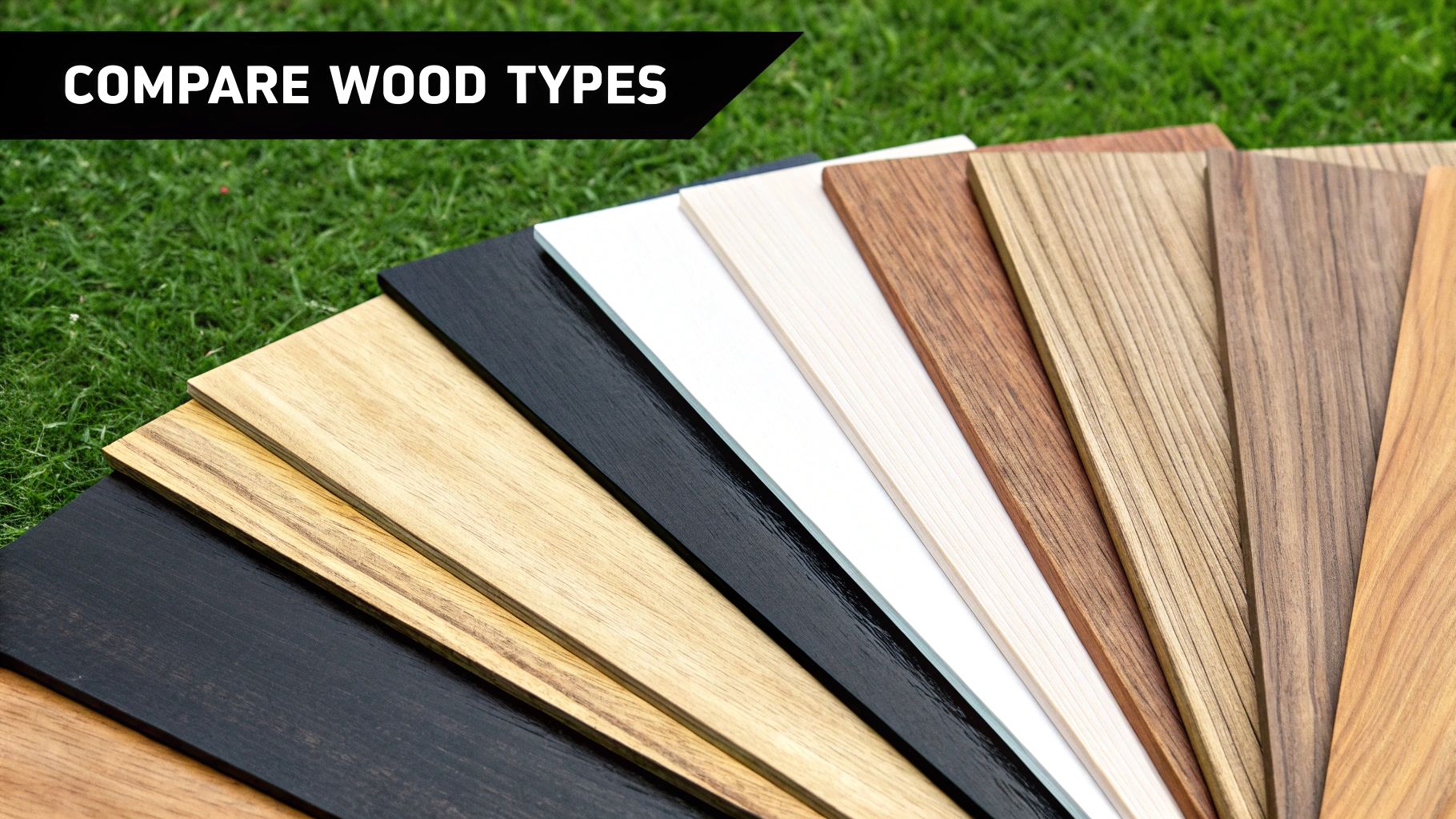
The moment you walk into a flooring showroom, it’s easy to feel a bit overwhelmed. So many options, where do you even start? But here's a pro tip: a great store isn't about having the most options, it's about having the right ones. They curate their selection to solve the real problems homeowners face.
The first thing to notice is variety. Do they just have oak, or do you see a healthy mix of species like rustic hickory and sleek maple? Look at the finishes, too. A good showroom will have everything from a low-sheen matte that’s great for hiding kid and pet traffic to a classic satin that gives a subtle glow. This kind of range tells you they get that every home has different needs and styles.
Solid vs. Engineered Hardwood in the Real World
Probably the biggest decision you'll make is whether to go with solid or engineered hardwood. Any salesperson can list the technical differences, but a true expert will frame it in real-world terms you can actually use.
- Solid Hardwood: This is the old-school, timeless stuff. It’s perfect for a second-story bedroom or a formal dining room—anywhere moisture isn't a big worry. Its superpower is that you can sand it down and refinish it over and over again, making it last for generations.
- Engineered Hardwood: Think of this as the modern problem-solver. It’s made with a genuine wood layer on top of a super-stable core. This makes it the go-to choice for tricky spots like finished basements, kitchens, or any room built on a concrete slab foundation where moisture can be an issue.
There's a reason engineered wood has taken over the market, now making up a whopping 72.37% of global sales. It's just so much more stable in changing humidity levels, and many modern versions come with click-lock systems that make installation faster and easier.
Getting Hands-On With the Samples
Don't just stand back and look. You need to pick up the samples, feel them, and really inspect them. Your hands will tell you a lot about the quality a store is willing to stand behind.
Here’s what I always look for when I’m checking out a sample:
- The Wear Layer (for Engineered): Ask how thick the top layer of real wood is. Anything 3mm or thicker is a good sign, as it means you can refinish the floor at least once or twice down the road, adding decades to its life.
- The Milling (for Solid): Look closely at the tongue and groove on the sides of the plank. Are they clean and precise? They should be. Sloppy milling leads to gaps between boards—a dead giveaway of a lower-quality product.
- The Finish Clarity: The protective top coat should be smooth and perfectly clear. Any bubbles, cloudiness, or rough spots point to a shortcut in the manufacturing process, and that finish won't hold up to daily life.
A truly great showroom doesn't just sell you flooring; it educates you. The staff should be happy to let you handle the products and should be ready with clear answers about durability, where the wood comes from, and what the warranty covers.
Ultimately, what’s on the showroom floor is a direct reflection of the store's standards. A diverse selection of well-made products shows they've built relationships with trusted manufacturers. For a more detailed breakdown of all the material options, our guide on how to choose hardwood flooring is a great place to start. It will help you find a floor that fits your life, not just your color palette.
Gauging a Store's Expertise and Customer Service
Picking the perfect wood is only half the battle. The other, and arguably more critical, half is the expertise of the people helping you. When you're searching for the best hardwood flooring store near me, you're really looking for a partner in your project, not just a place that sells planks.
The difference between a true flooring expert and a slick salesperson becomes crystal clear once you know what to watch for. A genuine pro is an educator first. Their primary goal is to help you find the right solution for your home, your family, and your budget—even if that isn't the most expensive option on the showroom floor. They listen. They ask smart questions about your lifestyle, the state of your subfloor, and what you hope to achieve long-term.
On the flip side, a pushy salesperson often defaults to high-pressure tactics. They'll likely steer conversations toward "limited-time" deals or try to upsell you on features you don't need without a solid reason.
This infographic really highlights the contrast you'll find when evaluating a store's approach.
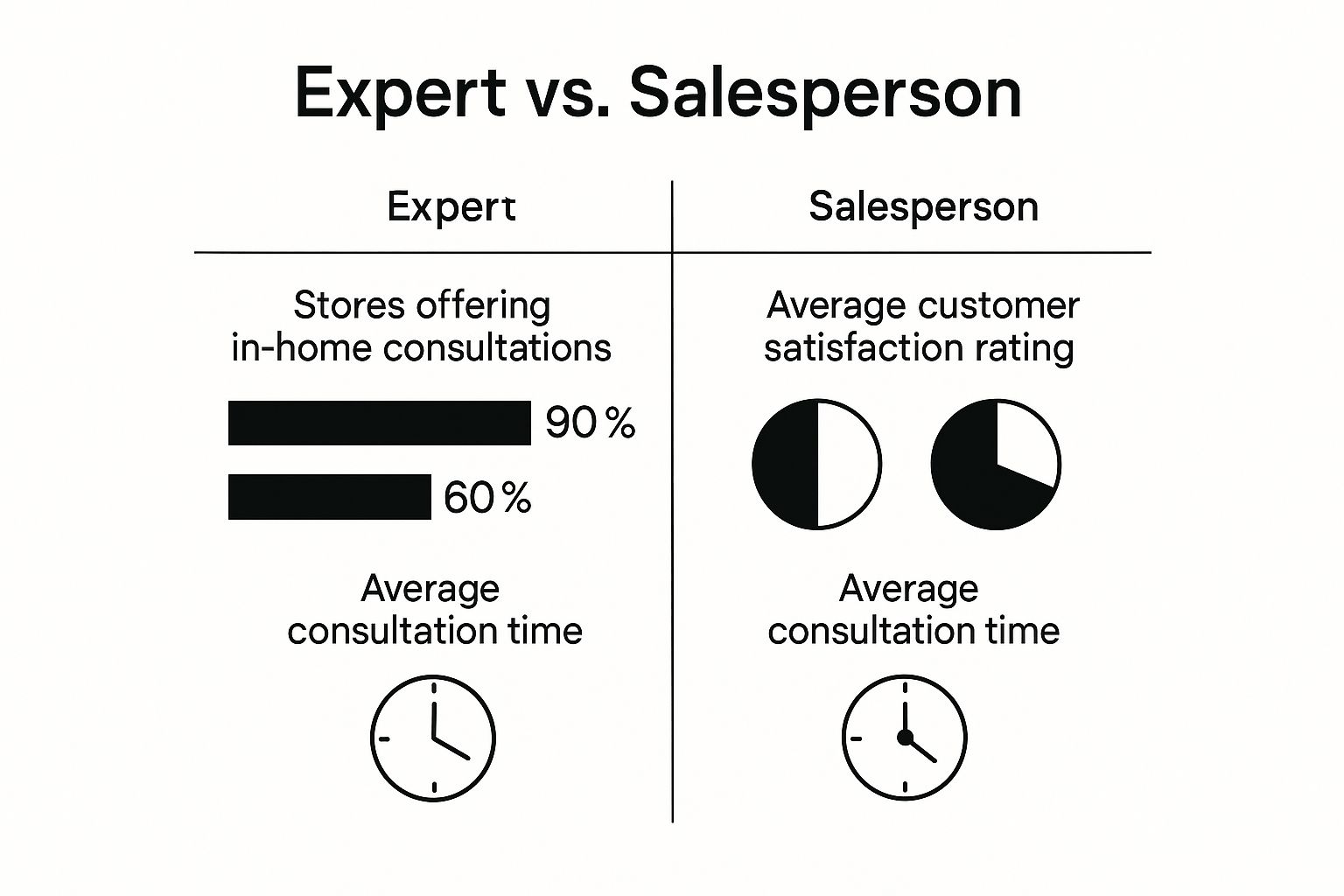
As you can see, the numbers don't lie. Stores that prioritize expert advice invest more time in consultations and earn much higher customer satisfaction scores. It’s a direct link: better service leads to a better outcome.
Vetting Their Technical Knowledge
Don't ever hesitate to dig into the details and test their knowledge. You're making a huge investment, and their answers (or lack thereof) will tell you everything you need to know about their experience.
Walk in with a few specific scenarios in mind. Here are a couple of examples to get you started:
- For homes with pets: "We have a couple of big dogs. What kind of hardwood and finish would you recommend to stand up to their claws, and why?" A real expert will immediately start talking about Janka hardness ratings, the benefits of scratch-resistant finishes like aluminum oxide, and might even suggest a textured style like wire-brushed oak that helps hide minor wear and tear.
- For local climate concerns: "How long does this type of wood need to acclimate in our area before installation?" They should give you a specific timeframe, like 7-10 days, and be able to clearly explain why that step is so crucial for preventing gaps and buckling down the road.
A knowledgeable consultant will offer patient, detailed answers. If they dodge your technical questions or give vague, generic responses, consider it a major red flag. It likely means they don't have the deep product understanding required for a successful, long-lasting installation.
The Importance of the In-Home Consultation
Any top-tier flooring store will insist on coming to your home for a consultation before giving you a final quote. This step is completely non-negotiable. It’s the only way for them to get precise measurements, properly assess the condition of your subfloor, check for moisture issues, and truly understand the unique layout and lighting of your space.
Think of this visit as your best chance to see their professionalism up close. The final proof is in the quote they provide. A transparent, trustworthy company will give you a detailed, itemized estimate that breaks down every cost: materials, labor, trim, and any necessary subfloor preparation.
If you get a vague, lump-sum number scribbled on a piece of paper? That’s your cue to walk away and find someone else.
Vetting Installation Services and Understanding Warranties
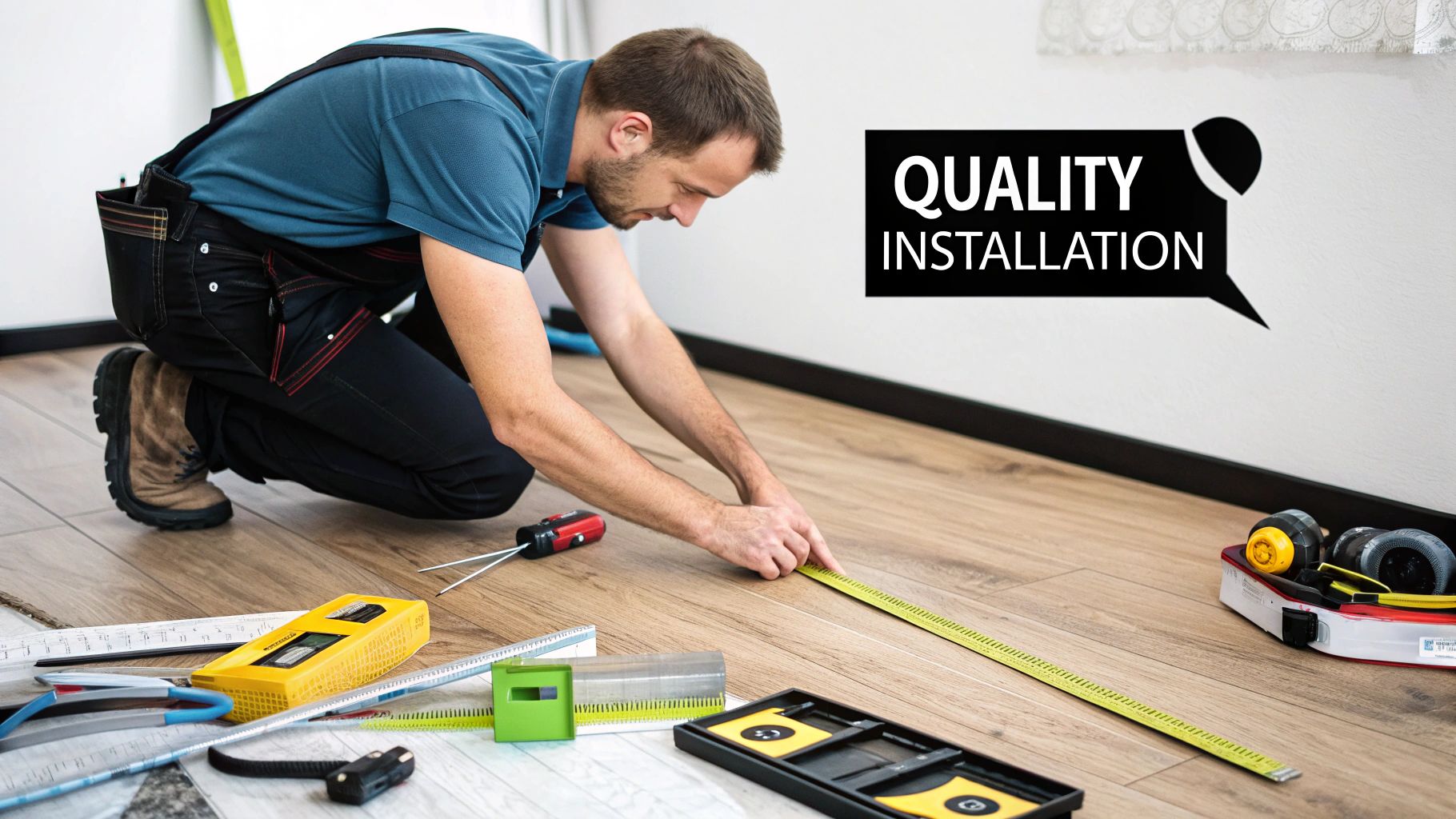
You can pick the most stunning, top-of-the-line hardwood on the market, but if the installation is a mess, none of it matters. The skill of the installation crew is every bit as critical as the quality of the wood. A perfect installation is what makes your floors look incredible and last for decades.
This brings up a crucial point: does the store use its own in-house installers or do they hire subcontractors? It makes a huge difference. A store with a dedicated in-house team usually offers more control and accountability. These installers are trained to that store’s specific standards, so you get a consistent, high-quality job every time.
Subcontractors can certainly be skilled, but the relationship is less direct. This can sometimes lead to communication problems or a noticeable difference in the quality of work from one job to the next.
Installer Type Comparison: In-House vs Subcontractor
When you're comparing stores, understanding who will actually be in your home doing the work is a big deal. The table below breaks down the key differences between a store that uses its own employees versus one that outsources the labor.
| Feature | In-House Installers | Subcontractors |
|---|---|---|
| Accountability | The store is directly responsible for the team's work and professionalism. | Accountability can be split; issues may become a "he said, she said" scenario. |
| Training | Trained to the store’s specific quality standards and product lines. | Training and skill levels can vary widely between different crews. |
| Communication | Direct line of communication through the store, leading to fewer misunderstandings. | Can involve multiple layers (store to sub to crew), increasing the risk of miscommunication. |
| Consistency | The same standards are applied to every single job, ensuring predictable results. | Workmanship and process can differ from one subcontractor to another. |
Ultimately, a store that invests in its own installation team is showing you they're committed to controlling the quality of the final product from start to finish.
Questions to Ask About the Installation Process
Before you sign on the dotted line, you need to know exactly how a store approaches the installation. Don't hesitate to dig in with detailed questions—their answers will tell you everything.
A true professional will have no problem explaining their process. Here's what you should ask:
- Subfloor Prep: How do you prepare the subfloor? You want to hear about making sure it's clean, flat, and structurally sound to prevent future squeaks and gaps.
- Moisture Testing: What's your process for testing moisture? This is non-negotiable. They need to test both the subfloor and the new wood to prevent cupping and buckling down the road.
- Dust Control: How do you manage dust during the job? Look for answers that mention modern dust containment systems, not just hanging up some plastic sheeting.
The answers to these questions are incredibly revealing. It's why local specialty retailers still lead the market, even with the rise of online shopping—they manage the hands-on details that make or break a project. You can see more about these flooring market trends on a site like mordorintelligence.com.
If a store gets vague or can't give you a confident, specific answer about their installation process, that's a massive red flag. Real pros are proud of their methods and are happy to explain why they do what they do.
Decoding Product and Labor Warranties
Warranties are your safety net, but they can be tricky. You’re usually dealing with two separate guarantees: one for the product (from the manufacturer) and one for the labor (from the store).
The product warranty covers defects in the wood itself—things like problems with the finish or milling errors. But here’s the catch: that warranty is almost always dependent on a perfect installation. One small mistake, like using the wrong nails or failing to acclimate the wood properly, can void the entire product warranty in an instant. This is exactly why a skilled installer is so valuable.
The labor warranty is the store's promise to stand behind their own work. This covers any issues that pop up because of the installation itself, like loose boards or unsightly gaps. Ask how long their labor warranty lasts and make sure you get the details in writing. Understanding the true hardwood flooring installation cost means knowing what protections are included. The right store will confidently guarantee both the materials they sell and the craftsmanship they provide.
Look Beyond the Price Tag: What True Value Really Means
When you start searching for a local hardwood flooring store, it's easy to get fixated on the price per square foot. I get it. A flooring project is a big investment. But let me tell you from experience: the cheapest quote is almost never the best deal.
True value isn't found in a low-ball estimate. It's hidden in the details—the quality of the materials, the skill of the installers, and the long-term durability of the work. To really compare apples to apples, you have to look past that initial sticker price and understand what you're actually paying for.
Deconstruct Every Estimate You Get
A professional, trustworthy store will never just hand you a single lump-sum price. They'll give you a detailed, itemized quote that breaks down every single cost. If they don't, that's a huge red flag.
When you're reviewing a quote, make sure it clearly spells out the costs for:
- The Wood Itself: This should specify the species, grade, and finish, plus any underlayment, transition strips, or custom trim.
- The Labor: Who is doing the work? What's their rate? This covers the installation team's time and skill.
- Subfloor Prep: This is critical. Any work needed to get your subfloor perfectly flat, clean, and dry should be listed. Skipping this step is a recipe for disaster.
- The "Extras": Does the quote include moving your furniture? What about tearing out and hauling away your old carpet or tile? These are real costs that can surprise you if they aren't on the estimate.
A vague, all-in-one number might mean they're hiding inflated markups or, worse, planning to skimp on the crucial prep work that ensures your floor lasts a lifetime.
Vet Their Local Reputation Like a Pro
Price is only half the equation. The other half is reputation. A store’s track record in your own community tells you everything you need to know about their commitment to quality work and happy customers.
Don't just rely on the glowing testimonials plastered on their website. You need to dig a little deeper. Check out third-party review sites like Google Reviews, Yelp, and the Better Business Bureau. But don't just scan the star ratings. Read the actual comments.
Pro Tip: Look for specifics in reviews. A bunch of generic five-star comments like "Great job!" are less telling than a detailed review that says, "The installation crew, led by Mike, was incredible. They were punctual, protected our furniture, and perfectly handled a tricky transition into our kitchen tile." That’s the kind of feedback that signals real quality.
Also, pay close attention to how the owner or manager responds to negative reviews. Are they defensive and argumentative? Or do they respond constructively and offer to make things right? How a business handles criticism tells you a lot about how they'll treat you if something goes wrong with your project.
Alright, you've done the hard part. You’ve walked through showrooms, collected samples, and have a stack of quotes sitting on your kitchen counter. Now comes the moment of truth: making the final call and signing on the dotted line.
Before you commit, it’s absolutely critical to get everything in writing. Think of this final contract as the complete blueprint for your project. Don't settle for a vague one-pager.
The agreement should spell out the exact product name, the plank width, the specific finish—everything. It also needs to clearly define the full scope of the work. Will they handle the subfloor prep? What about moving the heavy furniture? Is there a detailed payment schedule? Getting this clarity now prevents those "I thought that was included" headaches down the road.
See the Floor in Its Natural Habitat: Your Home
This might be the most important tip I can give you: never, ever make your final color decision based on how it looks in the showroom. The lighting in those places is designed to make everything look good, but it's nothing like the light in your actual house.
Ask for several large sample boards of your top two or three choices and take them home. Live with them for a couple of days.
- Morning Light: Watch how the cool, bright light of the morning plays across the grain.
- Afternoon Glow: Notice the shift as the warmer, golden afternoon sun hits the planks.
- Evening Ambiance: See how the color and finish look at night under your own lamps and overhead lights.
This simple step is the only real way to know you’re choosing a color you'll love for years, not one you'll regret the moment the installers leave.
You're about to make a significant investment in your home, joining a market expected to hit $69.78 billion globally by 2033. When you make your final choice, remember you're not just buying wood; you're choosing a partner for a major renovation. Go with the store that has demonstrated top-notch installation quality and communicates clearly and honestly. You can find more details on the growth of the hardwood flooring market on imarcgroup.com.
Still Have Questions About Choosing a Flooring Store?
Even with all this information, a few common questions tend to pop up right when you're about to make a decision. It's completely normal. Choosing the right partner for a project this big is a major investment, so let's tackle some of those final uncertainties head-on.
Is a Local Specialty Store Really More Expensive?
This is probably the biggest misconception out there. You see a low per-square-foot price at a big-box store and think you've found a steal, but that number rarely tells the whole story.
A dedicated flooring store offers a different kind of value. Think about it: their installers are flooring specialists, not jack-of-all-trades contractors. That expertise means the job gets done right the first time, preventing costly mistakes and ensuring your beautiful new floor lasts for decades.
When you weigh the expert installation, in-depth product guidance, and the sheer quality of the finished product, the total cost from a local pro is often surprisingly competitive. You're not just buying planks of wood; you're investing in a seamless, guaranteed service from start to finish.
What Are the Biggest Red Flags to Watch Out For?
Honestly, your intuition is your best guide here. A great store will make you feel empowered and informed, never cornered.
If you run into any of these situations, it’s probably best to walk away:
- The Hard Sell: Any salesperson pushing a "buy it now or the deal is gone" tactic should make you immediately skeptical. A quality investment doesn't need that kind of pressure.
- Fuzzy Math: If a store won't give you a detailed, line-by-line quote, what are they hiding? You need to know exactly what you're paying for.
- Blank Stares: Ask detailed questions. If the staff can't explain the difference between wood species, the importance of acclimation, or where their products come from, they don't have the expertise you need.
- A Sad Showroom: A disorganized, poorly lit showroom with a meager selection isn't just an eyesore—it often reflects the company's overall standards.
The bottom line is this: choosing a flooring partner shouldn't feel like a battle. If you feel like you're being rushed or that information is being withheld, thank them for their time and find someone else.
Can I Just Buy the Wood Myself and Hire My Own Installer?
I know this seems like a clever way to cut costs, but from my experience, it's a recipe for disaster.
When you buy the flooring and hire the installation from the same reputable store, they own the entire project. There's one point of contact, one source of accountability. If something goes wrong, they fix it.
Split those jobs up, and you create a perfect storm for finger-pointing. If your floor starts to cup, the installer will blame the material, and the supplier will blame the installation. Guess who's stuck in the middle with a failing floor and a warranty that's likely void? Keeping it all under one roof is the single best way to protect your investment.
Ready to start your flooring journey with a team you can trust? The experts at Flacks Flooring have been guiding homeowners in Cumming, GA, through every step of the process for decades. Explore our hardwood options and schedule your in-home consultation today!