
More than just a surface to walk on, your floors are the foundation of your home’s entire look and feel. They set the stage for everything else. And when it comes to a timeless choice that delivers on beauty, durability, and real value, hardwood plank flooring is in a class of its own—especially for homeowners here in Cumming, GA.
Why Hardwood Plank Flooring Is a Smart Investment
Think about the first thing you notice when you step into a house. It's almost always the floors. For homeowners, real estate agents, and designers working in our local communities from Milton to Johns Creek, the flooring choice is a big deal. It’s not just a design decision; it’s a strategic one that affects a home's market value and everyday livability.
Sure, there are plenty of flooring options out there. But hardwood planks consistently prove to be one of the smartest investments you can make. It’s less of a building material and more of a core feature that defines a home’s character.
More Than Just a Pretty Surface
The magic of hardwood lies in its authenticity. Unlike manufactured materials trying to look like wood, every single plank is the real deal. It tells a story through its unique grain patterns, knots, and subtle color shifts, bringing a warmth and elegance into your home that simply can't be faked.
This is an investment that truly pays you back. Here’s how:
- Increased Home Value: Ask any real estate agent in Forsyth County—homes with hardwood floors are always in high demand. They tend to sell faster and for more money, giving you a real, tangible return on your investment.
- Unmatched Durability: This is where hardwood really shines. With the right care, a good hardwood floor can last for 100 years or more. You can sand and refinish it multiple times over the decades, completely refreshing its look and erasing years of wear.
- Improved Indoor Air Quality: Unlike carpet, hardwood floors don't trap dust, pollen, dander, and other allergens. For families, especially those with kids or allergy sufferers, this creates a much healthier living space.
Choosing hardwood is about playing the long game. It's an upfront investment that delivers lasting beauty, structural integrity, and financial returns, transforming a house into a highly desirable home.
Setting the Stage for Your Home
At the end of the day, picking hardwood plank flooring is an investment in your home’s future. You’re getting a beautiful, durable, and valuable foundation that works with any style—from a rustic farmhouse vibe to a clean, modern minimalist look.
Now, let's get into the details. We'll explore the different types, wood species, and finishes that let you customize this classic choice to fit your life and your home perfectly. This way, you can be sure your investment isn't just smart, but also a perfect reflection of you.
Choosing Between Solid and Engineered Hardwood
When you start looking at hardwood plank flooring, one of the first big decisions you'll face is whether to go with solid or engineered planks. On the surface, they can look identical, but what’s going on inside the plank is a completely different story. Figuring out that difference is key, especially for those of us here in Cumming and Forsyth County, where Georgia's famous humidity is always a factor.
Think of solid hardwood as the original, tried-and-true classic. Each plank is cut from a single, solid piece of wood. It's nothing but pure, authentic timber from top to bottom. That simple construction is its greatest strength—and sometimes, its biggest challenge.
Engineered hardwood, on the other hand, is a more modern solution, specifically designed to be more stable. Picture a high-tech plywood sandwich: on top, you have a beautiful layer of real hardwood, but underneath, it’s fused to multiple layers of high-quality plywood or fiberboard. Those core layers are stacked in a cross-grain pattern, which is a clever way to fight against wood’s natural urge to expand and shrink with moisture changes.
Solid Hardwood: The Timeless Original
The main appeal of solid hardwood plank flooring is its incredible lifespan. Since it's one solid piece of wood all the way through, you can sand it down and refinish it over and over again. A floor that’s been around for decades can be brought back to life to look brand new, letting you switch up the color or simply erase years of wear.
But there’s a catch. Solid wood is very sensitive to moisture and humidity. It literally breathes—expanding when the air is humid and shrinking when it gets dry. In our climate, this can cause problems like:
- Cupping: The edges of the planks curl up, becoming higher than the center.
- Crowning: The center of the plank bulges upward.
- Gapping: Noticeable spaces appear between the planks as the wood contracts.
This decision guide can help you sort through the key factors—like your budget, foot traffic, and the look you want—to find the right fit.
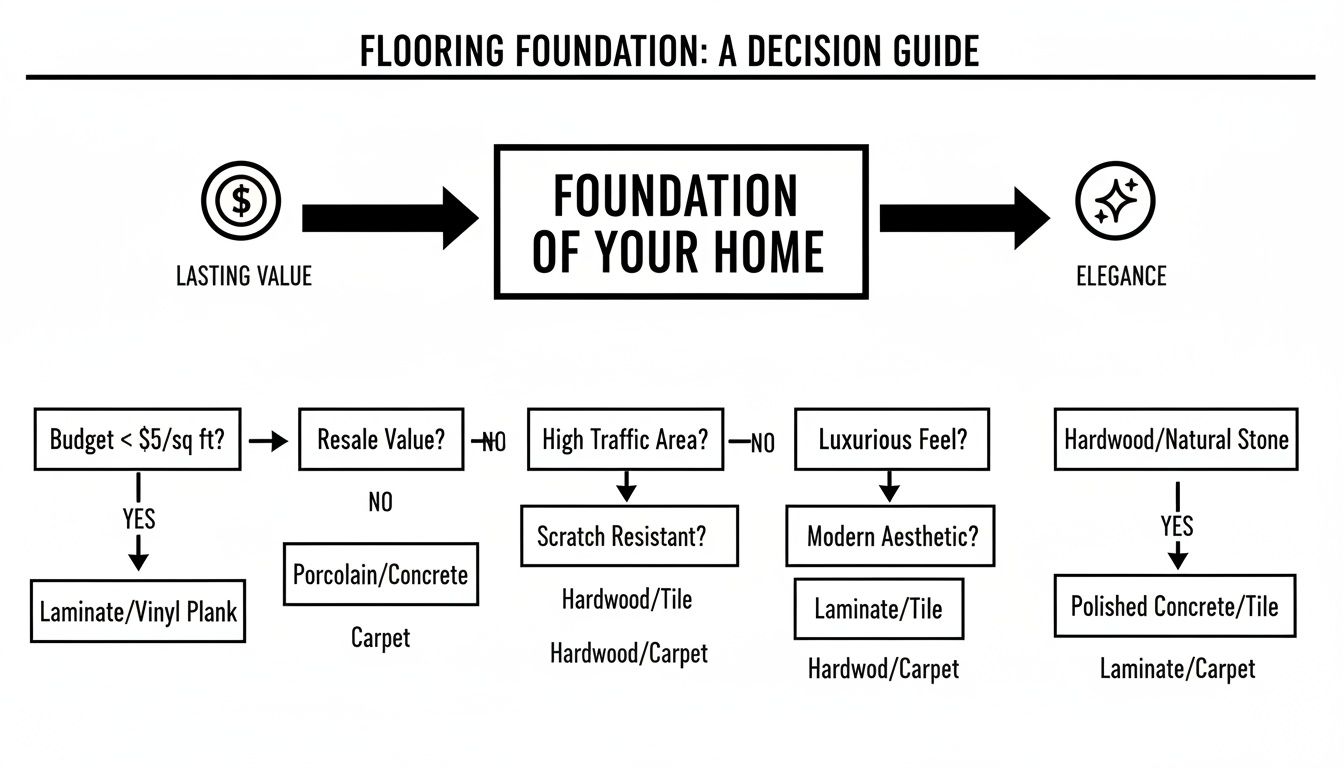
In the end, it’s all about balancing your long-term vision with the practical needs of your home and lifestyle.
Engineered Hardwood: Built for Modern Homes
This is where engineered hardwood plank flooring really proves its worth, especially in a place like North Georgia. That cross-ply construction gives it what we call dimensional stability, making it much less likely to swell and shrink than solid wood. It’s the perfect solution for tricky installations, like in basements or directly over concrete slabs, where you generally wouldn't dare put solid hardwood.
Because of its layered structure, engineered hardwood is less likely to warp or gap due to the high humidity common in Georgia summers. This makes it a reliable and worry-free option for many local homes.
The tradeoff comes down to refinishing. The top layer of real wood, called the wear layer, dictates how many times (if at all) you can sand the floor down. A board with a thick wear layer—say, 3mm or more—might allow for one or two refinishing jobs in its lifetime. Thinner layers, however, might not be refinishable at all. For a closer look at how it’s made, you can learn more about what engineered hardwood flooring is and how it holds up.
To help you see the differences side-by-side, here’s a quick comparison.
Solid vs Engineered Hardwood at a Glance
| Feature | Solid Hardwood | Engineered Hardwood |
|---|---|---|
| Construction | Single piece of solid wood | Real wood top layer over plywood/HDF core |
| Moisture Resistance | Susceptible to humidity | Highly resistant to humidity & moisture |
| Installation Areas | Above-grade rooms only | Any level, including basements & concrete |
| Refinishing | Can be refinished multiple times | Limited; depends on wear layer thickness |
| Lifespan | 50-100+ years with proper care | 20-40 years, depending on quality |
| Value | Increases home resale value significantly | Excellent value; also boosts resale value |
This table shows there’s no single "best" choice—it’s about what’s best for your specific situation.
Making the Right Choice for Your Space
So, which one is right for you? It really boils down to two things: where the floor is going and what your long-term goals are.
- For Upstairs Bedrooms or Living Rooms: If the room is on or above the ground floor and your HVAC keeps the humidity in check, solid hardwood is a fantastic investment that can literally last a lifetime.
- For Basements: Engineered hardwood is almost always the right call for basements or any installation over a concrete slab. Its moisture resistance is a non-negotiable benefit here.
- For Homes Prone to Humidity Swings: If you’re worried about how Georgia’s wild climate swings will treat your floors, engineered hardwood offers some valuable peace of mind with its built-in stability.
Both solid and engineered planks give you the authentic beauty and feel of real hardwood because, well, the part you see and walk on is real wood. The decision isn't about "real" vs. "fake." It's about choosing the smarter construction for your Cumming-area home's environment.
Finding Your Perfect Plank Species and Width
Once you’ve settled on solid vs. engineered, the real fun begins. This is where you get to infuse your home’s personality into the floor itself. Choosing the right wood species and plank width is less like a technical decision and more like an artist picking their palette and brush; it’s all about setting the mood, style, and feel of your space. You're not just picking a floor—you're deciding on the story it will tell.
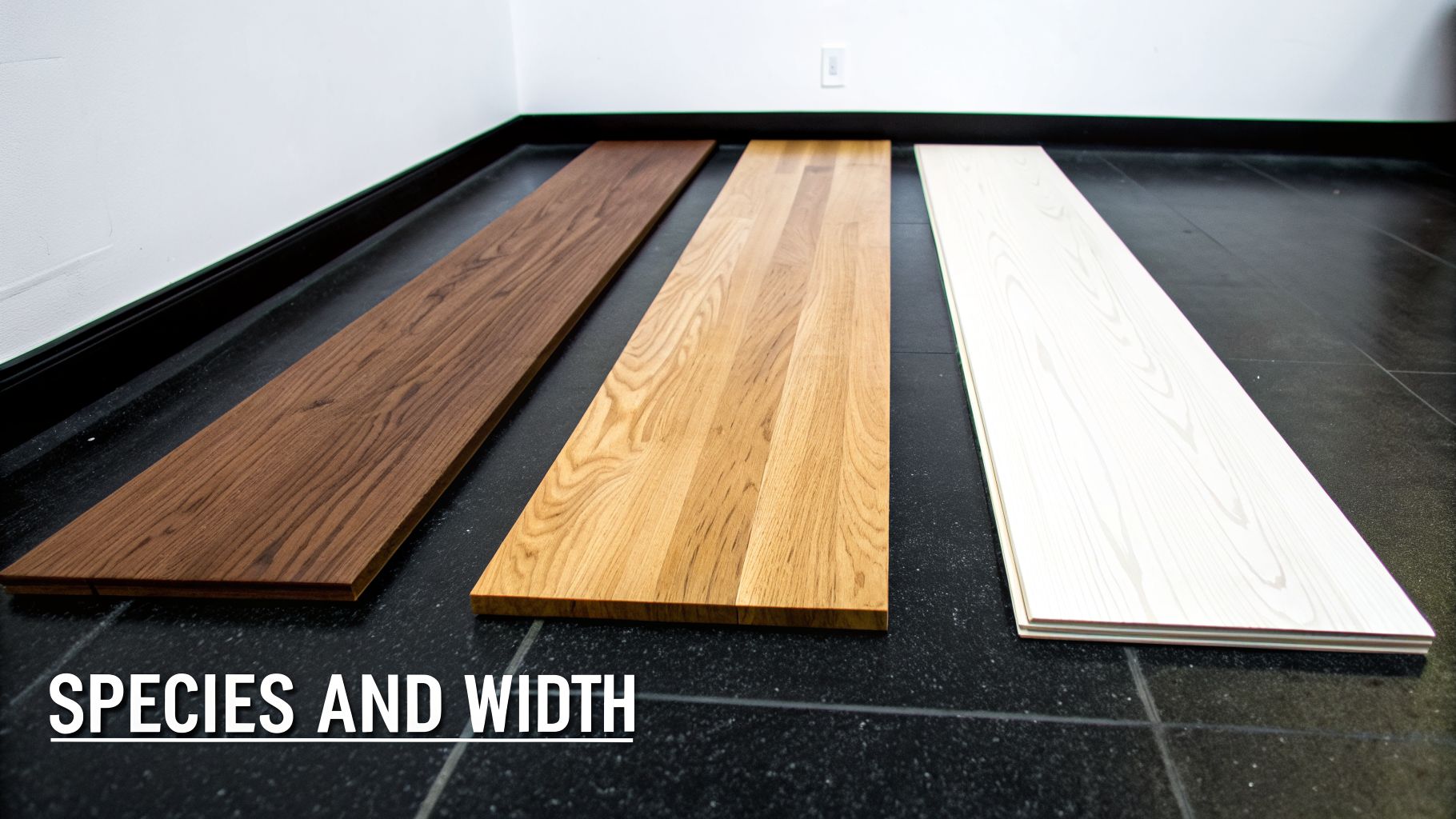
This step is about so much more than just "light" or "dark." Every species brings its own unique grain patterns, colors, and textures to the table. The classic, reddish warmth of Red Oak might be perfect for a traditional home in Milton, while the clean, bold lines of Hickory could define a modern space in Johns Creek. The species you select lays the entire foundation for your home's interior design.
Decoding Wood Species and Hardness
Every wood has a distinct character, and just as important, a distinct level of toughness. We measure this using the Janka hardness scale, which is the industry's go-to standard for gauging how well a wood stands up to dents, dings, and daily wear. Think of it as a simple durability score—a higher number means a tougher wood.
A higher Janka rating is your best friend in a busy house. It means your floors are better prepared to handle everything from pet claws and dropped toys to constant foot traffic.
- Red Oak (Janka Rating: 1290): This is the quintessential American hardwood. It’s loved for its strong, prominent grain and inviting reddish hues. A true classic that never goes out of style.
- White Oak (Janka Rating: 1360): A bit harder than its red cousin, White Oak has a more golden-brown tone and a smoother, less busy grain. It’s incredibly durable, making it a fantastic choice for high-traffic zones.
- Hickory (Janka Rating: 1820): As one of the hardest domestic woods you can get, Hickory is known for its dramatic color variations and powerful graining. It delivers a look that’s both rustic and strikingly modern.
- Maple (Janka Rating: 1450): With its clean, fine grain and creamy color, Maple brings a bright, contemporary feel to any room. It’s perfect for creating a sense of light and space.
Understanding these differences is key. A softer wood might work in a quiet bedroom, but for an entryway or kitchen, a harder species like Hickory or White Oak is a much smarter long-term investment. To see these and other options side-by-side, you can check out our guide on hardwood species.
https://flacksflooring.com/guide-to-hardwood-species/
The Impact of Plank Width
With a species in mind, your next decision is the width of the planks. This choice has a huge effect on the visual scale of your room. It’s what makes a floor feel either detailed and traditional or open and expansive.
Think of plank width as the "voice" of your floor. Narrow strips speak in a traditional, formal tone, while wide planks create a casual, bold statement that feels open and modern.
Wider planks—anything 5 inches or wider—have become incredibly popular lately, and for good reason. Because there are fewer seams, they create a cleaner, more unified look that can make a room feel significantly larger. This works especially well in open-concept homes, where wide planks can flow seamlessly from the kitchen to the living room, tying the whole space together.
On the other hand, narrower planks, typically in the 2 to 4-inch range, give off a more classic, traditional vibe. The extra seams create a subtle rhythm and texture that adds character, especially in smaller rooms or homes with a more formal, historic feel.
Making the Right Choice for Your Cumming Home
Choosing the right species and width isn't just about looks; it has real, practical benefits. For homeowners in the Cumming area, the natural thermal properties of hardwood can help regulate indoor temperatures, potentially trimming energy bills by 10-15% during our notoriously variable Georgia seasons. Real estate agents in Johns Creek often see homes with wide-plank hardwoods sell up to 20% faster, as buyers consistently favor the look of natural wood grain.
With our decades of local experience, we can offer personalized guidance to match the planks to your life—from recommending pet-proof finishes to selecting hypoallergenic surfaces that can reduce airborne allergens by 25%.
When you thoughtfully combine a wood species you love with a plank width that suits your home's architecture, you create a floor that is not only beautiful and durable but a true reflection of you.
Finishes, Installation, and What to Expect for Costs in Cumming
Okay, you’ve picked out your perfect planks. That’s a huge step! But turning that stack of wood into a gorgeous floor that lasts for decades involves a few more important decisions. This is where we get into the nitty-gritty: the finish, the installation method, and what a project like this actually costs right here in Forsyth County.
These choices are what truly bring the floor to life and determine how it will look, feel, and hold up to daily life for years to come.
The first big question is whether you want pre-finished or site-finished flooring. It’s a bit like choosing between a high-quality, ready-to-wear suit and one that's custom-tailored just for you.
Pre-finished planks come straight from the factory with their finish already applied and cured under UV lights. This makes for an incredibly fast and clean installation—no sanding dust, no fumes, and no waiting for coats to dry. The factory-applied aluminum oxide finishes are also exceptionally durable, often tougher than anything that can be applied in a home. The trade-off? You have fewer custom stain options, and the planks have small beveled edges, which create visible lines between each board.
Site-finished flooring is the custom-tailored option. We install raw, unfinished wood first, then sand it perfectly smooth, and then apply the stain and protective coats right there in your home. This gives you ultimate control over the final color and results in a seamless, glassy-smooth surface without any bevels. It is, however, a much more involved process that takes several days and introduces dust and fumes into your home.
Finishes That Define Your Floor
Whether you go with pre-finished or site-finished planks, the type of sealant used has a massive impact on your floor’s look, feel, and maintenance routine.
Most floors today use a polyurethane finish. Think of it as a durable, clear coat that sits on top of the wood, creating a protective plastic-like layer. It's fantastic at resisting spills and scuffs, making it a very practical choice for busy homes with kids or pets.
The other route is a natural oil finish. These finishes work completely differently. Instead of forming a layer on top, they soak into the wood fibers, becoming part of the wood itself. This results in a stunning, low-sheen matte look that feels much more organic underfoot. The real magic of an oiled floor is how easy it is to repair. A scratch in polyurethane often means calling a pro to recoat the entire room, but a scratch in an oiled floor can usually be fixed yourself with a quick wipe of a special repair oil.
The global shift toward healthier, more sustainable home materials has definitely reached Forsyth County. In fact, over 60% of new hardwood installations now use low-VOC (Volatile Organic Compound) finishes. These modern formulas can slash indoor air pollutants by up to 50% compared to traditional varnishes. If you want to dive deeper into these trends, Mordor Intelligence is a great resource and a leading source for market research on the global wood flooring market.
Installation Methods for Georgia Subfloors
How the planks are actually secured to your floor is just as critical as the wood itself. A good local installer will look at your home’s subfloor and the type of hardwood you’ve chosen (solid or engineered) to recommend the right method.
- Nail-Down/Staple-Down: This is the classic, time-tested method for installing solid hardwood onto a wooden subfloor. It’s strong and reliable.
- Glue-Down: This method is typically used for engineered wood, especially over concrete slabs common in our area. It creates a very solid, quiet feeling underfoot.
- Floating: Used only with engineered flooring, this is the quickest installation method. The planks click together and "float" over a padded underlayment without being directly fastened to the subfloor, which can also help with sound dampening.
Budgeting for Your Hardwood Project in the Cumming Area
Getting a clear picture of the total investment is key to planning a smooth project. The final cost is always a mix of three things: the wood itself, the labor to install it, and any prep work needed to get your subfloor ready.
The price of hardwood planks can vary dramatically depending on the species, width, and grade you choose. Labor costs here in the Cumming area will typically cover tearing out your old flooring, making sure the subfloor is flat and clean, and the professional installation itself.
It’s absolutely essential to get a detailed, all-inclusive quote that itemizes every single cost. For a complete breakdown of what goes into the final price tag, we put together a detailed guide on estimating your hardwood flooring installation cost. And since finding the right team is half the battle, it's also smart to learn about how to hire contractors to ensure your project is a success from start to finish.
Keeping Your Hardwood Floors Beautiful for Decades
Your new hardwood flooring isn't just something to walk on; it’s a genuine investment in your home. And like any good investment, it needs a little care to keep its value. The good news? Protecting it is far simpler than most people think. A straightforward routine is all it takes to keep your hardwood looking spectacular for decades, gracefully handling everything daily life throws its way.
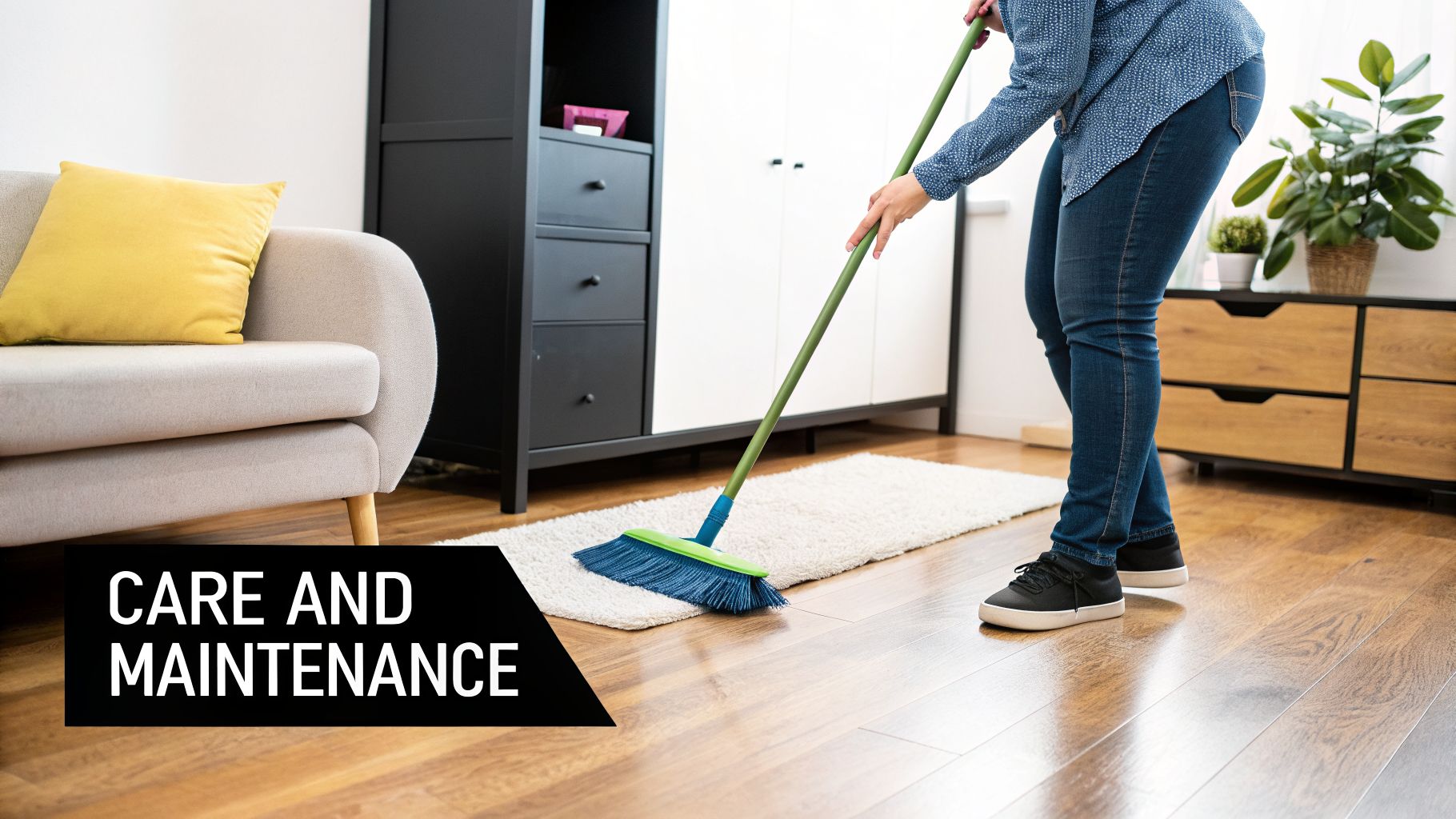
Think of it like this: consistent, gentle care is the secret. It’s a bit like owning a classic car—a little attention on a regular basis prevents big, expensive problems down the road. It all boils down to a simple plan for daily, weekly, and as-needed upkeep.
Your Simple Maintenance Routine
A consistent cleaning schedule is your floor’s absolute best friend. Why? Because the tiny bits of grit, dust, and dirt that get tracked in act like sandpaper underfoot, slowly but surely dulling your floor's beautiful finish over time.
Your Weekly Checklist:
- Daily Sweep: The single most effective thing you can do is run a microfiber dust mop or a soft-bristle broom over the floors each day. It takes just a few minutes and stops abrasive grit in its tracks.
- Weekly Vacuum: Use a vacuum with a soft-bristle head to get the dust and dirt that settles in corners and between planks. Crucially, turn the beater bar off—its stiff bristles can scratch the finish.
- As-Needed Spot Cleaning: Spills happen. When they do, grab a lightly dampened cloth and wipe them up immediately. Quick action prevents moisture from having a chance to seep into the wood.
When it's time for a deeper clean, remember that less is more. Stick to a pH-neutral cleaner made specifically for hardwood. Steer clear of popular DIY solutions like water and vinegar, soap-based detergents, or steam cleaners. These can actually strip the finish and damage the wood itself.
Preventing Scratches and Dents
Prevention is always, always easier than repair. The biggest threats to a perfect hardwood floor are scratches from furniture and damage from moisture. Thankfully, a few smart habits can neutralize them both.
The easiest way to protect your floors from your furniture is with felt pads. Seriously. Putting these inexpensive little pads on the bottom of every chair, table, and sofa leg is non-negotiable. They act as a soft buffer, preventing scrapes and gouges every single time a piece of furniture gets moved.
Don’t forget about area rugs, especially in high-traffic zones like entryways, hallways, and living rooms. A good mat at every exterior door will also catch most of the water and dirt before it even has a chance to reach your wood floors. Think of them as the first line of defense, preserving the finish right where it gets the most abuse.
Knowing When to Refresh or Refinish
Even with the best care in the world, hardwood floors will eventually show signs of a life well-lived. Knowing your options for bringing them back is key.
If your floors just have light surface scratches or the finish looks a bit dull, a screen and recoat is a fantastic option. This process involves lightly abrading (or "screening") the top layer of finish and applying a fresh new coat. It’s a quick, affordable way to restore that original luster without the dust and hassle of a full sanding.
For floors with deeper scratches, heavy wear patterns, or areas where the finish has worn through completely, you’ll need a full refinish. This is a more intensive job where we sand the planks down to the raw wood, erasing all the damage. From there, we can apply a new stain and several coats of durable finish. While it's a bigger project, it literally makes your floors look brand new again.
With just a little routine care, your hardwood floors won't just last a lifetime—they'll continue to be a source of pride and beauty in your home for years to come.
2. Your Hardwood Flooring Decision Checklist
Making the final call on a major home investment like hardwood plank flooring can feel like a huge task. With so many variables—species, width, finish, and installation—it’s easy to get lost in the details.
This final checklist is here to cut through the noise. We've boiled everything down to what truly matters for your specific goals, whether you're a homeowner, real estate agent, or designer.
A Checklist for Homeowners
As a homeowner in the Cumming area, your biggest concern is how your new floors will fit into your daily life. You need something that looks great, can handle your family's comings and goings, and makes sense for your budget.
Your Life, Your Floor: Got kids? Or a four-legged friend (or two)? You’ll want to prioritize a harder wood species with a high Janka rating, like Hickory or White Oak. Pairing it with a durable, low-sheen finish is a smart move to help hide minor scuffs and scratches.
Location, Location, Location: Think about where the flooring is going. For basements or any room built on a concrete slab, engineered hardwood is the safe, stable choice. For main living areas or upstairs bedrooms, classic solid hardwood is a timeless option.
Be Honest About Maintenance: How much time do you really want to spend on upkeep? If you like the idea of a floor that's easy to spot-repair and develops a natural patina, an oil finish is perfect. If you’d rather have a "set it and forget it" surface, a factory-applied polyurethane finish delivers top-tier durability right out of the box.
A Checklist for Real Estate Agents and Contractors
For real estate pros and contractors, the calculation is a bit different. It’s all about return on investment, durability, and broad market appeal. You need a floor that boosts property value and won’t cause headaches down the road.
This value is undeniable in the real estate world. Properties with hardwood floors often sell 3-5% faster and can command higher prices—a major win when staging homes in Johns Creek or Milton. For contractors, a quality installation pays dividends, potentially reducing project callbacks by up to 30%. You can discover more about the growing hardwood market to see how these trends are shaping the industry.
Go for Mass Appeal: It's best to stick with classic, neutral choices that won't polarize buyers. A medium-toned oak in a 3 to 5-inch width is a crowd-pleaser that works with almost any design style.
Create Perceived Value: Wider planks (think 5 inches or more) can make a room feel larger and more modern. This adds a premium touch that really connects with what today’s buyers are looking for.
Durability and Warranty: Always opt for pre-finished flooring that comes with a strong factory warranty. This signals quality and longevity to potential buyers and protects everyone's investment.
A Checklist for Interior Designers
As a designer, your job is to perfectly balance your creative vision with practical reality. The goal is to find a hardwood plank floor that not only grounds the entire design concept but also meets your client's day-to-day needs.
Define the Vibe: What’s the aesthetic you're building? Is it rustic, modern, or traditional? Use the plank width to reinforce that theme. Narrow planks feel more traditional, while wide planks are perfect for a modern or farmhouse look.
Play with Color and Grain: Don't shy away from a species with a little personality. The bold, dramatic grain of Hickory can become a statement piece in a room, while the quiet elegance of Maple creates a clean, serene canvas.
Master the Finish Sheen: The sheen level—from a flat matte to a high gloss—has a huge impact on the final look and feel. A matte finish feels organic and contemporary, while a satin or semi-gloss finish lends a more classic, polished appearance.
By using these targeted checklists, you can confidently sort through the options and choose the perfect hardwood plank flooring that aligns with your vision, budget, and long-term goals.
Your Hardwood Plank Flooring Questions, Answered
Alright, we've covered the basics, but I know you probably have some specific questions still rattling around. Let's dive into the common concerns I hear from homeowners right here in Cumming and Forsyth County.
Think of this as a quick chat to clear up those last-minute "what ifs" before you make a big decision.
How Do I Protect Hardwood from Georgia Humidity?
This is the number one question I get, and for good reason. Georgia's humidity is no joke. The best way to protect your investment is to create a stable environment inside your home. Run your HVAC system or a good dehumidifier to keep your indoor humidity between 35% and 55% year-round. It's a simple step, but it makes a world of difference in preventing the wood from swelling and shrinking with the seasons.
Another great strategy is to opt for engineered hardwood. Its layered construction is inherently more stable and resists the warping and cupping that can plague solid wood in our damp climate. No matter which type you choose, acclimating the planks is a must. Let them sit inside your home for at least 7 to 10 days before installation. This gives the wood time to get used to your home’s specific conditions.
Acclimation isn't just a suggestion; it's the single most critical step in ensuring your hardwood plank flooring performs well for years. Skipping it is like building a house without letting the foundation settle—you're just asking for problems down the line.
Is Hardwood a Good Choice for Pets and Kids?
Absolutely, as long as you're strategic about it. For a busy household with pets and kids, you’ll want to focus on two things: hardness and finish.
- Hardness: Check the Janka hardness rating of the wood. A higher number means it’s tougher and more resistant to dents and scratches. Species like Hickory and White Oak are fantastic, durable choices that can stand up to a lot of action.
- Finish: The finish is your floor’s armor. A factory-applied aluminum oxide finish, which is standard on most quality pre-finished planks, is incredibly tough. I also recommend a lighter color and a low-sheen or matte finish. They are masters at hiding the inevitable minor scratches and stray pet hair, unlike dark, glossy floors which seem to highlight every imperfection.
What Is the Real Cost Difference Between Solid and Engineered?
It's interesting—while the price per square foot for the planks themselves can be very similar, the real difference often comes down to installation.
Solid hardwood almost always has to be nailed or stapled down to a wooden subfloor, which can be a more involved and time-consuming process.
Engineered hardwood, on the other hand, is more versatile. It can be floated, glued, or stapled, which can sometimes speed up the installation and lower labor costs. The biggest potential for savings, though, is that engineered planks can often go directly over a concrete slab. Solid wood would need an expensive subfloor built first, so engineered can save you a significant amount in that scenario. The only way to know for sure is to get an all-inclusive quote from a local pro who can assess your specific situation.
Ready to get answers tailored to your home? The experts at Flacks Flooring have been helping homeowners in Cumming, GA, navigate these questions for decades. Schedule a consultation today to find the perfect hardwood for your space.