
Choosing the right floor is all about finding that sweet spot between your daily life and your design dreams. It really comes down to a practical look at your lifestyle, how you use the room, and the level of durability you need. Get this balance right, and you'll end up with a floor you love for years to come.
Start Here: Assessing Your Real Flooring Needs
Picking new flooring is a big deal, and with homeowners making up over 50.4% of the global flooring market, it’s a decision plenty of us are making. But the best place to start isn't the showroom—it's right in your own home, with an honest look at your habits.
Jumping straight to samples is a classic mistake. It's like planning a road trip without a destination. You'll get somewhere, but it probably won't be where you wanted to go. Instead, let's ground this whole process in reality. A floor isn't just a surface; it's the stage where your life happens. The perfect floor for a quiet couple in a downtown condo is going to be worlds apart from what a family with two big dogs and three kids needs.
Define Your Lifestyle and Traffic Patterns
First thing's first: who lives in your house? Do you have pets skidding around corners? Kids who think the living room is a gymnasium? These little details immediately push you toward materials that can handle scratches and impacts. A floor's durability isn't just a technical spec; it's a direct measure of how it will hold up to your life, day in and day out.
Think about the pathways people take through your home.
- High-Traffic Zones: Entryways, hallways, and kitchens get hammered with foot traffic. They need your most durable options.
- Medium-Traffic Zones: Living rooms and dining areas see consistent use but don't take the same beating as the main thoroughfares.
- Low-Traffic Zones: Bedrooms and home offices are your easy-going spaces that can get by with less rugged flooring.
I've seen it a hundred times: someone falls in love with a floor's looks, only to watch it get scuffed and dented within a year. Matching the material's toughness to the room's traffic is the single most important part of this whole process.
This simple idea—matching durability to the room—is what guides your entire search.
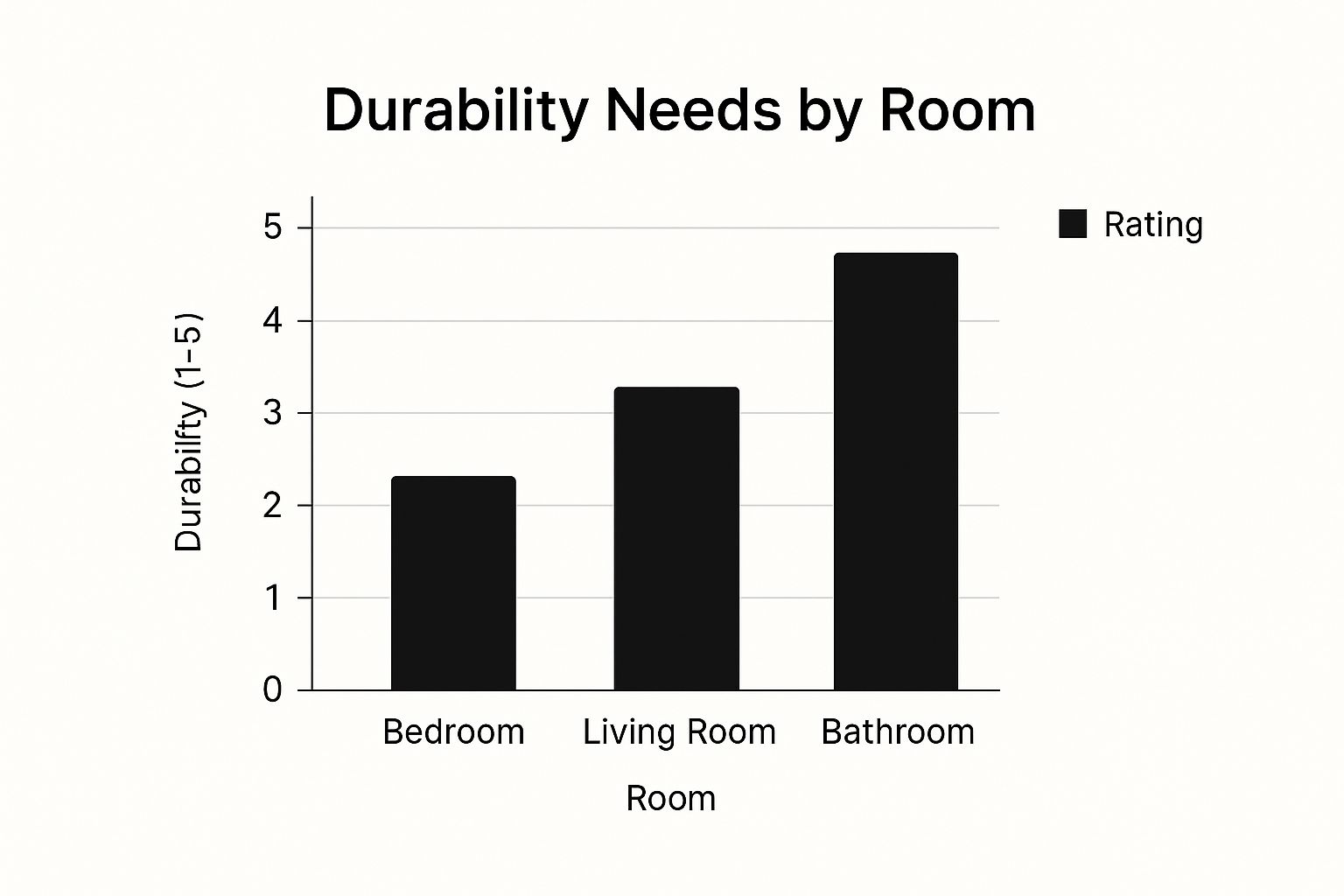
As you can see, a bathroom demands a top durability rating, mostly because of moisture, while a bedroom gives you the freedom to choose something softer and cozier.
Once you start thinking about your needs, you'll also have to think about measurements. Getting those numbers right is non-negotiable for planning and budgeting. You might even find it helpful to use a simple tool to convert feet to inches if you're dealing with mixed-up plans or supplier specs.
To help you put all this together, here’s a quick checklist to get you thinking before you even look at a single sample.
Quick Flooring Choice Checklist
This table is a great starting point. Just run through these common lifestyle factors and see which flooring characteristics and types pop up. It helps narrow things down fast.
| Lifestyle Factor | High-Priority Flooring Characteristics | Flooring Types to Consider |
|---|---|---|
| Pets (dogs, cats) | Scratch-resistant, easy to clean, waterproof | Luxury Vinyl Plank (LVP), Laminate, Tile |
| Young Children | Stain-resistant, durable, softer underfoot | Carpet, LVP, Cork, Rubber |
| High Foot Traffic | High durability, wear-resistant, low maintenance | Hardwood, Tile, High-Quality Laminate, LVP |
| Moisture/Spills | 100% waterproof or highly water-resistant | Porcelain/Ceramic Tile, LVP, Sheet Vinyl |
| Allergies | Hard surface, traps minimal dust/dander | Hardwood, Tile, Laminate, Cork |
| Budget-Conscious | Affordable upfront cost, DIY-friendly installation | Laminate, Vinyl (LVP or Sheet), Carpet |
Using this checklist gives you a solid foundation. You're no longer just guessing; you're making an informed choice based on how you actually live.
Comparing the Most Popular Flooring Materials
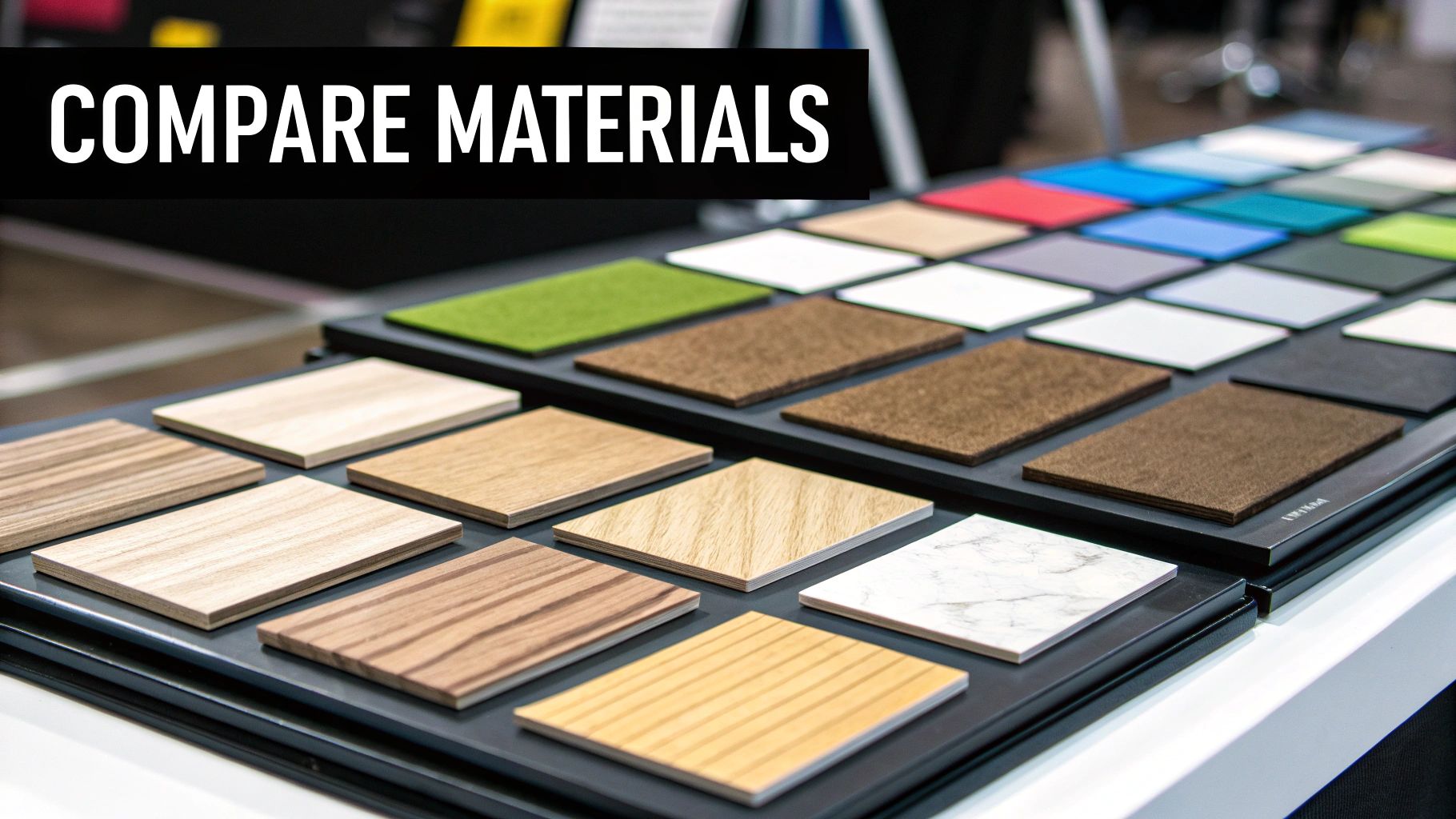
Alright, you've figured out what your floor needs to do. Now comes the fun part: picking the material. Walking into a flooring showroom can feel like a pop quiz you didn't study for, with endless options all claiming to be the best. Let's cut through that noise.
We're going to break down the real-world pros and cons of the big players—hardwood, vinyl, laminate, tile, and carpet. Getting to know these materials is the single best way to find a floor that looks great and actually works for your life.
Hardwood and Engineered Hardwood
You can't talk about flooring without starting with the timeless classic: solid hardwood. It’s what everyone wants for a reason. Hardwood brings an authentic warmth and character that’s impossible to replicate, and it adds serious resale value to your home. The best part? It can be sanded and refinished multiple times, literally giving you a new floor every decade or so.
Then there's engineered hardwood, a very clever cousin to solid wood. It has a genuine slice of hardwood on top, but the core is made of layered plywood. This structure makes it much more stable against humidity swings, so you can confidently install it in places where solid wood would warp, like a finished basement.
Just remember, whether it's solid or engineered, wood is wood. It will scratch and dent, and neither option is waterproof. That makes them a definite no-go for full bathrooms or flood-prone laundry rooms.
Laminate and Luxury Vinyl Plank (LVP)
For a long time, laminate was the go-to for getting the wood look on a budget. It's essentially a high-resolution photo of wood fused onto a fiberboard core. This makes it tough as nails against scratches and fading from sunlight. While newer laminate products have improved their water resistance, they still have a critical weakness: if water gets into the seams and soaks that fiberboard core, it's game over.
This is where luxury vinyl plank (LVP) has completely changed the game. I can't tell you how many homeowners I've worked with who have fallen in love with this stuff. Because it’s made from PVC, LVP is 100% waterproof. Spills, pet accidents, leaky dishwashers—none of it matters. It’s perfect for any room. The visuals have also gotten incredibly realistic, making it a fantastic, worry-free choice for families with kids and pets.
For a busy family, the peace of mind that comes with waterproof flooring is priceless. I’ve seen countless clients in the Cumming area breathe a sigh of relief when they realize they no longer have to worry about spills or pet accidents ruining their beautiful floors.
Tile and Carpet Choices
When your top priorities are durability and water resistance, nothing beats tile. Period. Porcelain and ceramic tiles are practically indestructible—they laugh at water, stains, and scratches. This makes them the undisputed champion for bathrooms, kitchens, mudrooms, and entryways. With a dizzying array of styles, the design potential is truly limitless.
It’s no surprise that porcelain tile holds a massive global market share of over 36%. Homeowners are clearly leaning towards floors that are not only stylish but built to last. You can dive deeper into flooring market trends from this research to see where things are headed. Of course, tile isn't perfect. It's hard and cold underfoot, and anything you drop on it will likely break. Plus, you have to keep those grout lines clean to prevent staining.
And finally, we have carpet. For pure comfort, nothing else comes close. The softness and warmth it brings to a bedroom or a cozy family room is unmatched. Carpet is also fantastic for absorbing sound. Modern carpets made from fibers like nylon and triexta have come a long way in stain resistance, but they still need more upkeep than a hard surface and can trap allergens, which is something to consider for anyone with asthma or allergies.
Flooring Materials Head-to-Head Comparison
To make things even clearer, here’s a quick-glance table comparing these popular options side-by-side. Think of it as your cheat sheet for matching a material's strengths to your home's needs.
| Flooring Type | Average Cost (per sq ft) | Durability | Water Resistance | Best For Rooms |
|---|---|---|---|---|
| Solid Hardwood | $8 – $25 | Good | Low | Living rooms, bedrooms, dining rooms |
| Engineered Hardwood | $6 – $20 | Good | Low | Living areas, basements, kitchens (with caution) |
| Laminate | $3 – $8 | Very Good | Medium | Bedrooms, living rooms, hallways |
| Luxury Vinyl (LVP) | $4 – $10 | Excellent | High (100% Waterproof) | Any room, including bathrooms and kitchens |
| Porcelain/Ceramic Tile | $5 – $25 | Excellent | High (100% Waterproof) | Bathrooms, kitchens, mudrooms, entryways |
| Carpet | $3 – $12 | Fair to Good | Low | Bedrooms, family rooms, basements |
This table should give you a solid foundation. Remember, the "best" flooring doesn't exist—only the best flooring for your specific room and lifestyle.
How to Create a Realistic Flooring Budget
When you’re figuring out how to choose flooring, one of the most common pitfalls is fixating on the price per square foot. That number on the box? It’s just the starting line. A truly realistic budget looks at the entire project cost, which saves you from that gut-wrenching sticker shock when the final bill arrives.
Believe it or not, the flooring material itself often only makes up about 50-60% of your total investment. The rest gets eaten up by all the other "little" things that are easy to overlook but add up fast. It's a lot like buying a car—the sticker price is never what you actually drive off the lot for.
Look Beyond the Material Cost
To get your numbers right, you have to break down every single potential expense. These are the so-called hidden costs where most budgets completely derail.
Here’s a practical list of what you need to account for:
- Underlayment and Adhesives: This is a non-negotiable. This layer is crucial for moisture protection, sound deadening, and adding a bit of cushion underfoot.
- Removal and Disposal of Old Flooring: Tearing out old, dusty carpet or cracking out tile takes time and labor. Plus, you’ll likely have a disposal fee.
- Subfloor Preparation: This is the big unknown. If your subfloor is uneven, damaged, or rotting, it must be repaired before new flooring goes down. This could be a minor patch job or a significant, costly repair.
- Trim and Transitions: To get that polished, professional look, you'll need new baseboards, quarter-round molding, or transition strips between rooms.
A flooring project is only as good as the subfloor it’s installed on. I’ve seen homeowners try to save money by skipping subfloor prep, only to end up with squeaky, uneven floors that have to be completely redone a year later.
Factoring in Installation
Next up is the big decision: are you going to install it yourself or hire a pro?
Going the DIY route can definitely save you a few thousand dollars in labor, but you have to be brutally honest about your skill level and patience. Even then, you’ll still need to budget for tool rentals or purchases—things like a miter saw, a floor scraper, and a good pair of knee pads are essential.
Hiring a professional, on the other hand, is an investment in peace of mind and a quality finish. Labor costs can vary quite a bit depending on where you live and the complexity of the installation. For a detailed breakdown, you can explore our guide on hardwood flooring installation costs to get a better sense of what to expect in the Cumming area.
Finally, do yourself a favor and add a contingency fund of at least 10-15% to your total estimate. This isn't being pessimistic; it's being smart. This buffer is your safety net for those "oops" moments, like discovering hidden subfloor damage or realizing you need just one more box of planks. To help manage all these moving parts, using an interactive budgeting tool can be a lifesaver.
By planning for the complete cost from the start, you can confidently choose a beautiful floor you love without blowing up your finances.
Matching Flooring to Your Home's Design
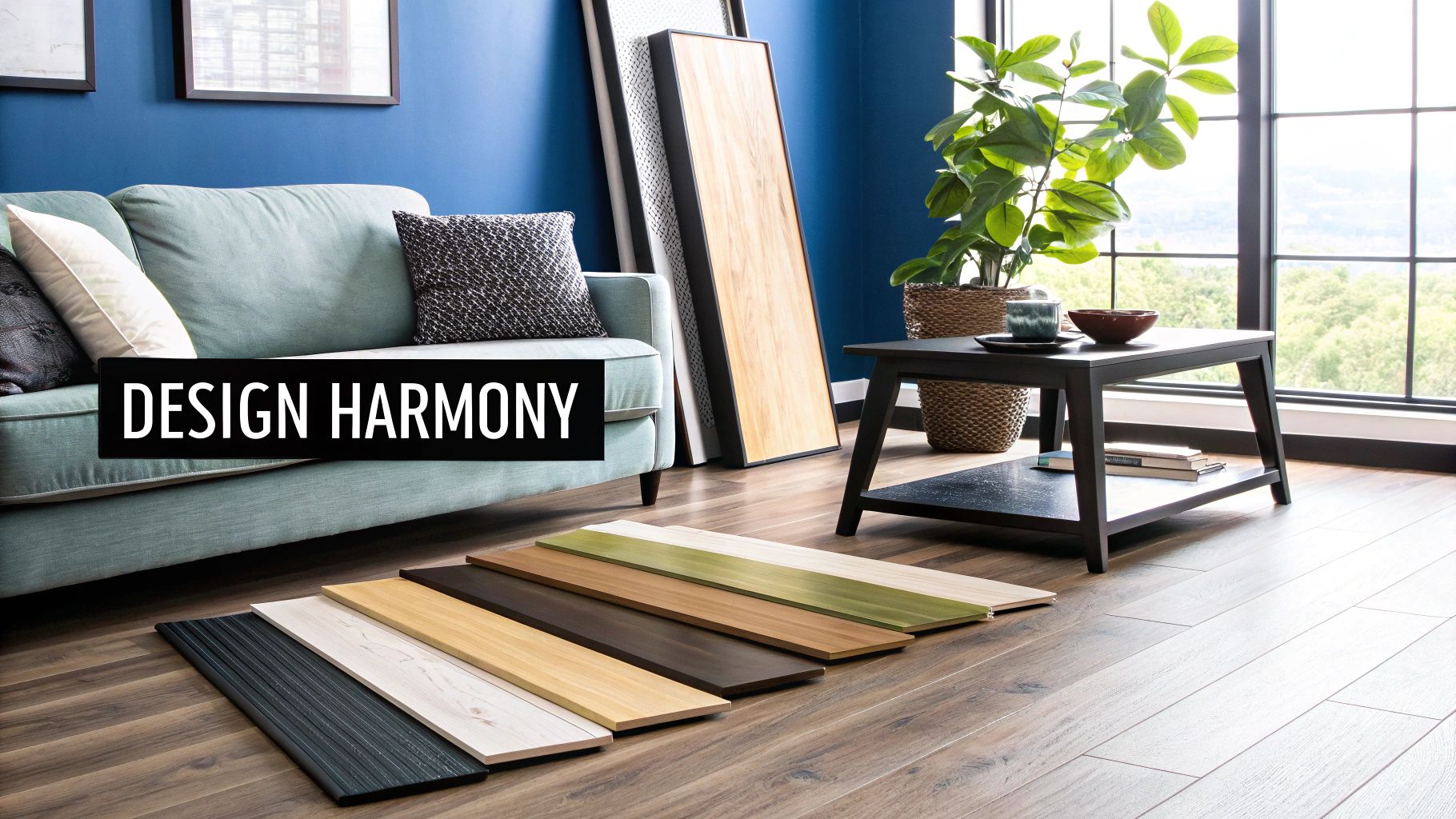
Think of your floor as the design anchor for any room. It’s not just a surface you walk on; it sets the entire mood and can either pull a space together or make it feel disjointed. I've seen it time and again—the right flooring is the secret ingredient that makes a home's aesthetic truly work, whether you're going for minimalist modern or a cozy, rustic charm.
For instance, light-colored, wide-plank hardwood has become a go-to for that open, coastal, or Scandi-inspired look. The wider planks mean fewer seams, which creates a clean, uncluttered canvas that makes any room feel more expansive. On the flip side, if you want to dial up the warmth and character, you might lean toward darker tones with a hand-scraped texture to get that traditional, lived-in feeling.
Unlocking Design Potential with Planks and Patterns
One detail homeowners often overlook is the powerful impact of plank width or tile size. It's a subtle choice that can completely alter how big or small a room feels.
You can really play with perception here:
- Wide Planks (5 inches or more): These are fantastic for creating a high-end, contemporary feel. With fewer lines breaking up the floor, they make spaces seem less busy and more open.
- Narrow Planks (under 3 inches): This is your classic, traditional choice. It brings a certain formality that works beautifully in dedicated spaces like a formal dining room or a home office.
- Large-Format Tiles: In a smaller bathroom or kitchen, big tiles with thin, matching grout lines are a game-changer. They create an almost seamless surface that tricks the eye into seeing a much larger, more streamlined area.
The right pattern can turn your floor from a simple backdrop into a genuine showstopper. A herringbone or chevron layout, for example, adds instant sophistication and a sense of movement, making it a perfect statement for an entryway or formal living room.
Harmonizing with Your Existing Style
Remember, your new floor has to live with your existing furniture, wall colors, and decor. This is where color coordination becomes absolutely critical. If you want to get really granular on this, our complete guide on how to choose flooring color dives deep into undertones and pairings.
It's all about creating harmony. A cool, gray-toned floor might look incredible next to crisp white cabinets and stainless steel appliances, but it could clash horribly with warm cherry wood. In contrast, a warm honey-oak floor will feel right at home with earthy paint colors and traditional furnishings.
This is why I always tell people: never, ever commit to a floor without bringing samples home first. See how they look in your light, at different times of day, next to your sofa. It’s the only way to be sure you'll love the final result.
Think About Health and Sustainability Before You Choose
It’s so easy to get caught up in the look and feel of a new floor—the color, the texture, the durability. But I always tell my clients to take a step back and think about what the floor is actually made of. What you put on your floor can have a real impact on your home's environment, and these days, creating a healthy, responsible living space is a huge priority for so many of us.
This means we need to look closer at the materials under our feet, especially when it comes to indoor air quality. The big culprit here is often something called Volatile Organic Compounds (VOCs). These are chemicals that can "off-gas" from certain flooring materials and the adhesives used to install them, and they can absolutely affect the air you and your family breathe.
What You Need to Know About VOCs and Air Quality
Making a conscious choice to go with low-VOC or even zero-VOC flooring is one of the best moves you can make for your home's air quality. These products are specifically made to release very few, if any, of those harmful chemicals. It's not just a small trend, either; it’s a major shift in how we build and renovate.
We’re seeing this play out on a global scale. For instance, in places with tight building regulations, like Europe, the demand for energy-efficient, low-emission flooring materials is exploding. It's a clear signal that people are prioritizing healthier materials. You can actually get a better sense of these commercial market trends on gminsights.com if you want to dig into the data. When you choose low-VOC flooring, you're not just making a smart call for your own home—you're part of a much bigger movement.
So, how can you be sure you're getting a product that's truly low-emission? Always look for third-party certifications right on the box.
- FloorScore: This is the big one you'll see on a lot of flooring. It's a reliable certification that confirms the product meets strict indoor air quality standards.
- GREENGUARD Gold: This certification takes things a step further. It has even stricter criteria, making it a fantastic choice for homes with kids, older adults, or anyone with sensitivities.
Choosing a certified low-VOC floor is one of the simplest yet most impactful decisions you can make for your family's long-term health. It’s an investment in the air you breathe every single day.
Diving into Eco-Friendly Flooring Materials
Beyond just air quality, many people are looking for materials that come from renewable or recycled sources. The good news is, you don't have to sacrifice style or durability to go green. We have a whole guide covering eco-friendly flooring options, but here are a few of my favorite go-to choices:
- Bamboo: A lot of people think it's wood, but bamboo is actually a grass. It grows incredibly fast, which makes it a fantastic renewable resource. Plus, it’s surprisingly tough—often harder than many traditional hardwood species.
- Cork: This one is just amazing. It’s harvested from the bark of cork oak trees, and the best part is that it doesn't harm the tree at all. Cork is naturally antimicrobial, a great insulator, and feels incredibly soft and cushioned underfoot.
- Reclaimed Wood: If you want a floor with a story, this is it. Using salvaged wood from old barns, factories, or other buildings gives you a look that is completely unique and full of character. It also keeps beautiful, perfectly good wood out of the landfill.
Making the Final Decision Before You Buy
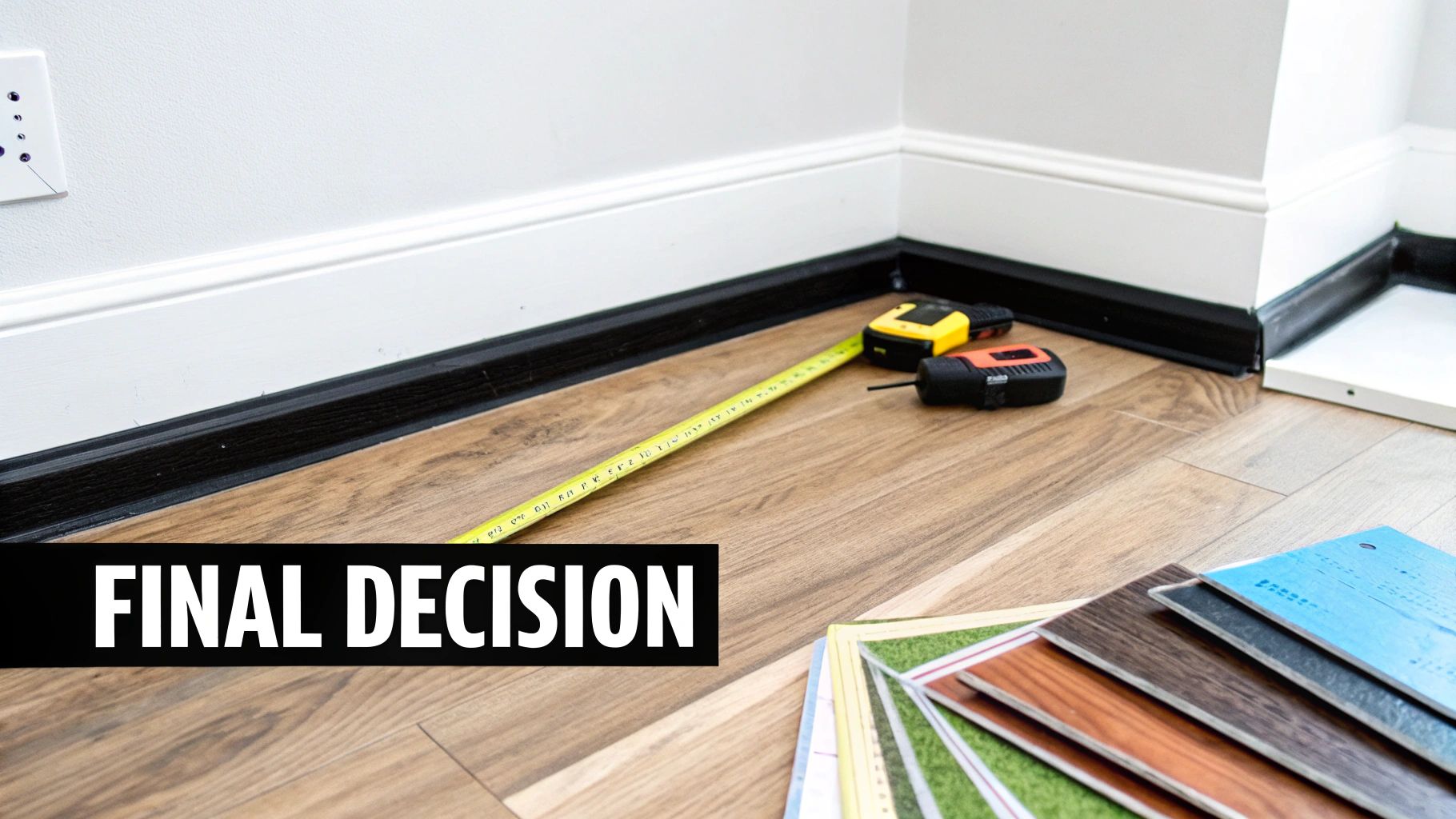
You've done the hard work of researching and shortlisting your options. This is the final gut-check, the moment you lock in your choice with total confidence before swiping your card. And the single most important thing you can do right now? Bring samples home. This part is absolutely non-negotiable.
A color that looks like a perfect match under the bright, artificial lights of a showroom can look shockingly different in your own space. I’ve seen it happen countless times. Place your samples in the actual room and live with them for a day or two. Watch how the morning sun hits them, how they look in the full light of midday, and how they change under your lamps at night. It's the only way to see how the color truly interacts with your walls, furniture, and lighting.
Measure Twice and Plan for Waste
Once you've landed on the perfect sample, it's time to get serious with the tape measure. To get your room's square footage, just multiply its length by its width. If you're working with an L-shaped room, mentally split it into two separate rectangles, calculate the square footage for each, and then simply add them together.
Now for a crucial tip that separates the pros from the rookies: you have to account for waste. You'll need extra material for cuts, tricky angles, and the occasional mistake. The golden rule is to order at least 10% more flooring than your measurements call for. If you're planning a more complex pattern like a diagonal installation, I’d bump that up to 15% to be safe.
Trust me on this one: running out of material halfway through a project is a nightmare. The replacement batch you order might be from a different dye lot, meaning the color could be slightly off—a glaring mistake on your brand-new floor.
Understand Your Warranty and Installation Plan
Before you pull the trigger, take five minutes to actually read the manufacturer’s warranty. Don't just glance at it. You need to know what you’re getting and, more importantly, what could void your coverage. Pay close attention to the details:
- Finish and Wear: How many years is the surface guaranteed against wearing through to the core?
- Structural Integrity: Does the warranty cover manufacturing defects like boards warping or layers separating (delamination)?
- Exclusions: This is the big one. Most warranties are voided by improper installation or moisture damage from a subfloor that wasn't prepped correctly.
Finally, how is this beautiful new floor getting installed? A DIY installation can definitely save you some cash, but you need to be brutally honest with yourself about your skill level and if you have the right tools. Bringing in a professional installer from the Cumming area not only ensures the job is done efficiently and correctly, but it also protects your investment by keeping that product warranty intact.
Answering Your Lingering Flooring Questions
Even after you’ve narrowed down your choices, a few practical questions almost always come up. It’s completely normal. Let's tackle some of the most common things homeowners ask right before they pull the trigger.
What’s Genuinely the Best Flooring for a House Full of Kids and Pets?
If your home is a whirlwind of paw prints, spilled drinks, and tricycle traffic, you need something that can take a beating. From my experience, two options consistently come out on top: luxury vinyl plank (LVP) and porcelain tile.
LVP is a true workhorse. It’s highly scratch-resistant and 100% waterproof, which makes it nearly indestructible against the daily chaos of family life. On the other hand, porcelain tile is incredibly hard and tough, standing up to scratches and moisture without a problem. The only real trade-off is that tile can feel quite hard and cold underfoot.
Can I Just Install New Flooring Right Over My Old Floor?
This is a big one, and the answer is… maybe. It really depends on what you have now and what you're putting down.
You can often "float" thin, rigid flooring like LVP or engineered hardwood directly over a single, level layer of an existing hard floor (like old vinyl or linoleum). However, installing new flooring over old carpet is an absolute no-go—it just creates a squishy, unstable foundation that will ruin your new investment.
A word of caution: Stacking floors can cause problems you might not expect. That extra height can prevent doors from closing properly or make your dishwasher impossible to slide out. It’s almost always better to tear out the old stuff and start with a clean, fresh subfloor.
Do I Really Need to Bother with Underlayment?
Yes, absolutely. Underlayment isn't just a flimsy sheet of foam; it’s a critical part of your flooring system.
Think of it as the unsung hero that:
- Acts as a moisture barrier to protect your floors from below.
- Smooths out tiny imperfections in the subfloor.
- Absorbs sound, making the room quieter.
- Adds a bit of cushioning for comfort underfoot.
Skipping the correct underlayment is a surefire way to cause problems down the road, and it will almost certainly void your flooring's warranty. Don't cut this corner.
At Flacks Flooring, we're here to help you navigate every question and find the perfect flooring solution for your Cumming, GA, home. Explore our waterproof flooring, hardwoods, and more by visiting us online.