
When a carpet gets really dirty, bringing it back to life isn't just a one-step process. It's a strategic mission with four distinct phases: first, you get rid of all the loose, dry soil. Then, you tackle the specific stains. After that comes the deep clean to pull out the embedded grime, and finally, you have to dry everything properly.
Following this order is the secret to getting a truly clean carpet without accidentally damaging the fibers or leaving it with that dreaded damp, musty smell.
Your Essential Carpet Cleaning Playbook
Before you even think about grabbing a cleaner and a brush, let's map out a game plan. Having a solid approach makes all the difference—it's what separates a beautifully restored carpet from a cleaning attempt that accidentally sets a stain for good or, worse, discolors a patch of your floor. Success really starts with knowing what you’re dealing with.
Identify Your Carpet Type First
Carpets aren't all the same. Synthetic fibers like nylon and polyester are workhorses; they can handle pretty aggressive cleaning. Natural fibers, on the other hand—think wool or silk—are far more delicate and can be ruined by harsh chemicals or too much water.
Not sure what you have? Look for a manufacturer's tag or, better yet, find a hidden spot (inside a closet works great) to test your cleaning solution. This little spot test is your absolute best friend. It’s the one thing that will tell you for sure if a cleaner is going to cause fading, color bleeding, or other damage, saving you from a very expensive headache. For folks in Forsyth County, knowing how to choose a good carpet for your home from the start can make cleaning down the road much less stressful.
I see it all the time: a homeowner panics over a fresh spill and immediately starts scrubbing frantically. This is the biggest mistake you can make. Scrubbing just grinds the stain deeper into the carpet's fibers and backing. The golden rule is to always blot gently with a clean cloth, working from the outside of the stain toward the center to keep it from spreading.
To keep things simple, here’s a quick overview of the cleaning process.
Quick Guide to Carpet Cleaning Stages
This table breaks down the entire cleaning project into manageable phases. Follow these in order, and you'll be on the right track.
| Stage | Objective | Key Action |
|---|---|---|
| Preparation | Remove surface-level dirt and debris. | Vacuum the entire area thoroughly, making several passes. |
| Spot Treatment | Address specific, set-in stains. | Apply the appropriate cleaner and blot gently. |
| Deep Cleaning | Extract embedded grime from the fibers. | Use a carpet cleaning machine for a deep wash. |
| Drying | Prevent mold, mildew, and musty odors. | Ensure maximum airflow with fans and open windows. |
Each stage builds on the last, so skipping a step will only compromise your final results.
The Four Stages of a Successful Clean
Think of this as your project checklist. Doing these steps out of order will sabotage your hard work.
- Lifting Dry Soil: Always start by vacuuming. Always. Dry dirt, sand, and dust are abrasive, and if you add moisture and start scrubbing, you’re essentially grinding sandpaper into your carpet fibers.
- Targeted Spot Treatments: With all the loose grit gone, now you can zero in on the noticeable stains. Different types of spills need different treatments, which we’ll get into later.
- Restorative Deep Clean: This is the main event. You’ll use a carpet cleaning machine or another deep-cleaning method to wash the entire carpet, pulling out all the deep-down dirt that a vacuum just can't reach.
- Fast and Safe Drying: Getting your carpet dry quickly is non-negotiable. A damp carpet is a perfect home for mold and mildew. Use fans, open windows, or run a dehumidifier to get the job done right.
This methodical approach isn't just for wall-to-wall carpeting. The same logic applies to other floor textiles, and you can find great advice on how to clean a bathroom rug effectively using similar principles. Stick to this playbook, and you’ll get a reliable, effective clean every single time.
What You'll Need: Your Carpet Cleaning Toolkit
Jumping into a carpet cleaning project without the right gear is a recipe for frustration. You'll work twice as hard for half the results. Getting your supplies in order first is the secret to turning a dreaded chore into a seriously satisfying refresh for your home.
You don’t need to buy out the cleaning aisle, but a few key items are absolutely non-negotiable for doing the job right. Think of this as building your home's first-response kit for spills and dirt.
The Must-Have Basics
Before you even think about stains or deep cleaning, you need a few workhorses ready to go. These are the tools you'll grab for almost any carpet-related issue.
- A Vacuum with Serious Suction: This is your number one weapon. A good, powerful vacuum is critical for pulling up all the dry, gritty soil, dust, and crumbs. If you don't get this stuff out first, you're just turning it into mud once you add water. For those looking at a major upgrade, it’s worth investigating options like finding the best central vacuum systems for the ultimate in-home cleaning power.
- Clean Microfiber Cloths: Don't skimp here—have a decent stack ready. Nothing beats them for blotting up spills. They're super absorbent and won't leave fuzzy lint all over your carpet.
- Spray Bottles: Grab a couple of empty, clean spray bottles for mixing your own cleaning solutions. Be sure to label them so you don't accidentally spray a vinegar mix on a stain that needs something else.
- A Soft-Bristled Brush: You'll need this for gently working cleaners into the carpet fibers. The key word is gently—a stiff brush will just cause frizzing and damage.
Once you have these essentials, you can move on to the cleaning solutions themselves.
Picking the Right Cleaning Solutions
The cleaner you use completely depends on the type of mess you're dealing with. There's no magic "one-size-fits-all" spray, and using the wrong one can lock a stain in permanently. A well-stocked cleaning caddy should have both some simple DIY options and a few specialized store-bought products.
For a general refresh or a simple, non-greasy spill, a homemade solution often does the trick beautifully. A mix of one part white vinegar to three parts water is a fantastic, all-purpose cleaner that also helps neutralize odors. Another old-school method that still works wonders is sprinkling baking soda over the carpet. Let it sit for about 15 minutes to absorb odors, then just vacuum it up. Easy.
But for tougher jobs, you'll need to bring in the specialists.
When you're up against organic stains—we're talking pet urine, blood, or food spills—an enzymatic cleaner is your best bet. These formulas contain active enzymes that literally digest the proteins in the stain, completely removing the spot and the lingering odor. For colorful spills like red wine or coffee, an oxygen-based cleaner (think OxiClean) is fantastic at lifting the pigment out.
The Big Decision: Rent or Buy a Deep Cleaner?
For that wall-to-wall deep clean, you're going to need a carpet cleaning machine. This is where homeowners in our area, from Milton to Johns Creek, have to make a choice: do you rent a commercial-grade machine from a local store, or buy a smaller model to keep at home?
Renting gives you a taste of professional-level power for a deep, annual cleaning without the high cost of hiring a pro. These machines are beasts, perfect for reviving a carpet that's seen better days.
On the other hand, owning a home unit is incredibly convenient. If you have kids or pets, you know spills are a regular occurrence. A home machine lets you tackle messes immediately and keep high-traffic areas from getting dingy. It might not have the raw power of a rental, but for frequent, smaller cleanups, it's often the more practical choice. It really comes down to your budget, storage space, and how often you see yourself needing it.
Mastering Everyday Stain Removal
Life happens. Spills are just an unavoidable part of a busy home, whether it's a splash of morning coffee in your Cumming kitchen or muddy paw prints tracked across the living room in Milton. The key isn't trying to prevent every single accident—it's knowing exactly how to react when one occurs.
What you do in those first few minutes can make the difference between a minor cleanup and a permanent, nagging stain.
Forget frantically scrubbing at a fresh spill. I’ve seen it time and time again—that’s the fastest way to make a small problem much, much bigger. The real secret to keeping your carpet looking great is using the right technique for the specific type of stain. It’s less about brute force and more about smart chemistry.
The Cardinal Rule: Blot, Don't Rub
If you take only one piece of advice away from this, let it be this: always blot, never rub. It sounds simple, but it's the most critical step.
When you scrub a fresh spill, you're not lifting it out. You're actually grinding the staining particles deeper into the carpet fibers while spreading the mess outward. This creates a larger, more set-in spot that's infinitely harder to remove.
Blotting, on the other hand, uses gentle pressure and absorption to pull the liquid up and out. Always start from the outer edge of the spill and work your way toward the center. This one small change in technique contains the stain and prevents it from bleeding into the surrounding carpet.
This guide can help you pick the right cleaning agent for common household messes.
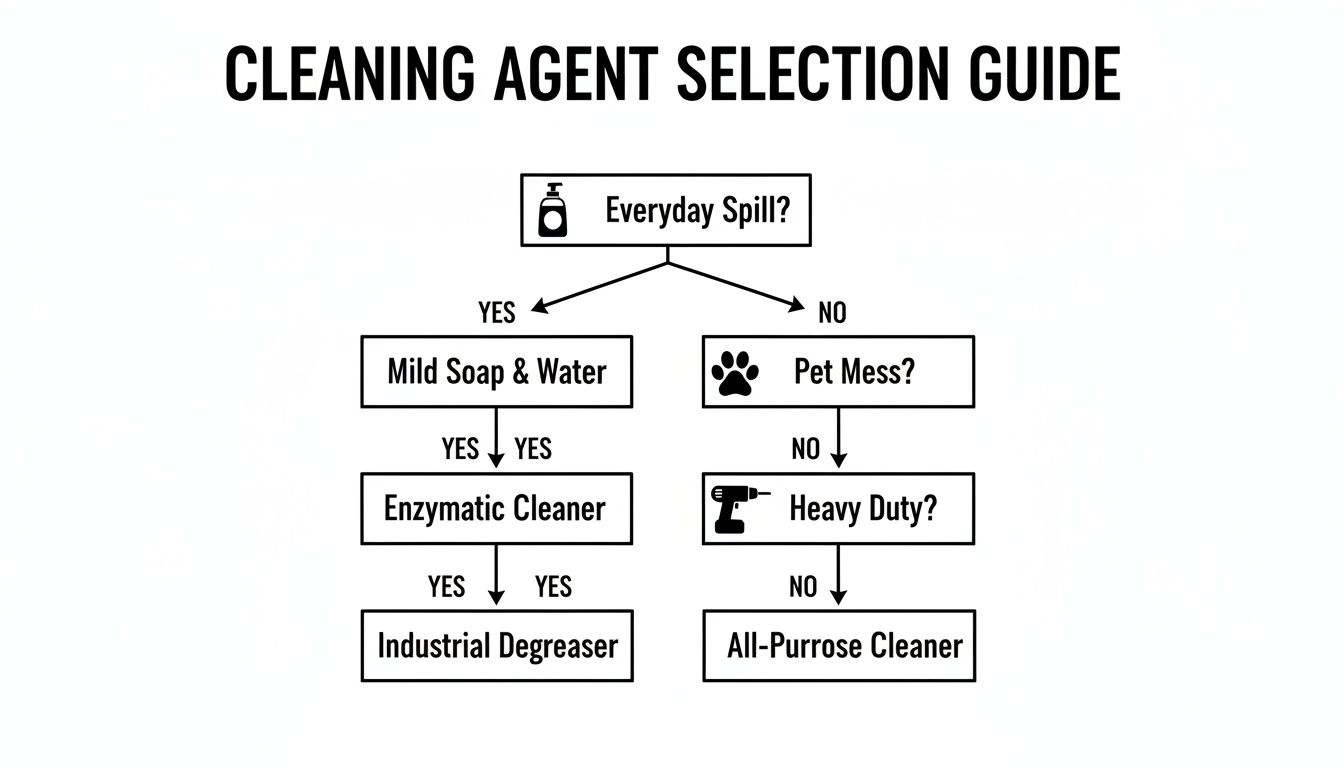
As you can see, what caused the spill—whether it's a simple drink or a more complex pet accident—dictates the specific approach you need to take for the best results.
For a quick reference, here’s a breakdown of how to handle some of the most common stains we see.
Common Stain Treatment Guide
| Stain Type | Recommended DIY Solution | Commercial Product Type |
|---|---|---|
| Coffee/Tea/Juice | 1/4 tsp clear dish soap in 1 cup lukewarm water | Water-Based Spot Remover |
| Red Wine | Equal parts white vinegar and water | Oxidizing Stain Remover |
| Mud | Let it dry completely, then vacuum. Treat residue with soap/water solution. | General Carpet Cleaner |
| Grease/Oil | Dab with isopropyl rubbing alcohol on a cloth, then follow with soap/water. | Solvent-Based Spotter |
| Pet Urine | Blot, then saturate with an enzyme cleaner. | Enzymatic Cleaner |
Always remember to test any cleaning solution on a hidden spot first, like inside a closet or under a large piece of furniture.
Tackling Water-Soluble Stains (The Easy Ones)
Good news: most of the spills you’ll encounter are water-soluble. This broad category includes everything from mud and latex paint to soda, juice, and alcoholic drinks. For most families, these are the everyday messes you’ll face.
Your go-to solution here is surprisingly simple. Just mix about one-quarter teaspoon of a clear, mild dish soap (make sure it has no bleach or lanolin) into one cup of lukewarm water.
Using a clean white cloth, gently sponge the solution onto the stain. Don't drench the carpet; a little goes a long way. Then, with a dry cloth, blot the area to absorb the liquid and the stain. Repeat until the spot is gone.
Finish by sponging the area with a small amount of plain water to rinse out any soap, then blot it completely dry. This last step is crucial—leftover soap residue is sticky and will attract dirt over time, creating a new dark spot.
Pro Tip: For a tougher stain like red wine, a mix of equal parts white vinegar and water can be a lifesaver. The gentle acidity of the vinegar helps break down the pigments without harming most modern carpet fibers.
Dealing With Greasy And Oily Stains
Greasy stains from things like salad dressing, butter, or cooking oil are a different beast because they repel water. For these, your simple dish soap solution won't cut it.
Your secret weapon here is isopropyl rubbing alcohol. Put a few drops on a clean cloth—never pour it directly on the carpet—and gently dab the stain. You'll see it start to break down the oil. Once the grease is lifted, you can follow up with your mild soap-and-water solution to clean any remaining residue.
Pet Accidents and Other Organic Stains
For families in Johns Creek and Forsyth County with furry friends, pet stains are a fact of life. These stains are organic, meaning they contain proteins that require a special type of cleaner to be fully removed. The same goes for other organic materials like blood or vomit.
Your absolute best tool for this job is an enzymatic cleaner.
- How They Work: These smart cleaners contain specific enzymes that literally digest the proteins in the organic waste. Think of them as microscopic Pac-Men that eat the stain and the odor source.
- Why They're a Must-Have: This process doesn't just remove the visible stain; it completely eliminates the odor-causing bacteria. This is non-negotiable for pet accidents. If your pet can still smell a previous spot, they are highly likely to mark that same area again.
- How to Use Them: Follow the product's instructions carefully. You’ll usually need to thoroughly saturate the stain (and the padding underneath) and let the cleaner sit for a while, giving the enzymes time to do their job before you blot it dry.
If you're dealing with pets, stain management is just one part of the equation. It's worth learning more about protecting your carpet against pets to minimize damage and keep your home looking and smelling fresh.
The Deep Clean Your Carpet Is Craving
Sometimes, even with faithful vacuuming and quick spot treatments, your carpet just loses its spark. Over time, a stubborn layer of ground-in dirt, allergens, and oily grime builds up deep in the fibers, leaving it looking dull and feeling, well, gross. This is when you know it’s time for a real deep clean—a process that pulls out the gunk that regular cleaning just can't reach.
For those of us in Cumming and the rest of Forsyth County, the changing seasons track everything from spring pollen to muddy autumn leaves right into our homes. A good deep clean isn't just for looks; it's about hitting the reset button on the health and freshness of your living space.
Choosing Your Deep Cleaning Method
When you’re ready for that full-room refresh, you've got two main routes: rent or buy a carpet cleaning machine for a DIY job, or call in the professionals. For the hands-on homeowner, a machine is your best friend.
You can rent a beast of a commercial-grade unit from a local hardware store or buy a more manageable model made for home use. The best choice really depends on how often you'll use it. If a deep clean is your big annual project, renting a high-powered machine is a smart move. But if you have pets or kids, and find yourself deep cleaning high-traffic areas every few months, owning your own machine is a game-changer for convenience.
Prepping for the Machine Clean
Before you even think about adding water, proper prep is everything. A carpet cleaning machine works by spraying a cleaning solution into the fibers and then sucking the dirty water right back out. If you skip the prep, all you're doing is making mud.
First things first, get all the furniture out of the room. I know, it's a workout, but it’s the only way to get a consistent, wall-to-wall clean without any weird lines or missed spots.
Next, give that carpet the most thorough vacuuming of its life. Seriously. Go over it multiple times from different directions to pull up as much loose dirt, pet hair, and debris as you can. Every bit of dry soil you remove now is less gunk the machine has to deal with later.
Mastering the Machine Technique
With the room cleared and vacuumed, you're ready to go. Mix your cleaning solution exactly as the manufacturer directs. One of the most common mistakes I see is using too much soap. It leaves a sticky residue that becomes a magnet for new dirt, and you’ll find your carpet gets dirty again in no time.
Crucial Tip: Never, ever oversaturate your carpet. The machine is designed to wet the fibers and pull the moisture right back out. Drenching the carpet can damage the backing and even the subfloor, creating a perfect breeding ground for mold and mildew. It’s always better to make a second, drier pass than to soak it on the first go.
Start in the corner farthest from the doorway so you can work your way out of the room without stepping on your clean, damp carpet. It’s a simple push-and-pull rhythm:
- Forward Pass: Squeeze the trigger to release the solution as you slowly push the machine forward.
- Backward Pass: Let go of the trigger and slowly pull the machine back over the same spot. This is the all-important extraction phase.
Work in straight, slightly overlapping lines, almost like you're mowing a lawn. This ensures you cover every inch for a perfectly uniform finish.
The Power of Professional Methods
While DIY machines have come a long way, it’s good to know what separates them from professional methods like steam cleaning (also known as hot water extraction). The pros use powerful, truck-mounted units that super-heat the water and have suction that no rental unit can match.
This push for more powerful cleaning isn't just anecdotal. The global market for carpet cleaning products was valued at USD 1,805.8 million in 2023 and is projected to hit USD 2,451.3 million by 2030. This growth is fueled by homeowners wanting professional-grade results. You can read more about these carpet cleaning market trends to see how the industry is evolving.
If your carpets are heavily soiled, or if you're dealing with delicate materials like wool, calling a professional is often the wisest (and safest) choice. They have the equipment and the know-how to bring your floors back to life.
Don't Skip the Final Step: Drying and Finishing
You’ve done the hard part, and the carpet looks fantastic. It's so tempting to move the furniture back and call it a day, but what you do next is just as important as the cleaning itself. Getting the drying process wrong is the number one way a DIY carpet cleaning job goes south, leading to that dreaded musty smell or, even worse, mold and mildew.
Think of it this way: your goal is to get that carpet dry as fast as humanly possible. A carpet that’s still damp after 24 hours becomes a perfect breeding ground for mildew, which completely undoes all your hard work and can seriously impact your home's air quality.
Get the Air Moving
The secret to quick drying is aggressive air circulation. As soon as you finish the last pass with the cleaner, your mission is to get the air flowing. Don't just rely on your central air.
Here’s what I recommend for speeding things up:
- Bring in the Fans: Grab every box fan and oscillating fan you have. Aim them directly across the surface of the carpet to help whisk moisture up and away from the fibers.
- Open the Windows: On a beautiful, dry day in Cumming or Milton, this is a free and powerful tool. Opening windows on opposite sides of the room or house creates a cross-breeze that works wonders.
- Fire Up the Dehumidifier: Let’s be real, we have plenty of humid days here in Forsyth County. On those days, a dehumidifier is your absolute best friend. It will pull moisture straight from the air, which in turn helps the carpet dry out much more quickly.
Your home's HVAC system can also be a great ally. Go ahead and turn on the air conditioning during the summer or the heat in the winter. It helps control the overall humidity in the house while your fans do the heavy lifting.
A Quick Pro Tip: The "touch test" is notoriously misleading. The top fibers might feel dry to the touch within a few hours, but the padding underneath can hold onto moisture for a long time. A better method is to press a clean, dry paper towel firmly into the carpet. If it picks up any dampness at all, it's not ready for foot traffic or furniture.
The Final Touch: Fluffing the Carpet Pile
Once you're 100% sure the carpet is completely dry—and I mean bone dry—there’s one last trick to get that professional, brand-new look. The deep cleaning process, especially with a rental machine, can sometimes flatten the carpet fibers, leaving them looking a bit matted and sad.
To bring that plush, soft feel back, simply vacuum the entire area thoroughly with a clean, dry vacuum cleaner. The combination of the suction and the beater bar is perfect for lifting and separating the fibers, fluffing them up and erasing any wand marks or footprints.
If you really want to go the extra mile, a carpet rake (a simple tool with soft nylon bristles) can be used to gently groom the pile so all the fibers stand up in the same direction. It's a small detail, but it’s that finishing touch that makes a freshly cleaned carpet look truly immaculate.
Knowing When to Call in the Professionals
Learning how to tackle a dirty carpet on your own is a fantastic skill to have. But let's be honest—sometimes, a rental machine just isn't going to cut it. There are moments when the best DIY efforts can't compete with the raw power and specialized knowledge of a professional crew. Knowing when to wave the white flag can save you a ton of frustration, prevent accidental damage, and give your carpet the deep, restorative clean it really needs.
Think of it this way: your DIY efforts are like regular maintenance. A professional service is the deep-tissue massage your carpet is begging for. They bring a level of skill and equipment that simply isn't available at the local hardware store.
Red Flags That Signal It's Time for a Pro
Some situations are clear signs that you should pick up the phone instead of the rental machine. If you’re nodding along to any of these, it’s time to call in an expert.
- Widespread Water Damage: If you've had a pipe leak or a minor flood, a rental unit won’t pull out enough water to stop mold and mildew from taking root in the padding and subfloor. Pros use truck-mounted, high-powered vacuums designed for exactly this kind of disaster.
- Persistent, Deep-Set Odors: That lingering pet smell or musty odor that keeps coming back? It's probably because the source has soaked all the way through to the carpet’s backing and padding. Professionals have access to specialized enzyme treatments that neutralize odors at their source, not just mask them.
- Delicate or High-End Carpets: Carpets made from natural fibers like wool or silk are notoriously tricky. They require specific cleaning solutions and precise temperature control to avoid shrinking, bleeding colors, or permanent damage. This is absolutely not a job for a one-size-fits-all rental machine.
- Stubborn, Set-In Stains: If you're up against an old, mysterious stain that has survived all your best attempts, it's time for a new strategy. A pro has an entire arsenal of specialized solvents and spot-removal techniques to tackle things you can't.
For a lot of homeowners in places like Johns Creek and Milton, bringing in a professional isn't just about getting the carpet clean—it's about peace of mind. Knowing your expensive flooring is in the hands of someone with the right tools and training is invaluable.
What Professionals Bring to the Table
The real difference between a DIY job and a professional one boils down to three things: equipment, expertise, and efficiency. Most pros use a method called hot water extraction, which is leagues more powerful than any steam cleaner you can rent.
Their truck-mounted systems heat water to a much higher temperature (killing bacteria and allergens) and use incredible suction to pull almost all of the moisture back out. This means they're yanking out deeply embedded dirt and grime that rental units leave behind, and your carpet dries much faster.
Industry experts generally recommend a professional deep clean every 12–18 months to keep your carpet looking its best and extend its life. It's easy to let that slide, but the longer you wait, the more soil builds up, and the harder it is for any home machine to make a dent. That gap is a big reason why the U.S. carpet cleaning industry is thriving—professionals have the heavy-duty gear to fix what DIY methods can't. You can dig into the numbers with these carpet cleaning industry statistics. A regular pro cleaning doesn't just make your carpet look new; it can actually help it last years longer.
Your Top Carpet Cleaning Questions, Answered
Even the most prepared DIY-er runs into a few questions when it's time to deep clean the carpets. I've heard them all over the years, so let's tackle some of the most common ones you might be asking yourself.
How Often Should I Really Be Deep Cleaning My Carpets?
This is probably the number one question people have. For a typical household here in Cumming or Johns Creek, a thorough, deep cleaning every 12 to 18 months is a solid rule of thumb.
But—and this is a big but—if you've got a busy house with kids, pets, or just a lot of people coming and going, you'll want to shorten that timeframe. In high-traffic homes, cleaning every six months is a much better game plan to keep deep-seated grime and allergens from taking over.
What's the Deal With Stains That Come Back?
It's one of the most frustrating things that can happen. You spend all that time cleaning a spot, it looks great, and then the next day… it's back. This isn't your imagination; it's a common issue called "wicking."
Wicking happens when a spill penetrates not just the carpet fibers, but the padding underneath. As the surface of the carpet dries, the moisture trapped below gets drawn—or "wicked"—back up to the tips of the fibers, bringing the stain right back with it.
To fix this, you need to pull that remaining moisture out. The best trick is to lay a clean, thick white towel directly over the damp spot and place something heavy on top of it, like a stack of books. Leave it overnight, and the towel will absorb the rest of the spill from the padding.
Is Vinegar a Safe Bet for Cleaning?
I see vinegar recommended everywhere as a miracle cleaner, but you have to be careful with it on carpets.
For most synthetic carpets (like nylon or polyester), a diluted mix of white vinegar and water is generally fine. But you should never use it on natural fibers like wool or silk. The acid in the vinegar can cause permanent damage and discoloration to these materials.
When in doubt, always do a little spot test on a hidden area, like inside a closet, before you commit to using any new cleaning solution.
Can a Clean Carpet Actually Help My Allergies?
Yes, absolutely. Think of your carpet as your home's biggest air filter. It's fantastic at trapping dust, pollen, pet dander, and other particles that would otherwise be floating around for you to breathe in.
When you deep clean your carpets, you're not just removing stains; you're emptying that filter. A regular, thorough cleaning is one of the best ways to improve the air quality in your home.
At Flacks Flooring, we know that a clean, well-cared-for floor is the heart of a happy home. If your carpets are past the point of a DIY refresh, stop by our Cumming showroom or visit us online at https://flacksflooring.com. We can help you explore options that will keep your home looking its best for years to come.