
So, you've just had beautiful new carpet installed, but there's one thing you didn't bargain for: that distinct "new carpet" smell. The good news is that getting rid of it is straightforward. It really comes down to two key actions: airing out the room and pulling up any lingering compounds with a good vacuum.
This simple one-two punch is the most effective way to tackle the smell at its source, which is just chemicals from the manufacturing process off-gassing into your home.
Why Your New Carpet Has That Distinctive Smell
That signature scent is a familiar experience for anyone who's gotten new flooring, whether you're in Cumming or right here in Milton. It’s not just your imagination—it's caused by Volatile Organic Compounds (VOCs). These chemicals are part of the manufacturing process, used in everything from the carpet fibers themselves to the latex backing and the adhesives that hold it all in place.
When the carpet is tightly rolled for shipping, those VOCs get trapped. As soon as it's unrolled in your home, they start to release into the air. This process is called "off-gassing," and it's what creates that chemical-like odor. While it can be a bit unpleasant, rest assured it’s a normal and temporary part of getting new floors.
Knowing what's behind the smell is the first step. Our goal isn't to just cover it up with air fresheners, but to actually help it dissipate and clear out of your home for good.
The Science Behind the Smell
The specific VOCs at play usually include compounds like formaldehyde and benzene, which are actually found in many common household products. Thankfully, the concentration levels in today's carpets are very low and fade quickly. In fact, these types of odors are the very reason the global odor-eliminator industry is so huge—it was valued at a staggering USD 91 billion in 2023 and is expected to nearly double by 2031.
The timeline for getting rid of the smell is pretty predictable if you take the right steps. This visual breaks down the key milestones for clearing the air in your home.
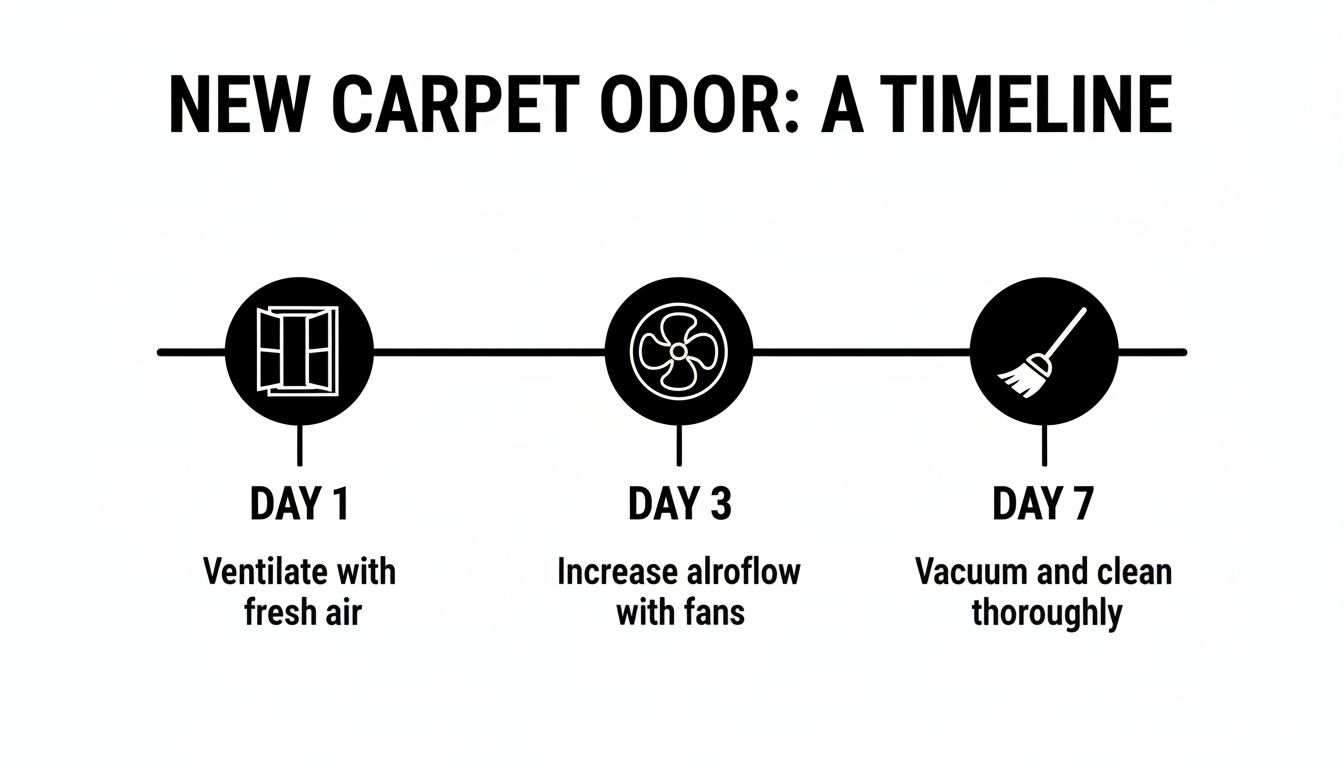
As you can see, the biggest improvement happens in the first few days, with active ventilation playing the starring role.
The First 72 Hours Key Actions for Odor Reduction
The first three days after installation are absolutely critical. What you do during this window will have the biggest impact on how quickly that new carpet smell disappears. Here’s a quick-reference guide to focus your efforts.
| Action | Why It Works | Local Tip for Forsyth County Weather |
|---|---|---|
| Open Windows & Use Fans | Creates cross-ventilation, pushing VOC-laden air out and pulling fresh air in. | On hot, humid Georgia summer days, run the AC to dehumidify, but open windows for 15-20 minutes in the cooler morning/evening hours. |
| Increase Room Temperature | Warmer air accelerates the off-gassing process, releasing VOCs faster. | Turn up your thermostat a few degrees (to around 75-78°F) for a few hours while you're out to speed things up. |
| Vacuum Thoroughly | Removes loose fibers and dust that have trapped VOCs on the surface. | Use a vacuum with a new bag or clean filter to ensure maximum suction and particle capture. |
By focusing on these three simple actions, you're not just masking the odor; you're actively removing the source from your home's air.
Carpet Materials and Odor Levels
It's also worth noting that not all carpets off-gas equally. Synthetic fibers like nylon and polyester generally have a stronger initial smell because their manufacturing process involves more chemicals compared to natural options.
Key Takeaway: If you or your family members are particularly sensitive to smells, the material you choose makes a big difference. Natural fibers typically have a much milder, less noticeable scent from the start.
For example, wool is a fantastic natural choice that’s known for having very low VOCs. Many people also love that it can help improve indoor air quality over time. If you're looking for a more natural flooring solution, it’s worth exploring the benefits of wool carpet. By understanding what causes the smell and which materials are more prone to it, you can take control and get back to enjoying your beautiful new floors faster.
Your First Line of Defense: Ventilation and Airflow

Before you even think about grabbing a bottle of cleaner, your number one tool for fighting that "new carpet" smell is completely free: fresh air. Moving air is what physically carries those VOCs out of your home. Just cracking a single window isn't enough; the real goal is to create a constant, powerful exchange of stale indoor air for fresh outdoor air.
Think about it like airing out a smoky room. You’d open everything up to create a current, right? The exact same logic applies here. You want to actively flush those chemical odors out of the space.
Create a Powerful Cross-Breeze
The most effective, no-cost strategy is to generate a strong cross-breeze. This is simple: just open windows and doors on opposite sides of the room, or even opposite sides of your house. This creates a natural wind tunnel that forces the contaminated indoor air out while pulling clean air in.
For instance, if you've just carpeted a bedroom in your Milton home, open the windows in that room and a door or window down the hall. You’ll feel the current start to flow. To give it a serious boost, place a box fan in one window facing outward—this will actively push the old air out much faster.
Put Your HVAC System to Work
Your home’s HVAC system is another powerful ally in this fight. Don't leave the fan on "Auto." Flip the switch to "On." This forces continuous air circulation through your entire home, even when the furnace or AC isn't actively running.
This constant movement helps in two major ways:
- It pulls the VOC-heavy air out of the carpeted room and dilutes it throughout the house.
- It passes that air through your HVAC filter, which can trap some of the airborne particles.
Just make sure you have a clean filter in place before you start. A fresh, new filter is far more effective at grabbing the dust and particles that can carry those stubborn odors.
Here in Georgia, especially on a humid day, running your air conditioner offers a hidden advantage. Your AC naturally dehumidifies the air, pulling moisture out of the room. Drier air actually helps the carpet fibers release those trapped VOCs more easily, making your ventilation efforts even more effective.
For homeowners looking for a more permanent upgrade, exploring professional skylight and ventilation solutions can drastically improve your home's air quality year-round. But for now, remember that these simple, immediate steps are your first and best defense against new carpet odor.
Natural and Safe Ways to Absorb Lingering Odors
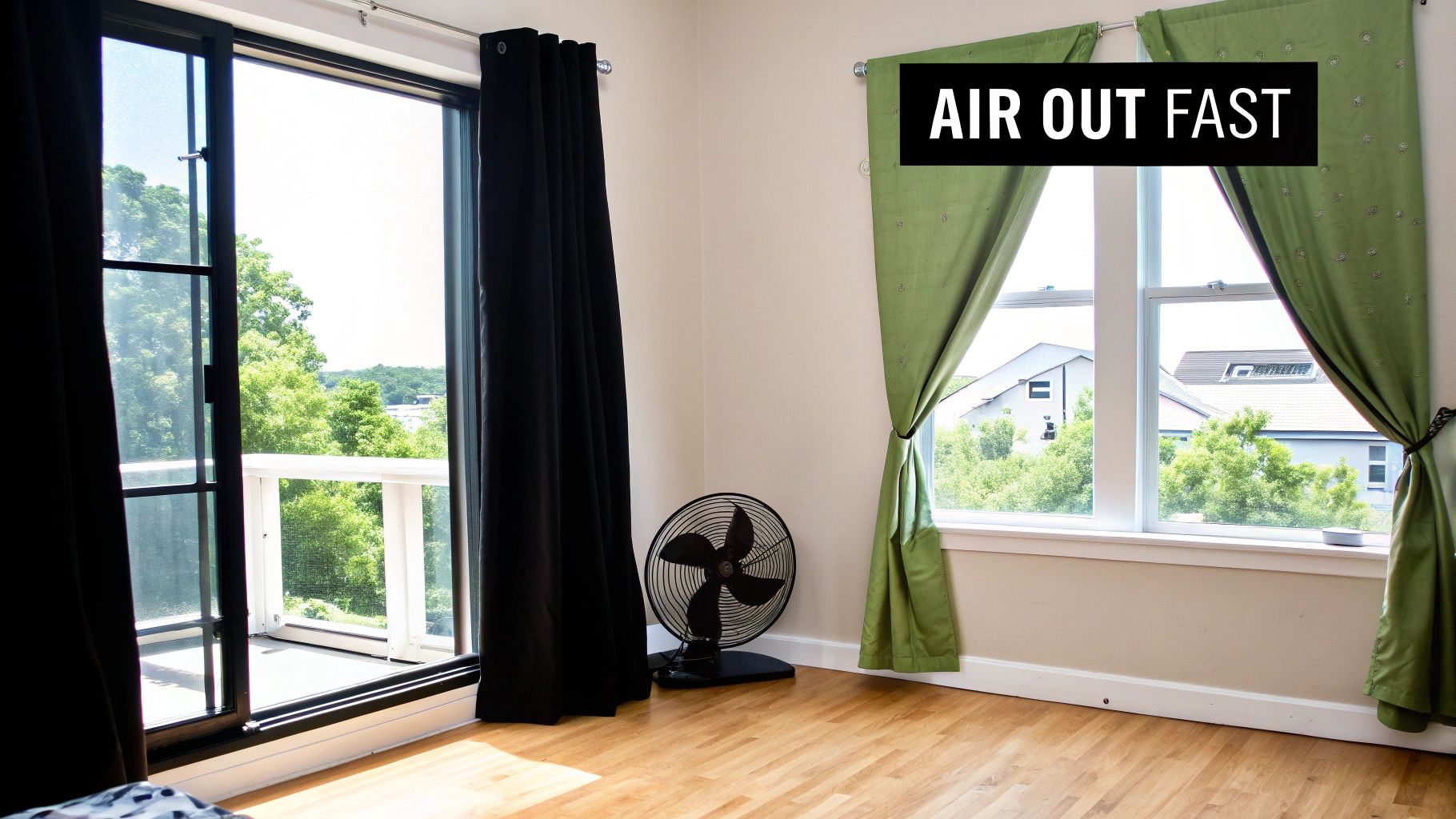
Even after you’ve aired out the room really well, you might still catch a whiff of that stubborn “new carpet” smell. It’s a common issue. Ventilation gets rid of most of the VOCs floating in the air, but some of those molecules just love to cling to the new fibers.
This is where you need a more direct attack, and thankfully, you can turn to safe, natural odor absorbers that you probably already have at home. This is especially important for households in Milton and Johns Creek with curious pets or young children, where harsh chemicals are a no-go. Natural solutions don’t just cover up the smell; they actually absorb it, leaving your air truly fresh.
The Power of Baking Soda
You've probably heard this one before, and for good reason—baking soda is a champion odor-eater. The trick is to use it generously. Grab a full box (or two for a large room) and sprinkle it evenly over the entire carpet. You're aiming for a light, consistent dusting.
Now comes the easy part: waiting. Let the baking soda sit for at least a few hours. If you can leave it overnight, even better. This gives the powder plenty of time to work its magic and neutralize those acidic odor molecules.
When you’re ready to clean up, a thorough vacuuming is key. Start with a fresh, clean filter or a new bag in your vacuum. Trust me, a clogged filter will just blow that fine baking soda—and the smells it’s trapped—right back into your room. Go over the carpet slowly, making a few passes in different directions to ensure you get all the powder up.
Other Go-To Household Solutions
Baking soda isn't your only option. A few other simple household items can help tackle any remaining airborne smells while the room continues to air out.
- White Vinegar: Don't worry, your room won't smell like a salad for long! Just pour some white vinegar into a few shallow bowls and place them in the corners of the room. The vinegar works to neutralize odors in the air. The vinegar scent will dissipate shortly after you remove the bowls, and it takes the carpet smell with it.
- Activated Charcoal: This stuff is a powerhouse absorber and completely scent-free. You can find it in premade pouches or as loose briquettes. Simply place them in a few bowls around the room, and they’ll quietly get to work pulling VOCs out of the air.
For many homeowners, finding safe ways to clean is a top priority. Using simple ingredients like baking soda and vinegar can be just as effective as store-bought chemicals for many tasks. If you're interested in greener cleaning, you can find more great tips on using natural floor cleaning solutions throughout your home.
You can also introduce some pleasant scents to improve the room's atmosphere as the last of that new carpet smell fades away. It's worth looking into which essential oils that can make a house smell good can be used safely and effectively to create a welcoming environment.
Gentle Cleaning and Post-Installation Carpet Care

After you've aired everything out and let the baking soda do its job, you might still catch a faint whiff of that "new carpet smell." It's tempting to think a quick wash will solve the problem for good, and sometimes it can. A gentle cleaning can help rinse away any lingering manufacturing residues.
But hold on—this is where you need to be careful. Your carpet is a brand-new investment, and the last thing you want is to damage it or, even worse, void your warranty right out of the gate.
First Things First: Check Your Warranty
Before a single drop of cleaner touches those new fibers, grab the paperwork that came with your carpet. Nearly every manufacturer has very specific guidelines on what cleaning products and methods are safe to use.
Using the wrong solution—even something you think is mild—can lead to discoloration, dissolve the glue in the backing, or damage the fibers themselves. It's a surprisingly common and costly mistake. Always stick to manufacturer-approved, low-residue cleaning solutions. These are formulated to clean effectively without leaving behind a sticky film that just attracts more dirt down the road.
Expert Tip: If you're standing in the cleaning aisle feeling unsure, don't guess. A quick call to us or your installer here in the Cumming area can save you a huge headache. We know what works for the specific carpets we install and can point you in the right direction.
What the Pros Use
The demand for safe, effective carpet cleaners is huge. In fact, the global market was valued at USD 641–663.8 million in 2023–2024 and is expected to climb past a billion by 2033. This boom, detailed in a carpet cleaner market report, is driven by homeowners who want powerful, eco-friendly products that can safely rinse away residues and neutralize smells.
While you have more options than ever, the "less is more" approach is always best for a brand-new carpet. If you're dealing with a bigger mess later on, a more thorough approach might be needed. For those situations, we have a complete guide on how to clean a dirty carpet that covers everything you need to know.
Ultimately, being gentle and patient in these first few weeks is key. It not only gets rid of that initial new carpet odor but also sets you up with a good maintenance routine for years of beautiful, comfortable flooring.
How Long Does That New Carpet Smell Actually Last?
Let's talk about what you can really expect. Knowing the timeline helps take the stress out of the process, so you'll know what's normal and when it might be time to take action. While that "new carpet smell" is a predictable thing, a few factors can change how long it hangs around.
Right after installation, the smell is going to be at its peak. This is when the most intense off-gassing of those Volatile Organic Compounds (VOCs) happens. The good news? It drops off fast. Within the first 24 to 72 hours, you should notice a huge difference. This is your most important window for airing things out—get those windows open and the fans going.
The First Week and Beyond
After those first few days, you might still catch a faint whiff of it, especially when you first walk into the room. Don't worry, that's completely normal. The smell will keep fading and should be pretty much gone by the end of the first week. By then, consistent airflow and a few good vacuuming sessions will have done most of the heavy lifting.
Now, a few things can either speed this up or slow it down:
- What Your Carpet's Made Of: Synthetic carpets, like nylon or polyester, often have a stronger initial odor compared to natural fibers like wool.
- The Room Itself: A small, closed-off room is going to trap that smell a lot longer than a big, open-concept space where you can get a nice cross-breeze going.
- Our Local Weather: Here in the Cumming, GA, area, we know all about humidity. Humid air can make carpet fibers cling to those VOCs a little longer, which is why running your AC can be so helpful—it pulls that moisture right out of the air.
The bottom line is this: if you're still dealing with a strong, chemical smell after a week or two of consistent ventilation and cleaning, it’s worth making a call. Most new carpet smells fade on their own, but a scent that just won't quit could point to something else.
Is This a Normal Smell, or a Real Problem?
It's crucial to know the difference between the typical "new" smell and something that's cause for concern. The standard scent has a chemical quality, but the key is that it gets noticeably weaker every single day.
If the odor is just overpowering, isn't getting better after a week, or starts to smell musty or like mildew, it's time to contact your installer. A professional can help figure out if the problem is with the carpet itself, the padding, or maybe even moisture in the subfloor. Always trust your gut—if something just doesn't seem right, a quick phone call can set your mind at ease and make sure you love your new floors.
When It’s Time to Call Your Flooring Professional
You’ve done everything right—windows open, fans blowing, baking soda scattered—but that stubborn "new carpet" smell just won't quit. While most of that initial off-gassing is a normal, temporary part of the process, you need to trust your gut. If something feels off or the smell isn't fading like it should, don't hesitate to pick up the phone.
A good installer, especially one serving areas like Milton or Johns Creek, wants you to be thrilled with your new floors. Calling them isn't about complaining; it's about making sure your investment is perfect and your home is comfortable.
Red Flags That Mean You Should Make the Call
If that chemical smell is still just as strong after two or three weeks of airing things out, it's time to stop waiting. A normal new carpet odor should gradually and noticeably fade day by day. If it’s not, that’s your first sign to reach out.
Pay attention to the kind of smell, too. If the initial chemical scent starts to morph into something musty or damp, that's a major red flag. This could point to a bigger problem, like moisture trapped under the padding or an issue with your subfloor. That's definitely not something you should have to troubleshoot yourself.
Most importantly, listen to what your body—and your family's—is telling you. A little initial sensitivity can happen, but ongoing symptoms are a different story.
- Persistent Headaches: Is anyone getting a headache only when they spend time in the newly carpeted room?
- Breathing Trouble: Are you noticing coughing, wheezing, or allergy symptoms that won't go away?
- Nausea or Dizziness: Feeling queasy or lightheaded specifically in that space is a clear warning sign.
Your family’s well-being always comes first. If someone in your home has asthma, allergies, or known chemical sensitivities and is having a persistent reaction, your installer should be the very first person you call.
A quick phone call can provide immediate peace of mind. A professional can come out, assess the situation, and make sure your beautiful new carpet is also a safe and healthy addition to your home.
Common Questions About That New Carpet Smell
When you get new carpet, that distinct smell often comes with a few questions. We hear them all the time from homeowners. Let's walk through the most common concerns so you can feel confident about your fresh, new space.
Is the "New Carpet Smell" Actually Harmful?
For the vast majority of people, that smell is nothing more than a temporary annoyance. The volatile organic compounds (VOCs) that cause it are present in very low concentrations and usually fade away quickly.
That said, if someone in your household has asthma, severe allergies, or is particularly sensitive to chemicals, they might experience a mild headache or some temporary respiratory irritation.
It’s always a good idea to play it safe. We often advise clients to keep young children and pets out of the newly carpeted room for the first 24-48 hours while the off-gassing is at its peak. Just follow the ventilation advice in this guide, and your indoor air will be back to normal in no time.
How Can I Make the Smell Go Away Faster?
Getting fresh air moving is, by far, the most effective thing you can do. But you can do more than just crack a window. To really speed things up, try these pro tips:
- Create a cross-breeze: Open windows on opposite sides of your home. This creates a natural wind tunnel that pulls the stale air right out.
- Use fans the right way: Don't just circulate the air in the room. Place a box fan in a window facing outward. This actively pushes the VOC-laden air outside, drawing fresh air in from other open windows.
- Crank up the heat (just for a bit): If you can, turn up the thermostat in that room for a few hours. A little extra warmth encourages the carpet fibers to release those trapped gases more quickly. Just remember to keep the fans going to vent it all out.
Will an Air Purifier Actually Help With the Odor?
Absolutely, but you need the right kind. A good air purifier can make a noticeable difference.
Look for a model with a two-stage filtration system: a HEPA filter for capturing tiny airborne particles and, most importantly, an activated carbon filter. The carbon is what actually traps the odor-causing gases and chemicals from the air. Run it on its highest setting in the room for the first couple of days for the best results.
One common mistake we see is people trying to cover up the smell with scented candles or aerosol air fresheners. This only masks the odor—it doesn't get rid of the source. Plus, you're just adding more chemicals into the air. Stick with methods that truly absorb and remove the smell.
At Flacks Flooring, we believe getting new floors should be an exciting and worry-free process from start to finish. If you have any concerns about your new carpet in the Cumming, Johns Creek, or Milton areas, our team is always here to help. For professional advice and flawless installation, stop by or visit us online at https://flacksflooring.com.