
Hardwood floors look their best in real life, not in a showroom. In North Atlanta homes, that means they have to stand up to school mornings, dogs racing down the hall, grocery bags sliding in from the garage, and summer humidity creeping in every time the door opens.
That’s why homeowners in Cumming, Johns Creek, Milton, and nearby areas ask the same question. Not how to make hardwood floors look good for a weekend, but how to maintain hardwood floors so they still look right years from now.
The good news is that hardwood usually doesn’t need complicated care. It needs consistent care. The wrong habits slowly wear down the finish, while the right habits protect the floor, preserve resale appeal, and help you avoid replacing something that may only need cleaning, recoating, or refinishing.
Your Hardwood Floors and the Beauty of Everyday Life
In a lot of North Metro Atlanta homes, hardwood is one of the first things people notice when they walk in. It warms up an open floor plan, works with modern and classic interiors, and gives a home a finished look that buyers and homeowners both value. It also creates a quiet kind of worry. Every scrape from a dining chair, every wet paw print, every spill on a busy weeknight feels like damage waiting to happen.
That concern is reasonable. Hardwood is durable, but it isn’t indestructible. In Forsyth County homes especially, daily traffic and Georgia moisture test the finish long before the wood itself is worn out. Families in Alpharetta and Johns Creek often aren’t dealing with neglect. They’re dealing with normal life moving fast.
What homeowners usually get wrong
Most floor damage doesn’t come from one dramatic event. It comes from repeated small mistakes. Grit stays on the floor too long. A vacuum brush roll stays on. A mop leaves too much water behind. Furniture gets moved once without protection, and the mark never quite disappears.
Practical rule: Good hardwood maintenance is mostly about preventing tiny damage from becoming visible damage.
That’s also why maintenance shouldn’t feel like a chore list pulled from a product label. It should fit the way people live. If a routine only works in an empty house, it won’t last in a real one.
A local way to think about it
After more than 30 years of flooring work around Cumming and Forsyth County, one thing stands out. Homes here don’t need generic advice. They need habits that account for humidity, red clay grit, pollen, pets, and heavy family traffic. The right routine protects both the beauty of the floor and the value of the investment underneath it.
A well-kept hardwood floor keeps doing its job. It makes the home feel better, photograph better, and age better.
The Foundation of Hardwood Care Daily and Weekly Routines
The best maintenance routine is simple enough that you’ll do it. For hardwood, the foundation is a three-part rhythm. Remove dry soil first, clean lightly with the right product, and avoid anything that leaves excess moisture or residue behind. A rigorous three-step approach can reduce finish dulling by up to 50% over 5 years in high-traffic households, and walk-off mats can capture 70-80% of external grit before it reaches the wood, according to hardwood floor maintenance guidance from Zerorez.
Start with dry soil, not liquid
Dust, sand, pollen, and fine dirt act like abrasives. If you mop before removing them, you’re just moving grit around the surface. A microfiber dust mop is the right everyday tool because it grabs debris without grinding it into the finish.
For entry points, use mats both outside and inside the door. In homes around Woodstock, Canton, and Cumming, that one move cuts down on the red clay and road grit that get tracked in constantly.
- Use a microfiber dust mop: Keep one on the main level and run it through the busiest paths regularly.
- Place mats where people enter: Front door, garage entry, and back patio doors matter more than decorative rugs in low-traffic rooms.
- Skip stiff brooms for routine care: They often move dust around instead of lifting it off the floor.
Vacuum the right way
A vacuum helps, but only if it’s set up correctly. Hardwood should be vacuumed on a hard-floor setting with the brush roll off. That’s one of the easiest ways to avoid adding scratches while trying to clean.
If you’re unsure which cleaners are safer for children, pets, or sensitive households, this guide to best non-toxic floor cleaner options is a useful starting point. It helps narrow the field before you buy something that leaves a film or reacts badly with the finish.
One cleaner homeowners still ask about is vinegar. It sounds harmless, but it can create problems depending on the finish. This breakdown on using vinegar on hardwood floors covers why that shortcut often does more harm than good.
Damp mop lightly, not aggressively
Once the dry debris is gone, use a lightly damp microfiber mop with a cleaner approved for hardwood. The pad should feel barely wet, not saturated. If you can see standing moisture, it’s too much.
A clean floor shouldn’t feel sticky, cloudy, or slick after it dries. If it does, the product or the amount is wrong.
A practical weekly routine looks like this:
- Dry mop first: Especially in halls, kitchens, and near exterior doors.
- Vacuum next if needed: Use a soft-floor-safe attachment.
- Damp mop only where traffic calls for it: Focus on the lanes people walk.
That routine doesn’t take long. More importantly, it prevents the sort of gradual wear that makes a floor look older than it is.
Proactive Protection Against Scratches and Wear
Cleaning matters, but prevention matters more. A floor can be spotless and still get beat up if furniture, sunlight, pets, and hidden moisture aren’t managed. The simplest protective steps usually do the most work over time.
According to Junckers hardwood maintenance guidance, proactive protection can avert over 80% of common hardwood damage, and quality felt furniture pads and entry mats can block 85% of grit-induced micro-scratches that dull the finish.
Protect the contact points
Most visible wear starts where something repeatedly touches the floor. Dining chairs, barstools, side tables, and planters cause more daily damage than large furniture that never moves.

A few habits make a real difference:
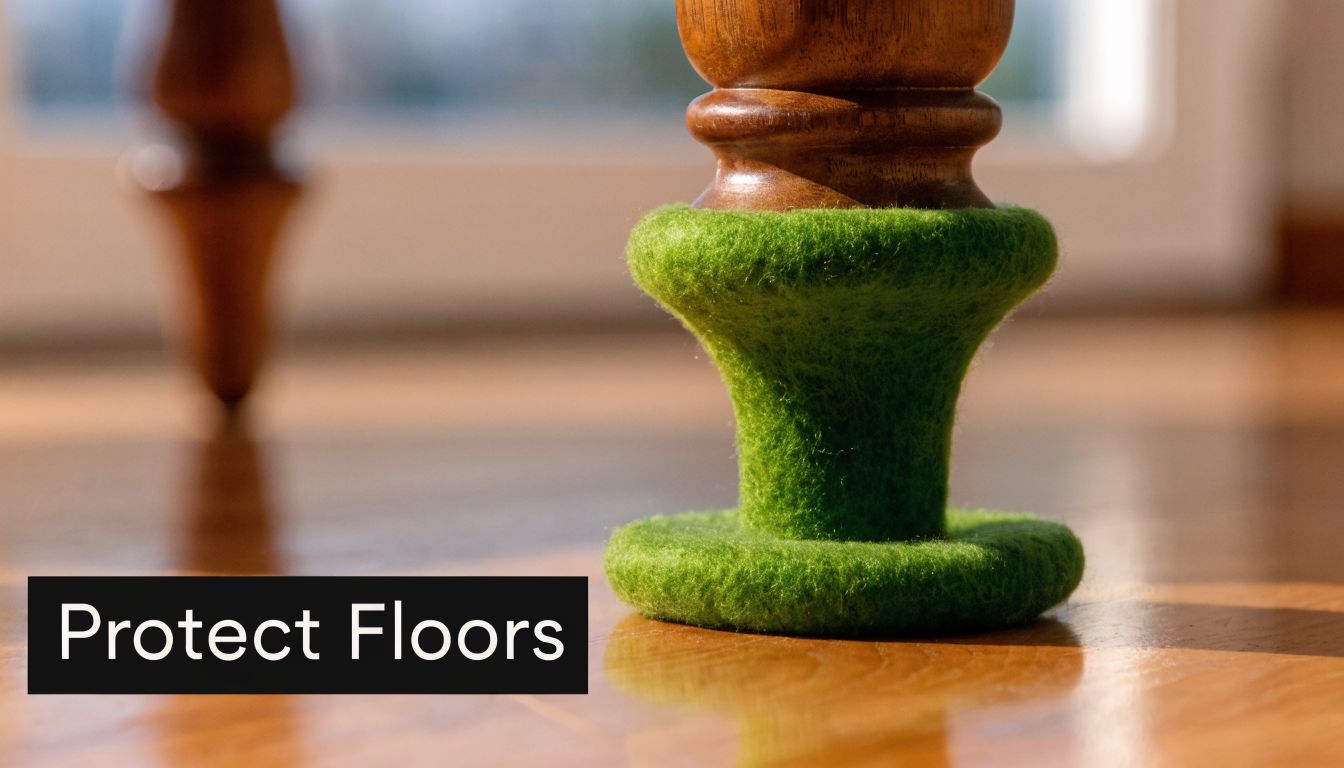
- Add felt pads to every moving leg: Chairs are the worst offenders because they slide often and at an angle.
- Check pads before they fail: Dirt gets embedded in felt. When that happens, the pad becomes the scratch tool.
- Lift heavy items: Don’t drag a bench, sofa, or appliance even once if you can avoid it.
If you want a room-by-room approach, this guide on how to protect hardwood floors from furniture is worth reviewing.
Watch sunlight and pet traffic
Sunlight changes wood over time. That isn’t always damage, but uneven exposure can leave the floor with strong color differences under rugs and around furniture. Use blinds, curtains, or UV-filtering window film in bright rooms, and rotate rugs occasionally so the floor ages more evenly.
Pets add another layer. Nails, water bowls, and repeated traffic patterns can wear one stretch of flooring much faster than the rest. Keep nails trimmed, use mats under bowls, and don’t let damp rugs sit flat against the finish for long periods.
Hardwood can be pet-friendly, but only if the house is set up for it.
Water problems need fast attention
Small leaks do more harm to hardwood than many homeowners expect because they often go unnoticed until boards darken, swell, or cup. Under sinks, around refrigerators, near dishwashers, and behind toilets are common trouble spots. If you want a simple homeowner checklist, Voyager Plumbing's leak detection tips offer a practical way to spot moisture problems early.
The no-nonsense version is this. Don’t wait for a stain to confirm there’s a problem. If a floor feels different underfoot, smells musty, or shows a slight edge lift, inspect the area before the finish and wood pay the price.
Long-Term Care Deep Cleaning and Refinishing
Hardwood doesn’t stay perfect on routine cleaning alone. It also needs periodic professional attention so the finish keeps protecting the wood underneath. The key is knowing whether your floor needs a surface refresh, a new topcoat, or a full sand-and-refinish.
Regular maintenance can extend the lifespan of hardwood floors up to 100 years, and the average cost to refinish hardwood is $1,887 compared with $4,726 for a new installation, according to Angi’s hardwood flooring cost guide. That’s why long-term care is usually the smarter move when the wood is still structurally sound.
When a simple polish is enough
Some floors just look tired. The finish may seem flat or lightly hazy, but there’s no major wear-through, deep gouging, or widespread board damage. In those cases, a surface-level deep clean or polish can improve appearance.
This is the least invasive option, but it also has the shortest effect. It helps appearance more than it fixes wear. If the finish is already compromised, polish won’t solve the underlying issue.
When to screen and recoat
A screen-and-recoat makes sense when the floor has normal wear, light scratches, and traffic dulling but the damage hasn’t cut far into the wood. The old finish is lightly abraded, then a fresh coat is applied over it. This is often the sweet spot for homeowners who want to preserve the floor before it reaches the point of needing full sanding.
A practical way to look at it:
| Condition | Likely need | Why |
|---|---|---|
| Surface looks flat but intact | Polish or deep clean | Mostly a cosmetic issue |
| Light scratches and worn traffic lanes | Screen and recoat | Restores protection before damage gets deeper |
| Deep wear, visible staining, or finish failure | Sand and refinish | Resets the floor properly |
When full refinishing is the right call
Full sanding and refinishing is the reset button. It removes the worn finish and exposes fresh wood so the floor can be rebuilt with a new protective coat. It’s the right move when the finish has failed, scratches are deep, or traffic paths are too pronounced to ignore.
If you can see that the wood itself has been affected, surface fixes usually waste money.
Homeowners weighing budget against outcome should get familiar with the basics before calling contractors. This page on the cost to refinish hardwood floors helps frame that conversation in practical terms.
The big trade-off is downtime versus replacement cost. Refinishing is disruptive for a short window, but it often preserves a floor that still has plenty of life left.
Troubleshooting Damage When to Repair vs Replace
Some hardwood problems are repairable. Others keep coming back because the cause was never addressed. In Georgia, humidity is often the deciding factor. In high-humidity climates like ours, where summer humidity averages 70-80%, keeping indoor relative humidity at 40-55% can reduce wood floor cupping by 60%, according to Lowe’s hardwood floor care guidance. When homeowners ignore that, they often end up choosing between repeated repairs and full replacement.
What can usually be repaired
Localized damage often responds well to targeted flooring repair. A few deep scratches, a stained board near a sink, or isolated movement in one section doesn’t always mean the whole floor is done.
Repair usually makes sense when:
- The problem is limited to one area: A few boards can often be replaced or blended.
- The rest of the floor is stable: No widespread cupping, soft spots, or recurring moisture issue.
- The species and finish can still be matched reasonably well: Older floors can be trickier, but not impossible.
For homeowners in Roswell or Marietta with original hardwood, this is often the first place to start. If the floor has good bones, preserving it usually gives the best visual result.
When replacement becomes the better decision
Replacement is often the smarter path when the cause of the damage won’t change. Basements, slab-level rooms with chronic moisture, heavy pet traffic, and rental properties all put different demands on flooring. In those spaces, replacing hardwood with a more forgiving product can solve the underlying problem instead of repeating repairs.
That’s where LVP flooring, laminate flooring, tile flooring, or other waterproof flooring options come into the conversation. Luxury vinyl plank is a common choice for families who want a wood look with easier moisture handling. Modern laminate can also work well in dry areas where scratch resistance and affordability matter. Tile remains one of the most practical options for bathrooms, laundry rooms, and some basement applications.
Hardwood floor decision guide
| Scenario | Best Option | Considerations |
|---|---|---|
| A few isolated scratches or gouges | Repair | Best when the finish and surrounding boards are still in good shape |
| Traffic wear across multiple rooms | Refinish | Preserves real wood if the boards remain structurally sound |
| Repeated cupping tied to poor humidity control | Repair only after moisture is corrected | Fix the environment first or the problem often returns |
| Basement or moisture-prone lower level | Replace with waterproof flooring | LVP or tile usually fits the space better than hardwood |
| Heavy pet wear in a busy family home | Replace if damage is widespread | Scratch-resistant flooring may be more practical for daily use |
| Dated flooring during a full renovation | Replace | Opportunity to rethink style, durability, and room-by-room function |
The right answer isn’t always the original material. It’s the floor that fits the room, the moisture conditions, and the way the household actually lives.
For shoppers in Alpharetta, Acworth, Woodstock, Canton, and across Metro Atlanta, that’s the real maintain-versus-replace decision. Keep hardwood where it still makes sense. Upgrade where another surface will perform better.
Preserve Your Investment with Expert Guidance
Hardwood rewards steady care. Dry soil removal, careful cleaning, scratch prevention, and timely refinishing do more than improve appearance. They protect one of the most visible investments in the house.
That matters whether you’re staying put, preparing to sell, updating a rental, or planning a broader floor replacement project. In some homes, the best answer is preserving the hardwood you already have. In others, the smarter move is replacing problem areas with waterproof flooring, pet-friendly flooring, tile, carpet, or a more scratch-resistant option that fits your lifestyle better.
What a good next step looks like
If you’re unsure what your floor needs, don’t guess from a cleaning aisle label or an online photo that looks vaguely similar. Have the floor evaluated in person. A proper look at the finish, the board condition, the subfloor environment, and the wear patterns tells you far more than a generic maintenance checklist ever will.
That’s especially true in Cumming, Johns Creek, Milton, and the surrounding North Atlanta communities, where climate and floor type often change the right recommendation. The same house can need hardwood refinishing upstairs, waterproof flooring in the basement, and a totally different solution in a high-traffic family room.
Why local guidance matters
A good flooring plan should answer practical questions. Should you repair or replace. Does the floor need recoating or full refinishing. Is hardwood still the right fit, or would LVP, laminate, carpet installation, or tile flooring serve the room better.
Those are purchase-ready questions, and they deserve specific answers based on the home itself. If you’re searching for flooring near me in Forsyth County, North Fulton, Cobb County, or Cherokee County, the most useful step is an in-home consultation that looks at the actual conditions instead of making assumptions.
If you want clear advice on maintaining existing hardwood, comparing floor replacement options, or choosing new flooring for a renovation in Cumming, Johns Creek, Milton, Roswell, Woodstock, Acworth, Alpharetta, Canton, or Marietta, Flacks Flooring is a strong local place to start. Their team offers in-home consultations, guidance on hardwood, waterproof flooring, carpet, laminate, and LVP, and practical recommendations built around how your home is used every day.