
Your beautiful new floors are only as good as what’s underneath them. Here in Cumming, GA, we see it all the time at Flacks Flooring: a homeowner invests in gorgeous new flooring, only to have it fail because the subfloor wasn't right. A solid, properly installed subfloor is truly the most important part of any flooring project, protecting your investment from the unique challenges we face in Forsyth County.
It’s what stands between your floors and the cupped hardwood caused by North Georgia humidity or the vinyl planks that start separating over an uneven surface. A faulty subfloor is often the hidden problem behind many flooring issues we’re called to fix.
Ready to get it right from the start? Visit our Cumming showroom or call us today to schedule a free flooring consultation and ensure your project is built on a solid foundation.
Why a Solid Subfloor Is Critical for Your Cumming Home
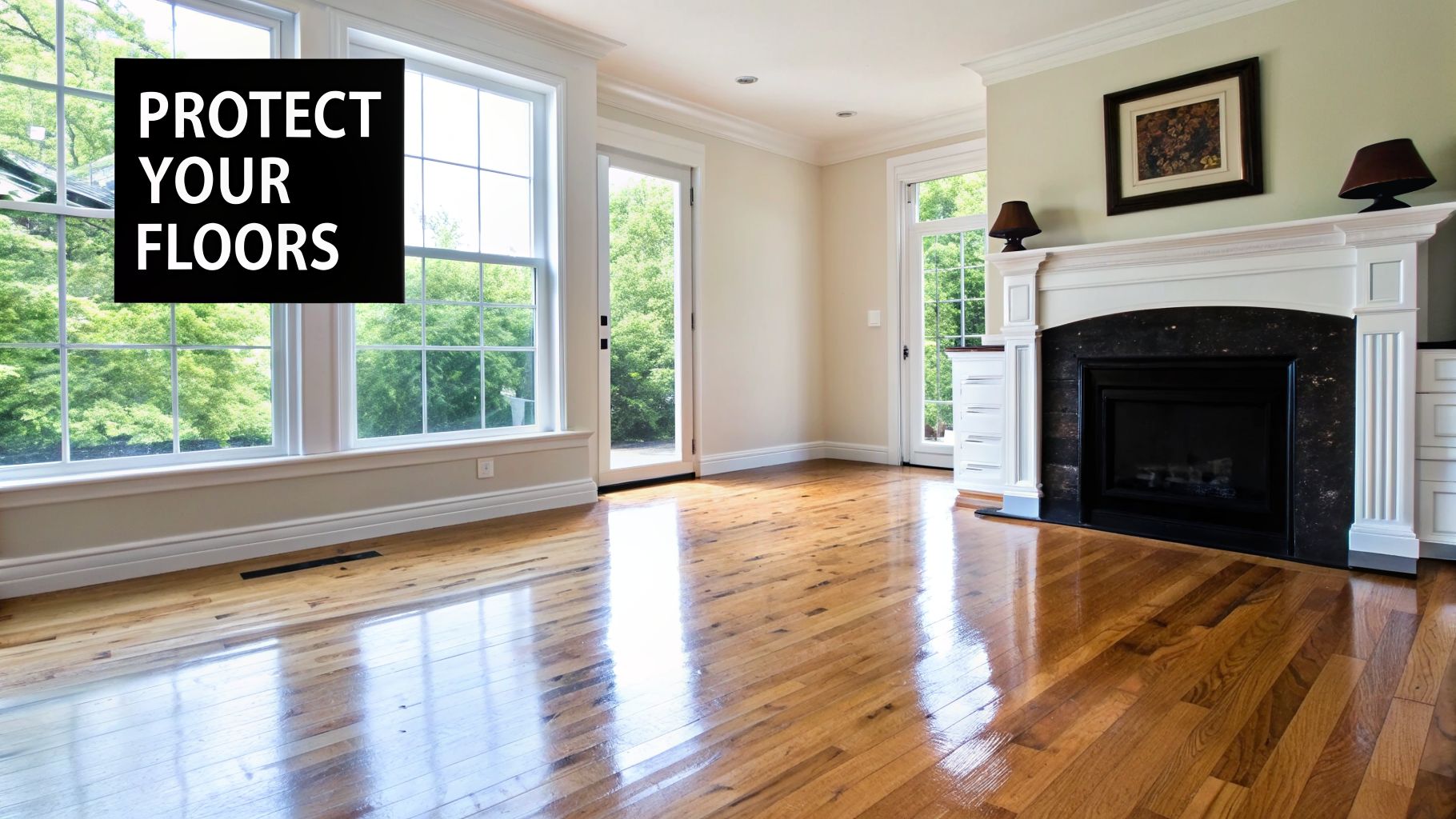
Around here, we’re not just building on any old dirt. We’re building on our signature red clay, which holds moisture and shifts with our distinct seasons. Add in the notorious humidity that rolls in every summer, and you've got a recipe for immense stress on a home's foundation and, by extension, its subfloor.
A weak or poorly installed subfloor is the root cause of countless flooring headaches we're called to fix in Cumming, Johns Creek, and the surrounding areas. It’s the hidden culprit behind those annoying squeaks, bouncy spots, and uneven planks that can drive a family crazy. Whether you're in a lake home near Lake Lanier or a new build in a Forsyth County subdivision, the subfloor matters.
The True Foundation of Flawless Floors
Think of the subfloor as the unsung hero of your home. It creates the smooth, flat, and stable surface your new hardwood, LVP, or tile needs to look and perform its best. Without a solid base, even the most expensive, high-end flooring will fail long before it should.
A professionally installed subfloor is specifically engineered to handle local challenges:
- Humidity & Moisture: It creates a stable base that resists the seasonal expansion and contraction common in our Georgia climate. This is what protects hardwood from cupping and keeps luxury vinyl from separating at the seams, a constant concern from Alpharetta to Buford.
- Structural Integrity: It distributes the weight of furniture and foot traffic evenly across the floor joists. This prevents those soft, bouncy spots and gives the floor a solid feel underfoot—a must for active family homes with kids and pets in Milton and Suwanee.
- Longevity: It eliminates the tiny movements and friction between the finished floor and the joists, which is the number one cause of squeaks and creaks developing over time, especially after a wet winter with muddy traffic.
A Smart Investment in Your North Atlanta Property
Putting money into a proper subfloor isn't just another line-item expense; it's a direct investment in your property's value and your own peace of mind. For homeowners in our humid climate, a great subfloor dramatically boosts the longevity and performance of any flooring you put on top.
It's no surprise that the subfloor adhesives market is projected to reach over $1.6 billion by 2030, a surge driven by homeowners who are tired of flooring failures. People are finally prioritizing a durable foundation to prevent problems like buckling and warping. In high-value areas like Johns Creek and Milton, a professionally installed subfloor isn't just a good idea—it's an essential feature that protects your home's flawless finish and adds to its resale value.
At Flacks Flooring, we’ve seen firsthand how a solid subfloor can make or break a flooring project in Cumming. It’s the difference between floors that last a decade and floors that last a lifetime. Getting this foundation right is the most important step.
For anyone taking on a basement finishing project in Buford or dealing with a concrete slab in an Alpharetta home, moisture becomes an even bigger concern. A correctly installed subfloor almost always needs to work with a high-quality moisture barrier. We cover this topic in-depth in our guide on how to install a flooring moisture barrier, a must-read for any below-grade projects in North Georgia.
Choosing Subfloor Materials for the Cumming Climate
Picking the right subfloor material is your first and most critical defense against the unique climate challenges we face here in North Georgia. The choice you make directly impacts the stability and longevity of your new floors, especially with our relentless humidity. For homeowners from Cumming to Alpharetta, the decision usually comes down to two main options: plywood and oriented strand board (OSB).
As a family-owned flooring store with over 30 years of local experience, we’ve seen firsthand how different materials hold up in real Forsyth County homes. Your home’s specific conditions—whether it's a basement finish, a main-level remodel, or a second-story addition—will ultimately guide which material is the right fit.
The Plywood vs. OSB Debate in Cumming
For most ground-level floors and basements in our area, plywood is almost always the better choice. Its cross-grain construction makes it inherently more resistant to swelling and delamination when exposed to moisture—a constant threat from our damp red clay soil and humid air. We frequently recommend specific grades of pressure-treated or moisture-resistant plywood for these jobs, especially in lake homes around Lake Lanier or older properties in Canton.
This type of plywood acts as a far more robust barrier against the ambient moisture that can seep up from a crawl space or concrete slab. While it costs a bit more than OSB, that extra investment can prevent thousands of dollars in repairs from warped hardwood or failing LVP down the road.
In our 30+ years of experience, spending a little more on a high-quality, moisture-resistant plywood subfloor for a basement or first floor is the smartest money you can spend on a flooring project in North Georgia. It's the foundation of a lasting installation.
However, that doesn't mean OSB has no place. High-performance OSB can be a smart, cost-effective solution for second stories or additions where conditions are consistently drier. In the upper levels of homes in Johns Creek or new construction communities in Dawsonville, the risk of ground moisture is gone, making OSB a perfectly suitable and budget-friendly option. It provides excellent structural stability when installed correctly.
A key part of the system is also the underlayment, which works hand-in-hand with the subfloor panel. To dive deeper into that, you can check out our guide on choosing the best underlayment for wood flooring.
Subfloor Material Comparison for Forsyth County Homes
| Material | Best Use Case in North GA | Moisture Resistance | Typical Cost per Sheet | Key Benefit |
|---|---|---|---|---|
| Plywood | Basements, crawl spaces, and any ground-level floor in Cumming. | Good to Excellent. Holds up better to swelling from Georgia humidity. | $35 – $60 | Superior moisture resistance and durability for local conditions. |
| OSB | Second stories, additions, and dry, climate-controlled areas. | Fair. Can swell at the edges when exposed to moisture. | $25 – $45 | Cost-effective and structurally stable in dry conditions. |
Ultimately, both materials can work well when used in the right application. The key is matching the material's properties to the specific environment of your project and protecting it from our spring pollen and tracked-in red clay.
Advanced Subflooring Options for Forsyth County Homes
Beyond the standard choices, some newer materials are gaining traction, particularly for specialized situations. For basement finishing projects or lakefront homes in areas like Milton and Cumming, we're seeing more homeowners opt for these advanced solutions.
Insulated subfloor panels, for instance, are becoming a go-to for boosting energy efficiency and managing moisture. These panels combine a structural board (like OSB) with a rigid foam insulation layer on the bottom, offering several fantastic benefits for North Georgia homes:
- Thermal Break: They help keep floors warmer in the winter, a huge comfort improvement in basements.
- Moisture Control: The integrated foam creates a small air gap that allows moisture from the concrete to dissipate, which helps prevent mold and mildew.
- Energy Savings: By insulating the floor, these panels can contribute to lower heating costs over time.
These modern systems offer a great all-in-one solution for creating a comfortable, dry, and healthy living space below grade. Making the right material choice for your project here in the North Atlanta area is a critical first step. It ensures your flooring not only looks great on day one but continues to perform beautifully for years, no matter what our Georgia climate throws at it.
How to Prepare Your Space for Subfloor Installation in Cumming

If you want a new floor that looks great and lasts for decades, you have to start with what’s underneath. We’ve been installing floors in Forsyth County for a long time, and I can tell you that proper prep work is everything. It’s the unglamorous part of the job that makes or breaks the final result in any home, from Suwanee to Dawsonville.
This isn’t just about clearing furniture out of the way. It’s a methodical process of tearing out the old, diagnosing the health of your home's structure, and creating a perfectly clean and flat foundation for your new subfloor.
Removing Old Flooring and Inspecting the Joists
First things first, the old floor has to go. Whether it’s decades-old carpet in a Johns Creek home or tired vinyl in a Milton kitchen, it’s time for some demolition. Get your pry bar, hammer, and a sharp utility knife ready. And please, don't skip the gloves and safety glasses—you’ll be dealing with countless staples, tack strips, and sharp edges.
With the old flooring pulled up, you get a clear look at the bones of your floor system. This is your one chance to spot and fix problems that would otherwise be hidden.
- Check the Joists: Get a good look at every single floor joist. You’re hunting for any signs of trouble—rot, moisture stains, or evidence of termites. Any joist that feels soft or looks compromised needs to be repaired or replaced. No exceptions.
- Hunt for Leaks: Dark stains on the joists or the old underlayment are major red flags. Don't just ignore them. You absolutely must find the source of the water—be it a leaky pipe or moisture coming up from the crawl space—and fix it for good.
- Do the "Squeak Test": If you’re working with an existing wood subfloor, walk over every square foot. Listen for squeaks and feel for any bounce. Use construction screws, not nails, to fasten any loose panels tightly to the joists until the floor feels solid.
Deep Cleaning Your Work Area
Now for the cleaning. And I don’t mean a quick pass with a broom. You need to get rid of every last bit of dust and debris. That fine North Georgia red clay dust we all know and love can get into everything, and even a little bit can ruin the bond of your subfloor adhesive.
Grab a good shop vacuum and go over the joists and the entire area meticulously. For anyone in Cumming, GA wrestling with that red dust, you’ll probably need to vacuum the whole area twice. A perfectly clean surface is non-negotiable if you want a professional result.
After 30 years of working on homes in Forsyth County, I can confidently say that 90% of subfloor problems—from annoying squeaks to total adhesive failure—stem from cutting corners on prep. That extra hour you spend cleaning is the smartest investment you can make in your new floor.
Achieving a Perfectly Flat and Level Surface
Today’s flooring materials, especially LVP and engineered woods, are picky. They need an incredibly flat surface to perform correctly. The smallest humps or dips can cause planks to pop apart, flex, or create hollow sounds when you walk on them.
This step is absolutely critical, especially in older Cumming homes or on concrete slabs around Sugar Hill where settling is common. Get yourself a long, straight edge—at least 6 or 8 feet—and slide it across the floor in every direction.
- Find the Low Spots: Use a pencil to circle any dips or valleys you find. On a wood subfloor, you might be able to use shingles or builder's felt to build them up. Over concrete, you’ll need to pour a self-leveling compound.
- Grind Down the High Spots: For high spots on a wood subfloor, a belt sander will knock them down. If you’re on concrete, you'll need a concrete grinder. The industry standard is a floor that’s flat to within 3/16 of an inch over any 10-foot span.
Don’t forget about ventilation. When you’re working with sanders, grinders, or leveling compounds, the dust and fumes can be intense. Open up the windows and set up fans to keep the air moving, especially for projects in tighter spaces around Alpharetta or Dawsonville. It’s this attention to detail that sets the stage for a perfect subfloor.
A Guide to Installing a Subfloor Over Wood Joists in Cumming
In most homes around Cumming and the rest of North Georgia, a new subfloor installation means you’ll be working directly over wood joists. This is the classic way to build a floor, and getting it right is crucial. It’s a job a skilled DIYer can certainly handle, but there’s no room for error.
Based on our 30 years of experience in Forsyth County, here’s how we lay down plywood or OSB to create a rock-solid, squeak-free foundation that will last for decades.
Stagger Your Seams for Strength
If you remember only one thing, make it this: stagger the seams of your subfloor panels. You never, ever want the corners of four panels to meet at the same point. It creates an undeniable weak spot that guarantees bouncing, flexing, and eventually, a failed floor.
Think about how a bricklayer works—the joints are always offset. It’s the same exact principle.
- Start your first row with a full sheet.
- Cut your first sheet for the second row in half.
- Keep alternating like this as you go.
This simple pattern spreads the load across multiple joists and ties the entire floor system together into one rigid platform. For busy family homes in Milton or Johns Creek, this isn't just a recommendation; it's essential for long-term durability.
Use Adhesive: The Secret to a Silent Floor
Ever walked across a floor that groans and squeaks with every footstep? That’s almost always the sound of subfloor panels rubbing against the joists. The solution is unbelievably simple: apply a continuous bead of high-quality subfloor adhesive to the top of every single joist before you lay a panel.
Don't be shy with it. Run a solid, unbroken line of glue along the entire length of the joist. This creates a powerful bond that literally welds the panel to the joist, eliminating the tiny movements that cause all that noise. We see this step skipped all the time in DIY projects from Buford to Woodstock, and it’s a shame because it’s so easy to get right.
To really protect your investment, think about the joists themselves. Especially in our humid climate, applying a product like deck joist tape can go a long way in shielding the wood from moisture and preventing future rot.
Fasten Your Panels the Right Way
Once a panel is glued and positioned, you need to fasten it down permanently. While nails might be faster, screws offer far better holding power and won't work their way loose over time. We exclusively use 1 5/8-inch or 2-inch coated construction screws for this job.
Follow a strict fastening pattern for the best results:
- Drive screws every 6 inches along all panel edges where they butt up against another panel.
- In the middle of the panel (the "field"), drive screws every 8 to 10 inches into each joist it crosses.
This tight pattern pulls the panel firmly into the wet adhesive, creating that critical, squeak-proof bond and preventing any bounce down the road.
An expansion gap isn't optional in our climate. That small 1/8-inch space gives your floor system room to breathe when the summer humidity arrives, preventing buckling and pressure issues that can damage your finished floors.
Don't Forget the Expansion Gap
Finally, you absolutely must leave a small gap around the perimeter of the subfloor. An 1/8-inch gap between the edge of the subfloor and the wall framing is critical. We see this forgotten in projects around Dawsonville, and it always creates headaches later on.
Wood-based panels naturally expand and contract with changes in temperature and humidity. That little bit of breathing room allows the entire floor system to move during our humid Georgia summers without buckling or pushing against your walls. Just use a scrap piece of 1/8-inch plywood as a spacer to keep the gap consistent as you work.
Stick to these core principles, and you’ll end up with a subfloor that is strong, silent, and perfectly suited for the North Atlanta climate—the kind of solid foundation every beautiful floor deserves.
Installing a Subfloor Over a Concrete Slab in Your Cumming Basement
Finishing a basement is one of the smartest ways to add real value and living space to your home here in North Georgia. But if you’ve spent any time in a basement from Suwanee to Woodstock, you know the biggest challenge we face is moisture. Concrete slabs act like a giant sponge, constantly wicking dampness up from the ground.
If you lay your final flooring directly on that concrete, you’re practically rolling out the welcome mat for mold, mildew, and warped boards. Installing a proper subfloor isn't just a suggestion—it's the only way to guarantee a warm, dry, and healthy space that actually lasts.
Before you start, it’s helpful to get familiar with the material you're building on. Taking a moment to read up on the concrete slab foundation pros and cons can give you some valuable context for the project ahead.
Two Proven Methods for Basement Subfloors in Cumming
When it comes to building a subfloor over concrete in Cumming, you've got two great options. The best one for your project really depends on your budget, how much time you have, and what you plan to do with the new space.
Method 1: The Modern Panel System
You've probably seen these at the big-box stores—they're often sold under brand names like DRIcore. These are engineered panels, usually 2×2 foot squares of OSB that come with a dimpled plastic base already attached.
This system is popular for a reason. The plastic feet create a small but crucial 1/4-inch air gap across the entire slab. This little bit of space is a game-changer, as it lets any moisture that seeps through the concrete evaporate instead of getting trapped under your floor.
Installation is also incredibly fast. The panels have tongue-and-groove edges that just lock together, making it a project a confident DIYer can tackle in a weekend. As a bonus, they provide a decent thermal break, so the floor feels warmer.
Method 2: The Traditional Sleeper System
This is the old-school, tried-and-true approach that our family has trusted for decades. It involves building a simple frame of pressure-treated 2x4s (we call these "sleepers") right on top of your concrete, then securing your OSB or plywood sheets to that frame.
With this method, you first lay down a heavy-duty 6-mil plastic vapor barrier across the entire slab. Then, you build your sleeper frame on top of it, spacing the 2x4s 16 inches on center and anchoring them to the concrete.
The result is an incredibly strong and solid floor. This is also our go-to recommendation if you're dealing with a significantly uneven slab, which is something we see all the time in older homes around the Canton and Cumming area.
Regardless of which method you choose, the way you fasten the panels is what makes or breaks the job. You have to stagger your seams, glue the sleepers, and fasten the panels securely. It’s the key to a floor that doesn’t squeak or bounce.

The Most Important Step for Any Cumming Basement Project
Before you buy a single 2×4 or subfloor panel, you absolutely must test your concrete for moisture. I can't stress this enough. Skipping this step is a recipe for disaster and can lead to a complete flooring failure down the road.
The good news is that it’s easy to do yourself. If you’re not sure how, check out our guide on how to test concrete for moisture. The results will tell you exactly what you’re dealing with and help you make the smartest choice for your home.
A solid subfloor doesn't just protect against moisture; it also makes your home much quieter. This is a huge plus for busy families in multi-story homes in neighborhoods like Johns Creek and Milton. In fact, the demand for better soundproofing has exploded, with the global flooring underlayment market growing from USD 3.5 billion in 2023 to a projected USD 5.8 billion by 2032. A quality subfloor can reduce footstep noise by 20-25 decibels—a difference you can truly hear and feel.
In our humid Georgia climate, a vapor barrier is not optional. It's the single most important part of any basement subfloor system and your best line of defense against the ground moisture we live with every day.
Whether you go with interlocking panels or a traditional sleeper build, getting this foundation right is what separates a successful basement remodel from a damp, musty headache. It ensures your new space will be a place your family can enjoy for years to come.
Why Choose Flacks Flooring in Cumming
It’s tempting to think you can save a few bucks by tackling a flooring project yourself, and sometimes you can. But the subfloor? That’s the one place you absolutely cannot afford to make a mistake. It’s the literal foundation for your beautiful new floors, and even a tiny error down there can lead to huge, expensive headaches later on.
This is where calling a local pro isn't a luxury—it's just smart.
For over 30 years, we've been the family-owned flooring team Forsyth County has turned to for flooring installation near me. We’re not some faceless national chain. We’re your neighbors in Cumming. We live and work right here, so we’re deeply familiar with the specific challenges of building and remodeling in North Georgia.
Local Knowledge the Big-Box Stores Don’t Have
Our team has spent decades inside homes just like yours, from brand-new builds in Dawsonville to classic properties in Canton and waterfront homes on Lake Lanier. We’ve seen firsthand how our local climate, that infamous red clay soil, and common building quirks in the area can impact a home’s structure.
That kind of deep, on-the-ground experience is something you can't learn from a corporate manual. It’s what allows us to:
- Spot problems others miss. We know the tell-tale signs of moisture creeping into a Cumming basement or how to identify joist sag that’s common in older Alpharetta homes long before it becomes a disaster.
- Choose materials that actually last here. North Georgia’s brutal summer humidity can be a nightmare for flooring. We know exactly which subfloor panels and adhesives will resist warping and prevent the squeaks and creaks that drive so many local homeowners crazy.
- Deliver a truly solid installation. We don’t just slap down panels and call it a day. We engineer a subfloor that is perfectly flat, incredibly stable, and completely silent. It’s built to last a lifetime.
Our Promise to You and Your Home
As a family business, our reputation is everything. We treat every project in Johns Creek and Milton as if it were for our own family because, in a way, it is. We simply don't do shortcuts or "one-size-fits-all" fixes.
The single best thing you can do to protect your flooring investment is to get a professional subfloor assessment. We’ll make sure the foundation is perfect, so you can avoid costly future repairs and enjoy stunning floors for years to come. Don't wait until humidity damage starts to show.
When you bring us in, you’re not just hiring a crew. You’re partnering with local experts who are genuinely committed to doing the job right and protecting the value of your home. Get your flooring estimate from the team that knows Cumming flooring best.
Answering Your Top Subfloor Questions in Forsyth County
If you're thinking about a new flooring project for your Cumming home, you’re probably also thinking about the subfloor. It’s the foundation for the entire job, and getting it right is everything. Over our 30 years in business, we’ve heard the same great questions from homeowners all over Forsyth County, so let's get you some answers.
Q: How much does subfloor installation cost in Cumming, GA?
A: In Cumming, GA, you can generally expect to budget around $3 to $7 per square foot for a professional subfloor installation, including standard materials and labor. This cost can vary for homes in Forsyth County, especially if we encounter significant leveling issues or need to use premium moisture-resistant plywood for a basement or lake home on Lake Lanier.
Q: How long does a subfloor installation take?
A: For an average-sized room (200-300 sq. ft.) in the Cumming area, our professional crew can typically complete a new subfloor installation in one to two days. This assumes the old flooring is removed and the joists are in good shape. If we find hidden rot or structural issues, which can happen in older homes across North Georgia, repairs may add to the timeline.
Q: Is a vapor barrier really necessary under a subfloor in Georgia?
A: Yes, absolutely. In our humid North Georgia climate, a vapor barrier is non-negotiable when installing a subfloor over a concrete slab or in a crawl space. It’s the most critical step to block ground moisture, prevent mold and mildew growth, and protect your hardwood or LVP from warping. We see this issue frequently in homes from Alpharetta to Sugar Hill.
Q: Can I just install new flooring over my old subfloor?
A: Sometimes, but a thorough professional inspection is crucial. If your existing subfloor in a Milton or Johns Creek home is perfectly flat, solid, and free of any water damage, it may be usable. However, if we find any soft spots, squeaks, or uneven areas, replacement is the only correct path. Building on a faulty foundation is a costly mistake you don't want to make.
Q: Do I need a permit to replace a subfloor in Forsyth County?
A: In most cases, simply replacing the subfloor panels as part of a flooring project does not require a permit in Forsyth County. However, if the project involves altering or repairing the floor joists or other structural elements of your home, a permit is almost always required. We can help guide you through any necessary steps for your specific project.
Ready to make sure your new floors are built on a rock-solid foundation? The team at Flacks Flooring brings over 30 years of experience installing subfloors designed specifically for the North Georgia climate. Schedule your free, in-home consultation today, and let’s get your project started right—from the ground up.