
So, is engineered hardwood a good choice? Let’s cut to the chase. For a lot of homes, the answer is a resounding yes. But the real, honest answer depends on your specific situation—the room you're renovating, your family's lifestyle, and of course, your budget.
What you're getting is the genuine beauty and feel of real wood, but with some clever modern engineering baked in for better stability. It’s an incredibly versatile flooring option.
Is Engineered Hardwood The Right Choice For You?
Engineered hardwood really holds a unique spot in the flooring world. It perfectly marries the timeless, classic appeal of solid wood with the practical advantages of modern construction.
Think of it like this: it has the classic good looks, but it’s been engineered to be more resilient when life—and humidity—happens. Its real strength comes from that layered design, which fights back against the expansion and contraction that happens with temperature and moisture changes. That's something solid hardwood just can't do as well.
This stability is a total game-changer for homeowners. It means you can finally have that real wood floor in places that used to be off-limits, like a finished basement or right over a concrete slab. It’s also a fantastic performer in climates with sticky, humid summers like we get here in Cumming, GA.
For most folks, the big draws are:
- Installation Versatility: You can float it, glue it, or staple it down. More options mean a better fit for your specific home.
- Location Flexibility: It’s happy on any level of your house—main floor, upstairs bedrooms, or even below ground.
- Moisture Resistance: It handles humidity far better than its solid wood counterpart.
The decision often comes down to this: you're trading unlimited refinishing for superior stability. A high-quality engineered product, however, gives you the best of both worlds—a floor that lasts and works just about anywhere.
To make things simpler, this flowchart can help you walk through the key decision points. It considers your room, lifestyle, and budget to see if engineered hardwood is the right match.
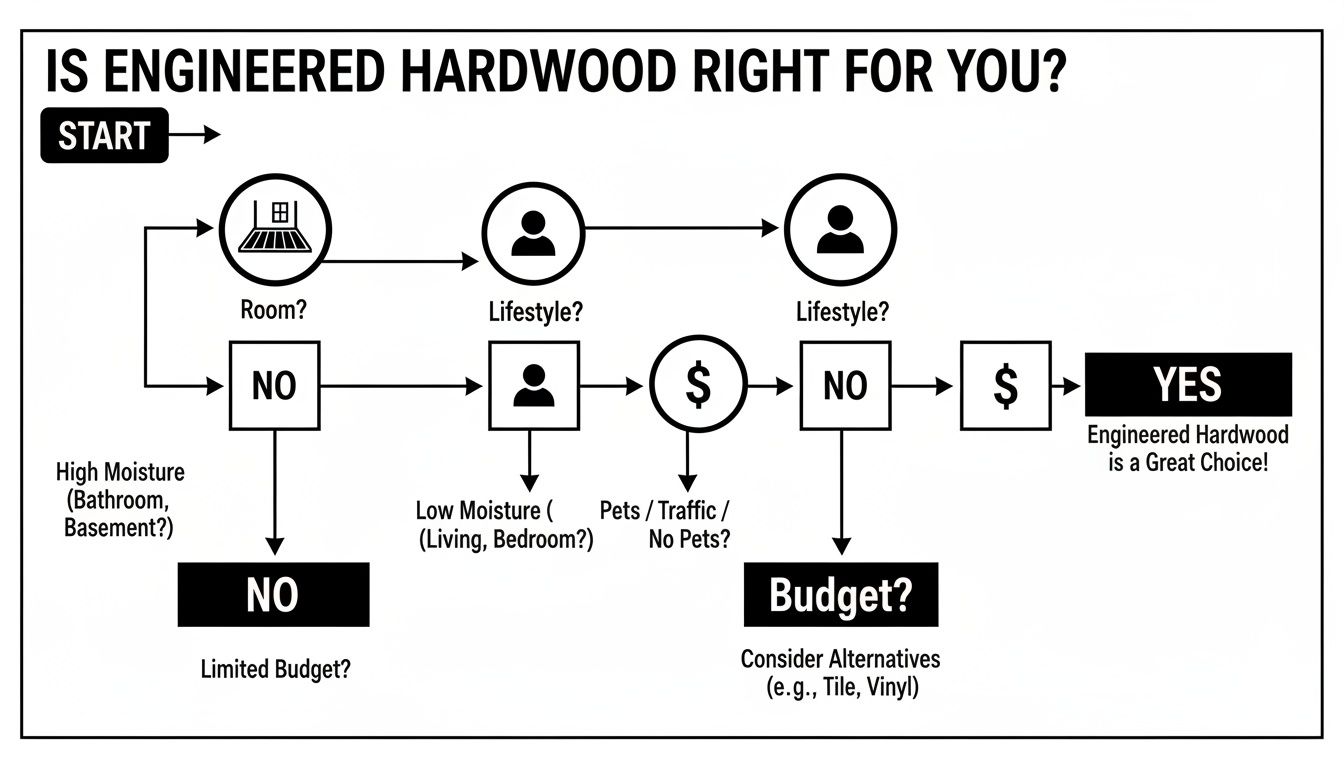
As you can see, if you’re looking at a basement installation or live in a place with significant humidity swings, engineered hardwood often comes out on top.
Choosing the perfect floor is all about weighing these kinds of pros and cons. For an even deeper dive, our guide on how to choose flooring for your home can offer more personalized advice.
For a quick overview, here's a simple breakdown of what engineered hardwood brings to the table.
Engineered Hardwood At A Glance
| Key Feature | Why It Matters for Homeowners |
|---|---|
| Layered Construction | Provides enhanced stability against humidity and temperature changes, reducing warping and gapping. |
| Real Hardwood Veneer | You get the authentic look, grain, and feel of real wood because the top layer is real wood. |
| Installation Flexibility | Can be installed in basements and over concrete subfloors where solid wood is not recommended. |
| Limited Refinishing | Can only be sanded 1-3 times, depending on the thickness of the top veneer layer. |
This table gives you a starting point. It shows that engineered hardwood is a smart, practical choice for many modern homes, offering beauty without some of the traditional limitations of solid wood.
What Exactly Is Engineered Hardwood?
Before you can decide if engineered hardwood is right for your home, you need to know what it is—and just as importantly, what it isn't. Let's clear up a common misconception right away: engineered hardwood is not fake wood. It’s a 100% genuine wood product, just built in a smarter, more modern way than old-school solid planks.
Think of it like a high-performance wood sandwich. The top layer, the part you see and walk on, is a slice of beautiful, authentic hardwood. This is what flooring experts call the veneer or wear layer, and it comes in all the popular species you love—oak, hickory, maple, you name it. This layer provides all the color, grain, and character that makes hardwood so desirable.
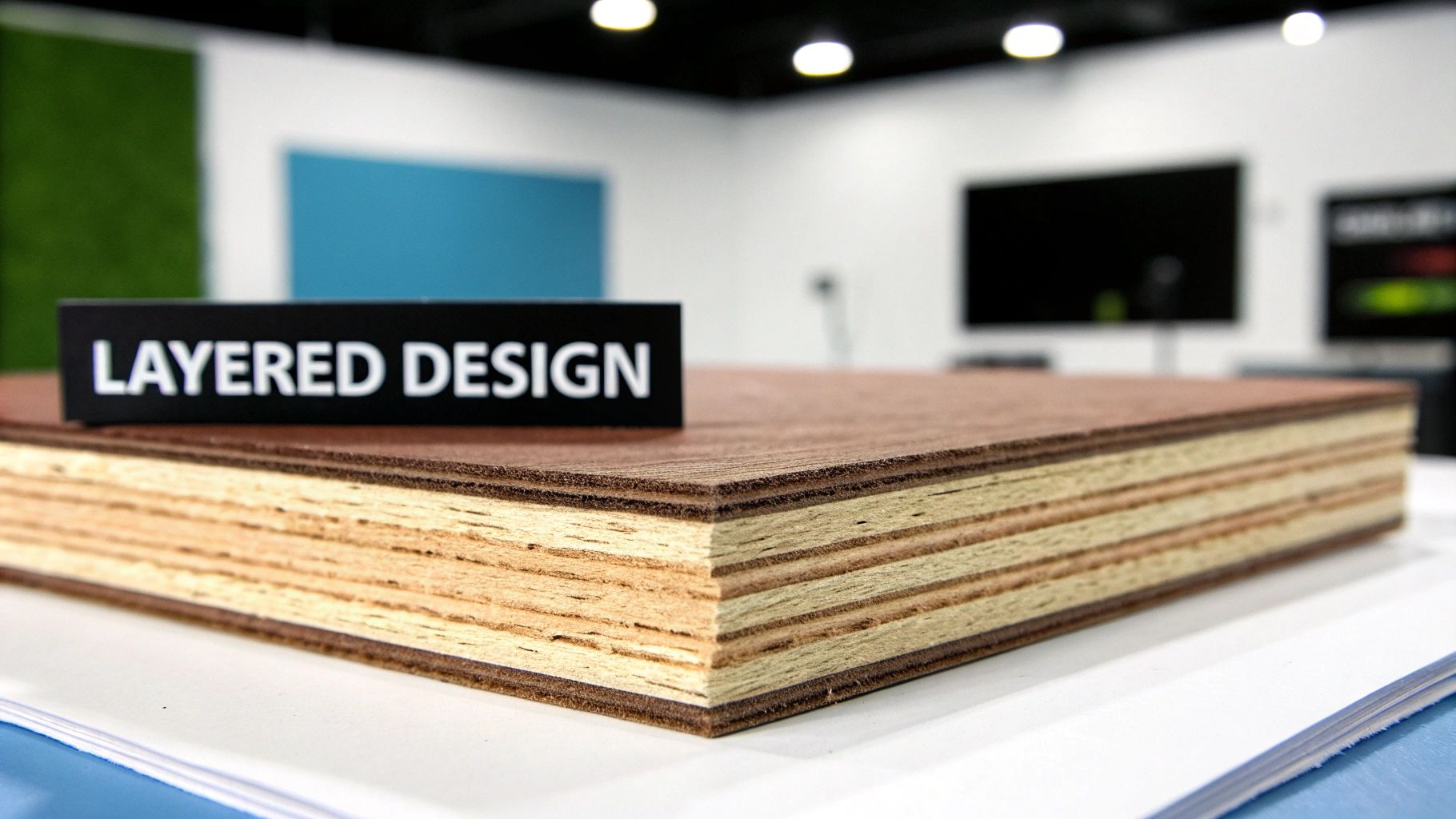
But the real secret to its performance lies underneath that pretty face. The core is where the engineering magic happens, and it’s typically made of multiple layers of high-quality plywood or sometimes high-density fiberboard (HDF).
The Power of a Multi-Layered Core
The genius of engineered hardwood is all in how these core layers are put together. They are fused under extreme heat and pressure, with the grain of each layer running perpendicular to the one above and below it. This cross-grain construction is the key to its incredible stability.
It’s a bit like trying to bend a single sheet of paper versus a thick phone book. That cross-layered structure resists wood’s natural urge to expand, contract, or warp when humidity and temperatures swing. This is a critical feature, especially here in Georgia. Understanding the properties of different materials is key when choosing the best wood types for any project, and flooring is no exception.
This clever design gives engineered flooring a huge leg up on its solid wood cousin.
Because its core is so stable, engineered hardwood can be installed in places where solid hardwood is a definite no-go. This includes moisture-prone areas like basements, kitchens, or any room built on a concrete slab.
Breaking Down the Layers
Every single plank of engineered hardwood is a team of different parts working in harmony:
- Top Finish: This is the invisible shield, usually an aluminum oxide coating, that fights off scratches and daily scuffs.
- Hardwood Veneer: The star of the show! This is the visible, real wood layer that gives the floor its look and feel.
- Core Layers: The workhorse of the plank, made of cross-grained plywood or HDF that provides the structural integrity.
- Backing Layer: The foundation. This final layer of wood balances the plank and adds even more stability.
This thoughtful combination creates a flooring product that gives you the authentic beauty of hardwood but with far more versatility. For many modern homes, especially in the variable climate of Forsyth County, that makes it a very good—and often better—choice.
What It's Really Like Living with Engineered Hardwood
Enough with the technical talk. Let's get down to what you really want to know: what’s it like to actually live on these floors every day? Like any choice you make for your home, engineered hardwood has its own set of give-and-takes. Knowing these practical realities is the key to deciding if it’s the right fit for your family and your home.
There’s a reason this flooring has become such a force in the home improvement world. It's a huge piece of the global engineered wood market, a sector valued at a staggering USD 331 billion in 2024. And it’s not slowing down; experts predict it will balloon to nearly USD 599 billion by 2034 as more people demand building materials that are both beautiful and built to last.
The Upside: Where Engineered Hardwood Shines
The biggest win for engineered hardwood is its incredible dimensional stability. That layered core we talked about earlier is its superpower, allowing it to shrug off humidity and temperature swings that would make solid wood swell, shrink, or cup. This stability makes it a brilliant, low-stress choice for rooms that used to be a no-go for wood.
Here’s where it really stands out:
- Humidity & Moisture Tolerance: It’s a fantastic option for kitchens, finished basements, and homes in muggy climates like we have here in Cumming, GA.
- Go-Anywhere Installation: You can install it almost anywhere. It can be floated over a pad, glued directly to concrete, or stapled to a wood subfloor.
This versatility blows the design doors wide open, giving you that authentic wood look and feel in places you never thought possible.
The Downside: The Limitations to Keep in Mind
Now for the other side of the coin. Engineered hardwood isn't perfect, and its main limitation comes down to refinishing. The thickness of that top layer of real hardwood—the wear layer—is everything.
A solid hardwood floor can be sanded down and refinished five, six, or even more times over its long life. Most engineered floors? You might get one or two refinishes, tops. Some of the thinner, more budget-conscious options can’t be refinished at all.
This is a crucial point. A deep gouge or widespread wear and tear might mean you have to replace a plank instead of sanding the whole floor down to look new again. While the factory-applied finishes are incredibly durable, you have to weigh the inability to hit the reset button multiple times.
To get the full picture, it's helpful to compare the complete hardwood flooring pros and cons and see how it stacks up against traditional solid wood. In the end, it’s all about balancing this long-term limitation against the incredible stability and go-anywhere flexibility.
Engineered Hardwood vs Solid Hardwood Compared
Walking into a flooring showroom, you'll likely face the classic showdown: engineered versus solid hardwood. Both give you that timeless, authentic wood look we all love, but they are built fundamentally differently and shine in different situations. To really figure out if engineered hardwood is the right call for your home, you have to see how it stacks up against the old-school original.
Solid hardwood is exactly what it sounds like—one solid plank of wood, milled from top to bottom. It's the traditional choice, famous for its incredible lifespan. Engineered hardwood, on the other hand, is more of a modern marvel. It uses a slice of real, beautiful hardwood on top (the part you see and walk on) bonded to a core of multiple layers of plywood or high-density fiberboard.
Key Differences in Performance
The biggest fork in the road between these two is how they handle changes in their environment, especially moisture and humidity. Solid wood is a natural material, and it acts like one. It breathes, expanding when it’s humid and shrinking when it’s dry. That movement makes it a risky choice for basements, bathrooms, or any room below ground level. Over time, it can warp, cup, or leave unsightly gaps.
This is where engineered hardwood's construction becomes its superpower. The core layers are stacked with their grain running in opposite directions, creating a stable, cross-hatched structure. This design almost completely stops the plank from wanting to expand or contract. It’s this built-in stability that makes engineered flooring the undisputed champion for tricky areas like basements, kitchens, and homes built on concrete slabs.
While solid hardwood has long been the "gold standard," premium engineered flooring offers comparable beauty and superior performance in more areas of the home, making it a smarter investment for modern living.
Engineered vs Solid Hardwood Which Is Right for You?
So, how do you decide? Sometimes the best way is a simple, side-by-side look at what matters most to homeowners. This table breaks it all down.
| Feature | Engineered Hardwood | Solid Hardwood |
|---|---|---|
| Moisture Resistance | Superior; ideal for basements, kitchens, and humid climates. | Poor; susceptible to warping and damage from moisture. |
| Installation Options | Highly versatile; can be glued, floated, or nailed down. | Limited; must be nailed or stapled to a wood subfloor. |
| Durability | Excellent scratch resistance from factory-applied finishes. | Very durable, but can dent and scratch more easily. |
| Refinishing & Lifespan | Can be refinished 1-3 times; typically lasts 20-40+ years. | Can be refinished multiple times; can last 100+ years. |
| Cost | Generally more affordable for materials and installation. | Typically more expensive for both materials and labor. |
Looking at these points, it's easy to see why the market has shifted so dramatically. As of 2024, engineered wood now commands roughly 75% of the global wood flooring market. Homeowners are clearly voting for performance and versatility.
Of course, solid wood will always have its place. For a deeper dive into the unique charm of traditional planks, you can learn all about our solid hardwood flooring options.
At the end of the day, it's about picking the right tool for the job. You can get a better sense of this by understanding solid wood vs. engineered wood materials in other applications, like cabinetry. While the century-long potential of solid wood is impressive, the practical stability and go-anywhere flexibility of engineered hardwood make it a more reliable and often smarter choice for the way we live today.
How Long Does Engineered Hardwood Really Last?
When people ask if engineered hardwood is a good long-term investment, what they're really asking is, "How long will this stuff last?" It's a fair question. Unlike a solid plank of oak that can be sanded down again and again, the lifespan of an engineered floor comes down to one thing: the thickness of its real wood top layer.
We call this the wear layer.
Think of that wear layer as your floor's lifeline. If you get a deep scratch or the finish just wears thin over the years, your only option is to sand it down and refinish it. The thicker that top slice of real wood, the more "sanding life" you have, which directly translates to how long the floor will look great in your home.
How Wear Layer Thickness Affects Lifespan
The wear layer is measured in millimeters (mm), and trust me, even a single millimeter makes a world of difference. It’s the most important number to look for when you're comparing products.
Here’s a practical breakdown of what those numbers mean for your floor's future:
- 1mm to 2mm Wear Layer: You'll find this on most entry-level or budget-friendly engineered floors. The key thing to know is that these floors can't really be sanded and refinished. Once the factory finish is worn through or you get a nasty gouge, that's pretty much it. With good care, you can expect them to last 15-25 years.
- 3mm to 4mm Wear Layer: Now we're talking. This is a huge jump in quality and what I'd consider a solid long-term investment. A floor this thick can be sanded down and refinished at least once, maybe even twice if your flooring pro is careful. That pushes its lifespan up to 30-50 years, sometimes more.
- 5mm+ Wear Layer: This is the best of the best. A wear layer this thick is usually found on high-end, premium engineered hardwood. It allows for multiple refinishing cycles—often 3 to 5 times—which puts it right up there with solid hardwood in terms of longevity. A floor like this can easily last 50-80+ years.
The ability to refinish your floor is like giving it a second or third life. Choosing a thicker wear layer is the best insurance for your investment, ensuring your floors can recover from future wear and tear and adapt to new design trends.
From a green perspective, this construction is also really smart. Because the core is made of other wood materials, engineered flooring uses far less of the prized slow-growth hardwood, which helps reduce the strain on our forests. You can find more about engineered wood's market impact and sustainability on MarketResearchFuture.com.
Bottom line? A quality engineered floor with a beefy wear layer is an excellent, long-lasting choice that truly does rival solid hardwood in just about every way.
So, What's the Final Verdict?
You've got the full picture now—how it's made, where it shines, and where it has its limits. The real question isn't "is engineered hardwood good?" but rather, "is it the right choice for my home?" To get to the bottom of that, you have to look past the product specs and focus on your own specific situation.
Let's start by pinpointing your number one priority. Do you absolutely have your heart set on real wood floors in your finished basement? If that's the case, engineered hardwood is the hands-down winner over solid. Or maybe you live in a classic Forsyth County home where the summer humidity makes solid wood a risky proposition. Again, the stability of engineered flooring gives it a major advantage.
The perfect floor is never just about the material itself. It’s about finding the right balance between your home’s environment, your family’s day-to-day life, and what you see for the future. It has to look beautiful, sure, but it also has to work for you.
Think about which of these scenarios sounds most like your own:
-
You've Got a Busy Household with Kids and Pets: Your best bet is an engineered plank with a top-notch, factory-applied finish built for scratch resistance and a wear layer of at least 3mm.
-
You're Tackling This as a DIY Project: The click-lock or "floating" installation options make engineered hardwood a far more approachable weekend project than a traditional nail-down solid floor.
-
You're Thinking About Long-Term Home Value: A high-quality engineered floor, especially one with a thicker wear layer that can be refinished, holds its value just as well as solid hardwood in the eyes of most buyers.
Answering Your Lingering Questions
Even after going through all the details, you probably still have a few specific questions bouncing around. That’s completely normal. Let's tackle some of the most common ones we hear from homeowners to help you get that final bit of clarity.
Can I Put Engineered Hardwood in My Bathroom?
This is a big one, and the answer is a firm "it depends." For a full bathroom with a shower or tub, the short answer is no, we don't recommend it. The constant high humidity and risk of puddles can eventually work their way into the wood veneer and core, causing damage over time.
However, a powder room or half-bath is a different story. Since these spaces don't have the same moisture issues, engineered hardwood can be a fantastic and elegant choice. For the main bathroom, though, you're much better off with a truly waterproof floor like luxury vinyl plank (LVP) or classic tile.
Will Engineered Hardwood Actually Increase My Home's Value?
Yes, without a doubt. Quality engineered hardwood is a major upgrade and is seen by buyers as a premium feature. When potential buyers walk into a home, they see it as a significant step up from carpet or laminate, and that perception often translates into a higher offer and a better return on your investment.
Think of it this way: a well-made engineered floor with a thick wear layer looks and feels so much like solid hardwood that most people can't tell the difference. It adds a touch of class and durability that adds real, tangible value to your property.
What's the Real Difference Between Engineered Hardwood and Laminate?
The core difference is simple: what’s on top. With engineered hardwood, the surface you see and walk on is a slice of real, genuine wood. It has the natural grain, knots, and unique character that only nature can create.
Laminate, on the other hand, is essentially a very convincing photograph of wood on a synthetic core. High-end laminate looks great, but it's still a picture. It doesn't have that authentic feel underfoot, and more importantly, it can never be refinished. Once it's scratched or worn, it's done. Engineered hardwood gives you the real deal because it is the real deal.
Ready to explore the best flooring options for your Cumming or Forsyth County home? The experts at Flacks Flooring can provide personalized advice and professional installation to bring your vision to life. Schedule a consultation on our website today.