
Let's get straight to the point: carpet usually has a lower price tag upfront, but over the long haul, luxury vinyl flooring often ends up being the smarter financial choice. The question of whether vinyl is cheaper than carpet isn't just about the initial sticker price. The real cost reveals itself over years of cleaning, wear and tear, and eventual replacement.
The Real Cost of Flooring: Vinyl vs. Carpet

When you look past that initial purchase, you start to see the total cost of ownership. This is a big deal for homeowners here in Cumming and Johns Creek. Thinking this way shifts your perspective from a simple purchase to a long-term investment in your home's value and comfort. It forces you to ask how each material will hold up to the realities of family life, pets, and spilled drinks.
To truly understand which is the better buy, we need to break down the key financial factors:
- Upfront Investment: This is the combined price of the materials and professional installation.
- Lifetime Value: How many years will you get out of the flooring before it needs to be completely torn out and replaced?
- Maintenance Expenses: What will you spend on cleaning supplies and professional services over time?
- Repair Costs: When damage inevitably happens, how easy—and affordable—is it to fix?
Years ago, the price gap was much wider. Back in the early 2000s, you could expect to pay around $2 to $5 per square foot for installed carpet. Vinyl, on the other hand, typically ran from $3 to $7 per square foot, making carpet the go-to for anyone on a tight budget.
Just like with any major upgrade, it's critical to look at the full picture. It's not just about the product itself, which is a key part of understanding installation costs for home improvements.
Initial Cost vs. Long-Term Value: A Quick View
This table gives you a snapshot of how these two popular flooring options compare when you factor in both the immediate and future costs.
| Cost Factor | Carpet | Luxury Vinyl Flooring (LVP/LVT) |
|---|---|---|
| Upfront Cost | Often lower | Generally higher |
| Average Lifespan | 7–10 years | 15–25+ years |
| Maintenance Needs | High (professional cleaning) | Low (sweeping, mopping) |
| Water Resistance | Low (prone to stains, mold) | High (often 100% waterproof) |
| Long-Term Value | Lower due to replacement cycles | Higher due to longevity |
In the sections that follow, we'll dive deeper into each of these points to help you make a decision you’ll be happy with for years to come.
Comparing the Upfront Investment in Flooring
When people ask, "is vinyl flooring cheaper than carpet?" they're usually thinking about the immediate, out-of-pocket expense. To get a real answer, we need to look at two separate pieces of the puzzle: the cost of the flooring material itself and the price for professional installation. Both can swing wildly depending on the quality you choose and what your current floors look like.
It's a common myth that vinyl is always the pricey option and carpet is always cheap. The truth is, there’s a huge range for both. Let's break down what you can actually expect to pay.
Material Costs Unpacked
The price tag on the material—what you pay per square foot—is all about quality. You can find very budget-friendly options in both vinyl and carpet, but as you climb the ladder to get better looks, stronger warranties, and tougher materials, the price naturally goes up.
- Entry-Level Options: Basic, builder-grade carpet can be one of the least expensive ways to cover a floor, sometimes starting under $2 per square foot. You can find sheet vinyl in a similar price range, giving you a waterproof option for a very low cost.
- Mid-Range Choices: This is the sweet spot where most of our customers in the Milton and Johns Creek areas land. A good, durable luxury vinyl plank (LVP) or a nice plush carpet will typically run you somewhere between $3 to $7 per square foot.
- High-End Selections: If you're looking at premium wool carpets or top-of-the-line LVP with realistic wood textures and super-tough wear layers, the cost can easily jump over $8 per square foot. At that point, you're in the same price territory as some hardwoods.
To make this easier to visualize, here’s a quick breakdown of what you can expect for initial costs.
Estimated Upfront Cost Comparison Per Square Foot
This table gives you a ballpark idea of the initial investment for both materials and professional installation, broken down by quality.
| Flooring Type | Quality Tier | Material Cost (per sq. ft.) | Installation Cost (per sq. ft.) | Total Upfront Cost (per sq. ft.) |
|---|---|---|---|---|
| Vinyl | Entry-Level | $2.00 – $3.50 | $1.50 – $2.50 | $3.50 – $6.00 |
| Mid-Range | $3.50 – $5.50 | $2.00 – $3.50 | $5.50 – $9.00 | |
| High-End | $5.50 – $8.00+ | $3.00 – $4.50+ | $8.50 – $12.50+ | |
| Carpet | Entry-Level | $1.50 – $3.00 | $0.75 – $1.50 | $2.25 – $4.50 |
| Mid-Range | $3.00 – $5.00 | $1.00 – $2.00 | $4.00 – $7.00 | |
| High-End | $5.00 – $8.00+ | $1.50 – $2.50+ | $6.50 – $10.50+ |
As you can see, while basic carpet often has the lowest starting price, the costs for mid-range and premium products start to overlap quite a bit.
Factoring in Professional Installation
Installation isn’t just about rolling out a new floor. It’s a detailed process that can have a big impact on your total budget. The labor costs really depend on what our installers find when they get to work.
The installation process is just as critical as the material choice. Proper subfloor preparation, for example, is non-negotiable for ensuring your new floor performs well and lasts for its full expected lifespan.
Several things drive up installation costs. We have to account for tearing out and hauling away your old flooring, making any necessary repairs to the subfloor, and dealing with the room’s layout. A simple square room is a lot quicker than one with lots of corners, closets, or a set of stairs. If you want to dive deeper into this, our guide breaks down all the factors that determine the cost to install vinyl flooring.
So, what's the bottom line? While carpet often looks cheaper on paper, especially the entry-level stuff, the price gap shrinks fast once you start comparing similar quality levels. The final installed price really comes down to the specifics of your home, which is why getting a professional quote is the only way to know for sure.
Lifetime Value: Durability and Longevity
The price you see on the tag is just the first chapter of your floor's financial story. To really figure out if vinyl is cheaper than carpet, we have to look past day one and think about the total cost over the long haul. This is where durability and longevity really come into play, because they determine how often you'll be pulling out your wallet for a replacement.
Vinyl flooring is engineered to last. It’s got a tough wear layer and a waterproof core that stands up to the daily grind of a busy home—spills, pet claws, you name it. This resilience is why a good quality luxury vinyl floor can easily last 15 to 25 years, and sometimes even longer if you take care of it.
Carpet, on the other hand, just isn't built for the same kind of marathon. Its fibers naturally trap dirt, soak up spills, and get matted down in the places you walk most, which means you'll be replacing it much sooner.
The Replacement Cycle: A Financial Reality
While that initial carpet quote might look tempting, the long-term math tells a very different story. The average lifespan of carpet is somewhere between 7 to 10 years. In a busy hallway or the main family room, you might even be looking at replacing it every 5 to 7 years.
Think about that over a 20-year timeline. You could end up replacing your carpet two, maybe even three times. All the while, that single installation of vinyl flooring would likely still be going strong. When you add up the repeated costs for materials, installation labor, and the hassle of tearing out and disposing of old carpet, vinyl starts to look like a much smarter, more predictable investment. You can find more details on the lifespan differences between carpet and vinyl flooring.
This chart gives you a quick visual of how those costs stack up over time.
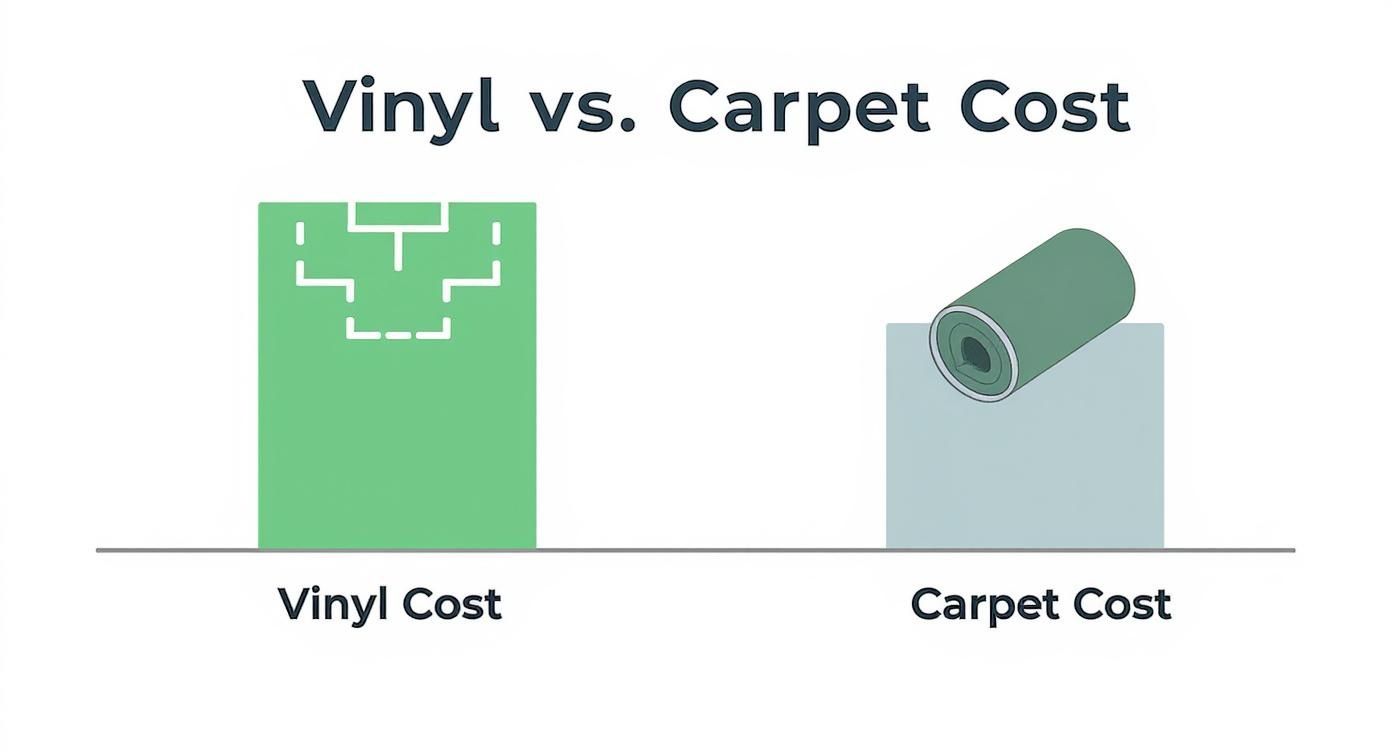
As you can see, even though carpet starts out cheaper, those replacement expenses really add up, often making it more costly than vinyl over a couple of decades.
How Durability Translates to Savings
The real difference is how each material handles life's little accidents. A dropped glass of red wine on a carpet could mean a permanent stain, a call to a professional cleaner, or even an early replacement. On luxury vinyl, that same accident is just a quick wipe-up, and you move on with your day.
Vinyl's durability isn't just about surviving a major disaster; it's about gracefully handling the thousands of small, everyday incidents that wear a floor down. That resilience directly translates into fewer repair bills and a much longer, more valuable life for your flooring.
This is especially true in a busy home. Let's look at a few common situations:
- Kids and Pets: Vinyl's scratch-resistant and waterproof surface is a game-changer for families. You're not constantly worrying about muddy paws, spilled juice, or dragged toys.
- High-Traffic Zones: Think about your main hallways, entryways, and kitchen. Vinyl handles that constant foot traffic without creating the worn-down paths and matted spots that make carpet look old fast.
- Moisture-Prone Areas: Putting carpet in a basement, bathroom, or laundry room is asking for trouble with mold and mildew. Vinyl’s waterproof construction completely eliminates that risk.
Ultimately, choosing vinyl is an investment in your peace of mind and your home's long-term value. You pay more at the start, but you get to step off the expensive merry-go-round of carpet replacement, making it the more economical choice over the life of your home.
Analyzing Ongoing Maintenance and Repair Costs
Beyond the initial price tag and how long your floor will last, the day-to-day cost of keeping it looking great is a huge piece of the puzzle. Life is full of spills, muddy shoes, and the occasional "oops," and how your floor handles these moments directly hits your wallet. This is where vinyl and carpet really go their separate ways, with one emerging as the clear winner for low-stress, low-cost upkeep.
Vinyl flooring is famous for its simple maintenance. A quick sweep and an occasional mop with a gentle cleaner are usually all you need to keep it looking brand new. Because it’s non-porous and waterproof, spills just sit on the surface waiting to be wiped away—no stressing about stains setting in or moisture seeping into the subfloor. For a deeper dive, check out our guide on how to keep vinyl floors looking new.
Carpet, on the other hand, demands a lot more effort and money.
The True Cost of Carpet Cleaning
Regular vacuuming is just the start. To really keep carpet fresh and prevent the fibers from getting crushed and matted, you need to get it professionally steam cleaned every 12 to 18 months. That’s a recurring expense that a lot of homeowners forget to factor into their budget.
When you're thinking about long-term costs, you have to account for this upkeep. For instance, looking at how much carpet cleaners charge in Australia can give you a real-world idea of what this maintenance truly costs. Those professional cleanings, plus any special spot treatments you buy for stubborn stains, really add up over the carpet's lifespan.
Vinyl's advantage isn't just about saving a few bucks on cleaning supplies. It's about saving your time and avoiding the predictable—and often expensive—cost of the professional deep cleaning that carpet absolutely requires.
Comparing Repair Scenarios
Sooner or later, floors get damaged. A deep scratch from dragging a sofa or a permanent stain from a spilled glass of wine creates very different problems depending on what’s under your feet.
- Repairing Vinyl: If a luxury vinyl plank gets seriously damaged, the fix is usually pretty contained. A good installer can carefully pop out the single damaged plank and drop a new one in its place. The floor looks perfect again, and you didn't have to tear up the whole room.
- Repairing Carpet: Fixing damaged carpet is a much trickier business. A burn mark or a deep-set stain might need a patch, but it's almost impossible to make that patch invisible. It often sticks out and ruins the seamless look of the floor. For anything bigger, your only real option is to replace the carpet in the entire room—a far more expensive job.
At the end of the day, vinyl's simple cleaning and easy, localized repairs make it the more budget-friendly and practical choice for handling the realities of daily life.
Choosing the Right Floor for Each Room
The question of whether vinyl is cheaper than carpet isn't just about the price tag. It’s about putting the right material in the right space to get the most value for your money. A flooring that’s perfect for one room could be a total headache—and a costly mistake—in another. How your family lives in each area of your home is really the key to making a smart, long-term investment.
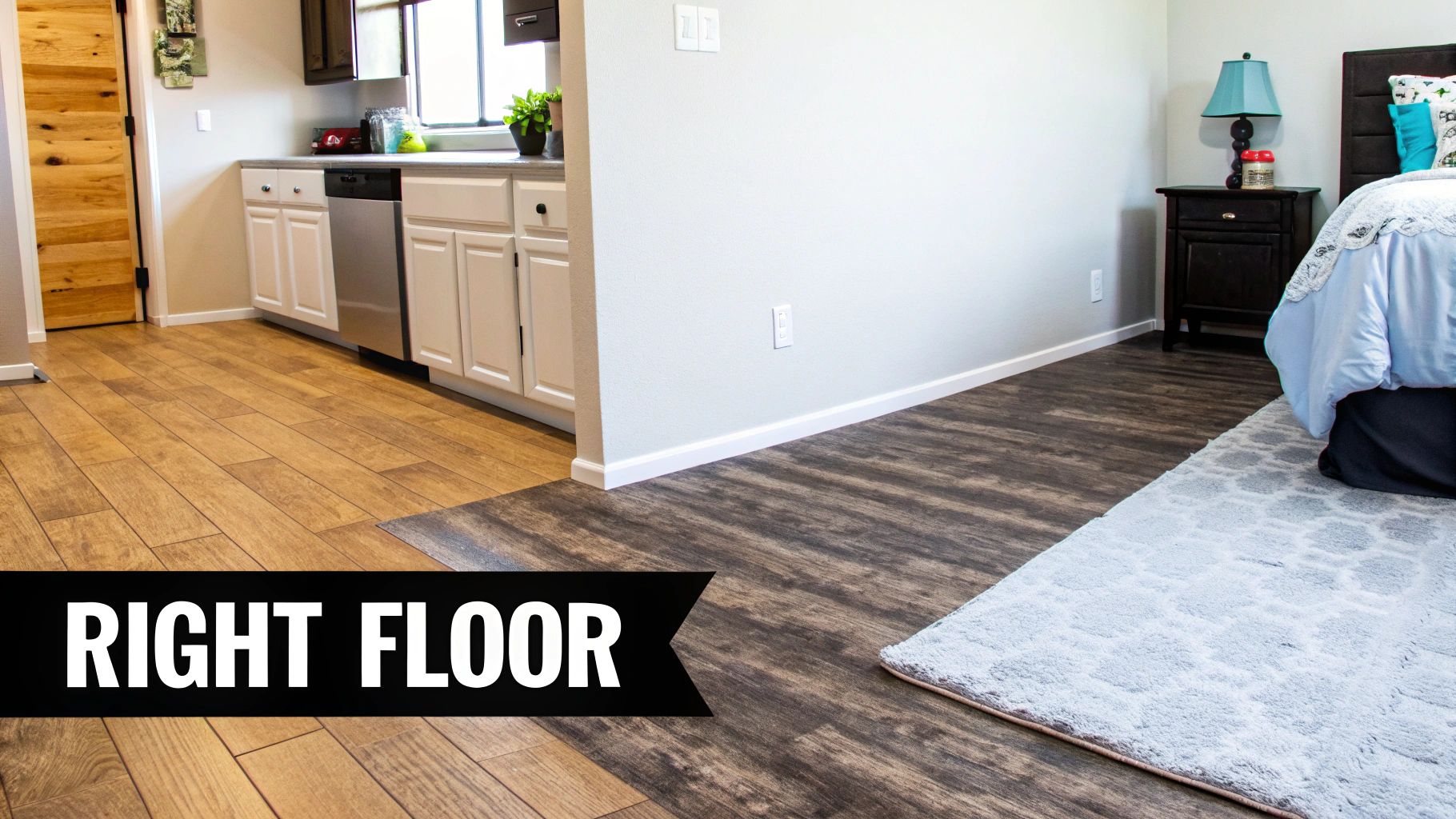
Think about places like kitchens, bathrooms, laundry rooms, and basements. In these high-moisture zones, the choice is pretty clear. Vinyl is 100% waterproof, making it the obvious winner. Putting carpet in these areas is just asking for trouble with mold, mildew, and potential subfloor damage, which makes vinyl the far more practical and economical choice in the long run.
High-Traffic vs. Low-Traffic Areas
In the busiest parts of your house—hallways, entryways, and family rooms—durability is everything. These floors have to stand up to constant foot traffic, accidental spills, and the general chaos of an active home. This is where luxury vinyl plank (LVP) truly shines, holding up against scratches, scuffs, and everyday wear and tear. It keeps its good looks for years, avoiding those matted-down traffic lanes that make a carpet look old fast.
On the other hand, for rooms like bedrooms and home offices, the decision isn't so black and white. Carpet brings a level of warmth and sound insulation that’s hard to beat, creating a quiet, cozy escape. While vinyl is tough as nails, many homeowners here in Milton and Forsyth County still prefer that plush, soft feeling of carpet under their feet in these more private spaces. If comfort is at the top of your list, our guide on how to choose a good carpet for your home can point you toward the perfect blend of softness and strength.
The best flooring choice is always situational. Vinyl's resilience makes it a cost-effective workhorse for the busiest parts of your home, while carpet can be a strategic, budget-friendly option for creating comfort in quieter rooms.
The Impact on Resale Value
We’ve seen a big shift in what homebuyers are looking for lately. Back in 2015, carpet was king, making up about 50% of the residential flooring market. Fast forward to 2023, and that number has dropped to around 40%. In that same time, vinyl's market share jumped from 20% to nearly 35%. What’s driving this? A growing demand for flooring that’s durable and easy to maintain.
This trend has a direct impact on your home's value. Some studies even suggest that homes with modern vinyl flooring can sell for 5% to 10% more than similar homes with wall-to-wall carpeting. By being strategic—using vinyl in the main living areas and keeping carpet in the bedrooms—you get the best of both worlds. You get durability where you need it most and comfort where you want it, all while making your home more attractive to potential buyers down the road.
Putting It All Together: Making Your Final Choice
Alright, we've broken down the numbers, looked at long-term value, and considered what it takes to keep each floor looking its best. Now it’s time to bring it all home and make a decision that feels right for you. Choosing a floor is a big deal, but you've got all the information you need to make a confident choice.
Think of it less as a test and more as a simple conversation with yourself about your home and your life. This little checklist will help you filter everything we've talked about through the lens of what actually matters to your family.
Your Personal Flooring Checklist
Let's get practical. A few honest answers here will point you straight to the best flooring for your home here in Cumming, Johns Creek, or wherever you are in our corner of Georgia.
-
What’s my real budget over the next 15 years? This is the big one. It's not just about the check you write today. Remember, you could easily be replacing that carpet once, maybe even twice, in the same lifespan of a quality vinyl floor. Factor that in.
-
How much work am I willing to put in? Be honest. If your weekends are for family, not chores, the quick sweep-and-mop of vinyl is a game-changer. It’s a totally different world from renting a carpet cleaner or scheduling a professional to come out.
-
Who lives in my house? (Pets and kids count!) If you have four-legged family members or little ones, spills and accidents are a part of life. Vinyl's solid surface is a lifesaver here. Carpet, on the other hand, loves to hang onto pet dander, dust, and odors, which means a lot more work to keep things fresh and clean.
The best floor for your neighbor isn't necessarily the best floor for you. It's about investing in a surface that genuinely fits your day-to-day life. Your gut feelings on these questions are just as important as the numbers.
At the end of the day, the question isn't just "is vinyl flooring cheaper than carpet?" It's about finding the smartest, most practical, and enjoyable solution that you'll be happy to live with for years to come.
Your Top Flooring Cost Questions Answered
Even with all the numbers laid out, you probably still have a few lingering questions. Let's dig into some of the most common things we hear from homeowners around Cumming and Johns Creek to help you nail down your final choice.
Which Flooring Adds More Resale Value to a Home?
Nine times out of ten, hard surface flooring like luxury vinyl plank (LVP) is going to give you a better return on your investment than carpet. Today's buyers are looking for durability, waterproof performance, and that clean, seamless look LVP provides across the main living areas.
While a fresh, high-end carpet in the bedrooms can be a nice touch, it's very subjective. One person's perfect plush is another's allergy nightmare. A neutral, quality vinyl floor, on the other hand, appeals to almost everyone and signals "move-in ready," which can make a real difference when you decide to sell.
Is Carpet Really More Comfortable Than Vinyl Flooring?
Carpet has a reputation for being the undisputed king of comfort, and for pure softness underfoot, it's hard to beat. But don't count vinyl out—it's come a long way. Many of the best LVP products we carry now have an attached underlayment, which adds a surprising amount of cushioning and even deadens sound.
Once it's installed properly, vinyl is comfortable and feels much warmer to the touch than something like tile. It won't give you that deep, plush feeling of a thick shag carpet, but many people find it hits the sweet spot between everyday comfort and bulletproof durability.
For active families, the "comfort" of vinyl flooring often comes from peace of mind. Knowing that spills, pet accidents, and muddy footprints won't cause lasting damage makes daily life much less stressful than worrying about a new carpet stain.
What Is the Best Flooring for Pets and Children?
For homes with the happy chaos of kids and pets, luxury vinyl flooring is almost always the hands-down winner. Its wear layer is built to resist scratches from claws and toys, and its core is 100% waterproof. That means you can clean up spills and accidents without a second of panic.
Here's the real kicker: vinyl’s solid surface doesn't trap pet dander, hair, dust, and other allergens the way carpet fibers do. For families in Milton or Forsyth County who want a floor that’s both tough and easy to keep clean and healthy, vinyl is the clear choice.
Ready to explore the perfect flooring for your home? The experts at Flacks Flooring are here to provide personalized guidance and a professional, no-hassle installation experience. Visit our showroom in Cumming, GA, or schedule a consultation today to find a floor you'll love for years to come.