
You’re probably looking at a kitchen, hallway, mudroom, or basement and thinking the same thing a lot of North Metro Atlanta homeowners think. You want the clean, upscale look of tile, but you don’t want a floor that feels hard and cold every morning or a project that turns into mortar, grout, dust, and delays.
That’s where laminate flooring that looks like tile has become a serious option, not a compromise. For many homes in Cumming, Johns Creek, Milton, and the rest of Forsyth County, it lands in the sweet spot between appearance, durability, and day-to-day practicality. It gives you the visual style people associate with slate, marble, travertine, or concrete, but in a format that’s easier to live with.
The right product can work especially well when you want a tile-inspired floor for busy family spaces and you care about long-term value, not just the first impression in the showroom.
Get the Tile Look Without the Tile Headaches
A common scenario goes like this. A homeowner falls in love with the look of stone or large-format tile for the kitchen. Then the practical questions start. How cold will it feel? How much grout will need cleaning? How disruptive will installation be?
That’s the moment tile-look laminate starts making sense.
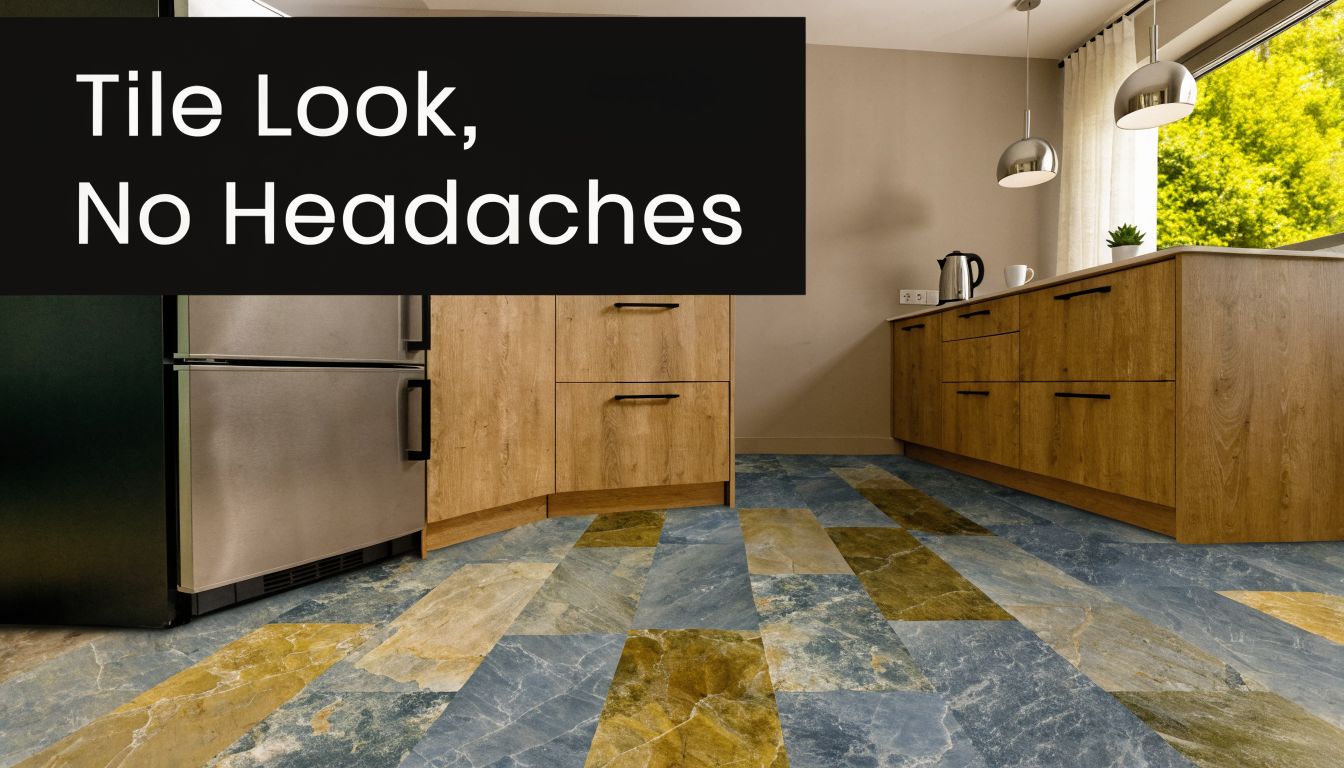
In real homes around Cumming and Forsyth County, this option usually appeals to people who want a more finished, architectural look than basic wood visuals but don’t want to take on the downsides of traditional tile. Kitchens are a prime example. You may love a slate or marble look, but you may not love kneeling on ceramic tile, living with grout lines, or hearing every dropped spoon hit a hard surface.
Where it tends to work best
Tile-look laminate is often worth a close look for spaces like these:
- Busy kitchens: Good for households that want a stone or concrete style without the feel of a hard tile floor.
- Hallways and entries: Useful where appearance matters, but so does scuff resistance and easy cleanup.
- Finished basements: A practical fit when you want a more contemporary tile appearance over a slab.
- Laundry-adjacent areas: Best when the product is specifically rated for moisture exposure, not just standard laminate.
Homeowner reality: Most people aren’t choosing between “cheap” and “luxury.” They’re choosing between a floor that looks good in photos and one that still works on a rushed Tuesday morning.
If grout maintenance is one of the things making you hesitate on real tile, Savera's complete grout guide is worth a read. It gives useful context on what grout care involves, which helps clarify why some homeowners decide they’d rather get the tile look without actual grout.
Understanding the Technology Behind the Style
The difference between a tile-look laminate floor that feels convincing and one that feels cheap usually comes down to construction, not just color. That matters in North Metro Atlanta homes, where strong window light, open floor plans, and transitions into kitchens or breakfast areas make repeating patterns and shiny finishes easy to spot.
Laminate can mimic wood or stone because it’s built in layers. A dense fiberboard core supports the board, the printed design layer creates the visual, and the wear layer protects the surface from day-to-day traffic. If you want a plain-English breakdown of that build, Flacks Flooring’s guide to what laminate flooring is made of is a useful starting point.
What creates the tile effect
The image layer does most of the visual work. Better products use sharper photography and more variation from board to board, which helps the floor read more like stone, slate, or concrete instead of a repeated print.
Edge treatment matters just as much. Many tile-look laminates use micro-bevels along the edges, and those slight grooves create the visual break people associate with grout joints. In a showroom sample, that detail can seem minor. Across a full kitchen floor, it changes the whole look.
Texture is the third piece. Matte finishes and light embossing keep the surface from looking flat under direct light, which is a common issue in homes around Cumming and Johns Creek with large rear windows or bright can lighting. If the print says slate but the finish reflects light like polished plastic, the illusion falls apart fast.
Why the layered build matters in real homes
Tile-look laminate is an engineered product, and that gives it some practical advantages. The layered design lets manufacturers pair a hard-wearing top surface with a rigid core that feels more substantial than some thinner floating floors.
That said, the build also sets limits.
If water gets past the surface and into the core on a standard laminate, swelling can become a real problem. The better waterproof or water-resistant lines handle that risk more effectively, but they are still products you need to match carefully to the room. In this part of Georgia, I tell homeowners to look hard at kitchens, mudroom-adjacent spaces, and any area near exterior doors where rain gets tracked in during summer storms.
A good tile-look laminate needs three things working together: believable print variation, edge definition that reads like grout spacing, and a finish that still looks natural under your home’s lighting.
What separates stronger options from weaker ones
Sample boards tell the story if you know what to check:
- Pattern variation: Look for enough visual change that the same “tile” image does not repeat every few boards.
- Edge detail: A slight bevel usually gives a more tile-like layout than a completely flat edge.
- Surface finish: Matte or low-sheen finishes tend to suit stone and concrete visuals better than glossy ones.
- Lighting response: Check the sample by a window and under your evening light fixtures. North Metro Atlanta homes often have mixed lighting, and some prints look very different once they leave the store.
- Board size and layout: Ask whether the format suits your room. A product that looks great in a wide-open showroom can look busy in a smaller galley kitchen or narrow hallway.
Before you buy, ask a local installer in Cumming or Johns Creek a few direct questions. Does this product have enough pattern variation for my room size? Will the bevel read like grout lines or like plank seams? How does this finish look under LED can lights and afternoon sun? Those answers usually tell you more than the display tag does.
Comparing Your Best Flooring Options
North Metro Atlanta homeowners usually narrow this choice to three paths. Go with real tile, choose luxury vinyl, or use laminate that gives you the tile look without a full tile installation. All three can work well. The better pick depends on how your house functions, not which sample looks best under showroom lights.
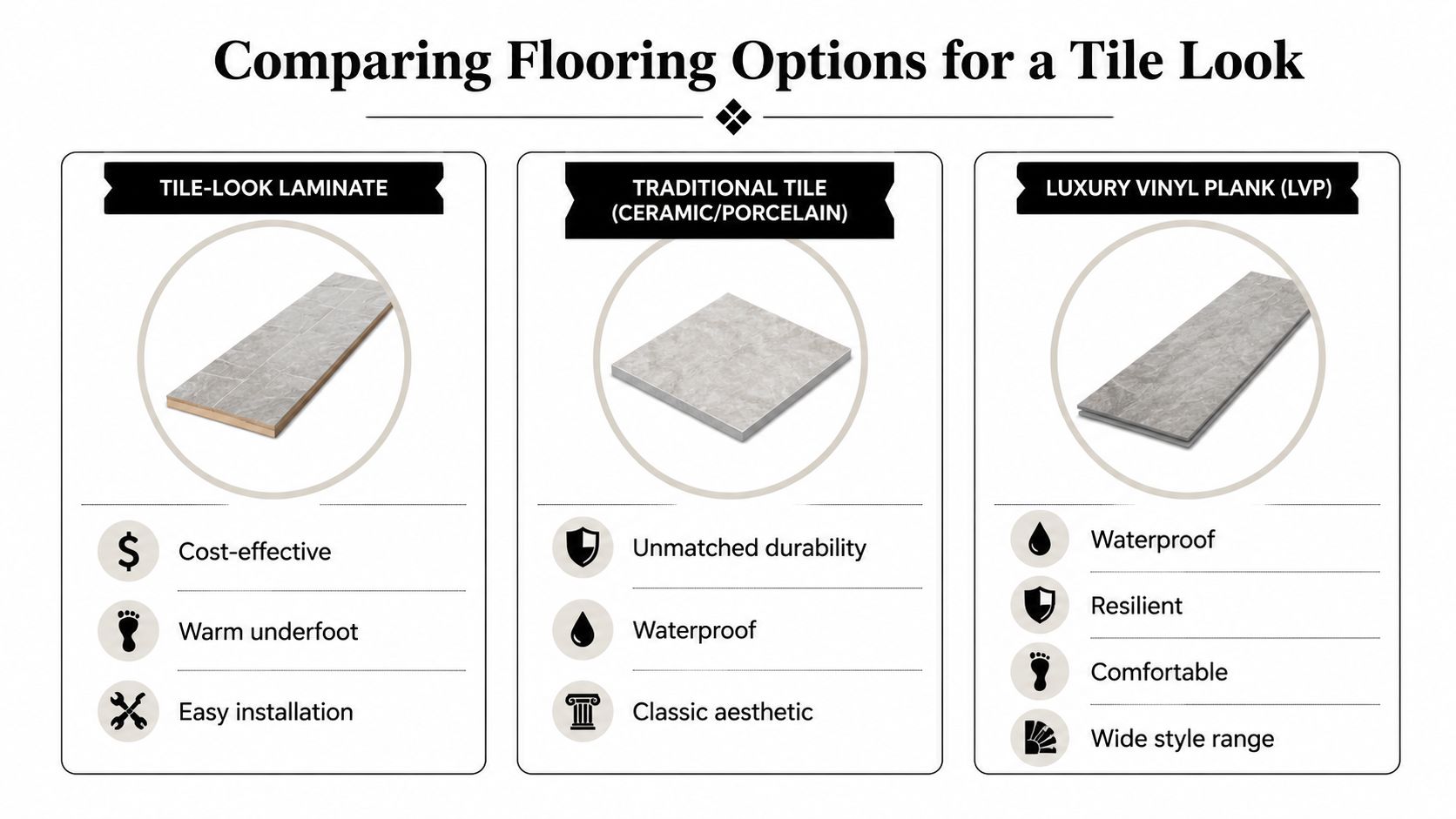
In Cumming, Johns Creek, and the rest of North Metro Atlanta, I usually tell homeowners to start with two questions. How much water will this floor really see? How much hardness are you willing to live with every day? Those answers eliminate a lot of bad fits early.
What each one does well
Real tile gives you the most authentic tile surface, and it still earns its place in bathrooms, laundry rooms, and homes where long-term moisture exposure is the main concern. It handles water well once installed correctly, but it is hard underfoot, colder in winter, and more demanding to install and repair.
Luxury vinyl plank or tile works well for households that want strong moisture resistance and a softer feel. It is often the safer choice for busy kitchens, finished basements, and homes with pets, especially if you know spills and tracked-in rain are part of normal life. If you are weighing that route too, this guide to vinyl flooring that looks like ceramic tile gives a useful side-by-side perspective.
Tile-look laminate sits in the middle in a way many homeowners like. It usually feels more solid underfoot than lower-end vinyl, skips grout maintenance, and installs more easily than ceramic or porcelain. The trade-off is moisture management. Some laminates handle occasional spills very well, but they are still not the automatic choice for every wet room.
Durability in busy rooms
Laminate belongs in the durability conversation. Earlier testing cited in this article placed laminate, porcelain tile, and vinyl among the stronger residential options for active areas, especially where daily foot traffic, chair movement, and routine household wear matter.
The category still has a wide range in quality. A well-made laminate can hold up very nicely in a kitchen, hallway, or family entry. A cheap one with weak edge construction or a thin wear surface can disappoint fast, especially if the subfloor is uneven or moisture gets into the joints.
That is the key comparison. Category matters, but product build and installation quality matter just as much.
Tile-Look Flooring Comparison Laminate vs Real Tile vs LVP
| Feature | Tile-Look Laminate | Ceramic/Porcelain Tile | Luxury Vinyl Plank (LVP) |
|---|---|---|---|
| Appearance | Strong tile visuals with printed stone, marble, slate, or concrete looks | Authentic tile appearance | Wide style range, including tile looks |
| Feel underfoot | Warmer and less harsh than tile | Hard and often colder underfoot | Softer and more forgiving than tile |
| Installation | Generally simpler click-lock installation | Labor-intensive installation with mortar and grout | Typically straightforward floating installation |
| Grout upkeep | No grout lines to maintain | Grout maintenance is part of ownership | No grout lines to maintain |
| High-traffic performance | Can perform well in active homes with the right product and proper prep | Strong performer | Strong performer |
| Best use case | Homeowners wanting tile style with easier living | Homeowners wanting true tile and accepting the trade-offs | Moisture-prone rooms and households prioritizing waterproof performance |
A practical way to sort it out is simple. Choose tile if you prefer genuine tile and do not mind the harder feel and heavier installation cost. Choose vinyl if water exposure is the top concern. Choose tile-look laminate if you want a balanced option for main living areas, kitchens, or hallways and you are willing to be selective about product quality.
Before you commit, ask the installer a few direct questions. In a kitchen near an exterior door, would they put this exact product in their own house? How flat does the subfloor need to be for the warranty to hold? If you are shopping in Cumming or Johns Creek, ask what they see fail more often locally: water intrusion at edges, grout cracking in tile jobs, or vinyl denting from appliance moves. A good installer will answer clearly and tie the recommendation to your room, your traffic level, and your budget.
Your Guide to AC Ratings Thickness and Water Resistance
Once you narrow the style, the next step is reading the spec sheet without getting lost in marketing language. That’s where many first-time buyers get tripped up. They assume all laminate performs roughly the same. It doesn’t.
You’ll hear people talk about AC ratings, thickness, and waterproof construction. Those aren’t small details. They shape how the floor feels, how it wears, and where it should or shouldn’t go.
AC ratings matter most in active areas
AC stands for Abrasion Class, and it helps indicate how well a laminate surface handles wear. In plain terms, higher ratings are better suited for tougher use.
For many homes, lighter-use rooms don’t need the same rating as kitchens, hallways, or main-level entries. If a room sees daily traffic, shoes, pets, and chairs sliding in and out, I’d pay more attention to the wear rating than to a dramatic sample board display.
A good installer should explain the recommended rating in practical terms, not just point at a label.
Thickness changes the feel more than people expect
Thickness doesn’t automatically mean a better floor, but it often changes the experience of living with it. A thicker product can feel more solid underfoot and may do a better job of minimizing the feel of small subfloor imperfections.
That said, thickness isn’t a substitute for prep. If the subfloor is out of spec, no plank is going to hide serious problems for long.
Look at thickness as a comfort and fit issue, not a shortcut around site preparation.
Waterproof is a specific feature, not a guess
People often make costly assumptions. Standard laminate is not naturally waterproof. Some newer products are designed for moisture-prone rooms, but you need to verify that you’re looking at a true waterproof laminate product, not a basic water-resistant floor with optimistic marketing.
According to Greatmats, modern waterproof laminate consists of a water-resistant core, typically high-density fiberboard composite, combined with a waterproof vinyl laminate surface layer, which is what allows it to perform in kitchens and bathrooms where traditional laminate would fail (Greatmats on waterproof laminate composition).
If you’re sorting through those labels, Flacks Flooring’s waterproof laminate overview is useful because it focuses on the distinction homeowners need to understand.
Don’t buy standard laminate for a wet room and hope careful mopping will make up for the wrong product choice. It won’t.
Questions to ask when reviewing specs
Bring these questions into the showroom or consultation:
- Is this standard or waterproof laminate? Don’t accept vague wording like “good around spills.”
- What rooms is this line intended for? A kitchen recommendation should be specific, not casual.
- What underlayment does it require? The right pad affects sound, feel, and performance.
- How forgiving is it of minor subfloor variation? That tells you whether the salesperson is thinking past the sample.
What works and what doesn’t
What works is matching the product to the room. Waterproof laminate for kitchens, laundry areas, and certain bathrooms. A standard laminate line for drier spaces where you want the tile look without stretching the budget.
What doesn’t work is buying by color first and construction second. The best-looking floor in the showroom becomes the wrong floor fast if the room asks more of it than the product can handle.
Inspiring Styles for Kitchens Bathrooms and More
The style side of tile-look laminate is where a lot of homeowners change their mind. They come in expecting something that looks obviously synthetic. Then they see how much the category has expanded.
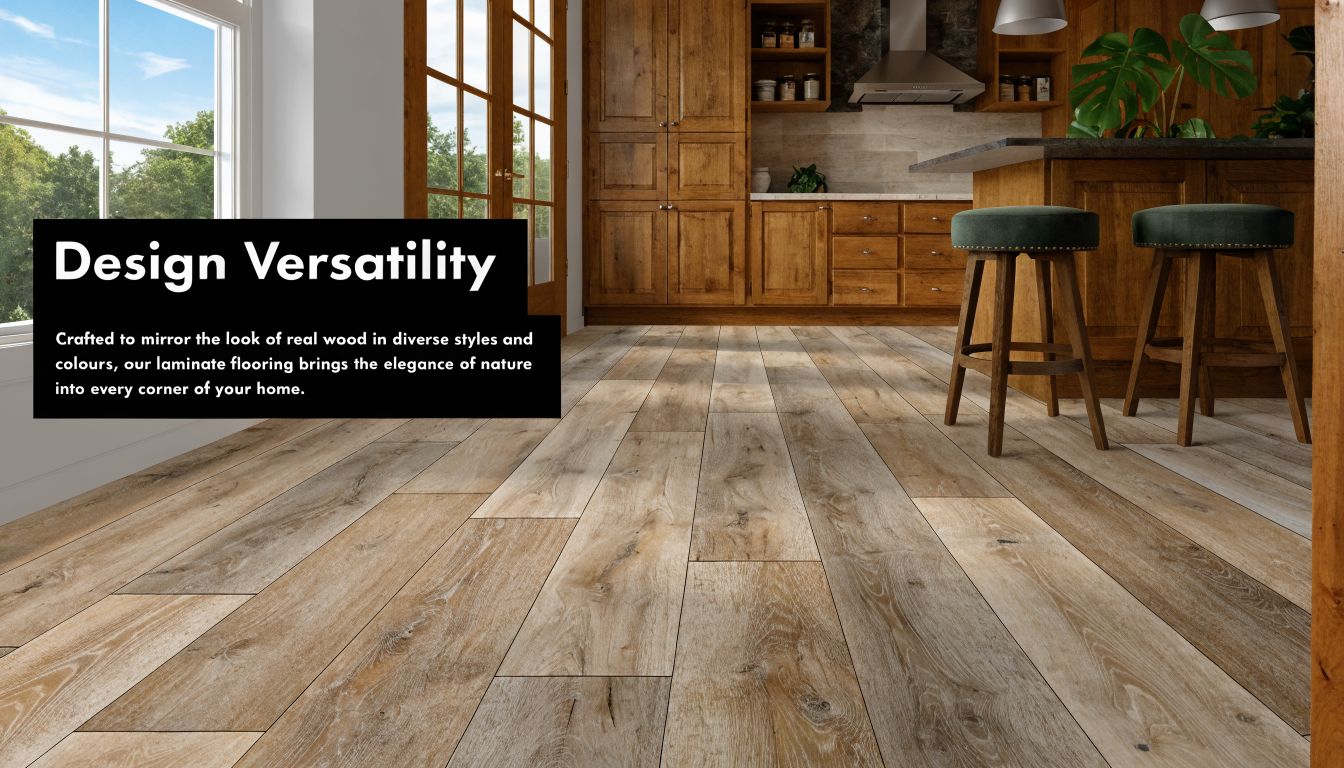
Today’s better visuals aren’t limited to one generic faux-stone pattern. You can get a floor that leans rustic, refined, industrial, classic, or soft and spa-like depending on the cabinet finish, wall color, and amount of natural light in the room.
Kitchens that need both style and forgiveness
In a Milton or Johns Creek kitchen, a slate-look or concrete-look laminate can bridge the gap between modern and lived-in. It pairs well with painted cabinets, natural wood islands, matte black fixtures, and warmer wall colors. You get the structured visual of tile without making the room feel severe.
For farmhouse-leaning homes, a weathered stone appearance usually works better than anything too polished. It keeps the room grounded and hides day-to-day dust better than a high-contrast surface.
Bathrooms and basement spaces
For a bathroom, the winning look is often marble-inspired or travertine-inspired. It gives the room a cleaner, brighter feel, especially in spaces that don’t get much natural light. The catch is simple. This only makes sense when the product is designed for moisture-prone conditions.
Basements are another strong use case. A polished concrete visual can look sharp in a finished lower level, home office, or gym area. It suits homes where hardwood would feel out of place and ceramic tile would feel too hard or too cold over a slab.
Matching style to the rest of the home
If you’re trying to choose a finish, think less about the sample on its own and more about the full room.
- Warm cabinets and earthy paint colors: Slate, limestone, and softer stone visuals tend to blend better.
- Clean contemporary interiors: Concrete, large-format tile looks, and low-sheen finishes usually feel right.
- Classic homes: Marble-inspired visuals can work well, especially when the pattern isn’t too busy.
- Pet-heavy households: Mid-tone surfaces often do a better job hiding daily life than very dark or very light floors.
A floor can be durable and still feel wrong stylistically. The best installations I see don’t chase trend boards. They fit the house.
Protecting Your Investment for Years to Come
A tile-look laminate floor is easier to live with than traditional tile in a lot of ways, but it still needs proper installation and basic care. Long-term value is protected or lost depending on these.
Most laminate products use a click-lock system and install as a floating floor. That simplifies the process, but it doesn’t make subfloor prep optional. If the floor underneath isn’t flat enough, the finished surface can feel hollow, flex in spots, or wear unevenly at the joints.
Installation choices that pay off later
Professional installation usually makes sense when the job includes transitions, appliance clearances, trim work, or questionable subfloor conditions. That’s especially true in older homes around Cumming where floors may not be as even as they look at first glance.
One practical option homeowners in the area consider is Flacks Flooring, which offers laminate flooring and installation support from its Cumming showroom. The value there is having product selection and site-prep discussion handled together instead of split across multiple vendors.
Maintenance that actually helps
You don’t need a complicated routine. You need a consistent one.
- Sweep or vacuum regularly: Use a hard-floor setting or attachment so grit doesn’t sit on the wear surface.
- Damp mop, don’t soak: Too much water is still a bad habit even with better moisture-resistant products.
- Skip the steam mop: Heat and moisture together can create problems at the seams.
- Use furniture protection: Felt pads under chairs, tables, and sofas prevent avoidable scuffs.
If you’re moving furniture around during a remodel or after installation, this guide on protecting floors from furniture is a helpful practical reference.
The floors that age best usually aren’t in perfect homes. They’re in normal homes where people clean up grit, avoid soaking the surface, and protect the contact points that cause the most wear.
What to Ask Your North Atlanta Flooring Installer
You find a tile-look laminate you like, the sample looks great under the showroom lights, and the price feels manageable. Then the estimate starts, and key questions emerge. Will it handle a busy kitchen in a Cumming home with kids and dogs? Will it sit flat over an older subfloor? Who is responsible if the floor underneath needs work once demolition starts?
That estimate appointment is where a good decision gets clearer.
Homeowners in Cumming, Johns Creek, Milton, and nearby parts of North Metro Atlanta should treat the installer conversation like a screening process. Product matters, but installer judgment matters just as much. A reliable installer should explain where tile-look laminate makes sense, where another product may hold up better, and what local conditions in your home could change the scope.

Questions that reveal whether they know the category
Ask these directly, and listen for specific answers rather than sales language:
- What does your quote include? Get clear on floor removal, disposal, subfloor prep, underlayment, trim adjustments, transitions, appliance handling, and furniture moving.
- What underlayment are you recommending, and why? The answer should match the product requirements and your house. Sound reduction, minor subfloor variation, and moisture control are different issues.
- Have you installed waterproof laminate in kitchens or powder rooms like mine? Experience with tile-look laminate in active spaces matters more than broad claims about installing "all kinds of flooring."
- How do you handle subfloor problems after the old floor comes up? In older North Atlanta homes, that question matters. Ask whether they charge by the hour, by the area repaired, or by a change order.
- Which rooms in my home are a good fit for tile-look laminate, and which rooms should use something else? A solid installer will not force one answer across the whole house.
- Who handles transitions at exterior doors, fireplaces, and adjacent rooms? Those details affect how finished the job looks.
- What expansion gaps do you plan for, and how will you hide them at baseboards, cabinets, and thresholds? That question quickly tells you whether they install carefully or just install fast.
Ask the ROI question that is often overlooked
Ask them to compare the expected lifespan of the laminate they are quoting with ceramic tile in your specific rooms, under your household conditions.
That puts the conversation where it belongs. A kitchen in Johns Creek with heavy daily traffic is different from a guest bath in Milton. A ranch home in Cumming with a flatter slab is different from a two-story home with older wood subfloors. The right installer should talk through wear, moisture exposure, replacement difficulty, and whether you are buying a short-to-mid-term update or a floor you want to leave in place for a long time.
Be careful with anyone who gives a blanket lifespan answer in the first minute. No honest installer can promise the same result for every product, every house, and every family.
What a strong answer sounds like
Strong answers usually include a few things:
- Room-by-room guidance: They separate kitchens, laundry areas, half baths, basements, and dry living spaces.
- Clear trade-offs: They will say when ceramic tile, porcelain tile, or LVP may be the better choice.
- A realistic prep plan: They discuss flatness, slab moisture, squeaks, soft spots, and height differences between rooms.
- A process for surprises: They explain what happens if hidden damage shows up after removal.
- Calm communication: They answer directly and do not rush you into a same-day decision.
That is the installer you want in your house.
If you are talking with local companies in Cumming or Johns Creek, ask one more practical question before you sign anything: If this were your own home, would you put this exact product in this exact room? Experienced installers usually answer that one truthfully, and the tone of the answer tells you a lot.
If you’re comparing laminate flooring that looks like tile for a home in Cumming, Johns Creek, Milton, or the surrounding North Metro Atlanta area, Flacks Flooring is one local place to start. An in-home consultation or showroom visit can help you sort through waterproof options, tile-look visuals, subfloor concerns, and installation details before you commit to a floor that only looks good on a sample board.