
Yes, today's laminate flooring is waterproof. This isn't the same laminate from a decade ago that would swell up at the first sign of a spill. Modern technology has completely changed the game, giving you top-down moisture protection that makes it a fantastic, worry-free choice for pretty much any room.
Understanding the "Waterproof" in Modern Laminate
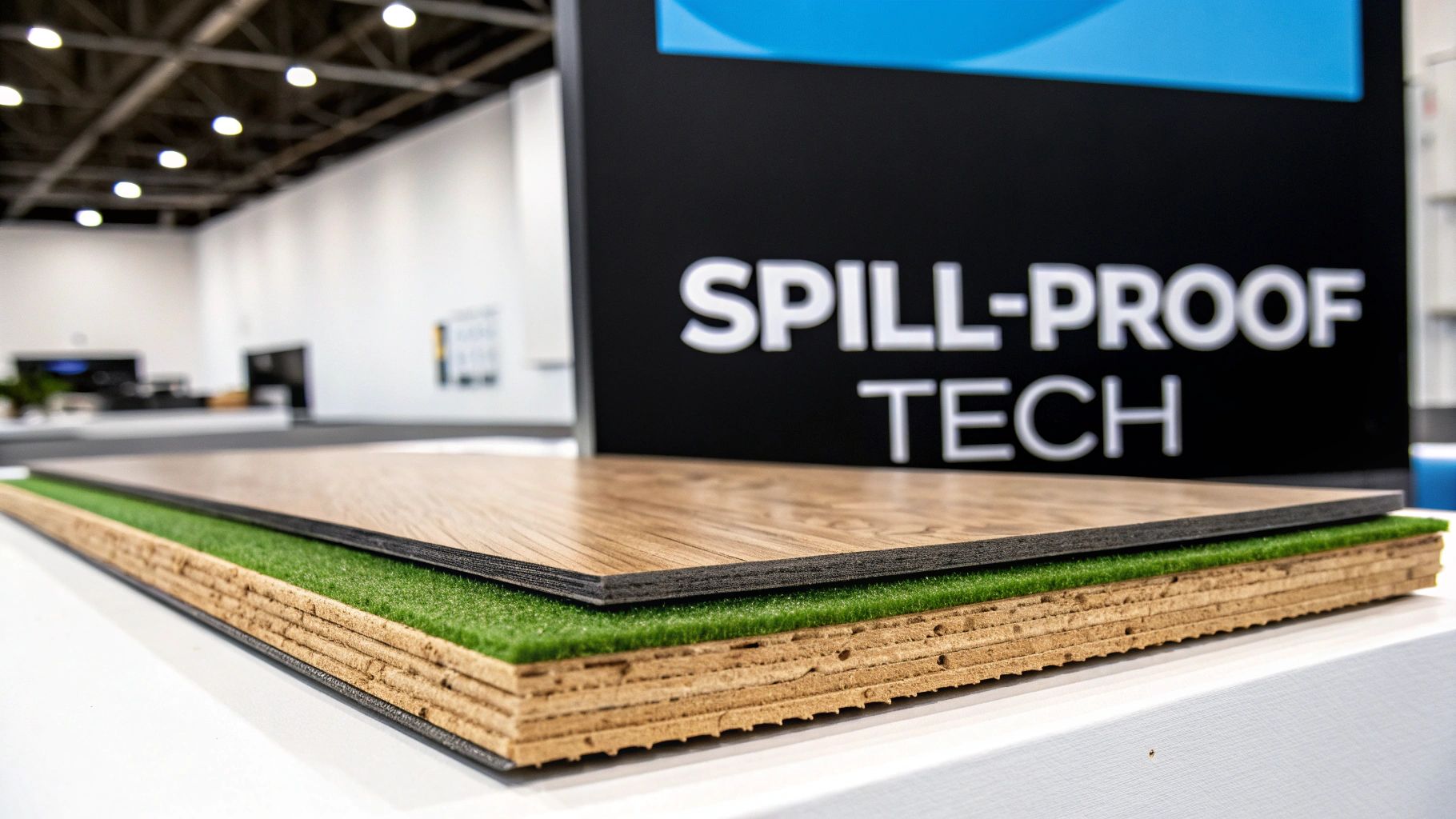
The jump from "water-resistant" to truly "100% waterproof" is probably one of the biggest leaps forward the flooring industry has ever seen. Think of it like the difference between a water-resistant windbreaker and a full-on Gore-Tex rain jacket.
The old windbreaker—or water-resistant laminate—could handle a light sprinkle. It bought you a little time to wipe up a spill before the moisture seeped into the core. But a real downpour? Forget it. Water would eventually get through and cause damage.
Today’s waterproof laminate flooring is the Gore-Tex jacket. It’s not just a surface coating; it's a completely engineered system from the top layer down to the locking mechanism, all designed to create a solid barrier that locks moisture out for good.
So, What Actually Changed?
The big breakthrough came when manufacturers finally solved laminate's age-old Achilles' heel: its high-density fiberboard (HDF) core. That core was basically pressed wood, and it loved to soak up water and swell. The fix involved a trio of innovations that work together.
- Hydrophobic Coatings: The top wear layer is now treated with special coatings that repel water on contact. You’ll see spills bead up on the surface instead of spreading out and trying to soak in.
- Dense, Waterproof Cores: The game-changer. The inner core is now made from materials that simply don’t absorb water. This is what prevents the bubbling, warping, and delaminating that used to ruin old laminate floors.
- Advanced Locking Systems: The edges of each plank are now milled with incredible precision to create a super-tight seal. Many brands also add a wax sealant to these locking joints, forming a final watertight seam between the boards.
This triple-threat defense means that spills from kids, pet accidents, and even the notorious humidity we get here in Cumming, GA, all stay on the surface where they can be easily wiped away. It protects the plank itself and, just as importantly, your subfloor underneath.
The real peace of mind comes from knowing that everyday life won't ruin your investment. From a spilled glass of sweet tea to muddy paws after a rainy day in Forsyth County, waterproof laminate is built to handle it all without damage.
The entire flooring industry has been moving this way for years. True waterproof laminate really started hitting the market around 2015, and since then, it’s exploded in popularity. This innovation helped drive the global waterproof flooring market to its current value of USD 12.5 billion. You can explore more about the growth of this market and see just how big the demand has become.
Water-Resistant vs 100% Waterproof Laminate
It's easy to get these terms mixed up, as they're often used interchangeably in marketing. But for a homeowner in Johns Creek or Milton, the difference is huge. Here’s a quick breakdown to clear things up.
| Feature | Water-Resistant Laminate | 100% Waterproof Laminate |
|---|---|---|
| Core Material | Standard HDF (High-Density Fiberboard) | Water-repellent HDF or a fully synthetic waterproof core |
| Protection Type | Topical; relies on a surface coating to repel spills | System-wide; core, locking system, and topcoat work together |
| Spill Window | Limited time (e.g., 30-60 minutes) to clean up spills | Can handle standing water for 24-72+ hours without damage |
| Best For | Low-traffic areas like bedrooms, living rooms, and hallways | Kitchens, bathrooms, basements, laundry rooms, and mudrooms |
| Weakness | Vulnerable at the seams; moisture can seep between planks | Can still be damaged by subfloor moisture from below |
In short, water-resistant buys you time. 100% waterproof gives you peace of mind, especially in those rooms where life gets a little messy.
The Technology Behind a Spill-Proof Floor
Ever wonder what makes a plank of flooring truly waterproof? It’s not just one thing. It's a clever system of layers all working together, a bit like a high-tech shield where every part has a job to do in fending off spills, splashes, and humidity.
This layered construction is really the secret sauce. Manufacturers have spent years figuring out how to solve the old problems—you know, the bubbling and swelling that gave laminate a bad name—and the result is a floor that’s not only beautiful but tough as nails. Let's pull back the curtain and see exactly how it works.
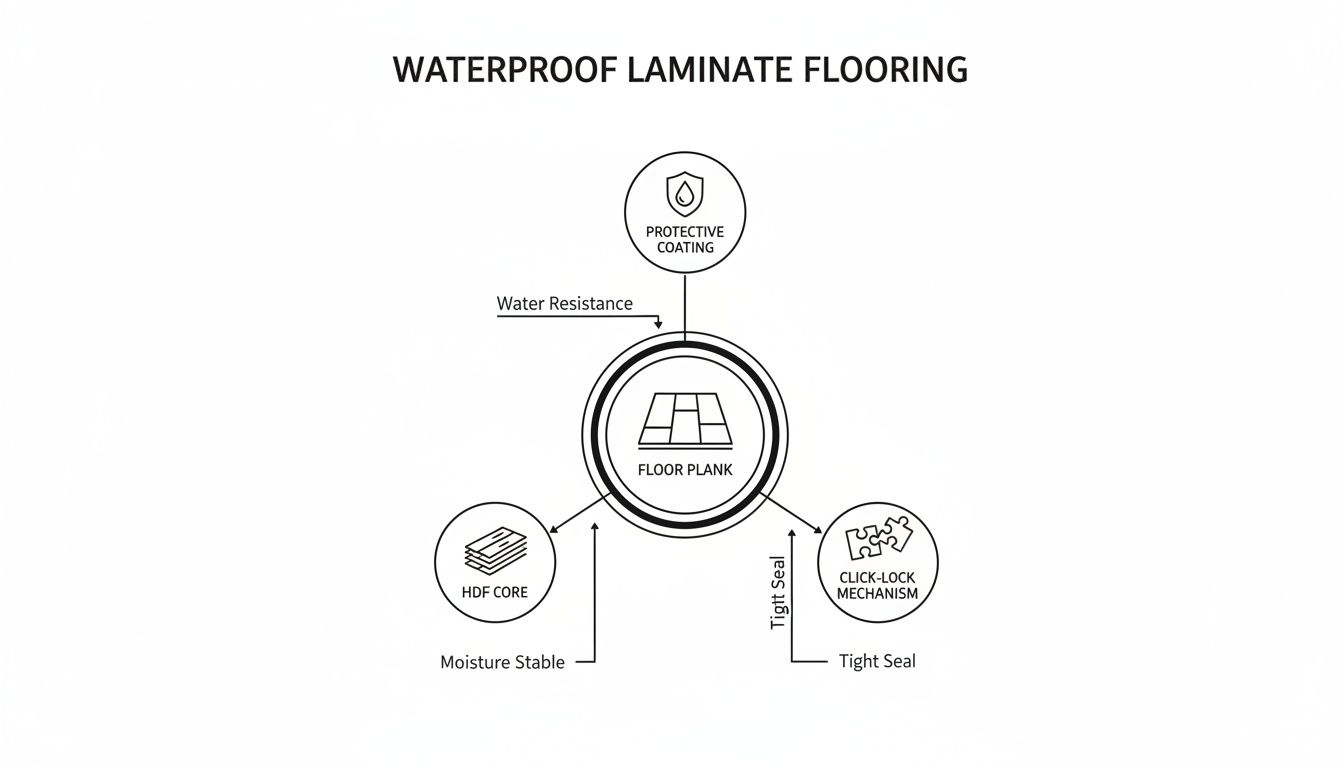
The Four Pillars of Protection
At its core, a waterproof laminate plank is made of four key layers that are fused together with a ton of heat and pressure. Each layer plays a specific role in making the final product stand up to the daily chaos of a busy home, whether you're in Cumming, Johns Creek, or Milton.
The Wear Layer: Think of this as the floor's invisible bodyguard. It's a clear topcoat, but it’s incredibly tough because it's usually beefed up with aluminum oxide—one of the hardest minerals out there. Its whole purpose is to fight off scratches, stains, and sun-fading so your floor stays looking brand new.
The Design Layer: Right under that tough wear layer is the part that makes the floor so beautiful. It's a super high-resolution photo that gives the plank its realistic look, whether that's the warm grain of oak or the cool tones of natural stone.
The Waterproof Core: This is the game-changer. Older laminate had a fiberboard core that would swell up like a sponge if it got wet. Modern waterproof laminate uses a high-density fiberboard (HDF) packed with water-repelling resins. This dense, sturdy core is what stops water in its tracks, preventing it from soaking in and causing that dreaded warping and bubbling.
The Backing Layer: The very bottom layer is all about stability. It keeps the plank straight and flat, preventing it from bowing or cupping over time. It also adds one last bit of defense against any moisture coming up from the subfloor.
These layers don't just sit on top of each other; they create a single, unified product that’s way more than the sum of its parts. If you're curious about the nitty-gritty of the materials, you can dig deeper in our guide on what laminate flooring is made of.
More Than Just Layers
The plank itself is only part of the story. Two other key innovations are what really lock out the water for good.
First, there's the locking system. The edges of the planks are milled with incredible precision into a "click-lock" profile. When you snap them together, they form a seam so tight that it's nearly impossible for water to seep through the cracks.
Many of the best brands go one step further and coat these edges with a wax sealant. This acts like a little gasket for the joints, giving you a final line of defense against that spilled glass of water or the dog's drippy water bowl.
It’s this complete system—the water-repellent topcoat, the impenetrable core, and the watertight locking edges—that gives homeowners in Forsyth County the confidence to install beautiful wood-look floors in kitchens, bathrooms, and basements.
Choosing the Right Waterproof Flooring for Your Home

When you start looking into waterproof flooring, the sheer number of options can feel overwhelming. You’ll hear acronyms like LVP and SPC tossed around, and it's easy to get tangled up in marketing jargon.
But for homeowners here in Cumming or Johns Creek, the decision really comes down to a few key questions. Which floor can handle our Georgia humidity? What will feel best underfoot on a cool morning? And which one gives me the most authentic look without breaking the bank?
Let's cut through the noise and compare the top contenders so you can feel confident you're choosing the right foundation for your home.
Laminate vs. Luxury Vinyl Plank (LVP and SPC)
Think of this as a friendly rivalry between two fantastic products. Both modern laminate flooring waterproof styles and Luxury Vinyl Plank (LVP) are built for wear and moisture, but they achieve it in different ways and each has its own distinct personality.
LVP is a 100% synthetic product, made of layered PVC vinyl. This composition makes it waterproof through and through. Its core is often flexible, which can give it a slightly softer and quieter feel when you walk on it.
Waterproof laminate, on the other hand, is built around a super-dense fiberboard (HDF) core. While this core is specially engineered to be waterproof, the real showstoppers are its incredible rigidity and the stunningly realistic high-definition images printed on its design layer.
The core difference really comes down to the material. LVP is solid vinyl, making it softer and completely impervious to water. Waterproof laminate has a wood-based core, which makes it feel more substantial and often look more like real hardwood.
This renewed interest in waterproof laminate is a smart move for homeowners and renovators in Forsyth County. Our rainy seasons demand resilient choices. In the U.S., recent laminate sales hit $1.15 billion, with waterproof versions driving a major comeback. The category now holds 4.8% of total flooring sales, with volume steady at 923 million square feet. If you're curious about the market dynamics, you can review the complete laminate sales statistics.
Key Differences That Matter in Your Home
When you're standing in a showroom, it helps to know what you’re looking at. Here are the main things that set these floors apart, especially for folks in our local area.
- Visual Realism: Laminate often takes the lead here. Its photographic layer is typically sharper and more detailed, creating incredibly realistic wood grain textures that you can both see and feel.
- Durability and Scratch Resistance: Both are tough, but laminate’s aluminum oxide wear layer is generally harder. That makes it more resistant to scratches from pet claws or scooting furniture. It’s truly built for high-traffic punishment.
- Feel Underfoot: This is all about personal preference. LVP's flexible nature can feel softer and warmer. Laminate's rigid HDF core provides a firm, solid feel that many people equate with genuine hardwood.
- Installation: Both primarily use a click-lock system, which is great for DIYers. However, laminate's rigidity can sometimes be more forgiving over a subfloor that isn't perfectly level.
- Cost: The prices are very competitive and often overlap. Your final cost will depend more on the brand, thickness, and specific style you pick, rather than the core material itself.
For an even deeper dive into the world of waterproof materials and what they offer, check out our ultimate guide to waterproof flooring. It's a great resource for figuring out which features matter most for your project.
Comparing Your Waterproof Flooring Options
Sometimes, seeing everything laid out side-by-side makes the decision click. Here’s a simple table to help you compare the most popular choices for homes in Milton and the surrounding Forsyth County area.
| Flooring Type | Key Benefit | Best For | Average Cost (per sq. ft.) |
|---|---|---|---|
| Waterproof Laminate | Unmatched realism and scratch resistance | Living rooms, kitchens, and high-traffic areas where a true wood look is desired. | $3 – $7 |
| LVP / SPC Rigid Core | 100% waterproof material, softer feel | Basements, bathrooms, and laundry rooms where extreme moisture is possible. | $3 – $8 |
| Water-Resistant Engineered Hardwood | Genuine wood top layer | Bedrooms and living areas where moisture is low but aesthetics are paramount. | $6 – $12+ |
At the end of the day, the right choice really hinges on your priorities. If you crave the most authentic wood look and need a floor that can stand up to kids and pets, laminate flooring waterproof options are an outstanding choice. But if your main concern is a floor for a potentially damp basement or you simply prefer a softer feel, LVP or SPC might be the perfect fit.
Where Can You Install Waterproof Laminate Flooring?
The real magic of today's waterproof laminate isn't just in how it's made—it's the design freedom it unlocks. For years, there was an unwritten rule: keep wood-look floors out of wet areas. That rule is officially a thing of the past.
This flooring truly comes into its own in the parts of your home where life gets a little messy. It’s a game-changer for any room that sees its fair share of spills, humidity, or constant foot traffic. You finally get to have that gorgeous wood look without sacrificing practicality.
Let's look at the specific rooms where waterproof laminate makes the biggest difference, solving some of the most common headaches for homeowners right here in Cumming and Forsyth County.
High-Moisture Hotspots, Reimagined
We all have those rooms that are natural enemies of traditional flooring. Think about it: kitchens, full bathrooms, laundry rooms, and mudrooms. With old-school laminate or hardwood, one overflowing sink or a forgotten wet towel could mean disaster.
This is exactly where waterproof laminate shines. The core is built to repel water, and the seams lock together so tightly that they create a top-down barrier, forcing moisture to stay on the surface where you can wipe it away.
- Kitchens: As the heart of the home, the kitchen sees it all—dishwasher leaks, spilled spaghetti sauce, and splashes from the sink. Waterproof laminate takes it all in stride without warping or swelling, giving you that beautiful hardwood aesthetic without the constant anxiety.
- Bathrooms: Once a definite "no" for laminate, new technology has turned it into a fantastic, stylish choice. It handles steam from hot showers and splashes from the kids’ bath time while feeling much warmer underfoot than cold tile. If you're weighing your options, you can explore our complete guide to choosing the best flooring for bathrooms.
- Laundry Rooms & Mudrooms: These workhorse spaces are ground zero for leaky washing machines, muddy cleats, and dripping raincoats. A waterproof floor isn't just a nice-to-have here; it's practically a necessity for long-term durability and your own peace of mind.
Transforming Basements from Drab to Fab
Basements in North Georgia can be notoriously damp, which has always made finding the right flooring a huge challenge. Too often, homeowners just throw in the towel and leave them as cold, concrete utility spaces. But what if you could turn that space into a real part of your home?
I remember a family over in Milton who turned their humid, unused basement into a fantastic playroom for their kids. They specifically chose laminate flooring waterproof because they knew it could handle spilled juice boxes and the inevitable moisture that seeps through a foundation. The result? A warm, inviting, and completely worry-free space for their family to enjoy. That’s the kind of real-world problem this flooring solves.
The numbers back this up. The global market for this kind of flooring is valued at $15 billion annually, with manufacturers producing 1.2 billion square feet. Here in North America, we're seeing a huge surge in demand as families realize they can get a floor that not only looks great but also extends the typical lifespan from 10 years to well over 25.
The ultimate benefit is versatility. Waterproof laminate empowers you to carry a single, seamless flooring design throughout your entire home, from the front door to the back, upstairs and down, without compromising on performance.
Of course, laminate isn't the only game in town. For homeowners looking at all their waterproof options, you might also consider highly-rated DIY peel and stick floor tiles. They offer another simple, moisture-resistant solution for a quick and budget-friendly update.
Getting Installation and Maintenance Right
A gorgeous waterproof laminate floor is only as good as the hands that install it. Think of it like a custom-built car—the engine might be top-of-the-line, but if the bolts aren't tightened correctly, you're not going to get very far. Proper installation and simple, consistent care are what unlock the decades of performance you're paying for.
It's about more than just clicking planks into place. The real magic happens before you even open the first box. Getting the foundation right and knowing the easy upkeep routines will ensure your floor remains a point of pride, easily handling the spills and foot traffic of a busy Forsyth County home.
The Foundation for a Perfect Floor
Before a single plank hits the ground, the most important work has already begun. I can't stress this enough: subfloor preparation is the make-or-break step for any successful flooring project. Skipping this is the number one mistake we see in DIY jobs, and it's what leads to those frustrating squeaks, gaps, and that uneven feeling underfoot later on.
Your subfloor needs to be:
- Spotless: Every bit of debris, dust, and old adhesive has to go. A perfectly clean surface is non-negotiable for getting the planks to lie flat.
- Solid: Walk the entire area. Are there loose boards or soft spots? Screw them down. Squeaks? Secure them. If you're on a concrete slab, any cracks or pits need to be properly filled and patched.
- Perfectly Flat: This is the big one. We're talking flat within 3/16 of an inch over any 10-foot span. High spots need to be ground down, and low spots must be filled with a self-leveling compound.
Why all the fuss about a flat subfloor? Because it protects the locking mechanism. If planks can flex up and down over bumps and dips, it puts constant stress on the joints. That's how you end up with gaps that compromise the entire waterproof system.
With the subfloor prepped, your next move is selecting the right underlayment. It's more than just a thin layer of foam. A quality underlayment dampens sound (goodbye, echoey footsteps!), adds a bit of thermal insulation, and, most importantly, provides a vapor barrier. This is absolutely essential for blocking moisture that can creep up from a concrete slab or a crawlspace, especially in the humid climate we get here in Cumming, GA.
Installation Smarts and Long-Term Care
Once the prep work is done, putting the floor down is usually a smooth process, thanks to modern click-lock systems. But you still have to be precise. One of the most critical details people forget is leaving an expansion gap—usually 1/4 to 3/8 of an inch—around the entire perimeter of the room. Laminate is a wood-based product, meaning it will naturally expand and contract a tiny bit with shifts in temperature and humidity. That gap gives the floor room to breathe, preventing it from buckling against the walls.
While many homeowners in Johns Creek and Milton are more than capable of tackling a DIY project, there's a strong case for hiring a professional. A seasoned installer will spot and fix subfloor issues you might not notice. They’ll nail the details, from the expansion gaps to those tricky cuts around doorways and cabinets. And maybe the biggest benefit: a pro installation almost always protects your manufacturer's warranty, which can easily be voided by a DIY job gone wrong.
After your new floor is in, keeping it looking great is surprisingly easy.
- Sweep or Vacuum Often: Grit and dirt are like sandpaper for your floor's finish. Use a soft-bristle broom or a vacuum (just make sure the beater bar is turned off).
- Wipe Up Spills: Yes, it's waterproof, but don't let puddles sit forever. A quick wipe with a dry or barely damp cloth is all you need.
- Clean with the Right Stuff: For a deeper clean, stick to a pH-neutral floor cleaner made for laminate. Stay away from harsh chemicals, waxes, or anything oil-based—they'll just leave a dull, sticky film.
- Protect from Scratches: This is simple preventative maintenance. Put felt pads on the legs of all your furniture. Use doormats and area rugs in entryways to stop dirt at the door.
Looking at the Cost and Long-Term Value
When you're planning a flooring project, the first thing everyone looks at is the price tag. That's natural. But when it comes to waterproof laminate flooring, it helps to think of it less as a simple purchase and more as a smart investment in your home. The real story isn't just what you pay per square foot; it's about what you get back over decades of performance and protection.
For folks here in Cumming and Forsyth County, the initial cost is pretty reasonable. You can expect the materials themselves to run between $3 to $7 per square foot. Professional installation will add to that, but it's a cost that positions waterproof laminate comfortably in the mid-range of flooring options. The real financial win, however, comes later.
What's the Real Return on Your Investment?
That initial cost is just one piece of the puzzle. Where waterproof laminate really starts to make sense is in its long-term value, saving you both money and serious headaches down the line. Think of it as buying an insurance policy for your floors that also happens to look fantastic.
Here’s how it pays you back over time:
- A Seriously Long Lifespan: A quality waterproof laminate floor, when cared for properly, can easily last 20 to 25 years. That kind of durability means you won't be tearing everything up and spending thousands on a replacement project anytime soon.
- Dodging Expensive Repairs: Imagine a dishwasher leak or a pipe bursting under the sink. With standard flooring, that single incident can easily lead to thousands in subfloor repairs and total floor replacement. A waterproof system keeps that water on the surface, giving you time to clean it up and preventing that kind of catastrophic damage.
- Boosting Your Home's Resale Value: A beautiful, durable, and waterproof floor is a huge plus for potential buyers. For real estate agents and homeowners in Johns Creek and Milton, showcasing a home with consistent, high-performance flooring makes it far more appealing and can absolutely have a positive impact on the final sale price.
Investing in waterproof laminate isn't just about buying a floor; it's about buying peace of mind. You’re getting a worry-free foundation for your home that looks great, holds up to real life, and protects your biggest asset from costly moisture disasters.
Planning for the Full Project Cost
As you budget, don't forget to think about the whole process. When you're redoing floors, you have to move everything out of the way. Shuffling furniture from room to room can be a logistical nightmare and risks damaging your belongings.
To keep your project on track and your furniture safe, looking into moving companies with storage options can be a game-changer. It's often a surprisingly affordable way to clear the space completely, ensuring your installers can work efficiently and your valuables stay protected. A little bit of planning on this front makes for a much smoother renovation from start to finish.
Your Top Questions About Waterproof Laminate Answered
When you're making a big decision for your home, you're bound to have questions. Here are some of the most common ones we hear from our customers right here in Cumming and Forsyth County. Let's clear up any lingering doubts you might have.
Our goal is simple: to give you the confidence that comes from making a smart, well-informed choice for your home.
So, Is "Waterproof" the Same as "Flood-Proof"?
This is a really important one to understand. The short answer is no.
A 100% waterproof laminate floor is fantastic at handling water on its surface. We're talking about spills, splashes, and pet accidents that can sit for up to 72 hours without damaging the planks themselves. That's a huge relief for everyday life.
But if you have a major water event, like a burst pipe or a flooded appliance, water can still find its way under the planks and into your subfloor. The good news? Once the subfloor is professionally dried and repaired, the waterproof laminate planks can often be carefully uninstalled and then reinstalled. That’s a massive win—it saves you from having to buy a whole new floor.
Can I Put This Right Over My Old Tile Floor?
More often than not, yes! This is a major perk for homeowners in Johns Creek and Milton looking to renovate without a massive demolition project. It saves so much time, dust, and money.
As long as your existing tile floor is level, securely bonded, and free of any major cracks, you can usually lay waterproof laminate right on top with the right underlayment.
That said, it's always a good idea to get a professional opinion. A quick assessment from a local pro can confirm your tile is a solid foundation and check that the added height won't cause issues with your doors or cabinets.
How Does It Hold Up Against Big Dogs?
It’s an excellent choice for pet owners, especially those with larger dogs. The tough, commercial-grade wear layer on top is built to resist scratches from claws and everyday roughhousing.
Even better, the waterproof core and tight-locking joints mean you don't have to panic about water bowl splashes, muddy paws, or the occasional accident. You get that gorgeous wood look you love with the real-world durability a pet-friendly home demands.
Ready to see how waterproof laminate flooring can transform your home? The experts at Flacks Flooring are here to help you find the perfect style. Visit our showroom in Cumming, GA, to explore your options today!