
When you hear "low pile carpet," think short, tight, and tough. The fibers are packed together to create a smooth, dense surface, a bit like a pristine putting green. This isn't the shag rug of the 70s; it's a practical, durable workhorse, which is why you'll find it in so many busy homes and commercial settings.
Decoding Low Pile Carpet
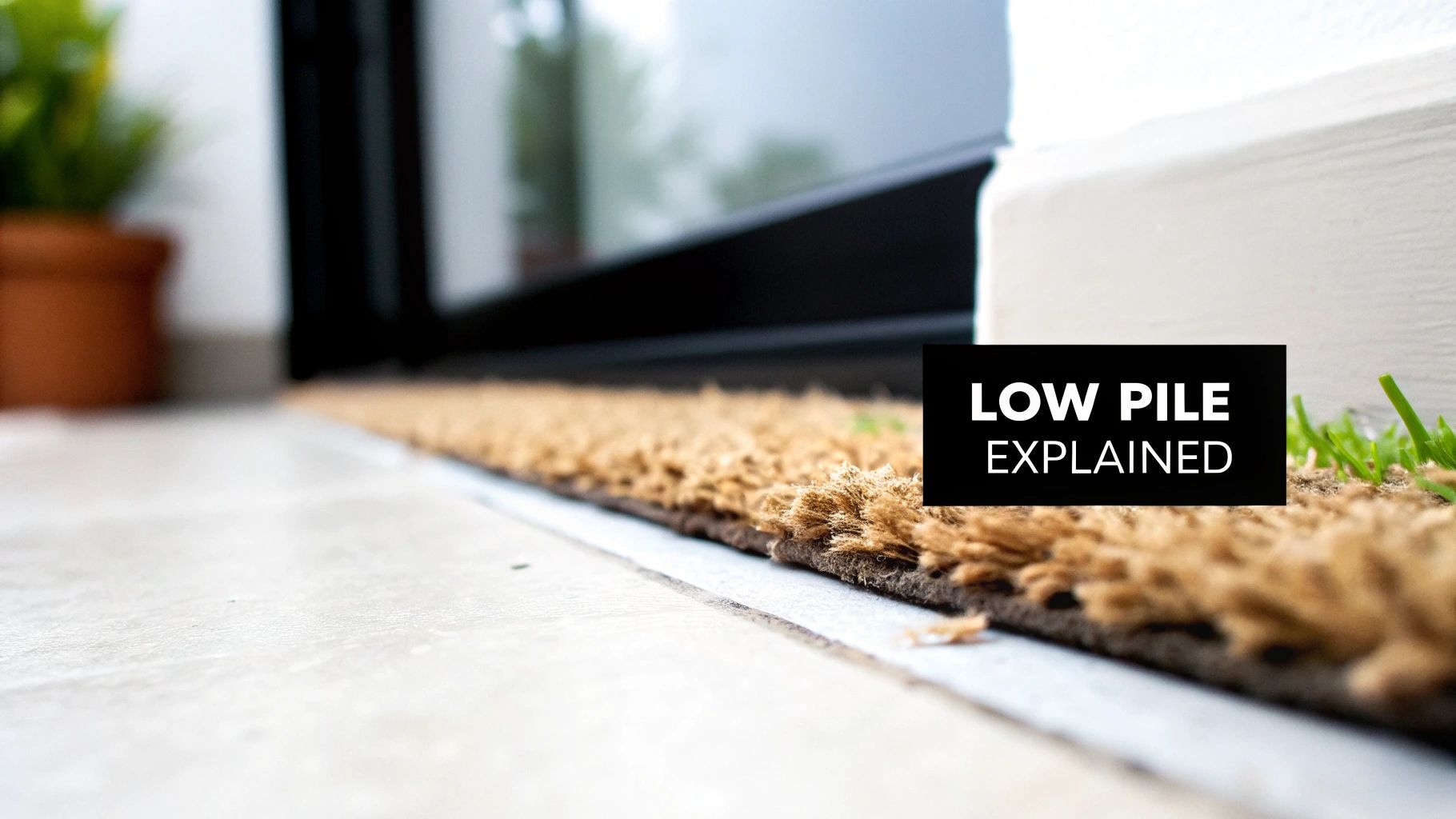
Before we get too far, let's clear up what "pile" even means. In the world of flooring, pile is simply the term for the carpet's fibers—specifically, their height and how densely they're packed together.
A low pile carpet is exactly what it sounds like: it has short fibers, usually less than a quarter-inch tall. Because they're so short, they stand up straight and create a really tight, flat surface. This is the kind of carpet you see in hallways, offices, or family rooms that get a ton of action.
Key Characteristics
This tight-knit structure is what gives low pile carpet its signature personality. Knowing these traits will help you figure out if it's the right choice for your space.
- Short Fibers: The fibers are typically less than 1/4 inch high, giving the carpet a sleek, low profile.
- Dense Weave: The fibers are packed in tightly, which is great because it means dirt and spills tend to sit right on top instead of sinking deep down.
- Smooth Surface: This is a huge plus for practicality. Office chairs, kids' toys, and vacuums glide right over it without getting stuck.
- Resilient Nature: The compact design helps the fibers spring back from footsteps, which means less matting and crushing over time.
The concept is really straightforward: shorter, tighter fibers make for a surface that's easier to clean and holds up better to daily life. That durability is the number one reason people choose it for high-traffic areas.
To put it all together, here’s a quick rundown of what defines low pile carpet.
Low Pile Carpet At a Glance
This table breaks down the essential qualities you can expect.
| Characteristic | Description |
|---|---|
| Fiber Height | Typically under 1/4 inch, creating a flat, uniform surface. |
| Durability | High; the dense weave resists crushing from foot traffic. |
| Maintenance | Easy; vacuums can easily lift dirt from the surface. |
| Feel | Firmer and less cushioned compared to high pile options. |
| Best For | Hallways, living rooms, home offices, and commercial spaces. |
Basically, if you need a carpet that can handle the chaos of everyday life without being a pain to maintain, a low pile option is a fantastic starting point.
Why Go with a Low Pile Carpet? The Practical Perks
Beyond its sleek, modern look, a low pile carpet brings a ton of practical benefits to the table, making it a seriously smart choice for today's homes. Its short, tightly packed fibers create a surface that’s incredibly resilient and can handle the chaos of daily life in a way that deep, plush carpets just can't. This is precisely why you see it in so many high-traffic areas.
Just think about your busiest spots—the main hallway, the family room where the kids and pets run wild, or even a home office with a chair rolling back and forth. In these areas, low pile carpet stands strong against crushing and matting. The dense fibers just bounce right back from foot traffic and heavy furniture, keeping their smooth, uniform appearance for years without those dreaded worn-down "lanes."
Built to Last: Superior Durability and a Longer Lifespan
One of its biggest selling points is just how tough it is. Because the fibers are so short and compact, there's nothing loose to snag, fray, or get pulled out over time. This built-in strength means a much longer lifespan, even when it's getting walked on all day, every day.
It's also a fantastic option for households with pets. Claws are far less likely to catch and tear the loops, which is a common headache with shaggier styles. This durability translates to less frequent replacement, giving you much better value for your money in the long run.
Cleaning That's Actually Easy
If the thought of deep-cleaning carpets makes you groan, you'll love a low pile option. Its smooth, tight surface makes maintenance a breeze. Dirt, crumbs, and pet hair tend to sit right on top of the fibers instead of getting buried deep down, so your vacuum can suck them up effortlessly.
Spills are also less of an emergency. Liquids often bead up on the surface for a moment, buying you a few critical seconds to blot them up before they have a chance to soak in and set as a permanent stain. This ease of care is a game-changer for anyone who wants a clean home without dedicating their weekends to upkeep. In fact, studies have shown that in homes, low pile carpets trap 40% less dirt than high pile versions, which can cut annual cleaning costs by up to 25%. You can learn more about carpet market trends and statistics here.
A Healthier Choice for Your Home
For anyone dealing with allergies, the type of flooring you choose is a big deal for your health. The dense weave of a low pile carpet is a huge plus here, as it traps way fewer allergens like dust, pollen, and pet dander compared to its fluffier cousins.
By holding onto fewer airborne irritants, a low pile carpet helps improve your home's indoor air quality. That means a more comfortable, breathable space for everyone, especially those with sensitivities.
This makes it an excellent choice for bedrooms and family rooms, where clean air really matters.
A Clean Foundation for Any Design
Finally, the simple, understated look of low pile carpet gives you incredible design freedom. Its clean, almost-neutral appearance acts as the perfect backdrop for virtually any decor style you can imagine, from ultra-minimalist to cozy contemporary.
Because it doesn't have the visual "heaviness" of a thick carpet, it can actually make a room feel bigger, brighter, and more open. It provides a clean slate that lets your furniture, artwork, and other design choices be the stars of the show, pulling the whole room together for a polished, intentional look.
Comparing Low Pile Carpet With Other Flooring
Choosing the right flooring is a big decision, and it really comes down to weighing what matters most for you, your family, and the specific room you're outfitting. Low pile carpet is a fantastic workhorse—it’s tough, easy to clean, and looks great. But it’s just one piece of the puzzle.
To make a choice you’ll love for years, it helps to see how low pile stacks up against other popular options, from ultra-plush carpets to timeless hardwood floors.
The biggest trade-off you'll face is often comfort versus practicality. That deep, shaggy high pile carpet feels amazing under your feet, making it a dream for a cozy bedroom. But put that same carpet in a busy hallway? It'll likely get crushed, matted, and become a magnet for dirt in no time. Low pile, on the other hand, is built for the hustle and bustle of daily life.
This graphic really nails down the key advantages that make low pile such a smart pick for so many homes.
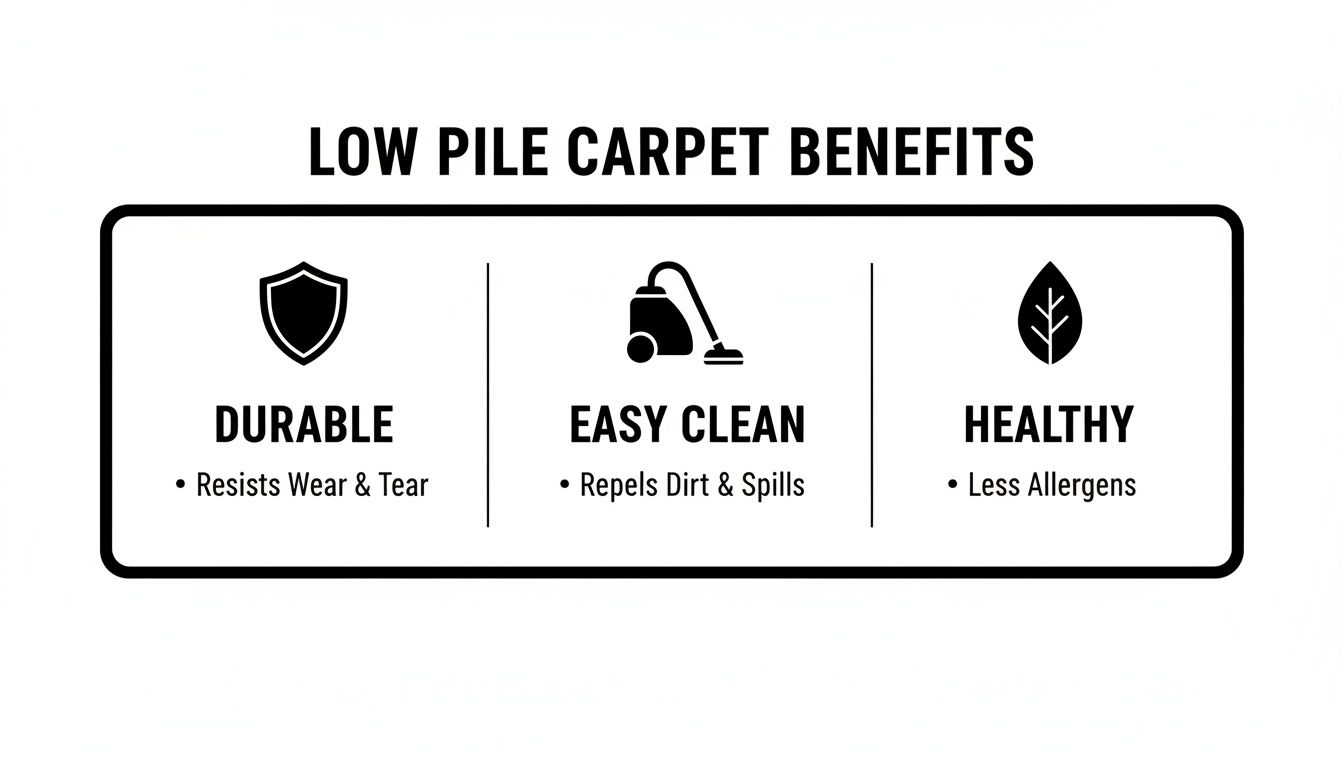
As you can see, its real strengths are its resilience, simple maintenance, and the fact that it traps fewer allergens, which is a huge plus for creating a healthier home.
Flooring Showdown: Low Pile Carpet vs. Alternatives
Let's put these flooring options head-to-head. Sometimes seeing a direct comparison is the best way to figure out what will genuinely work in your space.
| Flooring Type | Comfort & Feel | Durability | Maintenance | Best For |
|---|---|---|---|---|
| Low Pile Carpet | Firm but comfortable with a quality pad. | Excellent; resists crushing and matting. | Easy; vacuums easily and is stain-resistant. | High-traffic areas, homes with kids/pets, offices. |
| High Pile Carpet | Very plush and soft. | Moderate; prone to matting in busy areas. | Difficult; traps dirt and requires deep cleaning. | Bedrooms, low-traffic living rooms, dens. |
| Hardwood | Hard and cool underfoot; can be noisy. | Very Good; can scratch but is refinishable. | Moderate; requires specific cleaners and care. | Living rooms, dining rooms, kitchens. |
| Laminate | Hard; can feel artificial and be slippery. | Good; resists scratches but can't be refinished. | Easy; simple to sweep and mop. | Kitchens, basements, budget-conscious remodels. |
This table makes it clear just how much the "right" choice depends on the room. Think about a kid's playroom. Low pile carpet is the hands-down winner. It's smooth enough for toy cars to zip across, tough enough for daily chaos, and spills are no big deal. Hardwood looks beautiful, but it's also louder, less forgiving for a tumble, and prone to scratches from those very same toy cars.
Carpet vs. Hard Surfaces: The Great Debate
The decision between soft carpet and a hard surface like wood is one of the biggest debates in home design. There’s no right answer, just what’s right for you.
Low pile carpet brings warmth, absorbs sound beautifully (a huge bonus in busy households), and offers a bit of cushion. On the other hand, hardwood delivers a classic, elegant look that can seriously boost a home's resale value. If you're stuck, taking a look at a detailed carpet vs hardwood comparison can help you sort through the pros and cons for your long-term goals.
It's also smart to look beyond the material itself. Understanding the upfront considerations for hardwood floor installation gives you a good baseline for comparing the entire process—and cost—against what it takes to install new carpet.
Ultimately, there’s no single "best" flooring. The best flooring is the one that fits your life. By comparing these options honestly, you can find the perfect balance between looks, budget, and daily demands.
Where Low Pile Carpet Really Shines
Knowing the benefits of low pile carpet is a great start, but figuring out where it will truly thrive in your home is the real trick. The genius of this flooring is its sheer resilience, which makes it a perfect match for the spaces that see the most action, day in and day out. It’s a practical choice that excels where life gets messy.
Think about the main arteries of your home—hallways, entryways, and staircases. These are relentless foot-traffic zones. Choosing a low pile carpet here is like picking a sturdy pair of hiking boots over delicate slippers; it's simply built for the job and will resist crushing and matting far better than its plushier cousins.
High-Traffic Areas in Your Home
In family rooms and living areas where kids play and pets roam, low pile carpet is an absolute champion. Its smoother surface means toy cars and trucks can glide across the floor with ease. It also makes vacuuming up pet hair a breeze, since debris sits right on top instead of sinking deep into the fibers.
The home office is another spot where it's a natural fit.
- Easy Movement: Office chairs roll freely without snagging or getting bogged down. You won't create those annoying ruts you see in thicker carpets.
- Built to Last: The dense, tight fibers stand up to the concentrated pressure from chair casters and heavy desk legs.
- Clean Look: It offers a tidy, professional aesthetic that helps keep your workspace feeling focused and uncluttered.
Basements are another fantastic application. Since they can sometimes be prone to dampness, the shorter fibers of a low pile carpet don't hold as much moisture and dry out much faster than thicker options. This can make a real difference in preventing musty smells or mildew from taking hold.
The Go-To for Commercial Spaces
The incredible performance of low pile carpet isn't just for homes. It's become the gold standard for commercial properties, which should tell you everything you need to know about its long-term reliability.
Think about it: when you see low pile carpet in a busy hotel lobby, a bustling retail store, or a corporate office, that’s a powerful testament to its ability to handle constant, heavy foot traffic while still looking good. If it can handle that, it can definitely handle your busy household.
Ultimately, putting low pile carpet in these high-demand areas is just a smart investment. You're getting a durable, easy-to-maintain, and stylish foundation that’s perfectly suited for the busiest parts of your life.
How to Choose the Right Low Pile Carpet

When it comes to picking the perfect low pile carpet, it’s about more than just finding a color you like. You’re really matching the carpet’s nuts and bolts—its materials and construction—to how you actually live. Once you look past the pattern, you can choose a floor that not only looks fantastic but will stand up to years of real life.
The first big choice you'll make is the fiber. For most people, nylon is the champion, and for good reason. It’s incredibly resilient, meaning it has a unique spring-back quality that helps it resist getting crushed by constant foot traffic. That makes it a smart pick for the busiest spots in your home. It’s no surprise nylon holds a huge chunk of the carpet market; treated nylon is also a beast when it comes to fighting off stains. You can dive deeper into consumer flooring preferences on gminsights.com.
Of course, there are other great options. Polyester gives you a much softer feel underfoot and is naturally stain-resistant, while polypropylene (also called olefin) is great at handling moisture, making it a go-to for basements.
Understanding Carpet Styles and Construction
After you’ve landed on a fiber, the next thing to consider is the style. This really dictates the carpet's final look and feel. With low pile, you’ll mainly run into two types: loop pile and cut pile.
- Loop Pile: Just like it sounds, the fibers are looped back into the carpet backing. A classic example is Berber, famous for its flecked look and workhorse durability. Those tight little loops are tough, practical, and do a great job of hiding dirt.
- Cut Pile: With this style, the tops of the loops are sheared off, creating upright fibers. A Saxony style will give you that smooth, almost velvety finish, while a textured cut pile is designed to hide footprints and vacuum tracks a lot better.
How a carpet is put together is just as crucial as what it's made of. Two numbers you'll want to pay attention to are fiber density and twist level. Higher density simply means more fibers are packed into a smaller area, which makes the carpet more durable and less likely to get crushed flat.
A higher twist level is another sign of quality. It tells you how many times the individual fibers are twisted together in a one-inch length. More twists create a stronger, more resilient yarn that’s going to hold up so much better to daily wear and tear.
Your Final Selection Checklist
Making the right call is a lot easier when you have a plan. For an even more detailed breakdown, our guide on how to choose a good carpet for your home is a fantastic resource.
In the meantime, here’s a quick checklist to take with you to the store:
- Assess the Room's Traffic: Is this for a hallway that gets constant use or a bedroom that’s a quiet retreat? This will help you decide between super-durable nylon or something softer like polyester.
- Consider Your Lifestyle: Got kids or pets? If so, you’ll want to prioritize a low pile carpet with top-notch stain resistance. It’s a non-negotiable for busy homes.
- Evaluate Carpet Density: Give the carpet sample a good squeeze. If it feels firm and you can’t easily press your fingers through to the backing, you’re looking at a dense, durable carpet.
- Examine the Twist: Look really closely at the individual strands of yarn. A tight, well-defined twist is a tell-tale sign of a quality carpet that's built to last.
By focusing on these practical details, you can move beyond the color swatch and confidently pick a low pile carpet that perfectly balances style, comfort, and the demands of your home.
Simple Maintenance for Lasting Results
One of the best things about choosing a low pile carpet is just how simple it is to keep it looking great. You don't need a complicated, time-consuming routine to protect your investment. A little bit of consistent care is all it takes to keep your floors fresh and significantly extend their lifespan.
Your vacuum is your best friend here. Dirt, crumbs, and other debris tend to sit right on top of those short, dense fibers instead of burrowing deep inside. A quick pass with the vacuum two or three times a week is usually enough to stop everyday grit from getting ground in, which is what causes carpets to look dull and wear out prematurely.
Your Weekly Care Routine
To get the most out of your vacuuming, it’s best to use one with an adjustable beater bar or brush height. If you set it too low, you risk snagging and damaging the fibers. Set it too high, and it won't have enough oomph to lift out the dirt. A medium setting is almost always the sweet spot for low pile carpets.
When the inevitable spill happens, speed is everything.
- Blot, Don't Rub: The first rule of spill club. Grab a clean, dry cloth and gently press down on the spot. Work from the outside edges toward the center to keep the stain from spreading.
- Use a Mild Cleaner: Put a small amount of a carpet-safe cleaning solution on a new cloth and continue blotting. Let the cleaner do the work.
- Rinse Lightly: Finally, take another clean cloth, dampen it with plain water, and blot the area one last time. This removes any leftover soap residue that could attract more dirt later on.
The tight weave of a low pile carpet already gives you a head start on stain resistance, but nothing beats immediate action. Whatever you do, resist the urge to scrub—that just frays the fibers and can push the stain even deeper into the backing.
For a deeper dive, our guide on how to clean a dirty carpet has plenty more step-by-step tips.
Even with diligent weekly care, a periodic deep clean is essential. To get rid of the stubborn, deep-seated grime and allergens that a home vacuum just can't reach, it's a smart move to schedule a professional carpet cleaning every 12 to 18 months. This really revitalizes the fibers and restores their texture, ensuring your low pile carpet stays a beautiful, durable foundation in your home for years to come.
Answering Your Questions About Low Pile Carpet
Making a final decision on flooring can feel like a big commitment. To help clear things up and give you confidence in your choice, let's tackle some of the most common questions homeowners ask about low pile carpet.
Is Low Pile Carpet A Good Choice For Pets And Children?
Yes, it's actually one of the best. If you have a busy home with kids and pets, you'll find low pile carpet to be a real workhorse. Its short, dense fibers are tough and can stand up to heavy foot traffic without getting crushed or matted.
The tight weave is also a huge advantage for cleanup. Spills, pet hair, and crumbs tend to sit right on top instead of sinking deep into the fibers, which makes vacuuming far more effective. Plus, those short fibers trap fewer allergens, which is a big win for maintaining healthier indoor air for your family.
Does Low Pile Carpet Feel Hard Underfoot?
It’s true that you won't sink into a low pile carpet the way you would with a high-pile shag, but that doesn't mean it's hard or uncomfortable. The real secret to a comfortable floor is often what’s underneath.
The comfort you feel has as much to do with the carpet pad as the carpet itself. A high-quality, dense pad provides fantastic cushioning and support, turning a durable, practical surface into a genuinely comfortable one.
With the right padding, you get the best of both worlds: a soft landing without sacrificing the easy maintenance and durability that make low pile so appealing.
How Long Does Low Pile Carpet Last?
With proper care, a quality low pile carpet can easily last 10 to 15 years in a typical home.
Of course, a few things will influence its lifespan:
- Fiber Material: Nylon is the king of durability and resilience, often outlasting other fiber types in high-traffic areas.
- Foot Traffic: The carpet in a busy hallway will naturally wear differently than the one in a rarely used guest bedroom.
- Maintenance: Sticking to a regular vacuuming schedule and getting a professional deep clean every 12-18 months will make a massive difference in how long it looks its best.
Ready to find the perfect durable and stylish flooring for your home? The experts at Flacks Flooring have been helping homeowners in Cumming and Johns Creek for over 30 years. Explore our wide selection of high-quality flooring options and schedule your in-home consultation today by visiting us at https://flacksflooring.com.