
When you hear the term "low VOC vinyl flooring," think of it as the modern, healthier version of a classic. It’s a flooring solution specifically engineered to release a bare minimum of airborne chemicals—known as Volatile Organic Compounds (VOCs)—into your home. Simply put, it's designed to help you breathe easier from the ground up.
Decoding VOCs and Why Your Flooring Matters
You know that distinct "new car smell" or the sharp scent of a freshly painted room? That's the work of Volatile Organic Compounds (VOCs). These are gases that are released—or "off-gassed"—from all sorts of everyday solids and liquids, from your couch to your cleaning supplies.
Because flooring covers such a massive surface area, it's one of the biggest potential contributors to your home's indoor air quality. Traditional vinyl, along with other flooring types, can be made with adhesives, sealants, and resins that continue to release VOCs long after they're installed. While not every VOC is dangerous, some, like formaldehyde, can build up inside and cause everything from headaches to respiratory irritation.
The Rise of Healthier Home Environments
Today’s homes, especially newer constructions in places like Cumming and Johns Creek, are built to be tightly sealed and energy-efficient. That’s great for your utility bills, but it also means airborne chemicals can get trapped inside. This makes your choice of building materials more important than ever.
This is exactly where low VOC vinyl flooring comes in. It's manufactured using cleaner ingredients and better processes to dramatically cut down on those chemical emissions.
Choosing low VOC materials isn’t just about picking a color or style. It's a foundational decision for creating a healthier living space for your family, minimizing exposure to airborne irritants from day one.
What Makes Low VOC Vinyl Different
So what's the secret? It all comes down to the ingredients and the manufacturing standards. Producers of quality low VOC vinyl flooring put safety first by:
- Avoiding Harmful Additives: They steer clear of chemicals like certain phthalates and heavy metals often found in older or uncertified vinyl floors.
- Using Cleaner Binders: The resins and adhesives holding the flooring together are formulated to have very little off-gassing potential, keeping your air cleaner.
- Adhering to Strict Standards: The best products are independently tested and verified by third-party organizations that confirm their VOC emissions are well below strict safety limits.
In the end, low VOC vinyl isn't just another flooring trend; it’s a direct response to homeowners wanting healthier living spaces. For families here in Forsyth County and Milton, it offers the perfect blend of style, durability, and peace of mind. It sets the stage for a safer home environment for everyone—especially kids, pets, and anyone with allergies or respiratory sensitivities.
The Real-World Benefits of Healthier Floors

When you choose new flooring, you're doing more than just picking a color or style. You're laying the foundation for your home's environment, a decision that has a real impact on your family's daily life. This is where low-VOC vinyl flooring comes in, offering benefits you can see, feel, and even breathe. It's about building a safer, more comfortable space for everyone.
The most immediate payoff is cleaner indoor air. By drastically cutting down on the chemical fumes released into your home, this flooring helps reduce common problems like headaches, dizziness, and that nagging eye and throat irritation tied to poor air quality. For families with kids, elderly relatives, or anyone dealing with allergies and asthma, this isn't just a small upgrade—it’s a game-changer for their well-being.
But the good news doesn't stop there. Modern low-VOC vinyl is a workhorse, blending peace of mind with the practical performance you need for a busy home.
A Sanctuary for Sensitive Individuals
Think of your home as a sanctuary, a place where everyone can breathe easy. Traditional flooring can sometimes work against that, slowly releasing chemical compounds that can trigger reactions in sensitive people. Low-VOC vinyl flooring flips the script.
It's designed to be chemically stable, which means fewer irritants floating around in the air. This is a big deal in spaces like bedrooms and playrooms, where kids spend hours on the floor. The end result is a home where allergy and asthma symptoms are less likely to be provoked, making life more comfortable for everyone.
A healthy home is built from the ground up. By choosing flooring with certified low emissions, you are actively reducing the chemical load in your personal environment, creating a cleaner foundation for your family's health.
More Than Just Healthy—It's Tough and Practical
While better air quality is the main event, the everyday practicality of low-VOC vinyl is what truly makes it a smart choice for modern families. This isn't some high-maintenance material you have to tiptoe around; it's built for the chaos of real life.
Here are a few reasons it stands out:
- Impressive Durability: Thanks to a tough-as-nails wear layer, it can handle dropped toys, pet claws, and constant foot traffic without easily scratching or denting.
- Completely Waterproof: Spills, pet messes, or the humidity in a Milton basement are no problem. Because it’s waterproof, moisture can't seep through to the subfloor, which is your best defense against mold and mildew.
- Simple Maintenance: Forget about special cleaning products and complicated routines. A quick sweep and a damp mop are usually all you need to keep these floors looking brand new.
This powerful mix of health and durability is exactly why its popularity is soaring. Low-VOC vinyl is on track to capture about 47% of the global vinyl flooring market share in 2025. Here in Forsyth County, that translates to real-world solutions—its water resistance can prevent up to 95% of mold issues that thrive in Georgia’s humid climate. And unlike carpet that traps dust and dander, certified low-VOC vinyl can improve indoor air quality by up to 80%, making it a clear favorite for local families. You can dive deeper into the vinyl flooring market trends to see why it’s become such a leading choice.
How to Read the Labels and Certifications
Walking into a flooring showroom can feel like information overload. You're surrounded by beautiful options, all promising to be the best. But when your priority is a healthy home, you need to look beyond the wood grains and textures and learn to speak the language of safety certifications.
Think of these labels as a "nutrition facts" panel for your flooring. They're independent, third-party proof that a product has been put to the test and meets strict standards for indoor air quality. Understanding what they mean is the key to separating clever marketing from real-world performance, ensuring the low VOC vinyl flooring you bring into your Cumming home is genuinely good for your family.
FloorScore: The Gold Standard for Flooring
If you’re looking at vinyl plank, the first and most important label to hunt for is FloorScore. This certification was created specifically for the flooring industry by the Resilient Floor Covering Institute (RFCI) and Scientific Certification Systems (SCS). It’s not a general-purpose label; it’s laser-focused on how flooring products and their adhesives affect the air you breathe.
To get the FloorScore seal of approval, a product has to pass the notoriously tough indoor air quality standards of California Section 01350—a benchmark used across the country. The process is pretty intense: a sample of the flooring is locked in a controlled environmental chamber where scientists measure the emissions of 35 different VOCs, including nasty ones like formaldehyde. Only products that stay below the established health-based limits earn the certification.
Bottom line: If you see the FloorScore logo, you know that flooring is a solid choice for a healthier home. For me, it's a non-negotiable starting point.
GREENGUARD Certification: Broader Protection for Your Home
Another powerhouse certification you’ll run into is GREENGUARD. While FloorScore is the specialist for flooring, GREENGUARD tests just about everything that goes into a building—furniture, insulation, paint, you name it. Its broad scope makes it a great indicator of a manufacturer's overall commitment to making low-emission products.
A GREENGUARD Certification means the product has been screened for over 10,000 chemicals and meets their strict emission limits. It’s a comprehensive thumbs-up that a product is safe for indoor spaces.
Want to take it a step further? Keep an eye out for GREENGUARD Gold. This certification holds products to even stricter standards, making it the go-to for sensitive environments like schools and hospitals. If a floor has this label, it's one of the absolute safest options on the market for your family.
Low VOC Flooring Certifications at a Glance
It's easy to get these labels mixed up when you're comparing samples. This little cheat sheet should help you quickly remember what each one means and why it matters for your project.
| Certification | What It Guarantees | Best For |
|---|---|---|
| FloorScore | Low VOC emissions specifically for hard-surface flooring and adhesives, meeting strict California air quality standards. | The foundational certification you should always look for when buying low VOC vinyl flooring. |
| GREENGUARD | Low emissions across a wide range of over 10,000 chemicals, ensuring the product is safe for general indoor use. | Confirming a product's overall low-chemical-emission profile, suitable for any room in your home. |
| GREENGUARD Gold | Even stricter emission limits, designed to protect the most vulnerable individuals like children and the elderly. | Nurseries, bedrooms, and homes where residents have respiratory sensitivities or allergies. |
When you’re in a showroom in Forsyth County or Johns Creek, don’t be shy about asking your flooring pro to show you the product's technical spec sheet. Any reputable brand will have these certifications listed clearly. It's the best way to move forward with confidence, knowing your beautiful new floor is a healthy one, too.
Choosing the Right Low VOC Vinyl for Your Home
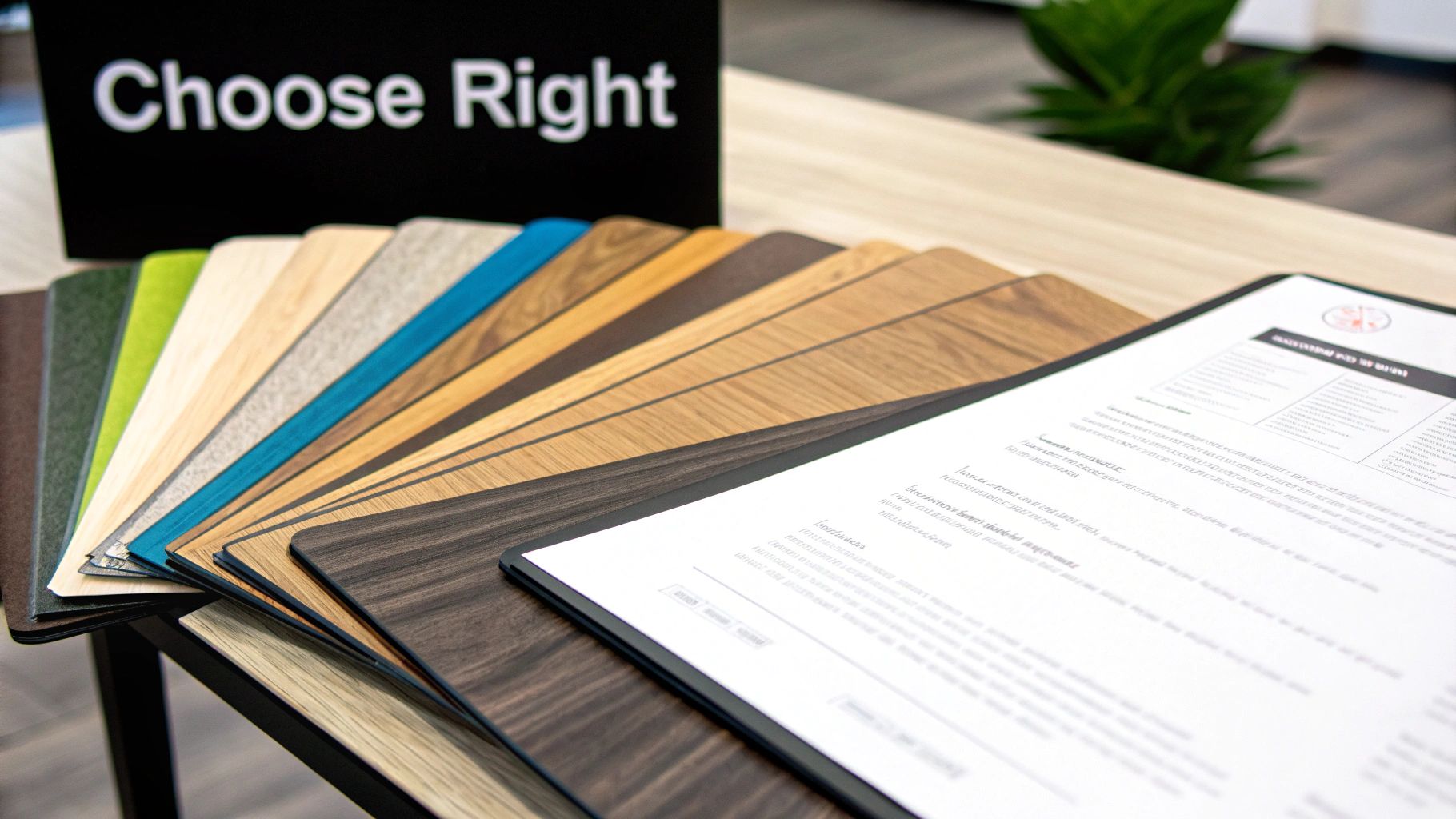
Alright, now that you know what to look for in certifications, you can walk into a showroom feeling confident. Picking the right low-VOC vinyl flooring goes beyond just finding the perfect color. It's really about matching the right material and installation method to your home and lifestyle. This is where we bring it all together: health, style, and real-world durability.
One of the first things you'll realize is that "vinyl flooring" covers a lot of ground. The two main players you’ll see are Luxury Vinyl Plank (LVP) and Stone Plastic Composite (SPC). They're both fantastic, modern options, but they have some key differences that make one a better fit than the other for certain parts of your house.
LVP vs. SPC: Which Low-VOC Vinyl is for You?
Think of LVP and SPC as two specialists on the same team. Both look incredible and pass low-emissions tests with flying colors, but what's on the inside—their core—is what truly sets them apart.
-
Luxury Vinyl Plank (LVP): LVP is built with a flexible vinyl core. This gives it a bit of softness and warmth underfoot, which can feel much more comfortable in places like living rooms or bedrooms where you’re often barefoot or sitting on the floor.
-
Stone Plastic Composite (SPC): SPC, on the other hand, has a rigid core made from a dense blend of limestone powder, PVC, and stabilizers. This construction makes it incredibly tough and stable, giving it a huge advantage against dents from heavy appliances or an accidentally dropped pan.
That rock-solid core makes SPC the clear winner for any area that takes a beating or sees a lot of moisture. For homes in Forsyth County, it’s the go-to choice for kitchens, bathrooms, laundry rooms, and basements where you need maximum durability and water resistance. While LVP is also water-resistant, SPC’s rigid structure provides better stability against temperature shifts and helps hide minor imperfections in the subfloor. If you want to dive deeper, our guide to luxury vinyl plank flooring reviews breaks down even more of the differences.
Here’s a simple rule of thumb: If the room is all about comfort and sees lighter traffic, LVP is a great fit. For the hardworking, high-traffic, or wet areas of your home, SPC is the smarter long-term investment.
The Overlooked Hero: Your Installation Method
The flooring material itself is only half the battle for clean indoor air. How it's installed is just as important. Older, traditional glue-down installations often rely on adhesives that can release a whole new set of VOCs into your home.
Luckily, today’s best low-VOC vinyl products are designed for a much cleaner install: the click-lock floating floor system. This clever engineering allows the planks to snap together tightly, creating a seamless floor that "floats" over your subfloor without needing globs of adhesive.
This method is not only faster and less messy, but it also virtually eliminates the risk of introducing VOCs from glues. When you're talking to an installer in Johns Creek or Milton, make sure you specifically ask about a floating floor installation to get the full air-quality benefit of your new floors.
This shift toward healthier materials is happening on a massive scale. The low-VOC vinyl flooring market is expected to grow from US$2,381 million in 2025 to US$4,629 million by 2031. That kind of growth is driven entirely by homeowners like you who are putting indoor air quality first.
Your Final Checklist Before Buying
You're almost at the finish line. Before you make the final call, just run through this quick mental checklist. It's the best way to be sure you've covered all your bases and are choosing a floor you'll be happy with for years.
- Confirm the Certifications: Don't just take our word for it. Ask to see the product’s technical sheet and look for the FloorScore or GREENGUARD Gold logo yourself.
- Match the Floor to the Room: SPC for the tough spots like kitchens and basements. LVP for cozy spaces like bedrooms and family rooms.
- Plan for a Floating Installation: Talk to your installer about using a click-lock system to avoid unnecessary adhesives.
- Request a Sample: Always take a sample plank home. See how the color looks in your home’s lighting throughout the day and give it a sniff to check for any strong initial odors.
By following these simple steps, you're doing more than just buying a new floor. You're making a smart, informed investment in your home's beauty, durability, and—most importantly—your family's health.
Installation Aftercare and Long-Term Maintenance
So, your beautiful new low VOC vinyl flooring is installed—congratulations! You’ve made a great choice for a healthier home. Now, let’s talk about what happens next to make sure you get the most out of your investment for years to come.
First up is a little process called "off-gassing."
Even with certified low VOC products, you might notice a faint "new floor" smell right after the installation is complete. This is totally normal. It’s just the last traces of manufacturing and packaging odors making their way out of the material. Think of it like airing out a new shirt before you wear it.
The good news? Because your floors release far fewer chemicals, this period is much shorter and less intense than with older types of vinyl. Most of this minimal off-gassing wraps up within the first 24 to 72 hours.
Speeding Up the Fresh-Air Process
The best way to handle that initial scent is simple: good old-fashioned ventilation. Fresh air is your best friend during this time.
Here are a few easy things you can do:
- Open the Windows: If you can, create a cross-breeze by opening windows on opposite sides of the room or house. This is the fastest way to circulate fresh air and whisk away any lingering odors.
- Use Fans: Turn on ceiling fans or set up a few box fans on a low setting. This keeps the air moving, especially in areas that don't get a great natural breeze.
- Let It Settle: If your schedule allows, give the floors a day or two to air out before moving all the furniture back in.
Taking these simple steps ensures that the brief off-gassing period is over before you know it, leaving you with nothing but clean, fresh air.
The goal of aftercare is simple: protect your investment and preserve your home's air quality. Proper ventilation at the start and gentle cleaning for the long term are the two pillars of success.
Protecting Your Floors and Your Air Quality
Long-term maintenance is all about locking in those health benefits. It would be a shame to install a low-VOC floor only to clean it with harsh, chemical-heavy products that put those same VOCs right back into your air. The secret is to use gentle, non-toxic cleaning methods that are safe for the floor's finish and your family.
For daily dirt and dust, a quick sweep with a soft broom or a vacuum (just make sure it’s on the hard floor setting) is all you’ll need. When it’s time for a deeper clean, a damp mop with a simple, pH-neutral cleaner does the trick perfectly. We've got more tips on this in our guide to keeping your vinyl floors looking brand new.
Choosing the right cleaner is key. You'll want to look for non-toxic floor cleaners, which often use plant-based ingredients that clean effectively without leaving behind a chemical residue. By pairing your beautiful new floor with a smart cleaning routine, you’re ensuring your Cumming or Johns Creek home stays healthy, your air stays clean, and your floors look fantastic for the long haul.
Comparing Flooring Types for a Healthy Home
When you're choosing new floors for your home in Cumming or Milton, it's about more than just finding the right color. It’s a decision that impacts your family’s health and the way you live every day. While low-VOC vinyl flooring hits a sweet spot for many homeowners, let's break down how it really compares to other popular options like hardwood, tile, and carpet.
Think of it this way: every flooring material has its own personality. What makes for a perfect, cozy bedroom floor might be a disaster in a busy, moisture-prone kitchen.
Low-VOC Vinyl vs. Traditional Hardwood
Everyone loves the classic look of hardwood, but it comes with a few strings attached. The wood itself is natural, of course, but the finishes, stains, and sealants are often loaded with VOCs. To keep your air clean, you'll need to hunt down special low-VOC or water-based finishes, which can definitely drive up the price.
Plus, hardwood is prone to scratches, dings, and water damage—not exactly ideal for kitchens, bathrooms, or basements in our Forsyth County homes. This is where modern low-VOC vinyl, especially the super-durable SPC core products, really shines. It gives you that gorgeous wood look but is 100% waterproof and built to handle real life.
Low-VOC Vinyl vs. Ceramic and Porcelain Tile
From a pure air quality standpoint, tile is a champion. It's an inert material, meaning it emits virtually zero VOCs. It's also incredibly tough and completely waterproof. But let's be honest—tile can be cold and hard underfoot, which isn't always comfortable for families. And don't forget the grout lines, which need constant sealing and scrubbing to keep them from getting grimy.
Low-VOC vinyl offers a much warmer and softer surface to walk on, and you can say goodbye to grout maintenance forever. Installation is also typically faster, cleaner, and less expensive than a tile job, making it a far more practical choice for many home updates.
Low-VOC Vinyl vs. Wall-to-Wall Carpet
Carpet feels great underfoot, but it's basically a giant trap for dust, pet dander, and allergens that can wreak havoc on your indoor air quality. The adhesives, padding, and chemical treatments used in many carpets can also off-gas VOCs for years. Even if you find a low-VOC carpet, it still demands frequent, deep cleanings to stay healthy.
This is a category where low-VOC vinyl is the clear winner for a healthy home. Its solid, non-porous surface is a breeze to clean and doesn't give allergens a place to hide. If you're passionate about creating a healthy space, it's also worth looking into other sustainable interior design materials to create a truly holistic environment.
This quick guide below shows a few simple but critical steps to take after installation to protect your floors and your air quality.
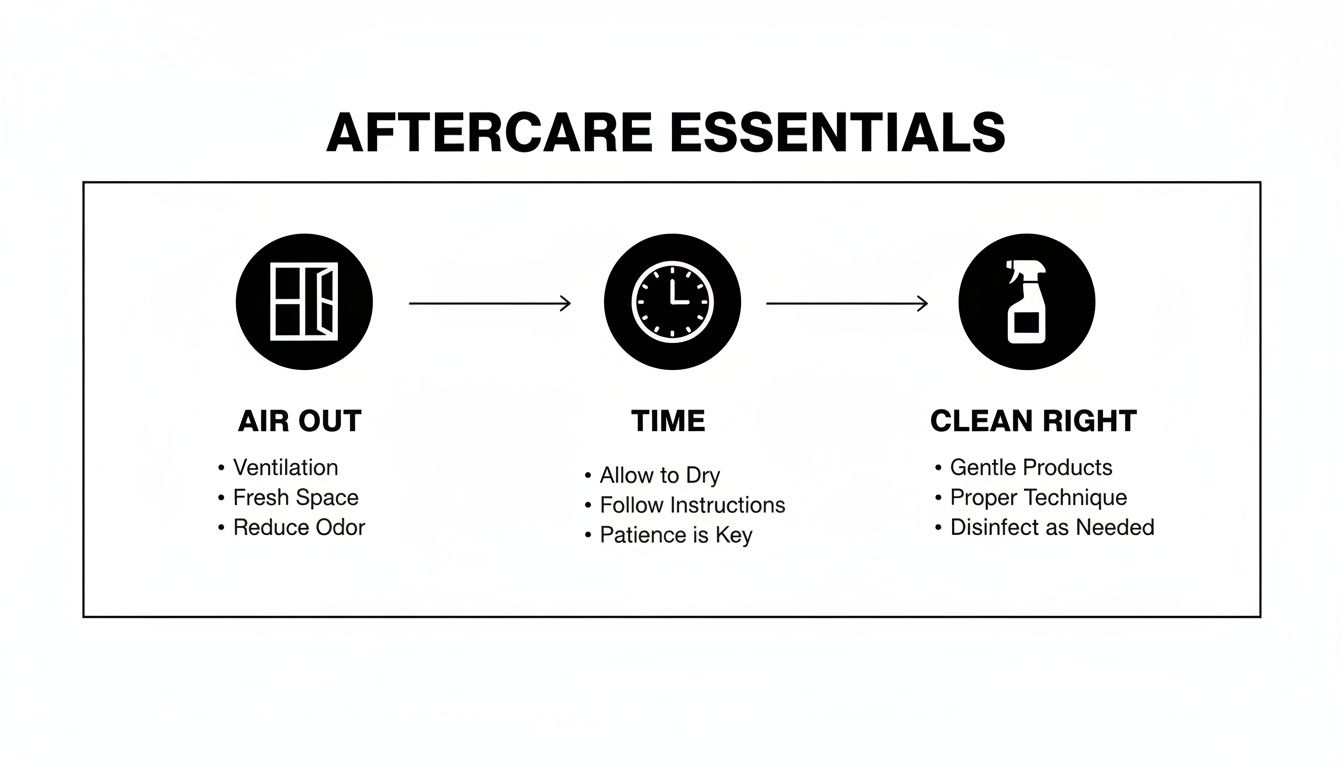
Making sure you properly air out the room, give everything time to settle, and use the right cleaning products are key to enjoying your new floors for years to come. For a deeper dive, you can explore a wide variety of https://flacksflooring.com/eco-friendly-flooring-options/.
Have More Questions? Let's Clear Things Up
Even after you've done your homework, it's natural to have a few last-minute questions before pulling the trigger on new floors. I hear these all the time from homeowners in Cumming and Forsyth County, so let's tackle the most common ones head-on.
Is All Luxury Vinyl Flooring Automatically Low VOC?
That’s a big "no," and it's a critical point to understand. Not all LVP is created equal. While the industry is definitely moving in the right direction, you can't assume a vinyl plank is healthy just because it's new.
Some standard vinyl products still use binders, plasticizers, and other chemicals that release a high level of VOCs. The only way to be sure is to look for those third-party certifications we talked about, like FloorScore or GREENGUARD. Think of them as the "proof" that a product meets strict air quality standards. Always check the box or ask your flooring specialist to confirm.
It's a bit like grocery shopping. Just because a package says "all-natural" doesn't guarantee it's healthy. Certifications are the nutritional labels for your flooring—they give you the real story.
How Long Does Low VOC Vinyl Flooring Need to Off-Gas?
Here’s the good news. The whole point of low VOC flooring is that the off-gassing period is drastically shorter and less intense. Since there are far fewer volatile compounds to begin with, most of the minimal release happens within the first 24 to 72 hours after it's installed.
To speed things along and give yourself peace of mind, just open the windows and get some fresh air circulating during and after the installation. Any faint "new floor smell" should be gone in a flash, leaving you with nothing but clean air.
Does "Waterproof" Mean the Same Thing as "Low VOC"?
This is a really common mix-up, but the two terms describe completely different features. It's important not to use them interchangeably.
- Waterproof is all about performance. It means the flooring itself won't get damaged by water, which is why it's a fantastic choice for basements, kitchens, and bathrooms.
- Low VOC is all about health. It refers to the chemical makeup of the floor and its minimal impact on your home's indoor air quality.
Now, many top-tier waterproof vinyl floors are also low VOC, but one doesn't guarantee the other. If you need both for your home in Johns Creek or Milton—and most people do—make sure you verify each feature separately on the product spec sheet.
Ready to find a floor that’s as healthy as it is beautiful? The experts at Flacks Flooring can walk you through our huge collection of certified low VOC vinyl options. Stop by our Cumming showroom or schedule a consultation today to find the perfect foundation for your home.