
If you're looking for that high-end hardwood or stone look without the sticker shock or the high-maintenance headaches, luxury vinyl flooring is your answer. It's a tough, waterproof, and incredibly versatile flooring that's perfect for the real-life chaos of busy homes, especially in places like kitchens, basements, and bathrooms.
Why North Atlanta Homes Are Embracing Luxury Vinyl
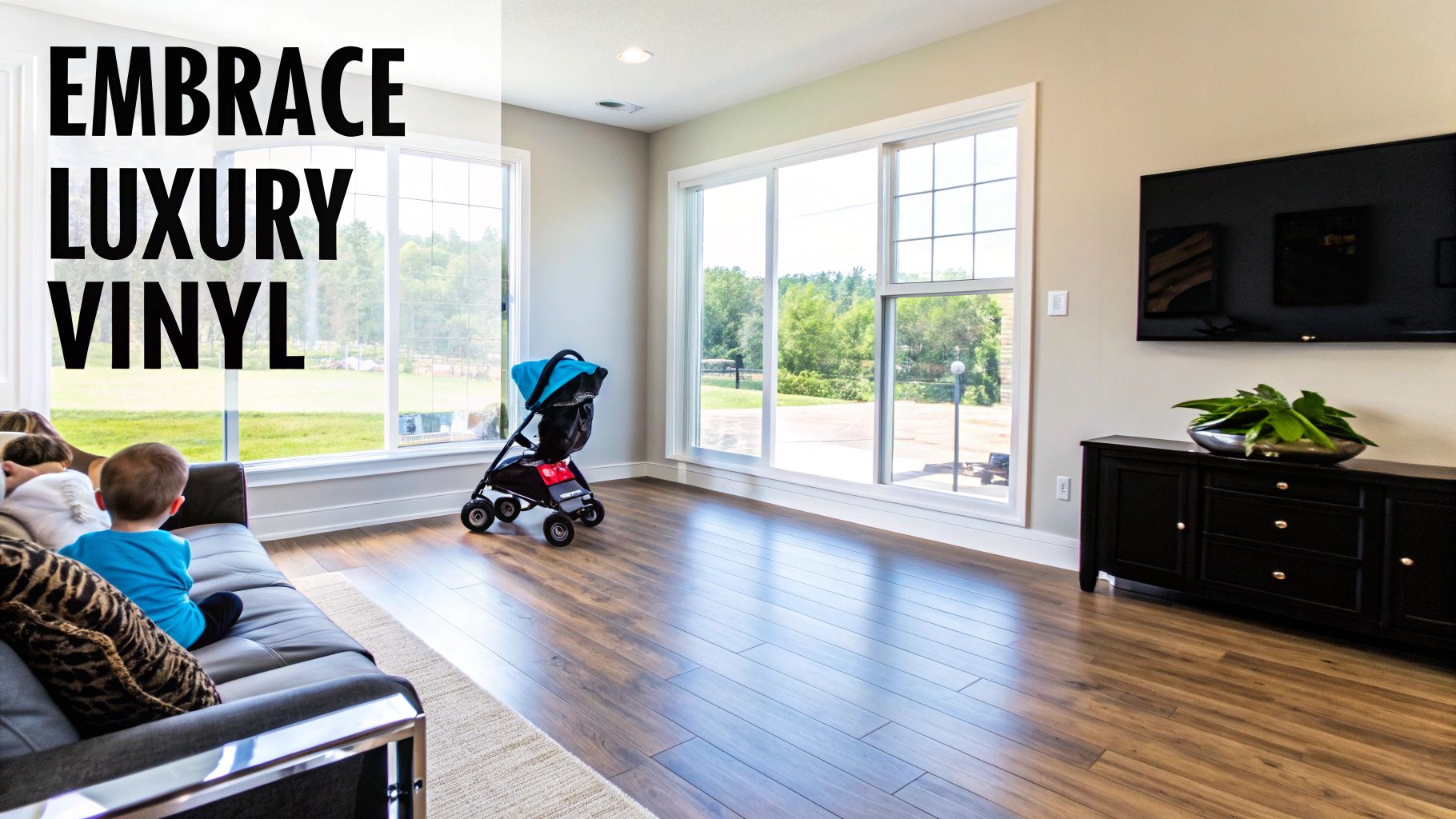
From the family-centric neighborhoods of Cumming and Milton to the vibrant communities in Johns Creek, homeowners want floors that look amazing but can also handle real life. Luxury vinyl has quickly become the top choice because it perfectly balances sophisticated style with day-to-day practicality—a must for the modern North Georgia lifestyle.
This is a floor built for spilled sweet tea, muddy paws after a rainy walk at Fowler Park, and the constant pitter-patter of a growing family.
Think of it as the ultimate chameleon for your home's design. It can flawlessly mimic the warm, rustic grain of aged oak or the cool, elegant veins of Carrara marble, all while having a core built to withstand just about anything you throw at it. That unique combination makes it a genuinely smart investment for any home around here.
The Modern Homeowner's Choice
For a long time, the choice seemed to be between the classic beauty of hardwood and the rugged durability of tile. Luxury vinyl completely changed the game, bridging that gap by offering the best of both worlds without the usual downsides. It's no surprise that it's a favorite for new builds and remodels all over Forsyth County.
Here’s a quick rundown of why your neighbors are choosing it:
- Worry-Free Waterproofing: This is a big one. Unlike hardwood that swells and warps, luxury vinyl is 100% waterproof. That makes it a no-brainer for damp basements, splash-prone bathrooms, and laundry rooms.
- Unmatched Durability: A tough, transparent top coat called the "wear layer" acts like a shield, fending off scratches, scuffs, and stains. It's a surface that can handle kids, pets, and furniture being dragged around without looking beat up.
- Aesthetic Versatility: The printing technology today is just incredible. You can get stunningly realistic visuals, whether you're dreaming of a farmhouse-chic wide plank or a sleek, modern stone tile. There’s a style for every vision.
In the real estate world, you can't overstate the appeal of updated, low-maintenance flooring. Homes with modern, durable surfaces like luxury vinyl just feel more "move-in ready," which is a huge draw for potential buyers and can definitely support a higher asking price.
When you combine the benefits of luxury vinyl with powerful marketing tactics like virtual staging for real estate, you create a powerful formula for selling a home faster. This guide will walk you through everything you need to know—from the different types of luxury vinyl to budgeting and finding a great local installer right here in the Cumming area.
What Is Luxury Vinyl Flooring, Really?
To get why luxury vinyl flooring performs so well, you have to look past the beautiful surface. It’s not just one single material. Think of it more like a high-tech floor sandwich, with each layer engineered for a specific job—strength, beauty, and a long life. This layered construction is the secret sauce to its incredible performance.
The very top layer is the wear layer. This clear, tough, urethane-based coating is the floor's invisible bodyguard. It's the first line of defense against everything life throws at it, from your dog's claws and dragged dining chairs to that spilled glass of red wine. The thickness of this layer, measured in mils (a thousandth of an inch), is probably the single biggest factor in how well your floor will hold up over the years.
Right below that bodyguard is the design layer, and this is where the visual magic happens. It’s a super high-resolution 3D photograph that gives the floor its incredibly realistic look. Modern printing is so good that this layer can mimic the deep grains of an old oak plank, the warm hues of walnut, or the subtle, elegant veins of a marble slab. The quality here is what makes your friends do a double-take, genuinely wondering if it's the real thing.
The Core of the Matter
The real muscle of the plank, though, is its core layer. This is the thickest, most important part of the whole structure. It provides the stability and rigidity, and most importantly, it's what makes the floor waterproof. What this core is made of is what separates the different types of luxury vinyl, something we'll get into next. It’s the powerhouse that stops planks from bending, swelling, or buckling, even in a damp Forsyth County basement or a steamy bathroom.
Last but not least, you have the backing layer at the very bottom. This foundation adds more stability and even helps with sound insulation. On a lot of premium floors, this layer is actually an attached underlayment—often made of cork or foam. This little extra makes the floor more comfortable to walk on and dampens noise, a real bonus in a busy, two-story house.
"Understanding the layers is everything. This isn't just a sheet of printed vinyl; it's an engineered flooring system. Every single component has a job, and they all work together to give you a waterproof, durable, and beautiful floor that simply outperforms the old stuff."
Plank vs. Tile: What's the Difference?
As you shop for luxury vinyl, you'll hear "LVP" and "LVT" thrown around constantly. The difference is really simple and boils down to shape and style.
-
Luxury Vinyl Plank (LVP) is made to look just like natural hardwood. It comes in the familiar long, rectangular planks you'd expect from a wood floor, with all sorts of different widths and lengths. If you want that classic wood floor look for your Johns Creek home, whether it’s rustic farmhouse or timeless traditional, LVP is what you’re looking for.
-
Luxury Vinyl Tile (LVT) is designed to look like stone, ceramic, or porcelain tile. These come in square or rectangular tile shapes. LVT is a fantastic way to get the clean, high-end look of a slate or marble floor in your kitchen or bathroom, but without the cold, hard feel underfoot or the hassle of cleaning grout lines.
At the end of the day, LVP and LVT are built with the exact same tough, multi-layered construction. The choice between them is purely about the look you're trying to create in your space.
Choosing Your Perfect Luxury Vinyl Floor Type
Okay, so you've decided on luxury vinyl. Great choice. But now comes the real decision: which type? It’s not just about picking a color that looks like wood (LVP) or stone (LVT). The most important part is actually hidden inside the plank—the core.
Think of the core as the chassis of a car. It determines how the floor handles daily life, how stable it is, and even how it feels to walk on. For most folks here in Forsyth County, the choice boils down to two main players: SPC and WPC.
This quick guide can help you start with the visuals—do you prefer the classic look of wood planks or the elegance of stone tiles?
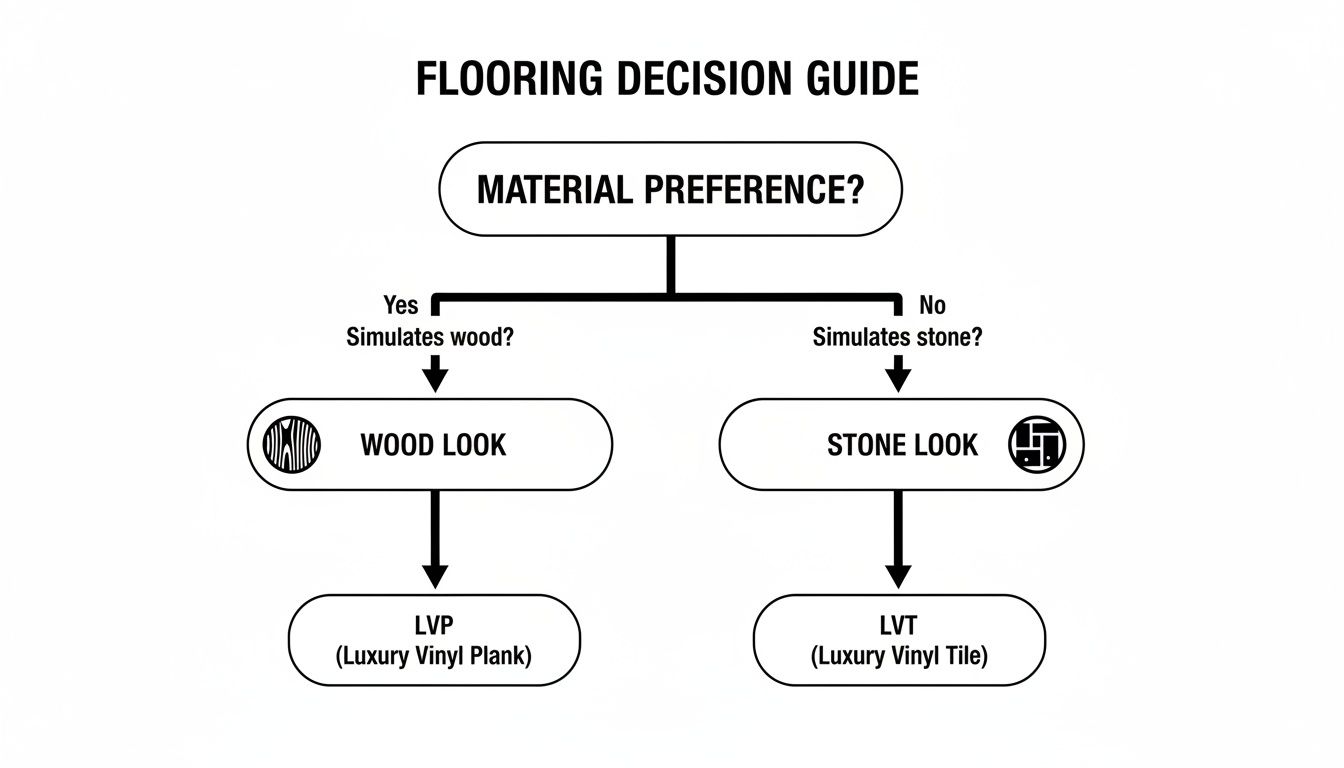
Ultimately, choosing between LVP and LVT is all about your personal style. The real performance comes from the construction underneath that pretty surface.
SPC: The Indestructible Core
If you need a floor that can take a beating, you’re looking for SPC (Stone Polymer Composite). Imagine a dense, rigid core made from a tough blend of natural limestone powder, PVC, and stabilizers. The result is a plank that is incredibly strong and stable.
Because it's so dense, SPC is the champ when it comes to resisting dents and impacts. If you’re picturing dropped pans in the kitchen, heavy furniture legs in the living room, or the constant foot traffic in a busy Cumming entryway, SPC is your go-to. Its rigidity is also a huge plus because it can hide minor imperfections in your subfloor, which saves a lot of headache.
SPC’s strength is its unyielding density. It’s what we recommend for commercial spaces and the most demanding areas of a home because it trades a little bit of softness for maximum toughness.
The market backs this up. Rigid core flooring, which includes both SPC and WPC, now accounts for a massive 64.64% of total industry revenue. People are clearly choosing performance, and it's easy to see why.
WPC: Comfort Meets Durability
Now, let's talk about WPC (Wood Polymer Composite). If SPC is the tough-as-nails work boot, WPC is the cushioned running shoe. It’s still a rigid core, but it’s made with a foaming agent that makes it thicker, lighter, and less dense than its stony cousin.
That difference is something you can actually feel. WPC is noticeably softer and warmer underfoot, and its extra thickness helps dampen sound, which is a nice bonus for a quieter, more peaceful home. We often suggest WPC for places where you stand a lot, like kitchens, or rooms where you want a cozier vibe, like bedrooms and family rooms.
The trade-off? That comfortable feel means it’s slightly less dense than SPC, so it can be a bit more prone to dents from a heavy, sharp impact.
The Glue-Down LVP/LVT Option
While SPC and WPC are "floating floors" that click together, there’s one more classic option to consider: glue-down LVT/LVP. This type of vinyl is much thinner and more flexible because it doesn't have a rigid core. Just like the name says, every single plank or tile is glued directly to the subfloor with a strong adhesive.
This method creates an exceptionally stable floor, which is why you see it in huge commercial buildings. The catch? Your subfloor has to be perfectly flat and smooth, because any little bump or dip will eventually show through the thinner vinyl. For most homes in Johns Creek or Milton, the convenience and forgiving nature of a rigid core SPC or WPC floor just make more sense.
To help you visualize the differences, here’s a simple breakdown of how these three options stack up against each other.
Comparing SPC, WPC, and Glue-Down Luxury Vinyl
This table compares the key features of the three main types of luxury vinyl flooring, helping you choose the best fit for your home's needs and lifestyle.
| Feature | SPC (Stone Polymer Composite) | WPC (Wood Polymer Composite) | Glue-Down LVT/LVP |
|---|---|---|---|
| Core Material | Dense, rigid limestone composite | Lighter, thicker wood-plastic composite | No rigid core; flexible PVC |
| Feel Underfoot | Very firm and sturdy | Softer, quieter, and warmer | Firm; feel is tied to the subfloor |
| Dent Resistance | Excellent—the most durable option | Good—but softer than SPC | Good—but can telegraph subfloor issues |
| Installation | Click-lock floating system | Click-lock floating system | Full-spread adhesive |
| Subfloor Needs | Can hide minor imperfections | Can hide minor imperfections | Requires a perfectly smooth subfloor |
| Best For | High-traffic areas, commercial spaces, homes with pets/kids | Bedrooms, family rooms, areas where comfort is key | Large commercial projects, areas with very heavy rolling loads |
Understanding these core differences is the key to picking a floor that doesn't just look amazing on day one but also holds up to your family's life for years to come. To see how top manufacturers put these technologies to use, check out our guide on the best luxury vinyl flooring brands to find the perfect product for your home.
The Real Pros and Cons of Luxury Vinyl
Every flooring option has its ups and downs, and luxury vinyl is no different. To make the best call for your home here in North Georgia, you need the straight scoop—no fluff. Let's dig into what makes this flooring a fantastic choice for so many, and also where it has its limits.
Getting a handle on these trade-offs is crucial. It’s what ensures the floor you pick not only looks incredible the day it's installed but also stands up to your family's real life for years to come.
The Clear Advantages of Luxury Vinyl
There's a reason luxury vinyl's popularity has exploded in neighborhoods from Cumming to Milton. Its combination of good looks and sheer practicality is tough to beat.
Here’s what really makes it shine:
- Completely Waterproof Performance: This is the big one. Unlike real hardwood that can cup and warp with moisture, luxury vinyl is 100% waterproof. That makes it a no-brainer for kitchens, bathrooms, laundry rooms, and basements—all those places prone to spills, splashes, and Georgia's humidity.
- Impressive Durability: Life happens, especially with kids and pets tearing through the house. Luxury vinyl is built for the chaos. Its tough top wear layer is designed to fend off scratches from dog claws, scuffs from dragged chairs, and stains from spilled juice, keeping your floors looking great.
- Effortless Maintenance: Forget about special waxes or polishes. Keeping these floors clean is refreshingly simple. A quick sweep or vacuum and an occasional pass with a damp mop and a pH-neutral cleaner is all it takes.
- Endless Design Options: The printing technology today is just incredible. You can get the gorgeous, authentic look of wide-plank oak, rustic barnwood, or even elegant marble without the high cost and constant upkeep of the real thing.
"For homeowners in our area, the peace of mind that comes with a waterproof floor cannot be overstated. It removes so much daily stress, knowing that a spilled drink or a pet accident won't ruin your investment."
It’s no surprise that practical, stylish flooring is in high demand. With U.S. housing completions hitting over 1,526,000 annually, the blend of affordability and toughness makes luxury vinyl a go-to choice, especially during remodeling booms. You have major players like Shaw and Mohawk right in our backyard, constantly pushing the technology forward. For a deeper dive into market trends, check out this detailed industry analysis on GrandviewResearch.com.
Understanding the Potential Drawbacks
As great as luxury vinyl is, it isn't perfect for every single situation. Being aware of its limitations helps you set the right expectations and make sure it’s truly the best fit for your home.
- Susceptibility to Fading: If you have a room with big, beautiful windows that get blasted with intense sunlight all day, know that luxury vinyl can fade over time. It’s a good idea to use curtains, blinds, or UV-protective window film to protect your investment.
- Cannot Be Refinished: This is a key difference from solid hardwood. You can’t sand down and re-stain luxury vinyl to erase deep scratches or wear. The good news is that if a single plank gets severely damaged, it’s usually a pretty simple job to pop it out and replace it.
- Subfloor Preparation is Critical: I can't stress this enough. For a successful installation, luxury vinyl needs to go over a subfloor that is flat, smooth, and clean. Any major bumps or dips can mess with how the planks lock together, eventually causing gaps or a hollow feel underfoot. Professional subfloor prep is absolutely essential for a floor that lasts.
How to Budget for Your New Flooring Project
Let's talk numbers. Nailing down a realistic budget is probably the most crucial first step you can take. If you get this right, the rest of your flooring project will be a whole lot smoother.
A classic mistake I see homeowners make is getting laser-focused on the price per square foot of the vinyl itself. But that's only one piece of the puzzle. The true, all-in cost includes several moving parts that all have to come together to give you that gorgeous, durable floor you're dreaming of.
Think of it like buying a car—the sticker price is just the starting point. You still have to factor in taxes, dealer fees, and maybe an extended warranty to get the real bottom line. Flooring is no different.
Breaking Down the Material Costs
The luxury vinyl planks or tiles themselves will be the biggest line item, and the prices can swing quite a bit depending on what you choose.
Here's what drives the cost:
- Brand and Quality: Just like anything else, top-tier brands with cutting-edge features—like super tough wear layers or built-in acoustic pads—will cost more than a builder-grade option.
- Thickness and Wear Layer: A beefier plank (say, 8mm vs. 5mm) and a thicker protective wear layer (a commercial-grade 20 mil vs. a residential 12 mil) adds to the price but pays you back in durability.
- Style and Finish: If you fall in love with a unique, high-definition wood grain or a special embossed texture that feels just like real stone, expect it to command a slightly higher price.
For most quality luxury vinyl floors that we see going into homes around Cumming and Johns Creek, a good budget for the material alone is between $3.50 to $7.00 per square foot.
Factoring in Labor and Installation
Unless you're a hardcore DIYer with a lot of experience, professional installation is an investment that truly pays for itself. A pro install not only looks perfect but also protects your warranty and ensures the floor performs beautifully for years.
The labor cost isn't just for laying the planks. It covers a few critical stages.
A great installer does more than just lay planks. They ensure the foundation of your floor—the subfloor—is perfectly prepared, which is the most critical step for a lasting installation.
Proper subfloor prep is completely non-negotiable. If your concrete or plywood isn't perfectly flat, installers will need to either grind down high spots or pour a self-leveling compound to fill in the dips. This is essential work and will factor into the labor cost.
You'll also need to budget for tearing out and hauling away your old flooring, whether it's shag carpet, cracked tile, or worn-out hardwood. And finally, the finishing touches—like new baseboards or quarter-round molding and the transition pieces between rooms—are what make the job look complete.
For a much more detailed breakdown, our guide on the cost to install vinyl flooring gets into the specifics of what you can expect for professional work right here in our area.
While your new floors are the star of the show, they're often just one part of a bigger update. For a broader perspective, this article on planning your home renovation has some great advice on budgeting for the whole shebang.
When you add it all up—materials, prep, and professional installation—the total project cost for a luxury vinyl floor in North Georgia typically lands somewhere between $6.00 and $12.00 per square foot.
Finding a Trusted Flooring Installer in North Georgia
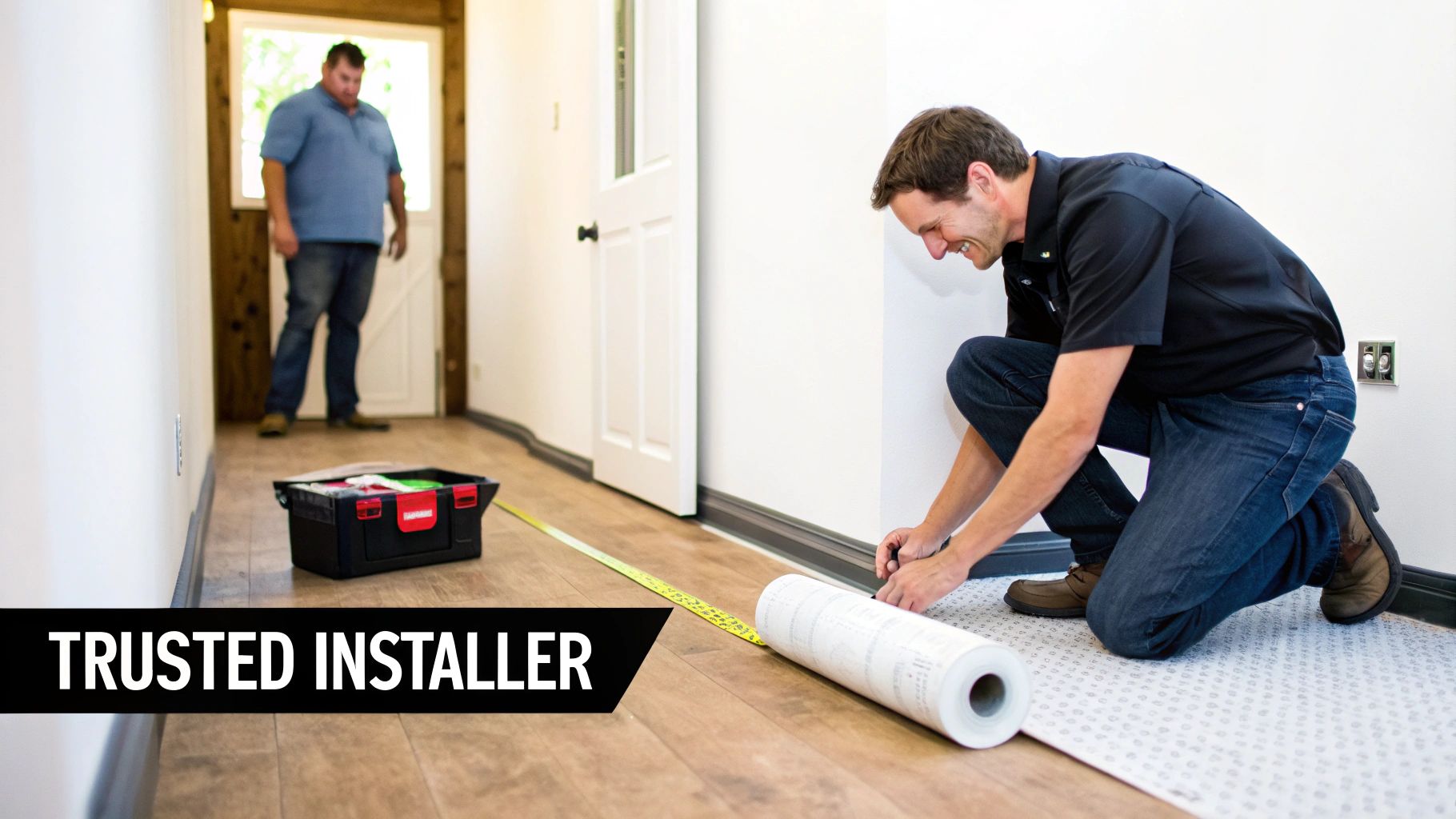
Here's the truth about any flooring project: your beautiful new luxury vinyl is only as good as the hands that install it. You could choose the most stunning, durable planks on the market, but a rushed or incorrect installation can ruin the entire investment.
This is why finding a true craftsperson in the Cumming, Johns Creek, or Milton area isn't just a suggestion—it's the most critical step you'll take. A poor installation shows up in frustrating ways down the road. You might see planks separating and creating ugly gaps. You might hear hollow sounds or feel a slight bounce underfoot, both telltale signs of an uneven subfloor that was never addressed.
These problems aren't just an annoyance. They can actually void your manufacturer’s warranty, leaving you with a failed floor and no recourse. You’re not just hiring someone to lay down planks; you’re entrusting them with the foundation of your home's look and feel.
Starting Your Search for a Local Pro
So, where do you find the right team? Start right here in your own community. Word-of-mouth is still king when it comes to finding reliable trade professionals in North Georgia.
- Ask Neighbors and Friends: See a floor you love in a friend's house? Ask who did the work. A direct referral from someone you trust is gold.
- Check Online Reviews: Dive into Google and other local review sites. Don’t just look at the star rating; read the actual comments. You're looking for recurring themes like professionalism, punctuality, and how they solved problems when things didn't go as planned.
- Verify Credentials: Any legitimate business will readily provide proof of liability insurance. This is non-negotiable, as it protects you and your home from accidental damage during the job.
Crucial Questions to Ask Every Installer
Once you’ve narrowed your list down to a few names, it’s time for a quick interview. Think of it as a job interview for your home—you want the most qualified candidate. Their answers will tell you everything you need to know about their experience and commitment to quality.
A true pro will appreciate your detailed questions; it shows you care about doing things the right way.
A great installer knows their reputation is built on what's underneath. They take pride in meticulous subfloor prep, not just in how fast they can click the planks together. That's the work that makes a floor last.
Here’s what you absolutely need to ask:
- What’s your specific experience with luxury vinyl?
- How many LVP jobs do you handle each month? Can I see photos of your work in the area?
- How do you handle subfloor preparation?
- This is the most important question. A good answer will involve checking for flatness, grinding down high spots, and using a self-leveling compound for low spots. If they brush this off, they aren't the installer for you.
- Do you guarantee your workmanship?
- The flooring itself has a warranty, but what about the labor? A one-year workmanship warranty is the industry standard for reputable installers.
- How do you handle moving furniture and tearing out the old floor?
- Get clarity on whether these services are built into the quote or are extra line items. This helps you avoid surprise costs later.
Taking the time to find the right installation team is the final, crucial step in making your vision a reality. If you're looking for guidance, our team at the waterproof luxury vinyl flooring store in Cumming can always help connect you with skilled, vetted installers we trust.
Got Questions About Luxury Vinyl Floors? We've Got Answers.
As you get closer to making a decision, you probably have a few specific questions bubbling up. That's a good thing. Getting straight answers is the best way to feel 100% confident you're making the right choice for your home. We've put together the most common questions we hear from homeowners in Cumming, Johns Creek, and all over the area.
Think of this as the practical, real-world guide to what it's actually like to live with these floors day-in and day-out.
Can I Install Luxury Vinyl Floor Over My Existing Tile?
Good news—in many cases, you absolutely can. If your current ceramic or porcelain tile floor is in good shape (meaning it's level, stable, with no cracks), a rigid core luxury vinyl can often be installed right on top. This is a game-changer, saving you the mess, time, and cost of a full demolition.
But there's a big "if" here. The existing tile has to be a solid foundation. If you have cracked or loose tiles, or if the grout lines are super deep and wide, that's a no-go. An uneven surface will cause problems down the road. In those situations, your installer will need to fill in the grout lines or use a leveling compound to create a perfectly flat surface before the new floor goes down.
Don't ever let someone talk you into laying a floating floor over an uneven surface. It puts constant stress on the locking system of the planks, leading to gaps, squeaks, and eventually, broken joints. Solid prep work is the one step you can't afford to skip.
How Do I Clean and Maintain My New Floors?
This is one of the best parts about choosing luxury vinyl: it’s incredibly easy to care for. For everyday dust and crumbs, a quick sweep with a soft broom or a vacuum is all it takes. Just make sure to use the hard floor setting without the spinning beater bar, which can scratch the surface.
When it's time for a more thorough cleaning to get rid of footprints or spills, a simple microfiber mop will be your go-to tool.
- Stick to the Right Cleaner: Always use a pH-neutral vinyl floor cleaner. Avoid harsh chemicals, abrasive scrubs, or waxy polishes—they can dull the finish and damage the protective wear layer over time.
- Don't Drown It: LVP is waterproof, but you should still use a damp mop, not one that's soaking wet. Too much water can find its way into places it shouldn't.
- No Steam Mops, Ever: The high heat from a steam mop can warp the vinyl and even weaken the adhesive on certain types of LVP. It's best to avoid them entirely.
A little prevention goes a long way, too. Wipe up spills when they happen and put some felt pads on the feet of your heavy furniture. Do that, and your floors will look fantastic for years to come.
Will Luxury Vinyl Improve My Home's Resale Value?
Without a doubt. In hot real estate markets like Milton and Forsyth County, buyers are looking for homes that are modern and move-in ready. Pulling out dated, worn-out carpet and replacing it with a beautiful, high-quality luxury vinyl that has the look of real hardwood is one of the smartest updates you can make.
Today's homebuyers want both style and practicality. The fact that LVP is waterproof, scratch-resistant, and tough as nails is a huge selling point, especially for kitchens, bathrooms, laundry rooms, and basements. It tells a buyer that the home has been thoughtfully updated and will be easy to maintain—and that often translates to a better offer and a quicker sale.
Ready to find the perfect luxury vinyl floor for your home? The team at Flacks Flooring is here to guide you through every step, from selecting the right style to ensuring a flawless installation. Explore our beautiful collections online or visit our Cumming showroom today at https://flacksflooring.com.