
When you start digging into luxury vinyl plank flooring reviews, you quickly realize what all the fuss is about. This isn't your grandma's old sheet vinyl. LVP manages to capture the beautiful, timeless look of real hardwood but packages it with serious durability and water resistance that wood just can't match. It’s a multi-layered marvel built for the chaos of modern life, which is why it's become such a go-to for so many homeowners.
What Is Luxury Vinyl Plank Flooring
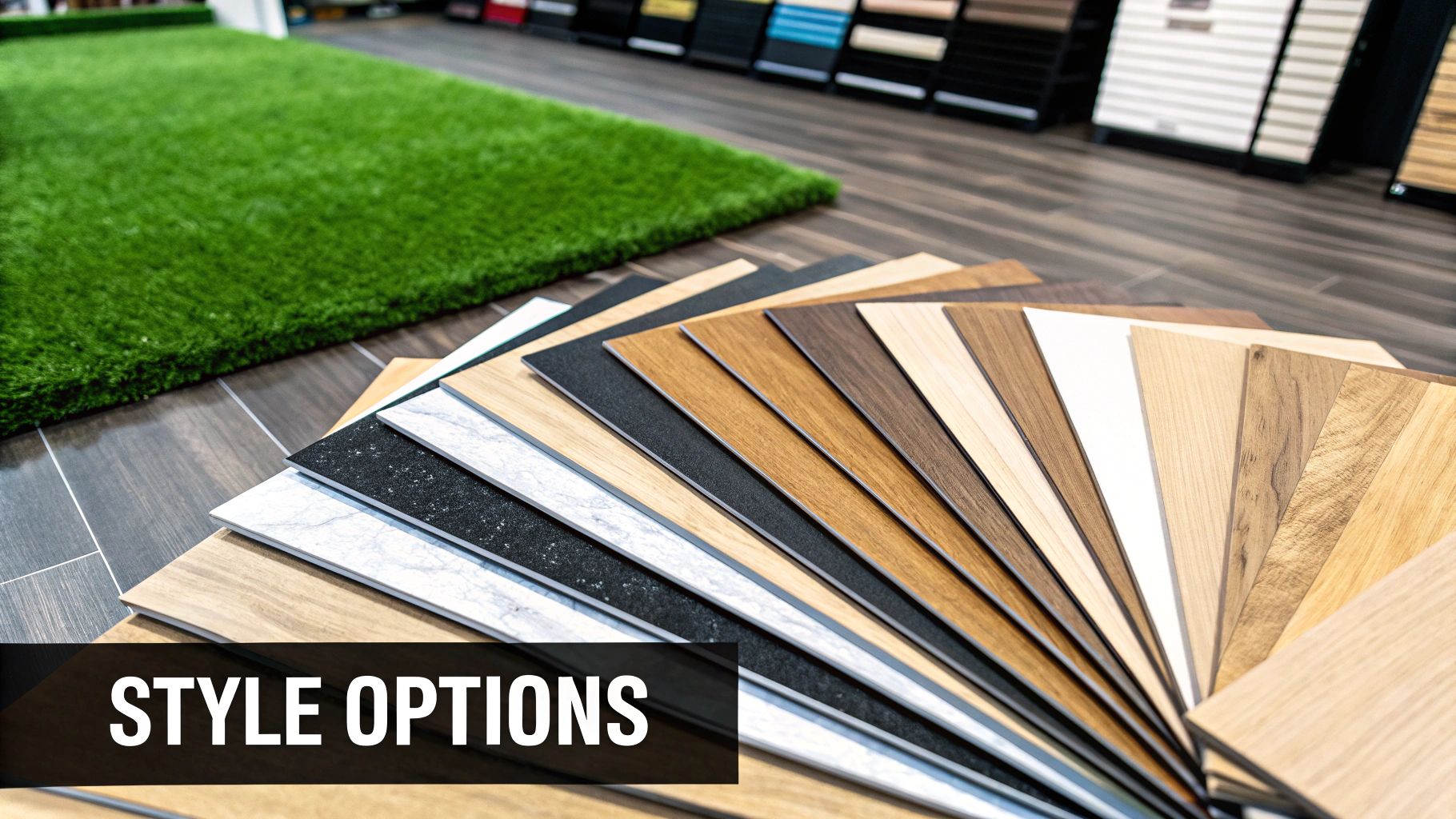
Luxury vinyl plank, or LVP, has completely changed the flooring game. It comes in individual planks, just like real wood, and is engineered with several distinct layers. This construction creates a rigid, incredibly stable plank that is so visually convincing it can fool even a discerning eye. It’s this thoughtful engineering that makes LVP a top contender for just about any room.
You just have to look at the numbers to see how popular it's become. The global vinyl flooring market was recently valued at a staggering $25.37 billion and shows no signs of slowing down. People are choosing LVP because it delivers that high-end look without the high-maintenance headaches of natural materials. You can get more details on these market trends on scharm.com.
Core Layers and Construction
To really get why LVP performs so well, you have to look at how it's made. Every single plank is a sandwich of different materials, each with a specific job.
- Wear Layer: This is the invisible shield. It's a clear top coat that takes the brunt of daily life, fighting off scratches, spills, and scuffs. The thickness of this layer, measured in mils, is your best indicator of how tough the floor will be.
- Design Layer: Right underneath the wear layer sits a highly detailed, 3D-printed image. This is what gives the plank its realistic wood grain, texture, and color. The quality of this layer is what separates cheap vinyl from premium LVP.
- Core Layer: This is the backbone of the plank. It provides the rigidity and, most importantly, the water resistance. The core is usually a Wood Plastic Composite (WPC) or a Stone Plastic Composite (SPC), with SPC being the denser and more durable of the two.
- Backing Layer: The foundation of the plank provides extra stability. Many LVP products now come with a pre-attached underlayment or pad on this layer, which helps with sound dampening and makes it more comfortable to walk on.
Key Differences from Other Flooring
It’s easy to get LVP confused with other options like laminate or hardwood, but they are fundamentally different materials. Knowing the pros and cons of each helps you make the right call for your home. While LVP is celebrated for being tough and easy to care for, comparing its upkeep to something like wood really puts its benefits into perspective. If you want a reminder of what goes into cleaning and maintaining traditional hardwood floors, you'll appreciate LVP even more.
The LVP Advantage: The biggest win for LVP is that it's completely waterproof, not just water-resistant. This means you can confidently install it in kitchens, bathrooms, and basements where real wood would be a disaster. It also handles scratches from pet claws and the wear and tear of a busy family far better than most hardwoods.
How We Evaluate LVP Flooring
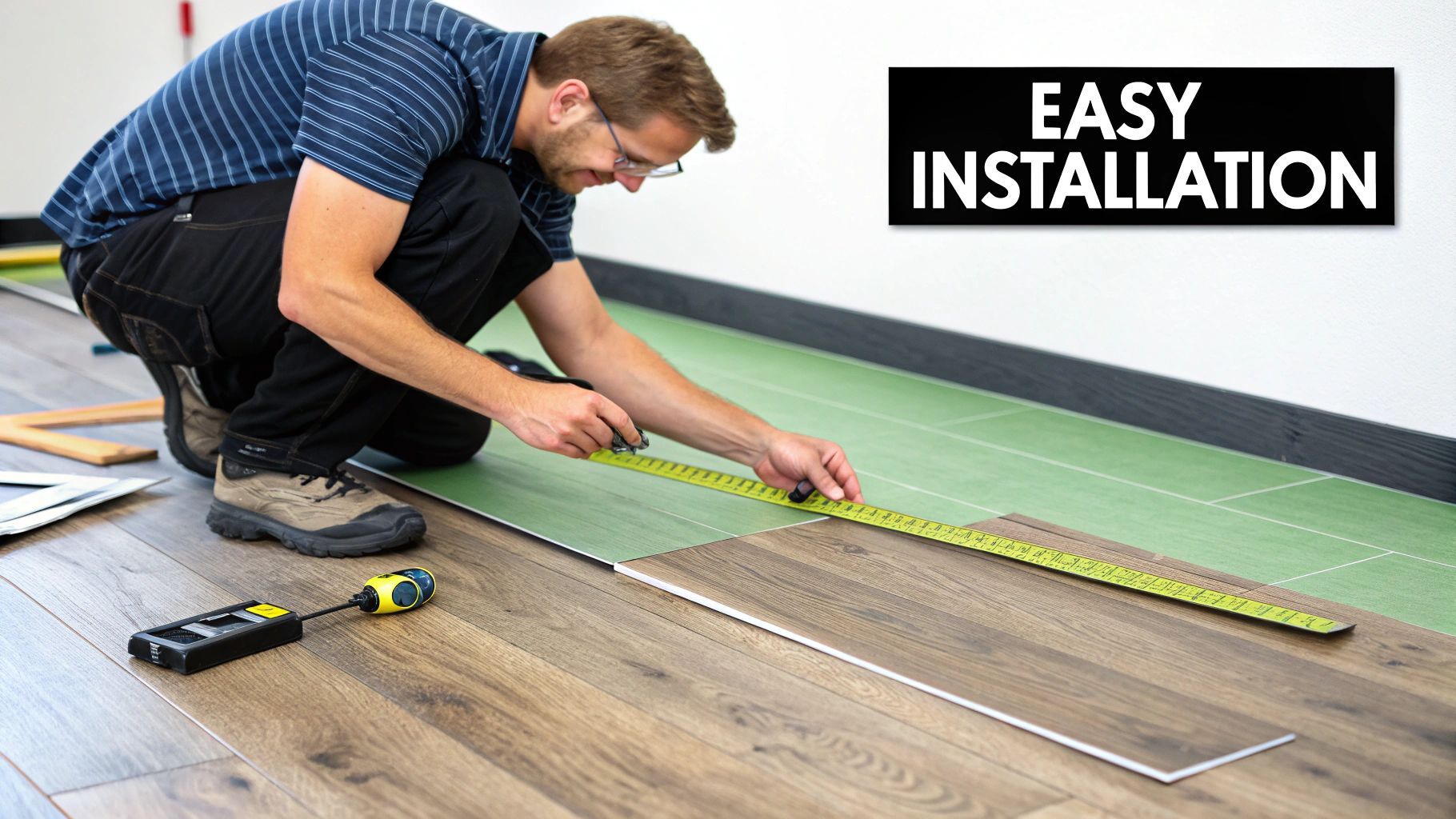
To give you fair and truly useful reviews of luxury vinyl plank, we have to look past the marketing hype. Not all LVP is created equal, so we've developed a consistent framework to cut through the noise. This system lets us focus on what really matters for your home.
We use this framework to put every product on a level playing field. It helps us answer the critical questions you're probably asking: Will this floor survive my chaotic kitchen? How realistic will it look in a bright, sunny room? Our goal is to give you the confidence to pick a floor that’s a perfect match for your life.
The Critical Wear Layer
If there's one thing that defines a plank's toughness, it's the wear layer. This invisible top coat is your floor's shield against everything—scratches, stains, scuffs, you name it. We measure its thickness in mils (which is just one-thousandth of an inch), and when it comes to durability, thicker is almost always better.
- 12 mil Wear Layer: Think of this as the entry point for residential flooring. It’s perfectly fine for a bedroom or a guest room, but not what you want in your main living areas.
- 20 mil Wear Layer: This is the gold standard for most homes. We consider a 20 mil wear layer the sweet spot for handling busy households with kids, pets, and active entryways. It’s tough enough for light commercial use, so it can definitely handle your family.
- 30 mil Wear Layer: This is heavy-duty stuff, built for commercial spaces like retail stores. While it offers incredible protection, it's usually overkill (and more expensive) for a typical home.
A robust wear layer directly translates to a longer-lasting floor, making it a non-negotiable part of our evaluations.
Core Construction: WPC vs. SPC
Underneath the pretty surface is the core, the part that gives the plank its strength and makes it waterproof. You'll mainly see two types: Wood Plastic Composite (WPC) and Stone Plastic Composite (SPC). They have different feels and are suited for different spaces.
WPC cores blend wood pulp with foaming agents, which makes the planks feel a bit softer and warmer underfoot. This composition is also great at absorbing sound, so if you're installing on a second story or just want a quieter home, WPC is a fantastic choice.
SPC, on the other hand, is built with a limestone composite core. This makes the planks incredibly dense and rigid, giving them superior protection against dents from dropped pots or heavy furniture.
Our Takeaway: If you need maximum durability for a kitchen, mudroom, or home gym, SPC is the undisputed champion. But for a cozier, quieter feel in a living room or bedroom, you can't go wrong with a quality WPC floor.
Visual Realism and Texture
The best LVP flooring does an incredible job of mimicking real wood. To judge how convincing it is, we look at two things. First is high-definition printing, which creates the rich, detailed grain patterns that keep the floor from looking fake and repetitive.
But the real magic comes from a technology called embossed-in-register (EIR). This is where the surface texture is perfectly synced with the visual pattern of the wood grain. When you can actually feel the knots and lines you see, it adds a whole new level of authenticity. Floors with EIR technology always earn our highest marks for aesthetics because they get so incredibly close to the real thing.
To help you understand these key metrics at a glance, we've put together a simple table summarizing what we look for when we evaluate LVP flooring.
LVP Evaluation Criteria at a Glance
This table breaks down the key performance indicators we use to assess the quality and suitability of luxury vinyl plank flooring for different homes and situations.
| Evaluation Criterion | What It Measures | Good | Better | Best |
|---|---|---|---|---|
| Wear Layer Thickness | Resistance to scratches and scuffs | 12 mil | 20 mil | 30 mil+ |
| Core Type | Dent resistance and comfort underfoot | WPC | WPC/SPC | SPC |
| Overall Thickness | Stability and feel underfoot | 5-6 mm | 6-8 mm | 8 mm+ |
| Visuals & Texture | Authenticity and realism | HD Printing | HD Print + EIR | HD Print + EIR |
| Locking System | Ease of installation and seam strength | Basic Click-Lock | Angle-Tap | Uniclic/Valinge |
Using these criteria, we can consistently compare products and give you clear, practical advice on which floor will perform best for your specific needs.
Comparing the Top LVP Flooring Brands
When you're trying to pick the right luxury vinyl plank, it often comes down to a few industry heavyweights. While plenty of brands make a good product, a handful consistently get top marks in luxury vinyl plank flooring reviews for their quality, looks, and durability. Let's put three of the biggest names—COREtec, Shaw, and Mohawk—head-to-head.
We're going to go beyond the marketing hype and look at how these floors actually perform in a real home. Each of these brands has found its own sweet spot, focusing on different strengths that appeal to different homeowners. Understanding what makes them tick is the secret to choosing the perfect floor.
This isn't about picking a single winner. It's about figuring out why one brand might be perfect for a quiet upstairs bedroom, while another is the obvious choice for a chaotic mudroom that sees a lot of paw prints.
COREtec: The Comfort and Quiet Innovator
COREtec really made a name for itself with its innovative WPC (Wood Plastic Composite) core. This is what truly separates it from the pack, especially when it comes to how the floor feels and sounds.
The WPC core has a foaming agent mixed in, creating tiny air pockets inside the plank. The result? A floor that feels a little softer and warmer under your feet compared to the rock-solid feel of other vinyl planks. It’s a subtle but noticeable difference that adds a real sense of comfort to a room.
That unique core also makes COREtec a star performer in the sound department. The floor naturally absorbs more noise, cutting down on the echo and clicking sounds you sometimes get with hard flooring.
Situational Recommendation: COREtec is a fantastic choice for multi-level homes, apartments, or condos where noise is a concern. Its acoustic benefits make it ideal for second-story rooms, so you don't hear every footstep from downstairs. It's also great for living rooms and bedrooms where you want a warmer, cozier feel.
Many COREtec products also come with an attached cork underlayment. Not only does this boost its sound-dampening power, but cork is also naturally antimicrobial, which is a nice bonus for a healthier home. While some people find LVP a bit loud, COREtec's cork backing helps create a more solid, less hollow sound when you walk on it.
Shaw Floorté: The Waterproofing Champion
Shaw Floors is a giant in the flooring world, and their Floorté line is all about extreme durability and top-of-the-line waterproofing. Shaw mostly uses an SPC (Stone Plastic Composite) core, which is much denser and more rigid than WPC.
This high-density core gives Shaw Floorté incredible resistance to dents and dings. If you worry about heavy furniture, dropped pots in the kitchen, or even high heels, the rigid SPC core offers serious peace of mind. It’s built to take a beating in a high-traffic home without showing its age.
But where Shaw really shines is its waterproofing. The planks aren't just waterproof themselves; they're engineered to create a watertight seal between them when installed. This makes Shaw Floorté one of the best options for the most demanding areas of your house.
- Best for Wet Environments: It’s a no-brainer for basements, bathrooms, and laundry rooms.
- Family-Friendly Durability: The tough SPC core easily handles the chaos of kids and pets.
- Commercial-Grade Toughness: Many Floorté products are even rated for light commercial use, which tells you everything you need to know about their construction.
Shaw doesn't slack on the visuals, either. Their collections often use embossed-in-register (EIR) technology, which lines up the texture with the printed wood grain for a stunningly realistic look. You don’t have to trade beauty for brawn. To see how various brands stack up, take a look at our guide covering some of our favorite vinyl brands and their unique strengths.
The infographic below gives you a quick visual on how these top brands compare on the big three: cost, durability, and warranty.
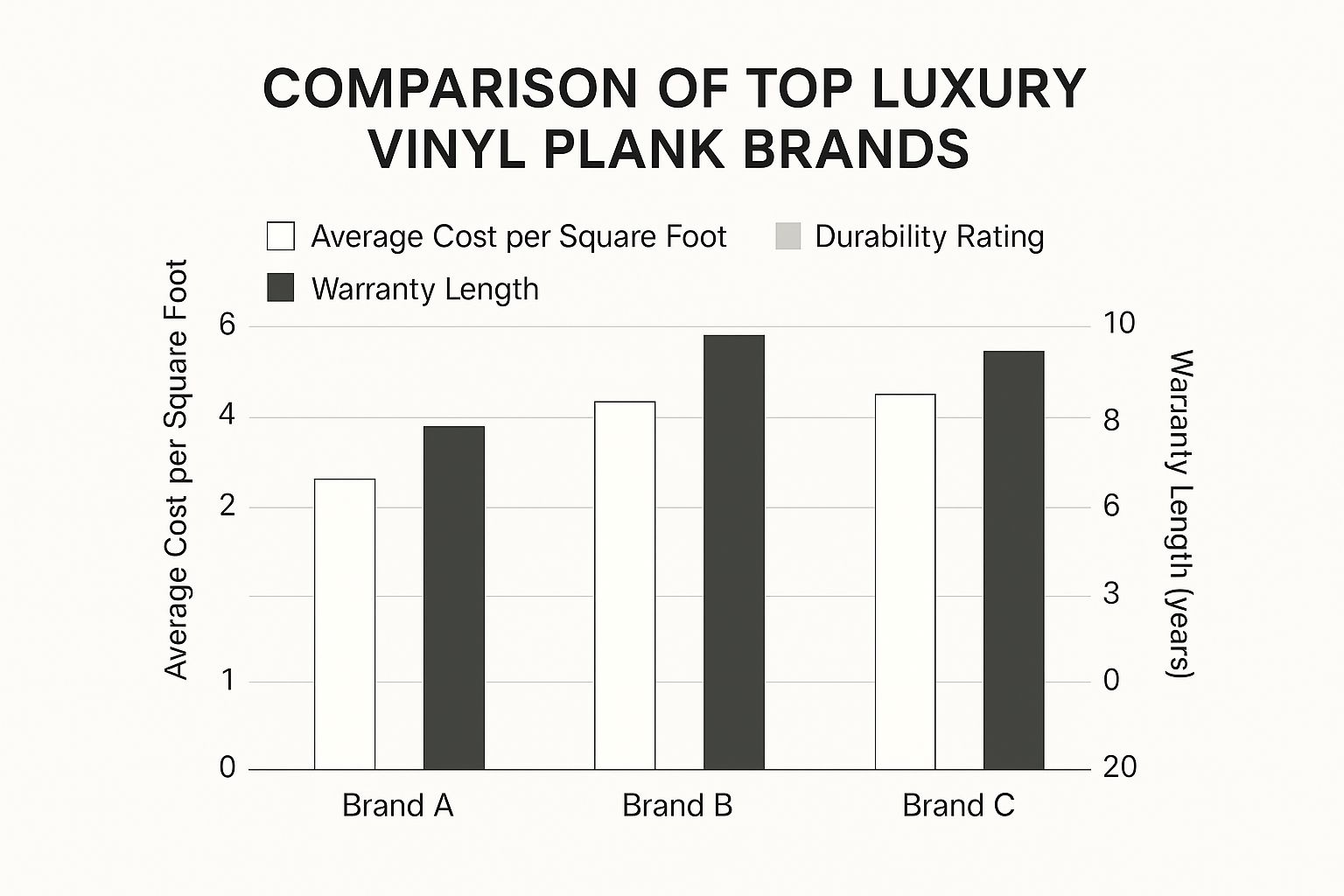
As you can see, while the prices are often in the same ballpark, Shaw tends to have the edge in durability, and all three offer excellent, competitive warranties.
Mohawk SolidTech: The Master of Scratch Resistance
Mohawk built its reputation by tackling one of the biggest headaches for homeowners: scratches and stains. Their SolidTech line is engineered from the ground up to fight back against the daily abuse from pets, kids, and busy life, making it a lifesaver for households needing maximum surface protection.
The secret sauce is in SolidTech’s advanced wear layer. Mohawk uses a special proprietary finish that provides much better scratch resistance than a lot of standard urethane coatings. If you have a big dog, this is a total game-changer, as it dramatically reduces the appearance of claw marks.
On top of that, SolidTech planks have a unique locking system that creates incredibly tight seams. This is key to its 100% waterproof rating, but it also stops dirt and grime from getting trapped in the grooves, making the floor much easier to keep clean.
Use Case Scenario: Picture a busy family with two big dogs and a toddler who loves rolling toys across the floor. Mohawk's SolidTech is built for this. Its scratch-resistant surface stands up to pet nails and plastic wheels, while its stain resistance means spilled juice or muddy paw prints are a simple wipe away.
The demand for this kind of tough flooring is huge and still growing. The luxury vinyl tile (LVT) market, which LVP is part of, recently claimed a massive 64.7% revenue share of all vinyl flooring. And with commercial spaces—which require extreme durability—making up 54.3% of consumption, it’s clear that LVP is built for the toughest environments.
Direct Comparison: The Final Verdict
So, which one should you choose? The honest answer is that it completely depends on what you need for your home and lifestyle. There's no single "best" brand—only the best brand for you.
Let's break it down by your top priority.
Choose COREtec If:
- Comfort is everything. Its WPC core and cork backing feel warmer and softer underfoot.
- You're installing on an upper level. Its sound-dampening abilities will keep your home significantly quieter.
- Your subfloor isn't perfect. The thicker, more flexible WPC plank can be more forgiving over minor imperfections.
Choose Shaw Floorté If:
- You need maximum dent resistance. The dense SPC core is ideal for kitchens, home gyms, or rooms with heavy furniture.
- The room is a splash zone. Its superior waterproofing is the safest bet for basements, bathrooms, and laundry rooms.
- You have a high-traffic household. It’s built to handle the constant wear and tear of a busy home.
Choose Mohawk SolidTech If:
- You have pets, especially large dogs. That enhanced scratch resistance is its superpower.
- You're worried about stains and spills. Its tough surface and tight seams make cleanup a breeze.
- You need a floor that can keep up with an active family. It’s engineered to look great despite the daily chaos.
By matching each brand's standout features to what your home really needs, you can pick a luxury vinyl plank floor that doesn't just look amazing but will perform perfectly for years. It's about finding a solution that fits your life.
Choosing the Best LVP for Your Home
There’s no single “best” luxury vinyl plank. The floor that works perfectly in a quiet condo could be a disaster in a busy family home with two big dogs. The real trick is learning how to translate the technical specs on a sample into real-world performance for your lifestyle.
This is where we go beyond generic luxury vinyl plank flooring reviews. Instead, let's look at specific scenarios. I’ll help you pinpoint the exact features you should be looking for based on your home and your needs, so you can choose a floor that not only looks incredible but holds up to daily life.
The Best LVP for Homes with Pets
For anyone with furry family members, durability isn't just a nice-to-have, it's a must. The number one enemy is scratches from claws, which can quickly turn a beautiful new floor into a mess. Your focus needs to be laser-sharp on the wear layer and its protective top coat.
You should be looking for LVP with a wear layer of 20 mil or thicker. This is your main line of defense against daily scuffs and scratches. On top of that, many brands now add advanced coatings with materials like aluminum oxide, which significantly boosts scratch resistance and keeps the floor looking fresh.
Key Takeaway: For a truly pet-proof floor, zero in on a thick wear layer and a tough, scratch-resistant top coat. Mohawk’s SolidTech line is a fantastic example, as it was specifically engineered to handle the chaos of pets without sacrificing looks.
The Best LVP for Kitchens and Bathrooms
In places like kitchens, bathrooms, and laundry rooms, moisture is the main villain. While most LVP is marketed as waterproof, what really counts is the core construction and how well the planks lock together. This is what stops spills and humidity from causing real damage.
An SPC (Stone Plastic Composite) core is the gold standard here. Its high-density, rigid makeup makes it completely impervious to water and provides incredible stability. That means you don't have to worry about planks swelling, warping, or peeling when they get wet.
- Core Construction: Make an SPC core a non-negotiable for its top-tier water resistance.
- Locking System: A quality locking system creates a seal between planks so tight that water can’t seep through to the subfloor.
- Underlayment: If the plank has an attached pad, make sure it’s also waterproof and mold-resistant for total peace of mind.
Shaw's Floorté collection has built its reputation on its tough SPC cores and watertight locking systems, making it a go-to choice for any room where spills are a part of life.
The Best LVP for DIY Installations
Planning to install the floor yourself? The locking system is going to be your best friend or your worst enemy. A user-friendly design can be the difference between a frustrating weekend and a professional-looking floor you can be proud of.
Look for planks with a simple "angle-tap" or "fold-down" click-lock mechanism. These are designed to be intuitive, letting you connect the planks securely with minimal fuss. Another huge time-saver is finding planks with a pre-attached underlayment, which means you get to skip the step of rolling out a separate layer. Of course, it's always wise to understand how different materials perform in your specific region; exploring the best flooring options for specific home environments can provide great context for making a smart long-term investment.
The Best LVP on a Budget
Getting that high-end wood look without the high-end price tag is what LVP is all about. The key to finding great value is balancing the price with the performance features that actually matter, so you don't trade short-term savings for long-term headaches.
Your goal should be to find a product with a respectable 12 mil wear layer and a solid SPC core. While a 20 mil layer is the best for heavy use, 12 mil offers plenty of protection for most homes and comes at a much friendlier price. You can often find great deals from direct-to-consumer brands or the house brands at major home improvement stores, which deliver quality where it counts.
Innovations Shaping LVP Flooring
The world of luxury vinyl plank flooring is far from stagnant. Manufacturers are constantly pushing the envelope, zeroing in on more realistic looks, tougher performance, and greener production methods. These improvements are changing what we expect from our floors and setting new standards for quality across the board.
This constant push for better products is a direct result of incredible demand. The LVP flooring market recently hit a valuation of around $5.413 billion, which shows just how popular it has become. This boom is powered by new technologies that are creating more durable and beautiful flooring than ever before, a trend detailed in this market analysis from datainsightsmarket.com.
The Rise of Rigid Core Technology
While there are a few different core types out there, rigid core technology—specifically Stone Plastic Composite (SPC)—is still king. Its dense core, made from a limestone composite, gives it incredible dimensional stability. What that means for you is that the planks won't really expand or contract when the temperature changes, making it a solid choice for just about any room in the house.
That rigidity also makes it exceptionally dent-resistant. You can stop worrying about a dropped pot in the kitchen or the legs of a heavy sofa leaving a permanent mark. SPC's tough-as-nails construction is a major reason why the top-rated floors in luxury vinyl plank flooring reviews are almost always built on this technology.
Hyper-Realistic Visuals and Textures
The most exciting developments are arguably happening in the looks department. High-definition printing now allows for incredibly detailed and varied wood grain patterns. This completely does away with the fake, repetitive look that gave older vinyl floors a bad name. The goal today is to make LVP planks virtually indistinguishable from real hardwood.
But the real game-changer is embossed-in-register (EIR) technology. This is a manufacturing process that perfectly aligns the surface texture with the visual wood grain pattern underneath. You don't just see the knots and graining—you can actually feel them.
Why EIR Matters: This textural accuracy adds a whole new level of authenticity. When you run your hand over an EIR plank, it feels strikingly similar to real wood, which elevates the entire experience and makes the floor that much more convincing.
A Stronger Focus on Sustainability
The flooring industry as a whole is making a serious push toward being more eco-friendly. Homeowners are looking for products that aren't just durable and beautiful, but also made responsibly. This has led to a few key changes:
- Recycled Content: A growing number of LVP products now use recycled vinyl and other materials in their construction, which helps cut down on waste.
- Low-VOC Certifications: Always look for certifications like FloorScore or GREENGUARD Gold. These labels guarantee the flooring releases very low levels of volatile organic compounds (VOCs), which is great for maintaining healthy indoor air quality.
- Phthalate-Free Production: The best brands have switched to phthalate-free plasticizers, addressing long-standing health concerns tied to older types of vinyl.
These innovations are all part of a larger trend, which you can read more about in our article on the rise of luxury vinyl flooring. By marrying top-tier performance with a real commitment to sustainability, LVP is cementing its place as the go-to flooring for today’s homes.
Common Questions About LVP Flooring
When you start digging into luxury vinyl plank flooring reviews, you'll see a lot of talk about its durability and good looks. But you probably have some practical questions rolling around in your head. How does it actually hold up day-to-day? What’s the real story with installation?
Let's cut through the noise. I've gathered the most common questions I hear from homeowners to give you clear, straightforward answers. Making a smart flooring choice means knowing all the details, from cleaning routines to what’s happening under the planks.
LVP vs. LVT: What's the Difference?
This one trips a lot of people up. You’ll see LVP and LVT mentioned almost interchangeably, but their names give away their distinct design goals.
- LVP (Luxury Vinyl Plank) is all about mimicking hardwood. It’s cut into long, narrow planks, just like real wood flooring.
- LVT (Luxury Vinyl Tile) is made to look like stone or ceramic tile. It comes in square or rectangular shapes, mirroring classic tile dimensions.
Here’s the thing, though: underneath that top layer, they're built the same. Both LVP and LVT share an identical multi-layer construction, giving them the same great performance when it comes to durability and water resistance. The choice really just boils down to whether you prefer the aesthetic of wood or stone.
Keeping Your LVP Floors Clean
One of the best things about LVP is how ridiculously easy it is to maintain. A few simple habits are all it takes to keep your floors looking brand new, which is a huge relief compared to fussier materials like hardwood.
For daily dirt and dust, a quick pass with a soft-bristle broom or a vacuum (just make sure to turn the beater bar off) is plenty. When it's time for a more thorough clean, just use a damp mop with a pH-neutral cleaner designed for vinyl. And, of course, wiping up spills as they happen is always a good idea to prevent any chance of staining.
A Quick Word of Warning: Steer clear of steam mops, abrasive scrubbers, wax, or harsh chemicals. These can strip away the protective wear layer, leaving your floor looking dull and vulnerable to damage.
Can You Install LVP Over an Existing Floor?
In many situations, yes! This is a huge plus, as it can save you a ton of cash and mess by avoiding demolition. Rigid core LVP, particularly SPC, is fantastic for this because it's stiff enough to float right over existing hard surfaces, bridging minor bumps and dips in the subfloor.
It's a great option for laying over:
- Ceramic or porcelain tile
- Old sheet vinyl
- Existing hardwood
The key is to make sure the original floor is clean, solid, and flat. If you're going over tile, you might need to skim-coat the grout lines with a leveling compound to get a perfectly smooth surface. The one big no-no? You should never install LVP over another "floating" floor like laminate or engineered wood.
Is a Thicker Wear Layer Always Better?
A thicker wear layer offers more protection, but whether it’s "better" really depends on your lifestyle. That top layer is your floor's first line of defense against scratches, scuffs, and daily abuse, so its thickness matters.
Here’s a practical way to think about it: A 12 mil wear layer is perfectly fine for low-traffic spots like a bedroom or home office. But for the main arteries of your home—hallways, the living room, the kitchen—especially if you have kids or pets, stepping up to a 20 mil wear layer is a smart move for long-term peace of mind. You’ll see commercial-grade floors with 30 mil or more, but that's usually overkill for a house. Don't forget, the quality of the urethane coating and any additives like aluminum oxide also make a big difference in performance.
Finally, the big question on everyone's mind is about water. LVP has a great reputation for being water-resistant, but what does that really mean? For a deeper dive, check out our guide that asks—and answers—if vinyl plank is genuinely waterproof and what to look for to ensure your floors are protected.
At Flacks Flooring, we're here to help you sort through all the options and find the perfect floor for your home. Stop by our showroom or set up an in-home consultation to see our wide selection of high-quality LVP for yourself. Learn more at https://flacksflooring.com.