
When it comes to manufactured wood flooring vs laminate, the decision really boils down to one thing: authenticity versus durability. Manufactured wood gives you that genuine hardwood look and feel because it is real wood on top, which adds tangible value to your home. On the other hand, laminate offers a remarkably tough, budget-friendly look-alike using a high-definition photograph.
It's all about what you value more—the unmistakable character of real wood or the practical, everyday resilience of a synthetic surface.
Choosing Your Ideal Floor: Manufactured Wood vs Laminate
Finding the right floor for your home in Cumming or Johns Creek is a classic balancing act between looks, lifestyle, and your budget. Both manufactured wood (you’ll often hear it called engineered wood) and laminate have their strong suits, but they are fundamentally different materials built for different purposes. Getting a handle on these differences is the first real step toward making a choice you'll be happy with for years.
This guide will walk you through what really matters, moving past the marketing jargon to give you practical advice for your home here in Forsyth County. For a deeper dive, our guide on how to choose flooring has even more tips.
Quick Comparison: Manufactured Wood vs Laminate
Before we get into the nitty-gritty details, this at-a-glance table helps put the most important differences side-by-side. It’s a great starting point for seeing where each option shines.
| Feature | Manufactured Wood Flooring | Laminate Flooring |
|---|---|---|
| Core Material | A real wood veneer over a plywood or HDF core. | A synthetic, multi-layer product with a photographic image. |
| Authenticity & Value | High; adds significant resale value to your home. | Moderate; mimics wood but doesn't add the same value. |
| Durability | Durable but can dent or scratch like natural wood. | Highly resistant to scratches, stains, and fading. |
| Moisture Resistance | Good resistance to humidity; poor with direct water. | Excellent topical spill resistance; core can swell if wet. |
| Repairability | Can be sanded and refinished 1-3 times, depending on veneer. | Damaged planks must be replaced; cannot be refinished. |
| Cost | Mid to high price range; a significant home investment. | Budget-friendly; lower material and installation costs. |
This quick rundown shows the essential trade-offs. Your choice will depend on which of these features are most important for your specific room and lifestyle.
The popularity of both flooring types is undeniable. The global market for wood and laminate was valued at around USD 21.3 billion in 2024 and is expected to climb to USD 33.2 billion by 2030. In North America, laminate is a go-to for commercial projects because it's so tough, while manufactured wood is increasingly chosen for its own blend of durability and cost-effectiveness compared to solid hardwood.
Key Takeaway: Your decision really hinges on a trade-off. Manufactured wood delivers unmatched authenticity and a solid return on investment. High-quality laminate, meanwhile, offers superior everyday durability and affordability, making it a fantastic choice for busy households in places like Milton.
Understanding Core Materials and Construction
To really get to the bottom of the manufactured wood vs. laminate debate, you have to look past the surface. How each plank is put together from the inside out dictates everything—how it feels under your feet in your Johns Creek home, how it handles a spilled glass of sweet tea, and how it holds up over the years. These core construction differences are the foundation for every other point of comparison.
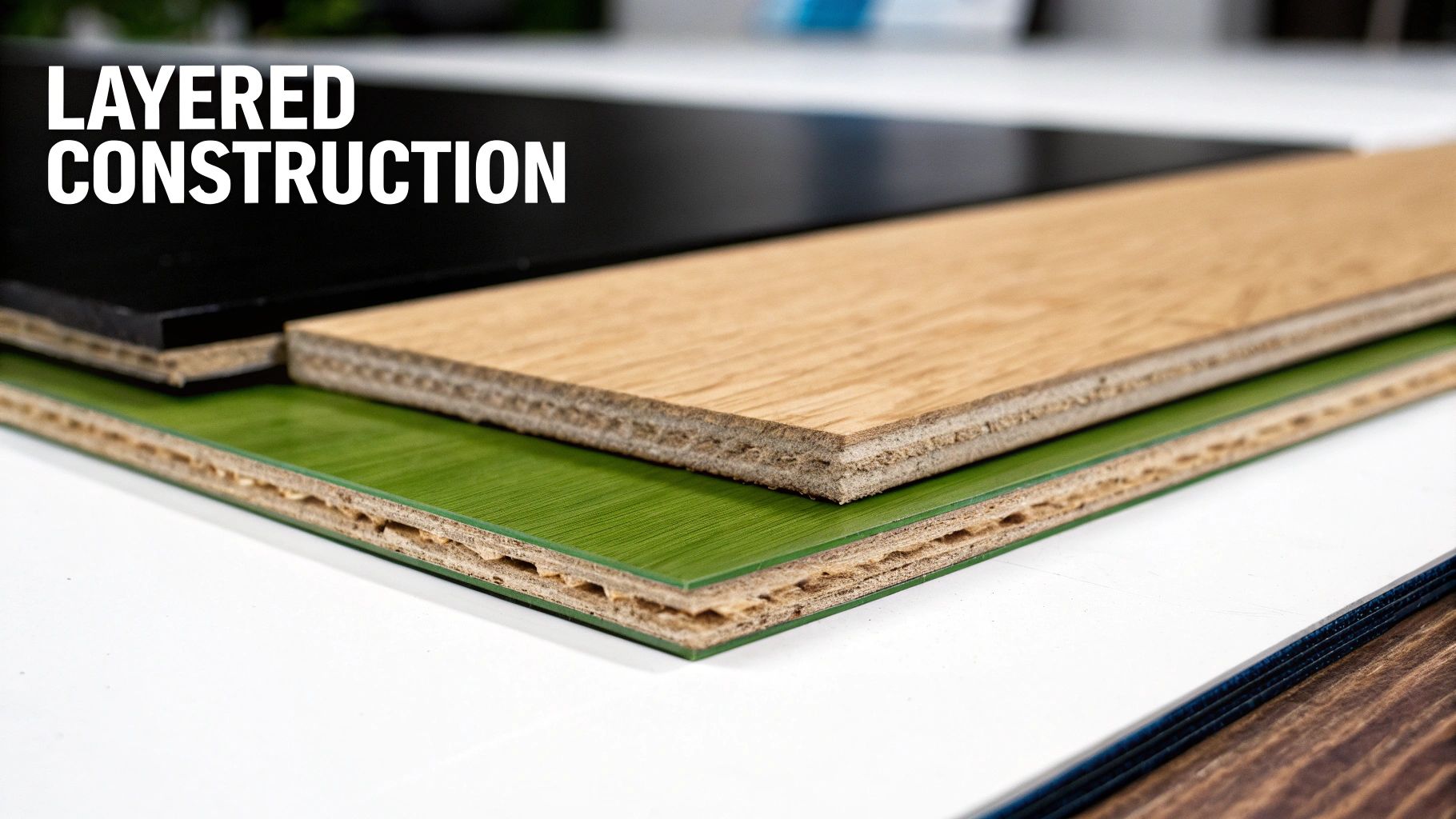
At first glance, the two can look surprisingly similar. But their internal makeup is worlds apart. One is a hybrid of natural wood and man-made materials, while the other is a fully synthetic product engineered for pure performance. Understanding this is the key to picking the right floor for the right room.
The Anatomy of Manufactured Wood
Manufactured wood flooring, which you’ll often hear called engineered hardwood, is a composite product with real hardwood at its heart. It’s built through a sophisticated layering process specifically designed to make natural wood more stable.
Picture a wood sandwich. The top layer you see and walk on is the veneer—a genuine slice of beautiful hardwood like oak, hickory, or maple. This is what gives the floor its authentic grain, texture, and unmistakable character.
Beneath that beautiful surface lies the core. This is typically made of multiple layers of plywood or sometimes a single, thick piece of high-density fiberboard (HDF). The key is that these layers are pressed together with their wood grains running in perpendicular directions. This simple-sounding technique is a game-changer, as it dramatically reduces wood's natural tendency to expand or shrink with shifts in humidity and temperature.
Why Construction Matters: This cross-grain engineering is precisely what makes manufactured wood more dimensionally stable than traditional solid hardwood. It’s a fantastic choice for the variable Georgia climate and can even be installed in basements where solid wood is a definite no-go.
Deconstructing Laminate Flooring
Laminate flooring takes a completely different path. Its goal is to create a hyper-durable and highly realistic imitation of wood. Instead of a real wood surface, it uses modern technology to build a tough, synthetic floor that looks strikingly similar to the real thing. To dive deeper into its specific traits, check out our guide that answers the common question, "what is laminate flooring?".
Laminate is made of four distinct layers, all fused together using intense heat and pressure:
- Wear Layer: This is a transparent, incredibly hard topcoat infused with aluminum oxide. Think of it as the floor's main shield, providing exceptional protection against scratches, stains, and fading from sunlight.
- Design Layer: Right under the wear layer is a high-resolution photograph of wood grain. Modern printing technology has gotten so good that this layer can replicate the look of almost any wood species with stunning detail and realism.
- Core Layer: The plank's main structure comes from an HDF core—the same dense material sometimes used in manufactured wood. This core gives the floor its rigidity and resistance to dents and impacts.
- Backing Layer: The bottom is a stabilizing layer that prevents the plank from warping. It also provides a crucial barrier against any moisture that might come up from the subfloor.
This layered construction results in a product that’s all about performance. While it contains no real hardwood on its surface, its engineering is entirely focused on creating a floor that can withstand the demands of a busy household in Cumming or Milton.
The core difference is clear: manufactured wood gives you authentic, natural beauty with enhanced stability, while laminate delivers a synthetic, high-performance replica.
Aesthetics: The Look and Feel of Your Floor
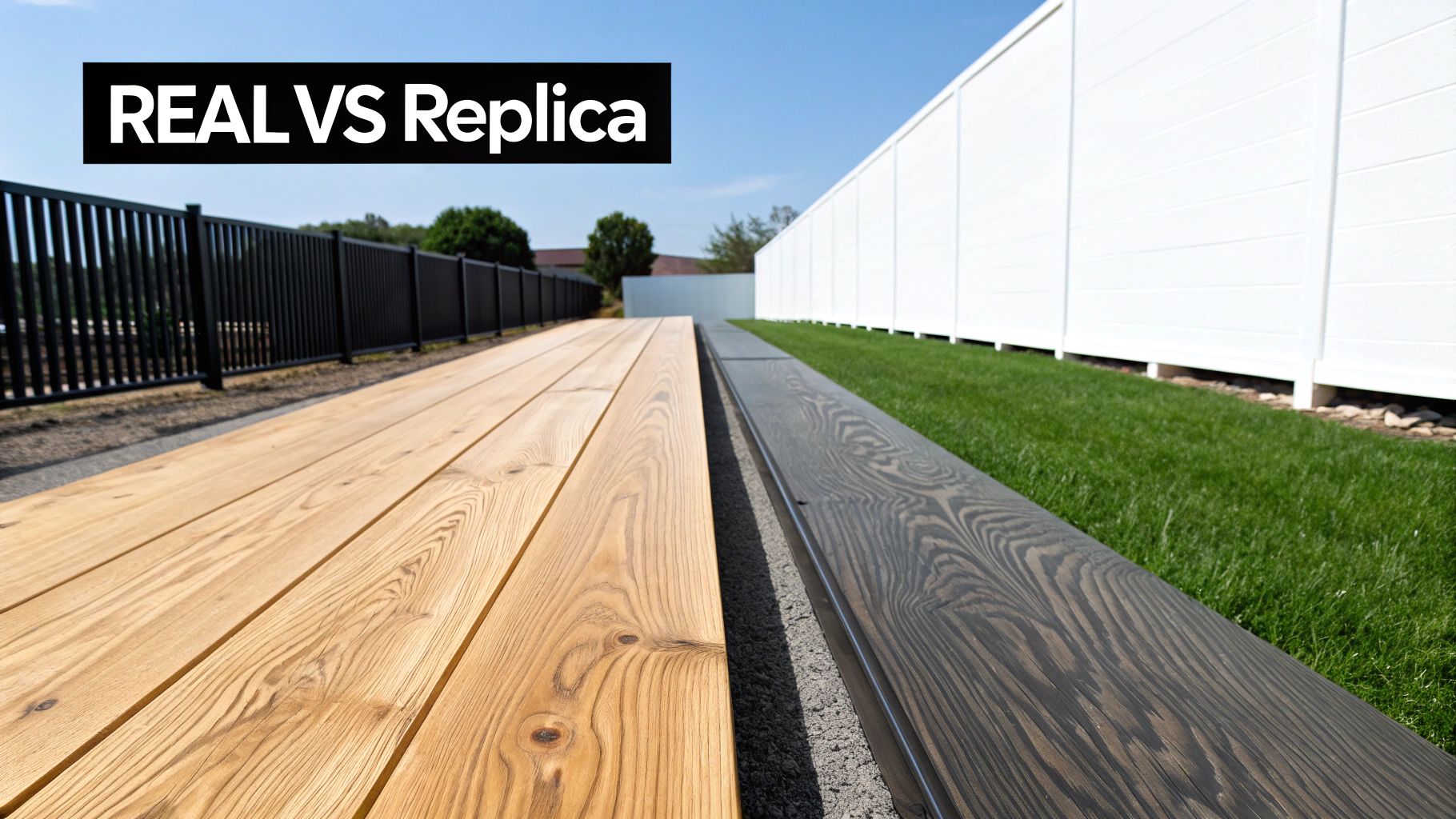
Let's be honest, the final look is often what makes or breaks a flooring decision. You want something that feels right underfoot and sets the tone for your entire home. While both manufactured wood and laminate are designed to capture the classic beauty of hardwood, they get there in very different ways. Understanding these differences is key to choosing the right foundation for your space in Johns Creek or Milton.
Manufactured wood gives you the real deal. Its top layer is a slice of genuine hardwood, meaning every plank has its own unique story—the natural grain, the subtle mineral streaks, and the organic color shifts that only nature can create. No two boards are ever the same. This creates a floor with incredible depth and character, a truly one-of-a-kind surface that can't be faked. It’s this authenticity that gives manufactured wood its premium, timeless feel.
Laminate's High-Tech Realism
Laminate, on the other hand, is a master of imitation. Its look comes from a highly detailed photograph of wood grain sealed beneath a tough, transparent wear layer. A decade ago, laminate often looked flat and artificial, but the technology has come a long way since then.
Modern, high-quality laminate is remarkably convincing. The game-changer has been Embossed-in-Register (EIR) technology, a process that aligns the surface texture with the visual pattern of the wood grain beneath it. This means you can actually feel the grooves and knots that you see, creating a three-dimensional effect that mimics real wood with stunning accuracy.
If you're after a very specific look for your Forsyth County home—maybe a rare, exotic wood or a trendy gray wash—laminate is your best friend. It offers a huge catalog of consistent styles without the high cost or sourcing headaches of the real thing.
The main visual giveaway for laminate is pattern repetition. While manufacturers mix up the plank images, you might spot a duplicate pattern here and there across a large room. A good installer can minimize this, but it’s a fundamental difference from manufactured wood, where every single plank is unique.
A Head-to-Head Look at Visuals
So, how do they really stack up when you put them side by side? Here’s a quick breakdown to help you visualize which option fits your home's personality.
| Aesthetic Factor | Manufactured Wood Flooring | Laminate Flooring |
|---|---|---|
| Authenticity | Unmatched. You're getting a real slice of hardwood. | A high-quality replica. Modern tech makes it very convincing. |
| Grain & Texture | Genuinely natural, random, and feels like real wood. | Can feel surprisingly real with EIR, but the texture is manufactured. |
| Pattern Variation | Infinite. No two planks are ever the same. | Limited. You will see pattern repeats, though less in premium lines. |
| Design Consistency | Expect natural color variations between boards. | Delivers a perfectly uniform color and pattern across the floor. |
In the end, it boils down to what you value most. If you're drawn to the perfect imperfections and inimitable character of a natural material, manufactured wood is the undeniable choice. But if you prioritize a specific, consistent aesthetic and appreciate how far technology has come, a top-tier laminate can deliver a beautiful and durable alternative.
How Much Wear and Tear Can Your Floors Handle?
When you’re deciding between manufactured wood and laminate, one of the biggest questions is how well each will stand up to daily life. The right choice for your home in Cumming really boils down to your lifestyle. Are you dealing with a constant whirlwind of kids and pets, or is your household a bit more serene?
Laminate often comes out on top for sheer surface toughness. Its secret weapon is the top wear layer, a clear, incredibly hard coat infused with aluminum oxide. This layer is so tough, in fact, that it’s graded on an Abrasion Class (AC) rating scale, from AC1 for very light use all the way up to AC5 for heavy commercial traffic.
For a busy household in Johns Creek or Milton, a laminate floor with an AC4 or AC5 rating is a game-changer. It’s built to resist scratches from dog claws, scuffs from chairs, and the general abuse that comes with an active family.
Scratch and Dent Resistance
Manufactured wood is a durable product, but at the end of the day, its surface is real wood. That means it can be dented if you drop something heavy and can be scratched by sharp objects. While modern finishes offer a lot of protection, it still has the vulnerabilities inherent to any natural wood.
This is where high-quality laminate really shines. It was literally engineered to shrug off daily wear and tear. Its tough exterior doesn't show the fine scratches and scuffs that can build up on wood floors over time, making it an ideal choice for high-traffic areas like foyers, hallways, and living rooms.
Expert Insight: If you have large dogs or kids who love to play, a laminate with a high AC rating gives you instant peace of mind. Its surface is designed to deflect the kind of daily impacts that would leave you needing touch-up kits for a natural wood floor.
Longevity and The Art of the Fix
Here’s where the conversation flips, and manufactured wood takes the lead. While laminate is hard to damage, it’s also very difficult to repair once significant damage occurs. If you get a deep gouge or a scratch that cuts through that tough wear layer, you can't just patch it up. The entire plank has to be replaced.
Manufactured wood, on the other hand, has a major long-term advantage: it can be professionally sanded and refinished. Depending on how thick its real wood veneer is (usually somewhere between 2mm and 6mm), you can give the floor a complete makeover once or even twice in its lifetime. This process completely strips away years of wear and tear, restoring it to a brand-new look.
That ability to be renewed gives manufactured wood a much longer potential lifespan, making it a true long-term investment in your home.
Standing Up to Moisture and Humidity
When we talk about durability, we have to talk about water. Being aware of common signs of water damage, including warped floors, is key to protecting any floor. Most modern laminate offers great topical resistance—its non-porous surface gives you a window of time to clean up spills before they soak in.
But here’s the catch: if water manages to seep between the seams and get to the HDF core, the plank will swell and warp, and that damage is permanent.
Manufactured wood handles ambient humidity much better. Its core is made of cross-laminated plywood, which gives it superior structural stability against the humidity swings we see here in Georgia. It’s still vulnerable to puddles and spills, of course, but it’s a more reliable choice for environments with shifting moisture levels. For below-grade installations like basements, there are specific considerations, which we cover in our guide on using engineered hardwood in a basement.
The demand for flooring that looks great and performs well keeps growing. The wood and laminate flooring market in the U.S. is expected to climb from USD 8.1 billion in 2025 to USD 11.8 billion by 2035. Engineered wood is set to dominate, capturing nearly half the market share (48.6%) in 2025. This is largely because its dimensional stability and performance are exactly what homeowners—who make up 73.4% of the market—are looking for.
Installation, Repair, and Lifespan: What to Expect
Once you’ve settled on a look, it’s time to think about the practical side of things. How a floor is installed, how you care for it day-to-day, and what happens when it gets damaged are just as important as its color and texture. The long-term experience in your Cumming or Milton home will be defined by these realities.
Getting It Installed
Laminate flooring is a DIY enthusiast's dream. Most brands use a click-lock system, where the planks snap together neatly. This creates a "floating floor" that sits on top of your subfloor without needing any glue or nails, which is a big reason so many Johns Creek homeowners feel confident tackling it themselves.
Manufactured wood gives you more options, but it’s usually a job for the pros. It can also be installed as a floating floor, but for a more solid, permanent feel, it can be glued, stapled, or even nailed down. This flexibility ensures a rock-solid installation that feels just like traditional hardwood underfoot.
The Long Game: Repairs and Lifespan
This is where manufactured wood and laminate flooring really show their differences. If a laminate plank gets a deep gouge or a serious scratch, your only option is to replace the whole plank. It’s doable, but it involves carefully popping out the damaged piece and slotting in a new one.
The ability to refinish is the game-changer for manufactured wood. Having the option to sand down the surface and give it a fresh start means you can erase years of wear and tear, a trick laminate just can't pull off.
With manufactured wood, you have a huge long-term advantage. Minor scuffs can be hidden with simple touch-up kits. But for more significant wear, the real wood veneer means you can sand the entire floor down and refinish it. Depending on how thick that top layer is, you can usually do this one to two times, easily adding decades to its life.
Let's look at the lifecycle of each flooring type side-by-side. The table below breaks down what you can expect from installation all the way through to the end of the floor's useful life.
Flooring Lifecycle At a Glance
| Lifecycle Stage | Manufactured Wood | Laminate |
|---|---|---|
| Installation | Professional installation recommended (glue, nail, staple, or float). | DIY-friendly with click-lock floating installation. |
| Repair Options | Can be sanded and refinished 1-2 times. Planks can be replaced. | Damaged planks must be individually replaced. Cannot be refinished. |
| Typical Lifespan | 20 to 50+ years, depending on veneer thickness and care. | 10 to 25 years, depending on the quality of the wear layer. |
As you can see, while laminate might be simpler upfront, manufactured wood is built for the long haul, offering repair options that give it a much longer potential lifespan.
Daily Care and Keeping It Clean
Keeping your floors looking great requires slightly different routines for each. For both, regular sweeping or vacuuming (turn that beater bar off!) is key to get rid of grit that can scratch the surface.
- Laminate Care: A damp mop and a cleaner made specifically for laminate is all you need. The golden rule is to avoid too much water, which can get into the seams and cause the core to swell. Definitely stay away from steam mops.
- Manufactured Wood Care: You have to be a little more careful here. Use a pH-neutral hardwood floor cleaner with a microfiber mop that’s just barely damp. Never reach for things like ammonia, vinegar, or oil-based soaps, as they’ll strip the protective finish. And, of course, wipe up spills immediately.
In short, laminate is a bit more forgiving for everyday cleanup, while manufactured wood needs a mindful routine to protect its beautiful, natural surface.
Making the Right Choice for Your Home
Choosing between manufactured wood and laminate flooring isn't about which one is "better" overall. It’s about which one is the right fit for your lifestyle and the specific room you're renovating. A practical mindset is key here, ensuring you get a floor that not only looks fantastic but performs exactly how you need it to in your Cumming or Forsyth County home.
Think about a bustling family room in Johns Creek, complete with kids and pets. This is where a high-quality laminate really shines. Its incredible scratch resistance and no-fuss cleaning make it a practical, worry-free choice for those high-traffic zones. You get maximum durability and great style without the premium price tag.
But for a formal living room or master bedroom, the conversation shifts. Here, the goal is often about visual authenticity and long-term property value. In this case, manufactured wood is the hands-down winner. Choosing the right floor isn't just a design decision; it's a smart investment that can increase your home's value. The genuine hardwood surface offers a timeless warmth and appeal that laminate, no matter how good, can only mimic.
Matching Flooring to Your Space
Let's get even more practical and break it down by rooms, looking at common scenarios we see in homes all over the Milton area.
-
For Kitchens and Entryways: A premium laminate with a high AC rating (AC4 or AC5) is almost always the smarter pick. These spaces get hammered with foot traffic and are spill-prone. Laminate's tough, water-resistant surface is simply built to handle that kind of daily abuse better than wood.
-
For Basements: This is where manufactured wood becomes a fantastic solution for below-grade spaces. Its layered construction gives it the stability to handle the subtle humidity changes common in Georgia basements—an environment where solid hardwood would likely warp and cup.
-
For Bedrooms and Formal Living Rooms: In these lower-traffic areas, the unmatched beauty of manufactured wood can take center stage. The priority shifts from pure utility to creating an inviting, high-end atmosphere where the natural character of real wood elevates the entire room.
This decision tree infographic offers a great visual summary of the practical trade-offs in installation, repair, and lifespan.
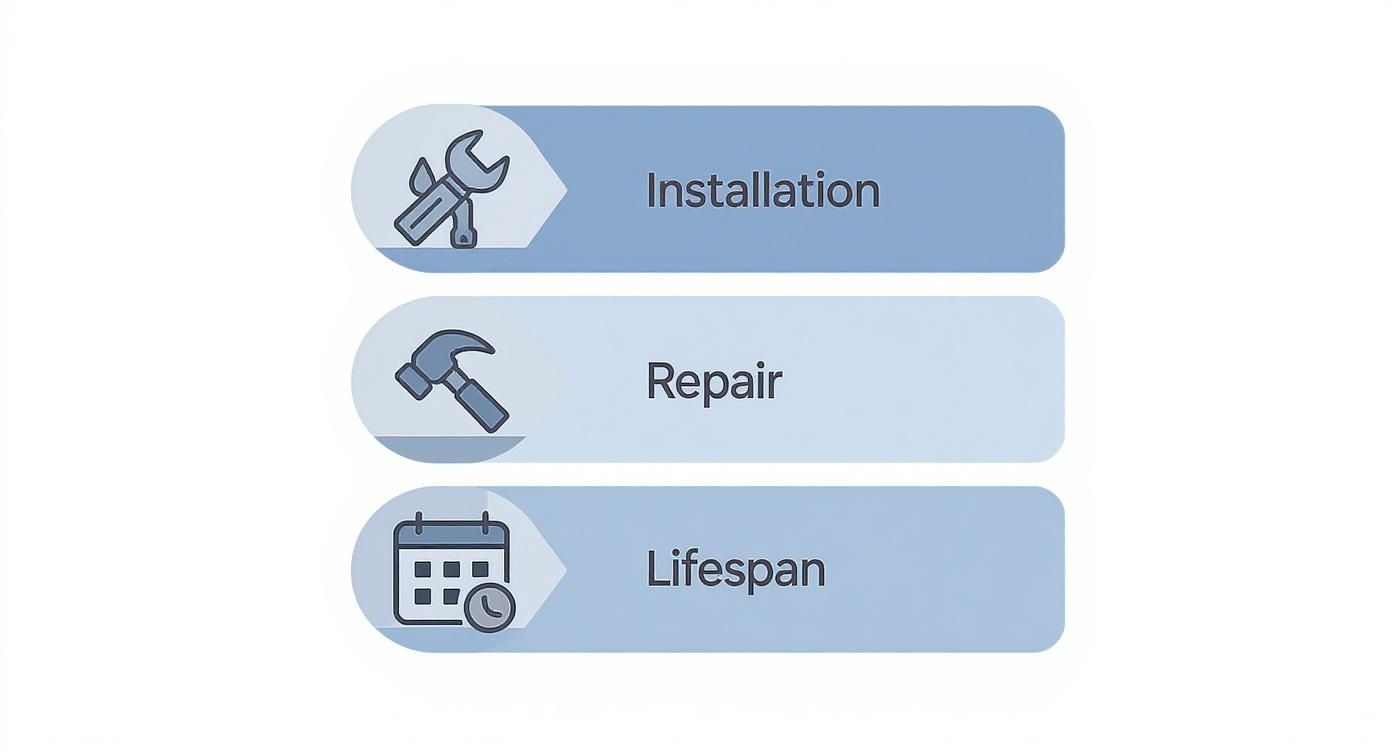
As the graphic shows, laminate might be simpler for a DIY installation, but manufactured wood offers a much longer potential lifespan because it can actually be repaired and refinished.
By evaluating each room's specific needs—from foot traffic and moisture exposure to your aesthetic priorities and budget—you can move past the general manufactured wood flooring vs laminate debate. This allows you to make a confident, targeted decision that you'll be happy with for years to come.
Common Questions We Hear From Homeowners
Even after comparing all the details, you probably still have a few specific questions. That's completely normal. Here are some of the most common things we get asked by homeowners in Cumming, Johns Creek, and the surrounding communities, along with our straightforward answers.
Does Manufactured Wood Flooring Really Add More Resale Value Than Laminate?
Absolutely. Manufactured wood flooring consistently adds more to a home's resale value than laminate does. Because it has a top layer of real hardwood, appraisers and potential buyers see it as a high-end feature, right up there with solid hardwood. It’s a genuine upgrade.
Laminate, on the other hand, is a fantastic product, but it's still widely seen as a practical, budget-friendly alternative. It doesn't typically boost a home's market value in the same significant way. If your main goal in Forsyth County is to maximize your long-term return on investment, manufactured wood is definitely the stronger choice.
Which Flooring Is Better for a Busy House With Pets and Kids?
This is a classic "it depends" situation, and the best choice comes down to your biggest priority.
If your main concern is fending off scratches, spills, and general mayhem, a top-tier laminate with a tough wear layer—look for an AC4 or AC5 rating—is going to be your best bet. That surface is specifically designed to take a beating from dog claws, dropped toys, and constant foot traffic.
But manufactured wood is no slouch, especially when you think about long-term solutions. A deep gouge in a laminate plank means you have to replace the whole thing. A similar scratch on manufactured wood? You can often touch it up, and if it's really bad, you can sand and refinish the entire floor down the road to make it look brand new again.
Our Take: If you have a large, active dog and your biggest fear is surface damage, go with a high-quality laminate. If you love the authentic look of wood and want the option to repair and fully restore your floor in the future, manufactured wood is a fantastic, durable option.
Choosing the right floor is a big decision, but you don't have to figure it out on your own. The team here at Flacks Flooring has been helping homeowners in Cumming and beyond find the perfect solution for years. Come see the difference for yourself by exploring our collection online or stopping by our showroom.