
The mudroom is the unsung hero of any Cumming, GA home. It’s the transition zone between the pristine interior and the outside world, tasked with corralling muddy boots, rain-soaked jackets, and the daily flurry of activity. But what about the floor that has to withstand it all? From Forsyth County's infamous red clay to the high humidity and occasional icy sidewalk salt, your mudroom floor needs to be more than just stylish—it needs to be a fortress.
A poorly chosen floor can quickly lead to water damage, mold growth, and constant cleaning headaches. The right surface, however, provides a durable, easy-to-clean foundation that protects your home's value and simplifies your life. This dedication to low-maintenance surfaces is a principle seen across modern home design; for instance, many homeowners now apply a protective ceramic coating for shower glass to repel water spots and grime with minimal effort.
This guide breaks down practical and beautiful mudroom floor ideas specifically curated for our local climate. We will explore options that balance durability, maintenance, and style, helping you find the perfect solution to protect your investment and your peace of mind. Let's dive into the best flooring choices that can handle everything you throw at them.
1. Waterproof Luxury Vinyl Plank (LVP) Flooring
Waterproof luxury vinyl plank (LVP) stands out as one of the best mudroom floor ideas for its powerful combination of style and resilience. Unlike traditional hardwood, LVP is an engineered product with a multi-layer construction, including a 100% waterproof core. This design makes it impervious to the melting snow, rainwater, and muddy footprints that are a daily reality in high-traffic entryways.
LVP convincingly mimics the look of natural materials like oak, hickory, or even stone, allowing you to achieve a classic aesthetic without the associated maintenance headaches. For homeowners in Forsyth County, where red clay is a constant concern, LVP's non-porous surface is a significant advantage. It prevents staining and makes cleanup as simple as a quick wipe with a damp mop, keeping your mudroom looking fresh despite the elements.
Key Considerations for LVP in Your Mudroom
- Texture for Safety: Opt for LVP with an embossed or textured surface. This subtle detail significantly improves slip resistance, which is crucial in an area that frequently gets wet.
- Core Construction: Look for products with a Stone Polymer Composite (SPC) or Wood Polymer Composite (WPC) core. These rigid cores offer superior stability and dent resistance against dropped sports equipment or heavy boots.
- Climate & Salt: The de-icing salts used on Cumming roads during winter can be abrasive. LVP's durable wear layer protects the floor from scratches and chemical damage, unlike more sensitive materials.
Expert Insight: For maximum protection, a professional installation is key. Proper subfloor preparation and tight seams ensure that moisture from tracked-in snow or rain never seeps underneath the planks, preserving both your flooring and the subfloor beneath it.
LVP offers a practical solution that doesn't compromise on design, making it an ideal choice for the modern, active household. To get a deeper understanding of its composition and benefits, you can learn what luxury vinyl plank flooring is and how it performs in demanding environments.
2. Polished Concrete with Sealant Protection
Polished concrete offers a sleek, industrial-chic aesthetic that is exceptionally durable, making it one of the most resilient mudroom floor ideas available. This option transforms an existing concrete slab through a process of mechanical grinding and polishing, then finishing with a high-quality sealant. The result is a seamless, glossy surface that is highly resistant to abrasion, moisture, and stains, ideal for contemporary farmhouse and minimalist designs seen in Milton and Johns Creek homes.
This flooring solution is particularly well-suited for high-traffic entryways. The non-porous surface created by a commercial-grade sealant prevents Forsyth County’s notorious red clay from seeping in and causing permanent stains. Furthermore, its monolithic nature means there are no grout lines or seams to trap dirt, simplifying cleanup and maintenance. Spills, mud, and water can be wiped away easily, maintaining a clean and modern look with minimal effort.
Key Considerations for Polished Concrete in Your Mudroom
- Sealant is Non-Negotiable: The performance of polished concrete hinges on the quality of the sealant. A professionally applied, high-grade penetrating sealer is essential to repel water and prevent staining.
- Finish and Safety: While a high-gloss finish is popular, consider a matte or satin finish for your mudroom. These less reflective surfaces provide better slip resistance when the floor is wet, a critical safety feature.
- Comfort and Temperature: Concrete can be cold underfoot, especially during Cumming’s colder months.
- Long-Term Care: To protect the sealant's integrity, always use pH-neutral cleaners. The floor will also need to be periodically resealed every few years, a maintenance task to budget for.
Expert Insight: Proper surface preparation is everything. The concrete slab must be in good condition, level, and free of major cracks before polishing begins. A professional will assess the slab and perform necessary repairs to ensure a flawless, long-lasting finish.
Polished concrete provides an almost indestructible surface that delivers a unique, modern aesthetic perfect for homes that blend style with practicality. Its robust nature stands up to the daily abuse of an active family entryway.
3. Porcelain Tile with Natural Stone Aesthetics
Porcelain tile is a top-tier choice for mudroom flooring, delivering exceptional durability and style. It is an engineered ceramic made from refined clay and fired at extremely high temperatures, resulting in a material that is incredibly dense, hard, and non-porous. This process gives porcelain superior resistance to water, scratches, and stains, making it one of the most practical mudroom floor ideas for enduring daily wear and tear.
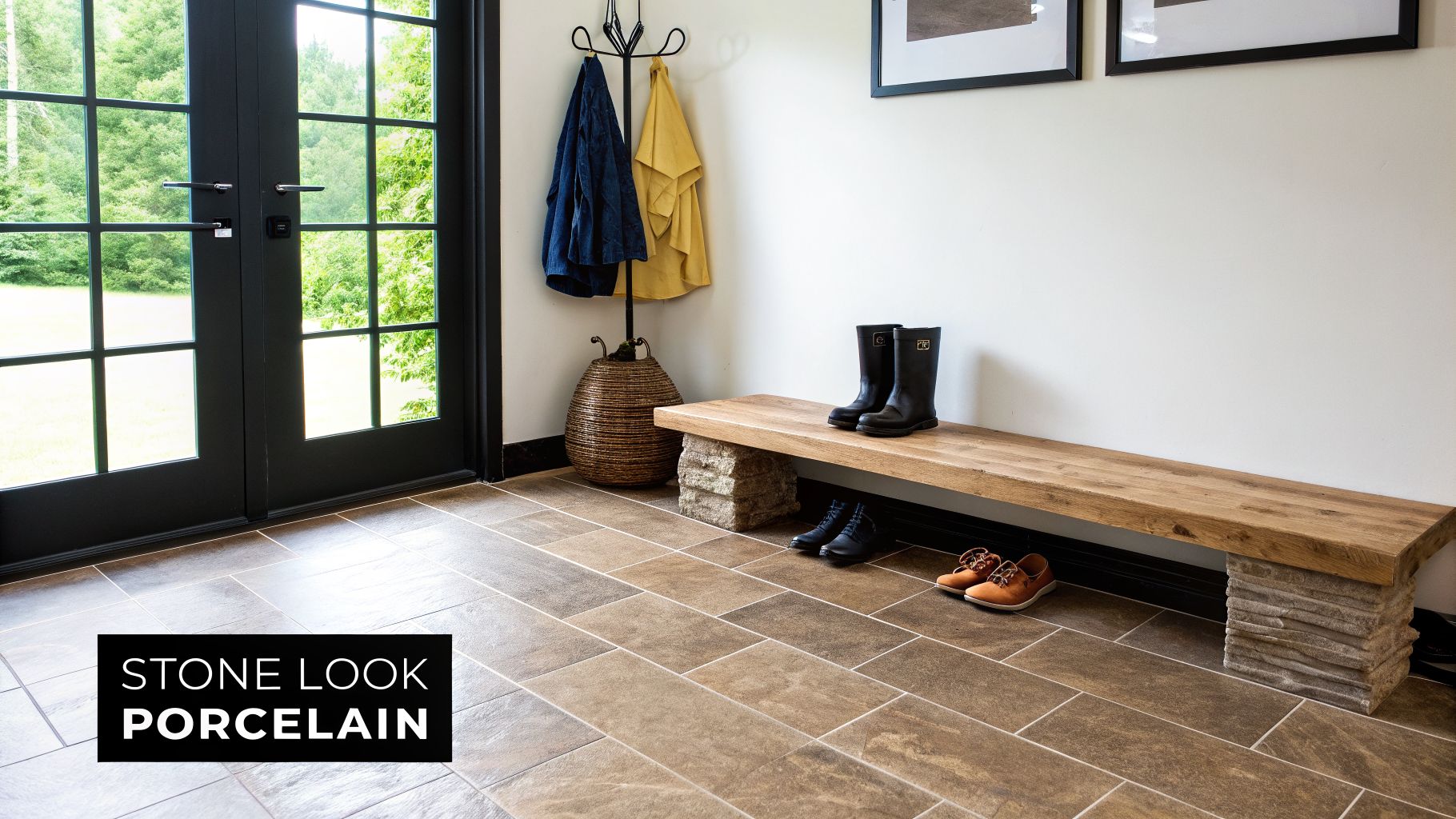
Modern manufacturing allows porcelain to convincingly mimic natural materials, offering the timeless beauty of slate, travertine, or marble without the intensive upkeep. For example, slate-look porcelain is a popular option in Forsyth County farmhouse mudrooms, while large-format stone-look tiles are often seen in modern Johns Creek homes. Its non-porous surface is especially effective against the stubborn red clay common in our area, ensuring dirt and grime can be cleaned up easily without leaving permanent marks.
Key Considerations for Porcelain Tile in Your Mudroom
- Slip Resistance: Prioritize tiles with a matte or textured finish. These surfaces provide much better grip than polished alternatives, reducing the risk of slips and falls when floors are wet from rain or melting snow.
- Grout Lines: Consider using larger format tiles (e.g., 24×24 inches or 12×24 inches). This minimizes the number of grout lines, which simplifies cleaning and creates a more seamless, modern look. To ensure your Porcelain Tile with Natural Stone Aesthetics remains beautiful and hygienic, understanding effective maintenance is key, such as utilizing these Tile and Grout Cleaning: Pro Tips for Pristine Floors.
- Climate & Durability: The extreme hardness of porcelain, measured by its PEI rating, makes it resistant to scratches from tracked-in gravel or salt used on Cumming roads. It is also frost-proof, so it will not crack due to temperature fluctuations.
Expert Insight: For ultimate moisture protection, insist on the installation of a waterproof or uncoupling membrane, like Schluter-DITRA, beneath the tiles. This step isolates the tile from subfloor movement and adds a critical layer of waterproofing, preventing any potential moisture issues down the line.
Porcelain tile provides a near-indestructible surface that looks beautiful for decades, making it a wise investment for any busy entryway. You can discover more about flooring for high-traffic areas to see how porcelain compares to other robust options.
4. Reclaimed or Engineered Hardwood with Protective Finish
For those who desire the timeless warmth and character of wood, engineered hardwood stands out among mudroom floor ideas as a highly practical choice. Unlike solid hardwood, which is prone to warping in moisture-prone areas, engineered wood features a real hardwood veneer layered over a stable plywood or high-density fiberboard core. This construction makes it more dimensionally stable and resistant to the humidity fluctuations common in a mudroom.
Modern polyurethane and aluminum oxide finishes provide a robust top layer that protects the wood from scratches, UV fading, and daily wear. This allows homeowners to achieve the classic, upscale look seen in many Milton and Johns Creek homes without the constant worry of water damage. When properly sealed and maintained, engineered hardwood brings an authentic, natural elegance to your home's entryway that is difficult to replicate with other materials.
Key Considerations for Hardwood in Your Mudroom
- Protective Underlayment: Always install a high-quality waterproof underlayment beneath engineered hardwood. This creates an essential moisture barrier, protecting both the flooring and the subfloor from water that might find its way through the seams.
- Finish and Sheen: Choose a matte or satin finish over a high-gloss one. These lower-sheen options are better at hiding minor scratches and are less slippery when wet, a critical safety feature for a busy entrance.
- Local Climate Factors: The humidity in Georgia can cause wood to expand and contract. Maintaining consistent indoor humidity levels (between 35-55%) is key to preventing gapping or cupping. Using engineered wood is best for covered mudrooms, not entries fully exposed to the elements.
Expert Insight: The longevity of a hardwood mudroom floor depends heavily on proactive care. Place a durable entry mat both outside and inside the door to trap the majority of Forsyth County's red clay and moisture. Re-sealing the floor every 3-5 years, depending on traffic, will maintain its protective barrier and keep it looking new.
5. Natural Stone Flooring (Slate, Granite, or Limestone)
For a mudroom that exudes timeless elegance and offers exceptional durability, natural stone flooring is a premium choice. Materials like slate, granite, and limestone are quarried directly from the earth, meaning each tile possesses a unique color, veining, and texture. This one-of-a-kind characteristic ensures your entryway is a distinguished feature, as seen in many high-end Forsyth County estates that favor the organic, earthy look of slate.
While it sits at a higher price point, the longevity and inherent beauty of natural stone are unmatched. It stands up incredibly well to the heavy foot traffic of a busy mudroom. The key to its performance in this demanding space is proper sealing and maintenance, which protects the stone from moisture and the notorious Georgia red clay. Granite, for example, is often selected for its hardness and resistance to stains once sealed, making it a functional and beautiful choice for luxury homes.
Key Considerations for Natural Stone in Your Mudroom
- Sealing is Non-Negotiable: Natural stone is porous. A high-quality penetrating sealer must be applied at installation and then periodically resealed (typically annually) to prevent water damage and staining.
- Surface Finish Matters: Opt for a honed or tumbled finish over a polished one. These textured surfaces provide better slip resistance, a critical safety feature for a wet mudroom. Slate, in particular, has a natural cleft texture that is excellent for grip.
- Proper Cleaning: Avoid harsh, acidic cleaners that can etch or damage the stone's surface. Use only pH-neutral cleaners specifically designed for natural stone to preserve its integrity and finish.
Expert Insight: When installing stone, the grout is just as important as the tile itself. Insist on using a high-performance grout and having a grout sealer applied. This creates a secondary barrier against moisture and dirt, preventing discoloration and breakdown over time.
Natural stone is a long-term investment that adds significant value and character to a home. To explore which option best fits your home's style, you can learn more about the top five types of stone flooring and their distinct qualities.
6. Rubber or Cork Flooring with Waterproof Backing
For homeowners prioritizing sustainability and comfort, rubber or cork flooring with a waterproof backing presents a unique and eco-friendly mudroom floor idea. These resilient materials offer a softer, more cushioned surface than traditional hard floors, making them comfortable to stand on and effective at dampening sound. Cork is harvested from the renewable bark of cork oak trees, while many rubber options are made from recycled materials, appealing to eco-conscious builds in Forsyth County.
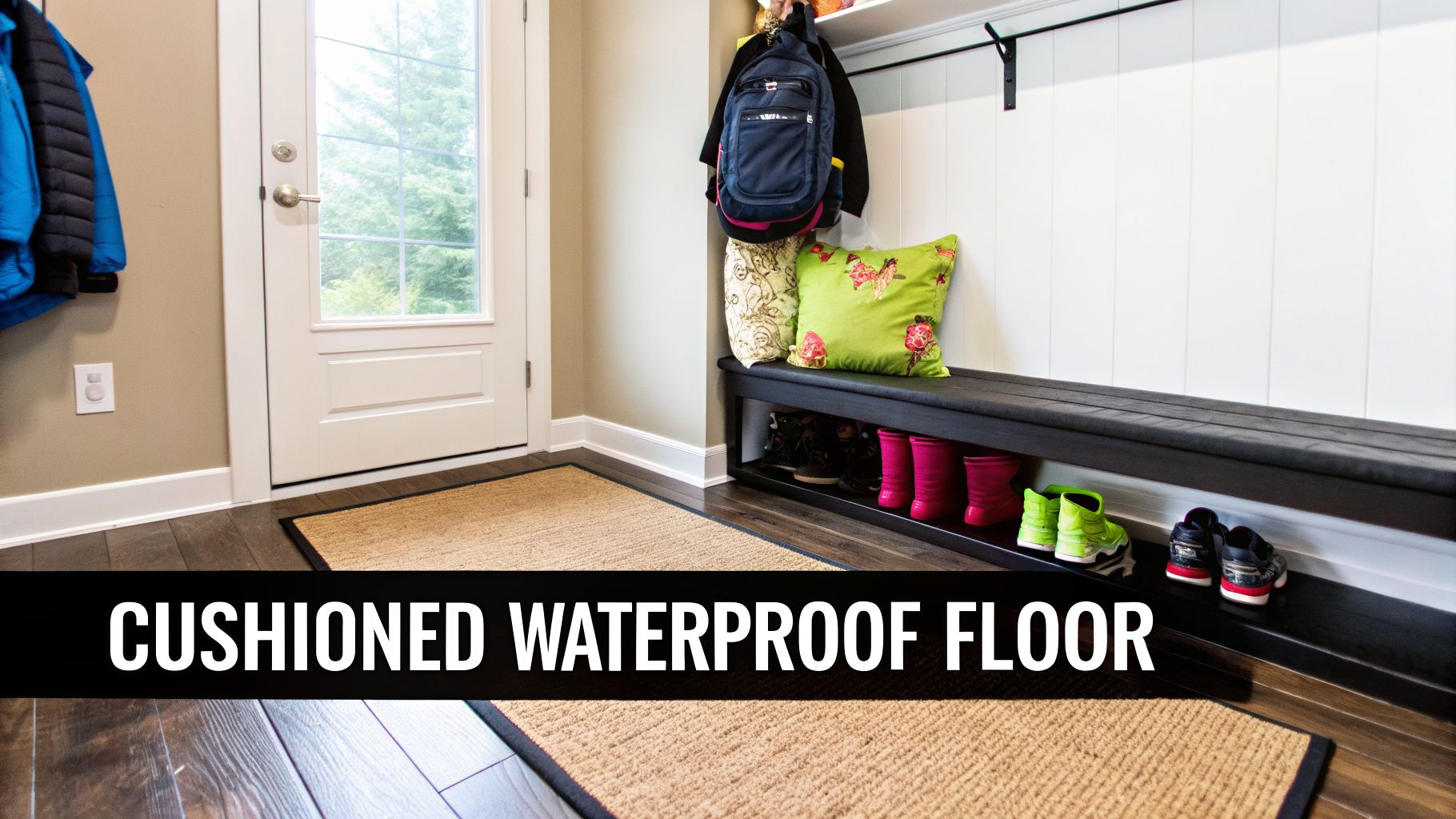
Innovations in manufacturing have made both materials increasingly suitable for areas with moderate moisture. The key is a high-quality waterproof backing and proper installation, which prevents water from reaching the subfloor. Their natural shock-absorbent properties also provide a forgiving surface, reducing the risk of items breaking if dropped. The distinctive, warm aesthetic of cork or the industrial look of rubber can create a truly custom entryway.
Key Considerations for Rubber or Cork in Your Mudroom
- Sealant and Backing are Crucial: The success of these materials in a mudroom depends entirely on a properly sealed surface and a fully waterproof backing. Ensure the seams are tight and the perimeter is sealed to prevent moisture intrusion.
- Color and Stain Management: Georgia's red clay can stain porous surfaces. Opt for darker or patterned cork and rubber to help conceal potential dirt and stains more effectively than lighter, solid colors.
- Climate & Humidity: Cork can be sensitive to drastic humidity changes. Maintaining consistent indoor humidity levels will prevent it from drying out and potentially cracking over time, a consideration for Georgia's fluctuating seasons.
Expert Insight: Rubber flooring is an excellent choice for extremely high-traffic or utility-focused mudrooms due to its industrial-grade durability. For residential spaces, ensure the product is rated for indoor use to avoid off-gassing and has a non-porous finish for easy cleaning.
While they require more mindful maintenance than vinyl or tile, the comfort, sound insulation, and sustainable sourcing of rubber and cork make them a compelling choice for a modern, green-focused home.
7. Epoxy-Coated Concrete Floors with Custom Design
Epoxy flooring offers an industrial-chic solution that transforms a basic concrete slab into a seamless, high-gloss surface. This process involves applying a thermosetting resin coating over a prepared concrete substrate, creating a finish that is exceptionally resistant to moisture, chemicals, abrasions, and stains. Once common in garages and commercial spaces, epoxy has become a stylish and practical choice for residential mudrooms where durability is paramount.
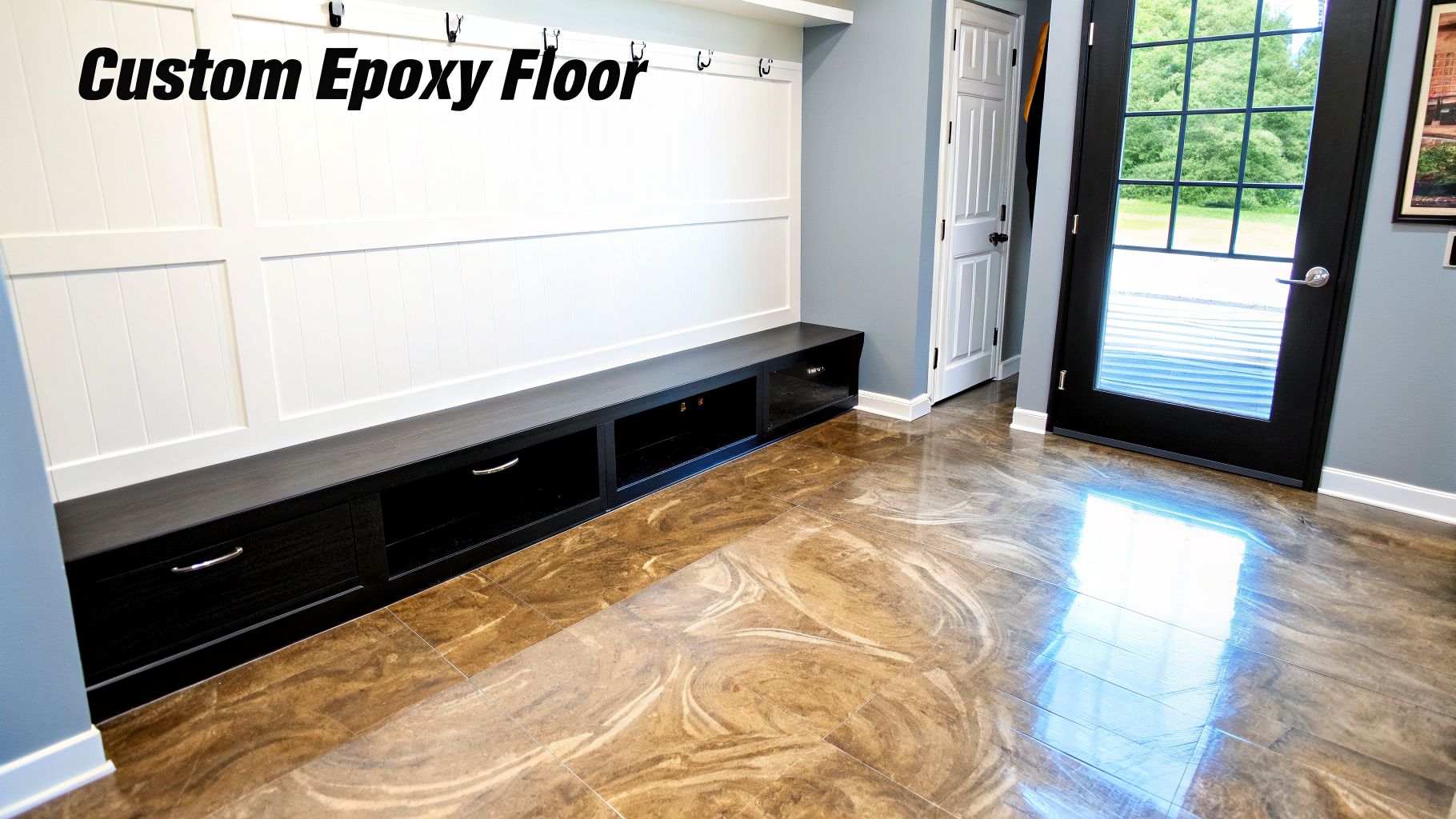
The seamless, non-porous nature of epoxy makes it one of the best mudroom floor ideas for dealing with the red clay common in Forsyth County. Spills, mud, and grime sit on the surface and can be wiped away effortlessly. Beyond its practicality, epoxy allows for immense design flexibility, from solid colors to decorative flakes or dramatic metallic swirls that make the floor a unique design statement.
Key Considerations for Epoxy in Your Mudroom
- Slip Resistance: The high-gloss finish can be slippery when wet. Requesting that non-slip additives, like a fine aggregate, be mixed into the final topcoat is essential for safety in a mudroom.
- Professional Preparation: The success of an epoxy floor depends almost entirely on the preparation of the concrete beneath it. The slab must be thoroughly cleaned, ground, and free of moisture before application to prevent peeling or bubbling.
- Curing Time: Epoxy requires a significant curing period, often 7 to 10 days, before it can handle heavy foot traffic and the placement of storage units. Plan your project accordingly to allow the material to harden completely.
- Climate & UV Exposure: If your mudroom has large windows or a glass door, choose a UV-stable epoxy formula. This will prevent the floor from yellowing or fading over time due to sun exposure.
Expert Insight: While DIY kits are available, a professional installation is highly recommended for residential applications. An experienced installer can properly assess concrete moisture levels, create a superior surface profile for adhesion, and ensure a flawless, long-lasting finish that DIY applications often cannot match.
Epoxy-coated concrete delivers a modern, custom look while providing the rugged performance needed for a home’s hardest-working entryway.
8. Interlocking Rubber Tiles or Mats with Moisture Barrier
Interlocking rubber tiles or mats deliver one of the most practical and durable mudroom floor ideas, borrowed from commercial and garage applications. This modular system consists of individual rubber tiles that connect to form a resilient, cushioned surface. Its primary advantage is its exceptional durability and water management, making it perfect for garage-adjacent mudrooms in Cumming or pet-friendly homes in Forsyth County that see constant foot and paw traffic.
The non-porous rubber surface is naturally resistant to water, mold, and mildew, and its inherent texture provides excellent slip resistance even when wet. For homes dealing with Georgia's signature red clay, the dark, forgiving colors of most rubber tiles effectively camouflage stains and dirt between cleanings. Cleanup is straightforward, typically requiring just a broom and a mop, while individual tiles can be replaced if one gets damaged, saving the cost of a full floor replacement.
Key Considerations for Rubber Tiles in Your Mudroom
- Drainage and Ventilation: Select tiles with built-in drainage channels on the underside. This design allows water from melting snow or rain to flow away and evaporate, preventing moisture from becoming trapped against the subfloor.
- Moisture Barrier Installation: For basement mudrooms or installations over a concrete slab, laying a high-quality moisture barrier underneath the tiles is essential. This step prevents moisture from wicking up from the concrete and creating mold issues.
- Tile Thickness: For high-traffic entryways, choose thicker tiles (¾ inch or more). Thicker rubber provides better cushioning, sound dampening, and resistance to damage from heavy items like sports gear or outdoor equipment.
- Managing Odor: New rubber flooring can have a distinct odor. It's best to allow the tiles to air out in a well-ventilated space, like an open garage, for a few days before installation to let the smell dissipate.
Expert Insight: Think of rubber tile as an industrial-strength solution with residential benefits. To avoid a purely utilitarian look, consider creating a border with a contrasting color or laying a decorative, low-pile area rug over the center to define the space and add a touch of warmth.
The modularity and resilience of interlocking rubber tiles make them a smart, long-term investment for the most demanding mudroom environments.
Mudroom Floor Ideas — 8-Option Comparison
| Flooring Option | Complexity 🔄 (implementation) | Resources & Speed ⚡ (cost, install time) | Effectiveness ⭐ (durability & water resistance) | Expected Outcomes 📊 (lifespan & maintenance) | Key Advantages & Ideal Use Cases 💡 |
|---|---|---|---|---|---|
| Waterproof Luxury Vinyl Plank (LVP) | Moderate (click-lock; pro recommended for best results) | Low–Moderate cost; fast install (days) ⚡ | ⭐⭐⭐⭐ — 100% waterproof core, scratch-resistant | 10–25 years; low maintenance; occasional cleaning; low replacement cost | Practical aesthetic with wood/stone look; ideal for families, pets, humid climates |
| Polished Concrete with Sealant Protection | High (specialized grinding & sealing) 🔄 | Moderate cost; long prep and cure time (days–weeks) ⚡ | ⭐⭐⭐⭐⭐ — very durable, stain/moisture resistant when sealed | 20+ years; minimal upkeep beyond resealing (1–3 yrs) | Very durable, modern look; ideal for high-traffic, low-maintenance, sustainable projects |
| Porcelain Tile (stone aesthetics) | High (precision tile work, grout/sealing) 🔄 | Moderate–High cost; moderate install time (days) ⚡ | ⭐⭐⭐⭐⭐ — nearly impervious, chip- and stain-resistant | 25+ years; grout reseal periodic; cold/hard without heating | Very durable and versatile styling; ideal for humid areas, busy households, pet owners |
| Reclaimed/Engineered Hardwood (protective finish) | Moderate–High (professional recommended) 🔄 | High cost; moderate install time; possible refinishing down the line ⚡ | ⭐⭐⭐⭐ — improved moisture resistance vs. solid wood, scratch-resistant finish | 15–30 years with maintenance; periodic finish recoats (3–5 yrs) | Warm, authentic appearance; ideal for climate-controlled homes valuing aesthetics |
| Natural Stone (slate, granite, limestone) | Very High (heavy, skilled installation & sealing) 🔄 | Very high cost; long install & sealing schedule ⚡ | ⭐⭐⭐⭐⭐ — exceptional longevity when sealed; variable porosity | 50+ years; annual/semiannual sealing; sensitive to cleaners for some stones | Timeless, premium aesthetic; ideal for luxury homes and high-end entries |
| Rubber or Cork (waterproof backing) | Low–Moderate (adhesive or click systems) 🔄 | Low–Moderate cost; quick install (DIY friendly) ⚡ | ⭐⭐⭐ — good water resistance with waterproof backing; softer surface | 5–15 years; gentle cleaning; protect from heavy point loads | Comfortable, eco-friendly; ideal for eco-conscious homes, moderate-traffic mudrooms |
| Epoxy-Coated Concrete (custom design) | High (surface prep & professional application) 🔄 | Moderate cost; multi-step install and cure (1–2 weeks) ⚡ | ⭐⭐⭐⭐ — seamless waterproof surface; chemical/stain resistant | 7–10 years typical before recoating; easy cleaning | Seamless, fully waterproof and highly customizable; ideal for modern/custom designs |
| Interlocking Rubber Tiles / Mats with Moisture Barrier | Low (tool-free modular install) 🔄 | Low cost; fastest install (hours–days) ⚡ | ⭐⭐⭐ — good traction & durability; seams require attention | 5–15 years depending on wear; easy replacement of tiles | Modular, replaceable, slip-resistant; ideal for renters, garages, active families |
Ready to Transform Your Mudroom? Let's Find the Perfect Foundation
Selecting the right flooring for your mudroom is one of the most practical and impactful decisions you can make for your home. It's the first line of defense against the elements, a landing zone for busy family life, and a crucial component of your home's overall design. As we've explored, your options extend far beyond simple utility. From the rugged durability of sealed concrete and epoxy coatings to the sophisticated look of waterproof LVP and porcelain tile, the perfect mudroom floor is a balance of performance, style, and maintenance reality.
The key is to move beyond a one-size-fits-all approach. Consider your family’s daily routine: Do you have athletes tracking in mud, pets with wet paws, or kids dropping heavy backpacks? An honest assessment of your needs will guide you toward the best material. For a high-traffic entryway in Forsyth County, where red clay and humidity are constants, a non-porous and easy-to-clean surface like porcelain tile or LVP often provides the most long-term satisfaction. Conversely, a household with less foot traffic might find the warmth of engineered hardwood with a robust protective finish to be a perfect fit.
Key Takeaways for Your Flooring Project
Before making a final choice, remember these core principles:
- Function First, Style Second: Prioritize materials that can handle moisture, dirt, and heavy use. Your floor must perform its primary duty before it can be a design statement.
- Consider the Entire System: The best flooring can be undermined by poor subflooring or inadequate trim. Ensure you have a proper moisture barrier and that your baseboards are made of a water-resistant material.
- Local Climate Matters: Our Georgia climate, with its humidity and occasional winter weather, demands materials that resist water damage and are easy to clean. Solutions that work in dry, arid regions may not be the best choice here.
Ultimately, the best mudroom floor ideas are the ones that make your life easier while protecting the value of your home. This space is a workhorse, but with the right foundation, it can also be a beautiful and welcoming transition into your home. A well-chosen floor reduces cleaning time, prevents damage to your home’s structure, and sets a positive tone from the moment you walk in the door. It’s an investment that pays daily dividends in cleanliness and peace of mind.
Don't leave your decision to chance. The experts at Flacks Flooring have spent over 30 years helping homeowners in Cumming, Johns Creek, and Milton find the ideal flooring solutions for their specific needs. Schedule your free in-home consultation today, and let us bring our showroom and expertise directly to you. Flacks Flooring