
When you hear "non-slip vinyl flooring," you might picture something purely functional, maybe even a bit industrial. But it's so much more than that. This isn't just a marketing buzzword; it’s flooring that's been specifically engineered with a textured surface to give you a better grip and prevent accidents, especially in places that get wet or see a lot of foot traffic.
Think of it as a safety feature built right into your floor.
What Makes Vinyl Flooring Non Slip
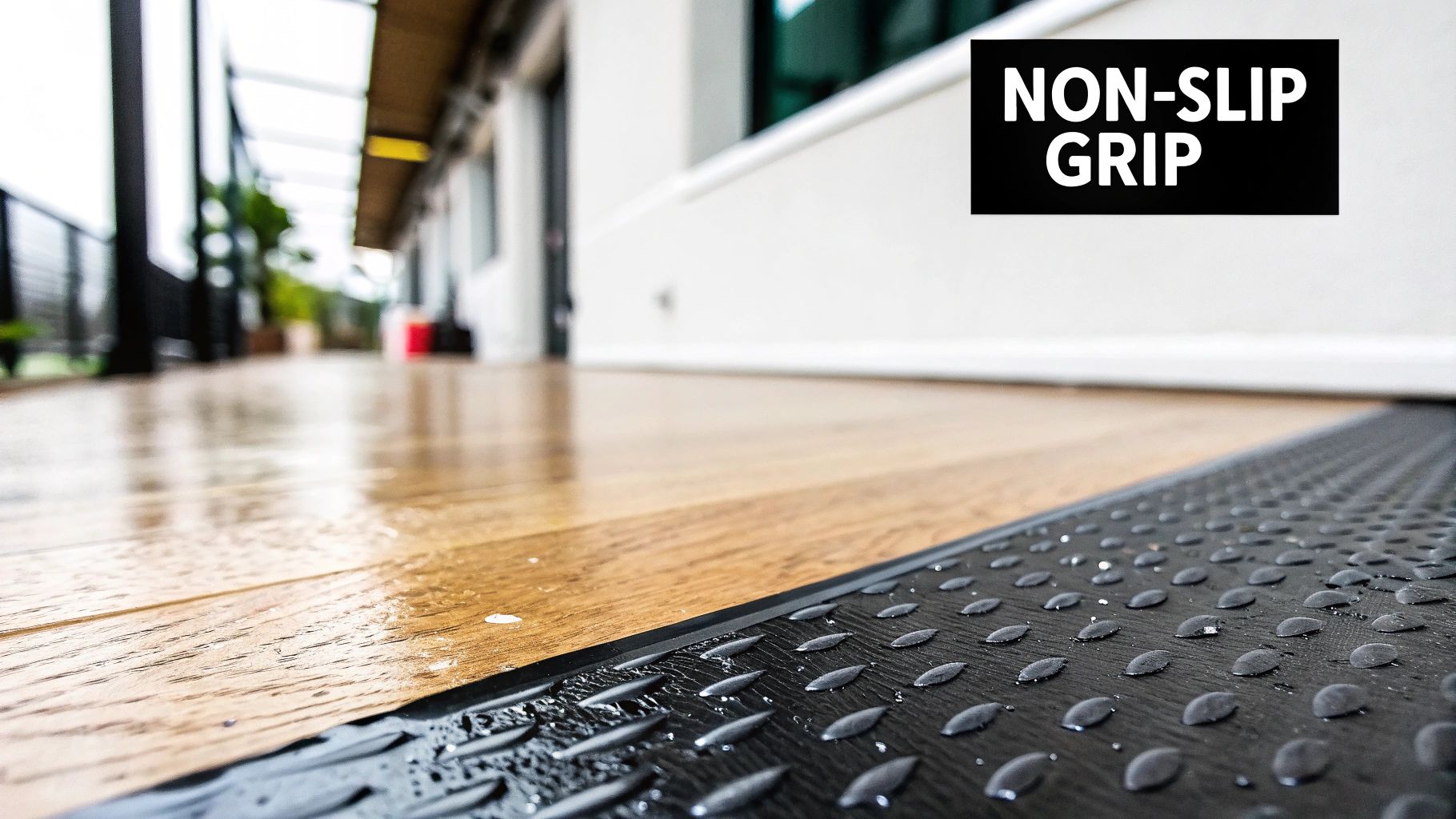
To really get what makes this flooring so effective, let's use an analogy. Picture the tires on a race car. A slick tire is perfectly smooth, designed for maximum contact on a dry track. But the second you add a little water, it's a recipe for disaster. Now, think about a rain tire. It’s covered in deep grooves and intricate patterns designed specifically to push water away and keep a solid grip on the road.
Non-slip vinyl flooring works on a very similar principle. It’s not just a flat surface with a pretty picture on it; it’s a system carefully designed to perform when things get slippery. Two key elements are responsible for this high-traction surface: the wear layer and the physical texture.
The Science Behind the Grip
Every vinyl plank is protected by a transparent topcoat called the wear layer. This is what shields your floor from scratches, scuffs, and spills. On non-slip vinyl, this layer gets an upgrade. It’s often infused with microscopic additives, like aluminum oxide or tiny ceramic beads, which create a high-friction finish. You can't really feel it, but it works wonders for increasing grip, especially when the floor is wet.
This invisible technology works in tandem with the physical texture of the plank itself. We’re not talking about a printed pattern; this is a real, three-dimensional surface you can feel.
The core idea behind non-slip flooring is to create microscopic peaks and valleys on the surface. This texture breaks the surface tension of water, stopping that slick, dangerous film from forming and allowing your shoe to make solid contact with the floor.
This intentional engineering is what turns a standard vinyl floor into a genuine safety solution. It's no surprise that its popularity has skyrocketed, particularly in homes and businesses where preventing falls is a major concern. In fact, the global vinyl flooring market was valued at USD 33.9 billion and is projected to hit USD 63.8 billion, partly fueled by this growing demand for safer flooring.
To give you a clearer picture, here’s a quick breakdown of what makes this flooring so special.
Key Features of Non Slip Vinyl Flooring at a Glance
| Feature | How It Works | Primary Benefit |
|---|---|---|
| Micro-Textured Wear Layer | The top layer is infused with additives like ceramic beads or aluminum oxide. | Creates high surface friction to grip footwear, even when wet. |
| Embossed Surface | The vinyl is physically pressed with patterns like wood grain or stone textures. | Channels away water and provides multiple points of contact for your feet. |
| Durable Construction | Made from resilient synthetic materials built to withstand heavy foot traffic. | Maintains its non-slip properties over time without wearing down quickly. |
This combination of features ensures that the floor isn't just safe on day one, but remains a reliable, high-traction surface for years to come.
Texture and Embossing
The most noticeable feature that contributes to the floor's grip is its embossed texture. Manufacturers use sophisticated methods to press realistic patterns—like the grain of a wood plank or the clefts in a piece of slate—directly into the vinyl.
There are a couple of ways they do this:
- Embossed in Register (EIR): This is the high-end approach where the texture perfectly matches the printed visual design. If you see a knot in the wood pattern, you can actually feel it underfoot. This creates an incredibly authentic look and feel with slip resistance built right in.
- General Embossing: This method applies a more uniform texture across the entire plank, like a subtle pebble or leather-like finish. It enhances grip without needing to line up with a specific visual pattern.
Both techniques result in an uneven surface that gives your feet multiple points of contact, ensuring you feel stable and secure. This smart technology is a cornerstone of modern flooring, especially with luxury vinyl. You can learn more by checking out our guide on what luxury vinyl plank flooring is and how it's constructed. It's this level of detailed engineering that transforms a standard floor into a dependable, non-slip surface.
How This Flooring Performs in the Real World
While the technical specs are interesting, what really matters is how non-slip vinyl flooring holds up in your home or business. It’s one thing to understand the science behind it, but it’s another to see the real, tangible difference it makes every single day. This isn't just a floor covering; it's a practical upgrade for a safer, more durable space.
The biggest, most immediate benefit is, of course, enhanced safety. Slips and falls are a top cause of injuries at home, especially in certain high-risk spots. Just think about all the places where water is a constant threat: your kitchen, the bathroom, the mudroom, or even the entrance to a shop on a rainy day.
In these areas, a regular floor can turn into a slick hazard in seconds. A bit of spilled oil while cooking, water splashed out of the tub, or melted snow tracked in from outside can create a genuinely dangerous situation. Non-slip vinyl is specifically designed to tackle this problem, giving you solid footing even when the surface is wet.
A Safer Foundation for Everyone
This built-in safety isn't just for a few "what if" scenarios; it gives you constant peace of mind for everyone who walks on it.
- For Homes with Kids: Children are a whirlwind of activity. Their sudden sprints and inevitable spills make slip resistance an essential feature for any family home. This flooring gives them a safer surface to be, well, kids.
- For Older Adults: A slip-and-fall can be devastating for seniors or anyone with mobility issues. Non-slip flooring is a simple way to create a more secure environment that promotes independence.
- For Pet Owners: Our four-legged family members are notorious for tracking in water or sloshing their water bowls. A floor with good traction is safer for them and for you.
You really can't put a price on the peace of mind that comes from reducing this common risk. It turns a busy kitchen from a potential hazard zone into the secure heart of the home and transforms a restaurant entryway into a safer, more welcoming space for every customer.
The best part is that non-slip vinyl delivers this critical safety feature without forcing you to compromise on style. You can have the beautiful look of natural hardwood or slate, all while knowing your floor is actively helping to prevent accidents.
This blend of safety and good looks is a game-changer, but the advantages don't end there. The very same features that make this flooring so safe also make it tough enough to handle anything life throws at it.
Built for the Grind of Daily Life
Beyond its incredible grip, non-slip vinyl flooring is famous for its durability. That hard-working wear layer providing all the surface friction also doubles as a shield against daily wear and tear. This isn't a fragile floor you have to tiptoe around; it's made to perform.
Picture a bustling coffee shop or a chaotic family mudroom. There's constant foot traffic. Chairs get scooted, toys are dropped, and pet nails scratch across the surface. Non-slip vinyl is built for exactly this kind of action. Its wear layer fights off scratches, scuffs, and dents, keeping your floor looking great for years.
This toughness also applies to water. Because it's made from synthetic materials, the planks won't swell, warp, or buckle when they get wet. Spills can be wiped right up without a panic, making it the perfect solution for basements, laundry rooms, and bathrooms where moisture is always a factor.
It's always smart to see how different materials stack up against each other. For a more detailed comparison, take a look at our guide on choosing the best flooring for high traffic areas.
In the end, this combination of safety and strength offers incredible long-term value. You're making a single investment in a floor that not only protects the people you care about but also stands up to the rigors of a busy life with very little upkeep. It’s this two-for-one benefit that makes non-slip vinyl such an intelligent, practical choice.
How to Choose the Right Non Slip Vinyl Flooring
Picking the perfect non-slip vinyl flooring goes way beyond just finding a color you love. It’s really about matching the floor’s built-in features to the real-world demands of your space. Before we get into the nitty-gritty of non-slip vinyl, it helps to see where it fits in the bigger picture, which you can explore in this definitive guide to various flooring options.
Making the right call means understanding the different vinyl types, knowing what the safety ratings actually mean, and choosing a texture that gives you both great grip and great style.
Comparing Popular Vinyl Types
First things first, you'll need to decide on the format. The most common choices you'll see are Luxury Vinyl Tile (LVT), Vinyl Sheet, and even Vinyl Composition Tile (VCT) in some settings. While they're all great with water, they have some key differences in how they look, how they're installed, and what they cost.
To make things a bit clearer, here's a quick breakdown to help you compare the main players side-by-side. This table should help you figure out which option aligns best with your project's goals, whether you're prioritizing style, budget, or durability.
Comparing Non Slip Vinyl Flooring Types
| Feature | Luxury Vinyl Tile (LVT) | Vinyl Sheet | Vinyl Composition Tile (VCT) |
|---|---|---|---|
| Appearance | Hyper-realistic wood & stone looks; individual planks/tiles for custom designs. | Comes in large rolls; seamless look with fewer patterns available. | Classic, often speckled look; popular in commercial or retro styles. |
| Installation | Click-lock or glue-down planks/tiles. DIY-friendly; damaged pieces can be replaced. | Professional installation recommended due to large size; creates a waterproof surface. | Glue-down tiles; requires precise installation and regular waxing/polishing. |
| Durability | Excellent. A thick wear layer protects against scratches, dents, and stains. | Very good. The seamless nature prevents water from seeping through joints. | Good, but more porous. Relies on wax finish for protection. High maintenance. |
| Best For | Kitchens, basements, living areas, and light commercial spaces where style is key. | Bathrooms, laundry rooms, and any area needing maximum moisture protection. | Schools, hospitals, and high-traffic commercial spaces where cost is a major factor. |
| Grip Factor | Often features embossed textures (EIR) that significantly enhance grip. | Can have textured surfaces, but generally has a smoother finish than LVT. | Typically has a smooth, polished surface; slip resistance depends on the finish applied. |
As you can see, the choice often comes down to balancing aesthetics with practical needs. For most homeowners, LVT hits that sweet spot between beautiful design and robust performance.
In fact, LVT has become a real powerhouse in the flooring industry. It accounted for a massive 64.7% of the total vinyl flooring market revenue, mostly because it blends durability, safety, and high-end design so well. It’s the go-to for homes and even commercial spots like hotels and offices for a reason.
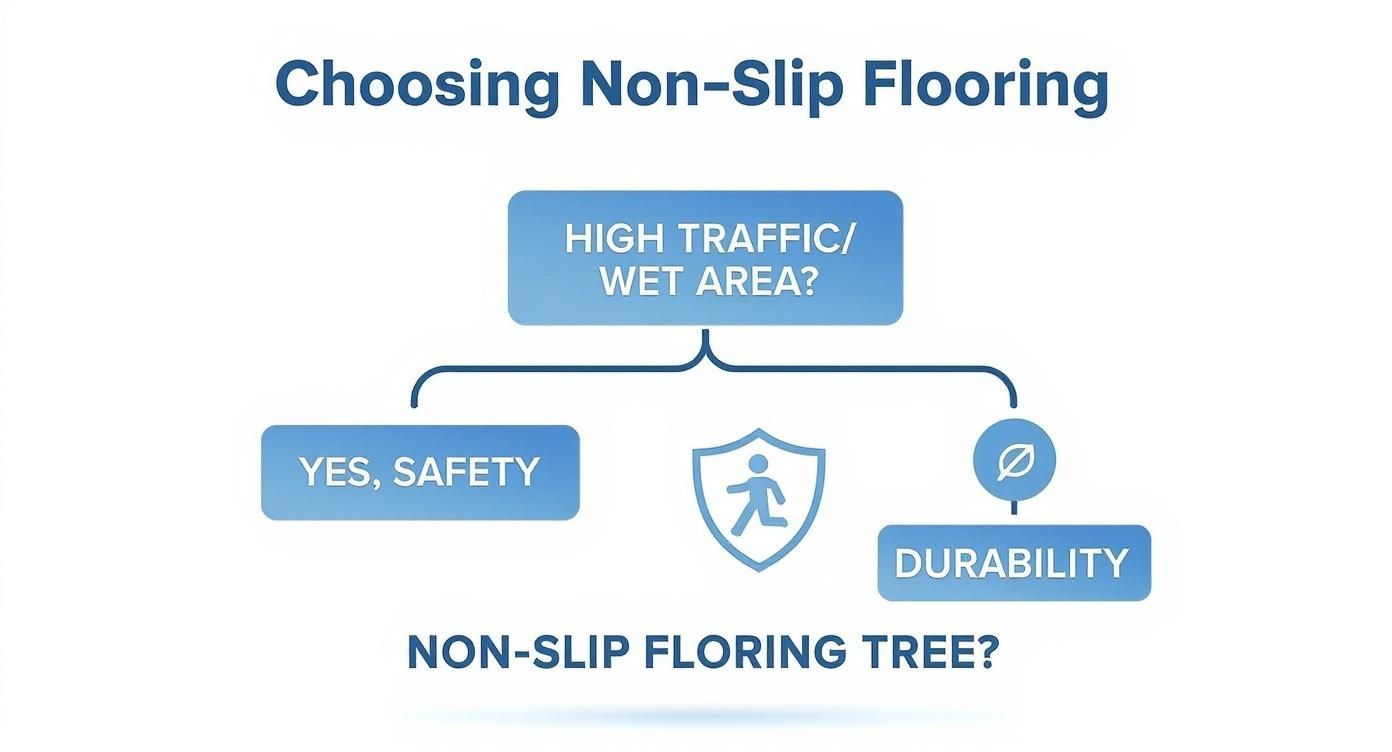
As the infographic highlights, the first step is always to figure out if your space is a high-traffic zone or a wet area. That simple question will point you toward prioritizing either enhanced safety or long-term durability.
Decoding Slip Resistance Ratings
So, how do you actually know how "non-slip" a floor is? That's where slip resistance ratings come in. The most common one you'll run into is the R-Rating, which comes from a "Ramp Test." It grades a floor's grip on a scale, usually from R9 up to R13.
Think of it this way: the higher the R-number, the steeper the ramp a person can walk on without slipping. It's a very practical, real-world measurement.
- R9: This is your baseline. It offers good grip for most dry residential spots like living rooms, hallways, and bedrooms.
- R10: A step up in traction, this is perfect for areas that might get a little wet from time to time—think home kitchens, bathrooms, and entryways.
- R11-R13: Now you're in commercial-grade territory. These ratings are for places that are constantly wet, greasy, or where safety is the absolute top priority. We're talking commercial kitchens, locker rooms, and busy public lobbies.
For a typical family home here in Cumming, an R10-rated floor strikes the perfect balance. It gives you reliable safety in the kitchen and bathrooms without being so textured that it's a pain to clean.
Choosing Textures and Finishes for Better Grip
Finally, let's talk about the feel of the floor. The texture isn't just there to look pretty; it's a crucial part of what makes the floor safe. A textured surface physically creates more friction for your feet.
As you're looking at samples, keep an eye out for these features:
- Embossed in Register (EIR): This is a premium feature where the texture is perfectly synced with the printed wood grain or stone pattern. Those realistic grooves and knots don't just look amazing—they create an uneven surface that gives your feet more to hold onto.
- Matte Finishes: High-gloss floors can look great, but they can also get slick when wet. A matte finish, on the other hand, naturally provides a more "grippy" feel underfoot and does a much better job of hiding small scuffs and footprints.
- Subtle Surface Texturing: Even on vinyl that isn't trying to look like wood, a light, pebbled, or brushed texture makes a huge difference in slip resistance compared to a completely smooth surface.
By carefully weighing the vinyl type, checking its R-Rating, and feeling the physical texture, you can confidently choose a non slip vinyl flooring that not only looks fantastic but also provides a safe, secure foundation for your family.
A Practical Guide to Flawless Installation
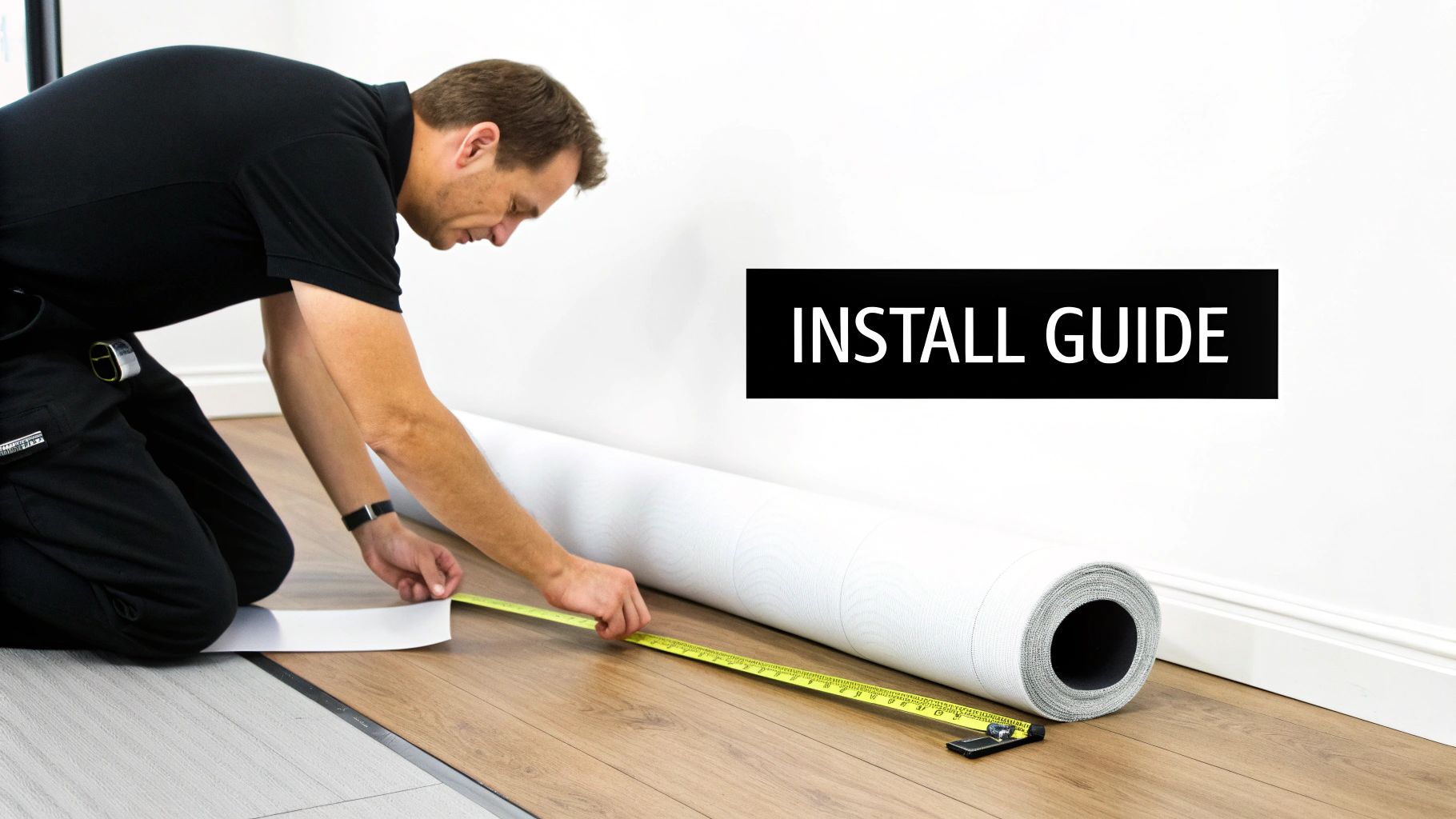
Choosing the perfect non slip vinyl flooring is the fun part, but a flawless installation is what really makes it all come together. A great install doesn't just look amazing—it’s the key to making sure your floor performs safely and stands up to years of daily life. The entire process hinges on one critical, non-negotiable step that pros swear by: prepping the subfloor.
Think of your subfloor as the foundation of a house. If it’s not solid, level, and clean, anything you put on top is bound to have issues down the road. This is the bedrock of a successful vinyl flooring project.
The All-Important Subfloor Preparation
Before you even think about laying down a single plank, the subfloor needs some serious attention. Any little imperfection—a bump, a dip, a leftover patch of old glue—can eventually show through the vinyl. This is called "telegraphing," and it can lead to uneven wear and annoying gaps. Skipping this step is easily the biggest mistake a DIYer can make.
Getting the subfloor ready involves a few key tasks:
- A Deep Clean: The surface has to be totally free of dust, dirt, grease, or old adhesives.
- Getting it Level: Grab a long level and check for high and low spots. You'll want to sand down any high points and fill in the low areas with a leveling compound.
- Repairing Damage: Any cracks, holes, or signs of moisture in the subfloor must be fixed before you move forward.
The goal here is a surface that's as flat and smooth as a sheet of glass. When the subfloor is perfect, the vinyl planks can lock together seamlessly and lay completely flat, preventing future headaches like squeaks or separating seams.
Once your subfloor is in pristine shape, you can figure out the best installation method for your particular space and vinyl type.
Choosing Your Installation Method
You’ve got three main ways to install non slip vinyl flooring: click-lock, glue-down, and loose-lay. Knowing the pros and cons of each will help you decide on the right approach for your project.
1. Click-Lock (The Floating Floor)
This is by far the most popular option for DIY projects and luxury vinyl plank (LVP) flooring. The planks come with a special tongue-and-groove system that just clicks into place. The new floor "floats" over the subfloor without any messy adhesives, making it fast, clean, and pretty forgiving if you’re new to this.
2. Glue-Down
This is the old-school, rock-solid method. Each plank or tile is bonded directly to the subfloor with a strong adhesive. This creates an incredibly stable and tough floor, which is why it’s the go-to for busy commercial spaces or anywhere you’ll have heavy rolling loads, like wheelchairs or equipment carts.
3. Loose-Lay
Loose-lay vinyl is pretty clever—it has a high-friction backing that grips the subfloor on its own. You just lay the planks tightly against each other, and their own weight and backing keep them firmly in place. It's the easiest to install and replace, but it demands a near-perfectly level subfloor to work properly.
Knowing When to Call a Professional
While click-lock floors have made DIY installation more achievable than ever, sometimes calling in a professional is the smartest move you can make. Getting that perfect, seamless finish takes real skill, especially when dealing with tricky layouts or a problematic subfloor.
You should seriously consider hiring an expert if:
- Your subfloor has major issues or needs a lot of leveling work.
- The room has a complicated shape with lots of angles, stairs, or obstacles to cut around.
- You've chosen a glue-down or sheet vinyl product, which requires more technical precision.
- The warranty on your flooring requires professional installation to stay valid.
At the end of the day, a professional installation is an investment in peace of mind. It ensures your non slip vinyl flooring is put down right, looks beautiful, and provides the safety and durability you expect for your Cumming home for years to come.
Keeping Your Floor Looking and Gripping Like New
You’ve made a great investment in a floor that’s safe, stylish, and built to last. Now, let's talk about how to protect it. A simple care routine isn't just about aesthetics; it’s about preserving that all-important textured surface that gives the floor its incredible grip.
Think of it like the tread on a car tire. If you let that tread get caked with mud or grime, it loses its ability to grip the road. It’s the same exact principle with your non-slip floor. A little consistent cleaning is all it takes to keep it performing safely and looking fantastic for years.
Your Simple Weekly Cleaning Routine
The secret to long-term success is consistency, not intensity. You don't need to get on your hands and knees for a deep scrub—in fact, that can often do more harm than good. A simple, two-part process is really all you need.
First, make a habit of sweeping or dust-mopping every day or two. This quick pass picks up the loose dirt, dust, and grit that can act like fine-grit sandpaper under your feet, slowly dulling the finish and wearing down that essential non-slip texture.
Once a week, it's time for a light mopping. The key here is using the right cleaner. You'll want a pH-neutral cleaner made specifically for vinyl floors. Anything too acidic or alkaline can eat away at the protective wear layer, compromising both its look and its grip. A small amount mixed with warm water is plenty.
Key Takeaway: The goal is to clean the surface, not coat it. Stay far away from "mop and shine" products or heavy-duty polishes. They do the opposite of what you want by filling in the micro-grooves that provide slip resistance, leaving behind a dangerously slick film.
What to Avoid at All Costs
Keeping your non-slip vinyl flooring in prime condition is just as much about what you don’t do. The wrong tools or chemicals can cause permanent damage or completely undo the safety features you chose it for.
Make sure these common culprits stay out of your cleaning arsenal:
- Abrasive Scrubbers: Things like steel wool, scouring pads, and overly stiff brushes will leave scratches and permanently dull the surface. Stick to soft cloths or microfiber mop heads.
- Harsh Chemicals: Ditch any cleaners with ammonia, bleach, or abrasive detergents. They can strip the floor's factory finish and even cause it to discolor over time.
- Waxes and Polishes: These are the enemy of non-slip flooring. They're designed for other materials and will create a slippery, unsafe buildup on your vinyl's texture.
- Too Much Water: Vinyl is water-resistant, but it's not waterproof. Always use a damp mop, not a sopping wet one. Flooding the floor can allow water to work its way into the seams.
For a deeper dive into best practices, check out our guide on how to keep your vinyl floors looking new for years.
A Little Proactive Protection Goes a Long Way
Finally, a few preventative steps can make a world of difference. Place good-quality doormats at every entrance to your home. They act as the first line of defense, trapping the vast majority of dirt, grit, and moisture before it ever touches your floors.
It's also a smart idea to put felt pads on the bottom of your furniture legs—chairs, tables, sofas, you name it. This one simple trick prevents scuffs and scratches when things get moved around. By pairing these proactive habits with a gentle cleaning routine, you’ll ensure your non-slip vinyl flooring stays a safe, beautiful, and valuable part of your Cumming home for a long, long time.
Common Questions About Non-Slip Vinyl Flooring
Even after you've seen all the benefits, a few questions might still be bouncing around in your head. That's completely normal—choosing the right floor is a big decision. We've heard just about every question there is, so we’ve put together answers to the ones that come up most often.
Is All Vinyl Flooring Naturally Non-Slip?
This is probably the biggest misconception out there. People assume that because vinyl handles water so well, it must be slip-resistant. But that's not necessarily true.
A standard vinyl plank with a smooth, glossy finish can get surprisingly slick when wet, just like glazed tile. True non-slip vinyl flooring is different. It’s specifically engineered with a textured surface and a specialized wear layer that's designed to create friction and give you a solid grip underfoot. If you need that extra safety, make sure the product you're looking at is clearly labeled as "slip-resistant."
How Do I Clean It Without Making It Slippery?
The trick is to clean the texture without leaving anything behind. Your best bet is a simple mix of warm water and a pH-neutral cleaner. The goal is to lift dirt out of the tiny grooves, not to coat the surface.
Definitely avoid using:
- Oil-based soaps
- Waxes or acrylic polishes
- Any "mop and shine" type products
These cleaners do more harm than good. They build up a film that fills in the very texture designed to keep you safe, creating a slick, hazardous surface. A great pro tip is to do a final rinse with a second mop and clean water—it ensures you've removed all the cleaner, leaving nothing but traction behind.
When cleaning non-slip vinyl, think of it as removing grime from its textured surface, not adding a glossy topcoat. A clean, residue-free floor is a safe floor.
Can It Be Installed Over Existing Tile?
Absolutely, and in most situations, it’s a fantastic way to go. Click-lock Luxury Vinyl Tile (LVT) is perfect for this, as it can be installed as a "floating floor" right over old ceramic or porcelain. This approach can save you a lot of time, mess, and money by avoiding a full demolition.
The one non-negotiable? Your existing tile floor has to be level, clean, and in good shape. If the grout lines are really deep or you have some uneven spots, a professional installer will first apply a self-leveling compound. This step is crucial because it creates a perfectly smooth canvas, which is exactly what you need for a new floor that looks great and lasts for years.
Does Non-Slip Flooring Look Different?
Nope! And that's the beauty of modern flooring technology. The days of having to choose between safety and style are long gone. Today's slip-resistant textures are so well-designed that they're a seamless part of the look.
For instance, the texture can be designed to follow the grain in a realistic wood plank or mimic the subtle, uneven surface of natural stone. You get access to the same stunning, high-end designs you'd find in standard LVT, so there's no compromise. It’s truly the best of both worlds: a gorgeous floor that gives you priceless peace of mind.
At Flacks Flooring, we believe a safe home is a beautiful home. If you're ready to explore flooring that offers both style and security, our team in Cumming is here to help you find the perfect non-slip vinyl solution for your space. Visit our showroom or schedule an in-home consultation today.