
You've probably seen it in high-end design magazines or historic homes and thought, "Wow, that floor is stunning." That's the herringbone pattern. When crafted from oak, it becomes something truly special. It's not just about laying planks side-by-side; it's a specific art where rectangular boards are arranged in a distinctive zigzag, creating a V-shape that adds instant movement and sophistication to a room.
The Enduring Appeal of Oak Herringbone
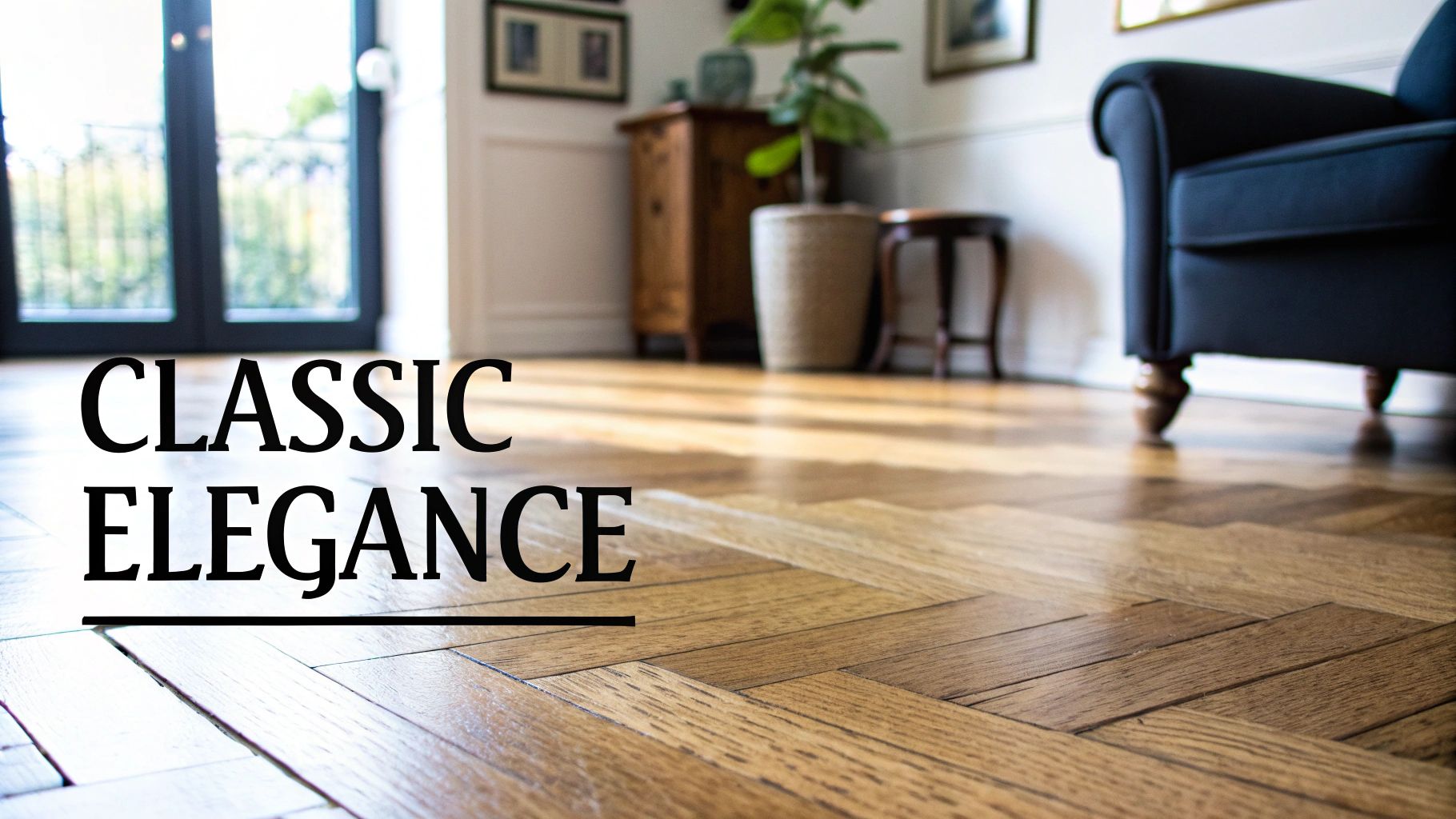
Think of an oak herringbone floor less as a simple surface and more as a foundational piece of your home's design. It acts like the perfect frame for a piece of art, elevating everything else in the room—from the furniture to the decor—without stealing the show. That unique V-shaped layout creates a subtle illusion of motion, which can make a narrow hallway feel wider or a small study feel more expansive and dynamic.
This isn't some new fad. The herringbone pattern has serious history, first documented way back in 1539 at the iconic Chateau de Fontainebleau in France. Named because it looks a bit like the skeleton of a herring fish, this intricate pattern became the gold standard in European palaces during the Renaissance before eventually making its way to North America.
Classic Charm Meets Modern Durability
So, why does oak herringbone feel just as right in a modern Milton home as it does in a historic French chateau? Versatility. It has this incredible ability to bridge the gap between classic grandeur and clean, contemporary style, making it a fantastic choice for the diverse homes you see across Cumming and Johns Creek.
The secret to its longevity isn't just aesthetic. The interlocking nature of the herringbone pattern distributes weight and stress more evenly across the floor than a traditional parallel layout. This built-in structural advantage makes it incredibly durable and ready to handle everything from kids and pets to dinner parties.
Pairing this timeless pattern with oak is what makes it a true powerhouse. Oak is legendary for its strength and gorgeous, distinctive grain, which brings a natural warmth to any space. Whether you're after a rustic, wire-brushed texture or a smooth, contemporary finish, oak provides the perfect canvas.
This powerful combination of a sophisticated pattern and a rock-solid material creates a floor that’s not just beautiful, but also a smart, lasting investment. For more on what makes hardwood so special, take a look at our guide on the timeless allure of hardwood flooring.
Choosing Between Herringbone, Chevron, and Plank Patterns
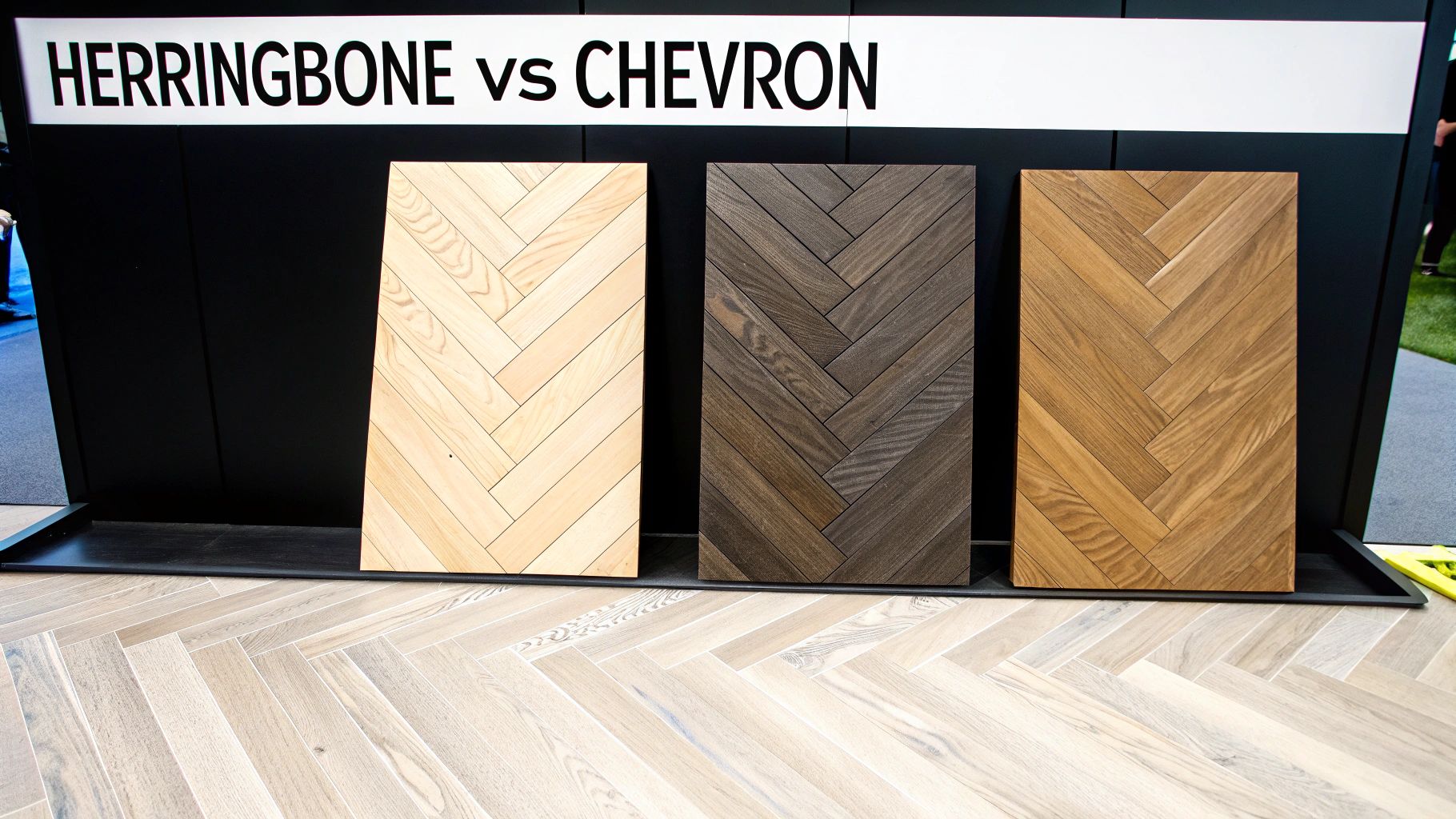
Settling on oak hardwood is a great first step, but the real magic happens when you choose the pattern. The way the wood is laid out can completely transform a room, elevating it from just a floor to a true design statement. While classic planks have a timeless appeal, an oak herringbone floor brings a dynamic elegance that’s hard to beat.
Of course, herringbone isn’t the only game in town. Its stylish cousin, chevron, often gets mistaken for it, but the two create surprisingly different visual effects. Getting to know the unique personalities of herringbone, chevron, and standard planks is the secret to picking a floor that feels perfect for your home and style.
The Visual Language of Each Pattern
Think of it like building with wooden blocks. A traditional plank floor is the simplest approach: you lay the blocks end-to-end in straight, clean lines. It’s a familiar, calming look that can make a room feel longer when the planks follow the longest wall.
An oak herringbone floor takes those same rectangular blocks and arranges them in a staggered, interlocking zigzag. You place the end of one plank against the side of another, creating a beautiful sense of movement and texture. It's a classic look that feels both historic and full of energy.
Chevron, on the other hand, is all about crisp, clean lines. For this pattern, the ends of each plank are cut at an angle, usually 45 degrees. When these mitered ends meet, they form a perfect "V" shape. This creates a continuous, arrow-like zigzag that gives the floor a sharp, modern feel and really directs the eye.
The core difference is all in the plank ends. Herringbone uses simple rectangular planks to get that classic, interlocking look. Chevron requires boards with precisely angled cuts to create its clean, continuous 'V' pattern, which often gives a space a more formal, contemporary vibe.
How Pattern Influences Your Space
The pattern you choose does more than just sit there—it actively shapes how your room feels.
- Herringbone: The staggered zigzag creates a sense of motion that can make a space feel larger and more dynamic. It's incredibly versatile, looking just as stunning in a traditional Milton home as it does in a modern Johns Creek condo.
- Chevron: The strong, directional "V"s are fantastic for creating a focal point. A chevron pattern can make a hallway feel longer or guide your gaze toward a fireplace or a beautiful view. Its clean geometry is a natural fit for contemporary and minimalist design.
- Plank: A classic for a reason. Straight planks provide a solid, neutral foundation that lets other design elements—like furniture, art, or area rugs—be the star of the show. It's a safe but incredibly effective choice for almost any style of home.
To make the differences even clearer, here’s a quick comparison of how these patterns stack up against each other.
Comparing Popular Wood Flooring Patterns
| Pattern | Visual Effect | Installation Complexity | Best For |
|---|---|---|---|
| Plank | Classic, linear, understated. Can make a room appear longer or wider. | Low | Creating a neutral foundation that allows other decor to shine. Works in any room or style. |
| Herringbone | Dynamic, textured, and full of movement with a classic, elegant feel. | High | Adding visual interest and a sense of luxury. Great for entryways, living rooms, and master bedrooms. |
| Chevron | Sharp, clean "V" shape. Creates a strong sense of direction and formality. | Very High | Making a bold design statement. Ideal for hallways, formal dining rooms, or creating a focal point. |
As you can see, the visual reward of a patterned floor comes with an increase in complexity.
Installation Complexity and Cost Considerations
It’s crucial to understand that a more intricate pattern means more time and money for installation. Laying a standard plank floor is the most straightforward job, requiring the least amount of custom cuts and labor.
Installing an oak herringbone floor, however, is much more involved. Each and every block has to be placed and aligned perfectly, a meticulous process that demands a skilled hand and a lot of patience. This complexity naturally drives up the installation cost.
Chevron is typically the most demanding of all. Since every piece is cut at a precise angle, there is virtually no room for error. Those mitered cuts also lead to more material waste than you'd have with herringbone or plank. As a result, both material and labor costs for a chevron floor are almost always the highest. It's a key factor to consider in your budget before you fall in love with the look.
Selecting Your Perfect Oak Finish and Style
Alright, so you're sold on the beautiful, dynamic look of a herringbone floor. That's a great first step. Now comes the fun part: making it truly yours. This is where we move from the general idea to the specific details that will bring your oak herringbone floor to life, ensuring it fits your home's personality and can handle your family's daily hustle. It’s all about finding that sweet spot between stunning looks and real-world durability.
One of the first big calls you'll have to make is whether to go with solid or engineered oak. People often hear "solid" and think it's automatically better, but for our climate here in Cumming and Forsyth County, engineered oak is almost always the smarter, more stable choice.
Don't think of engineered oak as a compromise—think of it as an upgrade. It’s made with a real top layer of beautiful oak, but it's bonded to a core of high-quality plywood layers. This construction is a game-changer because it stops the wood from expanding and contracting so much with humidity changes, preventing those annoying gaps and warps you can get with solid wood.
Solid vs. Engineered Oak: A Quick Look
Getting this choice right is fundamental to how your floor will perform and last for years to come. Each one has its place, depending on your home's specific conditions.
- Solid Oak: This is the classic—one single piece of hardwood from top to bottom. It feels incredibly premium and can be sanded down and refinished for generations. The downside? It's much more sensitive to moisture and temperature swings.
- Engineered Oak: You get the exact same authentic look and feel because the top layer is genuine oak. The real magic is its dimensional stability, which makes it the go-to choice for installations over concrete or in homes with fluctuating humidity.
Given its stability, engineered oak is the clear winner for most homes. To get even deeper into the weeds on this, our complete guide on how to choose hardwood flooring is a great resource.
Defining Your Floor's Personality with Finishes and Textures
The finish is like your floor's clear coat of armor. It’s the first line of defense against spills, scuffs, and foot traffic, but it also plays a huge role in the final look.
A matte finish, for instance, gives you a very raw, natural look that’s fantastic at hiding small scratches and dust—a real lifesaver in a busy house. If you want a little more glow, a satin finish offers a soft luster that highlights the oak's beautiful grain without being overly shiny or reflective.
The texture you choose adds another layer of character. A smooth-sanded finish is sleek and contemporary, while a wire-brushed texture gently pulls out the softer grain, creating a rustic, lived-in feel that adds depth and is wonderfully forgiving of everyday scuffs.
The Transformative Power of Stain Color
The stain is where your vision really comes together. The color you pick can completely change the vibe of a room, making your oak herringbone floor a bright, airy foundation or a dark, dramatic anchor for your design. Oak has a beautiful, open grain that soaks up stain wonderfully, giving you a huge palette to play with.
Just think about the mood you're going for.
- Light and Natural Stains: Shades like a natural white oak or a light gray can make a space feel bigger and brighter. They're perfect for that clean, minimalist, or coastal vibe.
- Medium and Warm Stains: You can't go wrong with classic honey, golden, or caramel tones. They bring a timeless warmth to a room and work with almost any decorating style, from traditional to modern farmhouse.
- Dark and Dramatic Stains: Looking to make a statement? Deep espresso, rich jacobean, or charcoal stains feel incredibly luxurious and sophisticated. They create a bold look that’s perfect for a formal dining room or a high-end living area.
To get some great ideas and see what's popular right now, check out these top oak hardwood floor stain colors. By thoughtfully combining the right material, finish, texture, and stain, you'll create a floor that is a perfect reflection of you.
The Oak Herringbone Installation Process Explained

Before a single board is laid, you've got decisions to make about the wood itself. This quick visual guide breaks down the key choices—the type of oak, the finish, and the stain—that will shape the look and feel of your final floor. Getting these right is the first step, as each choice influences how the installation needs to be handled.
The stunning beauty of an oak herringbone floor doesn't happen by accident. It's the result of a precise, almost surgical installation process. Unlike laying simple, straight planks where you might have a little wiggle room, the tight geometry of herringbone demands perfection right from the very beginning.
In fact, the most important work happens before the first piece of wood even enters the room. It all comes down to preparation.
Subfloor Preparation: The Most Critical Step
Think of your subfloor as the foundation of a house. If it’s not solid, level, and dry, everything you build on it is at risk. This is the absolute golden rule for any high-quality flooring project, and for a detailed pattern like herringbone, it's non-negotiable.
The interlocking nature of the pattern will magnify even the slightest flaw in the surface below.
- Level and Flat: A professional installer is aiming for a subfloor with no more than a 3mm deviation over a 2-meter span. Anything more than that can cause the boards to rock, creating gaps, squeaks, and an unstable floor down the road.
- Clean and Dry: Every bit of dust, old adhesive, or debris has to go. This ensures the new glue can form a powerful bond. If you have a concrete subfloor, which is common in many homes, moisture testing is a must. Trapped moisture is the enemy of wood, and it will cause warping.
A perfectly prepared subfloor isn't just a recommendation; it is the single most important factor in ensuring the longevity and beauty of your oak herringbone floor. Skipping this step is the fastest way to a failed installation.
Understanding Installation Methods
Once the subfloor is pristine, the real artistry begins. The best method for your project will depend on whether you chose solid or engineered oak.
By far, the most trusted and durable method is the glue-down installation. This is exactly what it sounds like: a specialized adhesive is troweled onto the subfloor, and each individual plank is carefully set into the glue. It's more labor-intensive, for sure, but the result is an incredibly solid-feeling floor with no hollow sounds or movement underfoot. It’s the gold standard for a pattern this intricate.
While some engineered products come with "floating" or click-lock systems, most seasoned pros will steer you towards a glue-down for the superior stability it provides a herringbone layout.
Understanding the True Cost of an Oak Herringbone Floor
Let's talk numbers. When you're budgeting for a new floor, it's easy to get fixated on the price per square foot you see on the box. But with something as special as an oak herringbone floor, that number is just the starting point. The final invoice reflects a combination of high-quality materials, the meticulous skill of the installer, and the crucial prep work that makes it all possible.
First, you have the wood itself. While solid oak is a classic, our Georgia humidity often makes engineered oak a smarter, more stable choice—you get the exact same look without the worry. The grade of that oak also moves the needle on price. A "clear" grade, with its flawless, uniform appearance, will cost more than a "rustic" grade that's full of knots and character.
Breaking Down the Core Expenses
The real difference-maker? The labor. Laying a herringbone pattern is a true craft. It's not about quickly clicking planks together; it's a slow, methodical process involving hundreds of precise cuts to get that perfect, interlocking zigzag. This is absolutely a job for an experienced pro, not a weekend warrior.
Here are the main expenses you should plan for:
- Material (The Wood): This is your baseline. For a quality engineered oak, you can expect to be in the $7 to $15 per square foot range, though specialty finishes can go higher.
- Installation Labor: This is a big one. Because of the complexity, herringbone installation costs a lot more than a standard plank floor. It’s not uncommon for the labor bill to equal or even exceed the cost of the wood itself.
- Subfloor Preparation: This is non-negotiable. Your subfloor has to be perfectly flat and dry. That might mean grinding down high spots, using leveling compounds, or even laying new plywood, all of which add to the total.
- Removal of Old Flooring: Don’t forget about what’s there now. Tearing out and hauling away old carpet, tile, or existing hardwood is an extra labor charge that’s easy to overlook when you're just starting to budget.
Don't Forget the Finishing Touches
Beyond the floor itself, a handful of smaller costs are essential for that polished, finished look. These are the details that truly complete the project and protect your beautiful new floor for years to come.
The true cost of a premium floor is a combination of materials, expert labor, and essential prep work. Budgeting for all three ensures a flawless result that lasts for generations, adding significant value and appeal to your home.
Think about things like new baseboards or shoe molding to frame the room, transition strips for doorways, and the right underlayment or moisture barrier. On their own, they might seem small, but these "hidden" costs add up. It's critical to make sure they're itemized in any quote you get.
A good, detailed quote should break everything down, from the wood to the disposal fees. For a closer look at what goes into a professional installation, our guide on hardwood flooring installation costs is a great resource. When you understand the full picture, you can invest with confidence, knowing you're getting more than just a floor—you're getting a timeless feature for your home.
Keeping Your Herringbone Floor Looking Brand New
An oak herringbone floor is more than just a surface to walk on; it's a major feature that adds a ton of character and value to your home. The good news is, keeping it looking incredible for years to come isn't about back-breaking work. It's really about forming a few simple, smart habits.
Think of the finish on your floor as its protective shield. Your main job is to protect that shield, and most of that comes down to a simple cleaning routine that prevents fine grit and dirt from acting like sandpaper underfoot.
The Weekly Cleaning Game Plan
A little bit of consistent cleaning goes a long, long way. You're not aiming for a deep scrub every time, just for removing the daily grime that can slowly dull the finish.
Your go-to toolkit is pretty simple:
- A soft-bristle broom or dust mop: This is your best friend for quick, daily sweeps to grab dust, crumbs, and pet hair.
- A vacuum with a hardwood setting: Make sure the beater bar is turned off. The soft bristles are great for getting into the V-shaped grooves of the herringbone pattern without scratching anything.
- A pH-neutral hardwood floor cleaner: This is a big one. Stay away from things like vinegar, ammonia, or generic all-purpose cleaners. They're often too acidic and can eat away at your floor's protective finish over time.
- A microfiber mop: When it's time for a slightly deeper clean, use a microfiber mop that's just barely damp. You never want to see standing water on a hardwood floor—it's wood's number one enemy.
A word of caution: Never, ever use a steam mop on your hardwood floors. The combination of high heat and moisture can force water deep into the wood and between the boards, leading to nightmares like warping, cupping, and permanent discoloration. It's one of the most common and damaging mistakes we see.
Smart Ways to Prevent Damage Before It Happens
Honestly, the best defense is a good offense. Stopping damage from happening in the first place is far easier than fixing it later, especially in a busy family home in areas like Cumming or Johns Creek.
Start right at the front door. Placing a good quality doormat at every entrance is your first line of defense. They do a fantastic job of trapping the dirt, grit, and moisture from shoes before they even have a chance to get onto your beautiful oak herringbone.
Another absolute must is putting felt furniture pads on the bottom of everything—chairs, tables, the sofa, even heavy cabinets. These little stick-on pads are cheap, but they are worth their weight in gold for preventing scratches and scuffs when furniture gets scooted around. Just be sure to check them once a year or so, as they can wear down or pick up debris. For an active family, this isn't optional; it's essential.
Your Top Questions About Oak Herringbone Flooring Answered
When you're thinking about a flooring project as specific as oak herringbone, you're bound to have some questions. It’s a big decision! We hear a lot of the same concerns from homeowners around Cumming and Forsyth County, so let's tackle them head-on and give you the answers you need.
Is Oak Herringbone a Good Idea if I Have Kids and Pets?
It’s actually a fantastic choice. Oak is naturally one of the tougher hardwoods, so it’s already built to handle the chaos of a busy family life. Add a tough, modern polyurethane finish, and you’ve got a surface that’s highly resistant to scratches and spills.
Here’s the real secret weapon, though: the herringbone pattern itself. It’s brilliant at hiding the little scuffs and dings that are just a part of life with kids and pets. Those minor imperfections get lost in the pattern, keeping your floor looking incredible for much longer. For maximum peace of mind, engineered oak is an excellent upgrade, as its construction is exceptionally stable and ready for anything.
Can I Put an Oak Herringbone Floor on My Concrete Slab?
You absolutely can, but this is one of those jobs where you really need a pro. Installing wood over concrete has to be done perfectly, or you’re asking for trouble down the road. The slab has to be completely clean, dead-level, and, most importantly, bone dry.
A high-quality moisture barrier is non-negotiable. It’s the only thing that stops dampness from the slab from wicking up into your beautiful wood, which is a major concern here in Georgia with our humidity.
When you're going over concrete, engineered oak is always the best choice. Its layered design is built to resist the subtle moisture and temperature changes that come from a slab, preventing the warping and buckling that can ruin a solid wood floor.
Will an Oak Herringbone Floor Help My Home's Resale Value?
Without a doubt. An oak herringbone floor is a showstopper that can make a huge difference when you decide to sell. It’s an immediate signal of quality and high-end taste that buyers notice the second they walk through the door.
Think of it from a buyer's perspective. They see a unique, beautifully crafted floor and it sets a positive tone for the entire house. Real estate agents will tell you that features like this make a home stand out from the competition. It creates a memorable, sophisticated impression that often translates into stronger interest, quicker sales, and better offers. It's not just a floor; it's an investment in your home's future value.
Ready to explore the timeless beauty of an oak herringbone floor for your home in Cumming, Johns Creek, or Milton? The expert team at Flacks Flooring is here to guide you through every step, from selecting the perfect style to ensuring a flawless installation. Visit our showroom or schedule a consultation today to transform your space with flooring that makes a statement. Learn more at https://flacksflooring.com.