
You’re probably doing what most homeowners in Cumming do when they start shopping for floors. You pick up one oak sample that looks perfect in the showroom, hold another one next to it, then a third, and suddenly every board starts to look either too pink, too gray, too dark, or too trendy.
That confusion is normal. Oak gives you a lot of flexibility, but that’s also why people make expensive mistakes. The right oak wood floor colors don’t just look good on install day. They need to work with Georgia light, Georgia humidity, your cabinets, your wall color, and the way your family lives.
I’ve seen the same pattern across Forsyth County, Johns Creek, and Milton. Homeowners get pulled toward whatever color is popular online, then realize too late that the undertone fights their trim, the sheen shows every speck of dust, or the stain they loved on a sample looks completely different across a full room. Oak is forgiving, but only if you choose with the house in mind.
Choosing Your Perfect Oak Floor Color in North Metro Atlanta
You walk into a new-build in Cumming, see a pale sample under bright showroom lights, and think you’ve found the one. Then it goes into a real house with Georgia afternoon sun, beige trim, a muddy dog coming in from the backyard, and summer humidity working on every board. That is where floor color decisions get expensive.
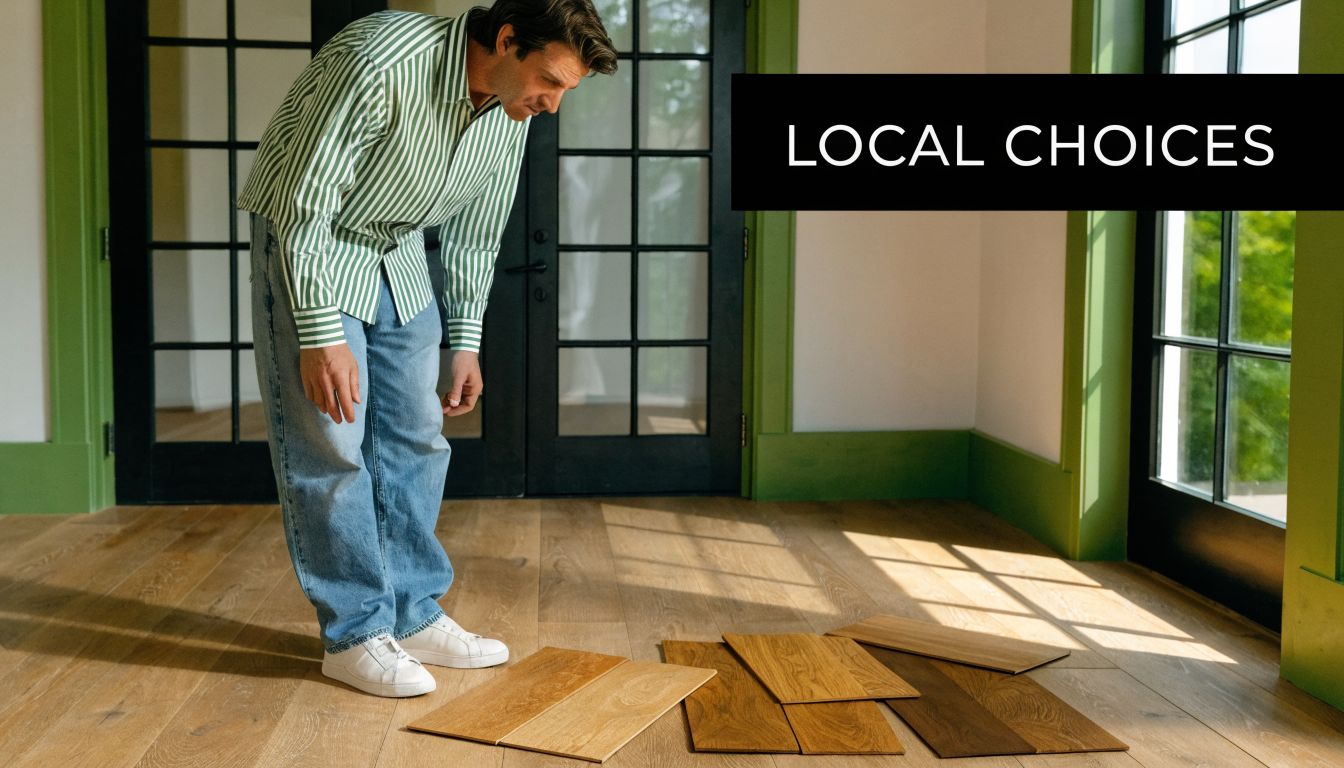
In North Metro Atlanta, the right oak floor color has to fit the house and the way people live in it. Open-concept homes in Cumming and South Forsyth usually look better with calmer, mid-tone floors that carry from the kitchen into the living area without chopping up the space. Johns Creek homes headed for resale benefit from colors that feel current but not trendy. In Milton and the more family-heavy parts of Forsyth County, low-sheen finishes and forgiving color variation matter because kids, pets, red clay, and everyday traffic show up fast.
Oak stays popular because it gives you range without getting risky. You can go warm, neutral, light, medium, or deeper in tone and still end up with a floor buyers recognize as solid, long-term value. If you want a broader look at species before locking into oak, this guide to hardwood species is a useful starting point.
Here’s the rule I give homeowners around Cumming. Pick the floor that still looks right on an ordinary Tuesday, not just on install day. That means ignoring flashy stains, heavy gloss, and extreme colors that fight the house.
A good oak floor should do three things well. It should match the fixed parts of the home, hold up to Georgia conditions, and stay attractive when styles shift in five or ten years. Get those right, and the color decision gets much easier.
Understanding Natural Oak Undertones Red Oak vs White Oak
Start with the species. If you get that wrong, every stain sample becomes a guessing game.
In Cumming, I see homeowners fall into the same trap over and over. They pick a color off a small sample, love it under showroom lights, then hate the installed floor because the wood underneath was working against them the whole time. Oak always brings its own undertone to the job.
Red oak feels warmer and more traditional
Red oak has a natural rosy, pink-beige cast and a more open grain. In a brick-front traditional home in Forsyth County, that warmth can look right at home. It pairs well with cream cabinets, warmer wall colors, and the heavier trim details you see in many older neighborhoods around Cumming and Johns Creek.
It also helps a room feel less stark. If your house gets uneven natural light or already has warm fixed finishes like tan tile, beige countertops, or stained millwork, red oak usually blends in more naturally than white oak.
Here is the warning. If pink undertones bother you now, they will bother you more after the floor is installed across the whole main level. Don’t talk yourself into red oak just because the price looks good.
White oak looks calmer and more current
White oak starts more neutral. It usually reads beige, taupe, or lightly gray depending on the board and finish, and the grain looks tighter and less busy. That is why it fits so many updated homes in South Forsyth, newer builds in Cumming, and transitional interiors in Johns Creek.
It also gives you more room if you want a lighter or more modern color without fighting obvious red or pink undertones. In homes with white cabinetry, black windows, cleaner trim profiles, or open-concept layouts, white oak is usually the better-looking floor.
It is also the tougher-looking species visually. I’m not talking about a dramatic durability gap. I’m talking about day-to-day appearance. White oak tends to hide its age in a cleaner, quieter way.
Red Oak vs White Oak At a Glance
| Attribute | Red Oak | White Oak |
|---|---|---|
| Natural undertone | Warm, pink-beige to reddish | Cooler beige, taupe, sometimes gray-leaning |
| Grain appearance | More open, more pronounced | Tighter, calmer |
| Overall style fit | Traditional, classic, warmer interiors | Modern, transitional, cleaner interiors |
| Hardness | Slightly softer | Slightly harder |
| Aging over time | Warms up more noticeably | Changes more subtly |
How each species behaves over time
This matters in Georgia. Sunlight, humidity swings, and day-to-day traffic all change how a floor looks after installation.
Red oak tends to warm up more as it ages. That can be a real advantage in a classic home where you want the floor to feel rich and established. White oak stays more restrained over time, which is one reason it holds up so well visually in homes chasing a lighter, more current look.
Forsyth County homes also deal with tracked-in red clay, wet shoes, dogs, and HVAC humidity changes through the year. A species with a calmer grain and less obvious color swing often stays easier to live with.
My direct recommendation
Choose red oak if your home leans traditional, your fixed finishes are warm, and you want visible grain with a familiar, established look.
Choose white oak if you want the safest long-term color base for resale in North Metro Atlanta. It works better with today’s cabinet colors, furniture mixes, and lower-sheen finishes. It also gives you fewer fights when you start testing neutral stains.
If you’re still unsure, stop comparing tiny squares. Put full plank samples in your actual house, next to the cabinets and in both morning and evening light. If you want to compare oak with other species before you commit, use this hardwood species guide and narrow the field first.
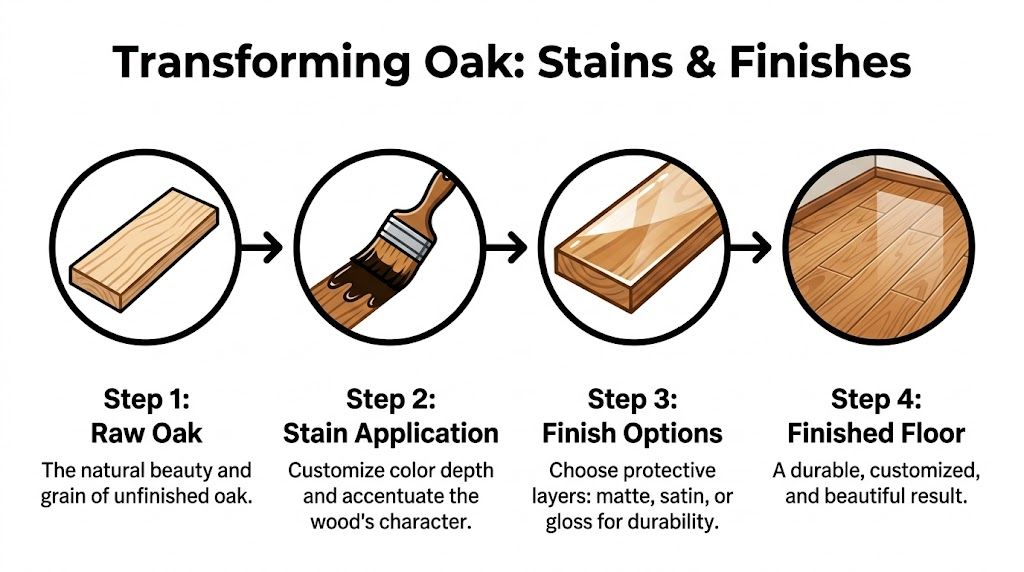
How Stains and Finishes Transform Oak Wood Floors
The biggest mistake I see is people treating stain color like paint. It’s not paint. It interacts with grain, undertone, and sheen, and all three affect what you end up seeing every day.
Start with the wood, not the stain name
“Natural,” “provincial,” “smoked,” and “drift” sound useful on a label, but they don’t tell you enough. The same stain behaves differently on red oak than on white oak because the undertones and grain structure are different.
That’s why test boards matter. Not a tiny chip. An actual sample on the species you’re using, under your lighting, next to your cabinets.
If you skip that step, you’re gambling with the whole project.
What stain actually changes
A stain can push oak lighter, darker, warmer, or cooler. It can also make the grain pop harder or soften the overall look, depending on the color and the cut of the wood.
For oak wood floor colors, most homeowners end up choosing from four lanes:
Natural and light
These keep the room open and bright. They work well in Cumming homes with open-concept layouts, white walls, and mixed wood furniture.Warm medium brown
This is the safest long-term choice for many homes. It hides dust reasonably well, feels grounded, and doesn’t date fast.Cool neutral brown
This works best when the house already leans cooler with gray, greige, black, or crisp white finishes.Dark and dramatic
Dark floors can look sharp, but they show more debris, more scratches, and more contrast. People love them until they live on them.
My advice: If you have dogs, kids, or a busy household, don’t pick the darkest floor in the showroom unless you enjoy constant visual cleanup.
Finish sheen changes the color more than people expect
Sheen is not just a protective layer. It changes how color reads and how wear shows.
A glossy finish bounces light harder. That can make a floor look richer, but it also highlights scratches, dust, and every bit of unevenness. Matte and satin finishes mute that reflection, so the floor looks more natural and usually more current.
According to Panel Town’s hardwood floor color overview, the trend toward matte and satin finishes for 2026 is tied to practical benefits too. These lower-sheen finishes can reduce visible dust and cleaning time by up to 40% and resist micro-scratches 25% better than high-gloss finishes.
That lines up with what I see in real homes. Matte and satin are easier to live with.
My finish recommendations by household type
- Busy family home: Choose satin or matte. You’ll see less dust and fewer fine scratches.
- Pet-heavy house: Stay away from high gloss. It highlights nail marks and everyday wear.
- Rental or resale prep: Pick a low-sheen finish with a broad-appeal color. It photographs well and wears better.
- Formal, low-traffic rooms: You can get away with a little more sheen, but I still lean satin over gloss.
Filler, texture, and why sample boards matter
On more character-heavy grades, filler and grain variation can affect the final tone. That’s one reason two boards with the “same stain” don’t always match the way a homeowner expects.
The fix is straightforward:
- Test on actual boards: Don’t approve from a brochure.
- View morning and evening: Georgia sun changes everything.
- Check next to fixed finishes: Cabinets, trim, brick, countertops, and paint all matter.
- Confirm the topcoat: The final sheen shifts the look.
If you’re comparing topcoat options, this explanation of oil-based or water-based polyurethane is worth reviewing because the top layer affects both appearance and long-term maintenance.
The blunt recommendation
For most North Metro Atlanta homeowners, I recommend a grain-emphasizing natural or medium tone with a matte or satin finish. It’s the most forgiving combination. It looks current without trying too hard, it works in modern farmhouse and traditional homes, and it won’t make you hate your floors after one muddy weekend.
How Light and Decor Influence Your Floor Color Choice
A floor sample in your hand is not the floor in your house. Light changes everything.

I’ve watched homeowners fall in love with a color under showroom lighting, then panic when it lands in a north-facing room and suddenly looks flat. That’s not the wood failing. That’s the sample being judged in the wrong environment.
Room light should drive your decision
South-facing rooms get stronger, warmer natural light. That can make warm oak feel richer and cooler oak feel balanced. North-facing rooms are less forgiving. They can make some floor colors feel dull, especially if the room already has dark cabinets or limited window space.
Use this simple rule set:
- Bright rooms with lots of sun: You can handle a little more depth and character.
- Dim rooms or shaded rooms: Lighter oak wood floor colors usually make the space feel easier and bigger.
- Rooms with mixed artificial lighting: Check samples at night, not just in the afternoon.
If a floor only looks good at one time of day, it’s not the right floor.
Decor style matters more than trend lists
A lot of Cumming and Forsyth County homes lean one of three ways. Modern farmhouse, classic suburban traditional, or updated transitional. Your floor should match that lane instead of fighting it.
For modern farmhouse homes
White oak or a lighter neutral oak usually fits best. Pair it with painted cabinets, soft white walls, black hardware, and a few warmer wood accents so the room doesn’t feel sterile.
For classic traditional interiors
Red oak in a warmer medium tone often makes more sense. It supports crown molding, stained built-ins, and richer furniture without feeling forced.
For transitional homes in Johns Creek or Alpharetta
Stay in the middle. Neutral oak with visible grain and a low-sheen finish gives you enough warmth to feel welcoming and enough restraint to look updated.
Floors shouldn’t compete with the sofa, cabinets, rug, and wall color. They should make all of them look like they belong together.
Think about furnishings before you commit
Flooring is frequently selected before a complete room design is considered. That’s backwards. Flooring covers too much square footage to be chosen in isolation.
A good check is to place your sample near:
- Cabinet doors
- Paint swatches
- Area rugs
- Upholstery
- Wood furniture tones
If you’re refreshing a living space at the same time, this guide to living room essentials that make a house a home is useful because it shows how furniture, texture, and accessories shape the feel of the room around a foundational element like flooring.
How to avoid the common visual mistakes
Here are the combinations that usually go wrong:
- Gray-leaning floor plus warm beige cabinets: They often clash.
- Very dark floor in a smaller room: It can make the space feel heavier than intended.
- Overly pale floor with cool everything else: The room can feel cold and unfinished.
- Busy grain with busy decor: Too much movement, not enough calm.
The best oak wood floor colors usually aren’t the loudest ones. They’re the ones that let your home feel settled.
Ensuring Longevity Durability and Maintenance for Georgia Homes
A lot of flooring regrets in Cumming start the same way. The sample looked great in the showroom, then one Georgia summer later the boards started showing gaps, cupping, or every scratch from the dog’s nails. Color matters, but performance matters more if you want a floor that still looks right five or ten years from now.
Grade affects the look, the price, and how the floor ages
“Select,” “No. 1 Common,” and “Rustic” are appearance grades. They are not a simple good-better-best scale.
Select gives you a cleaner, more uniform floor with fewer knots and less variation. Rustic gives you more character, stronger grain movement, and a less formal look that fits a lot of North Metro Atlanta homes well, especially newer craftsman builds in Forsyth County and family homes that get real daily use. It also tends to be the smarter value. Somerset notes in its hardwood flooring brochure that Rustic grade can cost less than Clear or Select while giving homeowners a more forgiving surface for everyday wear.
That forgiveness matters. In busy houses, a floor with some natural variation hides minor dents, pet traffic, and dust better than a perfectly uniform one.
White oak usually makes more sense here
For Georgia conditions, white oak is the safer pick in many homes. It handles our humidity swings better than red oak because its grain structure is tighter, which helps with stain performance and day-to-day stability.
That does not make red oak a bad floor. It means white oak gives you more margin for error in houses where the HVAC runs hard in July, doors open constantly, or indoor humidity is not managed well. In Johns Creek and Cumming, where you see a mix of open-plan renovations and older traditional layouts, that extra stability is worth paying for.
The floor lasts or fails at installation
Species and color get the attention. Moisture control decides whether the job holds up.
A wood floor installed in Georgia needs a crew that slows down and checks the conditions in the house, not just the boxes on the truck. The boards need time to acclimate. The subfloor moisture has to be checked. The finish has to fit the household. A low-sheen finish is usually the right call for active homes because it shows less scratching and less day-to-day wear.
In this part of Georgia, oak floors usually do not fail because oak is weak. They fail because someone skipped moisture testing or rushed the install.
Maintenance should match the way your house actually runs
If you have kids, dogs, backyard traffic, or a kitchen that stays busy, choose a floor you can live on without babying it. That usually means white oak, a matte or low-sheen finish, and an appearance grade with enough natural variation to disguise small marks.
For routine care, keep grit off the surface, clean spills quickly, and avoid soaking the floor. A simple wood floor maintenance routine for Georgia homes will do more for long-term appearance than any fancy cleaner.
My honest advice for pet-friendly homes is simple. If you want real hardwood, build in some forgiveness from the start. If you want the least worry around water bowls, muddy paws, laundry rooms, or basements, use tile or a quality waterproof product in those areas and save hardwood for the spaces where it will age well.
Your Next Steps to Finding the Perfect Floor in Cumming
You are standing in your family room in Cumming at 7 p.m. The overhead lights are on, the sun is dropping, and the floor sample that looked perfect in the showroom suddenly reads too yellow, too gray, or too busy. That is how expensive flooring mistakes happen in North Metro Atlanta.

Your job now is simple. Cut your choices down to two or three oak colors that fit the house you own, then judge them in the rooms where you live. A brick traditional in Cumming, a newer Johns Creek home with brighter open-plan spaces, and a farmhouse-style remodel in south Forsyth will all read color differently. Store lighting cannot answer that for you.
Use a decision filter that rules colors out fast
Ask these questions in this order:
- Does this color fit my house style in Forsyth County
- Will it work with my fixed finishes, especially cabinets, countertops, and trim
- Does it hide normal wear well enough for my household
- Will I still like it after the next paint change or furniture update
That last question matters more than people think. Floor color needs to outlast trends, because replacing hardwood is a major project and a major expense.
What to do before you approve anything
Bring large samples home. Put them in the brightest room and the darkest room. Look at them in morning light, afternoon light, and lamplight after dinner. Check them beside your cabinets, next to your fireplace brick, and against the wall color you already have, not the one you might choose later.
Be honest about the room’s job. Main-floor living areas in Cumming usually deserve a different flooring decision than a basement, laundry room, rental property, or a back entry that sees wet shoes and dog traffic. If you are comparing hardwood with laminate, tile, carpet, or waterproof flooring, judge each one by where it will be installed and how hard that space gets used.
Flacks Flooring has a showroom in Cumming and offers in-home consultations. That local side-by-side review is useful because homes in this area vary a lot, and a color that looks clean in a showroom can feel flat or too dark once it meets your actual walls and light.
The recommendation I give most often
Choose the oak color that still makes sense after the excitement wears off. In this market, that is usually a natural or medium-toned white oak look with visible grain and a low-sheen finish.
It fits more homes. It ages better. It gives you better resale flexibility in North Metro Atlanta than very dark stains or trendy pale finishes that can feel cold under Georgia lighting.
You should be able to live on your floor, not protect it like a display piece.
Common Questions About Oak and Alternative Flooring
Is oak still the right choice if I want long-term value
Yes, for many main-floor living areas it is. Oak has range, proven staying power, and broad resale appeal. But the right answer depends on the room. A basement, laundry area, or heavy pet zone may be a better fit for waterproof flooring, tile, or LVP flooring.
What’s better for dogs, oak or LVP flooring
If your priority is real wood, white oak is the stronger hardwood choice for active homes because of its tighter grain and greater dent resistance. If your top priorities are scratch resistance, easier cleanup, and water tolerance, luxury vinyl plank is often the more forgiving product.
That’s why many homeowners in Cumming, Woodstock, and Roswell mix materials by zone. Hardwood in the main living areas. Waterproof flooring in basements or high-risk moisture areas.
Is laminate flooring a good alternative to oak
It can be. Laminate flooring works well for homeowners who want an affordable flooring option with a wood-look surface and easier replacement planning. But it doesn’t deliver the same authentic grain, repairability, or aging pattern as real oak.
If you care most about genuine wood character, laminate won’t fully scratch that itch. If you care more about budget control and practical wear, it can make sense.
What floor color hides dust and scratches best
Medium tones with a matte or satin finish usually perform best visually. Very dark floors show dust fast. Very glossy floors highlight micro-scratches. Very pale floors can sometimes make dirt stand out in busy households too.
For most families, the sweet spot is a mid-range oak tone with enough grain and variation to soften daily wear.
Is hardwood a smart choice for basements in North Metro Atlanta
Usually not my first recommendation. Basements deal with moisture risk, and hardwood doesn’t love that environment. If you’re searching for waterproof flooring for basements in Alpharetta, Canton, or Marietta, look hard at LVP flooring or tile flooring first.
Use hardwood where the environment supports it. Don’t force it into the wrong room because you like the look.
Should I refinish existing oak or replace it
If the floor is structurally sound and the layout still works, refinishing can be the smarter move. That’s especially true when the issue is mostly color, sheen, or surface wear.
Replacement makes more sense when the boards are badly damaged, the width or grade isn’t giving you the look you want, or you’re trying to match a larger renovation that includes layout and style changes.
What’s the best flooring for high-traffic areas
That depends on what kind of traffic you mean.
- Main hallways and living areas: White oak is a strong hardwood option.
- Mudrooms and pet entries: Waterproof flooring often wins.
- Commercial or rental wear: LVP and tile are often easier to manage.
- Bedrooms: Hardwood, carpet, laminate, or LVP can all work depending on comfort and budget goals.
How do I choose between installation and full floor replacement
Ask what problem you’re solving. If you already love the material and footprint, installation may only involve replacing selected areas or refinishing. If the whole floor is dated, damaged, or wrong for your lifestyle, full floor replacement is the cleaner answer.
A lot of “flooring near me” searches are really people trying to figure out whether they need repair, replacement, or just better guidance on material selection.
What should I ask during an in-home flooring consultation
Ask practical questions, not showroom questions.
- How will this color look in my darkest room
- How will this floor handle my dog, kids, or rental use
- What sheen will be easiest to maintain
- Is hardwood the right product here, or am I forcing it
- What prep and installation steps are included
Those answers matter more than whether a sample looked nice under bright display lights.
What’s the best flooring near me if I want one company to handle everything
Look for a flooring company that can compare hardwood flooring installation, LVP flooring, laminate flooring, tile flooring, carpet installation, flooring repair, and full floor replacement without pushing every room toward the same product. You want advice based on room use, not just margin or trend.
If you’re sorting through oak wood floor colors and want a grounded second opinion, Flacks Flooring is a practical place to start. They serve homeowners in Cumming and the surrounding North Metro Atlanta area with hardwood, waterproof flooring, carpet, laminate, repair, and replacement options. The most useful step is an in-home consultation with real samples under your actual lighting, so you can make a decision that fits your house, not just the showroom.